

Australia's arthritis burden is already substantial: just under 3.7 million people, or 14.5% of the population, had arthritis in 2022, and the figure reached 48.9% among people aged 75 and over, according to the Australian Bureau of Statistics arthritis data. Natural joint care, therefore, isn't about chasing a miracle supplement. It's about protecting movement, strength, balance, body weight, sleep, and daily comfort through habits you can sustain.
There's also a reason to take pain seriously without assuming it means inevitable decline. In 2020–21, 93.9% of Australians aged 18 and over with arthritis experienced bodily pain during the previous four weeks, including moderate, severe, or very severe pain, as reported by the ABS. The practical question is how to improve joint health naturally while respecting your current capacity, rather than forcing an ideal routine onto a painful body.
Table of Contents
- Why Natural Joint Health Matters More Than Ever
- Building a Graded Movement Routine for Joint Support
- Nutrition and Weight Management for Reducing Joint Load
- Ergonomic Adjustments and Posture Habits for Daily Comfort
- Evaluating Supplements and Natural Pain Relief Options
- A Realistic Weekly Joint Health Plan
- When to Seek Professional Osteopathic Care
Why Natural Joint Health Matters More Than Ever
Arthritis becomes more common with age, but ageing alone doesn't explain every loss of mobility. Muscles become less active, joints lose regular exposure to comfortable movement, sitting occupies more of the day, and pain can encourage people to avoid the very activities that help them remain capable. That cycle can be interrupted.

The ABS data gives this issue a clear Australian context. Arthritis is strongly associated with bodily pain, so walking, climbing stairs, dressing, gardening, and exercising may all become harder. That doesn't mean these activities should disappear. It means they need to be adjusted, paced, and rebuilt around what the person can tolerate.
The aim isn't pain-free perfection. It's dependable function that you can maintain.
Natural joint health works best as a long-term management strategy. Regular movement keeps joints accustomed to load, stronger muscles help share work around vulnerable areas, and sensible weight management can reduce demand on weight-bearing joints. Sleep and workstation habits matter too, because a joint that's repeatedly irritated throughout the day has less opportunity to settle.
The problem with waiting for severe symptoms
Many people seek help only after movement has become extremely restricted. By then, they may have lost confidence, leg strength, balance, or the habit of exercising. Rebuilding those qualities is still possible, but it usually takes more patience than maintaining them would have required.
This is why low-impact activity and self-management belong near the centre of joint care. Australian evidence has identified exercise and weight management as important but underused strategies among people managing arthritis, while broader physical activity data show that many adults don't move enough for good health. The AIHW analysis of arthritis management and physical activity supports a practical conclusion: daily habits deserve more attention than supplement shopping.
Natural approaches also have limits. A hot, swollen joint, rapidly worsening pain, unexplained symptoms, or major loss of function needs proper assessment. But for many people with stiffness or stable chronic pain, consistent graded activity is a more useful foundation than repeated periods of rest followed by overexertion.
Building a Graded Movement Routine for Joint Support
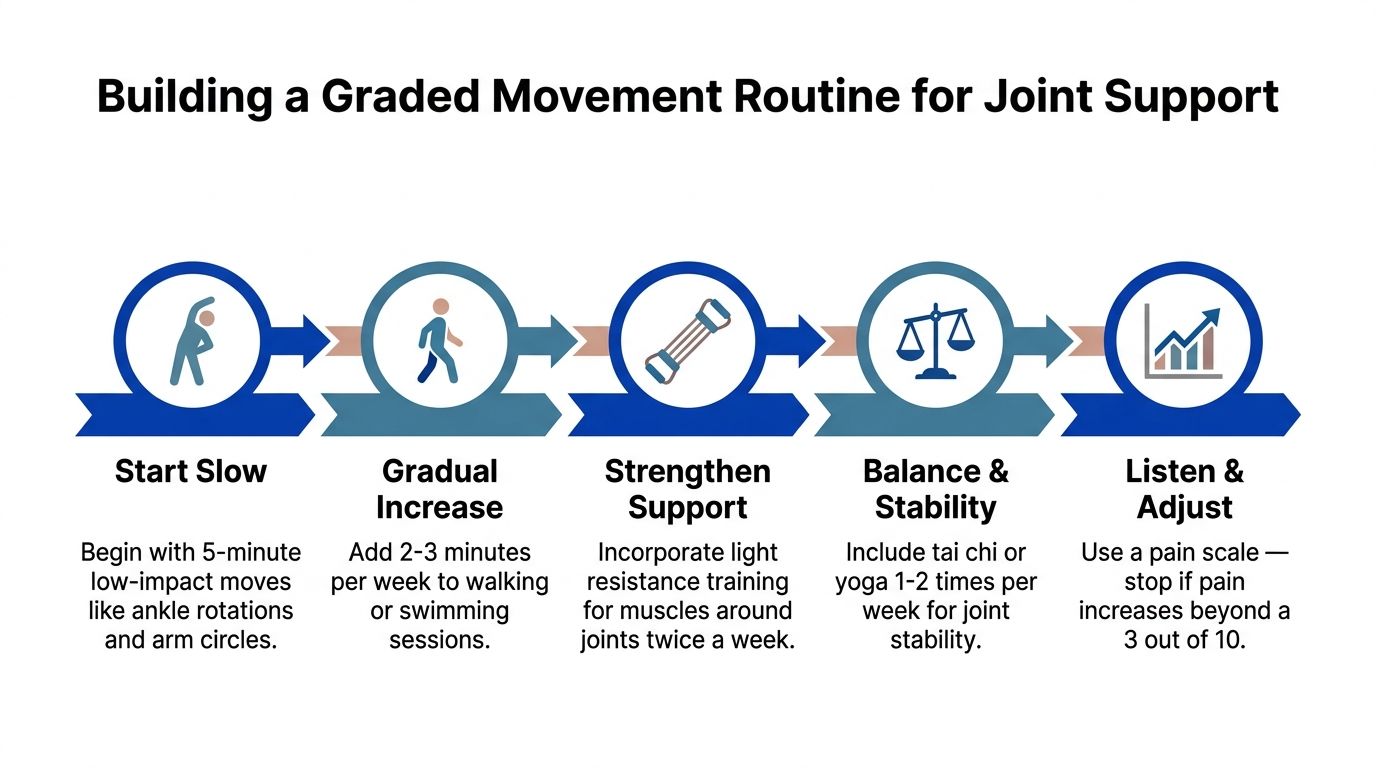
Movement should be dosed like medicine. Too little can leave you weaker and stiffer, while too much can provoke a flare that interrupts your routine. The safest starting point is an amount you can repeat, then a gradual increase when your body is settling well.
Start with tolerable movement
Begin with gentle walking, water exercise, a stationary bike, mobility drills, or easy resistance-band work. Ankle rotations, heel raises, shoulder circles, and supported sit-to-stand movements can help you practise motion without demanding a full workout.
Australia's guidance for people with chronic conditions recommends light activity across the day, regular moderate-to-vigorous activity, muscle strengthening, functional mobility and balance work, and less prolonged sitting. The Australian physical activity recommendations for people with chronic conditions provide the broad framework, but your starting dose should reflect your symptoms and current fitness.
A practical progression looks like this:
- Choose one low-impact activity. Walk on level ground, cycle gently, or use a pool if land-based exercise is uncomfortable.
- Keep the first sessions easy. Finish feeling that you could have done a little more.
- Add strengthening gradually. Use a resistance band, light weights, or controlled body-weight exercises to train the muscles supporting the affected joint.
- Practise balance and mobility. Tai chi, yoga, supported single-leg work, and joint-specific mobility drills can improve confidence and control.
- Review the response the next day. If discomfort settles by the following day, the load is usually more appropriate. Persistent worsening means you need to reduce duration, resistance, range, or frequency.
The technical Australian benchmark commonly used for arthritis exercise is 150 to 300 minutes of moderate activity per week, or 75 minutes of vigorous activity, with resistance work twice weekly, as described by Arthritis Australia's exercise guidance. Treat that as a destination for suitable adults, not a test you must pass immediately.
Pacing through a flare
A flare doesn't always require complete rest. Reduce intensity, shorten the session, choose a supported movement, and maintain comfortable range-of-motion work. Avoid vigorous loading of a joint that's unusually hot, swollen, or acutely painful, and seek assessment when symptoms don't behave like your usual pattern.
Here's a short demonstration to help you think about controlled movement and exercise technique:
A functional movement screen can help identify which movements need modification before you progress. This functional movement screening and exercise analysis resource is an example of the type of movement information practitioners may use when tailoring exercise advice.
Nutrition and Weight Management for Reducing Joint Load
Food can support joint health, but it won't replace movement or correct every painful joint. The most useful nutritional approach is consistent, adequate, and realistic enough to follow when pain limits energy for shopping and cooking.
Body weight matters mechanically because weight-bearing joints repeatedly carry the load of standing and walking. Australian commentary cited in the AIHW material links excess body weight with osteoarthritis progression and notes that obesity carries a 60% lifetime risk of knee osteoarthritis. The same source reports that more than two in three Australians are overweight or obese, which makes weight management a population-level joint-health issue, not a niche concern. See the AIHW evidence on arthritis, activity, and weight management.
Build meals around useful basics
A joint-supportive plate might include fish such as salmon or sardines, leafy greens, vegetables, legumes, whole grains, fruit, and a reliable protein source. These foods provide nutrients that support general health and make it easier to maintain muscle while changing body composition. Calcium-rich foods and vitamin D sources also matter for the broader musculoskeletal system, particularly where bone health is a concern.
The practical test is not whether a food has an “anti-inflammatory” label. It's whether your overall pattern contains fewer highly processed foods and more fibre-rich, nutrient-dense meals. Berries, extra-virgin olive oil, herbs, spices, and oily fish can fit comfortably into that pattern, but turmeric tea or a particular “superfood” won't compensate for an otherwise inadequate diet.
Make weight change joint-friendly
Crash dieting can leave you tired and less able to exercise. A steadier approach is to simplify portions, include protein at meals, keep convenient nutritious options available, and adjust one repeatable habit at a time. If pain limits walking, combine food changes with seated exercise, pool work, or a strength programme designed around your symptoms.
Weight management should be discussed with your GP or an accredited practising dietitian when you have diabetes, kidney disease, gastrointestinal conditions, a history of disordered eating, or medicines affected by dietary changes. The objective is not a rapid transformation. It's reducing avoidable joint demand while preserving the strength and energy you need to move.
Ergonomic Adjustments and Posture Habits for Daily Comfort
A joint can become irritated by long, low-level exposure to a position, even when no single movement feels dramatic. Desk work, driving, phone use, cooking, and sleep all create repeated demands on the neck, shoulders, spine, hips, and knees.
Set up the positions you repeat
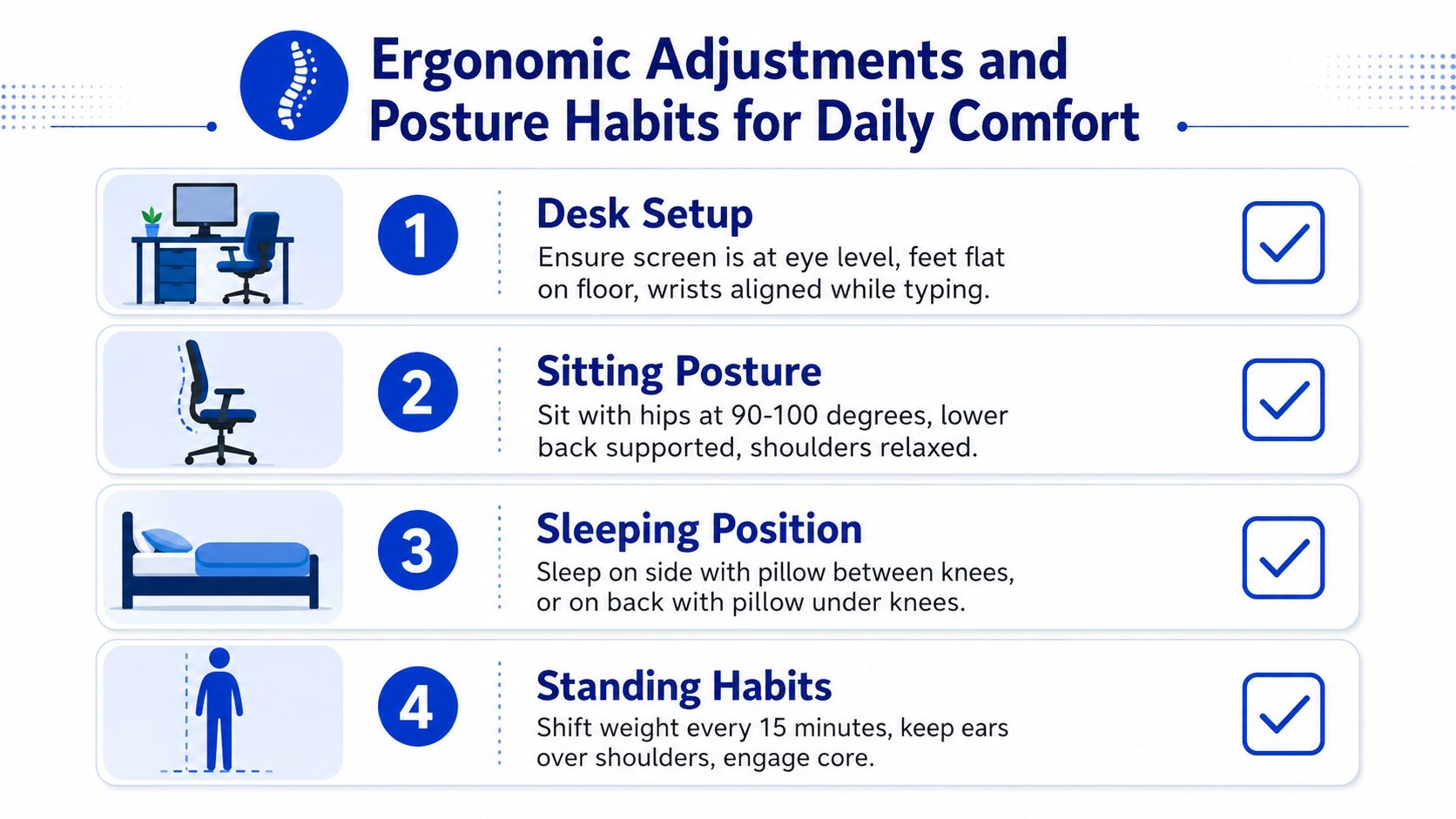
At a desk, place the monitor near eye level, keep your feet supported, and let your elbows rest comfortably rather than reaching forwards. Your keyboard and mouse should sit close enough that your shoulders can stay relaxed. A chair with useful lumbar support may reduce the effort required to hold an upright position, but no chair can compensate for staying still for hours.
Use a timer, calendar reminder, or computer prompt to interrupt sitting. Stand to make a phone call, walk to refill water, perform a few shoulder movements, or practise gentle sit-to-stands. The movement break matters more than finding a supposedly perfect posture.
Driving requires similar attention. Move the seat close enough that you aren't reaching for the pedals, keep your back supported, and avoid twisting repeatedly to check blind spots. For longer drives, plan opportunities to get out and move rather than waiting until your back or hips become irritable.
A corporate ergonomics and posture guide can help you review your workstation, but use your symptoms as feedback. If raising the screen eases neck tension yet increases shoulder discomfort, adjust the whole arrangement rather than copying a fixed template.

Make sleep a support, not another strain
Side sleepers may find a pillow between the knees reduces twisting through the hips and pelvis. Back sleepers can try support beneath the knees if the lower back feels compressed. Stomach sleeping often increases neck rotation, so changing position may help when morning neck symptoms are prominent.
Practical rule: Change one ergonomic variable at a time, then observe how your symptoms respond across several days.
Standing also benefits from variety. Shift your weight, alternate tasks, use a footrest when appropriate, and avoid locking your knees. Good posture isn't a rigid military position. It's the ability to move in and out of comfortable positions without allowing one posture to dominate your entire day.
Evaluating Supplements and Natural Pain Relief Options
Natural joint care prioritises sustainable daily habits, including movement, strength, balance, weight management, and sleep. Supplements may have a role, but evidence varies, product quality is inconsistent, and no capsule replaces progressive exercise, appropriate nutrition, or an accurate diagnosis.
| Supplement | Evidence strength | Best for | Key consideration |
|---|---|---|---|
| Glucosamine | Mixed | People considering a monitored trial for osteoarthritis symptoms | Benefits aren't consistent, and product formulations differ |
| Chondroitin | Mixed | Selected osteoarthritis trials under professional guidance | Discuss interactions and assess function, not marketing claims |
| Fish oil | Reasonable for general nutritional support | People with low dietary oily-fish intake | It's not a guaranteed treatment for mechanical joint pain |
| Turmeric or curcumin | Promising but variable | People seeking an adjunct for inflammatory symptoms | Absorption, dose, interactions, and product quality matter |
| Collagen | Emerging | People interested in connective-tissue nutrition | Evidence doesn't justify treating it as a stand-alone solution |
A sensible trial needs a clear reason, a review point, and a practical measure of benefit. Track walking tolerance, morning stiffness, sleep, and daily tasks instead of relying on a vague impression. Stop if side effects develop. Speak with your GP or pharmacist if you take anticoagulants, have surgery planned, or manage a chronic condition.
Use simple comfort measures well
Heat can relax muscles and make morning movement easier. Cold may help after activity when a joint feels irritated or swollen. Protect the skin, keep sessions comfortable, and avoid using temperature therapy to push through an injury.
Gentle self-massage around a painful joint, rather than forcefully into it, may reduce surrounding muscle tension. Breathing exercises, mindfulness, and calm pacing can also make pain feel less threatening, which may support easier movement. These strategies assist activity, but they do not show that structural problems have resolved.
Manual approaches can support an active plan when the treatment matches the person and diagnosis. This cupping therapy overview illustrates one option. Before trying it, consider bruising, skin sensitivity, medication use, and the underlying joint problem. Daily movement and graded loading should remain the foundation, particularly for older adults managing gradual changes in strength and mobility.

A Realistic Weekly Joint Health Plan
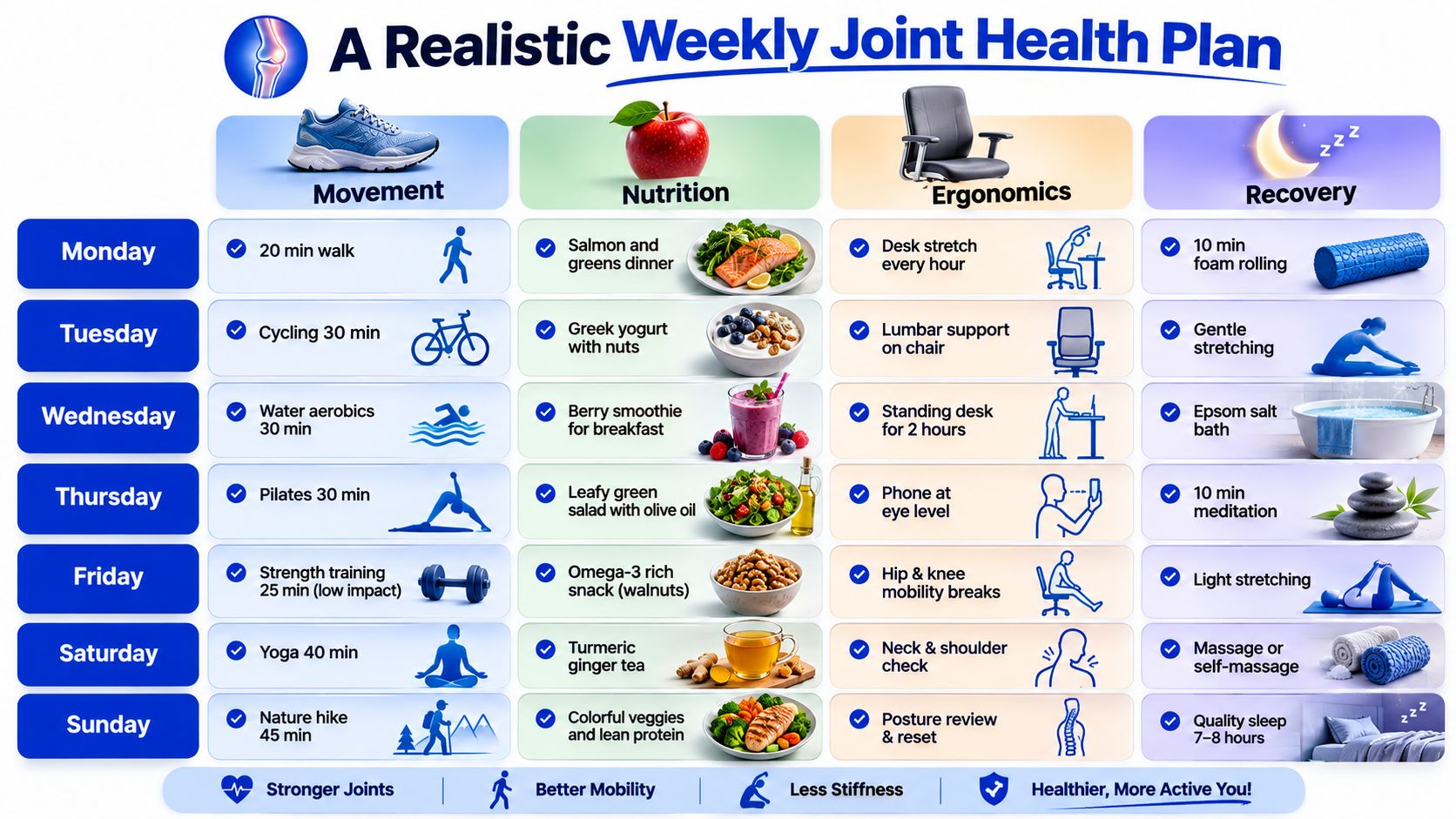
A workable plan leaves room for ordinary life. One busy adult might walk on Monday, use a pool midweek, complete strength work on two non-consecutive days, and reserve shorter mobility sessions for mornings when stiffness is strongest.
A flexible template
- Monday: Take an easy walk or cycle, use a protein-rich dinner with vegetables, and interrupt desk sitting regularly.
- Tuesday: Perform light resistance work for the muscles around the affected joints, then use gentle mobility rather than adding another demanding session.
- Wednesday: Choose water exercise or another supported aerobic option. Keep the evening quiet if your joints feel fatigued.
- Thursday: Repeat strengthening with different exercises or a slightly easier version. Check your workstation and driving position.
- Friday: Take a short walk in manageable intervals, practise balance, and prepare simple meals for the weekend.
- Saturday: Try yoga, tai chi, gardening with pacing, or a recreational activity you enjoy. Stop before fatigue changes your technique.
- Sunday: Use recovery movement, review your symptom response, and plan the next week around your most reliable time of day.
The exact activity matters less than the pattern. A high-energy day may allow a longer walk and full strength session, while a flare day may call for brief mobility, gentle pool movement, and more frequent position changes.
Progression should be boringly gradual. Increase one variable, such as time, resistance, or frequency, and keep the others stable while you assess the response.
If discomfort settles by the next day, continue cautiously. If it lingers or escalates, return to the last tolerable level and seek advice if the pattern continues. Food preparation can follow the same principle: cook extra portions, keep frozen vegetables available, and choose meals that don't require prolonged standing.
When to Seek Professional Osteopathic Care
Natural care isn't automatically safe. A painful joint that becomes suddenly swollen, hot, or difficult to use needs assessment, particularly when the symptoms are new or markedly different. Joint pain accompanied by unexplained weight loss, fever, significant trauma, neurological symptoms, or persistent night pain also deserves medical attention.
You should arrange professional review when a carefully graded activity plan continues to worsen symptoms or fails to improve function over several weeks. A practitioner can check whether the issue is coming from the joint itself, nearby muscles and tendons, the spine, nerve irritation, or a broader health condition.
An osteopathic assessment considers how the body moves as a whole. It may include movement testing, strength and mobility checks, postural observation, and discussion of work, sleep, previous injury, medication, and activity habits. Treatment can include soft-tissue techniques, joint articulation, gentle mobilisation, and a home exercise plan, depending on your presentation and preferences.
Care should remain collaborative. Hands-on treatment may ease symptoms or improve movement, but lasting progress usually depends on what you can practise between appointments. Bayside Osteopathic Health also provides guidance about Medicare options where applicable, so eligible patients can discuss supportive care under relevant plans with their healthcare team.
Bayside Osteopathic Health offers gentle osteopathic assessment and hands-on care for joint stiffness, arthritis-related discomfort, back and neck pain, and postural strain. Visit the clinic to discuss a personalised plan combining manual treatment, graded movement, and practical self-care you can use at home.