
You're at your desk, but you're no longer sitting normally. One shoulder has crept forward, your neck feels tight, and you're twisting slightly to avoid a familiar ache in your lower back. Or perhaps you're an active adult who has started skipping walks, gym sessions or weekend sport because a knee, hip or shoulder keeps reminding you that your body isn't recovering as quickly as it once did.
Injury prevention strategies work best before pain starts controlling your choices. They aren't limited to one exercise, perfect posture or a particular piece of equipment. They combine adaptable strength, mobility, sensible workload changes, everyday movement, recovery, footwear, sleep and timely professional guidance.
Australia's injury burden shows why prevention deserves attention. In 2023–24, injuries accounted for 1,824,454 emergency department presentations and 575,345 hospitalisations, while injuries caused 15,332 deaths in 2022–23. They also represented 7.9% of Australia's total burden of disease in 2024. AIHW injury data supports a practical approach: reduce avoidable strain, maintain mobility and address early changes before they become disabling.
Use the following advice as general education, not a diagnosis. Persistent, worsening or concerning symptoms deserve an appropriate assessment.
Table of Contents
- 1. Postural Awareness and Ergonomic Optimisation
- 2. Regular Movement Breaks and Activity Pacing
- 3. Active Mobility and Flexibility Training
- 4. Progressive Strength and Conditioning Training
- 5. Core Stability and Functional Movement Training
- 6. Proper Lifting Technique and Body Mechanics Training
- 7. Footwear Selection and Gait Analysis
- 8. Sleep Quality Optimisation and Recovery Practices
- 9. Stress Management and Tension Release Techniques
- 10. Regular Osteopathic Assessment and Preventive Healthcare Screening
- 11. Nutrition, Footwear, Sleep and Recovery Habits
- 11-Strategy Injury Prevention Comparison
- Turn Prevention Into a Personal Plan
1. Postural Awareness and Ergonomic Optimisation
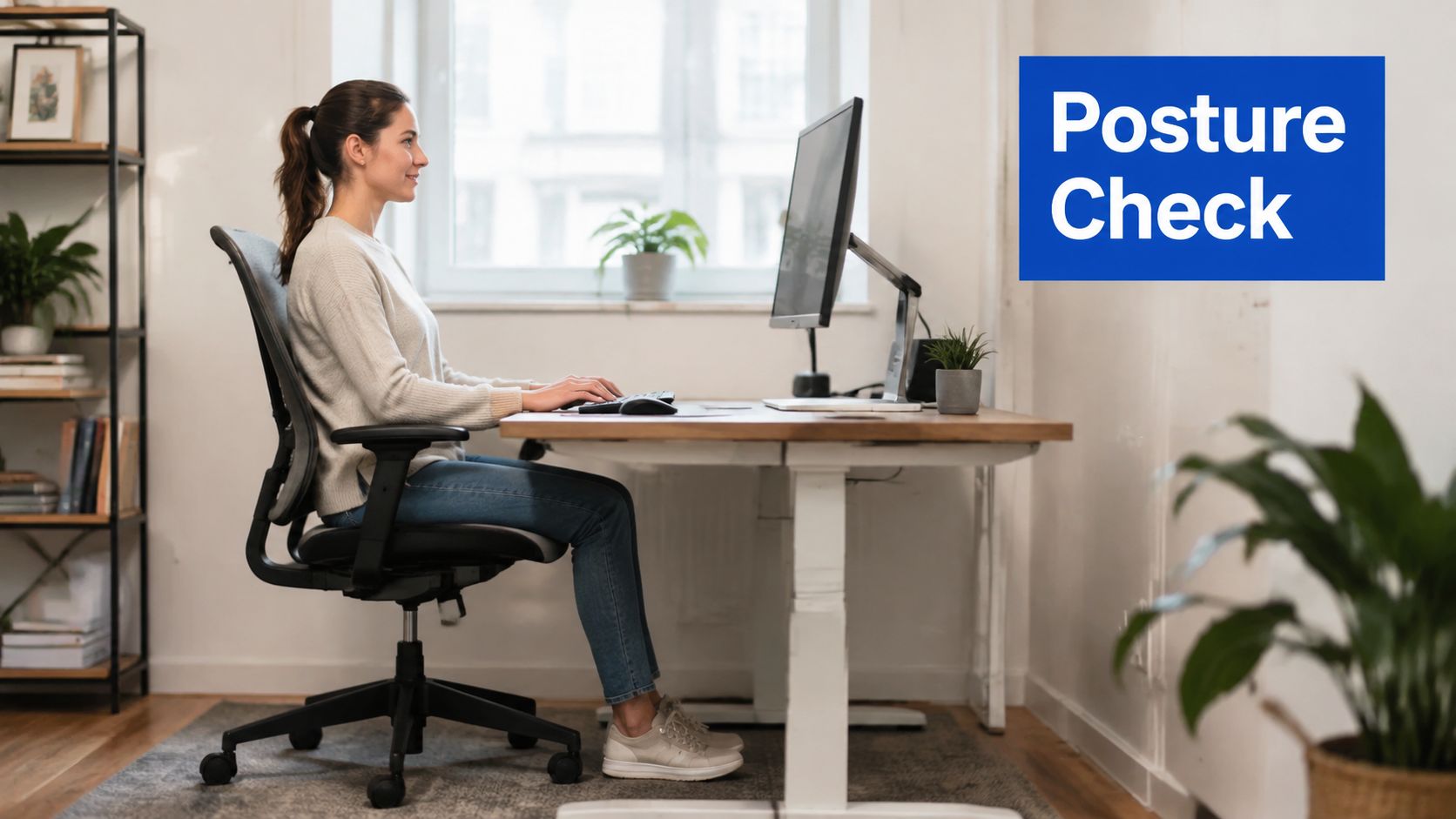
Posture isn't a single position you must hold all day. It's your ability to notice how you're sitting, standing, reaching and working, then change position before tissues become overloaded. A desk worker who leans towards a laptop for hours may develop tension around the neck, shoulders and upper back, while a remote worker may spend the day on a dining chair that offers little support.
Start with the equipment you already have. Raise a laptop with a stand or stable books, add a separate keyboard if necessary, and position the top of your main screen around eye level. Your feet should rest comfortably on the floor or a footrest, and your chair should allow your hips and knees to sit in a relaxed position. An ergonomic chair can help, but it won't compensate for remaining still for long periods.
Practical rule: The best posture is usually the next posture. Change position regularly rather than trying to maintain one rigid alignment.
Make the workstation serve the person
Set a reminder to check your shoulders, jaw, head position and breathing during the workday. If you're always reaching for a mouse, turning towards a second screen or looking down at a phone, adjust the layout rather than repeatedly forcing your body to adapt.
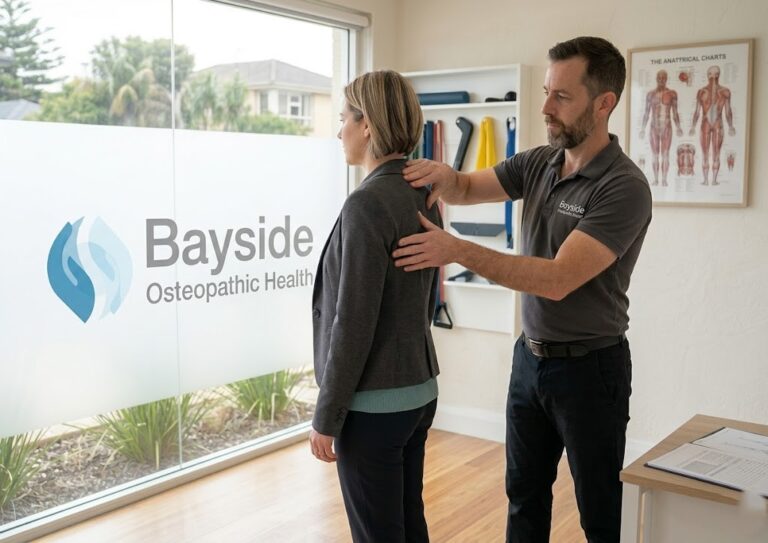
A postural review can be useful when symptoms keep returning despite equipment changes. An osteopathic assessment may identify movement restrictions, habitual loading patterns and areas that need mobility or strength work. You can also review corporate ergonomics and posture guidance as part of a broader workplace plan.
The aim isn't to create a perfect office setup. It's to make comfortable movement easier and repeated strain less likely.
2. Regular Movement Breaks and Activity Pacing
Long periods in one position can turn a manageable ache into pronounced stiffness. After a morning of video meetings, standing may feel uncomfortable even if sitting initially seemed easy. People with ongoing back or joint pain can also do too much on a good day and face increased symptoms later.
Short movement breaks interrupt static loading without adding another demanding workout. Refill your water while standing, walk during a phone call, alternate between sitting and standing, or perform a few relaxed shoulder movements. The aim is to change how your body is loaded throughout the day.
Pace the whole day, not just exercise
Review your total workload if activity repeatedly increases symptoms. Housework, commuting, work tasks, exercise and poor sleep all contribute to the demands placed on your body. Reduce the most provocative task, divide larger jobs across the day and rebuild your tolerance gradually instead of stopping all activity.
Useful options include:
- Use a regular prompt: Set a phone, watch or computer reminder to change position during the workday.
- Reverse the held position: Stand after sitting, or sit briefly after prolonged standing.
- Keep movements gentle: Neck turns, shoulder rolls, an easy walk or relaxed spinal movement should feel like maintenance.
- Watch the next day: More pain or stiffness later can indicate that the previous session exceeded your current tolerance.
- Change one variable: Adjust duration, intensity or frequency, rather than changing everything at once.
Safe Work Australia data identifies lifting, pushing, pulling or bending as the most common reported cause of work-related injury or illness, responsible for 24% of cases. The figures make pacing relevant in offices, trade work and physically demanding roles. At Bayside Osteopathic Health, an osteopathic assessment can help distinguish a workload problem from a movement restriction and clarify which activities should be modified first. Medicare information may also be worth checking when persistent symptoms require broader healthcare planning.
3. Active Mobility and Flexibility Training
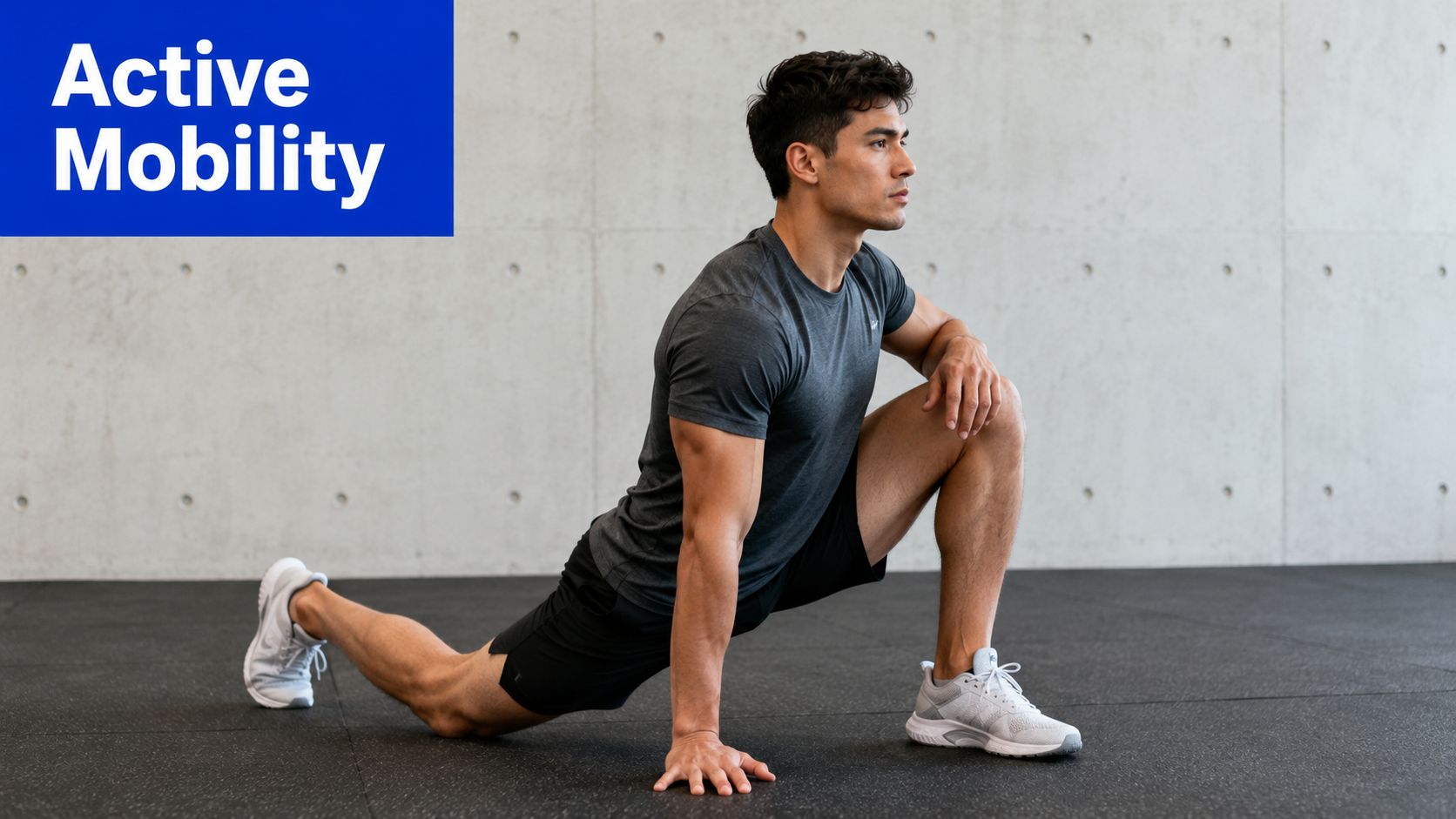
A stiff joint often changes how you move around it. Limited ankle movement can affect a squat, restricted hip movement can alter bending and walking, and reduced upper-back mobility can make the neck and shoulders work harder during reaching. Mobility training helps you practise available movement with control instead of relying only on passive stretching.
Active mobility differs from holding a stretch. You move into a comfortable range, control the return and gradually teach the body to use that range during a real task. This approach can suit older adults with arthritis, office workers who feel stiff after sitting and active people preparing for exercise.
Build mobility into ordinary routines
A short routine can include controlled hip hinges, supported squats, shoulder circles, thoracic rotations and ankle movements. Move slowly enough to notice whether the restriction comes from the joint, muscle tension, balance or fear of pain. A sensation of effort or mild stretch may be acceptable, but sharp pain, increasing symptoms or loss of control means the movement needs modification.
Mobility works better when it has a purpose. Practise hip movement if getting into a car is difficult, shoulder movement if reaching overhead is limited, or ankle mobility if stairs feel awkward. An osteopathic assessment can help prioritise areas rather than encouraging a long routine that you won't use consistently.
For a visual reference, see this joint mobility and stretching guide.
Mobility alone won't replace strength or task practice. It's most useful when paired with controlled loading, regular walking and movements that resemble your daily activities.
4. Progressive Strength and Conditioning Training
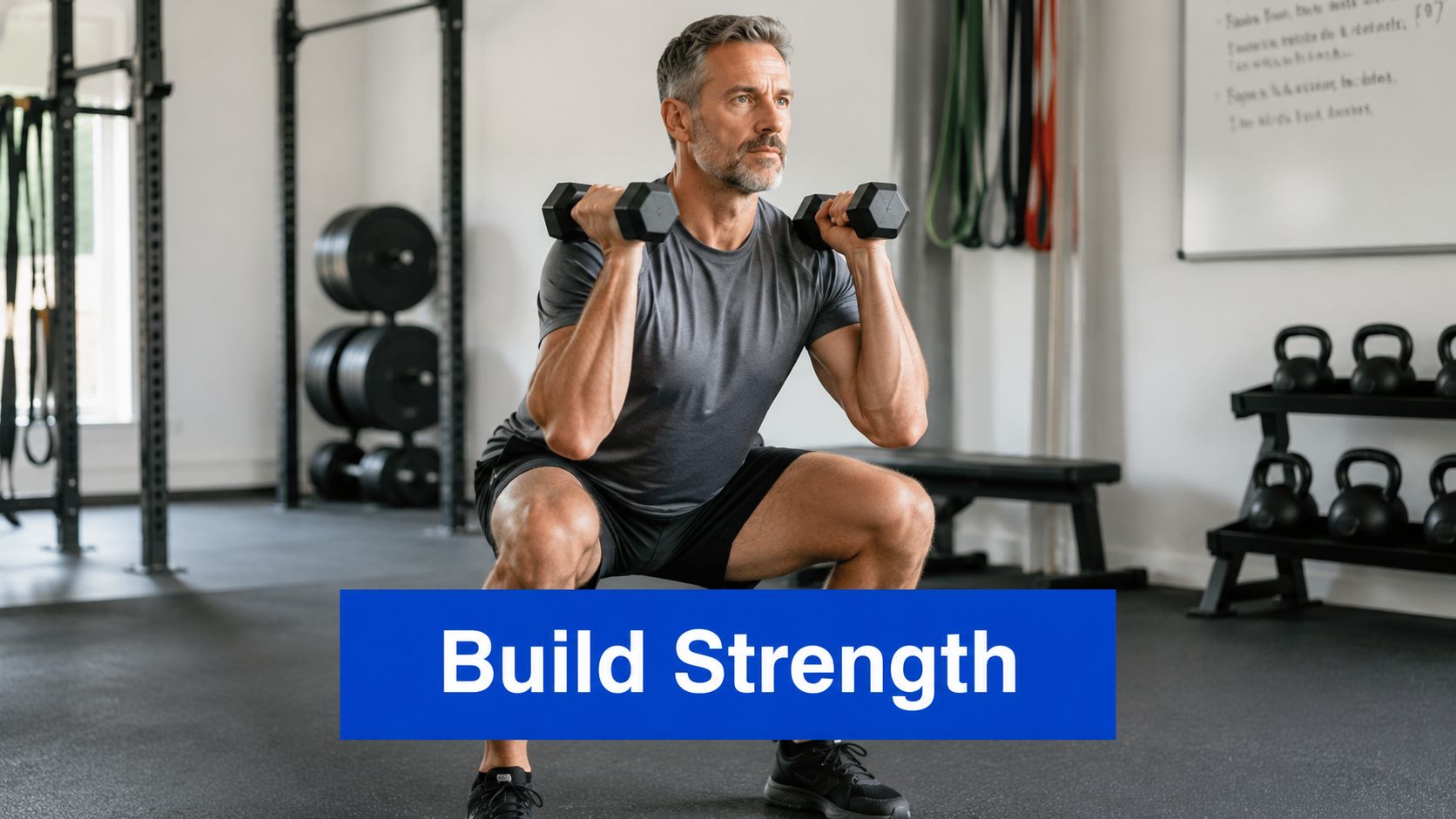
Strength is a reserve. When muscles have capacity, everyday tasks such as carrying shopping, climbing stairs or lifting a child demand a smaller proportion of that capacity. When strength and conditioning are neglected, an ordinary task may become unexpectedly strenuous, especially after illness, inactivity or a period of pain.
Progression matters more than ambition. Begin with movements you can perform with steady breathing and reliable control. This might include sit-to-stand practice, wall push-ups, supported calf raises, step-ups or light resistance exercises. Add challenge only when the current level feels manageable and recovery is predictable.
Increase the demand without chasing fatigue
You can progress by changing resistance, repetitions, range, speed or complexity. Don't increase several of these at once. A heavier weight isn't automatically better if it causes compensatory movement, breath-holding or a flare-up that interrupts the rest of the week.
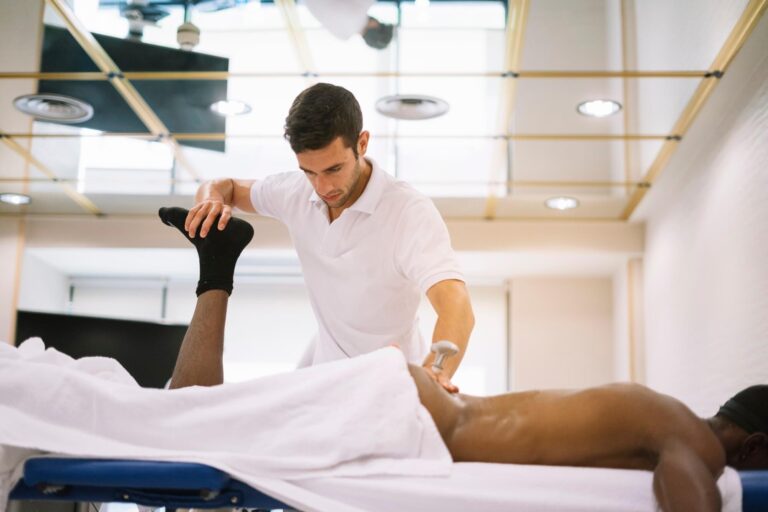
Strength work is particularly useful for older adults concerned about balance and for people managing recurring joint symptoms. It should still be adapted to pain, confidence, medication, previous injury and other health conditions. An osteopath can help connect assessment findings with exercises that fit your structure and daily demands. This hands-on treatment and movement resource illustrates the importance of guided movement where technique needs attention.
Australia's national workplace data shows that 80% of serious claims involve mechanisms including body stressing, falls, slips and trips, being hit by moving objects or mental stress. Safe Work Australia's key WHS statistics supports targeted prevention, not a generic instruction to “be fitter”.
5. Core Stability and Functional Movement Training
Core stability is about controlling the trunk while the arms and legs move. It isn't limited to visible abdominal muscles, and it doesn't require exhausting workouts. A useful core exercise teaches you to breathe, brace appropriately and keep the spine and pelvis controlled while bending, reaching, walking or lifting.
Start with low-complexity practice. Supine breathing with gentle abdominal engagement, dead bugs, bird dogs, supported carries and modified planks can all develop control. The right choice depends on symptoms and ability. Someone with acute back pain may need a supported variation, while a stronger person may benefit from standing or loaded movements.
Transfer control into daily movement
Core training becomes protective when it appears in real tasks. Before lifting a basket, organise your feet, bring the load close and create gentle trunk tension. When reaching, move through the hips and upper back rather than repeatedly extending the lower back. When walking, allow the arms and trunk to move rather than holding yourself rigid.
Daily practice is often more useful than one intense session followed by several days of soreness. A few controlled repetitions during an existing routine can reinforce coordination without adding a large workload.
A stable trunk should support movement, not freeze it.
Pilates, clinical exercise and functional strength programs can all be appropriate when adapted to the individual. Hands-on care may help reduce restrictions or sensitivity, but it should support an active plan rather than replace it. If core exercises consistently increase symptoms, ask for an assessment rather than pushing through a prescribed sequence that doesn't fit.
6. Proper Lifting Technique and Body Mechanics Training
Lifting injuries don't occur only in warehouses or construction sites. You might strain your back moving a pot plant, carrying laundry, helping someone transfer from a chair or placing luggage into a car. The risk rises when the load is awkward, the task is rushed or you're already fatigued.
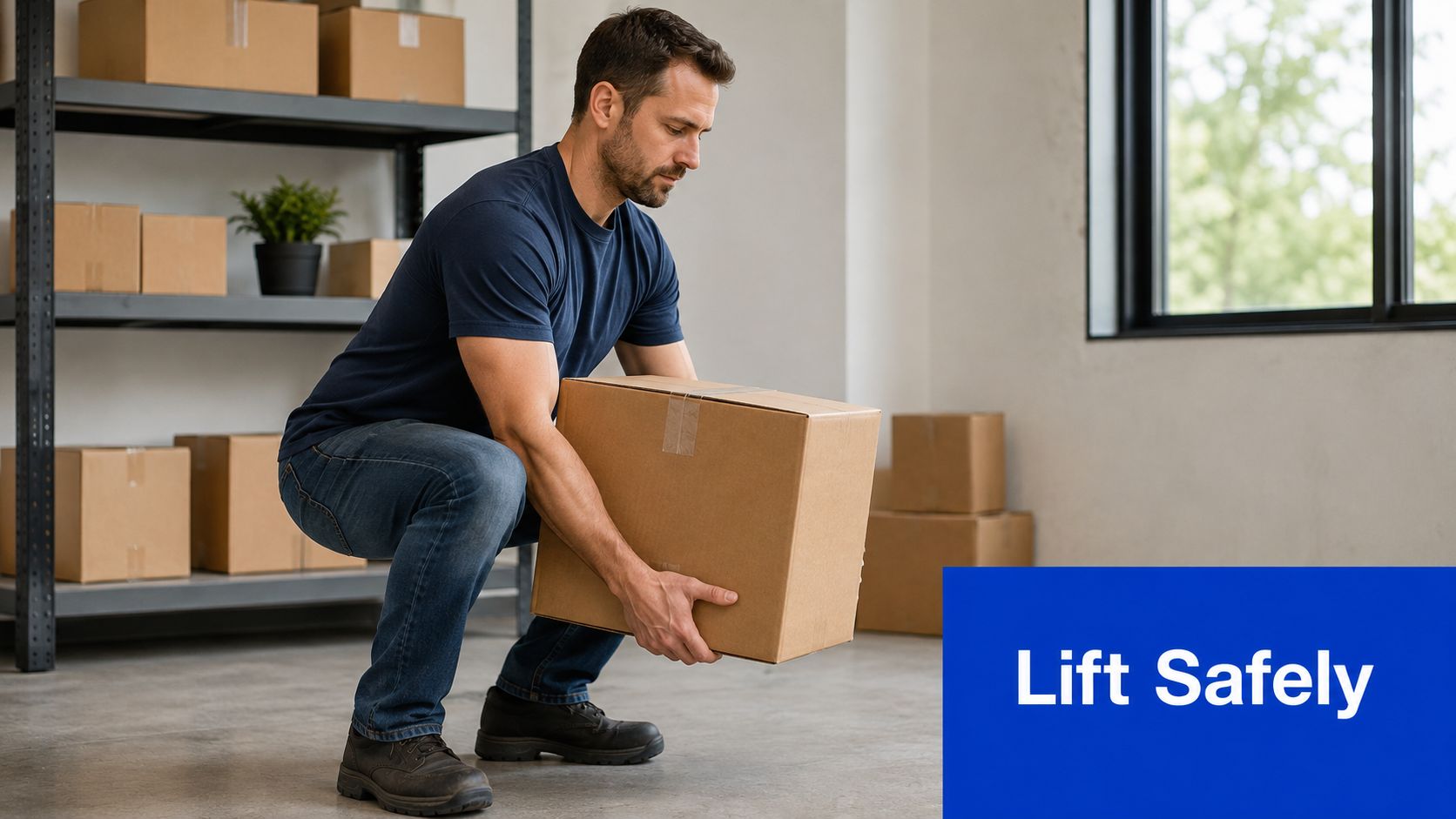
Before lifting, decide whether you can manage the object safely. Test an unfamiliar load, clear the route and ask for help when its size or shape makes control difficult. Split the load if possible. Place your feet in a stable stance, keep the object close and use your hips and knees as you lower and rise.
Use technique as a flexible skill
There isn't one perfect lifting posture for every object. A symmetrical squat may suit a box on the floor, while a staggered stance may give better balance when lifting from a shelf. The consistent principles are control, proximity, a stable base and avoiding sudden twisting under load.
Bracing should be purposeful, not a hard clench that prevents breathing. Exhale through the effort and keep the load close to your centre. If you're lifting repeatedly at work, the solution may include changing the height of the task, using equipment, rotating duties or reducing the distance carried. Individual technique can't compensate for an unsafe workflow.
A practitioner can assess how your work demands affect your back, neck, shoulders and hips, then suggest specific movement changes. The training video below can be used as a starting point, but it shouldn't replace workplace instruction or individual assessment.
7. Footwear Selection and Gait Analysis
Your feet influence how force travels through the ankles, knees, hips and spine. That doesn't mean one shoe type suits everyone, or that a popular running shoe can correct every movement problem. Comfort, fit, activity, foot shape, walking surface and symptoms all matter.
Look at how your shoes wear and how your body responds. Recurrent foot or ankle discomfort, unexplained knee pain, a new limp or pain that increases with walking may justify a gait review. A professional can observe walking, balance, joint movement and loading rather than relying only on the brand or appearance of a shoe.
Change footwear gradually
A major change in sole height, flexibility, cushioning or support can alter the demand on your calves, feet and hips. Introduce new footwear for shorter periods before using it for a long walk, full workday or sporting session. If symptoms appear, reduce exposure and reassess rather than assuming the shoe must be “breaking in”.
Running stores may offer useful observations, while podiatrists can assess foot-specific concerns and orthotic needs. An osteopath can consider how footwear changes affect whole-body movement, particularly when foot symptoms coexist with knee, hip or back pain. Brands such as Brooks and ASICS offer different designs, but the label alone doesn't establish that a shoe is right for you.
For older adults, secure fit and confidence on the ground may matter more than fashion. Check that the heel feels stable, the toe box isn't cramped and the sole suits the surfaces you regularly use. Footwear is one part of injury prevention, not a substitute for strength, balance and sensible activity progression.
8. Sleep Quality Optimisation and Recovery Practices
Recovery is part of training, work capacity and pain management. When sleep is disrupted by pain, stress, shift work or an unsuitable sleeping position, the next day may bring lower concentration, more tension and less tolerance for physical demand. That can create a cycle in which normal tasks feel harder and movement becomes guarded.
Make the routine practical. Keep sleep and wake times reasonably consistent, reduce stimulating activity before bed and create a bedroom that feels dark, quiet and comfortable. If your neck or back is painful, experiment with pillow height, side-lying support or another position that allows relaxed breathing and less strain.
Match recovery to the load
A challenging exercise session may need a lighter day afterwards. A demanding workweek may require shorter walks, gentle mobility or earlier bedtime rather than extra training. Recovery also includes hydration, regular meals and pauses between tasks, although nutrition or supplement decisions should be discussed with a qualified health professional when you're considering them for a specific problem.
If pain repeatedly wakes you or prevents you from finding a comfortable position, treat that pattern as useful clinical information, not a minor inconvenience.
Avoid copying a universal sleep schedule or buying products that promise to solve pain overnight. Track what changes your comfort, morning stiffness and daytime energy. Discuss persistent sleep disruption with your GP or osteopathic practitioner, particularly if pain is worsening or accompanied by other symptoms.
9. Stress Management and Tension Release Techniques
Stress can change how you move. You may lift your shoulders, clench your jaw, hold your breath or brace your lower back without noticing. Over time, that tension can make ordinary movement feel threatening and reduce your willingness to use an already sensitive area.
Stress management doesn't mean pain is imaginary. It gives your nervous system another input, which can help you lower unnecessary guarding and approach movement with more control. Try slow breathing, progressive relaxation, mindfulness, tai chi or a short walk without your phone. Choose the method you'll use during a busy Bayside workday.
Make release specific
Notice your most predictable tension points. If your jaw tightens during computer work, let your teeth separate and rest your tongue comfortably. If your shoulders rise during stressful calls, exhale slowly while allowing them to drop. If your back stiffens during worry, change position and take a few easy steps rather than forcing a stretch.
A simple breathing pattern can be useful during a stressful moment. Inhale gently, pause briefly if comfortable, then make the exhalation longer than the inhalation. Stop if you feel light-headed. Grounding through your senses can also shift attention away from escalating worry and back towards the room around you.
Osteopathic treatment may be combined with self-care, movement advice and medical support when appropriate. It shouldn't be presented as a cure for stress, anxiety or persistent pain. If stress is affecting sleep, work, relationships or safety, speak with a GP or mental health professional.
10. Regular Osteopathic Assessment and Preventive Healthcare Screening
A preventive assessment is most useful when it answers a practical question. Why does your neck become sore after work? Why does your hip feel restricted after walking? Why did a previously manageable exercise become difficult? An osteopath can review movement, joint mobility, muscle tension, work demands and daily habits, then connect findings with home strategies.
Hands-on approaches may include soft-tissue techniques, joint articulation and gentle mobilisation. These can be combined with mobility, strength, pacing and ergonomic advice. The purpose isn't to keep you dependent on treatment. It's to help you understand the pattern and build capacity between appointments.
Combine movement review with appropriate healthcare
Preventive care should include your usual medical check-ups and any screening recommended for your age, symptoms and risk profile. Bone health, falls risk, inflammatory concerns and other medical issues may require GP-led assessment or referral. Osteopathic care doesn't replace diagnosis, imaging, medication review or urgent medical treatment.
Medicare support depends on eligibility, the relevant plan and current referral requirements. Ask the clinic and your GP what applies to your circumstances rather than assuming every osteopathic appointment is covered. In Australia, workplace safety authorities undertook 301,000 interventions in 2023–24 and finalised 421 legal proceedings, according to Safe Work Australia's jurisdictional comparison dashboard. Prevention works best when people also identify hazards, report them and follow through with corrective action.
Bring a short record of symptoms, activities, sleep and aggravating movements to an appointment. That information helps turn a general consultation into a more useful plan.
11. Nutrition, Footwear, Sleep and Recovery Habits
Injury prevention is shaped by the ordinary choices that determine whether you can recover from your workload. Exercise may be well designed, but progress becomes harder if your shoes are uncomfortable, sleep is repeatedly interrupted or you're trying to manage demanding days without adequate food and rest.
Review these factors together, without turning them into a rigid wellness program. Note whether a particular pair of shoes changes your walking comfort, whether a better evening routine affects morning stiffness, and whether symptoms rise after busy workdays. Change one habit at a time so you can identify what helps.
Use qualified advice for individual decisions
Nutrition should support your general health and activity, but no universal diet or supplement can prevent every injury. If you're considering supplements, significant dietary changes or nutrition support for a medical condition, speak with an appropriately qualified professional. Older adults, people taking medication and those managing chronic illness need particularly individualised advice.
The Australian Sports Commission has described national work on sport injury data, including collaboration with AIHW intended to support safer community sport practices and participation through 30 June 2026. The Australian Sports Commission's national sports injury database information reflects a useful principle for everyday activity: prevention should help people stay involved, not frighten them away from movement.
Pair recovery habits with a manageable home routine. Comfortable walking, controlled mobility and appropriately progressed strength usually offer more value than repeatedly searching for a single perfect product.
11-Strategy Injury Prevention Comparison
| Strategy | Implementation Complexity 🔄 | Resources & Efficiency ⚡ | Expected Outcomes ⭐ | Ideal Use Cases 📊 | Key Advantages & Tips 💡 |
|---|---|---|---|---|---|
| Postural Awareness and Ergonomic Optimization | Moderate, workspace assessment + behaviour change | Low cost, quick implementation; minor equipment | ⭐⭐⭐⭐ Prevents posture-related chronic pain; improves comfort/productivity | Office & remote workers; corporate wellness | Immediate ROI; set hourly posture reminders; position monitor at eye level |
| Regular Movement Breaks and Activity Pacing | Low, scheduling and habit formation | Minimal cost; very time-efficient | ⭐⭐⭐ Immediate tension relief; reduces flare-ups | Sedentary workers, students, chronic pain pacing | Use timers every 45–60 min; micro-movements and gentle stretches |
| Active Mobility and Flexibility Training | Moderate, technique-dependent practice | Low equipment; short daily time commitment | ⭐⭐⭐⭐ Improves joint range, reduces stiffness, enhances movement control | Older adults, sedentary individuals, pre/post-treatment | 10–15 min/day; move slowly with control; pair with strength work |
| Progressive Strength and Conditioning Training | High, program design, progression & supervision | Moderate–high (coaching, equipment); time investment | ⭐⭐⭐⭐⭐ Builds muscular support, bone density, long-term resilience | Rehab patients, older adults, athletes, fall-prevention programs | Start bodyweight, progress conservatively; 2–3×/week; professional guidance |
| Core Stability and Functional Movement Training | Moderate, precise activation & practice | Low equipment; requires coaching for technique | ⭐⭐⭐⭐ Reduces back/neck pain risk; improves balance and function | Back pain management, functional daily tasks, fall prevention | Learn deep core activation; integrate into daily movements; practice often |
| Proper Lifting Technique and Body Mechanics Training | Low–Moderate, technique training and habit change | Minimal cost; immediate protective benefit | ⭐⭐⭐⭐ Prevents acute back injuries; reduces cumulative spinal stress | Manual workers, healthcare staff, tradespeople, anyone lifting regularly | Brace core, drive with legs, keep load close; assess load before lifting |
| Footwear Selection and Gait Analysis | Moderate, professional assessment and fitting | Medium cost (shoes/orthotics); specialist time required | ⭐⭐⭐⭐ Addresses root biomechanical causes; reduces downstream joint stress | Runners, lower-limb pain, gait asymmetry, diabetic foot care | Get gait analysis, transition shoes gradually, replace footwear regularly |
| Sleep Quality Optimization and Recovery Practices | Moderate, behaviour change; possible specialist input | Low cost but time/habit investment; effects accrue over weeks | ⭐⭐⭐⭐ Enhances healing, lowers pain perception, improves recovery | Chronic pain sufferers, recovering athletes, poor sleepers | Keep consistent schedule, dark/cool room, avoid screens 1–2 hrs pre-bed |
| Stress Management and Tension Release Techniques | Low–Moderate, practice + habit formation | Very low cost; portable; variable time per session | ⭐⭐⭐ Reduces muscular tension; improves sleep & pain tolerance | Patients with stress-related tension, chronic pain, burnout | Practice breathing (box breathing), 10–15 min/day mindfulness, combine with treatment |
| Regular Osteopathic Assessment & Preventive Screening | High, ongoing appointments and integrated screening | Higher cost/time; requires practitioner access | ⭐⭐⭐⭐⭐ Early detection of imbalances; root-cause, drug-free interventions | Older adults, chronic conditions, preventive-focused patients, athletes | Schedule reviews (4–12 wks), combine with home exercises; ask about coverage |
| Nutrition, Footwear, Sleep & Recovery Habits | Moderate, individualised habit adjustments | Low–medium; may need specialist referral for specifics | ⭐⭐⭐ Supports recovery capacity and complements movement strategies | General population, recovering patients, active adults | Change one habit at a time, track effects, seek qualified advice for supplements |
Turn Prevention Into a Personal Plan
You don't need to adopt every strategy at once. Choose one immediate environmental change, one movement habit and one recovery habit that address your current pattern.
Your immediate change might be raising a laptop, moving a frequently used item closer, improving lighting or changing footwear for a specific activity. Your movement habit could be standing and walking during regular work breaks, practising controlled mobility or completing a small strength routine. Your recovery habit might involve a consistent bedtime, better support while sleeping or a deliberate lighter day after demanding activity.
Progress should reflect your age, pain history, confidence, health conditions and current capacity. A younger active adult returning to sport may need a gradual increase in running, lifting or throwing demand. An older person with arthritis may need more attention to balance, strength, footwear and recovery between sessions. A desk-based worker may benefit most from changing static work patterns and building tolerance for regular movement.
Pain deserves interpretation rather than automatic obedience or dismissal. Mild, short-lived muscular effort can be part of adapting to exercise, but sharp pain, increasing symptoms, altered sensation or a noticeable loss of strength needs attention. If a movement repeatedly causes a flare-up, reduce the load, change the technique or seek guidance. Forcing a generic routine because it worked for someone else isn't a reliable prevention strategy.
Australian injury data reinforces the value of early, practical action. Injuries accounted for 6.4% of health spending in 2022–23, according to AIHW's national injury summary. That doesn't mean every ache requires treatment, but it does support taking falls, mobility loss, work strain and recurring pain seriously before they restrict daily life.
Seek qualified medical care for severe, sudden or rapidly worsening symptoms, significant trauma, new neurological changes, unexplained loss of strength, loss of bladder or bowel control, chest symptoms, fever with severe pain or concerns that don't improve. Contact emergency services for an immediate emergency. Your GP can help coordinate investigation, referrals and medical screening, while an osteopath can assess movement and contribute practical self-care guidance when appropriate.
For Bayside residents, Bayside Osteopathic Health can discuss how your work setup, activity, pain pattern, mobility and recovery habits fit together. An assessment may lead to hands-on care, individualized movement advice, pacing strategies and home exercises, with Medicare information discussed where applicable. The most useful plan is one you understand, can perform safely and can adjust as your symptoms and capacity change.
Bayside Osteopathic Health provides gentle, hands-on assessment and care for back, neck and joint pain, postural strain, stiffness and arthritis-related movement limitations. Visit Bayside Osteopathic Health to discuss an injury prevention plan, practical home strategies and Medicare options where applicable.