

You lift a coffee mug, turn a key, or reach for your phone, and a familiar ache catches in your fingers. Perhaps your hand feels stiff when you wake, your thumb hurts while opening a jar, or one knuckle looks larger than it used to. These changes can make ordinary tasks feel unexpectedly difficult, but arthritis treatment for hands usually works best as a planned combination of diagnosis, movement, joint protection, symptom relief and timely professional care.
Australia has a substantial arthritis burden. A 2022 Australian Bureau of Statistics release summarised by Arthritis Australia reported that just under 3.7 million people had arthritis overall, equal to 14.5% of the population. Australian burden data also recorded 1,339,641 hand osteoarthritis cases in 2019, with hand osteoarthritis years lived with disability increasing for both females and males over the period covered by the dataset. These figures help explain why preserving hand movement and independence deserves more than a one-size-fits-all remedy.
Table of Contents
- Starting With a Practical Hand Arthritis Plan
- Understanding the Main Types of Hand Arthritis
- Building a Safe and Effective Home Routine
- Using Gentle Osteopathic Care Alongside Hand Therapy
- Comparing Medical Pain Relief and Injection Options
- Recognising When Surgery or Specialist Care Is Needed
- Booking Care and Checking Medicare in Bayside
Starting With a Practical Hand Arthritis Plan
The first useful step isn't choosing a cream or exercise. It's working out what is causing the pain. Osteoarthritis, rheumatoid arthritis, post-traumatic arthritis, nerve irritation and tendon problems can overlap, but they don't follow the same treatment pathway.
A GP, osteopath, physiotherapist or hand therapist can assess how your joints move and which activities provoke symptoms, while a GP or specialist may arrange blood tests or imaging when the pattern suggests inflammatory or structural disease. Diagnosis matters because a swollen, warm hand that affects matching joints on both sides needs a different level of medical attention from a thumb base that aches after repeated gripping.
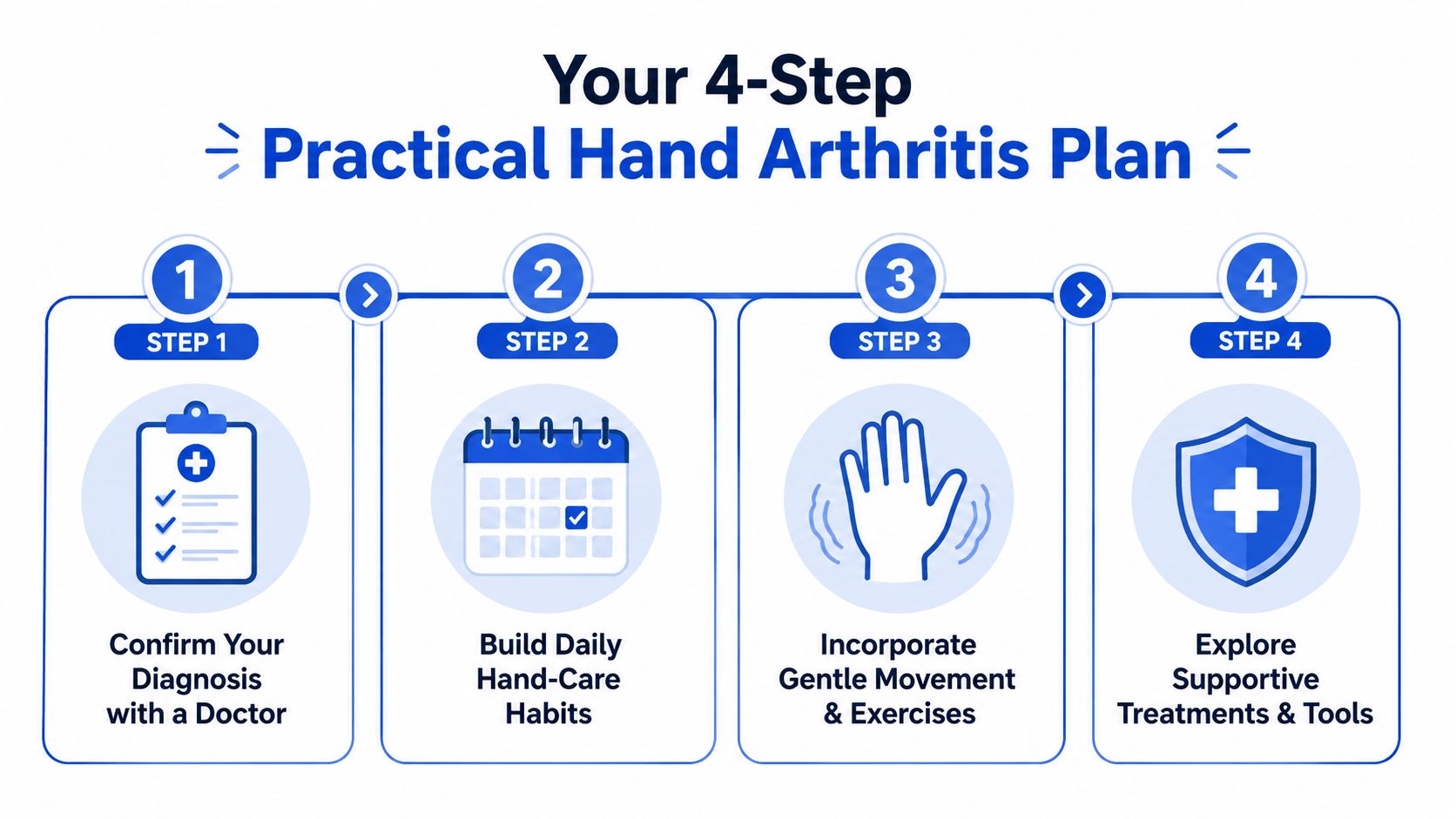
Four decisions that keep care on track
Confirm the pattern. Record which joints hurt, when stiffness appears, whether swelling is present, and what happens during tasks such as typing, gardening or opening packaging.
Build repeatable habits. Warmth, gentle movement, pacing and practical tools can reduce unnecessary strain during the day. The aim isn't to keep your hands still. It's to help them move with less irritation.
Add supervised care. Hand therapy can tailor exercises, splints and workarounds to your joints. Gentle osteopathic treatment may complement this plan by addressing wrist, forearm, shoulder and upper-body movement that influences how you load the hand.
Escalate when function keeps falling. Medication review, injections, rheumatology assessment or hand surgery may become appropriate when symptoms progress despite an organised conservative plan.
Practical rule: A treatment should earn its place by improving a real task, such as turning a tap, holding cutlery or fastening clothing, not simply by sounding powerful.
Australian referral guidance supports this conservative-first approach. NSW Health adult hand osteoarthritis referral guidance expects patients to try non-operative management, including hand therapy, before referral for many chronic painful or stiff hand conditions. That doesn't mean waiting through severe deterioration. Rapid functional decline and severe thumb-base disease require earlier review.
Understanding the Main Types of Hand Arthritis
Think of a finger joint as a small hinge. Smooth cartilage helps the joint surfaces glide, synovium lines the joint and produces fluid, and the capsule and surrounding tissues provide stability. Arthritis can affect one or several of these parts, so pain, stiffness, swelling and altered shape may develop in different combinations.
Osteoarthritis commonly affects the distal interphalangeal joints, or DIP joints near the fingertips, the proximal interphalangeal joints, or PIP middle joints, and the thumb carpometacarpal joint at the base of the thumb. It can also affect selected knuckle joints, including the index MCP joint. Bony enlargements at the end joints are called Heberden nodes, while similar changes at the middle joints are called Bouchard nodes. Grating, reduced movement, aching after use and thumb pain during pinching often fit this pattern.
Rheumatoid arthritis behaves differently. It's an autoimmune inflammatory condition that commonly affects the MCP and PIP joints, often on both sides of the body. Persistent swelling, warmth, tenderness and prolonged morning stiffness are more concerning for inflammatory arthritis than for straightforward mechanical irritation. Finger deformity can develop when inflammation remains active, so early medical assessment matters.
Post-traumatic arthritis follows an earlier injury, such as a fracture, ligament injury or joint disruption. The affected joint may remain less mobile, change its loading pattern and become painful during specific movements. A history of injury can therefore be as important as the appearance of the hand today.
The anatomy of these joints is illustrated in this hand joint anatomy resource.

Comparing Common Hand Arthritis Types
| Feature | Osteoarthritis | Rheumatoid Arthritis | Post-Traumatic Arthritis |
|---|---|---|---|
| Usual pattern | DIP, PIP, thumb CMC and some MCP joints | Often MCP and PIP joints, frequently in a matching pattern | Usually centred on a previously injured joint |
| Main driver | Cartilage and joint structure changes | Immune-driven inflammation of the joint lining | Long-term effects of fracture or ligament damage |
| Common clues | Bony nodes, aching with use, grating and stiffness | Warmth, swelling, tenderness and prolonged morning stiffness | Reduced movement, altered alignment and activity-specific pain |
| Why diagnosis matters | Guides load management, exercise and symptom relief | May require prompt rheumatology-led treatment | Helps identify structural limitations and suitable rehabilitation |
Diagnosis may involve physical examination, medical history, blood tests or imaging. No single symptom proves the cause. A knobbly finger can be osteoarthritis, but swelling and heat can point elsewhere, and pain after an old injury may reflect post-traumatic changes rather than a new disease.
Building a Safe and Effective Home Routine
Home care works best as a layered routine, not as a test of willpower. You're trying to prepare the hand for movement, keep joints mobile, strengthen gradually and reduce avoidable loading during everyday tasks.
Start with warmth if your fingers feel stiff. A warm shower, warm-water soak or carefully used paraffin wax treatment may make movement more comfortable before activity. Heat shouldn't be used over a very hot, acutely swollen joint without professional advice, and you should check the temperature carefully to avoid burns.

Move first, then strengthen
Gentle range-of-motion work can include tendon glides, finger spreads, thumb opposition and relaxed grip releases. Move slowly and stay within a tolerable range. Sharp pain, catching or a noticeable increase in swelling means the exercise needs to stop and be reviewed, not pushed through.
Strengthening may involve therapy putty or a soft ball, but resistance should match your current capacity. Squeezing harder isn't automatically better. A hand therapist can adjust the exercise, repetitions and grip position so the muscles work without repeatedly compressing an irritated joint.
Watch this hand mobility exercise video for a visual example of gentle movement.
Reduce the load hidden in ordinary tasks
Joint protection changes how force travels through the hand:
- Share the load: Use two hands for heavier objects rather than asking one thumb or finger joint to do all the work.
- Change the grip: Choose built-up handles and larger grips where possible. A jar opener can replace forceful twisting.
- Rotate activities: Alternate keyboard work, household tasks and rest rather than repeating one gripping action for a long period.
- Adjust devices: Keep your keyboard, mouse and phone in positions that reduce sustained wrist bending and forceful thumb use.
- Use support selectively: A resting splint overnight or a working splint during a flare may help when professionally fitted and recommended.
The hand arthritis mobility visual can help you think about movement as part of daily care rather than a separate workout.
Track what happens after each change. Note the activity, pain response, swelling and next-morning stiffness. If the hand becomes progressively hotter, more swollen or visibly deformed, arrange an assessment rather than just adding more exercises.
Using Gentle Osteopathic Care Alongside Hand Therapy
A Bayside tradesman may finish a day with aching fingers because his tools demand repeated gripping, pinching and wrist control. He might already be stretching at home, yet still struggle to hold a spanner or turn a tight fitting. That situation calls for assessment, not a promise that one manual technique will solve the arthritis.
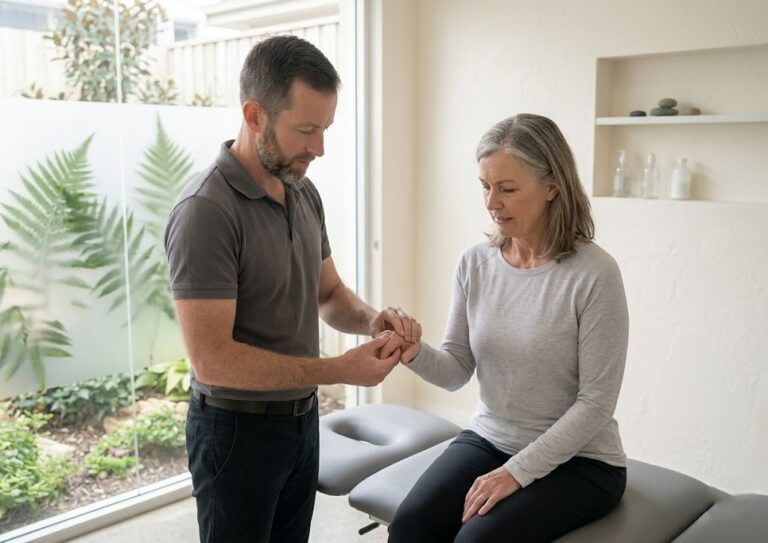
At an appointment, the practitioner would begin with questions about the hand symptoms, work demands, previous injuries, sleep, neck and shoulder tension and changes in grip. The assessment may then consider the fingers and thumb alongside the wrist, forearm, shoulder blade, upper back and posture. These areas don't remove arthritis from a joint, but they can influence how comfortably a person positions and loads the hand.
What a combined visit may include
Gentle techniques can include soft-tissue work, wrist and carpal mobilisation, and careful treatment around the upper back or ribs. The purpose is to support comfortable movement and reduce surrounding tension, while avoiding forceful treatment of an acutely inflamed or unstable joint.
The visit should also produce a practical hand plan. That might include tendon-gliding drills, gradual strengthening, a work modification, a splint discussion or a recommendation to see a registered hand therapist. With the patient's consent, the osteopath can provide the GP with relevant findings and suggest review if the symptoms don't follow the expected pattern.
This clinical treatment image reflects the broader principle of supervised, equipment-supported rehabilitation.

Manual care is a complement to diagnosis, exercise and medical management. It isn't a replacement for disease-modifying treatment when inflammatory arthritis is present.
The whole-person approach is useful when hand pain changes the way someone uses the rest of the upper limb. It should remain specific and measurable. Ask what movement is being targeted, how the response will be reviewed and what signs would prompt referral to a GP, rheumatologist or hand surgeon.
Comparing Medical Pain Relief and Injection Options
Medication choices depend on the arthritis type, the joints involved, other health conditions and the medicines you already take. A GP or rheumatologist can help decide whether the priority is local pain relief, reducing inflammation, treating an autoimmune disease or supporting a short-term flare.
Paracetamol may be discussed for pain, while a topical NSAID such as diclofenac can provide local treatment with less whole-body exposure than an oral anti-inflammatory. Even topical products need careful use, especially if you have allergies, damaged skin or other medicines that affect the advice you receive.
Oral NSAIDs can help some people during painful inflammatory episodes, but they aren't suitable for everyone. A clinician may need to consider stomach irritation, kidney function, blood pressure, cardiovascular risk and interactions with existing medicines. Oral corticosteroids are generally reserved for carefully supervised short courses because repeated or prolonged use can cause significant adverse effects.
Matching the option to the problem
Disease-modifying medicines have a different role from painkillers. They target inflammatory arthritis such as rheumatoid arthritis and require medical diagnosis, monitoring and specialist oversight. They aren't a routine treatment for mechanical hand osteoarthritis.
Injections can be considered when one joint, such as the thumb base or a finger joint, remains particularly troublesome. A corticosteroid injection may settle pain and inflammation for a period, but the response varies and it doesn't rebuild damaged cartilage. Hyaluronic acid and newer injection approaches have more limited evidence for the small joints of the hand, so a confident sales pitch shouldn't replace a balanced discussion.
| Option | Typical Role | Key Caution |
|---|---|---|
| Paracetamol | Basic pain relief for selected patients | Check the total daily amount and combination products with a clinician or pharmacist |
| Topical NSAID | Local relief for a painful area | Check skin reactions, allergies and medicine interactions |
| Oral NSAID | Short-term relief during suitable flares | Requires review of stomach, kidney, blood pressure and cardiovascular risks |
| Oral corticosteroid | Carefully supervised short-term anti-inflammatory treatment | Side effects make unsupervised or prolonged use inappropriate |
| Disease-modifying medicine | Treatment of inflammatory arthritis | Requires diagnosis and specialist monitoring |
| Corticosteroid injection | Local treatment for a persistent troublesome joint | Benefit may be temporary and suitability varies |
| Hyaluronic acid or newer injections | Options sometimes discussed when standard care hasn't solved the problem | Evidence is more limited in small hand joints |
An Australian expert summary on emerging inflammatory treatment for hand osteoarthritis reported symptom improvement with methotrexate and with 10 mg daily prednisolone in the context discussed. That finding doesn't mean every person with hand osteoarthritis should take either medicine. It reinforces the need to identify whether swelling and inflammation are central features and to seek qualified medical advice.
Recognising When Surgery or Specialist Care Is Needed
Individuals begin with conservative care, including exercises, splints, activity changes, medication advice and suitable manual or hand therapy. A planned trial is often reviewed over 6 to 12 weeks, as represented in the decision guide below, but the right timing depends on diagnosis, severity and how quickly function is changing.
Routine monitoring is reasonable when symptoms are stable and you can still complete important tasks. Keep a record of grip problems, pain during specific activities, swelling and movement. That record gives your clinician something more useful than a general statement that the hand is “worse”.
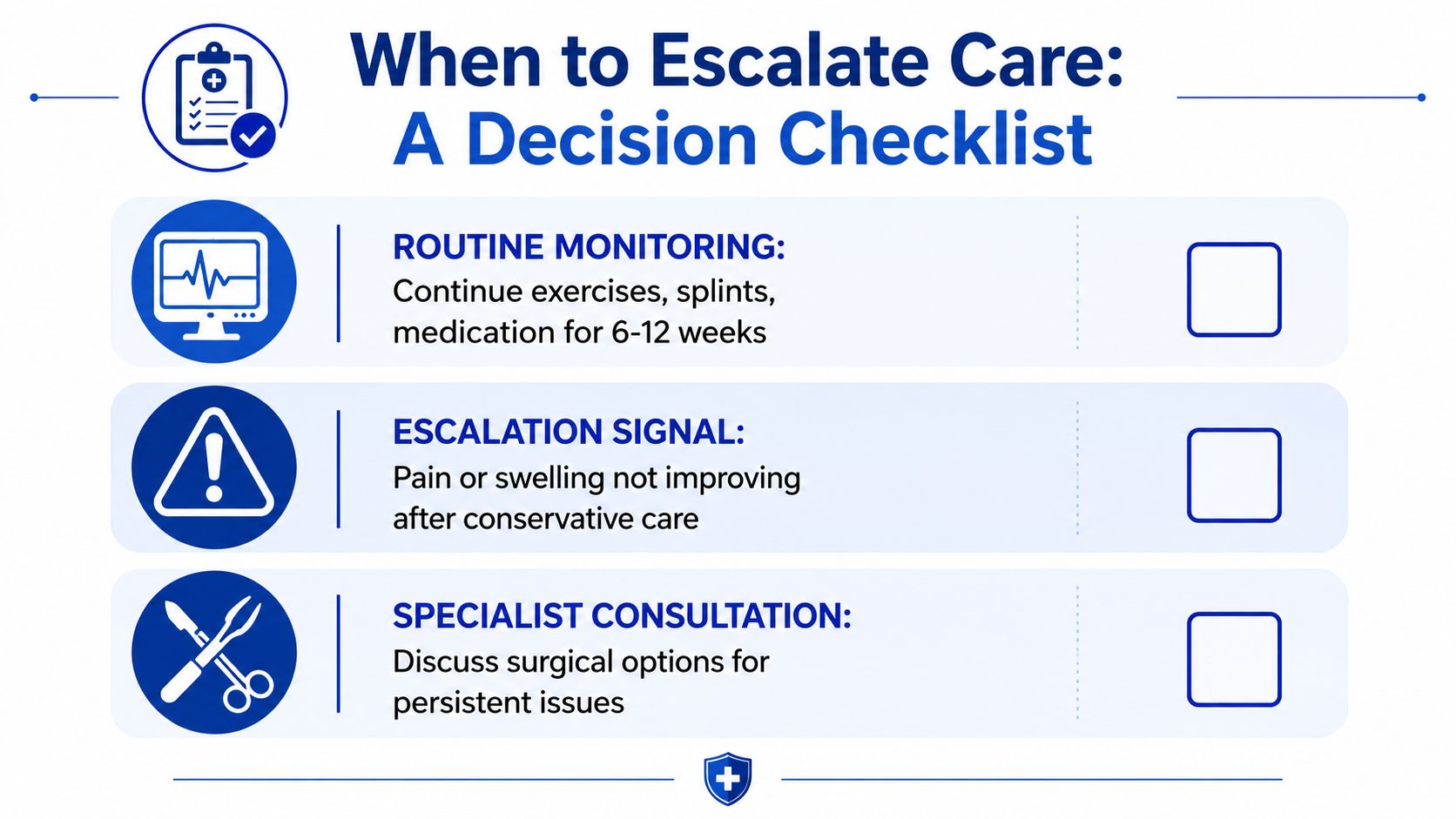
Signs that should change the plan
Arrange prompt medical review for a hot, swollen joint, rapidly worsening deformity, sudden locking or new numbness. Loss of grip, spreading redness, fever or severe pain after an injury also deserves urgent assessment because infection, nerve compression or another condition can resemble an arthritis flare.
A rheumatologist may be appropriate when several joints swell, symptoms are strongly symmetrical, morning stiffness is prolonged or other inflammatory features are present. A hand surgeon may review persistent pain, joint collapse, advanced deformity or severe loss of function after non-operative options have been properly tried.
NSW guidance places painful or stiff wrist or hand symptoms lasting 3 months or more, and moderate thumb-base osteoarthritis, in pathways that may wait up to 365 calendar days, while severe pain, rapid functional decline and severe thumb-base osteoarthritis may require review within 30 to 90 days. These are referral categories, not a personal prediction. Your GP should account for your examination findings and functional change.
Early specialist assessment can clarify whether surgery is appropriate, but referral doesn't automatically mean an operation. It may produce a better splint, a medication change, an injection discussion or a more focused rehabilitation plan.
Booking Care and Checking Medicare in Bayside
Start by writing down what your hand prevents you from doing. “Painful” is important, but “I can't open a jar”, “I avoid gardening” or “I lose grip on tools” gives the clinician a practical measure of progress.
Bring a symptom timeline, current medication list, relevant imaging reports, previous injury details and any splints you've tried. Include photographs of visible swelling or deformity if the appearance changes between appointments. A short list of goals helps the practitioner prioritise the movements that matter most to you.
Choosing the right combination of care
An osteopath can assess movement across the hand and upper limb and provide gentle manual care, movement advice and a home plan. A hand therapist can focus closely on splint design, tendon and joint exercises, dexterity and task modification. A GP can investigate the diagnosis, review medicines and organise referrals, while a rheumatologist manages suspected inflammatory disease and a hand surgeon considers procedural options.
These roles can work together. Ask whether the practitioner is comfortable coordinating with your GP or hand therapist, whether the appointment will include a hand and upper-limb assessment, and how progress and escalation will be reviewed.
Medicare coverage depends on your circumstances and the service involved. A chronic disease management plan may apply when a GP confirms that you meet the relevant eligibility requirements, and team care arrangements can involve allied health sessions. Private health extras may contribute to manual therapy depending on your policy, limits and provider requirements. Check eligibility and rebates directly with your GP, clinic and insurer before booking, because no general article can promise coverage.
Bayside Osteopathic Health can discuss gentle osteopathic assessment and conservative support for arthritis-related hand and upper-limb discomfort, while coordinating with medical and hand therapy care when appropriate. Visit Bayside Osteopathic Health to arrange an appointment, ask about the practitioner's experience with hand symptoms and request a written plan covering home exercises, review points and clear escalation criteria.