

You wake before the alarm, roll towards the edge of the bed and wait for your knees or hips to feel ready. The first few steps are guarded rather than automatic. Later, you might avoid the long walk, take the lift instead of the stairs, warm the shower before getting in, or ask someone else to open the coffee jar.
Those small adjustments can become so familiar that they hardly seem worth mentioning. Yet pain and stiffness can steadily narrow the activities that make your day feel like your own. In Australia, osteoarthritis accounted for $4.3 billion in health system spending in 2020–21, representing 2.9% of total health expenditure, and osteoarthritis was recorded in 285,000 hospitalisations in 2021–22. The Australian Institute of Health and Welfare overview of osteoarthritis shows why this is a widespread practical problem, not a niche concern.
So, can an osteopath help with arthritis pain? Sometimes, yes, particularly when the main difficulties are stiffness, protective muscle tension and reduced movement. But osteopathy doesn't repair worn cartilage, replace medication for inflammatory disease or remove the need for exercise and self-management. The useful question is not whether hands-on treatment is a cure. It's whether a carefully selected, short course can help you move more comfortably and make better use of active care.
Table of Contents
- When Mornings Get Harder Than They Used To Be
- What an Osteopath Actually Does
- Which Types of Arthritis Respond to Osteopathic Care
- The Hands-On Techniques Used for Stiff and Painful Joints
- What the Australian Evidence Really Says
- Safety, Red Flags, and When to See a Doctor First
- Realistic Timelines and What You Can Do at Home
- Booking Your First Visit at Bayside Osteopathic Health
When Mornings Get Harder Than They Used To Be
I often hear the same story in the consulting room. Someone stands beside the bed, places both feet on the floor and waits for the knees to accept their weight. The hips feel compressed, the back takes a few cautious movements to settle, and the first trip to the kitchen becomes a test rather than a routine.
By the time breakfast is ready, the joints may have loosened. That temporary improvement can be misleading because it doesn't mean the underlying arthritis has disappeared. It means movement, warmth and time have reduced some of the stiffness and muscle guarding around the joint.
The cost of ordinary movement
People living with arthritis often make quiet decisions throughout the day:
- Walking: Choosing a shorter route because the knees may become painful before reaching the destination.
- Stairs: Taking the lift, not because the stairs are impossible, but because they create too much effort.
- Hands: Avoiding tight lids, gardening tools or prolonged gripping when finger or thumb joints are sore.
- Driving: Hesitating before getting into the car because the hip needs time to bend and rotate.
- Rest: Sitting down earlier than planned, then finding that the first steps afterwards are difficult again.
An osteopath may be able to shorten that warm-up period by easing secondary muscle tension, improving movement in nearby regions and helping you feel safer within a comfortable range. The benefit is often modest and practical. It might mean standing more easily, walking to the shops with less apprehension or completing an exercise session without spending the rest of the day recovering.
A realistic promise: Osteopathy may buy back comfortable movement. It can't reverse the joint changes that caused arthritis.
The rest of this guide separates osteoarthritis from inflammatory arthritis, explains what treatment may involve and looks closely at the Australian evidence. It also covers safety, likely timelines, home strategies and what to expect when arranging an appointment.
What an Osteopath Actually Does
In Australia, osteopathy is a university-trained manual therapy profession. Osteopaths are registered with the Australian Health Practitioner Regulation Agency and focus on the musculoskeletal system, including how muscles, joints, connective tissues and movement patterns interact.
The basic clinical idea is straightforward. Structure and function influence each other. A stiff hip can change how you walk, which may increase work for the pelvis and lower back. A sore knee can make you avoid bending, which can leave the ankle, hip and surrounding muscles doing less varied movement. The osteopath isn't claiming that every painful joint is “out of place”. They're assessing how the person moves as a whole.
What happens in an appointment
A typical consultation includes four connected parts:
- A detailed history. The osteopath asks when symptoms began, what makes them better or worse, how you sleep, what activities matter to you and whether you have received a diagnosis.
- Movement assessment. You may be asked to walk, sit, stand, bend or move the affected joint. The practitioner may also assess areas above and below it.
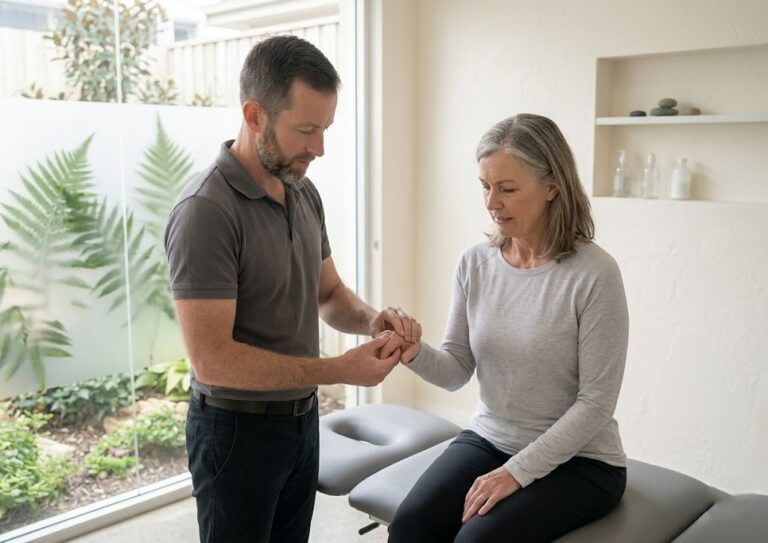
- Hands-on care. Treatment can include soft-tissue work, gentle articulation, joint mobilisation or stretching, selected according to your symptoms and tolerance.
- A manageable home plan. This may involve movement practice, strength work, pacing advice or changes that help you use the easier period after treatment.
The appointment isn't a massage for the painful area. An osteopath may treat the hip when the knee is the main complaint, or work through the ribs and upper back when hip movement is limited. That doesn't mean the painful joint is being ignored. It means the practitioner is considering the movement system that supports it.
Osteopathy and physiotherapy
Osteopaths and physiotherapists overlap in important ways. Both may assess movement, use hands-on treatment and prescribe exercises. The difference is often one of emphasis and professional style rather than a strict boundary.
An osteopath commonly takes a whole-body case history and may devote more of the consultation to manual assessment and treatment. A physiotherapist may place greater emphasis on rehabilitation protocols, progressive loading or recovery after surgery and injury. The right choice depends on your diagnosis, goals, access and the clinician's experience.
You can see the hands-on style used in practice in this illustration of osteopathy for neck pain and the spine, although arthritis care should always be adapted to the specific joint and disease activity.
Which Types of Arthritis Respond to Osteopathic Care
The answer changes considerably depending on the type of arthritis. Osteoarthritis is primarily a degenerative joint condition, while rheumatoid arthritis, psoriatic arthritis and ankylosing spondylitis involve inflammatory processes that need medical oversight.
Australian community data illustrates the scale of arthritis. In 2011–12, 14.8% of Australians, about 3.3 million people, had arthritis, and prevalence reached 52.1% among people aged 75 and over, according to the Australian Bureau of Statistics arthritis data. More recent AIHW reporting estimated that around 2.1 million Australians were living with osteoarthritis in 2022, with higher prevalence in females than males, as described in the AIHW musculoskeletal conditions report.
Osteoarthritis
Osteoarthritis commonly affects the knees, hips, hands, spine and big toes. Osteopathic treatment may help reduce muscle guarding, improve mobility in restricted areas and make stiffness after sitting or sleeping less intrusive.
The limits matter. Osteopathy can't regenerate cartilage, remove osteophytes or change the biological course of osteoarthritis. Its role is supportive. If treatment makes walking or bending easier, that window can help you complete strengthening, aerobic activity and other self-management work.
Inflammatory arthritis
Rheumatoid arthritis, psoriatic arthritis and ankylosing spondylitis require a treatment plan coordinated with a GP or rheumatologist. Medication can be central to controlling inflammation and preventing damage, so hands-on treatment shouldn't be used as a substitute.
When disease activity is stable, osteopathic care may focus on maintaining mobility in the thoracic spine and ribs, reducing muscle spasm around affected joints and helping you participate in an agreed exercise programme. During a flare, an acutely hot, swollen or highly tender joint usually needs medical review and protection rather than deep pressure or forceful mobilisation.
Other forms
Gout, post-traumatic arthritis and less common arthritic conditions also require condition-specific advice. Manual therapy may ease surrounding tension or help restore movement after the acute phase, but it doesn't replace medication, imaging or specialist care where those are needed.
| Arthritis type | Best osteopathic role | Realistic outcome |
|---|---|---|
| Osteoarthritis | Short-course hands-on care alongside exercise and self-management | Less stiffness, easier movement and temporary symptom relief |
| Rheumatoid or psoriatic arthritis | Supportive care when disease activity is stable, coordinated with medical treatment | Reduced secondary muscle tension and support for comfortable movement |
| Ankylosing spondylitis | Mobility support within a rheumatology and exercise plan | Help maintaining thoracic and rib movement |
| Gout | Care only after acute inflammation has been medically managed | Support for residual stiffness, not treatment of the attack |
| Post-traumatic arthritis | Mobility and surrounding soft-tissue care where appropriate | Improved function around an established joint problem |
The important distinction is the phase of disease. Stable mechanical stiffness is a different clinical problem from active inflammatory swelling.
The Hands-On Techniques Used for Stiff and Painful Joints
Treatment should feel purposeful, not punishing. With arthritic joints, a senior practitioner usually starts with techniques that respect the joint's irritability and works within a range you can tolerate.
Common approaches
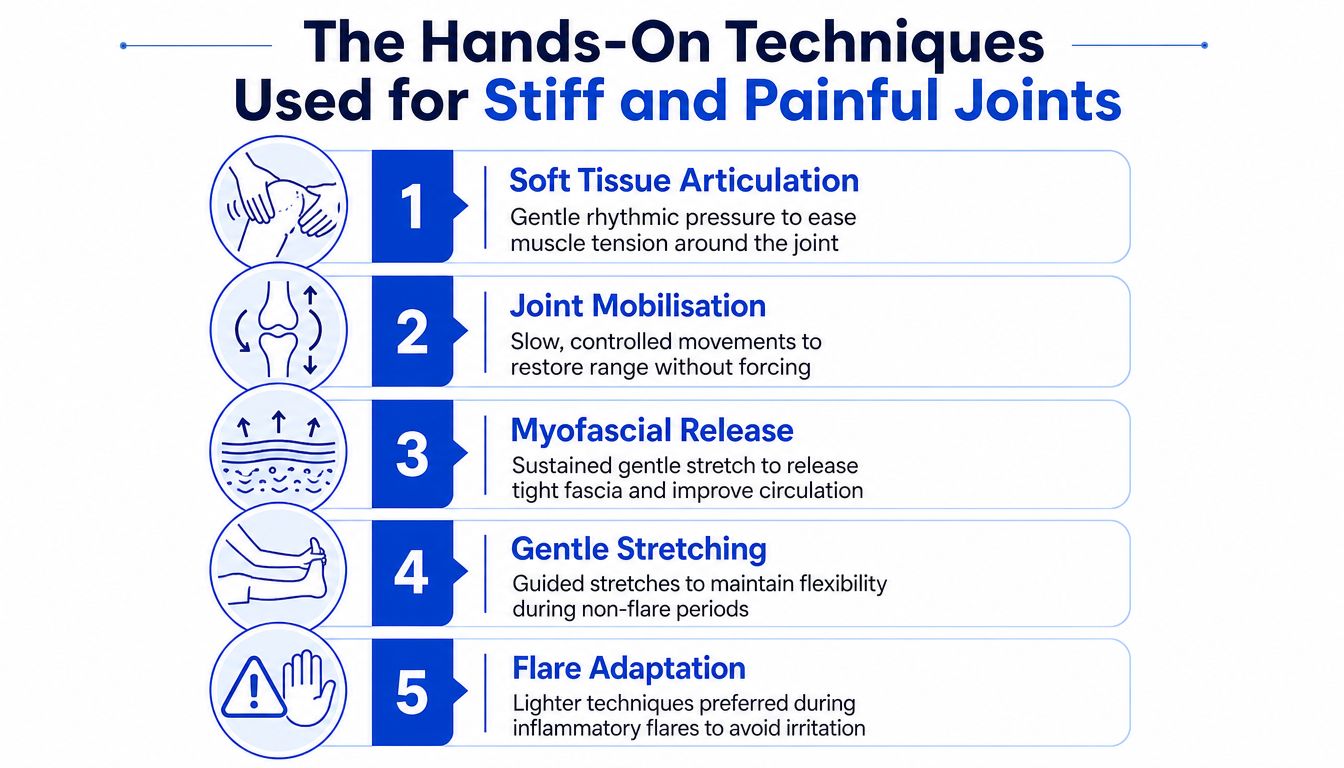
Soft-tissue articulation uses rhythmic pressure and movement through the muscles surrounding a joint. Around an arthritic knee, this may reduce protective tension in the quadriceps, hamstrings or calf, allowing the knee to move with less resistance.
Myofascial release involves sustained, gentle contact through muscle and fascia. The aim isn't to force a permanent structural change. It may reduce the feeling of tightness and make subsequent movement more comfortable.
Joint mobilisation uses slow, controlled movements to explore and support available range. An osteopath may mobilise an area above or below the painful joint rather than forcing an irritable arthritic surface.
Balanced ligamentous tension places the body in a position where the tissues can soften rather than resisting a push. This can be useful when direct pressure feels unpleasant.
What about manipulation?
High-velocity thrust techniques aren't automatically part of arthritis care. They would rarely be directed at an acutely inflamed or severely degenerative joint. In selected cases, a stiff compensatory region, such as part of the thoracic spine, may be appropriate for a more direct technique after the flare has settled, but consent and clinical reasoning come first.
Some practitioners also use visceral or cranial approaches to address broader tension patterns and the way stress affects pain sensitivity. These approaches should be explained clearly, and patients should feel free to ask what is being treated and what benefit is expected.
The pressure, positioning and session length should be adjusted continuously. If a technique causes sharp pain, escalating discomfort or a sense of threat, it isn't the right technique for that moment.
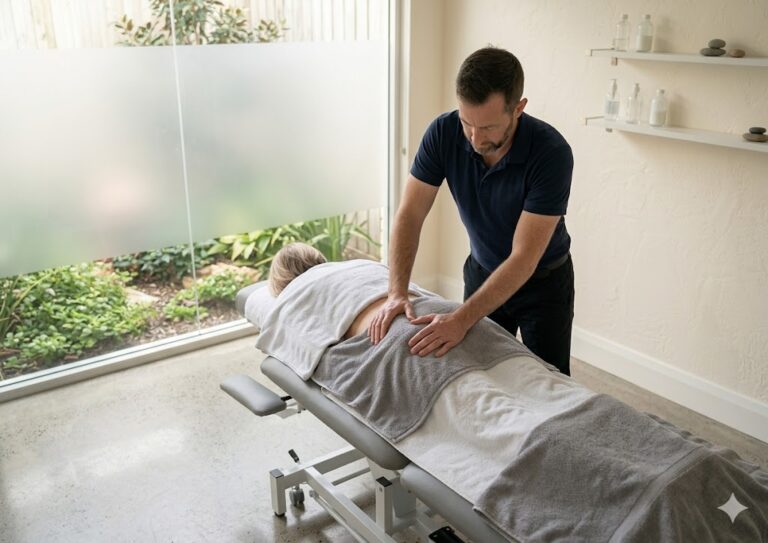
For a visual example of hands-on soft-tissue care, see this remedial massage and muscle therapy image.
A comfortable response afterwards is more useful than an impressive-sounding technique. The goal is better function, not a dramatic treatment experience.
What the Australian Evidence Really Says
The most useful Australian guidance is neither enthusiastically promotional nor dismissive. For adults with symptomatic knee or hip osteoarthritis, the RACGP recommendations for non-pharmacological care place manual therapy in a limited role. Stretching, soft-tissue work and joint mobilisation or manipulation may be considered as a short course and adjunct to active management, but the evidence is rated very low.
That position matches sound clinical practice. Manual therapy can create a temporary reduction in pain or stiffness, but exercise, education, weight management where relevant and daily movement do the heavier long-term work. If the hands-on session helps you take part in those activities, it has a sensible place. If it becomes the entire plan, its value is much more limited.
What the trial evidence suggests
An Australian knee osteoarthritis trial reported a short-term difference after a manual therapy protocol. After two weeks, mean present pain severity was 1.9 in the intervention group compared with 3.1 in controls, while self-reported knee mobility was 6.4 compared with 3.4 and function was 6.5 compared with 3.8. The Macquarie University record of the knee manual therapy trial also reports that no adverse reactions were recorded.
Those results are encouraging for short-horizon symptom relief, but they don't show cartilage repair or durable disease modification. The research base also has familiar limitations. Hands-on studies are difficult to blind, many are small, treatment protocols vary and long-term outcomes remain uncertain.
| Arthritis type | Evidence strength | Typical outcome |
|---|---|---|
| Knee or hip osteoarthritis | Very low certainty in the RACGP guideline | Short-term symptom relief when manual therapy supports active care |
| Other osteoarthritis presentations | Less specific evidence | Possible improvement in stiffness or comfortable range, depending on the person |
| Rheumatoid arthritis | Much thinner evidence | Support for secondary musculoskeletal tension and movement, not disease control |
| Psoriatic arthritis and ankylosing spondylitis | Condition-specific evidence for osteopathic care is limited | Carefully adapted mobility support alongside specialist management |
The honest conclusion is balanced. Osteopathy isn't a cure, and it isn't useless just because it doesn't alter joint structure. It's one conservative tool that may help the right person move with less discomfort while the active parts of management continue.
Safety, Red Flags, and When to See a Doctor First
Gentle mobilisation, soft-tissue work and carefully selected stretching are generally low-risk when provided by a registered practitioner who understands the diagnosis. That doesn't make every hands-on technique suitable for every patient. Safety depends on the type of arthritis, current disease activity, medications, recent surgery and the symptoms that haven't yet been explained.
Arrange medical review before osteopathy if you have:
- A hot or severely swollen joint: This may indicate active inflammation or infection, especially with fever.
- A sudden severe change: Pain after trauma may require imaging or urgent assessment.
- Systemic symptoms: Unexplained weight loss, persistent night pain or fever shouldn't be treated as ordinary mechanical stiffness.
- Neurological changes: New numbness, weakness or loss of coordination needs appropriate medical assessment.
- A known inflammatory flare: Rheumatoid or psoriatic flares should be managed with your GP or rheumatology team.
Situations requiring extra caution
Acute septic arthritis, an unstable fracture and recent joint replacement are not routine osteopathic presentations. Recent surgery also requires clearance from the treating team before hands-on care. If inflammatory arthritis is active during a medication adjustment, postponing treatment may be wiser than trying to work through it.
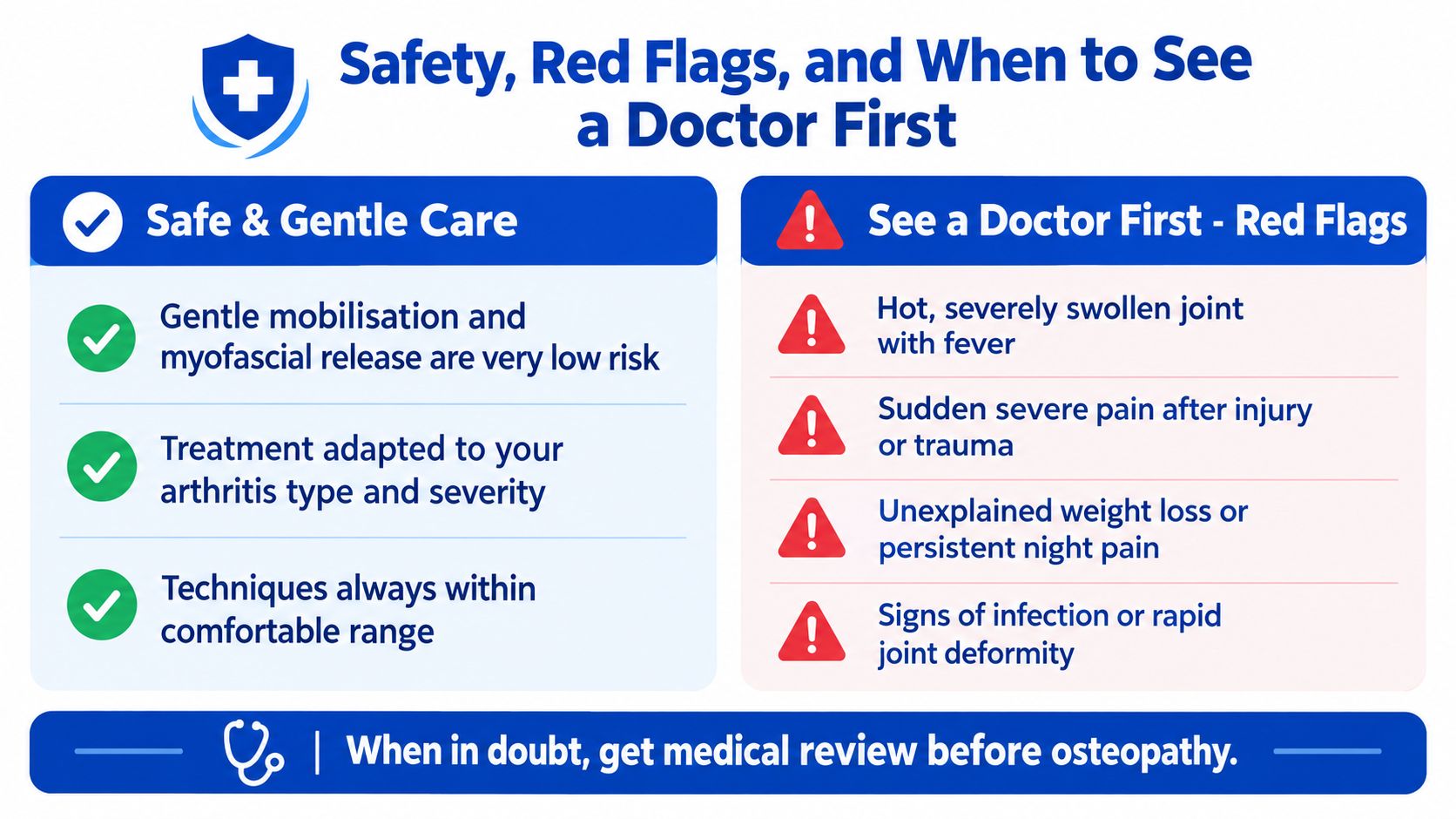
Practical rule: Stable osteoarthritis with predictable mechanical stiffness is reasonable to discuss with an osteopath. New, worsening or systemic symptoms deserve a doctor first.
Tell the osteopath about every medicine, including disease-modifying antirheumatic drugs, biologics, corticosteroids, anticoagulants and supplements. That information changes how the practitioner interprets symptoms and chooses pressure, positioning and treatment intensity.
Realistic Timelines and What You Can Do at Home
A useful course of care should have a review point rather than continue indefinitely. In practice, the first four to six weeks may be used to assess whether treatment creates a meaningful change in pain, stiffness or daily function, then adjust the plan according to your response.
The first visit is usually about understanding the pattern and finding a tolerable way to reduce guarding. During the next couple of weeks, the focus may shift towards maintaining any improved range through movement and strength work. By the later review, the question is whether you can do more between appointments, not whether you still have any arthritis symptoms.
Use the easier window
Manual therapy can create a window in which movement feels less threatening. Use it for activities that build capacity gradually:
- Morning mobility: Move the affected joints gently before getting out of bed, without forcing an end range.
- Isometric strength: Hold a comfortable contraction for the quadriceps, knee or thumb muscles when movement is irritable.
- Heat for stiffness: Warmth may feel useful before movement when the main problem is morning tightness.
- Cold for swelling: Cooling may be more comfortable after activity when swelling is the dominant symptom.
- Pacing: Break tasks into smaller portions and increase activity gradually rather than alternating between overdoing it and resting completely.
The “two-hour pain rule” can be a useful guide, but it shouldn't be treated as a universal prescription. If an activity causes a clear increase in pain that lasts well beyond the activity or disrupts sleep, reduce the load and discuss it with your clinician.
Flare-ups can happen even when treatment is appropriate. They may reflect activity, sleep, stress or the unpredictable nature of arthritis, and they don't automatically mean the hands-on care has failed. A good plan changes intensity when symptoms change.
You can also review this arthritis joint mobility resource as a reminder that daily movement is part of the treatment, not an optional extra.
If there is no useful change in comfort, movement or function after a reasonable trial, the plan should be reconsidered. That may mean changing the exercise approach, seeking medical review, using another allied health service or deciding that further osteopathic visits aren't worthwhile.
Booking Your First Visit at Bayside Osteopathic Health
Before booking, write down what you want to do more comfortably. “Less arthritis pain” is important, but “walk around the local shops”, “get out of the car more easily” or “open jars without avoiding them” gives the practitioner a clearer functional target.
You can enquire online or by phone. Wear clothing that allows the knees, hips, shoulders or spine to be assessed without restricting movement. Bring imaging reports if you have them, a list of current medicines and supplements, and any letters or information from your GP or rheumatologist.
What the first appointment involves
Expect a structured consultation rather than a quick treatment-only visit:
- History: Your diagnosis, symptom behaviour, medical background and goals are discussed.
- Movement screening: The osteopath observes relevant movements and may examine connected regions.
- Hands-on treatment: Techniques are selected according to irritability, comfort and clinical findings.
- Management plan: You receive practical movement or exercise advice, with an explanation of what to monitor.
Ask what improvement would justify continuing and when progress will be reviewed. A one-week review can help determine whether the initial treatment changed your symptoms and whether the home plan is realistic.
Fees vary, so confirm the current consultation cost when booking. Private health rebates may be available through HICAPS if your policy includes osteopathy. Some patients may also use the Medicare Chronic Disease Management pathway, but this requires GP involvement and an appropriate plan or referral. Under that pathway, the rebate covers part of up to five allied health sessions per calendar year, according to the Australian Government Medicare information.
The clinic can also explain parking, public transport access and any mobility considerations before you arrive. For someone with painful hips or knees, those details aren't minor. Knowing where to enter and how far you'll need to walk can make the first visit less stressful.
Bayside Osteopathic Health offers gentle, individualised osteopathic assessment for arthritis-related stiffness, pain and mobility limitations, combining hands-on care with movement guidance and practical self-management. If you want to discuss whether a short course of osteopathy fits your diagnosis and goals, visit Bayside Osteopathic Health to enquire or book an appointment.