

You wake with a stiff, aching neck and tell yourself it'll loosen up after a shower. By mid-morning, turning towards a second monitor feels uncomfortable. Later, checking a blind spot while driving becomes a careful shoulder movement rather than a simple head turn. The pain may settle for a few days, then return when work pressure rises, sleep is disrupted, or screen time increases.
Seeing a neck pain osteopath can help you understand why that pattern keeps repeating. Good care isn't just about moving the sore area for a few minutes. It involves checking how your neck, upper back, shoulders, jaw, work habits, sleep position, and daily movements contribute to the problem, then combining hands-on treatment with changes you can maintain outside the clinic.
Table of Contents
- When a Stiff Neck Becomes a Daily Problem
- How an Osteopath Approaches Neck Pain
- Hands-On Techniques You Might Experience
- Why Neck Pain Starts in the First Place
- What Happens at Your First Appointment
- Safe Self-Care and Exercises Between Sessions
- What the Evidence Actually Shows
- Booking, Medicare, and Your Next Step
When a Stiff Neck Becomes a Daily Problem
A desk-based worker might first notice a small twinge after a long afternoon at the computer. The discomfort stays local, perhaps along the right side of the neck or across the top of the shoulder. At first, it's easy to ignore because normal activities remain possible.
Then the pattern changes. The neck feels tight when getting out of bed, rotation becomes limited while reversing the car, and meetings become harder to tolerate because the head stays in one position. By the evening, the upper trapezius muscles feel heavy and tense. A low-level ache can gradually become a daily interruption rather than an occasional nuisance.
Why symptoms often return
Many people experience temporary relief after resting, using heat, or taking pain medication. That relief can be useful, but it doesn't necessarily change the desk setup, sleep position, movement habits, or stress response that keeps loading the area. When the same demands return, the neck can become irritable again.
Workplace exposure matters. Australian workplace data identifies the neck as the most commonly affected body region in work-related musculoskeletal disorders, accounting for 58.6% of affected regions in the cited reporting from Comcare's workplace research summary. The same source reports that 64% of Australians experienced neck pain, with 68% of women and 60% of men affected, while 72% reported pain when bending the neck down to look at a device was their most common posture. These figures don't mean every neck problem needs osteopathic treatment, but they do show why posture and work demands deserve attention.
Practical rule: If your neck improves away from work but flares when the same workday resumes, treatment should include the workday, not just the neck.
A consultation can clarify whether the presentation looks mechanical, whether another health professional should assess it, and what you can change immediately. You'll also learn what an osteopath does in a session, which techniques may be appropriate, and how to reduce the chance of another flare-up.
How an Osteopath Approaches Neck Pain
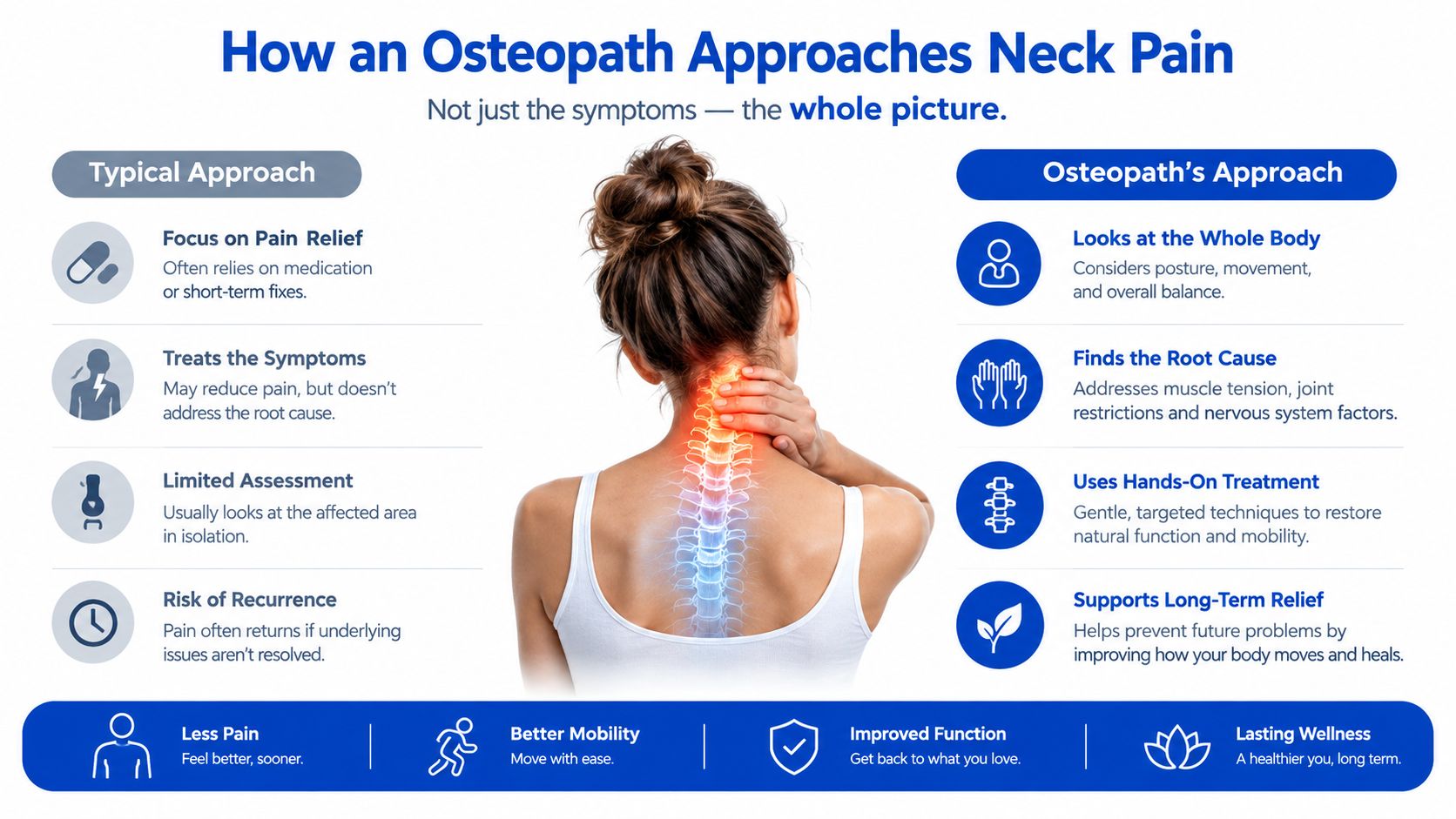
The first task is to understand the behaviour of the pain, not to locate the most tender spot. Your osteopath will ask when symptoms began, where they travel, what makes them better or worse, and whether you've experienced headaches, arm symptoms, injury, or previous episodes.
Your work setup forms part of that history. The clinician may ask about laptop use, monitor position, driving, phone habits, workload, sleep, exercise, and stress. These details help distinguish a neck that is irritated by sustained positioning from one affected by a recent injury or a broader medical concern.
Looking beyond the neck
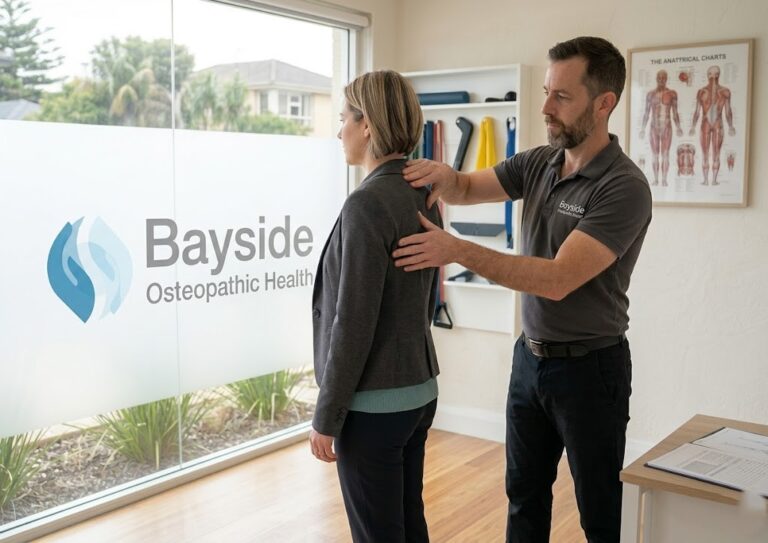
The physical assessment usually combines observation, movement testing, and hands-on examination. You may be asked to turn, bend, and extend your neck, then move your shoulders and upper back. The osteopath may assess the jaw, ribs, shoulder blades, and upper thoracic spine because these areas influence how the neck carries movement and load.
Palpation helps identify muscle tone, joint sensitivity, and areas that don't move comfortably. Where appropriate, the practitioner may also perform neurological or vascular screening. These checks help determine whether conservative osteopathic care is suitable or whether referral is more appropriate.
How it differs from other hands-on care
Osteopathy and physiotherapy can overlap, particularly when both include education, exercise, and manual treatment. Physiotherapy often places a strong emphasis on rehabilitation exercises, strength, coordination, and restoring functional capacity. Osteopathy commonly combines those elements with hands-on assessment and treatment of joints, muscles, connective tissues, and related body regions.
Remedial massage generally concentrates more heavily on soft tissues. That can be helpful when muscle tension is a major part of the presentation, but it may not address movement coordination, joint restriction, neurological screening, or exercise planning on its own. The right choice depends on the findings and your goals, rather than on a fixed hierarchy between professions.
For a visual comparison of treatment styles, see this osteopathy and massage therapy comparison.
The session may also include a short explanation of what the osteopath thinks is contributing to your symptoms. Clear reasoning matters because treatment works better when you understand what to do between appointments.
A short demonstration of the clinical approach is available below.
Hands-On Techniques You Might Experience
Treatment should feel purposeful rather than mysterious. At Bayside Osteopathic Health, an appointment may include several techniques, selected according to your examination findings, comfort, medical history, and preferences.
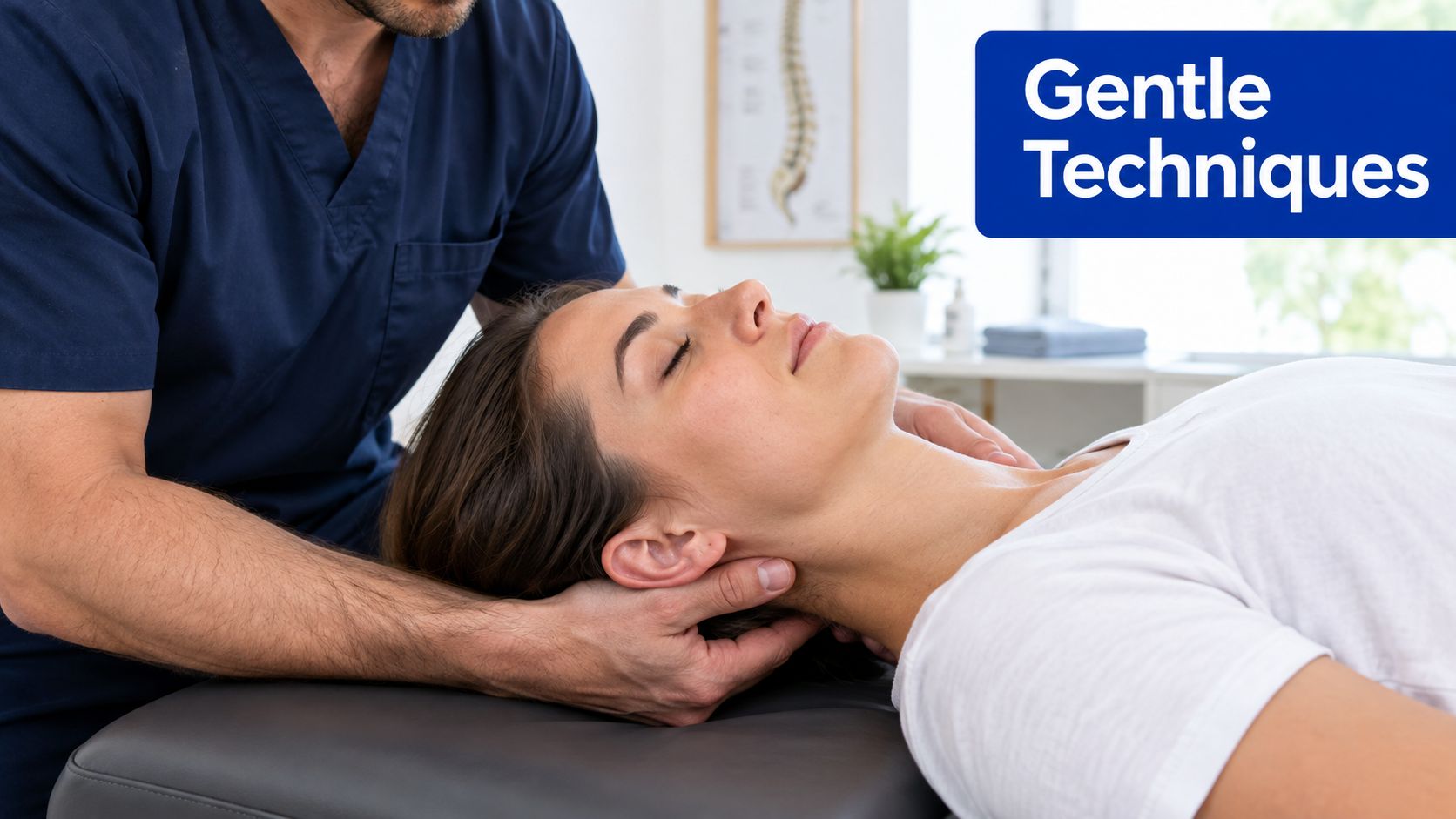
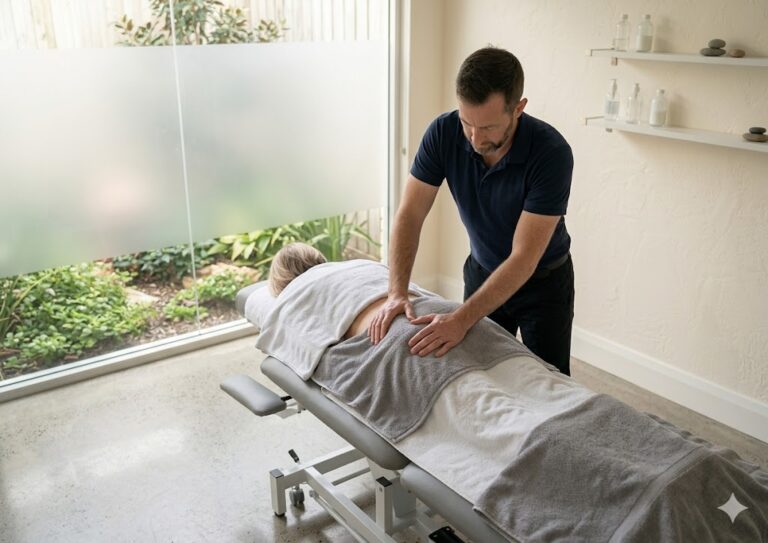
Soft-tissue treatment often comes first. The osteopath may work on the upper trapezius, levator scapulae, suboccipital muscles, chest, or upper back. The aim is to reduce protective tension and make movement more comfortable before asking a joint or muscle to do more.
Restoring comfortable movement
Articulation uses controlled, rhythmic movement through a joint's available range. Mobilisation is similar in that it uses repeated low-velocity movements, often with the patient relaxed. These approaches can help restore a sense of movement in the cervical and upper thoracic spine without requiring a forceful thrust.
Some people notice a soft popping or clicking sound during mobilisation or articulation. That sound isn't the goal of treatment, and it doesn't prove that a joint has been “put back in place”. The meaningful outcome is whether movement, comfort, and function improve.
Muscle energy technique involves your active participation. You'll move against a carefully directed resistance, usually through a gentle contraction, then relax while the osteopath reassesses the range. This can be useful when a particular muscle or joint movement needs more specific input than passive treatment alone.
High-velocity, low-amplitude thrust techniques are considered only after assessment. They require informed consent and aren't suitable for every person or presentation, particularly when the history suggests instability, significant injury, neurological involvement, vascular concern, or another condition requiring medical review. A responsible clinician won't use a thrust because you request a clicking sensation.
Why Neck Pain Starts in the First Place
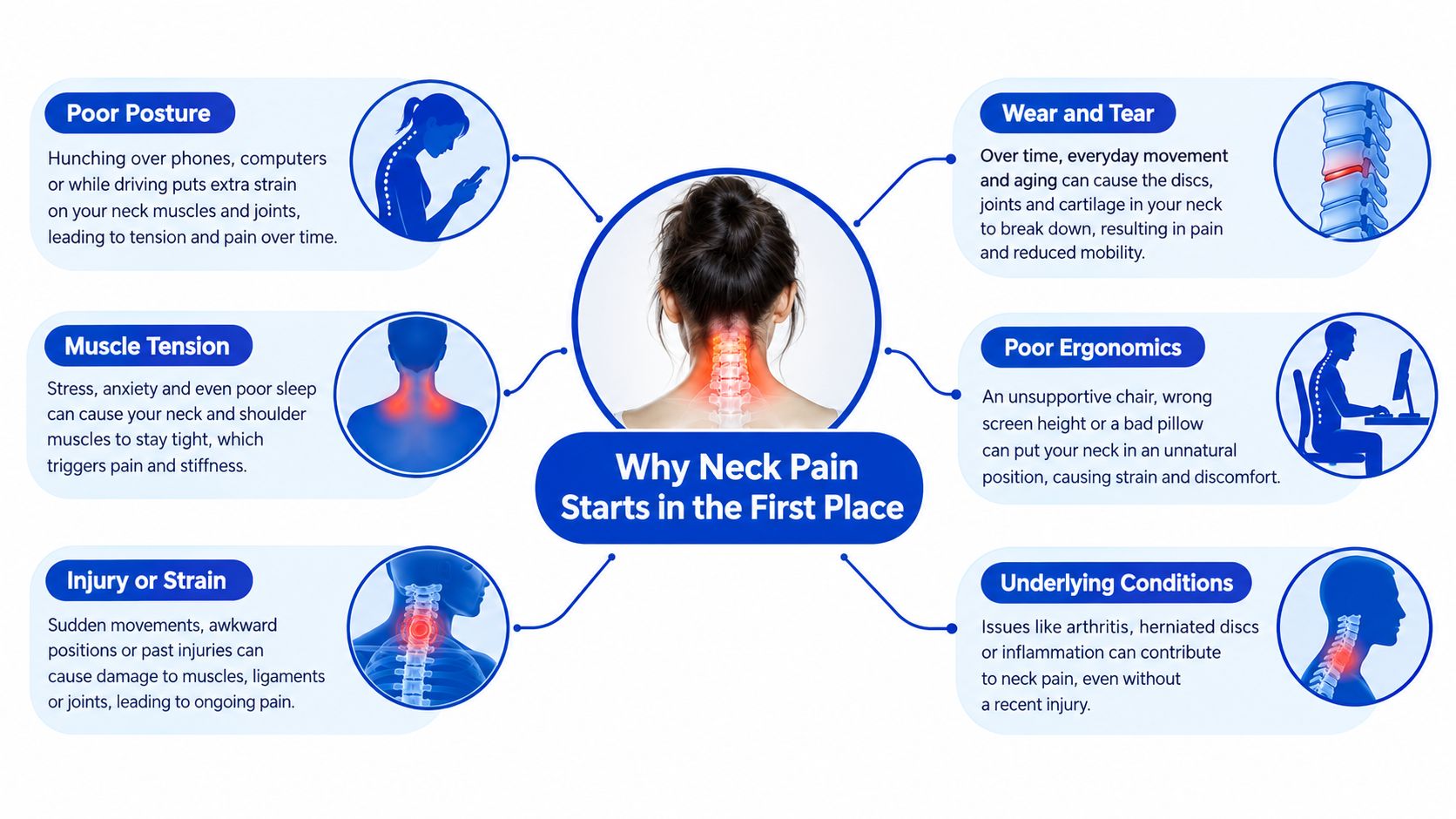
Neck pain rarely comes from one isolated fault. More often, several manageable stresses overlap until the tissues become sensitive and everyday movements start provoking symptoms.
Work and screen loading
A common pattern is a right-sided ache that builds across the workday. The head stays slightly forward, the eyes remain fixed on a screen, and the upper back moves very little. The small muscles beneath the skull and the lower cervical joints may then work continuously to keep the head supported.
Phone use adds a different version of the same problem. Bending the neck down to read or type can keep the muscles active for prolonged periods, especially when the device is held low. A laptop placed on a kitchen table or used from a sofa can combine forward-head posture with rounded shoulders and reduced upper-back movement.
Sleep, stress, and ageing
Sleep setup can explain symptoms that are worst first thing in the morning. A pillow that leaves the neck tilted or unsupported may keep one side shortened for hours. The relevant question isn't whether a pillow is expensive. It's whether your head and neck remain comfortably aligned in your usual sleeping position.
Stress can also increase unconscious guarding. Someone dealing with a demanding work period may repeatedly raise the shoulders, clench the jaw, or hold the breath during concentration. That doesn't mean the pain is imaginary. It means the nervous system and muscles are responding to sustained demand.
Age-related changes in the facet joints and discs can contribute to stiffness, particularly when rotation is limited or symptoms build gradually. Imaging findings don't automatically identify the source of pain, so they need to be interpreted alongside symptoms and examination findings.
A practical discussion of muscle-focused care is available in this remedial massage and muscle therapy resource. The main point is that treatment should match the pattern. If your symptoms involve work posture, sleep, jaw tension, upper-back stiffness, and stress, addressing only the most painful muscle is unlikely to be enough.
What Happens at Your First Appointment
Your first appointment should give you a clear explanation of what's happening and what the next step involves. It normally begins with a detailed conversation about the pain, including its location, quality, timing, aggravating activities, previous episodes, and any symptoms in the arms or hands.
The osteopath will also ask about your general health, past injuries, exercise, work demands, sleep, and previous treatment. Bring imaging reports or referral information if you have them, but don't assume that a scan is required before an assessment. The need for further investigation depends on the history and clinical findings.
Assessment before treatment
You may be observed standing and sitting, particularly if your symptoms relate to desk work or driving. The osteopath will look at how your head, shoulders, shoulder blades, and upper back are positioned, while remembering that there isn't one perfect posture that everyone must hold all day.
Active movement testing follows. You'll turn, side-bend, flex, and extend the neck within a safe range. The clinician may compare those movements with upper-back and shoulder movement to see whether another area is limiting comfortable neck function.
Hands-on palpation then helps assess the cervical joints and surrounding muscles. If your history suggests it, the osteopath may include neurological or vascular screening. These checks are important because pain after significant impact, arm weakness, altered sensation, dizziness, or other concerning symptoms can require medical assessment rather than routine manual care.
Treatment and your home plan
Once the osteopath has a working clinical impression and has confirmed that treatment is appropriate, care commonly begins during the same visit. The techniques may include soft-tissue work, mobilisation, articulation, muscle energy, exercise instruction, or a combination.
A first appointment typically runs for 45 to 60 minutes, although the exact duration depends on the clinic and the complexity of the presentation. You'll usually leave with a focused plan, such as gentle mobility exercises, a monitor adjustment, advice on heat or ice, and guidance about activity.
Review timing is individual. A practitioner may suggest reassessment in one to two weeks, then adjust the plan according to pain, range of motion, disability, and day-to-day function. Continuing treatment without checking whether it's helping isn't a sound strategy.
Safe Self-Care and Exercises Between Sessions
You can start with gentle movement today, provided the neck pain doesn't follow a significant injury and you don't have warning symptoms. The purpose is to maintain comfortable motion and reduce prolonged loading, not to force a stiff joint or stretch into pain.
Try a small chin tuck by drawing the head back as though making a gentle double chin. Keep the eyes level and avoid pushing the head down. Add scapular setting by allowing the shoulder blades to move lightly back and down without squeezing hard. Supported rotation can be performed while seated, turning only as far as feels easy.
Make the workday less demanding
Use movement rather than trying to hold a rigid “perfect” posture. A practical 30-minute rule is to interrupt prolonged sitting at least that often with a brief change of position, a walk to refill water, or a few relaxed shoulder movements.
Check that the top portion of your monitor sits around eye level and that you aren't repeatedly looking down at a laptop or phone. If you work from a laptop for long periods, an external keyboard and mouse can let you raise the screen without lifting your shoulders.
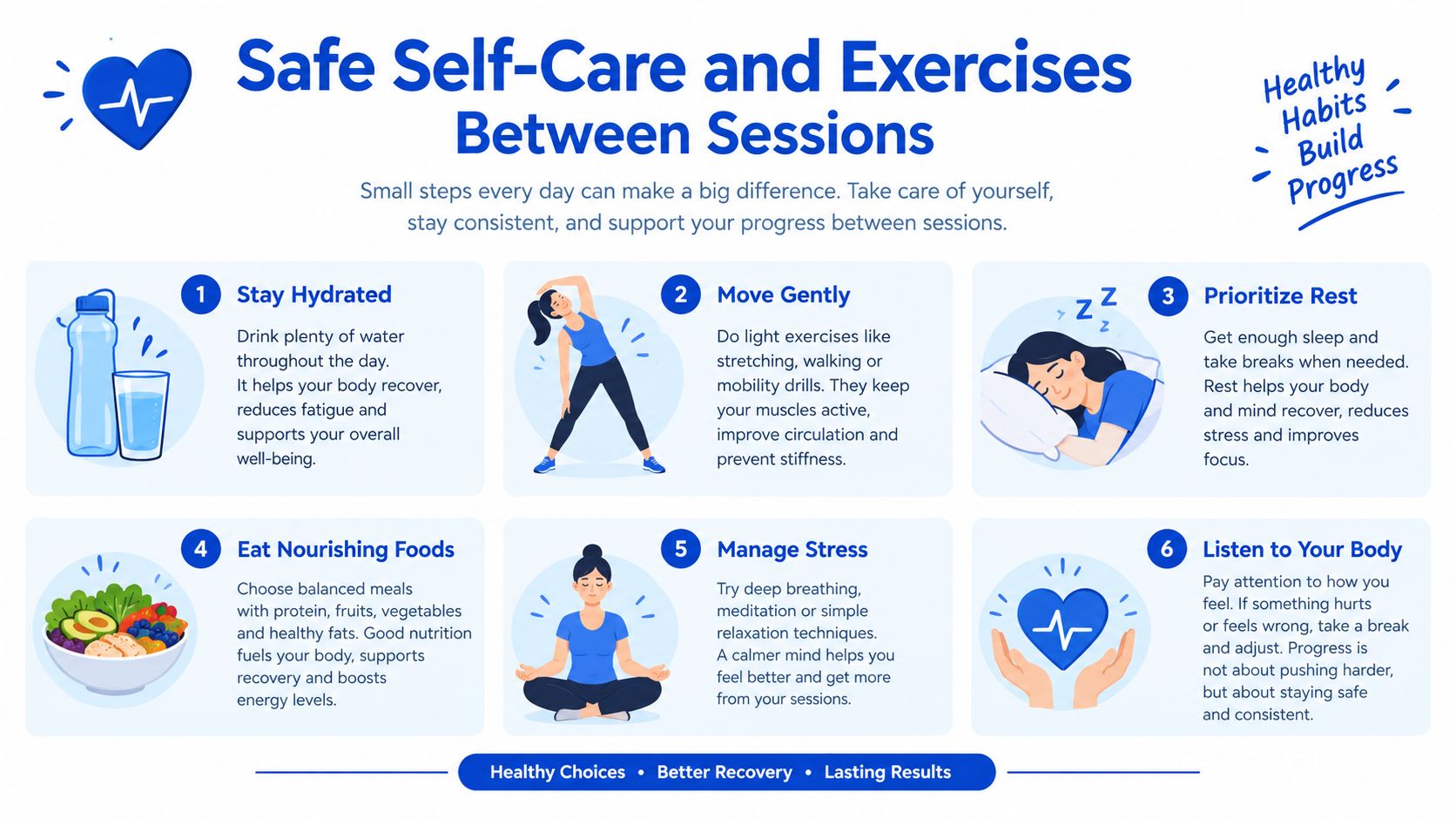
More practical guidance on desk positioning is available in this posture and corporate ergonomics resource. Outside work, gentle walking or swimming may help you stay active without repeatedly loading the neck in one fixed position. Choose activity that feels manageable rather than stopping all movement.
Heat can feel soothing for muscle guarding, while ice may be useful after a recent aggravation for some people. Use a barrier between the pack and your skin, keep the exposure comfortable, and stop if symptoms worsen. Sleeping on your side or back with the neck supported in a neutral position may be more comfortable than sleeping face down.
Stop an exercise if it causes sharp pain, increasing arm symptoms, dizziness, or unusual visual changes. Gentle movement should feel controlled and tolerable.
Seek prompt medical review for neck pain after a fall or impact, a severe headache unlike previous headaches, dizziness, visual change, numbness or weakness in the arms, fever, or unexplained weight loss. Those symptoms need assessment rather than a self-care experiment.
What the Evidence Actually Shows
Australian osteopathic practice has a longstanding role in neck-pain care. In a national survey of 971 Australian osteopaths, 98% reported treating neck pain often, while the average practitioner reported 28.1 patient-care hours per week and 36.7 patient visits per week, as documented in the Australian osteopathy practitioner survey. That supports the view that neck pain is a routine presentation for osteopaths, not a niche complaint.
A modified Delphi study of Australian osteopaths found moderate agreement around techniques including muscle energy technique, high-velocity low-amplitude thrust, and soft-tissue treatment. When clinical trials tested efficacy, they commonly used one session per week for 4 to 6 weeks, according to the Australian osteopathic neck-pain evidence synthesis.
What that means for a patient
The evidence supports a combined approach. Manual therapy may help reduce pain intensity and disability for some people with non-specific mechanical neck pain, with benefits reported for up to about three months in broader evidence syntheses. The more defensible plan combines hands-on care with self-management advice and exercise, rather than treating manual therapy as a complete solution.
The likely benefit is meaningful but not magical. Treatment may make movement easier, reduce irritability, and help you return to normal activities, but it won't remove every contributor if your work setup, sleep, stress, or activity pattern remains unchanged.
Serious adverse events are uncommon in the evidence summarised above, but cervical manipulation isn't risk-free. Screening, informed consent, technique selection, and referral for red flags are essential. A mechanical neck presentation may suit conservative care, while symptoms suggesting fracture, serious neurological disease, vascular problems, infection, or another significant condition require medical evaluation first.
Booking, Medicare, and Your Next Step
If your neck pain keeps affecting driving, work, sleep, exercise, or concentration, booking an assessment is reasonable. You don't need to wait until the problem becomes constant. A clinician can assess the pattern and tell you whether osteopathic care is appropriate, whether you should first see your GP, or whether another practitioner would better match your needs.
For Bayside residents, Bayside Osteopathic Health offers hands-on osteopathic assessment and care for neck pain, stiffness, and postural strain. Contact the clinic through its website to check online booking availability, appointment details, current fees, session length, and cancellation requirements. Clinic policies can change, so confirm these points before attending.
Bring comfortable clothing that allows the osteopath to assess your upper back and shoulders. Referral letters, imaging reports, medication details, and a short description of your work setup can also help, although you shouldn't delay care because you don't have every document.
Medicare and appointment planning
Osteopathy is generally provided privately, with rebates depending on your private health insurance policy. Eligible patients with chronic or complex needs may have access to osteopathic care through a GP-managed Chronic Disease Management plan, subject to the relevant requirements and referral arrangements. Ask your GP and the clinic whether this pathway applies to your circumstances before booking on that basis.
A simple readiness check can help:
- Duration: Has the pain persisted, recurred, or started limiting normal activity?
- Safety: Are there no red flags such as significant impact, arm weakness, fever, or unexplained weight loss?
- Previous steps: Have rest, movement changes, or basic self-care failed to provide lasting improvement?
- Goal: Do you want to turn more comfortably, work with less irritation, sleep better, or return to exercise?
- Participation: Are you willing to adjust the workday and follow a home plan?
The clinic's established community presence and experienced practitioners provide one local option for people seeking a measured, hands-on approach. The most useful appointment is one that gives you a clear explanation, a realistic plan, and a reason to continue or change course based on progress.
Bayside Osteopathic Health provides assessment, gentle hands-on treatment, movement advice, and practical strategies for work-related and posture-related neck pain. Visit Bayside Osteopathic Health to learn more and arrange an appointment that suits your needs.