
By mid-afternoon, the ache has settled between your shoulder blades. You roll your shoulders, stretch your neck, and perhaps reach for another coffee, but the burning tightness returns as soon as you sit back down. It may feel like a simple posture problem, yet upper back pain can involve the thoracic spine, ribs, shoulder blades, neck, breathing pattern, workload, stress, or several of these at once.
That's why an osteopath assessing osteopath upper back pain shouldn't focus only on the sore spot. The useful question is how the whole area moves, what repeatedly loads it, and whether the symptoms fit a straightforward musculoskeletal pattern or need medical review first.
Table of Contents
- The Ache Between the Shoulder Blades That Keeps Returning
- What Your Thoracic Spine and Rib Cage Do
- Why Upper Back Pain Develops in the First Place
- What Happens at Your First Osteopathic Appointment
- How Osteopathic Treatment Fits Into a Bigger Recovery Plan
- Simple Exercises and Self-Care You Can Use at Home
- When Upper Back Pain Needs a Closer Look
- Choosing an Osteopath and Knowing What to Expect Next
The Ache Between the Shoulder Blades That Keeps Returning
A dull ache between the shoulder blades can feel like a simple posture problem, especially after computer work. Yet similar symptoms may come from different parts of the same movement system. One person may have a stiff rib joint that feels uncomfortable during a deep breath. Another may have overloaded the muscles that guide the shoulder blade, with irritation from the neck referring discomfort into the upper back.
The sensation may match, while the examination and treatment priorities differ. An osteopath might find limited movement through the thoracic spine, reduced shoulder control, or a neck movement that reproduces the pain. A tender muscle can be the final link in the chain rather than where the problem began.
Context adds useful clues. Pain that eases with walking but returns during prolonged sitting can suggest a load and movement issue. Symptoms brought on by twisting or deep breathing direct attention to the ribs and thoracic joints. Stress may keep the muscles around the neck, shoulders, and ribs braced, even after the original irritation has settled.
Practical rule: The location of pain tells you where the alarm is ringing. It does not always identify what started the alarm.
Back problems affect an estimated 4.0 million Australians, or 16% of the population, according to the Australian Institute of Health and Welfare overview of musculoskeletal conditions. Upper back pain forms part of that wider burden.
That is why an osteopath assessing upper back pain from a whole-body perspective should examine more than the sore spot. The assessment considers posture, work strain, rib and thoracic movement, shoulder mechanics, breathing, and possible neck referral. It should also identify symptoms that sit outside routine hands-on care and need medical review. The sensible starting point is curiosity rather than panic, followed by a treatment plan matched to the pattern found.
What Your Thoracic Spine and Rib Cage Do
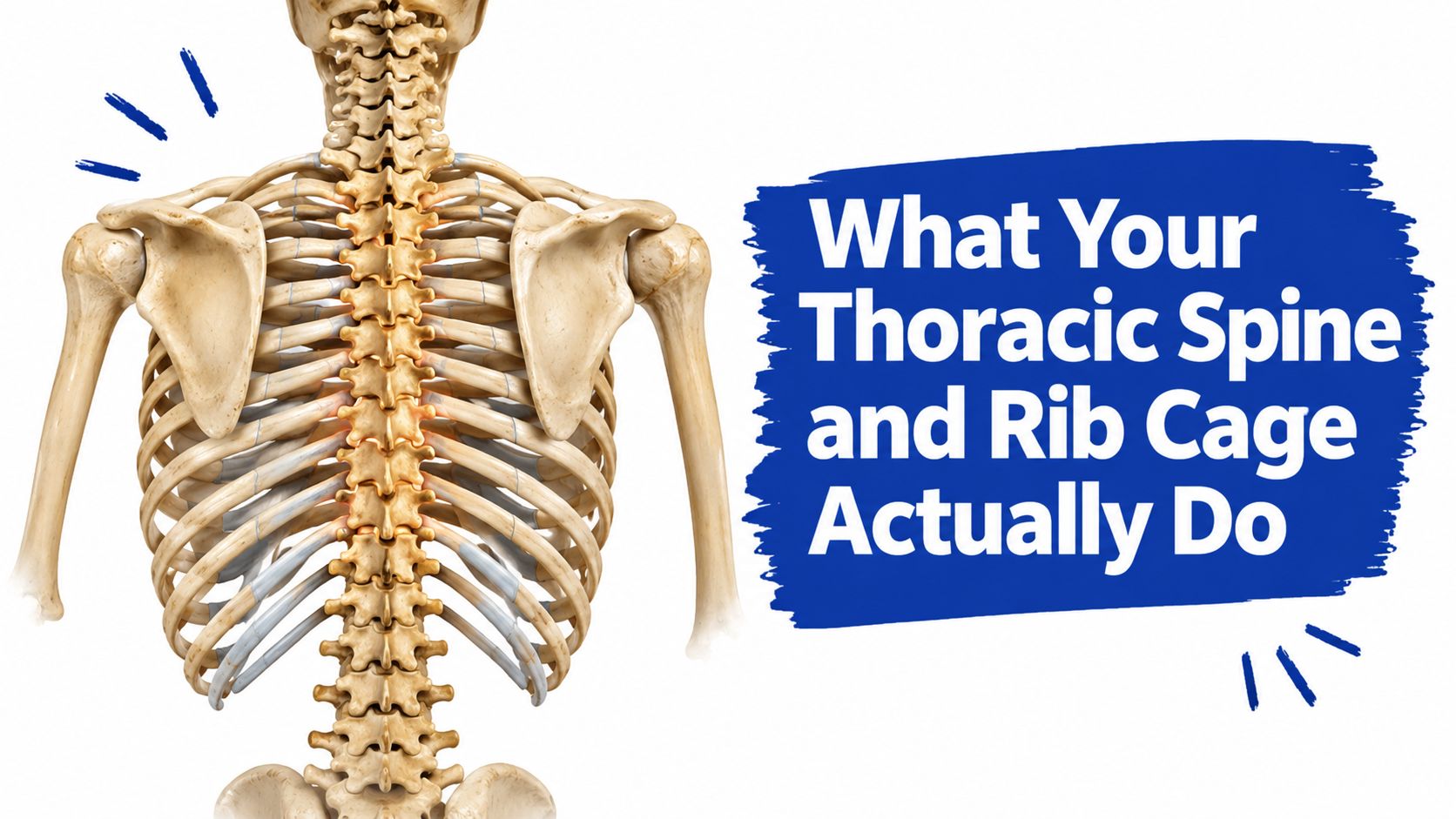
Your thoracic spine is the middle section of your back, between your neck and lower back. It works like a stack of rings, with each ring representing a vertebra. Small joints connect the rings, allowing controlled rotation and side-bending rather than large, forceful movements.
The ribs attach to this stack and curve around towards the front of the chest, forming a flexible cage that protects the heart and lungs while expanding as you breathe. Together, the thoracic spine and ribs create a mobile framework for breathing, arm movement, and trunk rotation.
Why movement matters
The thoracic region rotates when you turn to reach behind you, bend sideways, swing your arms, or change direction while walking. It also extends, meaning it gently opens backwards, so your shoulders and neck can sit comfortably over your rib cage.
Breathing adds another demand. Each breath requires coordinated rib movement, while the shoulder blades need to glide over the ribs as the arms reach, lift, and carry.
When the middle spine becomes stiff, the neck and lower back may pick up extra movement. The shoulder blades can also work harder to guide the arms. This does not mean your spine is “out of place”. It means one part of a connected movement system is sharing the workload poorly.
An osteopath therefore observes more than the painful point. They may compare rotation to each side, watch the ribs during breathing, and assess whether the shoulder blades move smoothly over the rib cage. These findings help identify whether the main restriction sits in the thoracic joints, ribs, shoulders, or a wider movement pattern. Treatment should follow that assessment rather than target the sorest spot automatically.
Australia has regulated osteopathy for decades. Statutory registration began in 1978, when there were about 100 registered osteopaths. By 2024, the Osteopathy Board of Australia and AHPRA reported more than 3,500 registered osteopaths and noted that Australia was the first country to fully regulate osteopathic practitioners. Osteopathic practice itself has been present in Australia since the early 1900s, including Edgar Culley in Victoria in 1909 and Florence McGeorge in Tasmania in 1913, as the same historical account records.
Why Upper Back Pain Develops in the First Place
Upper back pain usually develops through a pattern of loading rather than one isolated defect. The pattern may begin with a long day at a screen, a sudden twist, repeated lifting, guarded breathing, or a stressful period that keeps the upper body tense.
The main patterns an osteopath looks for
-
Postural strain: Sitting with the head forward and arms reaching towards a keyboard can keep the thoracic spine rounded and ask the shoulder muscles to work continuously. Symptoms often build gradually and ease when you change position or walk.
-
Thoracic or rib stiffness: A restricted joint may make rotation, reaching, coughing, or deep breathing uncomfortable. The pain can feel sharp in one spot or ache around the side of the rib cage.
-
Shoulder-girdle overload: The muscles around the shoulder blades can become tired and sensitive when they stabilise the arms for long periods. Carrying, overhead work, rowing, lifting, and sustained desk work can all contribute.
-
Stress-related guarding: Stress doesn't make pain imaginary. It can increase muscle bracing, reduce relaxed movement, and make normal sensations feel more threatening. The upper trapezius, muscles between the shoulder blades, and chest wall may remain active when they should be resting.
-
Shallow breathing: If breathing stays high in the chest, the ribs may not move fully and the muscles around the neck and upper chest can assist every breath. That extra work can maintain tightness across the upper back.
Australian osteopathic practice data found that spinal presentations accounted for 41.5% of presenting complaints, while cervical spine complaints made up 16.0% of reported symptom areas, according to the Australian osteopathy practice profile cited in Healthdirect's upper back pain information. These figures don't diagnose your pain, but they show how frequently spinal and nearby regions appear in osteopathic care.
An acute episode may start after a lift, awkward reach, or sudden rotation. Chronic discomfort tends to be more layered, with work habits, deconditioning, sleep, stress, and repeated flare-ups influencing how the body responds. A useful assessment separates the original trigger from the factors now keeping the pain active.
For an additional visual explanation of how spinal factors can contribute to persistent symptoms, see this illustration of chronic back pain and the spine.
What Happens at Your First Osteopathic Appointment
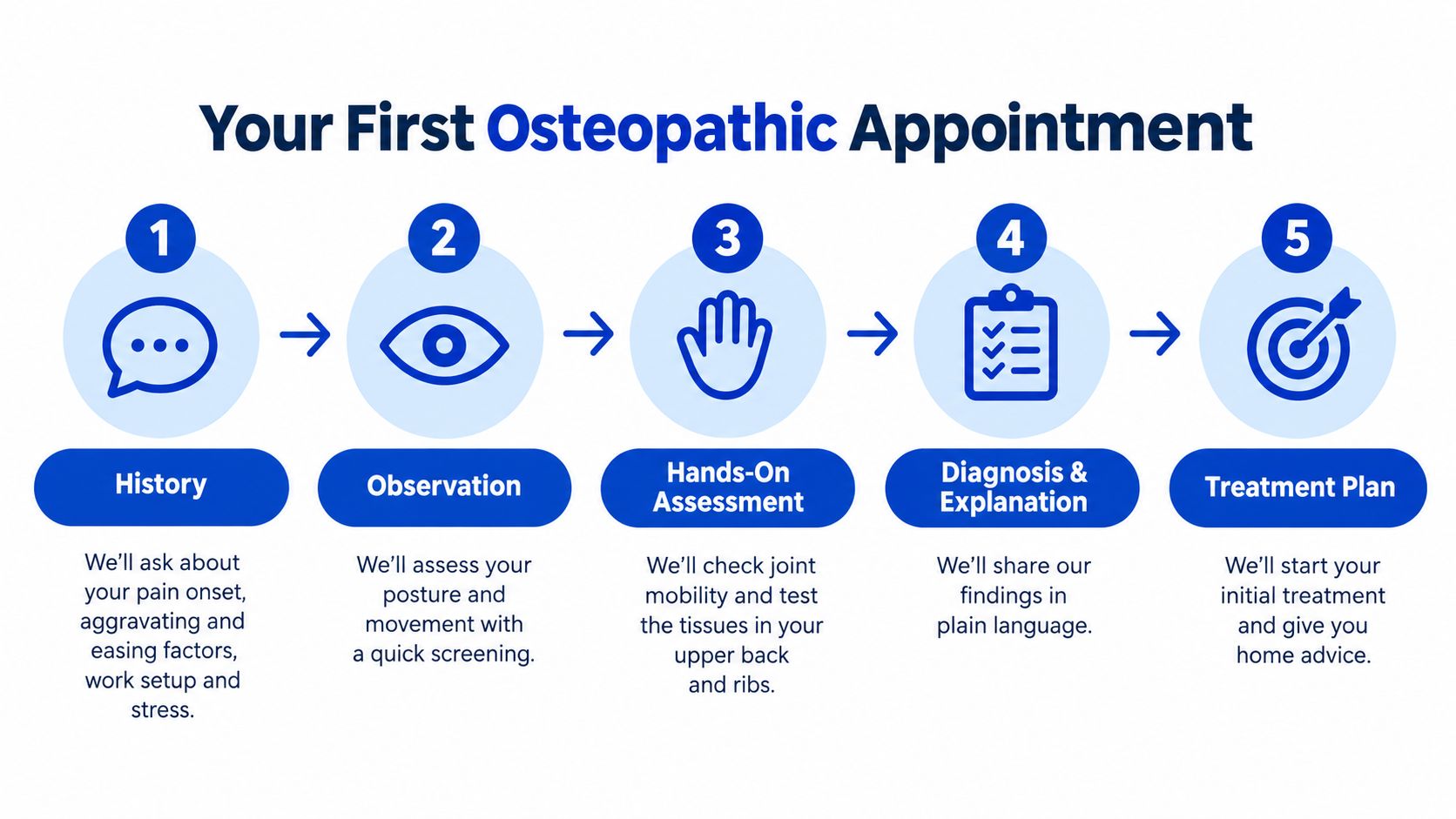
Your first appointment usually starts with conversation, not treatment. The osteopath will ask when the pain began, whether it followed an injury, what makes it worse, and what gives temporary relief. They'll also ask about your work setup, exercise, sleep, stress, previous injuries, medications, and general health.
Those questions help distinguish a local movement problem from a wider health concern. Pain that changes with posture and movement may suggest a musculoskeletal pattern. Pain that is unrelated to movement, accompanied by systemic symptoms, or associated with chest or neurological symptoms needs a different pathway.
The physical assessment
You may be asked to rotate, bend, lift your arms, walk, and take a deeper breath. The osteopath watches how your neck, thoracic spine, ribs, shoulders, and shoulder blades share movement. They may then use gentle hands-on testing to compare joint mobility, muscle tone, tenderness, and rib excursion.
For example, limited rib expansion on one side may suggest that the thoracic and rib joints aren't moving freely. Tender bands around the rhomboids may indicate shoulder-blade overload. Neither finding is a diagnosis by itself. The osteopath combines it with your history and the movements that reproduce or ease your symptoms.
Common hands-on options
-
Soft-tissue work uses sustained pressure, kneading, or broad strokes over tight muscles beside the spine and between the shoulder blades. It can feel firm or tender, but it shouldn't feel intolerable.
-
Articulatory mobilisation moves stiff thoracic segments through a controlled range. You'll usually feel gentle rocking or stretching rather than a forceful thrust.
-
Rib mobilisation targets the joints where the ribs meet the spine. The osteopath may coordinate the technique with your breathing, using your exhalation to encourage a small, comfortable movement.
-
Muscle energy techniques ask you to make a mild contraction against resistance, followed by relaxation. This can help restore movement symmetry without a sudden adjustment.
-
HVLA manipulation, when clinically appropriate and consented to, is a brief, controlled technique that may produce a click. The sound isn't the treatment goal, and you should always be able to decline it.
The session should finish with a working explanation, immediate self-care advice, and a plan for reassessment. Imaging or GP referral may be recommended if your history or examination suggests that hands-on care isn't the right first step.
How Osteopathic Treatment Fits Into a Bigger Recovery Plan
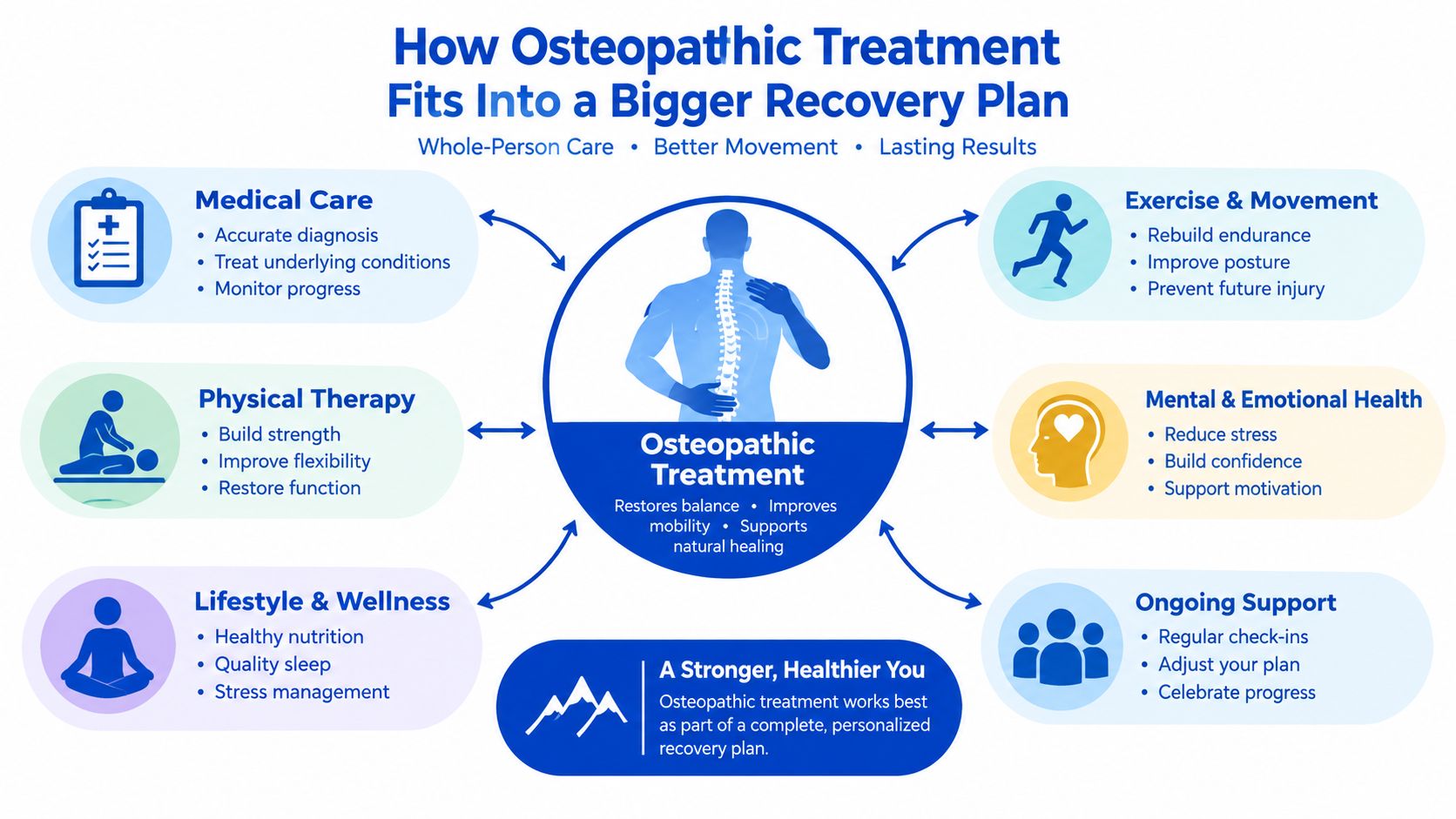
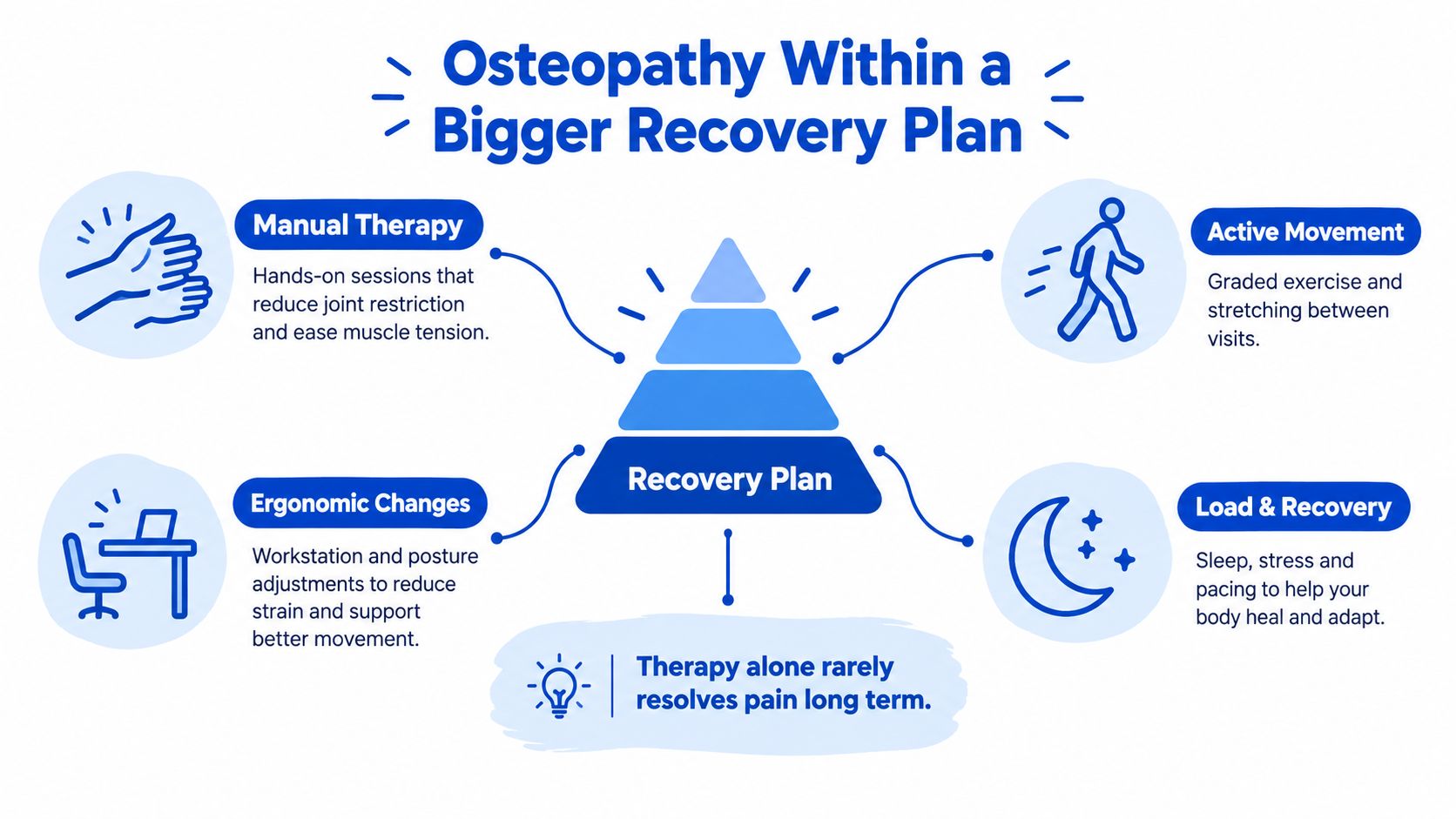
A patient who can finally rotate to check a blind spot after two sessions still needs a plan for the eight hours of desk work that follow. Easier movement is useful, but it is only one part of recovery. Treatment should help you practise movement, adjust repeated loads, and understand why symptoms return.
A plan may include:
- Movement practice: Gentle thoracic rotation, shoulder control, walking, and gradual strengthening help the ribs, upper back, and shoulders tolerate ordinary tasks again.
- Work adjustments: Set the screen at a comfortable height, support the forearms, vary sitting positions, and take regular movement breaks. These changes reduce repeated strain rather than asking one treatment to solve it.
- Breathing and down-regulation: Slower breathing with relaxed rib movement can reduce unnecessary effort in the neck and upper chest, particularly when work stress keeps those muscles active.
- Sleep and pacing: Consistent rest and gradual increases in activity can reduce the cycle of doing too much on a good day, then stopping after a flare.
The Royal Australian College of General Practitioners in its osteopathy review notes that spinal manipulation alone provides limited benefit for low back pain, while manual care combined with advice may be more helpful. Upper back pain is not identical to low back pain, but the reasoning still applies. Hands-on treatment should support movement and self-management, not replace them.
Posture-related pain that began recently may settle as irritated tissues regain tolerance and daily loading changes. Pain present for months or years usually calls for slower progression. A flare can provide information about workload, sleep, stress, or movement habits without proving that new damage has occurred.
This longer view matters because back problems place a substantial demand on Australia's health system. Upper back care should therefore address function and recurrence, not only short-term relief.
See this complete osteopathy care illustration for an overview of how osteopathic care can sit alongside movement practice and practical daily advice.

Simple Exercises and Self-Care You Can Use at Home
Start gently and use symptoms as your guide. These movements are intended for uncomplicated, movement-sensitive upper back discomfort, not unexplained pain or symptoms that are worsening quickly.
A short mobility routine
-
Thoracic extension: Sit on a chair with your hands across your chest. Lean the upper back over the chair's backrest, keeping the movement through the middle spine rather than forcing the lower back. Perform several comfortable repetitions, or pause briefly at the point of a mild stretch.
-
Scapular squeezes: Let your arms rest by your sides and gently draw the shoulder blades back and slightly down. Hold for a few relaxed breaths, then release fully. Avoid shrugging or pinching hard.
-
Open-book rotation: Lie on your side with your knees bent and arms in front. Slowly open the top arm towards the floor behind you while allowing your upper back and ribs to rotate. Return without forcing the range, then change sides.
-
Doorway chest stretch: Place your forearms on a door frame and step forward until you feel a mild stretch across the chest. Keep the ribs comfortable and don't arch aggressively through the lower back.
-
Diaphragmatic breathing: Lie comfortably or sit supported. Let the lower ribs widen gently as you inhale, then allow a slow, unforced exhalation. The neck and shoulders should remain quiet.
A mild stretch or sense of movement is acceptable. Stop if you feel sharp pain, increasing symptoms, numbness, tingling, unusual weakness, dizziness, or breathlessness. If an exercise repeatedly aggravates your pain, ask your osteopath or GP to modify the plan rather than pushing through.
A useful desk reset: Every 45 to 60 minutes, stand, let your arms hang, take a few comfortable breaths, and move your neck, shoulders, and thoracic spine through an easy range.
Heat can feel soothing for muscular tightness and stiffness, particularly before gentle movement. Ice may be more comfortable after a recent minor strain if the area feels acutely irritated. Use a cloth barrier, keep the application comfortable, and remember that neither changes the underlying workload by itself.
When Upper Back Pain Needs a Closer Look
Most upper back pain is not an emergency, but location alone can't rule out problems involving the heart, lungs, nerves, bones, or general health. An osteopath should screen for warning signs and explain when medical assessment is more appropriate.
Seek same-day medical help
Get urgent medical advice if upper back pain occurs with chest pain, significant breathlessness, faintness, sweating, or symptoms that feel cardiovascular or respiratory rather than mechanical. New loss of bladder or bowel control, severe or progressing weakness, or rapidly developing neurological symptoms also need urgent assessment.
Pain after a significant fall, collision, or other accident deserves medical review, especially if movement is severely limited or the pain is intense. Don't wait for hands-on treatment to “test it out” in those circumstances.
Arrange a GP review soon
Book a GP appointment within days if you have persistent night pain that disrupts sleep, unexplained weight loss, fever, or a recent infection. A history of cancer, osteoporosis, or steroid use also lowers the threshold for medical investigation.
Numbness, tingling, or weakness spreading into an arm or hand may indicate nerve involvement. It doesn't automatically mean a serious condition, but it does mean the neck and neurological system should be assessed rather than treating the upper back in isolation.
Continue with monitoring when appropriate
Osteopathic care may be reasonable when the pain clearly changes with movement or position, no red flags are present, and symptoms are gradually improving. Reassessment is still important if recovery plateaus, flare-ups keep returning despite consistent self-care, or stiffness steadily worsens.
Australian consumer guidance says osteopaths can help with back and neck pain, while also noting that more research is needed for many other uses, as explained by Better Health Channel's osteopathy information. That's a helpful boundary. Osteopathy can support a suitable musculoskeletal problem, but it shouldn't delay investigation of symptoms outside that pattern.
If upper back symptoms overlap with shoulder pain, this shoulder pain illustration may help you understand why nearby regions sometimes need assessment together.
Choosing an Osteopath and Knowing What to Expect Next
Choose an osteopath who explains the working diagnosis in plain language and links treatment to your goals. In Australia, check that the practitioner is registered through the national health practitioner system, then ask how they approach thoracic, rib, shoulder, and neck presentations.
A sound consultation should include:
- A clear assessment: The practitioner asks about onset, work, activity, health history, and warning signs before treatment.
- A reason for each technique: You should understand whether the aim is to ease muscle sensitivity, improve joint movement, or help you move more confidently.
- Active advice: A plan that includes exercise, pacing, breathing, or workstation changes is more useful than indefinite passive care.
- Honest referral: The osteopath should recommend a GP, physiotherapist, specialist, or imaging when your symptoms fall outside their scope.
- Transparent planning: You should know how progress will be reviewed and what would justify continuing, changing, or stopping treatment.
For uncomplicated upper back pain, meaningful change may become apparent across the early weeks of care, but there's no guaranteed timetable. Chronic pain, repeated work strain, and broader health factors can require a slower approach. Treatment frequency should reduce as your confidence and self-management improve, rather than continuing automatically.
Osteopathy can't replace medical investigation, permanently correct normal ageing, or guarantee a cure. It can provide a structured assessment, gentle hands-on care, movement guidance, and a way to address the rib, thoracic, shoulder, breathing, and workload factors that may be maintaining your symptoms.
If you're considering an appointment, write down when the pain began, what changes it, any arm or chest symptoms, relevant injuries, and the demands of your workday. Bring those details to an initial consultation and ask what the osteopath thinks is driving the problem, what you can do between visits, and when you should seek medical review.
Bayside Osteopathic Health provides gentle, hands-on assessment and personalised care for upper back pain, postural strain, and related neck or joint stiffness, combining techniques such as soft-tissue work and mobilisation with movement advice and practical self-care. Visit Bayside Osteopathic Health to book an initial consultation in the Bayside area and discuss a plan that fits your symptoms and daily activities.