
You wake with stiff fingers, sore knees or a hip that takes several minutes to loosen. By late afternoon, your desk, commute or household tasks have added another layer of discomfort. The temptation is to reach for a painkiller, sit still and hope the joint settles. That can help briefly, but it doesn't answer the more useful question: how to treat joint pain in a way that restores movement and keeps the problem from controlling your day.
Effective care usually combines accurate diagnosis, sensible short-term relief, regular movement, strength, load management and professional guidance when home care isn't enough. The right plan also depends on whether the pain reflects mechanical joint changes, an injury, or an inflammatory condition.
Table of Contents
- Understanding the Root Cause of Your Joint Pain
- Immediate Relief Strategies for Acute Flare-Ups
- Movement and Strengthening Exercises for Joint Mobility
- Lifestyle Adjustments and Ergonomics for Long-Term Care
- When to Seek Professional Osteopathic and Medical Care
- A Practical Daily Routine for Joint Health and Mobility
Understanding the Root Cause of Your Joint Pain
A knee that feels stiff after sitting, fingers that ache in the morning, or a hip that hurts on stairs can have several explanations. Start with the pattern: which joints are affected, when symptoms appear, what changes them, and whether the problem is local or widespread. A painful scan may show joint changes, yet it cannot explain every symptom on its own.
Osteoarthritis commonly produces mechanical joint pain. Symptoms often vary with load, movement, muscle capacity and the mobility of surrounding tissues. Walking, climbing stairs, gripping or sitting for a long time may bring pain on, while changing position can ease it. Stiffness after rest is common. It does not show that movement is harming the joint, and avoiding activity altogether can reduce strength and confidence.
A different pathway applies to Inflammatory arthritis. Rheumatoid arthritis and similar conditions may affect several joints, with persistent swelling, warmth, prolonged stiffness or symptoms elsewhere in the body. The driver is inflammation, so care may require disease-specific medical treatment and medicines that target the condition. Australian guidance separates these priorities: osteoarthritis care focuses on education, self-management and physical activity, while inflammatory arthritis requires condition-specific management (Australian guidance on best-evidence osteoarthritis care).
Clues that change the treatment plan
A practitioner will usually ask about:
- The symptom pattern: Pain linked to a particular movement or load can indicate a mechanical contribution. Several persistently swollen joints need medical assessment.
- The time course: Symptoms after a twist, fall or unusual activity call for a different assessment from stiffness that has built gradually.
- Associated symptoms: Fever, unexplained illness, marked fatigue or rapidly increasing swelling should not be treated as routine joint soreness.
- Function: Difficulty standing, walking, using your hand or sleeping shows how the problem affects daily life.
- Your wider health: Previous injuries, medicines, other diagnoses and activity levels influence safe treatment choices.
Arthritis affects many Australians. The Australian Institute of Health and Welfare estimates that 3.7 million Australians, or 15%, were living with arthritis in 2022, while osteoarthritis affected about 2.1 million people, or 8.3% (AIHW arthritis data). These figures describe population patterns, not a diagnosis for a particular person.
Practical rule: Treat the person and the pain pattern, not an image or label in isolation.
Arrange a medical review if several joints are swollen, symptoms are progressing quickly, or the presentation does not fit a straightforward mechanical pattern. Repeating generic exercises or masking symptoms without identifying the cause can delay appropriate care.
Immediate Relief Strategies for Acute Flare-Ups
A flare-up calls for a short period of protection, not complete immobilisation. The useful aim is to reduce irritability enough that you can return to gentle movement, sleep more comfortably and identify what triggered the change.

A calm response in the first stage
First, assess the change. Ask what happened before the pain increased. Did you lift more than usual, kneel, play sport, sit for a long period or sleep in an awkward position? Check whether the joint is swollen, hot, unstable or difficult to move. If the pain followed significant trauma, or the joint has suddenly locked, seek clinical advice rather than testing it repeatedly.
Next, reduce the aggravating load. Stop the specific activity that provokes sharp pain, but keep comfortable movements within an easy range. For a sore knee, that might mean reducing stairs and using a handrail while still walking gently around the house. For a hand flare, temporarily change gripping tasks rather than avoiding all use.
Use cold when swelling and heat are prominent. A wrapped cold pack can provide short-term comfort during an acutely swollen or irritated episode. Don't place ice directly on skin, and stop if the skin becomes painful, numb or unusually pale. Heat is often more useful for chronic stiffness or tight surrounding muscles when swelling isn't the main feature. A warm shower or heat pack before movement can make gentle mobility feel easier.
Compression and elevation may help a swollen limb. Compression should feel supportive, not restrictive. Remove it if you develop tingling, colour change, increased pain or numbness. Elevating the limb while resting can be sensible when swelling is uncomfortable, but it shouldn't replace movement throughout the day.
Temporary tools with a defined purpose
Topical products, oral non-steroidal anti-inflammatory drugs, TENS, massage and manual therapy may be useful short-term adjuncts for selected people. Australian recommendations describe these options as ways to manage symptoms while a person builds activity tolerance, rather than as a complete long-term plan (RACGP guidance on manual therapy, weight management and heat or cold).
Medicines aren't suitable for everyone. Ask a pharmacist or doctor about interactions, stomach, kidney, heart and blood pressure concerns, particularly if you're older, pregnant, taking several medicines or considering repeated use. A topical option may have a different risk profile from an oral medicine, but it still deserves careful use according to its instructions.
Avoid aggressive stretching into a hot, swollen joint. Avoid using pain relief to push through a demanding session. The best immediate strategy calms symptoms while preserving a route back to normal activity.
Movement and Strengthening Exercises for Joint Mobility
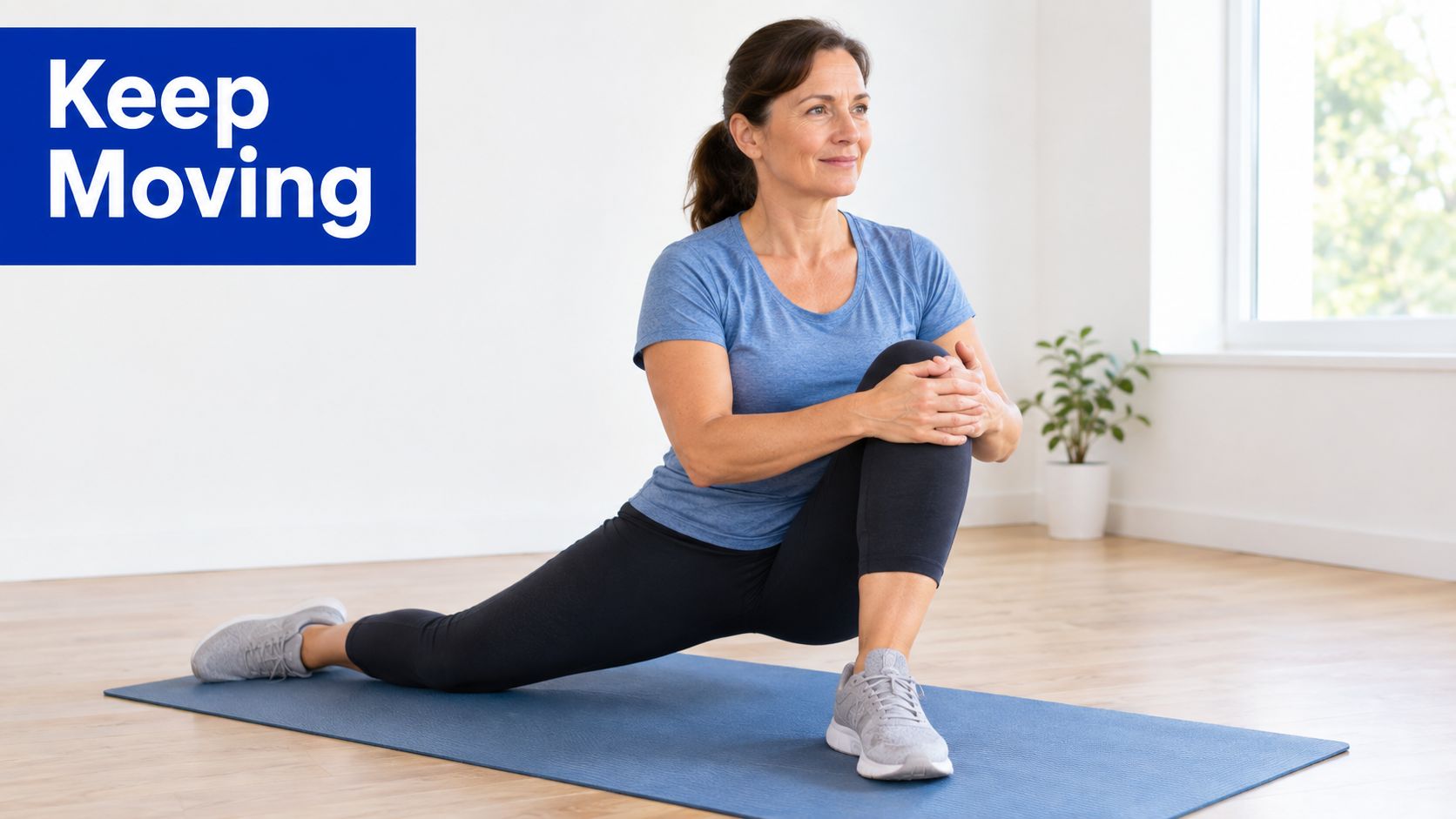
Movement is a core treatment for many people with osteoarthritis, not an optional extra. Avoiding every painful movement can make the joint and surrounding muscles less capable, so ordinary tasks then require more effort. That doesn't mean forcing a painful joint. It means finding a tolerable starting point and progressing gradually.
The RACGP strongly recommends land-based exercise for all people with knee osteoarthritis, regardless of age, disease severity, functional status or starting pain. Walking, muscle strengthening and Tai Chi are recommended options, with stationary cycling and Hatha yoga useful for some people. The guidance also states that exercise can improve pain and function even when weight loss isn't achieved or isn't needed (RACGP exercise recommendations for knee osteoarthritis).
Start with capacity, not ambition
If your knee feels stiff, begin with comfortable knee bends while seated, short walks on level ground, sit-to-stand practice from a firm chair, or gentle calf and hip movement. If your hands hurt, open and close the fingers slowly, practise light squeezing with a soft object and change tasks regularly. If your hips or back are sore after desk work, begin with brief standing and walking breaks before adding strengthening.
A useful response to exercise is mild, manageable discomfort that settles rather than steadily escalating. Reduce the range, speed, resistance or duration if symptoms remain more irritable afterwards. A flare doesn't always mean you've caused harm, but it does mean the dose needs reviewing.
Strength matters because the muscles around a joint help you control movement and share the demands of daily activities. Stronger legs can make a chair rise, step or walk feel less threatening. Better balance and coordination can also help you move with less hesitation.
Movement should leave you more capable over time, not prove how much discomfort you can tolerate today.
Use a simple progression. First make the movement consistent. Then add a little duration, resistance, range or complexity. Keep one variable stable while changing another, so you can tell what your body responds to. A practitioner can adapt exercises around arthritis, previous surgery, low confidence or other health conditions.
The following video demonstrates a movement-based approach. Use it as general education, not as a substitute for an individual assessment.
For a visual reminder of mobility work, see this joint mobility exercise reference. Stop and seek advice if an exercise causes sudden severe pain, new instability, marked swelling or neurological symptoms.
Lifestyle Adjustments and Ergonomics for Long-Term Care
Joint pain is influenced by the loads you repeat every day. A single exercise session can't fully offset hours of static sitting, repeated gripping, poor lifting technique or a sudden jump in walking. Long-term improvement comes from making ordinary activities less provocative and giving your body regular opportunities to move.
For desk workers, start with the workstation rather than chasing a perfect posture. Keep the screen high enough that you aren't constantly bending your neck, place the keyboard and mouse within easy reach, support your feet and let your shoulders relax. A chair that allows you to change position is more useful than one that locks you into a rigid pose.
Make the working day less static
Set up your environment so movement is convenient. Keep the phone or frequently used items close, but not so close that you never stand. Alternate sitting with standing when possible, walk during a phone call and use short movement breaks before stiffness becomes pain. The aim isn't to hold one ideal position all day. It's to avoid spending the whole day in one position.
Remote workers often lose the natural movement built into commuting, walking to meetings or changing rooms. A laptop used at a kitchen table can also encourage sustained neck flexion and rounded shoulders. An external keyboard and mouse, a raised screen and a proper chair can reduce accumulated strain, while regular position changes protect against static loading.
This corporate ergonomics and posture resource can help you review how your working position contributes to neck, shoulder, hip or back discomfort.
Manage load across the whole week
Weight management can be relevant for people with knee or hip osteoarthritis who are overweight or obese. Australian guidance recommends combining exercise with weight loss for greater benefit and identifies a minimum target of 5% to 7.5% weight loss in that situation (Australian evidence summary on osteoarthritis care). That target shouldn't become a reason to postpone movement. Exercise remains useful while you work on nutrition and body weight.
Choose changes you can repeat, such as regular meals built around vegetables, protein and fibre, fewer highly processed snack foods, and water in place of some sweet drinks. Avoid promising that one food will cure arthritis. Nutrition supports energy, weight management and general health, but it doesn't replace diagnosis, strength work or medical care when needed.
When to Seek Professional Osteopathic and Medical Care
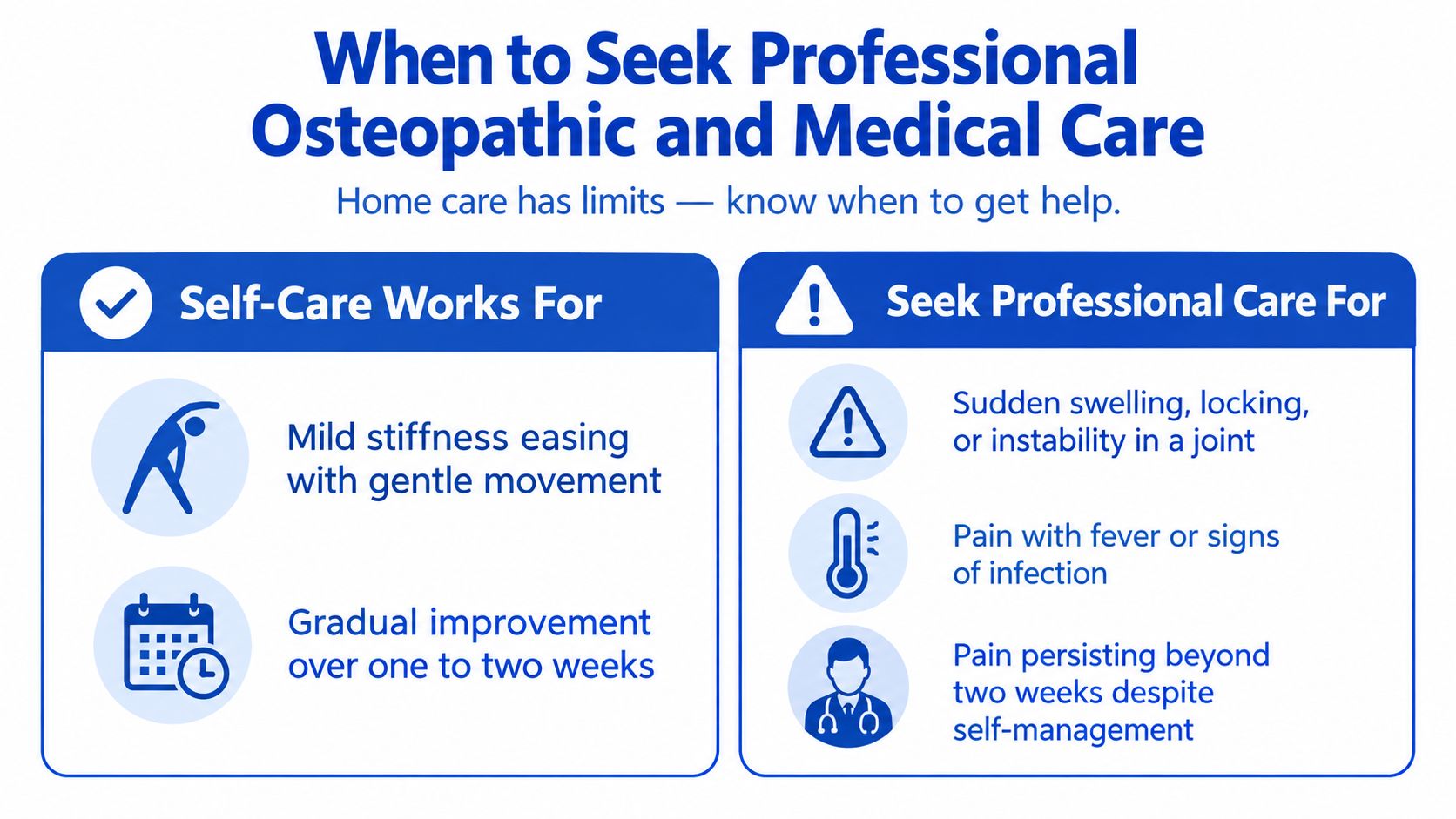
If mild stiffness eases with gentle movement and settles steadily, home care may be reasonable. Arrange an assessment when pain persists, keeps returning, limits ordinary activities or follows a pattern that does not fit a short mechanical flare.
The right next step depends on the likely cause. Wear-and-tear problems often respond to graded strengthening, load management and movement advice. Inflammatory conditions may produce prolonged morning stiffness, visible swelling or several painful joints, and need medical assessment rather than repeated hands-on treatment. Older adults may need review when pain changes walking, balance or independence. Desk workers may need assessment when neck, shoulder, hip or back symptoms continue despite changing position and activity.
When medical review comes first
Seek prompt medical assessment for sudden substantial swelling, a joint that locks or gives way, inability to bear weight, or pain after a significant injury. Obtain urgent care when joint symptoms occur with fever, feeling acutely unwell, a hot red joint or rapidly worsening swelling. Persistent unexplained night pain, unexplained weight change, new weakness or altered sensation also warrant medical evaluation.
A doctor may investigate inflammatory arthritis, infection, fracture, nerve involvement or another condition outside routine hands-on care. A preference for non-drug treatment should not delay assessment when symptoms could indicate a serious problem.
What osteopathic care can add
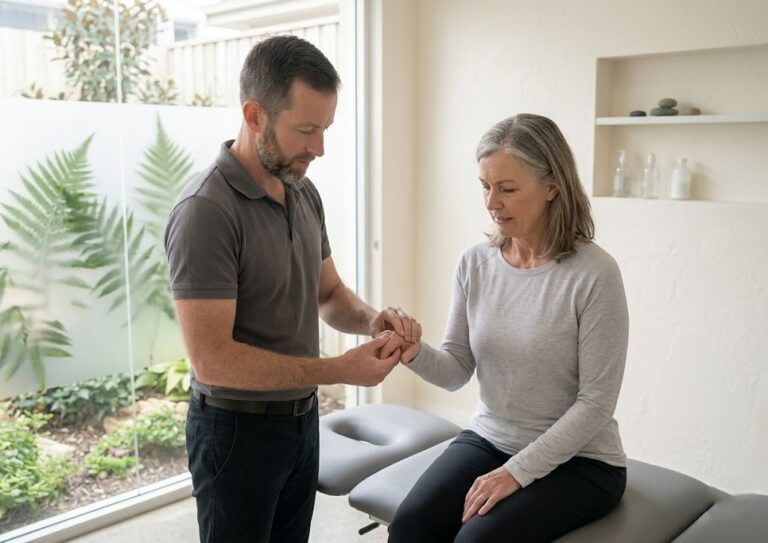
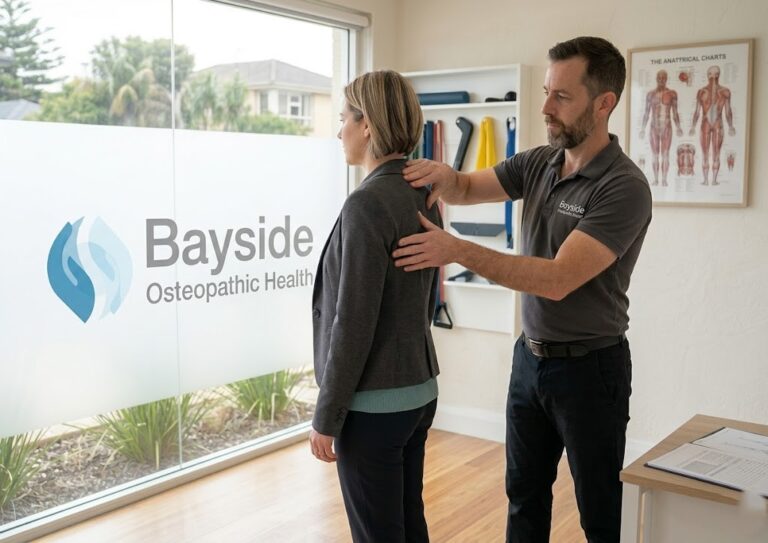
An osteopath examines how the painful area functions with the rest of the body. For knee pain, that may include gait and hip or ankle movement. For desk-related neck symptoms, it may include thoracic movement, breathing mechanics and shoulder control. The assessment should produce a clear plan with measurable goals, not an endless series of passive appointments.
Treatment can include soft-tissue work, joint articulation, gentle mobilisation and movement coaching. Hands-on care may reduce discomfort enough to practise rehabilitation, but temporary symptom relief is not the same as resolving the factors that maintain pain. Active strengthening, suitable load progression and self-management should remain part of the plan. Medication review, imaging or referral to a GP or specialist may also be appropriate.
Some eligible patients may access allied health support through Medicare arrangements, depending on their circumstances and plan. Ask your GP and practitioner what applies rather than assuming cover is automatic.
This soft-tissue therapy and rehabilitation comparison shows why hands-on treatment and active rehabilitation are often considered together. If symptoms continue beyond a reasonable period of self-management, book an assessment with a list of symptoms, medicines and aggravating activities.

A Practical Daily Routine for Joint Health and Mobility
A workable routine needs to fit around the life you already have. An older adult with morning knee stiffness and a remote worker with neck and hip discomfort won't use identical exercises, but both can benefit from frequent low-intensity movement, planned strength work and fewer long periods of stillness.
The Australian Bureau of Statistics found that 93.9% of adults with arthritis experienced bodily pain in the previous four weeks, including moderate or severe pain (AIHW summary of ABS arthritis findings). That level of ongoing discomfort makes consistency more realistic than an ambitious programme that collapses after a few days.
A routine for morning stiffness
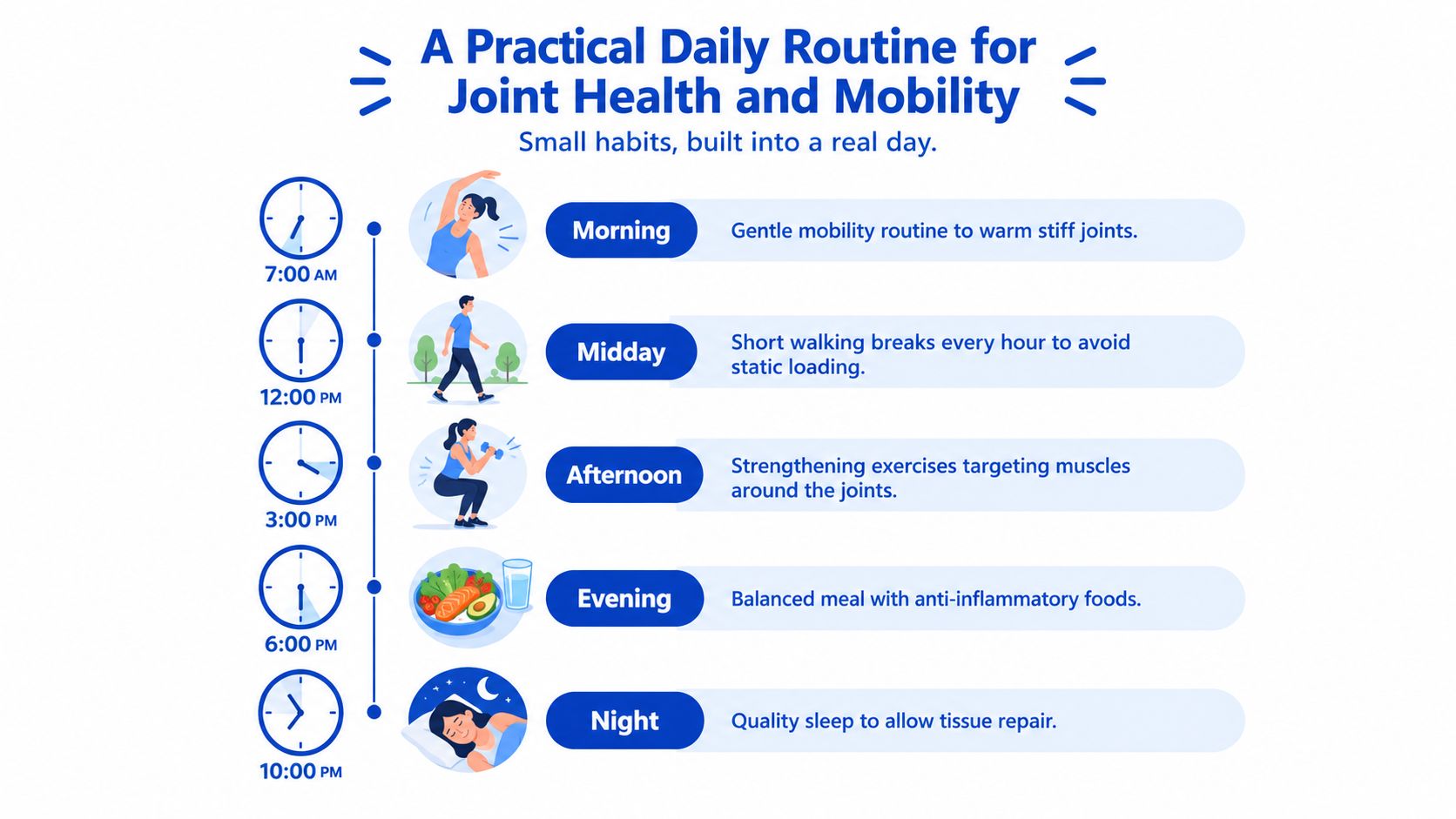
An older adult might begin with a warm shower or heat pack if stiffness, rather than swelling, is the main issue. After that, gentle ankle movements, knee bends while seated, a few supported sit-to-stands and a short walk around the home can prepare the body for breakfast and daily tasks.
Later in the morning, choose a manageable walk, stationary cycling session or land-based strengthening routine. Use a bench, rail or walking aid when appropriate, and focus on controlled movement rather than speed. If the joint becomes more irritable, shorten the next session instead of abandoning activity altogether.
At midday, change position and take another brief walk. In the afternoon, repeat a small amount of strength work if recovery has been comfortable. Finish the day with a balanced meal and a relaxed mobility routine. Good sleep, sensible pacing and a consistent bedtime give the body a better chance to recover.
A routine for a remote worker
A remote worker can start with gentle neck turns, shoulder rolls, thoracic extension over the back of a chair and several minutes of walking before opening the laptop. During work, alternate sitting and standing, take a short walk between meetings and reset the screen and keyboard position whenever you notice yourself leaning forward.
Schedule strengthening in the afternoon or at another reliable time. A brief routine might include sit-to-stands, wall push-ups, calf raises or resistance-band work, selected according to your symptoms and capacity. The key is to make the session repeatable, then build it gradually.
Pain management works better when it changes your daily choices, not just your symptoms for an hour. Start with one morning movement, one workday adjustment and one strengthening session you can sustain, then seek individual guidance if pain, swelling or uncertainty keeps getting in the way.
Bayside Osteopathic Health provides gentle hands-on assessment, soft-tissue work, joint articulation, mobilisation and movement advice suited to your needs for arthritis-related discomfort, stiffness and postural strain. Visit Bayside Osteopathic Health to arrange an assessment and build a practical plan for moving more comfortably.