

You're halfway through a midweek drive and turning your head to check the blind spot sends a sharp pull from the base of your skull into your shoulder. Later, your neck feels tight at the desk, sleep is unsettled, and the temptation is obvious: take a tablet, buy a different pillow, and hope tomorrow feels better.
Those options may have a place, but they don't answer the more useful question: what will help you move, sleep, work and drive with confidence again? The right neck pain treatment options depend on the pattern of your symptoms and the function you need to regain. This guide ranks care by what it restores, while showing where self-care, osteopathy, physiotherapy, medication, medical assessment and specialist treatment fit.
Table of Contents
- Why Your Neck Hurts and What Good Treatment Really Means
- The Three Faces of Neck Pain You Should Recognise First
- Self-Care Strategies You Can Start This Week
- Comparing Osteopathy, Physiotherapy and Chiropractic for Neck Pain
- How Manual Therapy and Exercise Stack Up Against Medication Alone
- Medications for Neck Pain and How to Use Them Safely
- Injections, Surgery and When to Escalate Care
- Building a Two-Week Plan and Knowing When to Seek Help
Why Your Neck Hurts and What Good Treatment Really Means
Neck pain often begins with an ordinary demand rather than a dramatic injury. A long day at a laptop, repeated overhead work, a sudden turn, an awkward sleep position or gradual joint stiffness can make rotation uncomfortable. For a Bayside office worker, the problem may appear while looking between two monitors. For a tradie, it may show up after lifting or working above shoulder height. For an older adult, reduced mobility may make reversing the car or checking a kerb more difficult.
The first step is to separate symptom relief from functional recovery. Heat, ice or medication may calm discomfort enough to let you sleep. Hands-on treatment may make turning easier during an appointment. Exercise and normal activity help build the capacity to keep using that movement. Good care combines these tools instead of treating pain intensity as the only measure of progress.
A practical question: “Can I turn my head more easily, tolerate my desk, sleep better or return to activity?” is more useful than “Did the pain disappear immediately?”
Your workstation can either support recovery or repeatedly load the same irritated tissues. A visual guide to posture and corporate ergonomics can help you review screen height, chair position and working habits, but no setup replaces movement breaks and an individualized assessment.


Australian clinical guidance has moved away from routine imaging and passive treatment as the default. The Royal Australian College of General Practitioners guidance on neck pain supports reassurance, education, maintaining normal activity, targeted exercise and manual mobilisation or multimodal physical therapy when appropriate. That gives us a useful principle: choose care according to the movement and participation you want to restore.
The Three Faces of Neck Pain You Should Recognise First
Before choosing among neck pain treatment options, sort your symptoms into a broad pattern. This isn't a diagnosis, but it helps you decide whether a gentle self-care plan is reasonable or whether you should arrange medical assessment.
Mechanical neck pain
This is the familiar stiff, aching or locally sore pattern. Turning one way may hurt more than turning the other, and the symptoms may follow a long desk session, a minor strain, an awkward pillow or gradual joint changes. Movement often feels restricted, but you don't usually have persistent tingling, numbness or weakness travelling into the arm.
Gentle activity, heat, individually selected exercises and hands-on care may all be considered after screening. A resource on arthritis and joint mobility can be useful for understanding why stiffness and function matter together.
Nerve-related pain
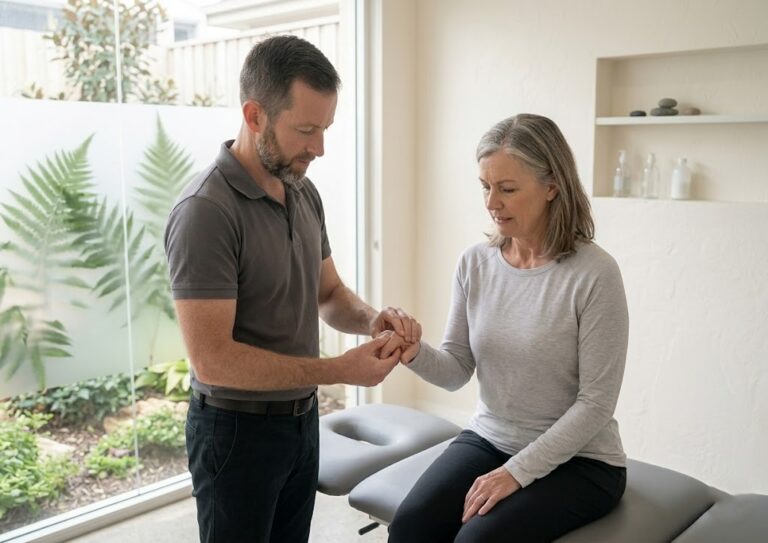
Nerve irritation can feel different. Pain may burn, shoot or travel from the neck into the shoulder, arm or hand. Pins and needles, numbness or reduced strength can also occur. A person might notice difficulty gripping a mug, lifting the arm or finding a comfortable position at night.
These symptoms deserve a more careful assessment, particularly if weakness is progressing. Exercise may still form part of care, but the movements need to match the examination findings.
Warning patterns
Seek prompt medical advice for progressive weakness, coordination problems, fever, major trauma, sudden neurological symptoms or severe unexplained deterioration. A feverish illness with intense neck pain, new difficulty walking, loss of bladder or bowel control, or rapidly worsening arm function isn't a situation for trial-and-error self-care.
If your symptoms sit clearly in the mechanical category, the next step is usually a measured activity plan. If they sound nerve-related or include warning signs, book a GP or other appropriate medical assessment before selecting a treatment package.
Self-Care Strategies You Can Start This Week
For uncomplicated mechanical pain, the first week or two can be an organised self-care period rather than passive waiting. The aim is to keep the neck moving within a comfortable range, reduce unnecessary irritation and track whether daily function is improving.
Start with the simplest tools:
- Heat: Use warmth when muscles feel guarded or stiff, particularly before gentle movement. It can make motion feel more comfortable, but it shouldn't be hot enough to burn the skin.
- Ice: Consider a wrapped cold pack after a recent flare or activity if it reduces soreness. Stop if the skin becomes painful or overly numb.
- Gentle movement: Slowly turn your head within an easy range, nod, and perform relaxed shoulder movements. The exercise should feel controlled, not forced.
- Short walks: Walking keeps the rest of your body active and can reduce the tendency to brace. You don't need to wait for perfect neck comfort before taking a manageable walk.
- Work breaks: Change position regularly rather than holding your head rigidly. Place the monitor near eye level, keep frequently used items close and alternate tasks where possible.
- Sleep support: Choose a pillow height that keeps your head broadly level with your spine. Side and back sleeping are usually easier to adjust than sleeping face down, but comfort and symptom response still matter.
Avoid the common trap of treating the neck as fragile. A collar, prolonged bed rest or refusing every uncomfortable movement may reduce activity and leave the supporting muscles less prepared for normal demands. The safer alternative is graded activity, where you begin with a tolerable amount and increase it as your response settles.
Use symptom response as feedback. If a movement causes spreading arm symptoms, new numbness, increasing weakness or a clear deterioration that doesn't settle, stop that exercise and arrange an assessment. Relaxation, breathing practice and attention to stress can also help reduce protective bracing. A practical visual on pain management without medication may support that part of your plan.
Comparing Osteopathy, Physiotherapy and Chiropractic for Neck Pain
The label on the clinic door matters less than the assessment, the safety screening and whether treatment helps you build useful capacity. All three professions may use hands-on techniques, but their usual emphasis differs.
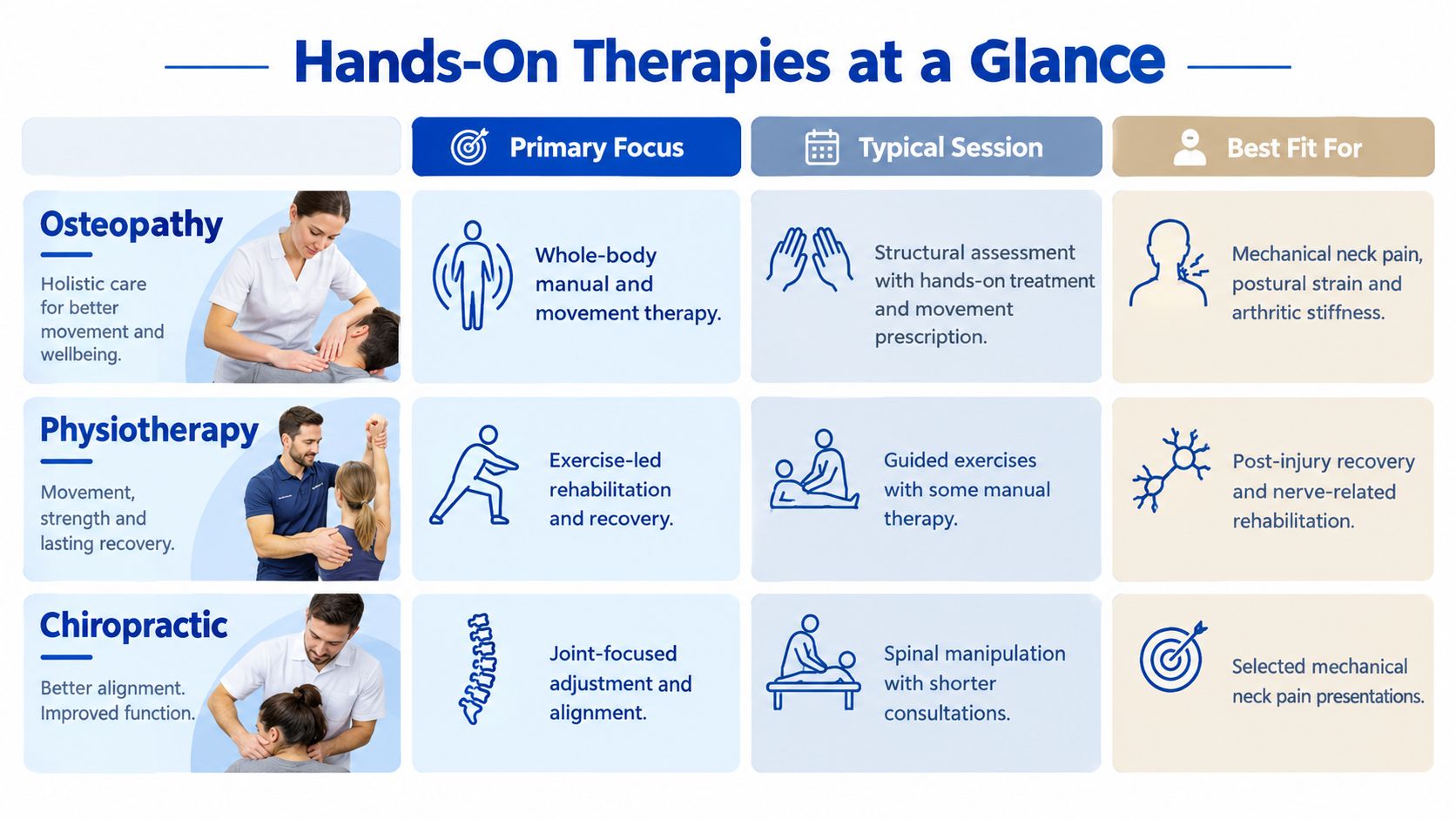
| Therapy | Primary focus | Typical session | Best fit for |
|---|---|---|---|
| Osteopathy | Whole-body manual and movement therapy | Structural assessment, hands-on treatment and movement prescription | Mechanical neck pain, postural strain and arthritic stiffness |
| Physiotherapy | Exercise-led rehabilitation and recovery | Guided exercises with some manual therapy | Post-injury recovery and nerve-related rehabilitation |
| Chiropractic | Joint-focused adjustment and alignment | Spinal manipulation with shorter consultations | Selected mechanical neck pain presentations |
Osteopathic care often looks at how the neck, upper back, shoulders, ribs and surrounding muscles share load. Treatment may include soft-tissue work, joint articulation and gentle mobilisation, followed by advice for movement or daily tasks. It can suit someone whose neck stiffness is linked with desk habits, upper-back restriction or an arthritic movement pattern. It isn't a universal answer, and a practitioner should refer or co-manage when findings fall outside that scope.
Physiotherapy generally places stronger emphasis on progressive exercise, strength, endurance and return to activity. That can be particularly useful after injury or when a nerve-related presentation requires close monitoring of strength and function. Manual therapy may be included, but it should support rehabilitation rather than replace it.
Chiropractic care commonly focuses on spinal and joint adjustments. Some people with mechanical pain may find this helpful, but the technique needs to be appropriate to the person's history, examination and preferences. Forceful treatment isn't automatically better treatment.
Australian recommendations favour active care, including education, normal activity and exercise, with manual treatment used where clinically appropriate. When you compare providers, ask what function they're targeting, what you'll do between appointments and how they'll change the plan if progress stalls.
How Manual Therapy and Exercise Stack Up Against Medication Alone
A randomised trial discussed in RACGP guidance compared three approaches over seven weeks. Clinical success was reported by 68.3% of people receiving once-weekly manual therapy, compared with 50.8% receiving twice-weekly physical therapy exercises and 35.9% receiving continued general-practice care involving analgesia, counselling and education. These are short-term trial outcomes, not a promise for every patient, and they don't mean exercise is unimportant.
The practical interpretation is more useful than the ranking alone. Manual therapy may make movement easier in the short term, while exercise develops the strength, endurance and confidence needed for repeated daily activity. Medication may reduce symptoms enough to sleep or participate, but it doesn't automatically restore neck control, desk tolerance or driving confidence.
The combination matters: hands-on care can open a movement window, while a home programme helps you use and keep that movement.
A sensible plan therefore asks three questions:
- What is limiting movement now? Joint stiffness, muscle guarding, fear of movement or nerve sensitivity may need different approaches.
- What capacity is missing? You may need cervical and upper-back endurance, shoulder control, mobility or confidence with a specific task.
- How will progress be maintained? The answer should include exercises, pacing, workplace adjustments and a flare-up strategy.
This is why a clinic may pair manual treatment with a home programme instead of offering them as competing choices. The hands-on component isn't meant to create dependence on appointments. It should help you practise a better movement pattern and gradually manage more activity independently.
Medications for Neck Pain and How to Use Them Safely
Medication can be useful when pain prevents sleep, movement or participation in rehabilitation. It should usually act as a bridge to active care, not become the entire plan.
Australian primary-care guidance identifies paracetamol and non-steroidal anti-inflammatory drugs, commonly called NSAIDs, as initial pharmacological options. Paracetamol may be unsuitable at excessive doses or for some people with liver concerns. NSAIDs can be inappropriate for people with stomach ulcers, kidney problems, bleeding risks, certain cardiovascular conditions or particular medication combinations. Pregnancy also changes what can be used safely.
Talk with a GP or pharmacist before starting regular medication, especially if you take blood thinners or several prescriptions. Don't assume an over-the-counter product is risk-free because it's easy to buy. Check the active ingredients in combination cold-and-pain products so you don't accidentally duplicate a medicine.
For persistent or more difficult symptoms, a clinician may discuss options such as muscle relaxants or tramadol. These can cause drowsiness, dizziness, nausea and other side effects, and they may affect driving or work safety. They require an individual risk assessment rather than casual self-dosing.
Opioid-based treatment is not a routine answer for uncomplicated neck pain. Australian guidance advises reserving analgesics for refractory presentations, using them for short periods and supervising treatment medically. The same principle applies to any medicine: use the lowest-risk option that supports useful activity, review whether it is helping, and don't let symptom suppression hide worsening weakness or neurological change.
A medication review is particularly important if you've been taking pain relief repeatedly without improving sleep, work tolerance or movement. Persistent symptoms may need a better diagnosis and a structured rehabilitation plan rather than a stronger tablet.
Injections, Surgery and When to Escalate Care
Injections and surgery are not automatic next steps for ordinary stiffness. They're specialist pathways considered when the clinical picture, examination and appropriate imaging point to a problem that conservative care hasn't resolved.
A corticosteroid injection or selective nerve-root block may be discussed when radicular arm pain remains troublesome after a period of non-surgical treatment and imaging confirms relevant nerve compression. The purpose may be symptom control, improved participation in rehabilitation or clarification of the pain source. It isn't a substitute for assessing strength, sensation and function.
Surgery becomes more relevant when there is persistent nerve-related pain with significant or progressing weakness, signs of cervical myelopathy such as coordination changes, or instability following major trauma. These findings require referral through a GP or specialist. They aren't decisions to make from a symptom checklist alone.
Australian primary-care guidance defines neck pain lasting at least six months as chronic and stresses that medication should generally be short-term, medically supervised and combined with conservative care rather than used as the main strategy. The Healthdirect neck pain guidance supports that stepped approach.
Patients with uncomplicated mechanical pain don't need to jump to an injection or operation. They do need a clear review point. If a well-chosen programme isn't restoring sleep, arm use, work tolerance or ordinary movement, reassessment is more sensible than repeating the same treatment indefinitely.
Building a Two-Week Plan and Knowing When to Seek Help
Use two weeks as a structured trial for uncomplicated mechanical neck pain, not as a promise that every episode will resolve within that time. Record the activities that matter to you, such as sleep, driving, desk tolerance, lifting or turning your head, and judge progress by those functions as well as pain.
Days one to three
Keep moving gently, use heat or ice according to your response, take short walks and reduce the positions that repeatedly provoke symptoms. Note whether the pain is local and stable or whether it begins travelling into the arm. If symptoms are escalating quickly, arrange assessment sooner.
Around day seven
Ask whether you can turn your head more easily, sit at your workstation for longer, sleep with fewer interruptions or complete basic tasks with less guarding. If there is no meaningful functional change, book an osteopath, physiotherapist or GP instead of adding more exercises.
By day fourteen
Begin a gradual return to normal activities, increasing one demand at a time. If your neck still limits work, driving, exercise or sleep, seek an individualised assessment. Australian guidance notes that exercise and conservative treatment can lose effectiveness over time, while psychosocial barriers can influence recovery, so structured follow-up is preferable to repeated short treatment bursts. The Australian Physiotherapy Association discussion of neck-pain management outlines this concern.

Stop self-care and seek urgent medical assessment for sudden severe pain after major trauma, fever, unexplained weight loss, progressive weakness, new coordination problems, changes in bladder or bowel control, severe night pain or sudden neurological symptoms. If the pain is recurring, ask why the flare-ups keep returning and whether your plan covers sleep, stress, workload and graded strength, not just posture.
Eligible Australians with chronic conditions may be able to access osteopathy under certain Medicare plans, subject to the relevant requirements and referral arrangements. Confirm your eligibility with your GP and Medicare before relying on that pathway.
Bayside Osteopathic Health offers individual assessment, gentle hands-on treatment and practical movement advice for mechanical neck pain, stiffness and postural strain. If your symptoms are limiting sleep, driving, desk work or daily activity, visit Bayside Osteopathic Health to discuss a function-focused plan and whether osteopathic care is appropriate for you.