
You wake up stiff, loosen up a little after a hot shower, then tighten again by lunch. Your neck nags when you turn to reverse the car. Your lower back complains after sitting, but it also flares when you try to “get stronger” with the wrong class. If that sounds familiar, you're probably not looking for a fitness trend. You're looking for movement that feels safe.
That's where Reformer Pilates often enters the conversation. Around Heathmont, many people searching for Reformer Pilates aren't chasing intense workouts. They want a way to move without aggravating an already sensitive back, neck, hip, or shoulder. They want guidance, not guesswork. They want to know one thing before anything else. Is this safe for me?
Table of Contents
- Is Reformer Pilates the Right Move for Your Aches and Pains
- How Reformer Pilates Helps Your Body Heal and Strengthen
- Finding Your Fit in Heathmont Choosing a Reformer Studio
- Your First Class A Step by Step Walkthrough
- The Osteopathic Connection Syncing Pilates With Your Health Plan
- Frequently Asked Questions About Reformer Pilates
Is Reformer Pilates the Right Move for Your Aches and Pains
A common local pattern goes like this. Someone has had back pain on and off for months, or neck tension that turns into headaches, or knees that feel unreliable on stairs. They know they should move more, but every attempt feels risky. Walking is fine until it isn't. The gym feels too blunt. Stretching helps for an hour, then everything tightens again.
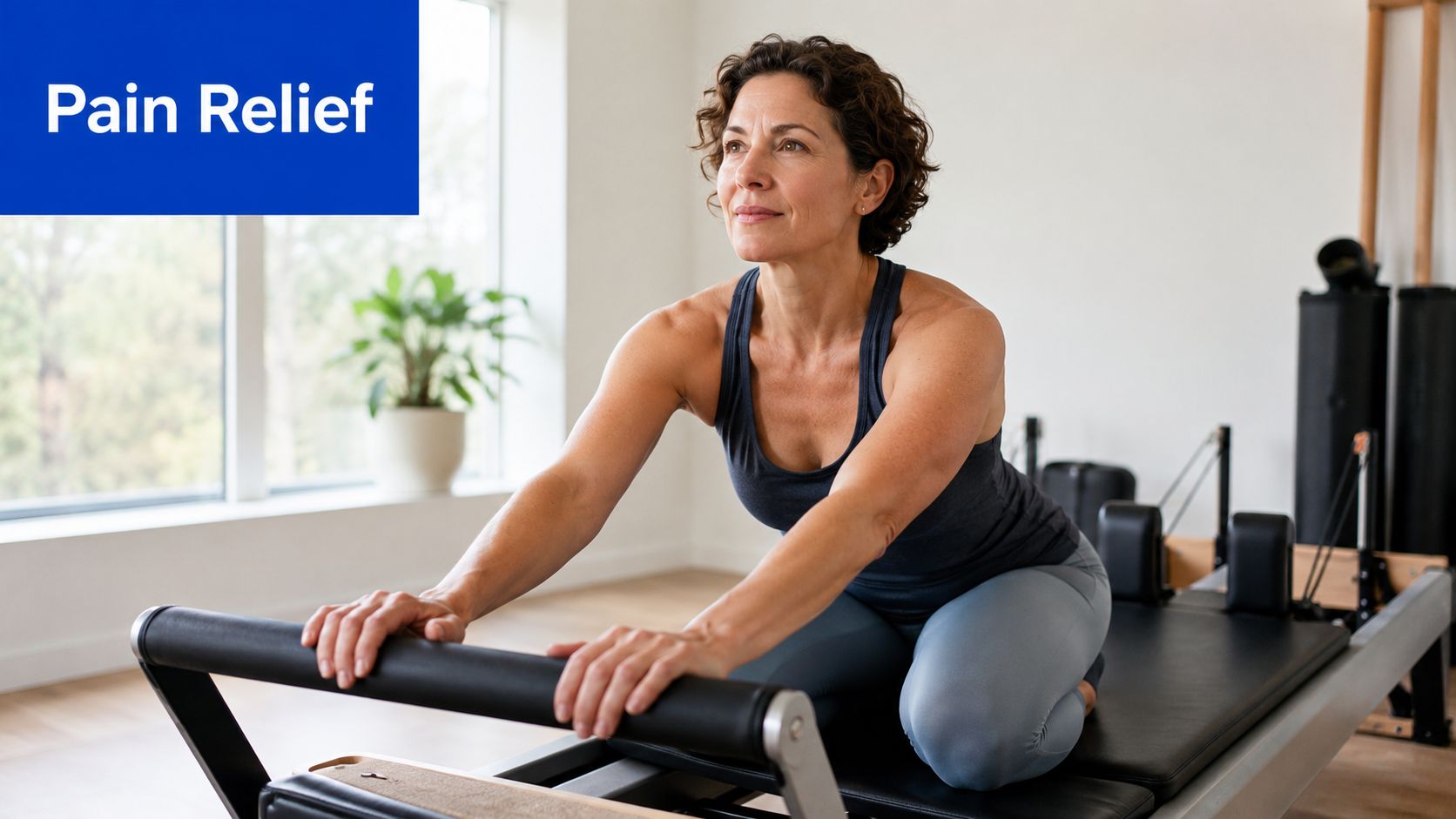
That's exactly why Reformer Pilates in Heathmont appeals to people with pain. It isn't just exercise on a fancy machine. It's a controlled system that gives your body support while still asking it to work. The reformer uses a sliding carriage, springs, ropes with handles, and a footbar, which means resistance can be adjusted instead of forced (Pilates reformer guide). For someone who feels fragile or deconditioned, that matters.
Why pain changes the question
If you've got persistent pain, the question isn't “What burns the most calories?” It's “What lets me move well enough to rebuild confidence?” For many people, the answer starts with low-impact movement that can be scaled.
In Australia, about 7.3 million Australians live with a musculoskeletal condition, and low back pain remains a leading contributor to health burden (Australian musculoskeletal overview referenced here). So if you're hesitating before booking a class, that hesitation is normal. You're not overthinking it. You're trying to protect a body that has already taught you to be careful.
Reformer Pilates tends to suit people who need precision, support, and gradual progress more than people who benefit from being pushed hard on day one.
What usually works and what usually doesn't
What works is a class where the teacher treats pain as relevant information. They watch your alignment, modify foot position, reduce spring tension when needed, and give you a smaller range if your body isn't ready.
What doesn't work is treating every sore body like it just needs more effort.
- Helpful approach: Controlled movement, steady breathing, and enough support to keep you out of protective bracing.
- Unhelpful approach: Fast transitions, deep ranges too early, and a “keep up with the class” mindset.
- Helpful approach: Small corrections that improve how your ribs, pelvis, and shoulders stack.
- Unhelpful approach: Chasing fatigue while your form slips.
Who tends to benefit most
Reformer Pilates is often a good fit for adults dealing with:
- Back or neck stiffness: especially when poor posture and deconditioning are part of the picture
- Joint sensitivity: where impact is a problem but movement is still necessary
- Post-injury uncertainty: when you want to return to exercise without guessing
- Office-related strain: where sitting has shortened some areas and weakened others
If that sounds like you, the goal isn't to prove toughness. It's to restore trust in movement.
How Reformer Pilates Helps Your Body Heal and Strengthen
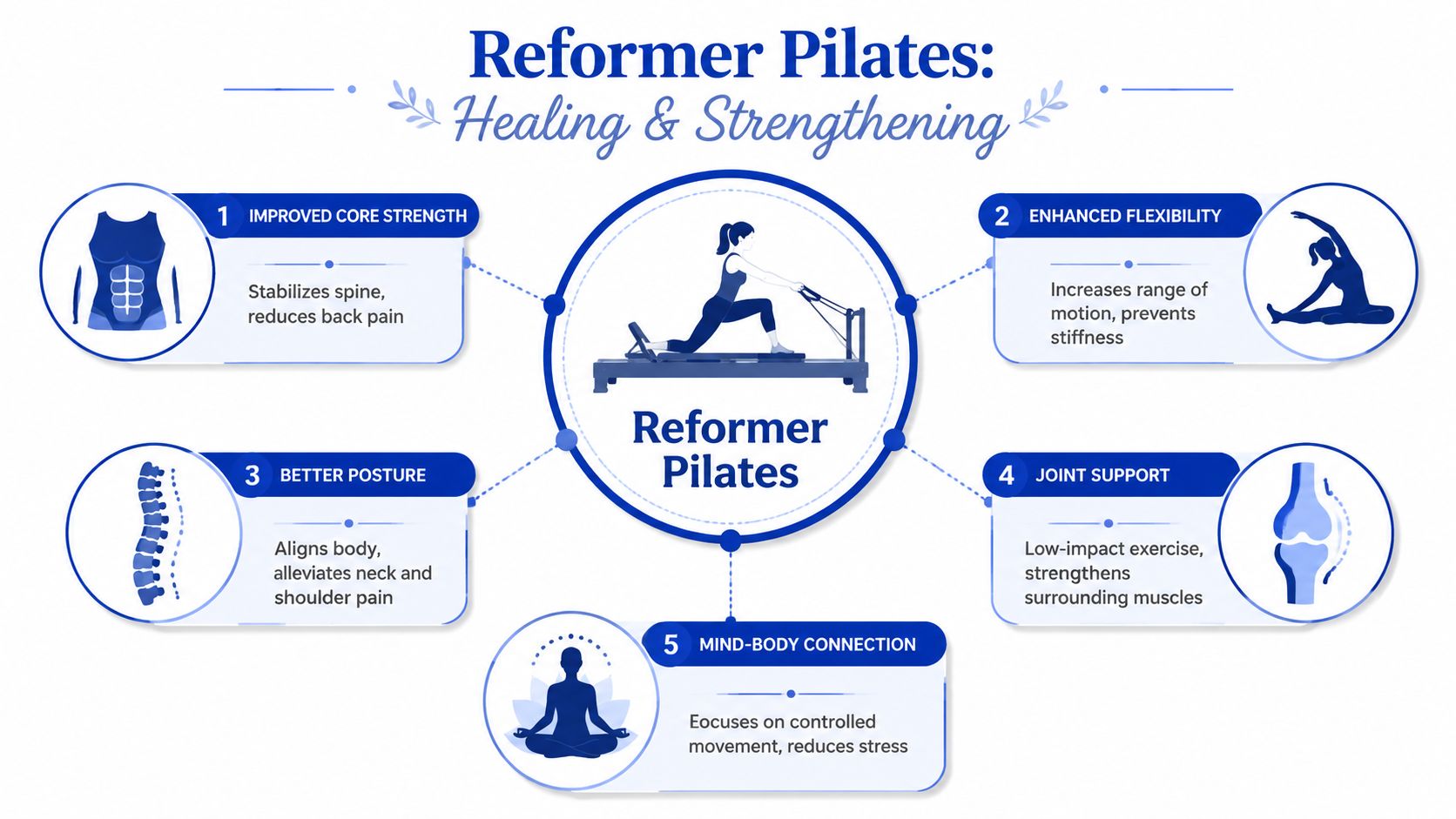
Reformer Pilates helps because it changes the way load reaches the body. Instead of dumping force into the joints and asking the strongest muscles to take over, it lets you organise movement before you add challenge. That's a major reason it often feels better than generic strength classes for people with pain.
Better control changes where stress goes
When someone has back or neck pain, they often move from the wrong place. The lower back overworks during leg effort. The shoulders grip during arm work. The neck braces during abdominal tasks. Reformer work gives enough support to slow that pattern down.
The carriage, springs, and straps create feedback. You can feel when your pelvis shifts, when your ribs flare, or when one side is doing more than the other. That matters because pain often lives in compensation patterns, not just in weak muscles.
A good example is posture-related strain. If your upper back is stiff and your shoulders sit forward, “pulling your shoulders back” rarely sticks. Better control through the trunk and shoulder girdle gives you a more stable base. That's the same kind of body-awareness principle behind postural and ergonomic load management, where alignment and repetition matter as much as strength.
What the clinical evidence supports
This isn't only a matter of people saying they feel better. An 8-week randomised controlled trial in overweight and obese women found statistically significant improvements in body composition, upper-extremity strength, endurance, depression, and anxiety, with reported p-values of 0.011 for body composition, 0.000 for upper-extremity strength, 0.000 for endurance, 0.025 for depression, and 0.031 for anxiety (clinical trial on reformer Pilates).
That's useful for a pain-management audience because chronic pain rarely stays only physical. When movement starts to feel more possible, people often notice better confidence, calmer breathing, and less fear around activity. The trial also reported large effect sizes for areas linked to function, including BMI, upper-extremity muscle strength, trunk flexor strength, back strength, and lateral bridge performance.
Clinical takeaway: Reformer Pilates has evidence behind it as a structured exercise approach. It isn't just a lifestyle extra or a boutique class format.
Where people get the most benefit
The biggest gains usually come when the exercise matches the problem.
| Area of concern | How reformer work helps |
|---|---|
| Back pain | Improves trunk control and reduces the habit of overusing the lower back |
| Neck and shoulder tension | Builds support through upper back and shoulder mechanics rather than only stretching tight spots |
| Hip stiffness | Encourages controlled mobility without heavy impact |
| Joint sensitivity | Uses adjustable resistance so the load can be matched to tolerance |
What usually fails is rushing the process. If resistance goes up before control improves, the machine can amplify the exact compensation you're trying to correct. The best sessions look calm from the outside. Internally, they're very precise.
Finding Your Fit in Heathmont Choosing a Reformer Studio
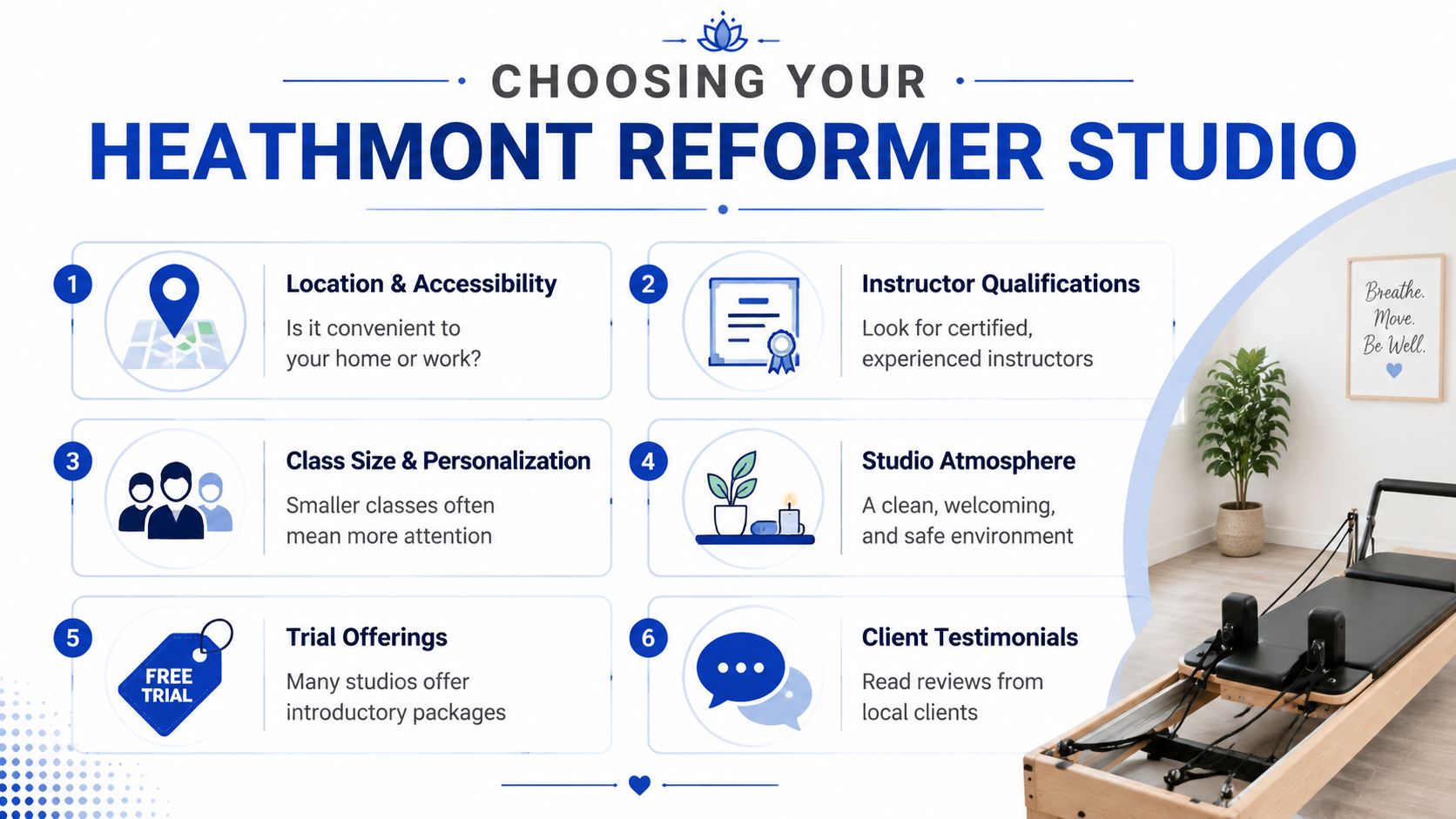
Picking a studio matters more when pain is part of the picture. A beautiful room and a polished website don't tell you whether the class will suit your back, neck, or arthritic joints. You need a place that can adapt, observe, and explain.
There is already an established local business footprint for reformer Pilates in Heathmont. ZoomInfo identifies Reformer Pilates at 136–138 Canterbury Rd, Heathmont, Victoria 3135, which shows this isn't just a broad Melbourne trend but a real local service category within the suburb's fitness economy (Heathmont business listing). That gives you a practical starting point for local research.
What to ask before you book
Don't just ask about timetable and price. Ask questions that tell you how the studio handles real bodies with real limitations.
- Pain experience: Ask whether the instructors regularly work with people who have back pain, neck pain, arthritis, or post-injury stiffness.
- Class supervision: Ask how closely instructors monitor technique and whether beginners get individual correction.
- Modifications: Ask what happens if a movement hurts or you can't kneel, lie flat, or tolerate loaded spinal flexion.
- Entry point: Ask whether they offer true beginner sessions rather than placing you straight into a general class.
If a studio answers vaguely, that's useful information. If they can explain their modification process clearly, that's usually a good sign.
Signs a studio is a better fit for pain management
A suitable studio often shares a few traits. You can usually spot them before you commit.
They screen you properly
They want to know about injuries, surgeries, current symptoms, and aggravating movements.They don't oversell intensity
The language is about technique, control, and progression, not punishment.They make adjustments normal
You shouldn't feel like the difficult client because you need a wedge, a smaller range, or lighter springs.They understand equipment-based rehab thinking
That often overlaps with the kind of guided movement you'd also see in equipment-supported rehabilitation settings, where setup and supervision shape the result.
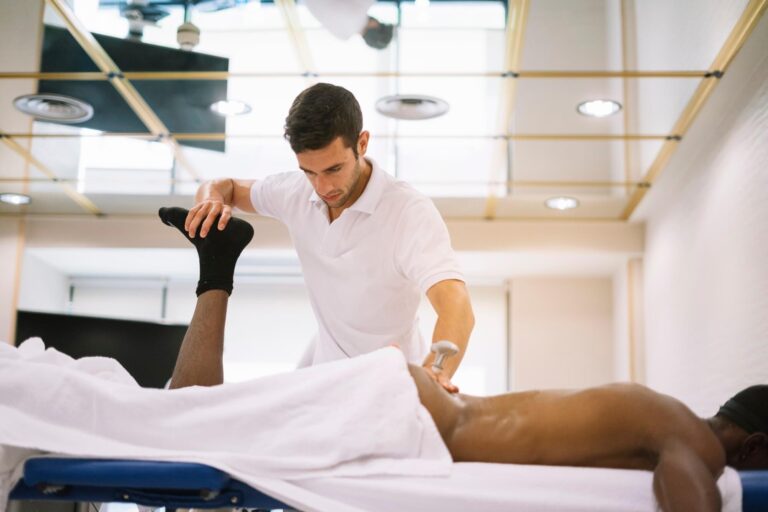
A studio is a good match when you leave feeling worked, clearer in your body, and not flared for the rest of the day.
Red flags worth noticing
Some warning signs are subtle.
- Everything is one-speed: no regressions, no pauses, no discussion of comfort
- Pain is brushed off: you're told to “push through” without assessment
- The room is too crowded: the teacher cannot properly see how you move
- Complexity appears too early: lots of unstable or loaded movements before basic control is established
For people searching Reformer Pilates Heathmont because they're sore rather than curious, those details make all the difference.
Your First Class A Step by Step Walkthrough
First classes feel easier when you know the rhythm before you arrive. Many individuals are less worried about the machine than they are about doing something wrong, holding everyone up, or triggering a flare. A little preparation fixes most of that.
Before you leave home
Wear comfortable clothing that lets the instructor see your alignment. Very loose clothing can make it harder for them to notice whether your pelvis is twisting or your ribs are lifting. Grip socks are usually expected because they improve traction and hygiene on the equipment.
Bring water, arrive a little early, and be ready to talk plainly about your symptoms. Simple statements help. “My lower back doesn't like fast roll-downs.” “My neck gets aggravated if I hold tension when lying down.” “My right knee is sore with kneeling.” That kind of detail is more useful than saying you're “a bit tight everywhere”.
Practical rule: Tell the instructor what hurts, what usually sets it off, and what has helped in the past. That gives them something they can work with immediately.
What the class should feel like
A well-designed reformer class follows a six-part structure of warm-up, stability, mobility, strength, challenge, and warm-down, with early attention to stabilising the lumbar spine and other stability-biased joints before progressing further (reformer programming guideline).
That sequence matters. It stops the class from jumping straight into effort before your body is ready.
Here's what that usually looks like in practice:
| Phase | What you may notice |
|---|---|
| Warm-up | Gentle breathing, footwork, and simple carriage work to settle tension |
| Stability | Controlled tasks where the trunk stays organised while arms or legs move |
| Mobility | Carefully increasing range once support and control are present |
| Strength | More load or longer sets, still with close attention to form |
| Challenge | Slightly more complex patterns, balance demands, or coordination |
| Warm-down | Lower-load movements to finish without an abrupt stop |
During the class
The best first class is rarely the hardest class. Expect pauses for setup, spring changes, and cues about ribs, pelvis, neck position, and breath. That isn't wasted time. It's where the value sits.
A few helpful habits:
- Ask early, not late: If a movement feels wrong, flag it at the first rep.
- Use the smaller range: Bigger isn't better if it changes the quality of the movement.
- Stay precise when tired: Once control drops away, the exercise has changed.
The guideline also notes that phase-one exercises should stay precise and core-driven until the body is warm, and that too much intensity too early reduces safety and limits benefit. That's exactly why a good class may feel conservative at the start. Conservative is often smart.
After the class
You may feel muscles you haven't noticed in a while. That's fine. What you don't want is a marked flare that lasts and makes normal daily movement worse.
If you're mildly sore but feel more upright, more mobile, or more supported through the trunk, that's usually a healthy response. If something specific was irritated, tell the instructor before your next session so the plan can change.
The Osteopathic Connection Syncing Pilates With Your Health Plan
For pain management, Reformer Pilates works best when it sits inside a bigger plan. Exercise is powerful, but exercise isn't assessment. If someone has recurring pain, asymmetry, old injury history, joint restriction, or a movement pattern that keeps reproducing the same strain, they often need two things. They need hands-on assessment and they need active retraining.
Why the combination makes sense
Osteopathic care looks at how the body is functioning as a whole. That includes joint motion, muscle tension, load transfer, posture, breath mechanics, and the way one restricted area can force another area to overwork. Reformer Pilates then gives you a practical way to train the corrected pattern.
That pairing is useful because manual treatment can improve mobility and reduce protective tension, but those changes need to be reinforced. If the body returns to the same movement habits, symptoms often return too.
When an assessment should come first
If you've got a history of repeated flare-ups, pain that travels, significant morning stiffness, or uncertainty after injury, it's sensible to get assessed before starting classes. That doesn't mean Pilates is unsuitable. It means the starting point matters.
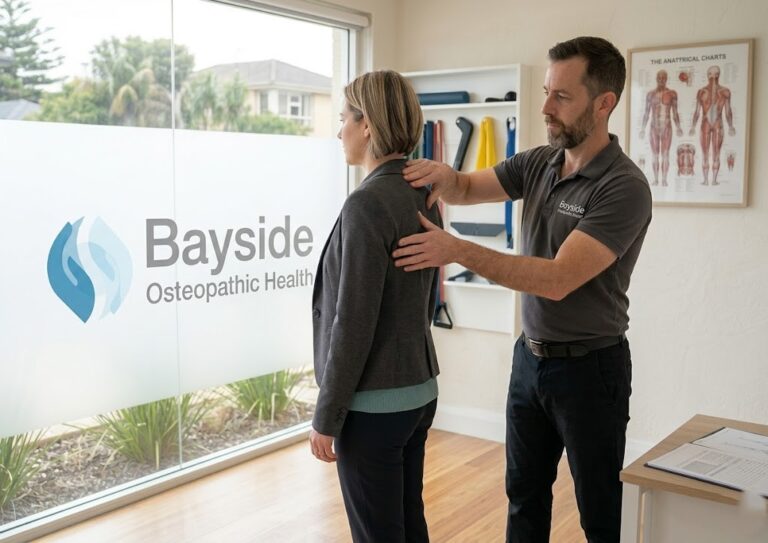
A clinic such as Bayside Osteopathic Health can assess how you're moving, identify common aggravators, use gentle hands-on care where appropriate, and help you decide whether group reformer work, a modified entry point, or a different phase of rehab makes the most sense first.
This is especially relevant for people navigating layered issues. Pregnancy-related loading changes, postural strain, desk work, arthritis, or persistent back and neck pain often need more than generic exercise advice. Supportive movement planning around those changes can sit alongside resources related to pregnancy and musculoskeletal care and other broader health considerations.

If Pilates is the strengthening phase, osteopathic care is often the stage that clarifies what your body will tolerate, what needs modifying, and what pattern you're trying to change.
What usually gets better outcomes
The most reliable approach is simple:
- Assess first when pain is persistent
- Start with movements you can control well
- Progress load only after technique is stable
- Review the response after class, not just during it
What doesn't work is guessing. Pain-sensitive bodies usually don't need less movement. They need better-targeted movement.
Frequently Asked Questions About Reformer Pilates
Is reformer Pilates different from mat Pilates
Yes. Mat Pilates uses body weight and floor-based positions. Reformer Pilates adds a machine with adjustable resistance and support. For people with pain, that support can make certain movements more accessible and easier to scale.
Should I go to class during a pain flare-up
Sometimes yes, sometimes no. It depends on what's flaring, how severe it is, and whether the class can be modified properly. If pain is sharper than usual, spreading, or making normal movement difficult, get professional advice before pushing through.
How often should I do it to notice a difference
A widely used benchmark is 2–3 Reformer sessions per week for 30–60 minutes to support noticeable gains in strength, flexibility, and overall well-being (Reformer session frequency guidance). Consistency matters more than making every class hard.
Is it safe if I have arthritis or an old injury
It can be, provided the class is well supervised and the exercises are adapted to your current tolerance. Adjustable resistance is one of the main reasons reformer work can suit people who need a gentler loading option.
Is Reformer Pilates safe in pregnancy
It may be appropriate for some people, but pregnancy changes pressure management, joint loading, and positioning tolerance. Check with your healthcare provider and choose an instructor who is comfortable modifying for pregnancy.
If you're considering Reformer Pilates because pain has made movement feel uncertain, a proper assessment can help you start with more confidence and fewer setbacks. Bayside Osteopathic Health offers gentle osteopathic care focused on pain relief, mobility, and practical movement guidance, which can help you decide whether reformer work is the right next step and how to approach it safely.