
Pelvic pain often starts as something you try to work around. You shift in your chair, avoid longer walks, brace when you stand up, and wonder why your lower back, hips, bladder area, abdomen, or pelvic floor all seem to flare at once. Many people have already tried to treat the painful spot directly, only to find the problem keeps returning.
That's where an osteopathic pelvic hub approach can feel different. Instead of treating the pelvis as an isolated area, it looks at how the pelvis works with the spine, hips, ribs, diaphragm, abdominal wall, and pelvic floor. For many patients, that broader view is what finally makes their symptoms make more sense.
Table of Contents
- Searching for Answers to Your Pelvic Pain
- What Is an Osteopathic Pelvic Hub
- Conditions We Address with Pelvic Osteopathy
- Osteopathic Pelvic Care vs Pelvic Physiotherapy
- Your First Visit What to Expect
- Empowering Your Recovery with Self-Care
- Booking and Medicare at Bayside Osteopathic Health
- Frequently Asked Questions
Searching for Answers to Your Pelvic Pain
If pelvic pain has been lingering for a while, you've probably noticed it doesn't stay neatly in one place. It may feel worse when you sit for too long, stand on one leg, roll in bed, bend, twist, exercise, or even when you're under stress and holding tension through your abdomen and breath. That pattern can be confusing, especially when the pain is labelled only by where it's felt.
A lot of people come in after bouncing between explanations that don't fully connect. They've heard about the pelvic floor, the lower back, the SI joints, posture, core weakness, endometriosis, postnatal strain, bladder symptoms, or prostatitis-like pain, but no one has joined the dots. The result is frustration, caution around movement, and a sense that the body has become unpredictable.
An osteopathic pelvic hub approach starts with a different question. Not just “where does it hurt?” but “what is loading, irritating, or restricting the pelvis in the first place?”
Pelvic pain often has more than one driver. If you only chase the painful tissue, you can miss the mechanics keeping it irritated.
In Australia, this field is still growing. Osteopathic pelvic health is a relatively recent and formally developing specialty, with the country's first osteopath-run pelvic health clinic and formalised training in internal pelvic floor assessment marking a significant expansion of osteopathic scope in this area, as noted by the Pelvic Health Institute and Osteopathic Pelvic Hub update.
That matters because newer specialty areas need clear boundaries and good clinical judgement. A careful osteopathic approach doesn't claim to cure every pelvic problem. It aims to identify the musculoskeletal and functional contributors that can amplify symptoms, then treat those gently and practically.
What Is an Osteopathic Pelvic Hub
The easiest way to understand the idea is to think of the pelvis as the hub of a wheel. The hub sits at the centre and connects everything around it. If the hub isn't moving well, the spokes can't work properly. In the body, those “spokes” include the lumbar spine, hips, legs, abdominal wall, rib cage, diaphragm, and pelvic floor.
Why the pelvis behaves like a hub
The pelvis transfers load every time you walk, climb stairs, roll in bed, lift a child, or sit at a desk for hours. It has to share force well with the lower back above and the legs below. It also works closely with breathing mechanics, because the diaphragm and pelvic floor respond to pressure together.
That's why pelvic pain doesn't always come from the pelvic floor alone. Sometimes the issue begins with stiff sacroiliac joints, poor hip rotation, guarding through the lower abdomen, shallow breathing, or a trunk that isn't distributing load evenly. The pelvis then becomes the place where strain collects.
A whole-body approach can include hands-on methods such as soft tissue treatment and therapeutic manual care when surrounding muscles and connective tissues are contributing to that strain.

What an osteopath looks for
An osteopath doesn't just inspect the sore area. The assessment often asks:
- How do you transfer weight? Walking, stepping, and single-leg balance can show whether one side of the pelvis is working harder.
- How do your hips and lower back move? Limited hip motion often forces extra movement through the pelvis.
- What is your breathing pattern like? A braced chest or upper-breathing pattern can keep the abdominal wall and pelvic floor under constant tension.
- Do symptoms change with posture? Pain on sitting, prolonged standing, bending, or twisting can point toward a mechanical component.
Practical rule: If symptoms change clearly with movement, posture, or load, it's worth assessing the whole mechanical chain, not only the place that hurts.
The term Osteopathic Pelvic Hub captures that central idea. The pelvis is not separate from the rest of the body. It's a meeting point. When treatment improves how that meeting point shares movement and load, patients often find everyday activities become less provocative and less draining.
Conditions We Address with Pelvic Osteopathy
Pelvic osteopathy is most useful when symptoms have a strong musculoskeletal or functional component. That doesn't mean the pain is “just posture” or “all mechanical”. It means body mechanics may be contributing to the intensity, frequency, or persistence of symptoms.
Women's pelvic pain and recovery
Women often seek pelvic osteopathy for persistent pelvic pain, endometriosis-related discomfort, pelvic girdle pain, postnatal strain, and pain linked with sitting, intercourse, bowel motion, exercise, or prolonged standing. In these cases, the goal isn't to make sweeping claims about pelvic pathology. It's to assess whether joint stiffness, muscle overactivity, poor load transfer, scar-related tension, or breathing and abdominal mechanics are adding to the problem.
A 2016 peer-reviewed pilot study on osteopathic care for chronic pelvic pain in women reported that 28 patients aged 20 to 65 years were treated, 22 completed the planned course of care, and 17 reported symptom improvement. Among the 14 patients with endometriosis, 10 improved. The same study found physical wellbeing improved in 80% of patients and psychological wellbeing in 60%, supporting the value of addressing factors such as sacroiliac joint restriction and pelvic floor tightness in selected patients, according to the peer-reviewed pelvic pain study on PubMed Central.
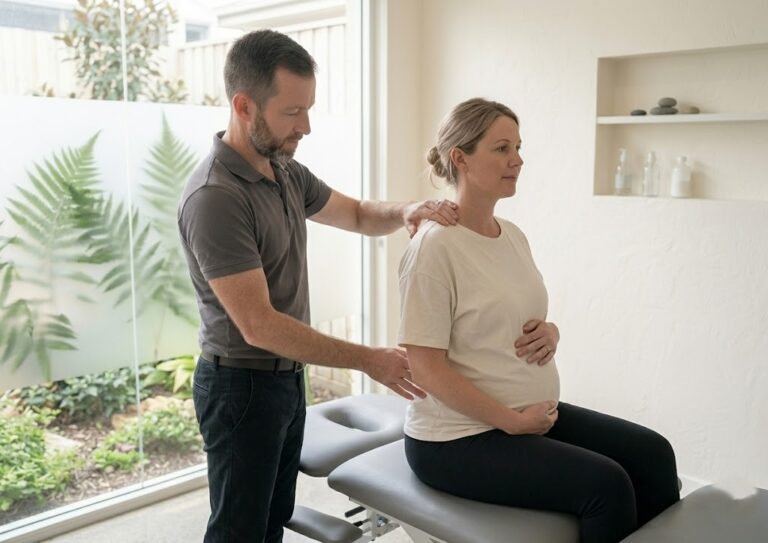
For pregnancy and after birth, musculoskeletal care often focuses on how the pelvis and trunk manage load. Supportive movement strategies and hands-on treatment may complement guidance around pregnancy postural support and changing body mechanics, especially when rolling, walking, lifting, or feeding positions are aggravating symptoms.
Men's pelvic pain matters too
Men are often underrepresented in pelvic health conversations, even though they present with real and often complex symptoms. These can include pelvic floor-related pain, lower abdominal tension, tailbone discomfort, genital or perineal pain, prostatitis-like symptoms, pain with sitting, and pelvic pain that overlaps with low back or hip stiffness.
One osteopathic educational source states that chronic pelvic pain affects 15% to 20% of women and 8% of men, highlighting that male pelvic pain is not rare, as discussed in this osteopathic pelvic pain education video.
What tends to help most is being realistic about the role of manual therapy. Osteopathy may help when symptoms appear linked to:
- Postural loading patterns
- Hip and lumbopelvic restriction
- Pelvic floor overactivity
- Breathing and abdominal bracing
- Pain referral from the lower back, gluteals, or deep hip rotators
What usually doesn't help is treating pelvic pain as if one release technique will fix every case. Chronic pelvic pain often needs coordination with GP care and, where relevant, other pelvic health professionals.
Osteopathic Pelvic Care vs Pelvic Physiotherapy
People often ask which is better. In practice, that's usually the wrong question. Both professions can play an important role. The more useful question is which starting point fits your presentation and preferences.
Where the approaches differ
Pelvic physiotherapy often begins with a stronger focus on pelvic floor muscle assessment, retraining, exercise prescription, bladder and bowel habits, and targeted rehabilitation. That can be very helpful when the main issue is muscle coordination, continence, return to activity, or pelvic floor awareness.
Osteopathic pelvic care often starts one layer wider. It looks at the pelvis as part of a moving system and asks how the spine, ribs, diaphragm, hips, abdominal wall, gait, and load transfer are influencing symptoms. The treatment tends to include hands-on work aimed at reducing joint restriction, soft-tissue tension, and protective guarding across that whole chain.
Neither approach needs to exclude the other. In fact, some patients do best when both perspectives are used at different stages.
If your symptoms are strongly linked to posture, walking, twisting, lifting, or back and hip stiffness, a broader structural assessment can be especially valuable.
Osteopathic Care vs Pelvic Physiotherapy at a Glance
| Aspect | Osteopathic Pelvic Care | Pelvic Physiotherapy |
|---|---|---|
| Main starting lens | Whole-body mechanics and how the pelvis shares load with the spine, hips, trunk, diaphragm, and pelvic floor | Pelvic floor function, muscle retraining, continence, exercise-based rehabilitation |
| Assessment focus | Movement patterns, joint mobility, postural loading, breathing mechanics, tissue tension | Pelvic floor strength, relaxation, coordination, bladder and bowel function, activity-specific control |
| Typical hands-on work | Soft-tissue treatment, joint articulation, gentle mobilisation, functional release | Pelvic floor assessment, manual release where indicated, exercise cueing, retraining strategies |
| Good fit for | Patients with overlapping back, hip, rib, breathing, or whole-body mechanical contributors | Patients needing targeted pelvic floor rehabilitation or specific exercise progression |
| Best mindset | Find and reduce mechanical drivers that keep symptoms irritated | Build control, awareness, and function in day-to-day tasks and exercise |
The overlap matters more than the rivalry. If care is thoughtful, evidence-informed, and appropriately scoped, both can contribute meaningfully to recovery.
Your First Visit What to Expect
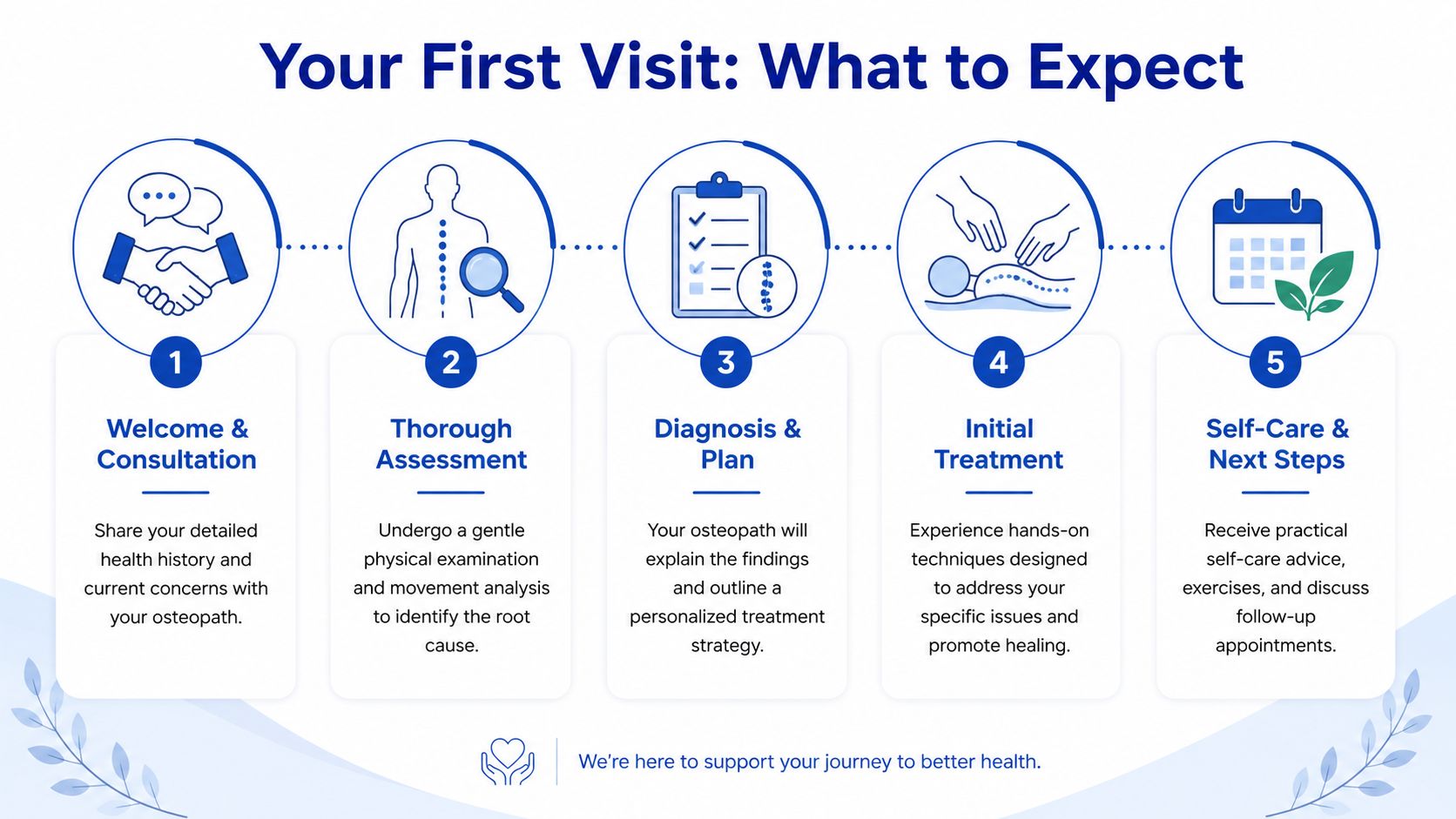
Patients often arrive a little unsure about what a pelvic appointment will involve. That's normal. A good first visit should feel clear, respectful, and collaborative from the start.
The conversation comes first
The appointment usually begins with a detailed discussion of your symptoms and history. That includes where you feel pain, what aggravates it, what eases it, whether it changes with sitting or walking, how long it's been present, and whether there are related issues such as lower back pain, hip tightness, postnatal strain, or pelvic floor symptoms.
The process should also clarify goals. Some people want to sit comfortably at work again. Others want to return to gym training, manage pelvic girdle pain in pregnancy, or reduce flare-ups during everyday movement.
Assessment and initial treatment
The physical assessment is usually broader than people expect. Depending on your symptoms and consent, an osteopath may assess:
- Spinal movement to see whether the lower back is stiff, overloaded, or avoiding certain ranges.
- Hip mobility because restricted hips often shift extra stress into the pelvis.
- Pelvic load transfer to understand how the pelvis handles single-leg stance, walking, or rolling.
- Breathing mechanics because a braced diaphragm and upper-chest breathing pattern can keep the trunk and pelvic floor tense.
In Australia, osteopathic practice is regulated and expected to stay within clear, evidence-informed clinical boundaries. For pelvic health, that means focusing on musculoskeletal issues such as pelvic girdle load transfer, sacroiliac mobility, and pelvic floor-related pain, with a practical sequence that starts by correcting structural blocks before moving to deeper tissues, as outlined by The Osteopathic Pelvic Hub clinical overview.
Treatment is usually gentle and specific rather than forceful. It may include soft-tissue work, articulation of the lower back or hips, release of overactive muscle groups, and strategies to reduce strain through the pelvis during daily tasks. If internal pelvic work is relevant, that should be discussed carefully, not assumed.
The first appointment isn't about doing everything at once. It's about identifying the main drivers, calming what's irritated, and giving you a practical direction.
Empowering Your Recovery with Self-Care
You leave the clinic feeling looser, then symptoms creep back after a long drive, a day at the desk, or a poor night's sleep. That pattern is common with pelvic pain. The pelvis sits in the middle of several moving parts, including the ribcage, diaphragm, lower back, hips, and pelvic floor, so recovery usually improves when daily habits stop feeding the same strain.
Simple things that help between visits
The best self-care plan is usually simple enough to repeat, and specific enough to match your pattern of symptoms.
Diaphragmatic breathing
Lie on your back or sit with support. Let the breath expand into the lower ribs and abdomen instead of lifting through the upper chest. This often helps settle protective tension through the abdominal wall and pelvic floor.Gentle pelvic tilts
In crook lying or sitting, slowly roll the pelvis forward and back in a comfortable range. This can improve pelvic awareness and reduce the stiffness that builds with prolonged sitting.Supported hip opening
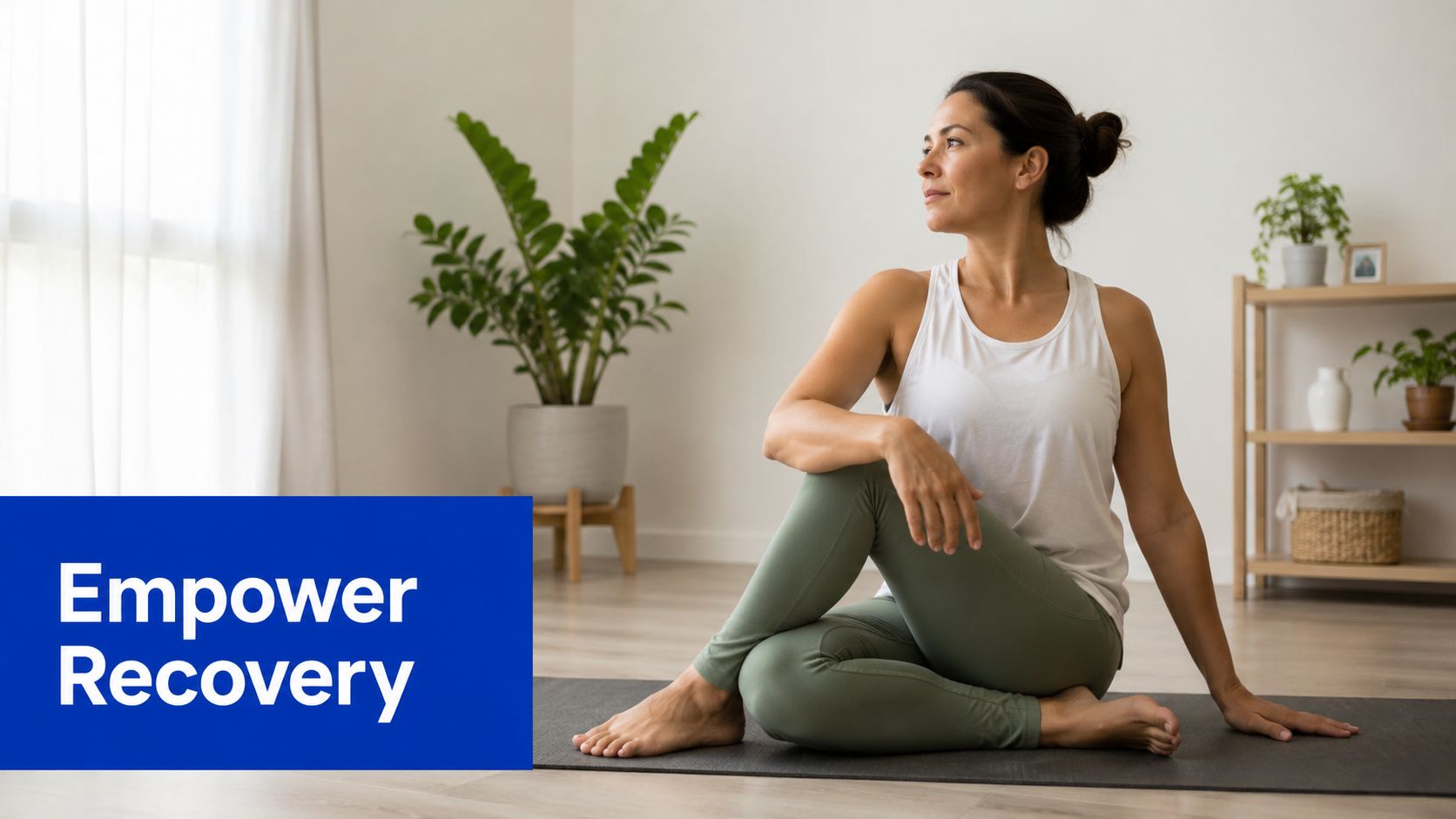
A gentle figure-four stretch, modified to suit your comfort, can reduce tension through the gluteals and deep hip rotators when those areas are contributing to pelvic pain.Walking within tolerance
Short, regular walks are often more useful than one long effort. The aim is smoother load transfer through the pelvis, not forcing distance.
For some patients, guided exercise adds another layer of support. Pilates-based support for mobility and control can work well alongside osteopathic care when the program respects symptom limits and focuses on breathing, hip control, and trunk coordination.
When self-care works best
Self-care is more effective when it matches the reason you flare. If sitting is the main aggravator, frequent position changes may help more than stretching harder. If breath-holding is part of the pattern, breathing retraining may be a better starting point than strengthening. If walking or single-leg loading triggers pain, the first job may be reducing irritation and improving control through the hips and trunk before adding more exercise.
That whole-body view matters here. Pelvic symptoms do not always begin in the pelvic floor itself. In both women and men, I often see pain driven by a combination of rib tension, shallow breathing, hip stiffness, gluteal overactivity, abdominal bracing, or poor load transfer through the lower back and pelvis. Self-care works better when it addresses that hub, not just one sore spot.
This short movement resource can be a helpful starting point for gentle body awareness and mobility:
A few practical rules help:
- Keep it comfortable. Mild effort is fine. Symptoms that rise and stay high usually mean the dose was too high.
- Be consistent. Small daily inputs tend to work better than occasional hard sessions.
- Notice patterns. Track which positions, movements, and times of day tend to trigger or settle symptoms.
Self-care does not replace assessment. It gives you a way to reduce strain, calm flare-ups, and support the work we do in the treatment room.
Booking and Medicare at Bayside Osteopathic Health
You have read about pelvic pain, recognised a few of your own patterns, and now the practical question is simple. How do you get assessed, and can Medicare help with the cost?
How to book
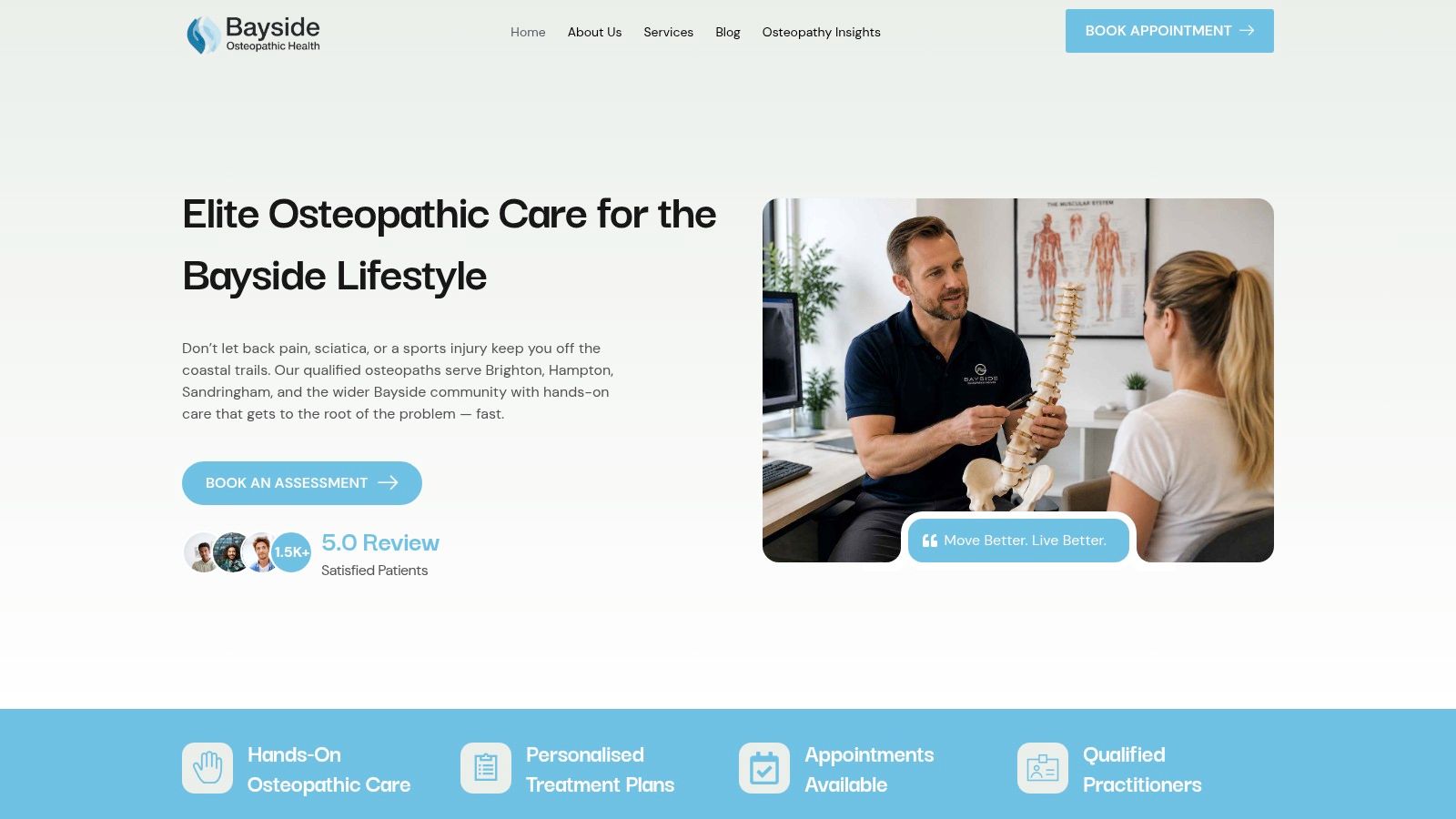
Appointments at Bayside Osteopathic Health can be booked directly with the clinic. If you are not sure whether osteopathic assessment is the right fit, contact the clinic first and briefly outline your symptoms, how long they have been present, and what tends to aggravate them. That usually helps clarify whether this whole-body pelvic approach is appropriate, or whether another referral pathway should be considered first.
A little preparation makes the first visit more useful. Bring a short timeline of your symptoms, any scan reports or letters from other practitioners, and a list of treatments you have already tried. Pelvic symptoms are often shaped by more than one driver, so that history helps us see whether the main load is coming from the pelvic floor itself, the hips, lower back, breathing pattern, abdominal wall, or a combination of factors.
Medicare and CDM plans
Some patients can access a Medicare rebate through a Chronic Disease Management plan, sometimes still called an EPC referral. This needs to be arranged through your GP and depends on your medical history and eligibility.
The process is usually:
- See your GP to discuss whether you qualify for a CDM plan
- Check whether osteopathy is included in your management plan
- Bring the referral details to your appointment if your GP provides them
Fees, rebates, and claiming arrangements can vary, so confirm the current details with both the clinic and your GP before the appointment. That avoids surprises and gives you a clearer picture of the out-of-pocket cost.
Frequently Asked Questions
Do I need a referral to see an osteopath
Usually, no. You can generally book privately without a referral. A GP referral may be relevant if you're seeking access through a Chronic Disease Management plan or if your broader care team is coordinating treatment.
Is treatment painful
It shouldn't feel aggressive. Pelvic pain often involves irritated, protective tissues, so forceful treatment usually isn't the goal. Most osteopathic care for this area uses gentle hands-on techniques, careful positioning, and gradual progression based on how reactive your symptoms are.
Good pelvic treatment should feel safe enough for your body to let go, not threatened enough to guard harder.
How many sessions will I need
That depends on how long the problem has been present, how irritable it is, whether symptoms are strongly mechanical, and whether there are other contributing factors. Some people respond quickly once the main load drivers are identified. Others need a slower plan with review, self-care, and coordination with other health professionals.
A realistic first aim is usually not “fix everything”. It's to reduce aggravation, improve tolerance for daily activities, and clarify what your body responds to.
Is internal pelvic work always necessary
No. Internal work is not automatic, and it isn't appropriate for every patient or every presentation. Many people benefit from external assessment and treatment of the lower back, hips, abdominal wall, diaphragm, sacroiliac region, and movement patterns.
If internal assessment is ever considered relevant, it should be explained clearly, offered only with informed consent, and never presented as the only valid option.
If you're ready to get a clearer understanding of what may be driving your symptoms, Bayside Osteopathic Health offers a practical starting point. The focus is gentle, whole-body osteopathic care that looks at how your pelvis works with the rest of you, then builds a treatment plan that is practical for daily life.