
You open your laptop at 8:30. By 9:30, your low back feels compressed, your neck is tightening, and you are shifting in your chair to find a position that feels tolerable. By mid-afternoon, concentration drops, one shoulder starts to ache, and the workday feels longer than it should.
That pattern is common in desk-based work, but it should not be dismissed as normal wear and tear.
Standing desks can help reduce the strain of prolonged sitting, especially when they are used to break up static postures through the day. In practice, the benefit is not standing for hours on end. The benefit is changing position often enough that your spine, hips, muscles, and circulation are not held in one fixed pattern for most of the day.
From an osteopathic perspective, that matters because the body functions best when structure and movement support each other. Joints need variation in load. Muscles need regular changes in demand. Breathing, circulation, and postural control all work better when you are not locked into one position for too long. A standing desk can support that, but it is only one part of the picture. Desk height, screen position, footwear, fatigue levels, previous injuries, and the way you transition between sitting and standing all affect whether it helps or irritates symptoms.
There are trade-offs. Some people feel relief in the lower back and more energy within days. Others swap sitting discomfort for sore feet, calf tightness, or increased back tension because they stand too long, lock their knees, or set the desk up poorly. People with varicose veins, balance problems, foot pain, hip arthritis, acute disc irritation, or certain circulatory conditions often need a modified approach rather than generic advice to stand more.
That is where clinical judgment matters. If standing increases numbness, leg pain, swelling, dizziness, or joint pain that lingers after you sit back down, it is worth being assessed. The same applies if your pain wakes you at night, travels down an arm or leg, or keeps returning despite ergonomic changes.
Below are nine standing desk benefits that matter in real working life, along with the common mistakes, key contraindications, and clear guidance on when professional care is a sensible next step.
Table of Contents
- 1. Reduced Lower Back Pain and Spinal Strain
- 2. Improved Posture and Reduced Postural Strain
- 3. Enhanced Circulation and Reduced Cardiovascular Risk
- 4. Decreased Neck and Shoulder Pain from Forward Head Posture
- 5. Increased Energy Levels and Mental Clarity
- 6. Better Blood Sugar Control and Metabolic Health
- 7. Reduced Risk of Arthritis and Joint Stiffness
- 8. Improved Core Strength and Spinal Stability
- 9. Enhanced Mood, Reduced Anxiety, and Better Mental Health
- 9-Point Comparison of Standing Desk Health Benefits
- Making the Stand Your Next Steps to a Healthier Workday
1. Reduced Lower Back Pain and Spinal Strain
By mid-afternoon, a common pattern shows up. The lower back feels tight, the hips feel stuck, and getting up from the chair takes a few steps before the body loosens again.
That pattern usually reflects prolonged static sitting more than a lack of willpower or poor fitness. From an osteopathic perspective, the problem is not just the lumbar spine. The hips, pelvis, rib cage, abdominal wall, and even breathing mechanics all affect how the lower back handles load across a workday. A standing desk can help because it changes that load often enough to give irritated tissues a break and lets joints share the work more evenly.
For many desk workers, pain eases when sitting is interrupted before stiffness builds. Standing for short periods can reduce the sustained flexed posture that often develops in a chair, especially when the screen is low or the pelvis drifts into a slumped position. The main benefit is variation. The spine tends to tolerate movement and changing positions better than one fixed posture held for hours.
A standing desk still needs proper setup and realistic expectations. People with active disc irritation, hip arthritis, plantar heel pain, knee osteoarthritis, balance problems, varicose vein symptoms, or pregnancy-related pelvic girdle pain may need shorter standing intervals, footwear changes, a footrest, or a different mix of sitting, standing, and walking. For some people, prolonged standing will aggravate symptoms instead of helping. That is not failure. It is a sign that the dose or setup needs adjustment.
How to reduce back strain without overdoing standing
The best clinical results usually come from frequent position changes, not long heroic standing blocks.
- Start with brief standing bouts: Use standing for calls, email, or short admin tasks, then sit again before fatigue builds.
- Keep the desk height honest: Elbows near 90 degrees, wrists neutral, shoulders relaxed, and the screen at eye level usually reduces compensatory back tension.
- Share the load through the lower body: Supportive shoes, an anti-fatigue mat, and occasionally resting one foot on a small footrest can ease lumbar strain.
- Build in movement: A few steps, a hip stretch, or a gentle back extension often helps more than remaining upright.
Clinically, I find that people do better when they treat standing as one tool within a broader posture and corporate ergonomics approach, rather than as a cure on its own.
Practical rule: If your back improves with short periods of standing but flares when you stay there too long, reduce the duration and increase the frequency.
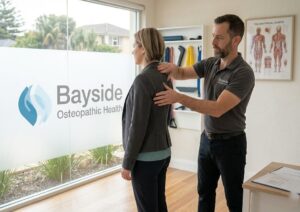
Seek professional care if pain shoots into the leg, causes numbness or weakness, wakes you at night, follows a recent fall or lifting injury, or keeps returning despite workstation changes. Those presentations need more than ergonomic advice. They call for an assessment of spinal mobility, hip function, nerve involvement, load tolerance, and the daily habits that keep the area irritated.
2. Improved Posture and Reduced Postural Strain
A standing desk won't automatically give you perfect posture, but it often makes poor habits more obvious. Slumping into the screen is easier to maintain in a chair than on your feet. Once you're upright, your body has to organise itself differently, and that alone can reduce some of the strain that builds through the upper back, ribs, shoulders, and neck.
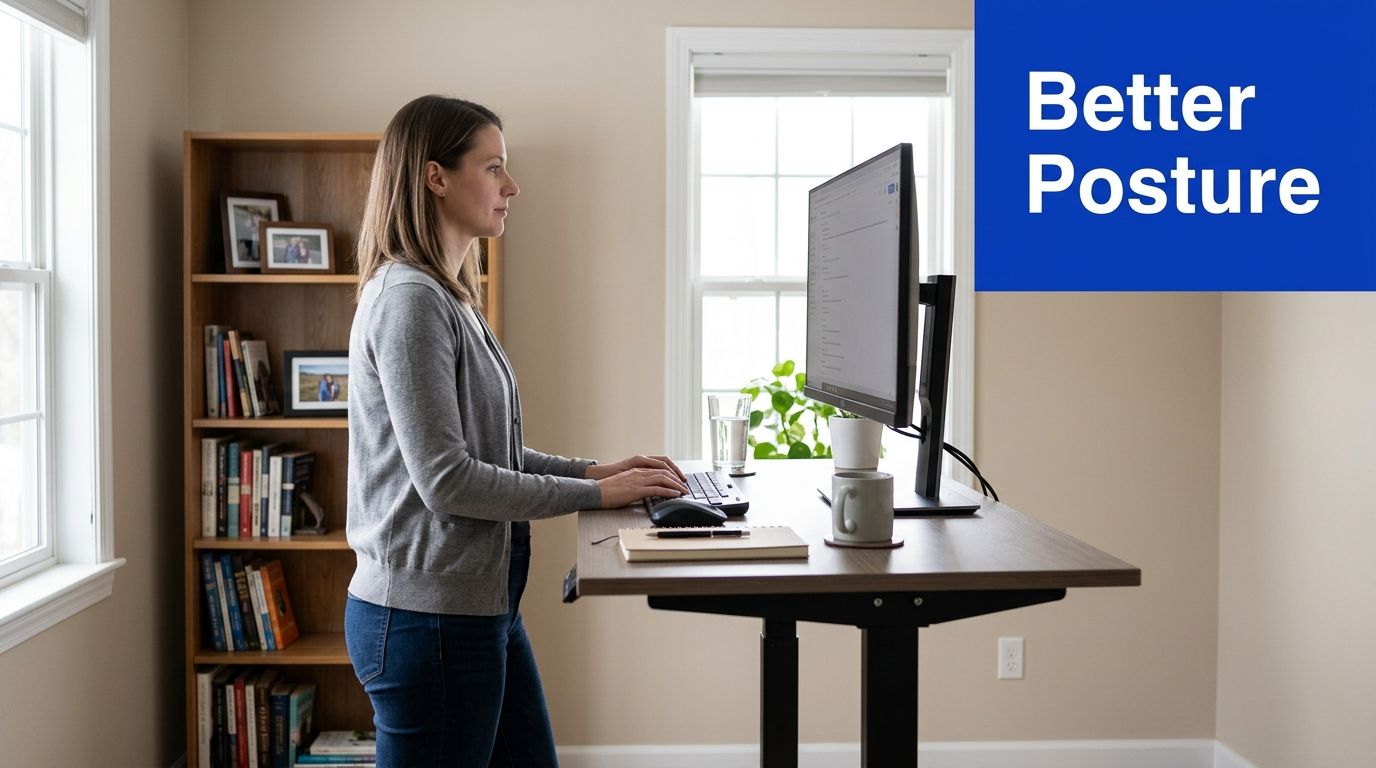
For people working from home, posture often falls apart because laptops sit too low, dining chairs offer poor support, and there's no real distinction between “temporary” and “all day”. Good standing setups force a more deliberate arrangement. That's one reason many clinicians use standing desks as part of a broader corporate ergonomics and posture education approach.
What actually changes when you stand
Standing asks your body to share load more broadly. The feet, legs, pelvis, trunk, and shoulder girdle all contribute, instead of letting one slumped position do all the work. Research also supports the idea that posture variation matters more than remaining upright alone. Australian guidance and related clinical discussion emphasise alternating postures and taking movement breaks rather than trying to stand all day, and recent clinical research supports improved cervical alignment and reduced neck and shoulder discomfort when standing is part of that variation strategy (clinical discussion of posture variation and standing desk use).
How to stand without replacing one bad posture with another
A common mistake is locking the knees, leaning into one hip, and reaching forward to the keyboard. That's not a better posture. It's just a different static strain.
A few cues help:
- Stack your body: Ears over shoulders, shoulders over ribs, ribs over pelvis.
- Keep the screen central: If the monitor is off to one side, the neck will rotate all day.
- Change often: Shift weight, step back, or sit briefly before fatigue makes you collapse into a swayback posture.
A short visual demonstration can help people notice these details faster.
If you can't find a comfortable upright position without feeling tension in the jaw, upper traps, or low back, it's worth being assessed. Sometimes the issue isn't the desk. It's restricted thoracic movement, poor rib mechanics, hip stiffness, or long-standing muscular guarding.
3. Enhanced Circulation and Reduced Cardiovascular Risk
Sitting for long stretches tends to leave people feeling heavy through the legs and flat in the afternoon. Even before anyone thinks about long-term health, they notice the short-term effects. Ankles feel stiff. Calves feel underused. Getting up after a long meeting can feel awkward for the first few steps.
Standing helps because the muscles in the legs start doing more low-level work. That muscle activity supports venous return and breaks up the stillness that comes with deep desk concentration. It's one of the more practical standing desk benefits because you can often feel it within days, especially if you combine standing with brief movement.
Why your legs and feet matter
This isn't just about the spine. The lower body plays a huge role in how tolerable desk work feels. A person who stands with small weight shifts, occasional calf raises, and brief walks usually does better than someone who stands rigidly in one spot.
Try this during the day:
- Use micro-movement: Shift from one foot to the other, lift the heels, or take a few steps during loading screens or calls.
- Watch for swelling: If your lower legs feel puffy or tight, alternate back to sitting and raise the legs later if needed.
- Wear supportive footwear: Hard floors and unsupportive shoes can turn a healthy change into foot and knee irritation.
Don't aim for stillness. Aim for gentle variation.
Seek professional advice if standing makes your legs throb, swell, or go numb, or if you have known circulation concerns. A modified plan may still work well, but it should be built around your medical history, footwear, and tolerance rather than generic advice.
4. Decreased Neck and Shoulder Pain from Forward Head Posture
By mid-afternoon, this pattern is common. The chin has crept toward the screen, the upper back has rounded, and the shoulders are doing extra work just to hold the arms in place. That posture often drives the familiar ache at the base of the neck, tight upper traps, and soreness between the shoulder blades.
A standing desk can help, but the benefit comes from better positioning and more frequent posture changes, not from standing for hours. In practice, neck and shoulder symptoms usually improve when the screen is raised to a better height, the keyboard and mouse are kept close to the body, and the person shifts between sitting, standing, and brief movement through the day. As noted earlier, workplace intervention research has reported reduced neck and shoulder symptoms with sit-stand use. Clinically, that matches what I see when the desk setup is adjusted properly rather than used as a simple swap from sitting to standing.

From an osteopathic perspective, forward head posture is rarely just a neck problem. The rib cage, upper thoracic spine, shoulder blades, jaw, and breathing pattern all affect how much load the cervical muscles have to carry. If the upper back stays stiff and the ribs do not move well, the neck and shoulders often compensate. A standing desk can reduce that load, but only if the workstation supports the whole chain.
These adjustments usually matter most:
- Set the monitor at eye level: If you look down for hours, the neck flexors and upper traps stay under constant strain.
- Keep elbows near your sides: Reaching forward or out to the side often increases shoulder and upper trapezius tension.
- Check desk height: If the surface is too high, the shoulders lift. If it is too low, the trunk slumps.
- Alternate positions: Short bouts of standing work better than fixed standing for people with neck tension, jaw clenching, or upper back fatigue.
There are trade-offs. Some people feel worse at first because they stand with locked knees, lean into one hip, or work from a laptop that is still too low. Others have shoulder pain that comes more from mouse reach, bifocal use, or stress-related muscle guarding than from the desk itself. In those cases, changing the workstation without addressing the driver gives only partial relief.
Seek professional care if neck pain is paired with headaches, dizziness, tingling, arm weakness, pain below the shoulder, or symptoms that wake you at night. Those signs can point to cervical joint irritation, nerve involvement, thoracic outlet loading, or referred pain from the upper back or jaw. People with recent trauma, known cervical disc injury, inflammatory arthritis, or persistent neurological symptoms should get individual advice before increasing standing time.
5. Increased Energy Levels and Mental Clarity
By 2:30 pm, many desk workers notice the same pattern. The body feels flat, concentration slips, and simple tasks start to take longer than they should. In practice, this is often less about motivation and more about physiology. Long, unbroken sitting reduces muscle activity, slows positional change, and can leave people feeling mentally dull even when they slept reasonably well.
A standing desk can help by breaking that low-activity spell. The benefit usually comes from changing position at the right times, not from standing as long as possible. From an osteopathic perspective, that matters because alertness is influenced by the whole system. Breathing mechanics, lower-limb muscle activity, visual setup, joint comfort, and pain load all affect how clear-headed a person feels at work.
The clearest pattern I see is practical. People often feel better when they use standing for tasks that suit light movement and posture changes, then sit again for work that needs fine control.
Match the position to the task
Use the desk based on the demand of the job in front of you.
- Stand for routine cognitive work: Calls, email, reading, planning, and short admin blocks often feel easier upright.
- Sit for high-precision tasks: Detailed spreadsheet work, drawing, or prolonged keyboard focus may be steadier in sitting.
- Change position before the slump builds: A short standing block earlier usually works better than waiting until fatigue is already heavy.
- Keep some movement in the mix: Gentle weight shifts, a brief walk, or calf raises often help more than rigid standing.
There are trade-offs. Some people feel more alert when standing. Others become distracted because their feet ache, their calves tighten, or they try to work upright for too long without support. If standing increases strain, the gain in focus is usually short-lived. Anti-fatigue mats, supportive shoes, a footrest, and shorter bouts often solve that problem.
This is also where contraindications matter. People with balance problems, orthostatic intolerance, POTS, poorly controlled fatigue conditions, acute foot or ankle pain, or recent lower-limb injury may not tolerate standing well without modification. In those cases, the goal is not only to stand more. It is to find a work rhythm the body can handle without increasing symptoms.
Seek professional care if low energy and brain fog are persistent, worsening, or paired with dizziness, faintness, chest symptoms, significant shortness of breath, new headaches, or unexplained pain. If fatigue does not improve with workstation changes, sleep correction, hydration, and regular movement, it deserves a broader assessment. An osteopathic evaluation can help identify whether musculoskeletal load, breathing pattern, rib and thoracic stiffness, or persistent pain is contributing, while your GP can rule out medical causes that a desk change will not fix.
6. Better Blood Sugar Control and Metabolic Health
The metabolic case for standing desks is less about “fitness” and more about interrupting long inactive spells. Desk work creates hours of muscular underuse, particularly through the hips and legs. Even light standing reintroduces some muscle activity and gives you more chances to break those static blocks.
For many people, the most useful habit is standing after meals or during the part of the day when they usually feel sluggish. The body generally responds better to small, repeatable movement exposures than to long periods of complete stillness followed by one burst of exercise after work.
Movement matters more than willpower
This benefit depends on how you use the desk. If you raise it and remain fixed in one position, the metabolic advantage is likely smaller than if you alternate, walk briefly, and move the lower body through the day.
A practical routine often looks like this:
- Stand after lunch: Even a short standing period can help break the post-meal slump.
- Pair standing with motion: March lightly, shift weight, or walk while taking calls.
- Keep expectations realistic: A standing desk supports metabolic health. It doesn't replace exercise, sleep, or nutrition.
If you live with diabetes, circulation issues, or foot sensitivity, take a more individual approach. You may benefit from shorter standing bouts, footwear changes, and coordination with your GP or allied health team. The desk can still be useful, but the plan should fit your condition.
7. Reduced Risk of Arthritis and Joint Stiffness
People with stiff hips, knees, or lower back joints often notice that prolonged sitting is what really aggravates them. It isn't always the amount of work. It's the lack of position change. Staying folded at the hips for too long can make the first few steps feel rough, especially in older adults and anyone already managing osteoarthritis.
That's where a sit-stand pattern can help. Regular transitions encourage joints to move through more than one position, and that often reduces the “rusty” feeling that builds across the day. For many people, one of the most practical standing desk benefits is feeling less locked up when they go from work to normal life.
Who needs a modified approach
This is also the group that most needs nuance. Standing desks aren't universally helpful. Clinical guidance notes that standing for long periods can increase lower-limb and foot fatigue, and people with chronic pain, arthritis, circulation problems, or long-standing back pain may need an individualized plan rather than generic encouragement to stand more (clinical discussion of who may not benefit from prolonged standing).
That matters in practice. Someone with arthritic knees may tolerate frequent short standing spells very well, but struggle with long static bouts on a hard floor. Someone with hip stiffness may improve quickly with transitions plus mobility work.
A few sensible adjustments help:
- Shorten the standing dose: Start with brief bouts and increase only if joints settle well afterwards.
- Soften the surface: Mats and supportive shoes reduce load through feet, knees, and hips.
- Add mobility between positions: Gentle hip, knee, and ankle movement often matters more than total standing time.
People already dealing with painful arthritic flare-ups often benefit from broader self-management, including education similar to this arthritis pain relief guide. Seek care if stiffness is worsening, joints swell regularly, or you're changing how you walk to cope with pain.

8. Improved Core Strength and Spinal Stability
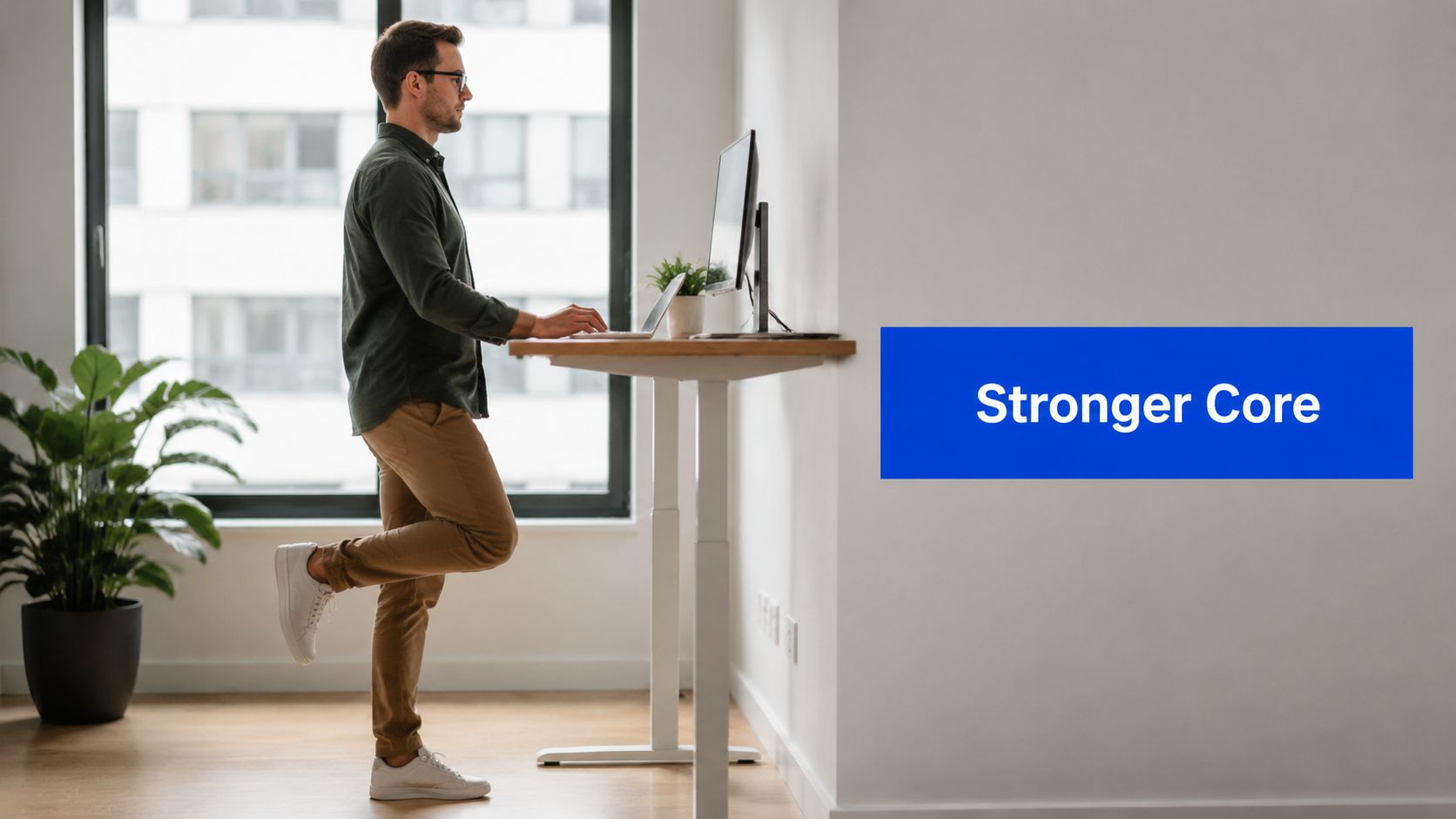
Standing isn't a core workout in the gym sense, but it does ask more from the trunk than prolonged sitting. When you're on your feet, your body constantly makes small adjustments through the abdominal wall, spinal stabilisers, hips, and pelvis to keep you balanced and upright.
That low-level activity matters. People who sit all day often rely on passive support from the chair, then wonder why standing posture feels tiring. The answer is usually that the postural system has become underused. A standing desk can gently reintroduce that demand across the day without turning work into exercise time.
Subtle muscle work is still real work
The key is posture, not bracing. You shouldn't be clenching your stomach all day. A neutral, easy upright position lets the deeper support muscles contribute without overworking.
Useful ways to support this benefit include:
- Stand tall without rigidity: Think length through the spine, not tension through the ribs.
- Address the hips too: Tight hip flexors can make upright posture feel harder than it should.
- Build on it outside work: Many people do especially well when standing desk use is paired with a guided movement program such as clinical Pilates support for strength and control.

If standing makes your low back grip, your ribs flare, or your abdomen feels overworked, get checked. Often the issue is less about “weak core” and more about how the pelvis, diaphragm, rib cage, and hips are coordinating under load.
9. Enhanced Mood, Reduced Anxiety, and Better Mental Health
Pain and posture don't stay in the body alone. When people feel stiff, sore, and sluggish for most of the day, mood often follows. Work feels harder. Patience drops. Small stresses land more heavily. That's why mental wellbeing deserves a place in any real discussion of standing desk benefits.
A sit-stand routine can support mood in a simple way. It adds movement, breaks monotony, and often reduces the discomfort that keeps the nervous system slightly irritated all day. Even changing posture can feel like a reset during long periods of concentration.
Pain and mood feed each other
From an osteopathic perspective, this is a whole-person issue. Reduced physical strain can improve mental resilience, and better mental state can reduce protective muscle tension. The relationship runs both ways.
A few habits make this benefit more likely:
- Use standing breaks as reset points: Change position before frustration and tension build up.
- Breathe normally: Shallow chest breathing often increases when people work under stress.
- Step away when possible: A brief walk outside can do more for mood than forcing another half hour at the desk.
If your body feels trapped in one position, your mind often feels trapped too.
Seek professional care if pain is affecting sleep, mood, or confidence in movement. If anxiety or low mood are significant, mental health support may be just as important as ergonomic changes. The desk can help, but it shouldn't carry the whole load.
9-Point Comparison of Standing Desk Health Benefits
| Benefit | 🔄 Implementation Complexity | 💡 Resource Requirements | 📊 Expected Outcomes | ⭐ Ideal Use Cases | ⚡ Key Advantages |
|---|---|---|---|---|---|
| Reduced Lower Back Pain and Spinal Strain | Moderate, proper setup & gradual adaptation | Adjustable standing desk, monitor riser, anti-fatigue mat | Reduced low‑back pain (~32% in studies) | Office workers with chronic low‑back complaints | Reduces disc compression; promotes neutral spine |
| Improved Posture and Reduced Postural Strain | Low–Moderate, posture awareness needed | Desk, monitor adjustment, posture training | Improved spinal alignment; less neck/shoulder tension | Remote/office workers spending 6–8 hrs/day | Activates postural muscles; improves breathing |
| Enhanced Circulation and Reduced Cardiovascular Risk | Low, stand plus periodic movement | Desk, scheduled movement breaks, hydration (optional compression) | Improved blood flow; reduced CV risk markers | Sedentary staff, older adults, healthcare workers | Reduces venous pooling; boosts tissue oxygenation |
| Decreased Neck and Shoulder Pain from Forward Head Posture | Moderate, precise monitor/ergonomic setup | Monitor riser, document holder, neck mobility exercises | Fewer neck pain episodes; reduced tension headaches | Call‑center workers, desk users with tech‑neck | Restores neutral head position; lowers cervical load |
| Increased Energy Levels and Mental Clarity | Low, short sessions to start | Standing desk, hydration, scheduled breaks | Higher alertness; reduced afternoon slump | Creative professionals, fatigued staff, chronic pain sufferers | Boosts circulation to brain; improves focus |
| Better Blood Sugar Control and Metabolic Health | Moderate, consistent habit change required | Desk, frequent breaks, nutrition guidance | Reduced post‑meal glucose spikes (~20–30%) | Adults at risk for metabolic disease | Improves insulin sensitivity; supports weight control |
| Reduced Risk of Arthritis and Joint Stiffness | Low–Moderate, gradual adaptation for joints | Anti‑fatigue mat, supportive footwear, mobility exercises | Reduced stiffness; preserved joint mobility | Older adults, early arthritis patients | Maintains synovial fluid; prevents static loading |
| Improved Core Strength and Spinal Stability | Moderate, weeks to develop; combine exercises | Desk, targeted core program, progressive use | Increased core endurance; better spinal stability | Rehab patients, those with recurrent back pain | Engages deep stabilizers; lowers reinjury risk |
| Enhanced Mood, Reduced Anxiety, and Better Mental Health | Low, consistent use over weeks | Desk, movement breaks, stress‑reduction practices | Improved mood and reduced anxiety (2–4 weeks) | Individuals with mood symptoms or chronic pain | Boosts mood neurotransmitters; improves sleep |
Making the Stand Your Next Steps to a Healthier Workday
A standing desk is worth considering if your workday is dominated by sitting, your body feels worse as the day goes on, and you want a practical change that supports healthier movement. But the most honest message is this: it's a tool, not a cure. The people who do best with standing desks usually don't try to stand all day. They set the desk up properly, alternate positions often, and pay attention to how their body responds.
That balanced approach fits well with osteopathic care. We don't look at one sore spot in isolation. We look at how the whole body is coping with the demands placed on it. If your neck is tightening every afternoon, the problem may involve screen height, rib cage position, shoulder mechanics, breathing pattern, and how often you move. If your lower back still hurts at a standing desk, the issue may be hip stiffness, poor load transfer, foot mechanics, or standing too long without variation.
A safe transition can be straightforward. Start with short bouts. Use standing for calls, reading, and lighter computer tasks. Return to sitting before fatigue pushes you into a poor posture. Keep the monitor at eye level, the keyboard at a comfortable height, and your shoulders relaxed. Add movement. Shift weight, walk during breaks, and don't chase perfection.
It's also important to recognise when a standing desk isn't enough. If you've got persistent back pain, recurrent headaches, shoulder tension that never settles, arthritic stiffness, or symptoms like numbness, tingling, swelling, or dizziness, a desk change may help but won't address the full picture. Those are the situations where personalised guidance matters. An individual assessment can help you work out whether the main driver is posture, joint restriction, muscle overload, mobility loss, or a condition that needs medical review.
The good news is that standing desk benefits don't require an extreme routine. They come from regular position changes, sensible ergonomics, and a body that's supported to move well. If you're in the Bayside area, professional guidance can make that transition much easier and far more effective. A personalized ergonomic assessment and osteopathic treatment plan can help you reduce pain, improve mobility, and build a workday your body can tolerate.
If you'd like help setting up a standing desk safely or you're still dealing with back, neck, or joint pain despite changing your workstation, Bayside Osteopathic Health can help. Our practitioners provide gentle, hands-on osteopathic care, ergonomic guidance, and practical movement advice suited to your body, your workday, and your goals.