
You're sore again. The neck tightness is back by Thursday, the low back grumbles after sitting, and every clinic website seems to use a different label for what looks like similar care. Osteopathy. Physiotherapy. Remedial massage. Myotherapy and movement. If you're trying to choose well, the names can blur together quickly.
That confusion is reasonable. They don't think in treatment categories. They think in practical questions. Why does this keep returning? Who's best for muscle tension versus joint stiffness? And what does a place like Sea Body Myotherapy & Movement do?
From an osteopath's perspective, myotherapy is one of the more useful therapies to understand because it sits close to osteopathy in some ways and differs from it in others. Both can help people with pain and restricted movement. The difference often comes down to where the assessment starts, what tissues get the strongest focus, and how the practitioner builds a plan for long-term change.
Table of Contents
- Navigating Your Path to Pain Relief
- Understanding Myotherapy and Movement
- What to Expect in a Myotherapy Session
- Myotherapy vs Osteopathy A Bayside Perspective
- The Power of Movement for Lasting Relief
- Accessing Care in Bayside and Your Health Options
Navigating Your Path to Pain Relief
A familiar Bayside scenario often unfolds. A person wakes with a stiff neck, gets through the day with coffee and stretches, then notices the pain spreading into the shoulder or up into a headache by evening. A massage helps for a short time. A rest day helps a little. Then the same pattern returns the next week.
At that point, the confusion usually begins. One practitioner talks about tight muscles. Another focuses on posture. Another recommends movement retraining. If you are trying to choose wisely, the essential task is to work out what your body is asking for, not just which label sounds best.
From an osteopath's view, the phrase "myotherapy and movement" is interesting because it suggests two parts of care working together. The first part addresses irritated tissues. The second looks at why those tissues keep being overloaded. That paired model is worth paying attention to because pain rarely comes from one sore spot alone. It often behaves more like a chain problem, where the neck, ribcage, shoulder blade, breathing pattern, and daily habits all influence each other.
Practical rule: If your pain settles for a day or two after hands-on treatment but keeps returning, the missing piece is often a clearer assessment and a plan for how you move between appointments.
Sea Body Myotherapy + Movement, based in Burleigh Heads, presents itself in that broader way, with a visible focus on myotherapy, breathwork, movement, and coaching across its public content. From an osteopathic perspective, that is promising. It reflects a clinical idea we use often at Bayside Osteopathic Health. Lasting relief usually comes from treating the irritated area while also examining the body around it, the habits loading it, and the movement options that may reduce strain.
That does not mean myotherapy and osteopathy are the same. They overlap, but they often start from slightly different clinical questions. Myotherapy commonly zeroes in on muscular overload, trigger points, soft tissue restriction, and recovery. Osteopathy also considers those issues, but it more often widens the frame to ask how joints, posture, breathing mechanics, and body regions above and below the sore area may be contributing.
For patients, that distinction helps. If the main problem feels local and tissue-based, myotherapy may suit you well. If the picture includes recurring strain, joint stiffness, several regions interacting at once, or the sense that your whole body has adapted around the pain, an osteopathic approach may add useful context.
Understanding Myotherapy and Movement
A patient comes in with a stiff neck, a headache behind one eye, and the sense that their shoulders are doing far too much work. In that situation, myotherapy often starts by asking a very practical question. Which muscles and soft tissues are overloaded, and what are they doing to the way the person moves?
What myotherapy focuses on
Myotherapy is an evidence-based discipline in Australia that assesses, treats, and rehabilitates musculoskeletal pain, with a strong focus on soft tissue and trigger points. In plain language, a myotherapist works like a skilled muscle detective. They look for irritated tissue, spots that refer pain elsewhere, and movement habits that keep the area under strain.
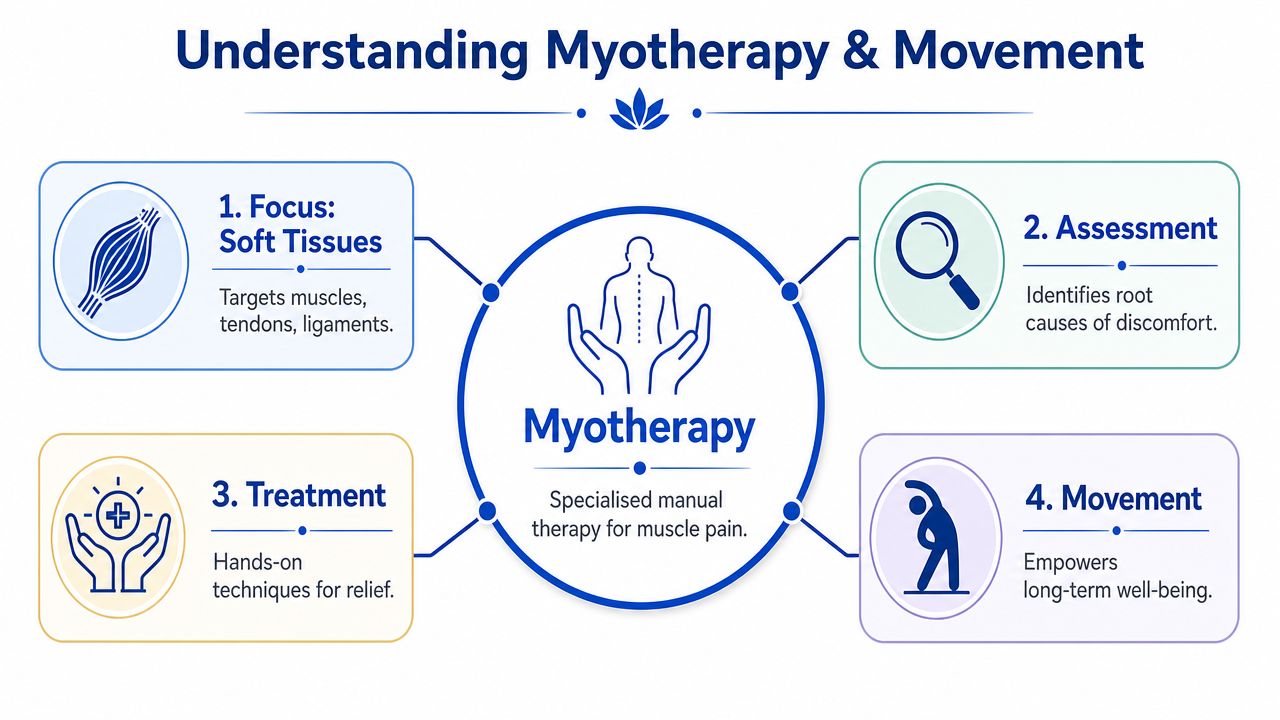
The term trigger point often causes confusion. It usually means a sensitive area in a muscle that can produce local tenderness, tightness, or pain felt in a nearby region. A common example is the upper trapezius. When that muscle is overworking, a patient may feel pain along the side of the neck or into the head, even though the source sits lower in the shoulder girdle.
Sea Body's public material gives a useful example of this style of care through hands-on work around the SCM, upper trapezius, and sub-occipital muscles. That kind of regional treatment can make sense for tension headaches, jaw clenching, or the desk-based neck that feels stuck by late afternoon. If you want a visual reference for the kind of manual care patients often compare with myotherapy, this remedial massage and muscle therapy treatment setting is broadly in that clinical territory.
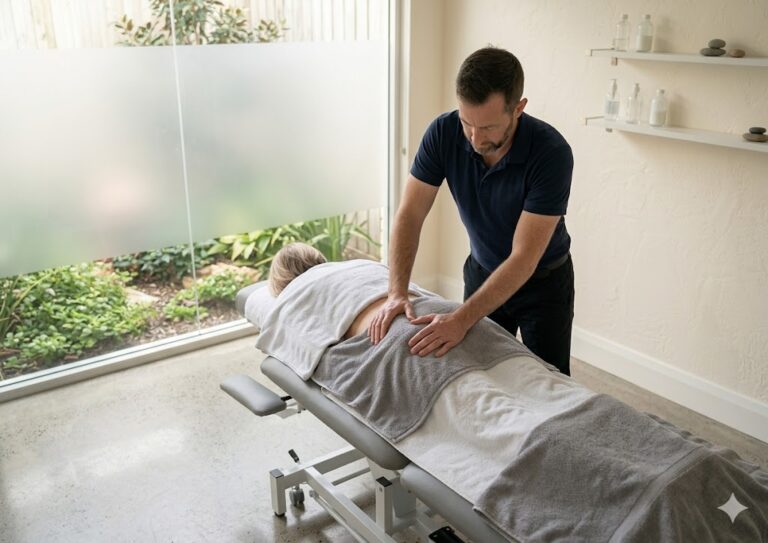
From an osteopath's perspective, this is one of myotherapy's strengths. It often gets very specific, very quickly. For a patient whose main issue is muscular overload, that directness can be helpful.
Why movement matters
Hands-on treatment can settle an irritated area. Movement helps explain why the area became overloaded in the first place.
That matters because muscles rarely work alone. A sore calf may relate to ankle stiffness. A tight neck may reflect rib restriction, upper back posture, screen setup, breathing habits, or all four. Sea Body's emphasis on movement and breathwork suggests an approach that looks beyond the sore spot and asks how the body is organising itself around that pain.
Breathwork can sound unexpected in a musculoskeletal clinic, so it helps to make it concrete. If someone breathes by lifting through the upper chest all day, the neck and shoulder muscles often assist more than they should. Over time, those tissues can become tired, guarded, and tender. In practice, improving rib movement and breathing mechanics may reduce some of that background tension.
A simple way to picture the process is this:
- Soft tissue work can calm protective muscle tension.
- Movement retraining can change how load travels through the body.
- Breathing work can reduce unnecessary bracing through the neck, ribs, and trunk.
- Self-management advice can help the change last between sessions.
Good myotherapy asks a better question than “where is the knot?” It asks why that area had to grip so hard.
This is also where myotherapy and osteopathy begin to overlap more clearly. Both can use hands-on treatment. Both can assess movement. The difference is often in emphasis. Myotherapy commonly concentrates on muscle and soft tissue function first, while osteopathy usually widens the lens earlier to examine how joints, posture, breathing mechanics, and other body regions may be contributing. For Bayside patients deciding between the two, Sea Body's approach is a useful example of a myotherapy model that includes more than local muscle work, while still remaining distinct from the broader whole-body reasoning an osteopath may bring to the same complaint.
What to Expect in a Myotherapy Session
You walk in with a sore neck, but the first question is not always, “Where does it hurt?” A good myotherapy session usually starts by finding out how the problem behaves, what loads it, and what your body does to work around it. For patients in Bayside comparing options, that often comes as a surprise.
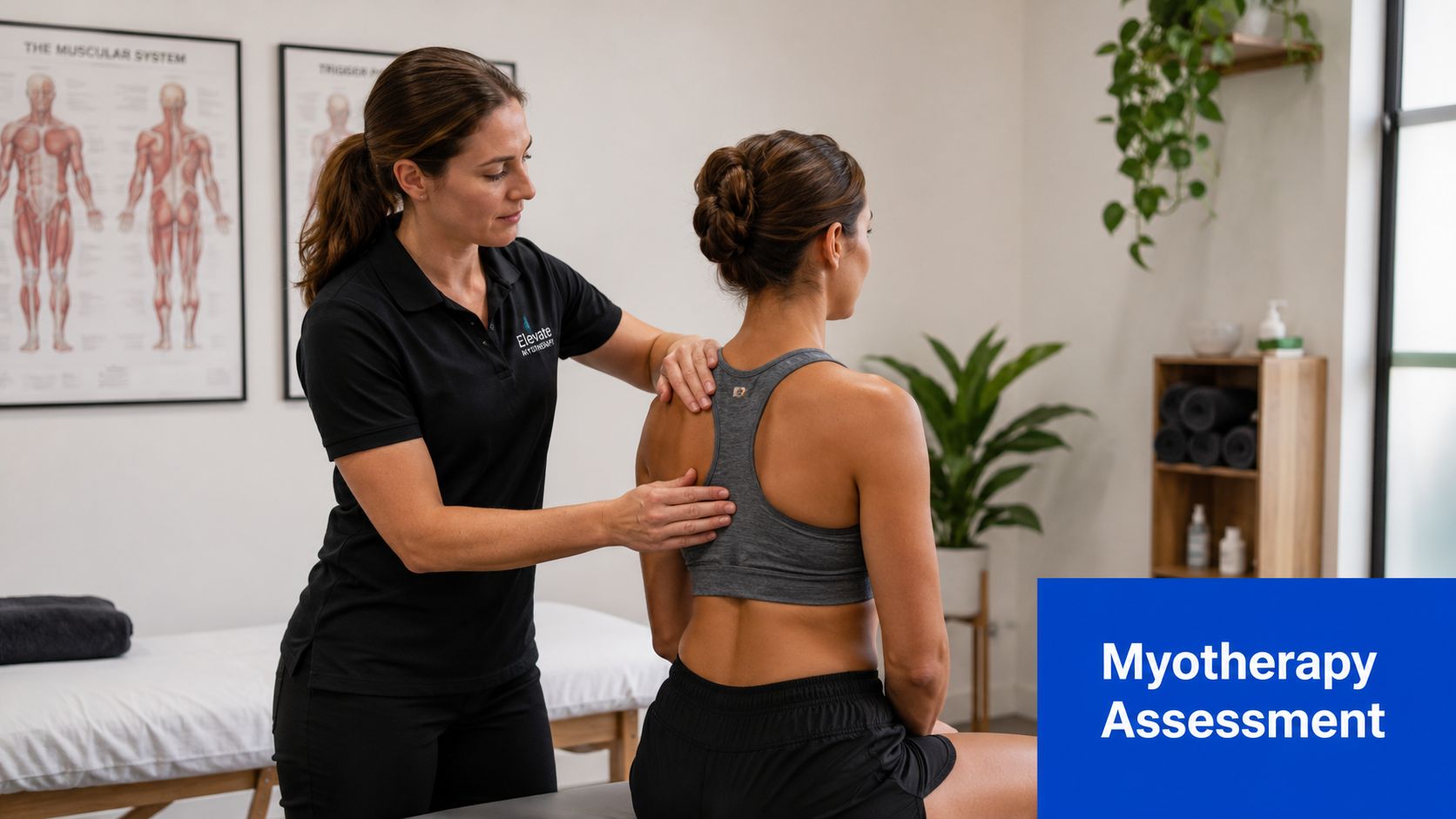
The session usually starts with a focused assessment
The opening conversation is there to build a map. Your myotherapist may ask when the pain began, whether it spreads, what movements bring it on, what time of day it feels worst, and whether training, desk work, sleep, or stress change it. Small details matter because pain in one spot does not always start in that spot.
Then comes movement testing. You might be asked to turn your head, reach overhead, bend, squat, or balance on one leg. The aim is to see whether the irritated area is overloaded, underused, stiff, guarded, or compensating for something nearby.
If you have only had relaxation massage before, this can feel more clinical. That is usually a good sign. The practitioner is trying to work out whether the problem seems to sit mainly in muscle and fascia, or whether the pattern suggests a wider mechanical issue that may need a broader view. Osteopaths assess in a similar way, but we often widen that view earlier to include how joints, posture, rib movement, and other body regions may be feeding into the complaint.
If you want a visual reference for the kind of setting patients often associate with this sort of care, this example of remedial massage and muscle therapy treatment is a useful guide.
Hands-on treatment is usually targeted, not random
Once the assessment points to the likely driver, treatment tends to become more specific. A myotherapist may work directly into a tight band of muscle, use slower pressure through fascial restriction, or choose techniques that help a painful area relax enough to move more normally again.
Common approaches include:
- Trigger point therapy, where sustained pressure is applied to an irritable point in muscle. It can feel tender, spreading, or oddly familiar.
- Myofascial work, which is often slower and broader, and aims to reduce tension through the surrounding connective tissue.
- Dry needling, which uses fine needles to target selected muscular trigger points.
- Mobility or muscle energy techniques, used to improve movement when an area feels stiff or guarded.
The method matters less than the reasoning behind it. Good treatment follows the findings from the assessment, not a fixed routine used on every patient.
This short video helps show how myotherapy is often explained to patients in a practical way:
You should leave with more than temporary relief
The useful part of a session is not only what happens on the table. It is also what changes when you stand up, retest the movement, and get a clear plan for the next few days. That may include a simple stretch, a strengthening drill, a work-station adjustment, or advice on how to reduce repeated strain.
A clear explanation helps. Patients should understand:
- What the practitioner found
- What improved during the session
- What to do between appointments
That last step is one of the best markers of quality care. Sea Body's movement-based style can be helpful here because it connects hands-on treatment with what your body needs to do afterwards. From an osteopathic perspective, that overlap is valuable. Lasting improvement usually depends on both symptom relief and better whole-body function.
Myotherapy vs Osteopathy A Bayside Perspective
A common Bayside scenario goes like this. Someone books care for a tight neck or stubborn hip, then realises they are choosing between two hands-on professions that sound similar on paper but assess the body a little differently in practice.
From an osteopath's point of view, the simplest way to understand the distinction is to start with the main clinical lens. Myotherapy often begins with the muscle and fascia that are producing pain or restriction. Osteopathy usually begins with the wider mechanics around that painful area, including joints, posture, breathing, load transfer, and how nearby regions are contributing.
Myotherapy vs Osteopathy at a Glance
| Aspect | Myotherapy | Osteopathy (Bayside Osteopathic Health Approach) |
|---|---|---|
| Primary focus | Soft tissue, trigger points, muscular pain, fascia | Whole musculoskeletal system, including joints, muscles, movement patterns |
| Common techniques | Trigger point therapy, dry needling, myofascial work, exercise prescription | Soft-tissue work, joint articulation, gentle mobilisation, movement advice |
| Assessment style | Often centres on muscular dysfunction and movement restriction | Looks at how one body region affects another and how the whole body moves together |
| Best known for | Deep clinical work on muscle and soft tissue problems | Broader structural and functional view of pain and mobility |
Where the approaches overlap
There is plenty of overlap. Both professions commonly help people with musculoskeletal pain. Both use hands-on treatment. Both should assess how you move, explain what they found, and give advice that continues between appointments.
The difference is often one of emphasis rather than quality. A myotherapist may zero in on overloaded tissue in a very precise way. An osteopath may ask why that tissue became overloaded in the first place.
That matters because pain is not always local. A sore shoulder can work like the warning light on a car dashboard. The painful spot is real, but the driver may sit elsewhere, such as stiff upper ribs, reduced thoracic rotation, or poor control through the shoulder blade. Osteopathy tends to chase that broader pattern more routinely.
If you want a visual example of that rehab-focused, whole-body thinking, this image of guided rehabilitation support during treatment reflects the kind of follow-up planning that often sits alongside osteopathic care.

Where they differ in practice
A myotherapist will often start by asking questions such as: which tissue is irritated, which muscle is overworking, where are the trigger points, and which movements reproduce the problem? That approach can be very helpful for local muscular pain, gym overload, repetitive strain, and soft tissue restriction that responds well to targeted treatment.
An osteopath usually starts one step wider. The question is not only which structure hurts. The question is also what pattern is feeding that irritation. In clinic, that may mean relating neck pain to rib movement, jaw tension, breathing mechanics, or the way the upper back shares load. It may mean relating hip pain to pelvic control, lumbar motion, or foot mechanics.
Patients sometimes find this easier to grasp with a simple comparison. Myotherapy often works like focused work on the tight rope in the system. Osteopathy often examines the pulley system attached to that rope as well. Both can be useful. The better fit depends on the person in front of you.
A practical way to choose
- Choose myotherapy first if the problem feels mainly local and muscular, such as knots, tissue tenderness, training overload, or referred pain from soft tissue.
- Choose osteopathy first if symptoms involve joint stiffness, several body regions, recurring postural strain, or a sense that one area keeps compensating for another.
- Choose either carefully if you want hands-on care plus a plan. Ask how the practitioner assesses movement, explains the cause, and decides what to treat first.
From an osteopathic perspective, Sea Body's style is useful to look at because it shows where myotherapy has matured beyond simple massage-based expectations. It combines tissue treatment with movement and function. That shared ground is positive for patients. The clearest difference is that osteopathy still tends to keep a wider whole-body frame around the problem from the first assessment onward.
The Power of Movement for Lasting Relief
You leave a treatment feeling looser, your neck turns more freely, and your back stops nagging for a while. Then two workdays later, you are back at the laptop, shoulders lifted, ribs barely moving, and the same ache starts to build again. That pattern is common.
From an osteopath's perspective, hands-on care often creates a window of opportunity. It settles irritated tissue, reduces protective muscle tension, and gives the body a better starting position. What keeps the improvement going is movement. In our clinical experience, patients who rely on passive care alone, without changing the way they move, sit, breathe, or load their body, often see symptoms return within weeks.

That is one reason Sea Body's movement-based myotherapy approach is useful to examine through an osteopathic lens. It reflects a stronger model of care than soft-tissue work alone. The muscle may be the sore part, but the movement habit is often the part that keeps reloading it. Osteopathy generally takes that one step wider again by asking how the whole body is sharing force, from breathing and rib motion through to pelvis, feet, and daily habits.
For readers wanting a practical picture of this kind of active care, this example of guided rehabilitation exercise support shows the sort of follow-through that persistent problems often need.
Simple movement ideas for desk-bound bodies
The goal is not a perfect exercise program. The goal is to give your body a different job often enough that it stops repeating the old one.
Try these simple options:
Seated thoracic extension
Sit near the front of a chair and gently lift your chest as if you are making space between the breastbone and the chin. Let the movement come through the upper back rather than forcing the low back. This can help after long periods of slumped sitting.Neck rotation with relaxed breathing
Turn your head slowly to one side, pause, breathe in gently through the nose, then exhale as you return to centre. Repeat to the other side. This suits people who hold tension through the jaw, throat, and upper neck while concentrating.Standing hip hinge reset
Stand with soft knees and fold at the hips while keeping the spine long. It is a simple way to practise sharing load through the hips instead of asking the low back to do all the bending.
A few rules make these more useful.
- Keep the movement comfortable. Mild effort is acceptable. Sharp or escalating pain is a sign to stop.
- Repeat small doses often. Three brief resets through the day usually help more than one long stretch at night.
- Attach the exercise to a routine. After sending an email batch, after a cup of tea, or before your next meeting works well.
Movement works like maintenance on a door hinge. Treatment can free the hinge. Regular motion helps stop it stiffening again.
Accessing Care in Bayside and Your Health Options
How to choose a qualified practitioner
If you're looking into myotherapy, start with practitioner credentials and clinical fit. The profession is supported by over 8,600 qualified therapists through Massage & Myotherapy Australia, and a cited summary describes myotherapy in Australia as an evidence-based therapy with reported effectiveness in eliminating 95% of physical pain associated with muscular discomfort for conditions such as head, back, and neck pain, according to Inner Outer Health's myotherapy facts and statistics page.
When you're comparing options, check for:
- Relevant training so you know the practitioner works within recognised Australian standards.
- Clear assessment processes rather than a one-size-fits-all treatment menu.
- Movement and self-care support if your issue is recurrent or posture-related.
- Communication style that helps you understand what's happening in your body.
If you're exploring broader local care pathways, this community health services guide for Bayside can help frame what kinds of services may be available around you.

Where osteopathic care may fit
For some people, myotherapy is exactly the right entry point. For others, the pain picture is more mixed. Joint stiffness, recurring flare-ups across more than one region, rib restriction, back pain with postural fatigue, or a sense that “everything feels connected” often points toward osteopathic assessment.
That's because osteopathy tends to look at how the whole body shares strain. It can sit well alongside movement advice, soft-tissue treatment, and practical self-care. For patients managing long-term conditions, it may also be worth asking your GP whether you're eligible for a Chronic Disease Management plan, which can apply to allied health services including osteopathic care where appropriate.
The main thing is not to wait until pain becomes your normal. If a problem keeps returning, get it assessed properly and choose the style of care that matches the pattern, not just the symptom.
If you'd like a whole-body assessment of persistent neck pain, back pain, joint stiffness, or postural strain, Bayside Osteopathic Health offers gentle, hands-on osteopathic care with practical movement advice specific to your situation. If you're unsure whether osteopathy or another therapy is the right fit, booking a consultation can help you get clear on what's driving the problem and what to do next.