
You wake up already negotiating with your body. Your lower back feels tight before your feet hit the floor. Your neck complains when you turn to check traffic. Your knee stiffens after sitting through a work meeting, then aches again when you finally get moving. None of this is dramatic enough for an emergency. But it's enough to wear you down, day after day.
That's where chronic disease management becomes useful. Not as a vague medical label, but as a practical way to make daily life easier, steadier, and more predictable. If you live in Bayside and you're dealing with arthritis, persistent back pain, recurring neck tension, or another long-running musculoskeletal issue, the aim isn't to chase a miracle fix. It's to build a plan that helps you move better, cope better, and stay engaged in the parts of life that matter to you.
Table of Contents
- Living with a Chronic Condition in Australia
- What Is Chronic Disease Management
- The Six Pillars of an Effective Care Plan
- How Osteopathy Supports Your Management Plan
- Practical Self-Care and Home Monitoring Strategies
- Accessing Care in Bayside Through Medicare
- Your Next Steps Toward Better Health
Living with a Chronic Condition in Australia
For many people, chronic pain doesn't arrive as one big event. It settles in gradually. A sore neck becomes a regular headache. Morning stiffness starts lasting longer. Walking the dog, gardening, lifting groceries, or sitting at a desk all begin to feel like activities that need planning.
You're not alone in that experience. In Australia, one in two people (50.8%) have at least one chronic condition, affecting more than 11 million people, and among people visiting general practice, two-thirds (66.3%) have at least one chronic condition, according to the Australian Commission on Safety and Quality in Health Care summary of OECD survey findings. Osteoarthritis is one of the most common conditions seen in general practice.
That matters because chronic conditions change how people use health care. They don't just need a single appointment. They need a system that helps them over time.
What management really means in everyday life
When patients hear the word “management”, they sometimes think it sounds passive, as if they're being told to put up with symptoms. In practice, it means the opposite. It means taking a condition seriously enough to organise care properly.
A good management approach usually helps you:
- Reduce day-to-day symptoms so pain or stiffness doesn't dominate every decision
- Protect movement and independence for work, family life, exercise, and hobbies
- Spot changes early before a flare-up grows into a bigger setback
- Make care less confusing by giving each practitioner a clear role
Living with a chronic condition is hard enough. Your care shouldn't feel scattered as well.
For Bayside locals, that often means finding support that fits ordinary life. It needs to be realistic around work, school pick-ups, public transport, energy levels, and the fact that some weeks are harder than others. The best plan is the one you can keep using when life is busy, not the one that only works in theory.
What Is Chronic Disease Management
Think of chronic disease management like tending a garden. You don't water everything once, declare the job finished, and expect it to thrive all year. You observe what's changing, adjust to the season, deal with problems early, and use different tools for different jobs.
That's how long-term musculoskeletal care works too. A painful flare-up might need hands-on treatment, pacing, and rest. A more settled phase might need strength work, walking, posture changes, and regular review. The condition may stay with you, but your experience of it can still improve.
It's a partnership, not a string of random appointments
Chronic disease management is an organised partnership between you and your health team. It isn't just “see someone when it gets bad”. It works best when there's a plan, clear goals, and follow-up.
In practical terms, that often includes:
Knowing your baseline
What hurts, what helps, what triggers symptoms, and what movement is currently limited.Setting useful goals
Not vague goals like “be better”, but concrete ones such as getting through a workday with less stiffness, sleeping more comfortably, or walking more confidently.Reviewing the plan
If something isn't helping, the plan changes. Good care is responsive, not rigid.
What it is trying to achieve
The aim isn't perfection. The aim is steadier health.
A well-run plan focuses on a few core outcomes:
| Focus area | What that can look like |
|---|---|
| Symptom relief | Less pain, less stiffness, fewer disruptive flare-ups |
| Function | Easier bending, walking, lifting, sitting, turning, and sleeping |
| Confidence | Knowing what to do when symptoms shift |
| Coordination | Less duplication, fewer mixed messages, clearer next steps |
Some conditions can be cured. Many chronic conditions can't be “fixed” in a once-and-for-all sense. That doesn't mean you're stuck. It means the work shifts from cure to control, from reacting to planning, and from isolated appointments to joined-up care.
Practical rule: If your plan only exists in someone else's head, it usually falls apart under stress.
The Six Pillars of an Effective Care Plan
A strong care plan doesn't rely on one treatment, one practitioner, or one good week. It rests on several parts that support each other. When one pillar is missing, the whole system becomes less stable.
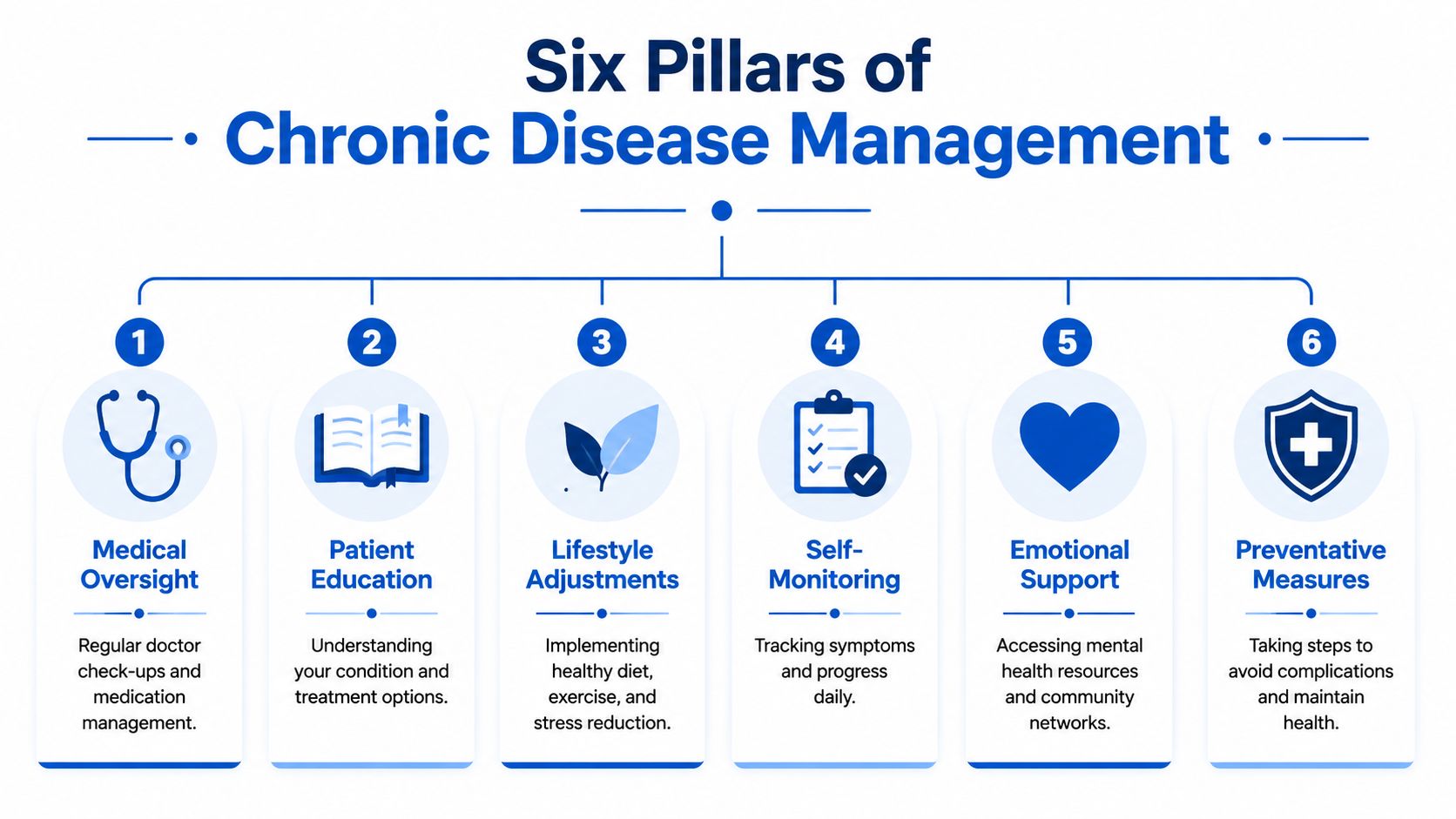
Structured care planning with written guidelines, clearly defined practitioner roles, and intensive follow-up is described as critical for effective chronic disease management by the Indigenous Health Performance Framework summary on chronic disease management. That organised approach matters because people with chronic conditions often have to work through complex health systems over a long period.
Assessment comes first
Before treatment starts, someone needs to understand the full picture. Not just where it hurts, but how the problem behaves.
A thorough assessment usually looks at:
- Symptoms over time such as morning stiffness, activity-related pain, or pain that builds later in the day
- Movement patterns including bending, walking, reaching, sitting tolerance, and balance
- Relevant health history because chronic pain rarely sits in isolation from sleep, stress, work demands, or other conditions
A good plan is shared and written down
Verbal advice is easy to forget when you're in pain. Written plans help patients and practitioners stay aligned.
Useful care plans tend to include:
- Your main goals
- What each practitioner is responsible for
- What to do during a flare-up
- When to review progress
Many people feel immediate relief, not because the pain has vanished, but because the confusion starts to lift.
Symptom control needs options
Pain control isn't one thing. It may include medication through your GP, pacing, heat, gentle manual therapy, changes to daily tasks, or exercise modification.
What doesn't work well is relying on only one tool. A flare-up managed with one strategy alone often keeps returning because the broader pattern hasn't changed.
Function matters as much as pain
A person can report less pain yet still struggle to get out of a chair, walk comfortably, or sleep through the night. That's why function deserves its own focus.
Ask simple questions:
- Can you turn your head when driving?
- Can you stand in the kitchen without leaning on the bench?
- Can you pick something up from the floor with confidence?
- Can you get through your work setup without escalating pain?
Self-management fills the gaps between appointments
Most of life happens away from clinics. The exercises you do, the breaks you take, and the routines you can maintain matter more than ideal advice you never use.
The best home plan is not the most impressive one. It's the one you'll still be doing on a tired Wednesday.
Coordination stops care from becoming fragmented
GPs, osteopaths, physiotherapists, specialists, exercise professionals, and family support can all have a place. The issue isn't having many people involved. The issue is whether they're pulling in the same direction.
When roles are clear, care feels lighter. When roles overlap badly or advice conflicts, patients often lose confidence and stop engaging.
How Osteopathy Supports Your Management Plan
For chronic musculoskeletal conditions, osteopathy often fits best where people need two things at once. Relief from symptoms, and better movement so the body isn't fighting every ordinary task.

Where osteopathy fits best
Gentle osteopathic care can support a broader chronic disease management plan for problems such as arthritis-related stiffness, ongoing lower back pain, neck tension, reduced spinal mobility, postural strain, and movement-related discomfort that keeps recurring.
The osteopathic approach is useful because it looks beyond the sore spot. A painful shoulder may be influenced by upper back stiffness. Recurring low back pain may be linked with hip restriction, deconditioning, work posture, or guarded movement after an earlier flare-up. Treating only the loudest symptom often gives short-lived relief.
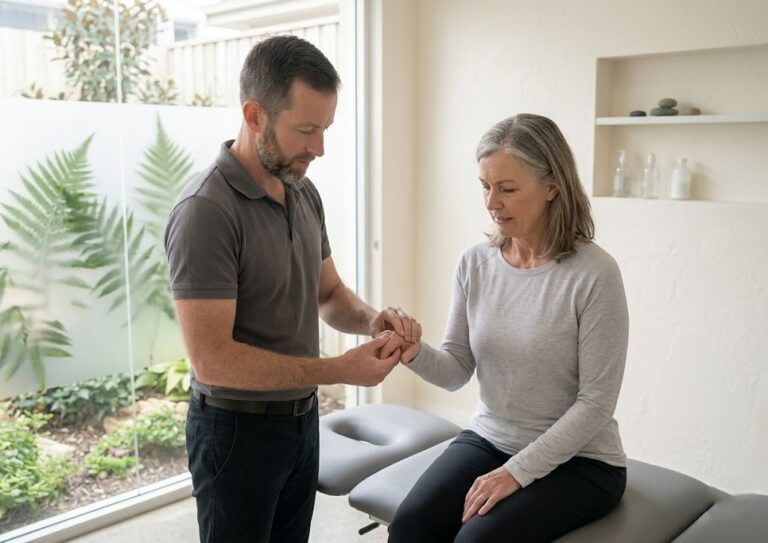
In practice, osteopaths commonly use hands-on approaches such as soft-tissue work, joint articulation, and gentle mobilisation. The aim is to reduce unnecessary tension, improve movement quality, and make it easier for patients to return to walking, stretching, strengthening, or daily tasks with less aggravation.
A broader allied health perspective can also help patients understand how movement care fits with other supports. This local guide to myotherapy, movement, and osteopathy options is a useful example of how hands-on care can sit alongside exercise and self-management.
What gentle care can and cannot do
Osteopathy isn't magic, and it shouldn't be presented that way. It won't erase every chronic condition. It also shouldn't replace medical oversight when medication review, imaging, specialist input, or broader disease monitoring are needed.
What it can do well is help remove some of the physical barriers that keep people stuck. When pain makes movement feel unsafe, hands-on treatment can calm things enough for a patient to start moving again. When joints are stiff and surrounding muscles are overworking, treatment can improve comfort and make exercise more achievable.
Coordinated multidisciplinary care improves chronic disease outcomes, yet around 50% of Australians with chronic diseases still do not receive best practice management, according to the Australian review of chronic disease management barriers and multidisciplinary care. For many patients, adding the right allied health practitioner isn't extra. It's the missing piece.
A sensible osteopathic role in chronic disease management usually includes:
- Hands-on symptom relief for stiffness, muscle guarding, and restricted movement
- Movement guidance that matches the patient's current tolerance
- Practical pacing advice so improvement doesn't get undone by doing too much too soon
- Communication with the broader care team when shared planning is needed
Practical Self-Care and Home Monitoring Strategies
Professional care helps, but your body lives with you at home, at work, in the car, and at the shops. That's where symptoms are often stirred up, and that's also where many of the most useful gains are made.

Clinical care alone usually isn't enough. Evidence on underserved communities has shown that addressing social determinants of health, including lifestyle and community support, is essential, while many standard care plans still fail to address these root causes, as discussed in the JMIR mHealth and uHealth paper on community-based chronic disease support.
Daily habits that usually help
You don't need an extreme routine. You need repeatable habits.
Gentle movement every day
Short walks, easy mobility work, and simple stretching often help more than saving all activity for one “good” day. If you live with joint stiffness, this arthritis and joint mobility resource can prompt sensible movement ideas to discuss with your practitioner.Change positions before pain forces you to
Long periods of sitting, driving, or standing still can build tension gradually. Set reminders to change position, roll the shoulders, walk briefly, or reset your desk posture.Use pacing instead of boom-and-bust
A common pattern is doing too much on a better day, then paying for it the next day. Break tasks into smaller blocks. Stop before symptoms spike, not after.Support sleep however you can
Many chronic pain conditions worsen when sleep is poor. Aim for a consistent wind-down routine, supportive pillows, and less late-night screen time if that tends to keep you wired.
How to track a flare-up without overthinking it
Monitoring should make you calmer, not more anxious. Keep it simple.
A notebook or notes app can track:
| What to notice | Example |
|---|---|
| Trigger | Long drive, poor sleep, heavier lifting, stressful week |
| Area | Neck, low back, knee, hip, shoulder |
| Pattern | Morning stiffness, pain after sitting, soreness late in day |
| Response | Walk helped, heat helped, stretching irritated it, rest settled it |
That kind of tracking helps patients spot trends. It also gives your practitioner something useful to work with instead of a vague memory of “it was bad at some point”.
If a strategy helps you feel slightly better and slightly more capable, it's usually worth repeating.
Pay attention to your environment as well. Stress at home, an unsupportive workstation, caring responsibilities, limited time to prepare meals, and social isolation can all shape symptoms. That doesn't mean your pain is “just lifestyle”. It means daily context influences recovery, and your management plan should respect that reality.
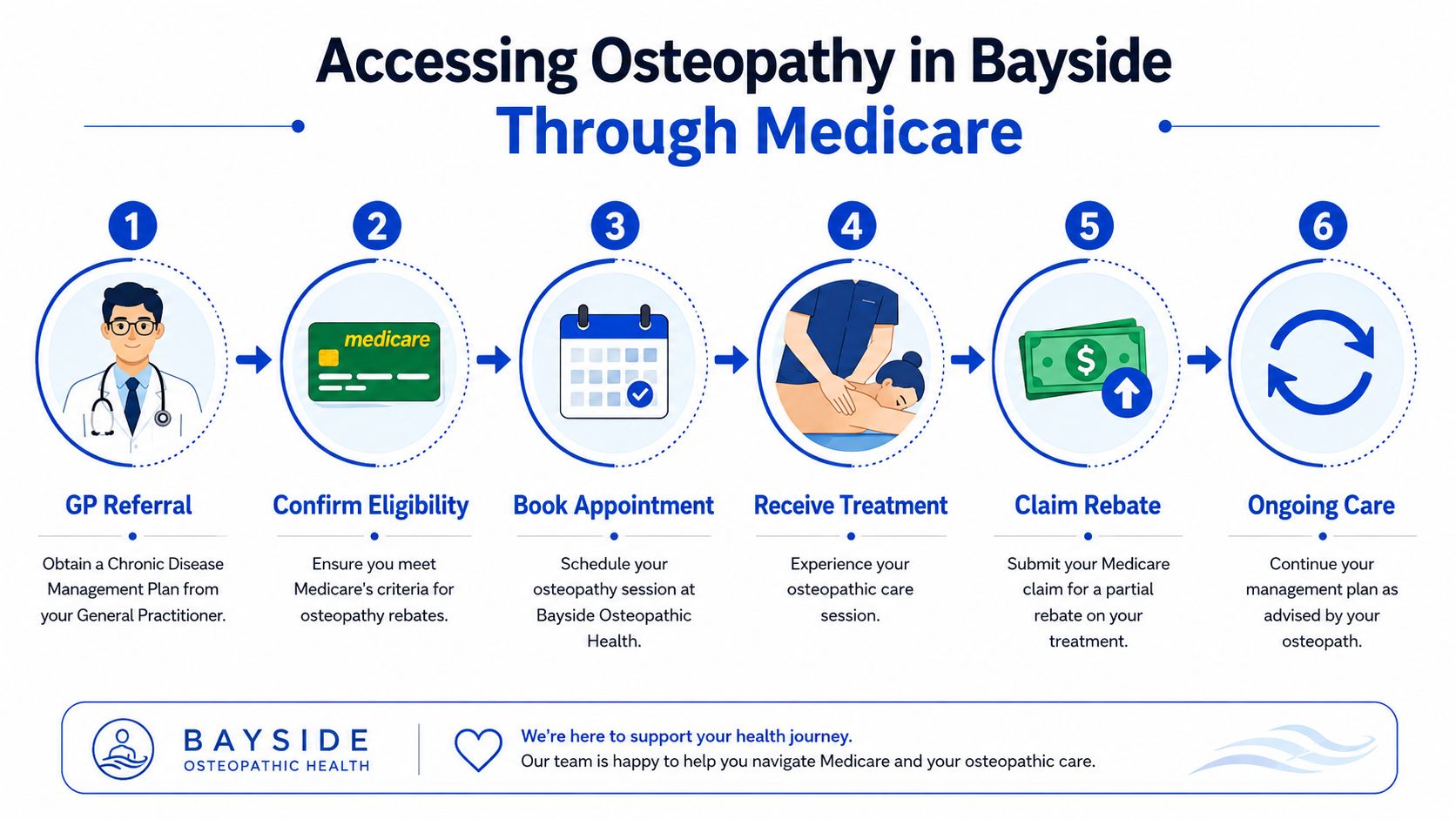
Accessing Care in Bayside Through Medicare
For many patients, the hardest part isn't deciding they need help. It's working out how to access it without getting lost in paperwork or assumptions about eligibility.
What to ask your GP
If you have a chronic condition and think allied health could help, book a longer appointment with your GP and ask whether you may be suitable for a GP Chronic Condition Management Plan.
You don't need to arrive with perfect wording. A simple starting point is:
“I'm dealing with an ongoing condition that affects my movement and day-to-day function. Could we discuss whether a chronic disease management plan and allied health referral would be appropriate?”
Some local patients also find it helpful to read a broader Bayside community health services guide before the appointment so they understand the types of support that may fit around GP care.

How the updated framework helps
The updated Medicare Chronic Disease Management framework simplifies access to allied health. The new GP Chronic Condition Management Plan links services such as osteopathy directly to new item numbers and removes previous red tape for eligible patients with a GPMP, according to the Victoria University health tracker report discussing the updated CDM framework.
That same report notes the framework introduced on 1 July 2025 simplifies items to a single plan preparation item and a second plan review item, with RACGP recommendations for new GP Management Plans and Team Care Arrangements every 2 years, plus 6-, 12-, and 18-month reviews. If you're discussing access after that date, it's worth asking your GP how they're applying the updated process in your case.
A few practical points make this easier:
- Bring a short symptom summary so your GP can understand the impact on work, sleep, mobility, and daily tasks
- Ask specifically about allied health inclusion if you think osteopathy may support your musculoskeletal care
- Clarify the review process so you know when your plan should be reassessed
- Check rebate details with the clinic before your first appointment so there are no surprises
The key is to start with the GP conversation. Once that happens, the path tends to become much clearer.
Your Next Steps Toward Better Health
Chronic disease management works best when it stops feeling abstract and starts becoming practical. You don't need to solve everything this week. You need a few clear actions, done in the right order, with the right support around you.
Start here:
Book a long GP appointment
Ask to discuss a chronic disease management plan if your condition is ongoing and affecting your daily function.Arrange an initial osteopathic assessment
If pain, stiffness, or reduced mobility are part of the problem, a gentle hands-on assessment can help clarify what's driving symptoms and what support may fit around your broader care plan.Keep your home strategy simple
Track triggers, move gently, pace your activity, and write down what works. Useful information beats guesswork.
The biggest shift often happens when people stop waiting for things to settle on their own and begin working from a plan. That's when care becomes more consistent, flare-ups become easier to understand, and health starts to feel less chaotic.
If you're ready to take that next step, Bayside Osteopathic Health offers gentle, hands-on osteopathic care for persistent back pain, neck tension, joint stiffness, arthritis-related discomfort, and movement limitations. The clinic also helps patients understand how osteopathy may fit within a broader chronic disease management approach, including Medicare-supported care where applicable.