
By mid-afternoon, a lot of people know the feeling. Your shoulders have crept up toward your ears, your chin is drifting toward the screen, and a dull headache starts to spread from the base of your skull toward your temples. You drink water, rub your neck, maybe take a painkiller, and try to push through. Then it happens again tomorrow.
That pattern is common in clinic. The headache feels like a head problem, but the driver is often lower down, in the neck, upper back, and the way your body is coping with hours at a desk, on the couch with a laptop, or looking down at a phone. For many people, the pain isn't random at all. It's mechanical.
Headaches from poor posture are often manageable when you understand what's being irritated and what your body needs to tolerate daily positions better. In Australia, approximately 4.9 million people experience headaches or migraines, and 1 in 5 Australians has headaches weekly or more often, with a significant portion linked to posture-related strain, according to Tailored Medical's overview of headaches and posture.
Table of Contents
- That Nagging Headache Might Start in Your Shoulders
- The Chain Reaction From Slouching to Head Pain
- Identifying a Posture-Related Headache
- Simple Exercises and Stretches for Quick Relief
- Your Guide to Ergonomic Set-Up and Smart Habits
- How Osteopathic Treatment Can Help Your Headaches
- When to See a Professional About Your Headaches
That Nagging Headache Might Start in Your Shoulders
A typical version goes like this. You start the day feeling fine. A few hours into emails, meetings, or study, your upper back feels tight. Then your neck stiffens. By the end of the day, there's a nagging ache wrapping around the back of your head or sitting behind the eyes.
A lot of people assume that kind of headache “just happens” because work is stressful or because they slept awkwardly. Sometimes that's part of it. But often the shoulders, neck, and upper back have been steadily doing too much work for too long.
When the body settles into a slouched sitting position, the chest tends to collapse, the shoulders round forward, and the head pokes out in front. That posture doesn't always hurt immediately. The trouble starts when you hold it for long stretches and repeat it day after day.
Many posture-related headaches don't begin in the head. They begin with tissues in the neck and shoulder girdle getting overloaded.
This is one reason people feel frustrated. The pain is real, but the source isn't obvious. They massage the temples while the true aggravation sits at the base of the skull, in the upper trapezius, or around stiff joints in the neck and upper thoracic spine.
The reassuring part is that once you recognise the pattern, you can start changing it. These headaches aren't always about finding one magical stretch or sitting bolt upright all day. More often, relief comes from reducing strain, improving movement, and helping the body cope better with normal daily positions.
The Chain Reaction From Slouching to Head Pain
If you want a simple way to understand posture headaches, think of the head like a bowling ball balanced on a stick. The stick is your neck. When the bowling ball stays reasonably centred, the muscles around the neck and upper back can share the load well enough. When the ball shifts forward, the support system has to work much harder.
Why your neck takes the load
Forward head posture is the classic set-up. Your chin drifts forward, your upper back rounds, and your shoulders roll in. That often happens while using a desktop monitor that's too low, a laptop on a dining chair, or a phone held in your lap.
Poor posture, especially forward head posture with rounded shoulders, loads the neck muscles, joints, and cervical vertebrae, irritating nearby nerves and leading over time to tension headaches or aggravations of migraines, as explained in The Ergonomic Physio's guide to cervicogenic headache caused by poor ergonomics.
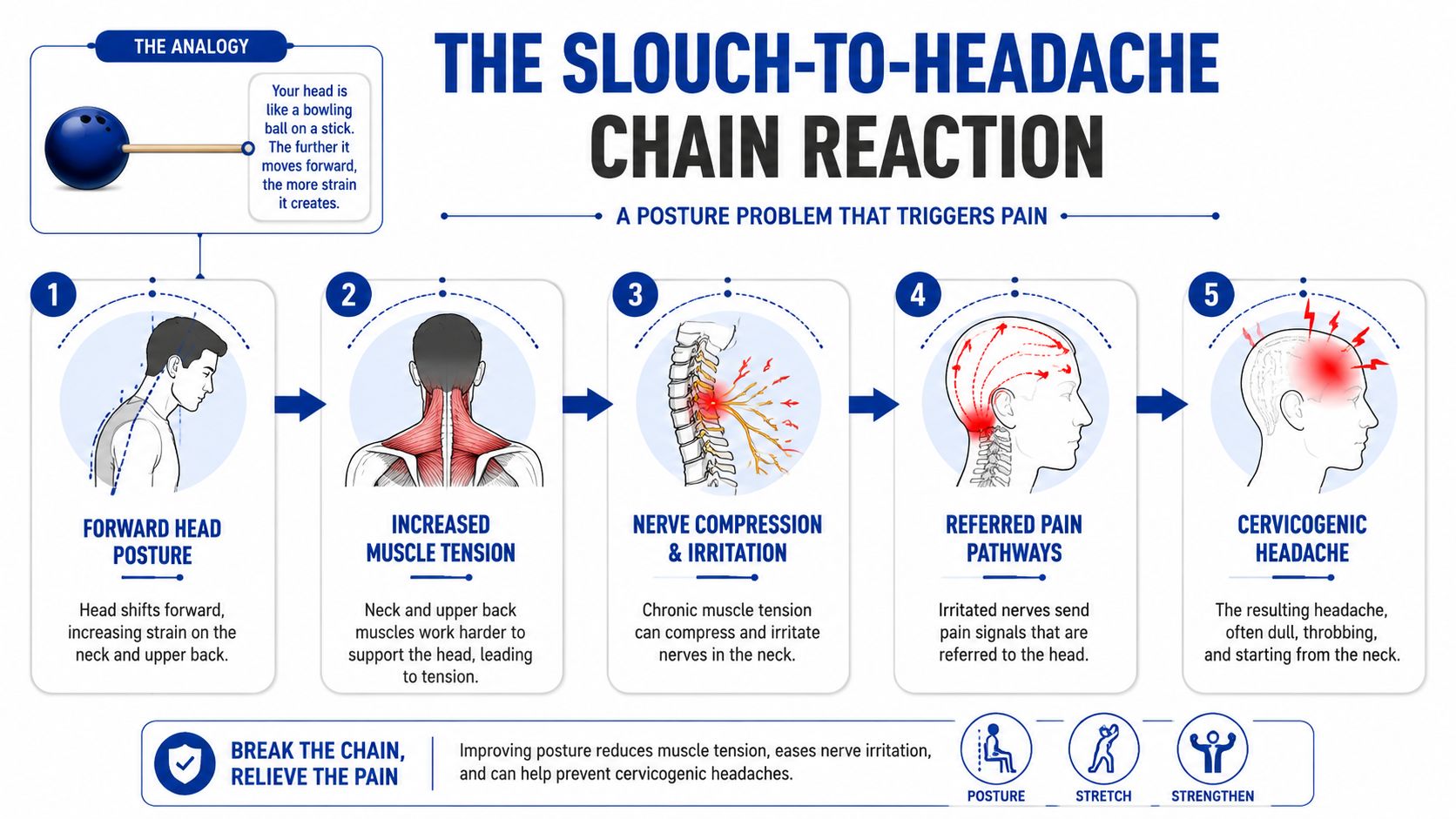
That extra load usually shows up first as muscle guarding. The muscles around the base of the skull tighten. The upper trapezius and levator scapulae get overworked. The deep neck flexors, which should help support the neck, often become less effective. The result is a body that's trying hard to hold you up, but doing it inefficiently.
How neck tension becomes head pain
Once those tissues are irritated, pain doesn't always stay local. The neck can refer pain upward into the head. That's why some people feel a headache in the forehead, behind the eye, or around the side of the skull even though the trouble started in the cervical region.
A common pattern looks like this:
- Sustained slouching: You stay in one position too long, often leaning toward a screen.
- Muscle overuse: Neck and shoulder muscles keep contracting to support the head.
- Joint irritation: Stiff or compressed segments in the neck and upper back stop moving well.
- Nerve sensitivity: Nearby nerves become irritated by the ongoing mechanical strain.
- Referred pain: The brain registers the problem as a headache.
Practical rule: If your headache builds during desk work and eases when you move around, the neck deserves attention.
What usually doesn't work is chasing “perfect posture” every second of the day. Holding a rigid upright position for long periods is challenging, and trying to force it often creates a new kind of tension. A better approach is to improve your set-up, move more often, and build the strength and mobility that let you tolerate ordinary sitting without flaring up.
Identifying a Posture-Related Headache
Not every headache is caused by posture. But some patterns strongly suggest the neck is involved.
Signs that point toward the neck
Cervicogenic headaches are frequently misdiagnosed, but they're directly caused by biomechanical strain from forward head posture and can feel like a dull, throbbing ache or a clamp-like pressure around the forehead or the back of the head and neck, according to Waterloo Chiropractic's summary of migraines and poor posture.
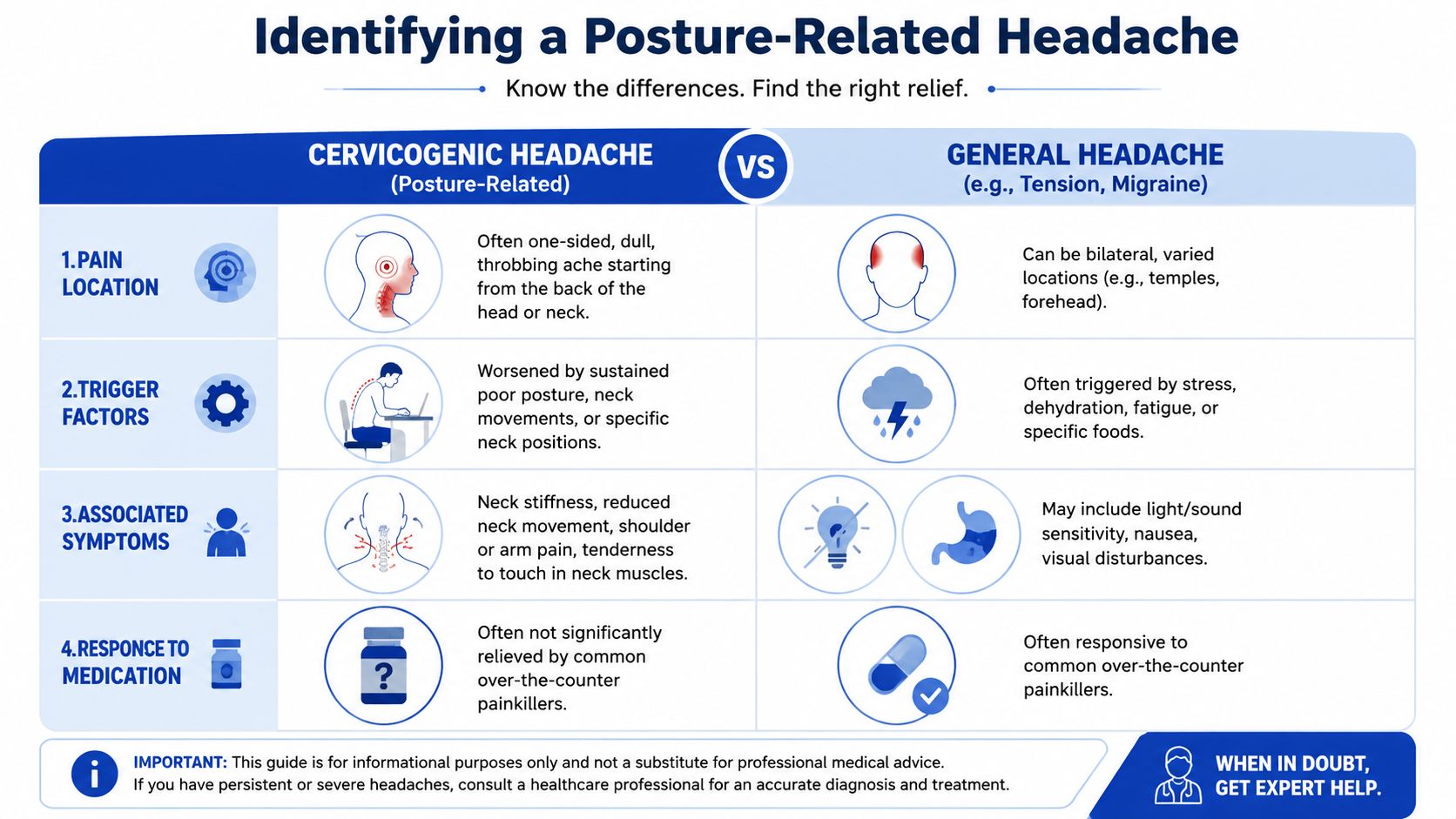
In practice, posture-related headaches often have a recognisable feel. They may begin in the neck or base of the skull and then spread upward. Some people notice one-sided pain. Others describe stiffness turning into pressure across the back of the head or forehead.
A quick self-check can help:
- Timing matters: Does the headache appear after computer work, study, driving, or phone use?
- Neck involvement matters: Do you also feel neck stiffness, shoulder tightness, or soreness near the top of the shoulder blades?
- Movement matters: Does gentle movement, changing position, or lying down reduce symptoms?
- Position matters: Can certain neck positions trigger or worsen the pain?
How it differs from migraine and other headaches
A posture-related headache and a migraine can overlap, which is why people get confused. The important distinction is that poor posture may cause neck-originating headache, but in people who are already migraine-prone, posture can also act as a trigger rather than the root neurological cause.
Sydney Migraine notes that the goal shouldn't be forcing perfect alignment, but increasing the body's capacity to tolerate normal positions without triggering pain, using gentle therapy and strength-building, in its article on whether bad posture can cause headaches.
Here's a simple comparison:
| Feature | More suggestive of posture-related headache | More suggestive of migraine or other headache |
|---|---|---|
| Starting point | Neck, base of skull, upper shoulders | May start elsewhere or feel more diffuse |
| Aggravating factor | Sustained sitting, screen use, neck posture | Can involve a wider range of triggers |
| Associated feeling | Stiff neck, reduced neck movement, upper back tightness | May include nausea, aura, light or sound sensitivity |
| Best clue | Changes with posture and movement | Less clearly linked to neck position |
If your “migraine” often follows a day of slumping, jaw clenching, and laptop work, it's worth assessing the neck as a contributing trigger.
Simple Exercises and Stretches for Quick Relief
When a headache is being fuelled by posture, the fastest help usually comes from gentle movement. Not force. Not aggressive stretching. Not cracking your own neck.
Three gentle resets you can do today
1. Chin tucks
Sit tall without stiffening. Gently draw your chin straight back, as if you're making a small double chin. Keep your eyes level. Hold briefly, then relax.
Why it helps: this activates the deep neck flexors and reduces the habit of jutting the head forward.
2. Shoulder blade squeezes
Let your arms relax by your sides. Gently draw the shoulder blades back and slightly down. Don't arch your lower back or lift the chest dramatically. Pause, then release.
Why it helps: this counters the rounded-shoulder position and gives the upper back muscles a chance to share the load again.
3. Upper trapezius stretch
Sit on one hand or hold the chair lightly. Tilt your opposite ear toward your shoulder until you feel a mild stretch through the side of the neck. Keep it gentle. You're looking for ease, not strain.
Why it helps: overworked upper trapezius muscles often contribute to the tight, upward-pulling sensation linked with headaches from poor posture.
4. Thoracic extension over a chair back
Sit in a stable chair with a supportive backrest that reaches your mid-back. Place your hands behind your head and gently extend over the chair, then return.
Why it helps: many desk workers are stiff through the upper thoracic spine, which pushes the neck to compensate.
For a visual example of guided rehab-style movement, this exercise and rehabilitation image reflects the kind of calm, controlled approach that tends to work best.

What helps and what usually backfires
Short, frequent movement beats one heroic stretching session performed later. If you wait until everything is already locked up, the body is often too irritated to respond well.
A few useful principles:
- Go gently: Mild relief is the target. Sharp pain means stop.
- Repeat often: Small resets through the day usually work better than doing a lot once.
- Breathe normally: Holding your breath adds more tension to the neck and shoulders.
- Pair movement with awareness: If you return to the same slouched position for hours, symptoms usually return too.
What often backfires is forcing the neck into end range, doing hard neck rolls, or trying to “sit perfectly” with a braced chest and tense shoulders. That creates a different strain pattern. Your body needs options, not another position to endure.
Your Guide to Ergonomic Set-Up and Smart Habits
A better desk set-up helps, but the goal isn't to create a flawless workstation and then freeze in it all day. The actual aim is to lower unnecessary strain and make movement easier.
Early in the day is the best time to notice your habits. Are you leaning forward to read? Reaching too far for the mouse? Letting your feet dangle? Those details matter because they change what your neck has to do.
Build tolerance instead of chasing perfect posture
The most useful shift in thinking is this. Posture tolerance matters more than posture perfection. A comfortable position becomes a problem when you hold it too long. Even a “good” posture can become aggravating if the body never gets a break.
That's why regular movement matters so much. The Ergonomic Physio recommends getting up out of your seat every 30 to 45 minutes to relieve pressure, in its earlier-cited discussion of cervicogenic headaches from poor ergonomics.
The body usually tolerates variety better than rigidity.
This short video gives a practical sense of posture-friendly desk habits and movement cues:
A desk set-up that reduces strain
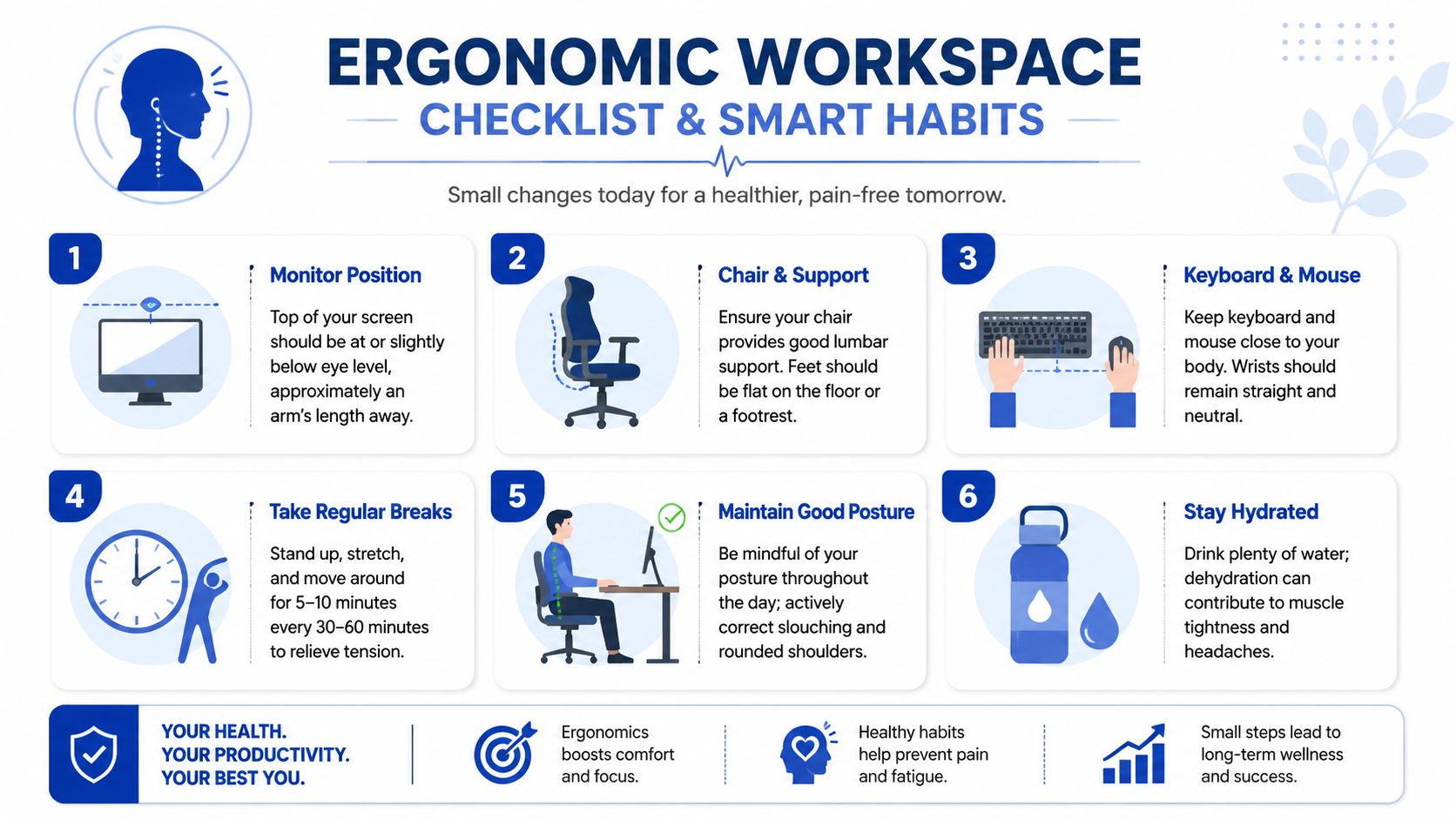
A good ergonomic set-up is simple and repeatable:
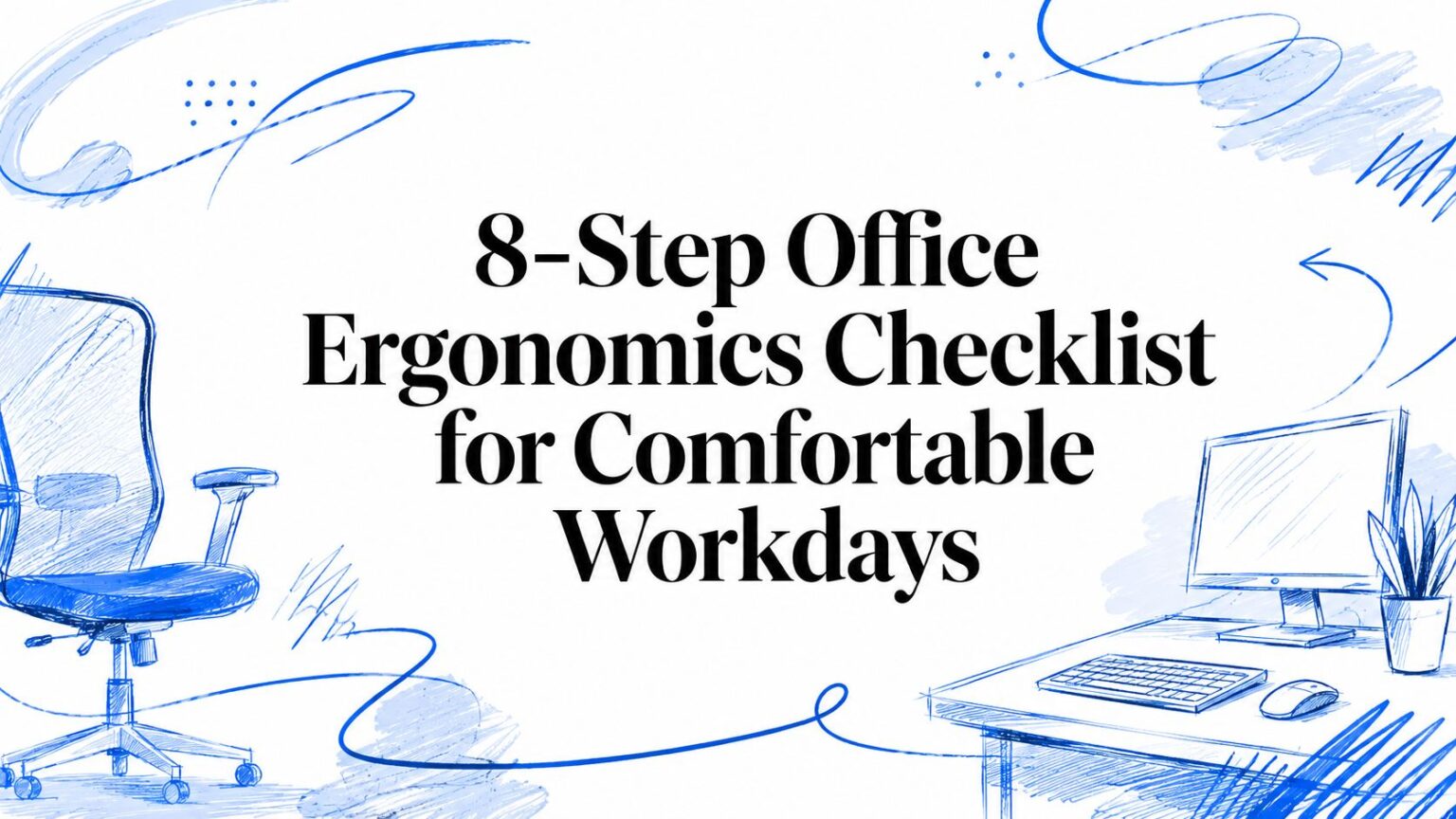
- Screen height: Put the monitor at eye level so you're not poking the chin forward to see.
- Foot support: Keep your feet well supported on the floor or on a footrest.
- Chair support: Use a chair that supports the lower back without forcing you rigidly upright.
- Keyboard and mouse: Keep them close enough that your shoulders can stay relaxed.
- Phone position: Bring the phone up toward eye level instead of dropping your head down to it.
This office ergonomics checklist image is a useful reference if you want a quick visual prompt near your workspace.
What works best in real life is a mix of sensible set-up and smart habits. Stand for a call. Walk while thinking. Swap positions. Reset before the headache starts, not after it has built momentum.
How Osteopathic Treatment Can Help Your Headaches
When headaches keep returning despite better habits, hands-on assessment can help identify what your body is missing. The key question isn't just “Where does it hurt?” It's “What is this body struggling to tolerate?”
What an osteopath looks for
An osteopath doesn't only look at the head. The assessment usually considers how the neck moves, how the upper thoracic spine contributes, whether the shoulders are doing too much, and whether breathing, jaw tension, or desk habits are feeding the problem.

That whole-body view matters. Two people can have the same headache pattern for different reasons. One may have stiff upper thoracic segments and overloaded upper traps. Another may have poor neck endurance and a workstation that keeps pulling the head forward.
A good assessment usually looks at:
- Neck mobility: Which movements feel limited, guarded, or provocative.
- Upper back contribution: Whether the thoracic spine is too stiff to support upright posture comfortably.
- Shoulder and rib mechanics: Whether the shoulder girdle is dragging the neck into tension.
- Daily load: How work, study, driving, and phone use shape the pain pattern.
What treatment may involve
Osteopathic care for posture-related headaches is usually gentle and practical. Treatment may include soft-tissue work to reduce muscular guarding, joint articulation or mobilisation to improve movement, and specific advice to help the body cope better between sessions.
The aim isn't to loosen everything and send you away. It's to restore more efficient movement and reduce the mechanical drivers that keep recreating the headache. A useful part of care is often the home plan, because what you do at your desk matters just as much as what happens on the treatment table.
This guide on reducing muscle tension with osteopath advice reflects the sort of practical self-management support that complements hands-on treatment.
Good treatment doesn't make you dependent on treatment. It should help you understand the pattern, calm the irritation, and build capacity.
For many people, that combination is what changes the cycle. The headache becomes less mysterious, the neck becomes less reactive, and daily work feels more manageable.
When to See a Professional About Your Headaches
A lot of headaches from poor posture respond well to the basics. Move more often. Improve your desk set-up. Stop forcing a rigid “perfect” posture. Build tolerance with gentle strengthening and regular resets.
When self-care is reasonable
Self-care makes sense when the pattern is familiar, clearly linked to posture or desk work, and settles with movement, stretching, or changing position. If the headache feels mechanical and you can see the trigger, a short period of targeted self-management is reasonable.
That said, persistence matters. If you keep doing the right things and the headache still returns, there may be a deeper driver such as stubborn joint irritation, poor neck endurance, significant muscle overload, or a migraine pattern that's being triggered by posture.
When not to wait
Seek prompt medical attention if a headache is sudden, severe, and unlike your usual pattern. Also get urgent advice if headache appears with fever, confusion, fainting, significant vision changes, new neurological symptoms, or after a head injury.
You should also seek professional assessment if:
- The pain keeps escalating: It's becoming more frequent or more intense.
- The headache doesn't respond to simple changes: Movement, rest, and position changes aren't helping.
- The neck feels increasingly restricted: You can't comfortably turn or move it.
- The pattern is unclear: You're not sure whether it's posture, migraine, jaw tension, or something else.
The right message isn't “put up with it.” It's to respond early. Mechanical headaches often become easier to settle when you address them before the pattern gets entrenched.
If headaches from poor posture keep returning, Bayside Osteopathic Health offers gentle, hands-on osteopathic care for people across the Bayside community. Our team looks at the root mechanical causes behind recurring head, neck, and upper back pain, then builds a personalised plan with treatment, movement advice, and practical self-care strategies. If you'd like clear guidance and a supportive approach, booking an appointment is a sensible next step.