

Yes, an osteopath can identify the signs of arthritis through expert physical assessment. In Australia, 1 in 7 individuals has been diagnosed with arthritis, and an osteopath's role is often to form a strong clinical diagnosis that may then lead to a collaborative formal diagnosis with a GP or specialist for complete care.
If you're reading this because a joint has become stiff, swollen, or oddly painful and you're wondering whether it's “just wear and tear” or something more, that's a very common place to start. Many people first notice arthritis in ordinary moments: getting out of bed, walking down stairs, opening a jar, or standing after sitting too long.
The practical question isn't only what arthritis is. It's who can recognise it early, who can help you move more comfortably, and when you need further testing. That's where the distinction matters. An osteopath can often recognise the pattern of arthritis during a thorough hands-on assessment. A formal medical diagnosis may still involve your GP or a specialist, especially when an inflammatory or autoimmune type is suspected.
Table of Contents
- That Aching Joint Is It Arthritis
- The Osteopathic Approach to Joint Pain Assessment
- Diagnosing Arthritis An Osteopaths Role and Limits
- Working With Your Healthcare Team Referrals and Collaboration
- How Osteopathy Helps Manage Arthritis Symptoms
- Practical Guidance for Bayside Patients
- Frequently Asked Questions About Osteopathy and Arthritis
That Aching Joint Is It Arthritis
Aching joints rarely announce themselves clearly. It might start as morning stiffness in your hands, a knee that protests on stairs, or a hip that loosens only after you've walked for a few minutes. By the time many people book an appointment, they want one clear answer: can an osteopath diagnose arthritis?
The useful answer is yes, with an important qualification. An osteopath can often make a clinical assessment that strongly points to arthritis by examining how the joint moves, how the surrounding muscles behave, whether there is swelling or restriction, and whether the pattern matches osteoarthritis or another arthritic presentation. That can be enough to begin sensible management.
What people often don't get told is that clinical recognition and formal medical diagnosis are not always the same thing. For some patients, especially those with a picture that looks like osteoarthritis, a physical examination gives a great deal of information. For others, particularly when symptoms suggest inflammatory or autoimmune disease, the next step is shared care with a GP or rheumatologist.
Why patients ask this question
Usually, one of these is happening:
- Pain has become persistent. It isn't settling with rest, stretching, or waiting it out.
- Movement feels different. The joint feels stiff, blocked, swollen, or weak.
- You want to avoid guessing. Self-diagnosing online often creates more confusion than clarity.
Practical rule: If a joint problem is affecting how you walk, sleep, work, or exercise, it deserves a proper assessment rather than another few weeks of hoping it settles.
An osteopathic appointment is often the point where vague joint pain becomes a clearer clinical picture. That matters because early recognition can guide the right advice, the right referral, and the right level of treatment.
The Osteopathic Approach to Joint Pain Assessment
An osteopathic assessment doesn't start and end with the sore joint. If you come in with a painful knee, the examination may also include your hip, ankle, lower back, walking pattern, and how you load that leg when you stand up or turn. Arthritis often affects movement in a chain, not in isolation.
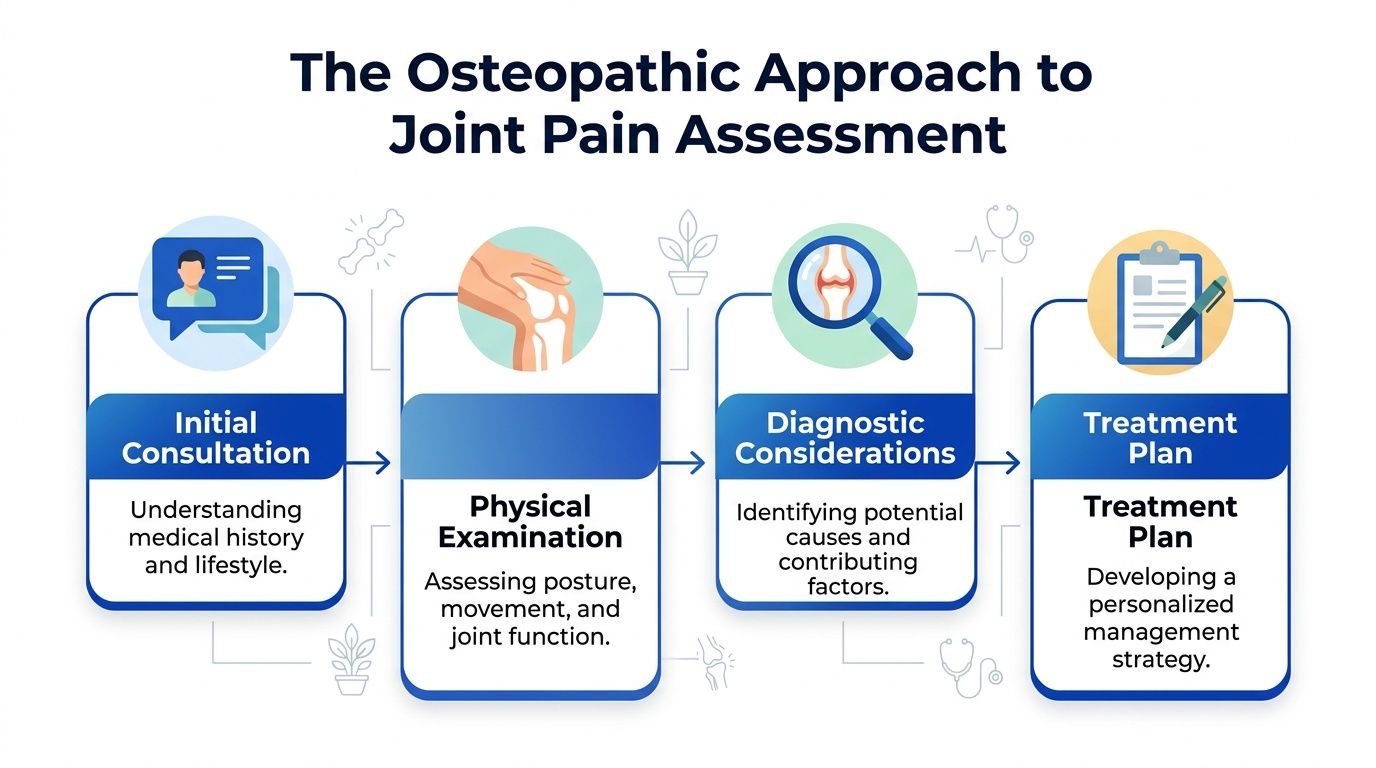
In Australia, 1 in 7 individuals has been diagnosed with arthritis, and many delay care due to out-of-pocket costs. That makes early assessment by primary health practitioners important. Osteopaths are registered with the Osteopathy Board of Australia and are trained to assess the whole body, including soft tissues, spine, and nervous system, so they can detect joint inflammation, swelling, and restricted movement through physical examination and signs and symptoms alone, as outlined by Osteopathy Australia's arthritis awareness information.
What happens in the room
A good assessment is methodical. It usually includes:
- History taking. When the pain started, whether stiffness is worse in the morning, whether the joint swells, and what activities aggravate it.
- Observation. Posture, gait, favouring one side, and how easily you sit, stand, bend, or grip.
- Hands-on testing. Range of motion, tenderness, warmth, swelling, joint end feel, muscle guarding, and surrounding tissue tension.
From there, the osteopath looks for patterns. Is the joint globally stiff or painful only at one angle? Is there swelling around the joint line? Is the muscle tension protective, or is it part of the problem? Do other joints show a related loading issue?
Why the whole-body view matters
A painful thumb can be influenced by wrist mechanics. A sore hip can change how the knee works. A stiff ankle can increase force through the knee on every step. If you only look where it hurts, you can miss what is keeping the problem going.
That whole-body approach is one of the practical strengths of osteopathy. It helps separate a local flare-up from a broader movement issue and helps identify when symptoms fit a common arthritic picture versus when they don't.
Sometimes the most important finding isn't the painful joint itself. It's the way the body has started moving around it.
Diagnosing Arthritis An Osteopaths Role and Limits
The confusion around this topic usually comes from one word: diagnose. In practice, that word gets used in two different ways. One means recognising the condition from a clinical assessment. The other means making the formal medical diagnosis that becomes part of your wider health record and may guide medication, imaging, or specialist care.
What an osteopath can diagnose clinically
An osteopath can assess whether your symptoms and physical findings are consistent with arthritis. That includes reduced joint movement, pain patterns, stiffness, swelling, and functional limitation. For osteoarthritis in particular, physical findings are highly important.
Australian guidance discussed in Key Osteopaths' review of arthritis diagnosis notes that no blood tests are required to diagnose osteoarthritis and that physical examination signs outweigh test results for diagnosis. The same source also points out an important nuance: many people don't distinguish between an osteopath's clinical suspicion or working diagnosis and a formal medical diagnosis that may require collaboration when autoimmune arthritis is suspected.
That means an osteopath may reasonably say, “This strongly appears to be osteoarthritis,” and begin management based on that assessment. That's not guesswork. It's clinical reasoning based on how the joint presents.
When a formal medical diagnosis matters
There are times when shared care is the right path from the start. If the symptoms suggest rheumatoid arthritis or another inflammatory arthritis, formal medical input becomes more important because blood tests, imaging, medication decisions, and specialist review may shape treatment.
Signs that may shift the conversation toward GP or specialist referral include:
- Multiple joints involved
- Marked swelling or heat
- Symptoms that behave like inflammation rather than simple mechanical stiffness
- A history that doesn't fit the usual osteoarthritis picture
An osteopath's job isn't to cling to the case. It's to recognise what fits within osteopathic management and what needs co-management.
| Aspect | Osteopath | Rheumatologist Specialist |
|---|---|---|
| Primary focus | Clinical assessment of movement, joint function, pain behaviour, and whole-body mechanics | Formal medical evaluation of inflammatory, autoimmune, and complex arthritic conditions |
| Main tools | History, observation, palpation, range-of-motion testing, functional assessment | Medical history, pathology review, imaging review, specialist examination |
| Best suited to identify | Mechanical patterns, reduced mobility, loading issues, symptomatic presentations consistent with arthritis | Autoimmune arthritis, inflammatory disease patterns, medication pathways |
| Role after assessment | Begin conservative care, monitor response, refer when findings suggest broader investigation | Confirm diagnosis where needed, oversee medical treatment, coordinate specialist management |
The strongest osteopathic assessments are not about claiming everything. They are about knowing what the hands can tell you, and when the bigger medical picture needs to be brought in.
Working With Your Healthcare Team Referrals and Collaboration
A referral isn't a sign that osteopathy has reached its limit. It's usually a sign that your care is being handled properly. Arthritis often sits across more than one part of the healthcare system, especially when diagnosis, symptom control, exercise, and medication all need to line up.
What a referral usually looks like
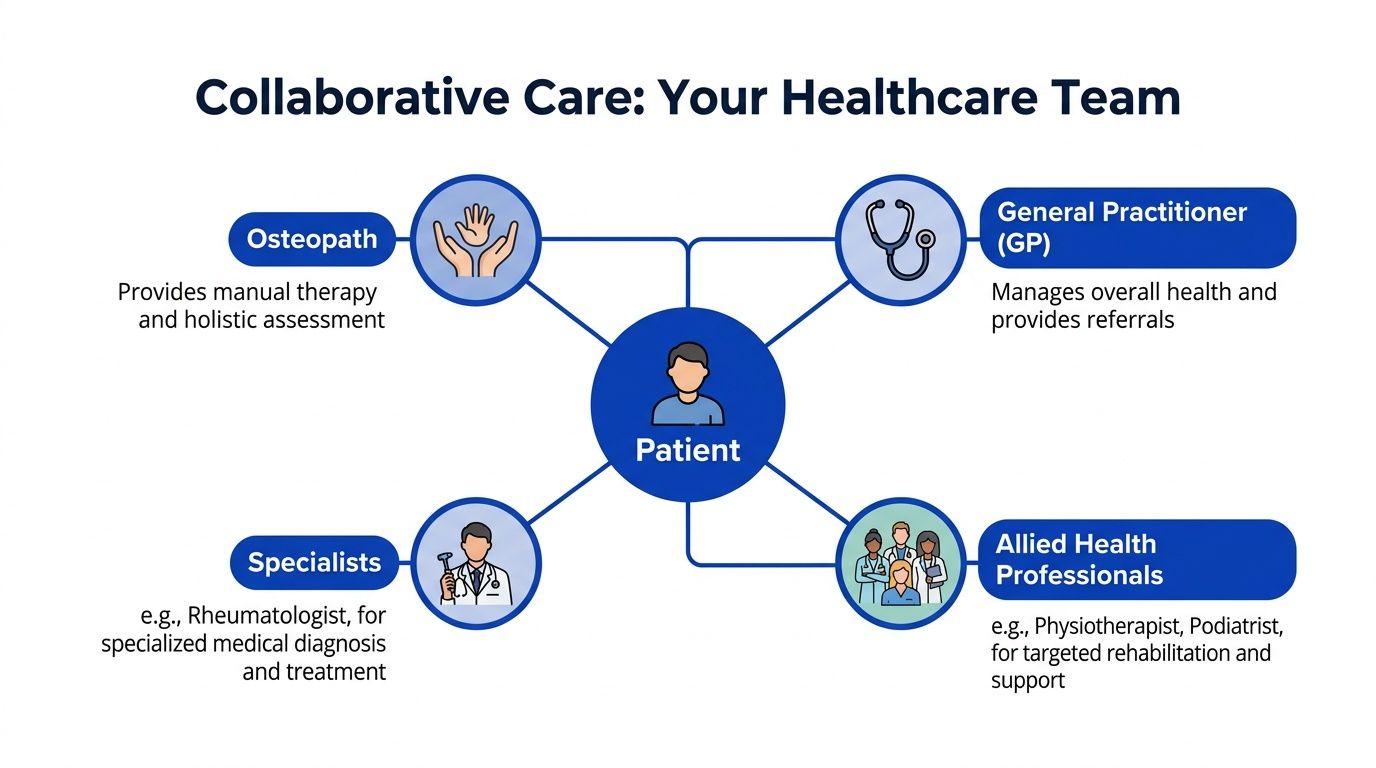
If an osteopath suspects arthritis that needs broader investigation, the usual next step is referral to a GP. That may be for imaging, pathology requests, medication discussion, or onward referral to a rheumatologist or orthopaedic specialist.
The referral should include clear clinical information. That often means which joint is involved, what movements are restricted, what swelling or tenderness is present, how symptoms behave, and why inflammatory or autoimmune causes are being considered.
Sometimes the care team also expands to include allied health support. Depending on your needs, that might involve exercise-based rehabilitation, footwear advice, or movement retraining. A practical example of this broader rehabilitation pathway can be seen in this physiotherapy and exercise support setting.

Why collaboration helps
Good arthritis care often works best when each practitioner sticks to their strength.
- The osteopath tracks movement quality, stiffness, pain behaviour, and functional change.
- The GP coordinates general medical care and referrals.
- The specialist helps when the diagnosis is medically complex or drug treatment is part of the plan.
- Other allied health clinicians can support rehabilitation and daily function.
That team approach matters because arthritis doesn't affect only scans or blood results. It affects sleep, walking, work, exercise tolerance, and confidence in movement.
How Osteopathy Helps Manage Arthritis Symptoms
You wake up, put your feet on the floor, and the joint feels stiff before the day has even started. By the time you have moved around a bit it eases, but stairs, longer walks, gardening, or getting up from a chair still remind you that the joint is not happy. That is usually the point where people want practical help, not just a label.
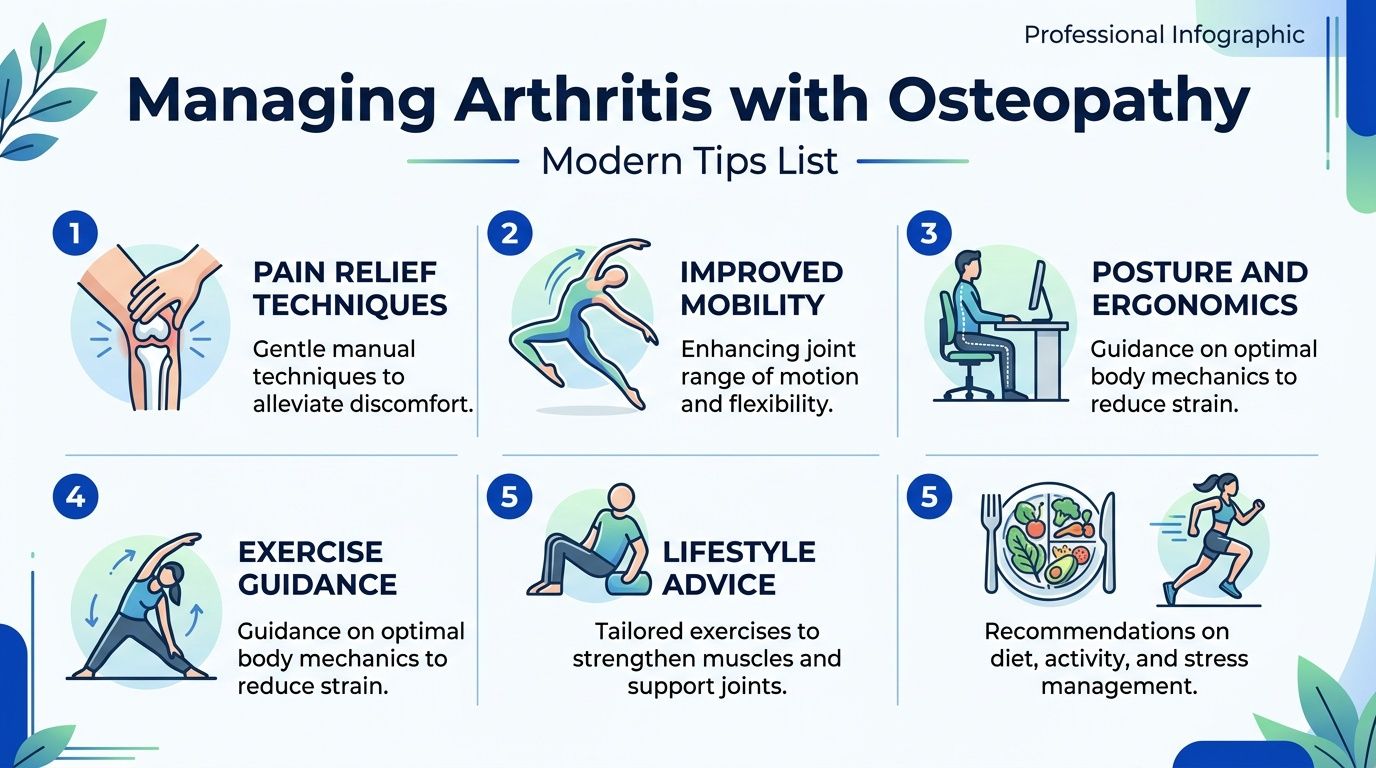
Osteopathy can help manage the day-to-day effects of arthritis. The aim is not to replace medical care or claim to formally diagnose every type of arthritis in the room. The practical role is to assess how the joint is moving, what surrounding tissues are doing in response, which activities are provoking symptoms, and how to improve function without stirring things up further. As noted earlier, formal diagnosis may still involve your GP, imaging, blood tests, or specialist input. In clinic, the focus is often symptom control and better movement.
What treatment usually involves
Hands-on treatment is usually gentle and specific to the joint, the stage of irritation, and your current tolerance. That may include:
- Joint articulation. Repeated controlled movement to reduce stiffness and make the joint easier to use.
- Mobilisation. Manual techniques aimed at improving how a restricted joint moves.
- Soft-tissue work. Treatment to muscles around the joint that have become tight or overprotective.
Manual treatment is only one part of it. Good management also includes advice on pacing, movement selection, flare control, and how to keep the joint active without overloading it. For some people that means shorter, regular walks. For others it means pool exercise, sit-to-stand work, or basic strength exercises around the hip, knee, shoulder, or hands. If you want a visual example of the kind of joint issue many people seek help for, this arthritis and joint mobility image reflects the sort of stiffness and functional restriction often discussed in clinic.
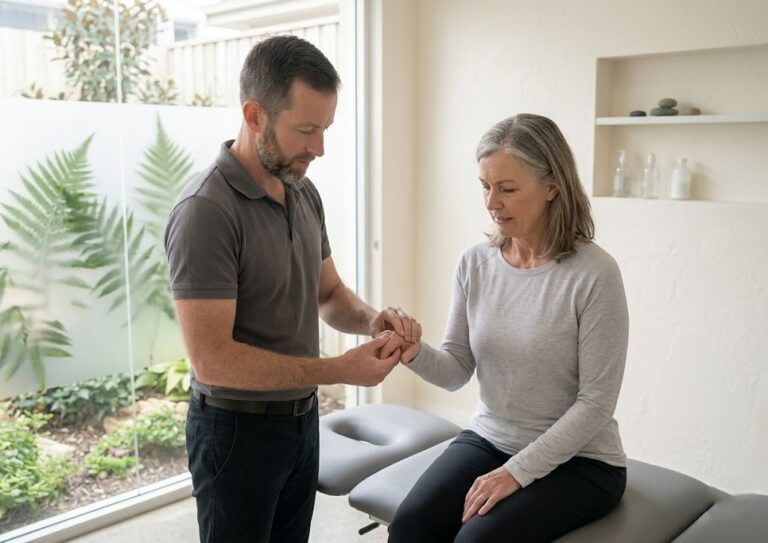
A helpful overview of movement-based support is below.
What tends not to work well
Complete rest often leaves joints stiffer. Pushing through a flare because you do not want to "give in" often backfires. Random online exercises can help some people, but they can also irritate an already sensitive joint if the load, range, or timing is wrong.
The better approach is steady and adjustable. Settle the flare, keep tolerable movement going, build support around the joint, and change the plan based on how the joint responds over the next day or two.
In practice, the best plans are often the least dramatic. Consistent, specific, and realistic usually works better than aggressive treatment that only feels good for a day.
Bayside Osteopathic Health provides osteopathic assessment, hands-on care, and practical self-management advice for people dealing with arthritis-related pain, stiffness, and reduced function.
Practical Guidance for Bayside Patients
If you're in Bayside and thinking about booking for joint pain or stiffness, a few practical details can make the process easier. The first appointment is usually most useful when you bring a clear symptom history, any relevant scans or letters, and a rough idea of what makes the joint better or worse.

What to bring to your appointment
You don't need to arrive with the diagnosis already worked out. You do help the process if you bring the basics:
- A timeline of symptoms. When it started, whether it came on gradually, and whether mornings are worse than evenings.
- Relevant medical information. Scan reports, blood test results, specialist letters, or a medication list if you have them.
- Questions that matter to you. People often want to know if movement is safe, what exercises to avoid, or whether they should be referred onward.
If your symptoms are influenced by desk work, repetitive setup, or poor workstation habits, practical postural considerations matter too. This ergonomic and posture resource image reflects the sort of work-related loading factors that can add to joint discomfort.

For some patients with chronic conditions, Medicare support may be available through a Chronic Disease Management plan arranged by their GP. Eligibility and referral decisions sit with the GP, so it's worth asking directly whether your arthritis or long-term musculoskeletal condition may qualify.
When to seek urgent medical attention
Not every painful joint should wait for a routine osteopathic appointment. Seek prompt medical review if you develop:
- Sudden major swelling
- A hot, red joint
- Fever with joint pain
- Unexplained weight loss
- A sharp decline in function or inability to bear weight
Those signs can point to something more urgent than routine arthritis management. Safe care always starts with recognising what needs medical attention now.
Frequently Asked Questions About Osteopathy and Arthritis
A few questions come up almost every week in clinic. They usually sit right at the point where diagnosis meets practical treatment.
Can osteopathy slow arthritis progression
This needs a careful answer. Osteopaths help manage arthritis, especially pain, stiffness, and mobility, but they do not claim to cure arthritis or halt progression. Pakenham Osteopathy's discussion of rheumatoid arthritis and osteopathy notes that Osteopathy Australia and Better Health Channel describe osteopaths as managing arthritis rather than curing it. The same source also notes emerging Australian research suggesting that early, targeted osteopathic intervention combined with low-impact exercise and ergonomic adjustments may reduce joint stiffness and inflammation, potentially mitigating further degeneration.
So the honest answer is this: osteopathy is well placed to improve how you function and how you feel. Claims about stopping disease progression should be treated cautiously.
Is treatment painful
It shouldn't feel forceful or punishing. Arthritic joints are often sensitive, so treatment is usually adapted to the joint, the irritability level, and what your body can tolerate that day. Gentle treatment tends to work better than trying to “push through” a flare.
How many sessions will I need
That depends on the joint involved, how long symptoms have been present, and whether the aim is short-term flare management or longer-term support. Some people come for a focused short course. Others do better with review appointments spaced out over time, especially if arthritis is longstanding.
Should I wait for a scan before seeing an osteopath
Not usually. A clinical assessment is often the right place to start, especially if you're unsure whether the problem is arthritis at all. If your symptoms suggest the need for imaging or specialist review, that can be picked up and referred appropriately.
If joint pain or stiffness is starting to limit your day, Bayside Osteopathic Health provides gentle osteopathic assessment and treatment, along with practical guidance on referrals, self-management, and Medicare options where applicable. Booking an appointment can help clarify whether your symptoms fit an arthritic pattern and what the next step should be.