
You wake up already negotiating with your body. Before your feet hit the floor, you're checking your back, your neck, your hips, or your knees. You're wondering whether today will be manageable or whether one awkward bend, one long drive, or one poor night of sleep will tip things into a flare-up.
That's the reality for many adults living with chronic pain and mobility issues. By the time pain has been around for months or years, the word prevention can sound misplaced. It can feel like something meant for earlier, for healthier years, for people who aren't already planning their day around stiffness and discomfort.
In practice, preventive health strategies still matter. They just mean something different. They become the small, steady actions that help you prevent setbacks, reduce avoidable strain, stay more mobile, and protect your quality of life.
Table of Contents
- Rethinking Prevention When You Already Have Pain
- Daily Habits That Build a Stronger Foundation
- Mastering Your Posture and Ergonomics
- Movement as Medicine A Gentle Approach
- The Osteopathic Approach to Lasting Relief
- Proactive Strategies for Arthritis and Fall Prevention
- Navigating Your Care and Medicare Options in Australia
- Taking the First Step Toward Better Movement
Rethinking Prevention When You Already Have Pain
A common pattern looks like this. Someone hurts their back lifting groceries, settles down for a few days, feels a little better, then returns to normal life too quickly. A week later the pain is back. After enough repeats, they stop trusting their body.
That's where prevention changes meaning. It's no longer about avoiding every health problem from the beginning. It's about preventing the next avoidable flare-up, the next week lost to stiffness, the next drop in confidence that makes you move less and hurt more.
For adults with chronic pain, preventive health strategies are often quiet and unglamorous. They're the chair adjustment that stops neck tension building by lunchtime. They're the short walk before stiffness settles in. They're the decision to pace housework instead of pushing through and paying for it later.
Practical rule: If an activity reliably leaves you much worse for the next day or two, it needs to be modified, broken up, or supported better. Pain management works best when the body feels safe, not threatened.
There's also a bigger reason this matters. The Australian Government's National Preventive Health Strategy 2021 to 2030 sets a target of increasing preventive health investment to 5% of total health expenditure by 2030 according to the National Preventive Health Strategy 2021 to 2030. That national shift reflects something clinicians see every day. Waiting until function collapses is expensive for the person and for the system.
For you, prevention can start much smaller than a grand health overhaul. It can start with noticing what aggravates you, what settles you, and what helps you stay steady through the week.
Daily Habits That Build a Stronger Foundation
When pain becomes persistent, people often search for one fix. A better foundation usually works better than one magic answer. Daily habits influence how your joints move, how your muscles recover, how well you sleep, and even how intensely your nervous system reacts to ordinary strain.
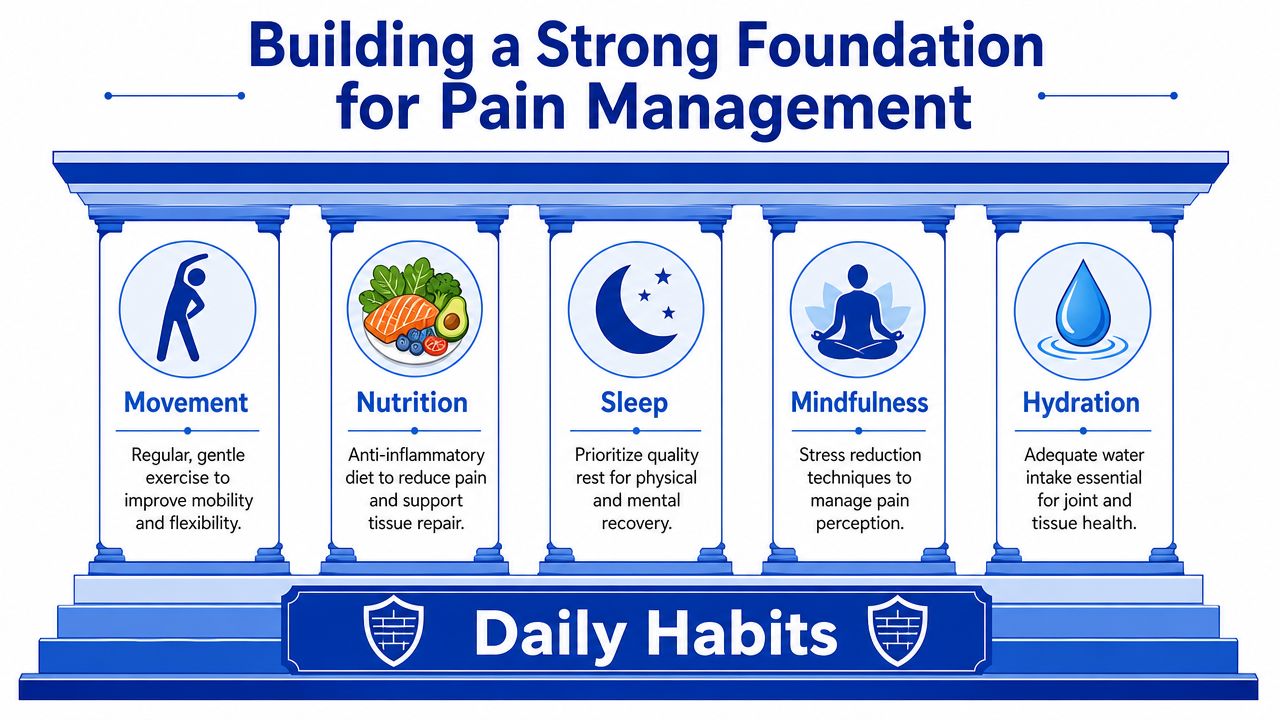
Food that settles the system
A pain-friendly pantry doesn't need to be perfect. It needs to make your easier choices more available when you're tired, sore, or busy.
Start with everyday basics that are simple to assemble:
- Protein options you can reach for easily such as eggs, yoghurt, tinned fish, tofu, beans, or pre-cooked chicken.
- Colourful plant foods like frozen vegetables, berries, salad greens, tomatoes, carrots, and fruit you'll enjoy.
- Convenient staples such as oats, rice, wholegrain wraps, soups, olive oil, nuts, and seeds.
These foods won't erase chronic pain. What they often do is support steadier energy, better recovery, and less of the boom-and-bust eating pattern that leaves many people feeling more inflamed, sluggish, and stiff.
A simple approach works well. Build meals around protein, add fibre-rich plant foods, and keep ultra-processed convenience foods as occasional backups rather than the main pattern.
Hydration and sleep are not optional extras
People with joint stiffness often underestimate how much low hydration can affect the way they feel. Tissues tend to feel less tolerant when you're running dry, especially if you also rely on coffee, skip meals, or stay seated for long stretches.
Try these low-effort habits:
- Keep water visible by using the same bottle each day and placing it where you spend time.
- Link drinking to routines like taking medication, making tea, or finishing a short walk.
- Choose regular sips instead of trying to catch up late in the day.
Sleep is just as important. Poor sleep often lowers your tolerance to pain and effort. After a rough night, movements that usually feel fine can feel sharp, heavy, or threatening.
A useful evening rule is to make the last hour of the day quieter than the rest. Lower the lights, reduce scrolling, and give your body a clear signal that it's safe to power down.
A basic sleep routine might include:
- A regular wind-down time even if bedtime varies a little.
- A warm shower or heat pack if stiffness tends to spike at night.
- Supportive pillows to reduce twisting through the neck, shoulders, hips, or knees.
- A notepad beside the bed so tomorrow's worries don't stay spinning in your head.
If you only improve one daily habit this month, choose the one that gives you the most stability. For some people that's breakfast. For others it's water, sleep, or a reliable short walk. Consistency usually beats intensity.
Mastering Your Posture and Ergonomics
Most posture problems aren't caused by sitting badly for ten seconds. They come from staying in one position too long, repeating the same load, or working in a setup that asks your body to compensate all day.
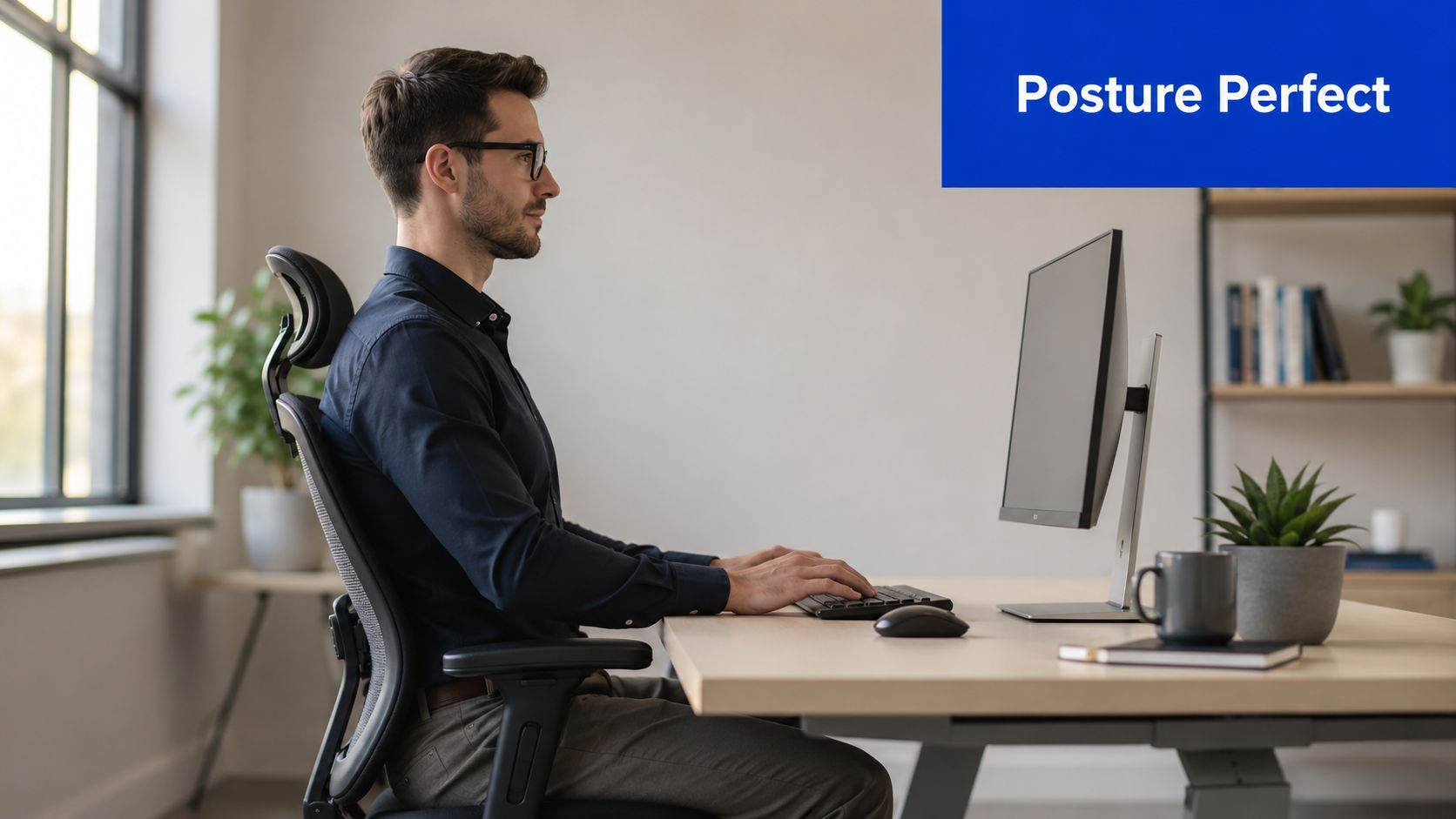
Desk work without feeding the pain cycle
If you work at a dining table, on the couch, or between office and home, your body may be dealing with different strain patterns every day. The aim isn't to hold a rigid “perfect posture”. The aim is to create a setup that lets you move, breathe, and change position without constant bracing.
A simple workstation checklist:
- Screen height should let your eyes look forward rather than dropping your chin for hours.
- Chair support should allow your feet to feel grounded. If they dangle, use a footrest or a sturdy box.
- Keyboard and mouse placement should keep your shoulders relaxed instead of creeping up toward your ears.
- Frequent resets matter more than one ideal position. Stand up, roll the shoulders, or walk to the kitchen before the ache builds.
For a visual example of workplace alignment, this posture and corporate ergonomics image shows the kind of neutral setup many sore desk workers are aiming for.
People often do well with a timer that prompts a brief movement break. It doesn't need to be a workout. A lap around the room, a few shoulder rolls, or a gentle back extension can interrupt the accumulation of tension.
Standing chores and sleep setup
Household jobs can be harder on the body than formal exercise because people rush through them without noticing posture at all. Vacuuming, folding washing, gardening, chopping food, and standing at the sink can all aggravate pain if you lock into one position.
Try a few practical swaps:
- At the bench open one cupboard door and rest one foot on the ledge, then swap sides.
- During chores split larger jobs into smaller rounds instead of doing everything in one burst.
- For lifting keep objects close to your body and pivot your feet rather than twisting through the spine.
- For floor tasks kneel on cushioning or bring the task up to a table when possible.
This short video gives a helpful visual guide to body position and setup during the day.
Night-time posture matters too. If you sleep on your side, a pillow between the knees can reduce pull through the hips and lower back. If you sleep on your back, a pillow under the knees may ease lumbar tension. The best sleep position is usually the one you can maintain comfortably, not the one someone online declared perfect.
Movement as Medicine A Gentle Approach
For many people in pain, the word exercise sounds like a threat. It brings up memories of pushing too hard, joining a class that flared everything, or being told to “just strengthen up” when the body already felt overloaded. A gentler approach works better.
Why gentle movement helps when rest has stopped helping
The painful body often becomes a guarded body. Muscles tighten to protect. Joints move less. Breathing gets shallower. Confidence drops. Then ordinary tasks start to feel harder than they should.
Gentle movement can interrupt that pattern. It helps keep joints moving, supports circulation, reduces the sense of stiffness, and reminds the nervous system that not all movement is dangerous.
This doesn't mean ignoring pain. It means choosing forms of activity your body can tolerate and repeat. Walking, pool movement, chair-based mobility work, light stretching, and controlled strengthening are often more useful than random high-effort sessions.
The best movement plan is the one your body will accept tomorrow, not just the one you can survive today.
Helpful movement versus flare-up movement
Helpful movement usually has a few signs. Discomfort may be present, but it feels manageable. You loosen as you go. You recover within a reasonable window. You feel more capable afterward, even if slightly tired.
Flare-up movement often looks different:
- You hold your breath and brace through the whole activity.
- Pain escalates sharply while you continue because you don't want to stop.
- Symptoms spread and stay aggravated well after you finish.
- Your next day is worse in a way that limits normal tasks.
That doesn't mean movement is bad. It means the dose, pace, or type wasn't right.
A useful framework is to start below what you think you can do. If a walk usually becomes uncomfortable at twenty minutes, start with ten or twelve. If stretching helps but long sessions irritate you, do five minutes more often. The body usually responds better to repeatable input than heroic effort.
Sample Weekly Gentle Movement Plan
| Day | Focus | Example Activity | Duration |
|---|---|---|---|
| Monday | Mobility | Gentle neck, shoulder, hip, and back stretches | 10 to 15 minutes |
| Tuesday | Walking | Easy walk on flat ground | 15 to 20 minutes |
| Wednesday | Recovery | Light range-of-motion work and relaxed breathing | 10 minutes |
| Thursday | Strength | Chair squats, wall push-ups, light band exercises | 10 to 15 minutes |
| Friday | Mobility | Gentle whole-body stretching or yoga-based movements | 10 to 15 minutes |
| Saturday | Low-impact activity | Hydrotherapy, pool walking, or an easy outdoor walk | 15 to 20 minutes |
| Sunday | Reset | Short stroll and brief mobility routine | 10 to 15 minutes |
If you're starting from a difficult place, cut this plan down further. Five calm minutes done regularly is more valuable than one ambitious session followed by three days of regret.
The Osteopathic Approach to Lasting Relief
Chronic pain rarely stays neatly in one place. A sore lower back changes how you bend. A stiff thoracic spine affects your neck and shoulders. A painful hip can alter your walking pattern and irritate the knee on the same side or the other. That's why a whole-body view matters.
Looking for the driver not just the sore spot
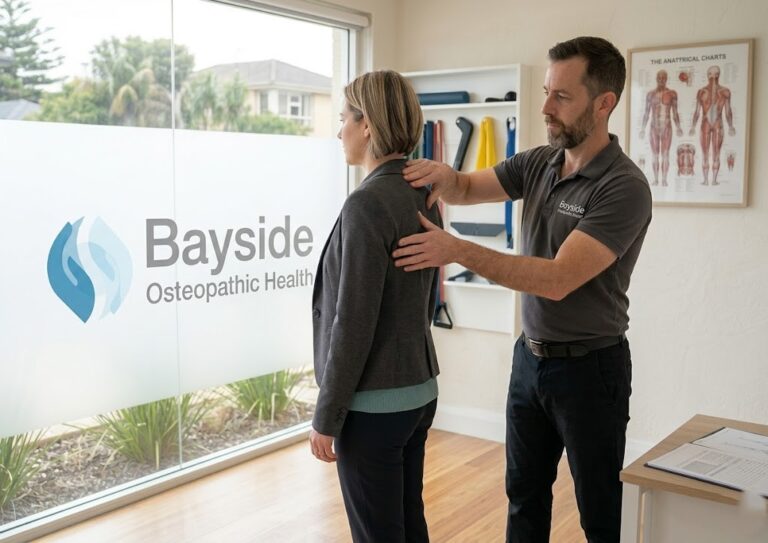
An osteopathic approach focuses on how the body is moving as a connected system. The question isn't only “where does it hurt?” It's also “what is this area compensating for?” and “what keeps reloading this pattern?”
That matters in prevention. If your neck keeps tightening because your upper back is stiff and your desk setup pulls you forward, treating the neck alone may give only short-lived relief. If your back flares every time you garden because your hip mobility is poor and you brace through the task, the long-term plan needs to address more than symptoms.
Hands-on care can help settle the body enough for better movement. Gentle soft-tissue work, articulation, and mobilisation are often used to reduce tension and improve ease of motion. This kind of support is most useful when it's paired with practical self-care rather than treated like a standalone rescue.
For readers wanting a visual sense of back pain support, this osteopathy for back pain image reflects the kind of hands-on care many people find reassuring when movement has become guarded.

What a preventive appointment often includes
A preventive consultation isn't about waiting for a major flare. It often works best when you come in while you're functional enough to notice patterns and build better habits.
A thorough appointment may include:
- Movement assessment that looks at bending, turning, walking, sitting, and standing mechanics.
- Hands-on treatment aimed at easing restriction without forcing the body.
- Load review that considers work setup, sleep, hobbies, commuting, and home tasks.
- A simple plan for stretches, mobility work, pacing, and symptom management.
Good preventive care should leave you with more understanding, not more dependence.
When people do best, it's usually because treatment and daily habits start reinforcing each other. The body moves a little better. Fear eases. Activity becomes less erratic. Fewer small aggravations turn into bigger problems.
Proactive Strategies for Arthritis and Fall Prevention
Arthritis and falls are two of the biggest worries for adults dealing with pain and reduced mobility. They're also closely linked. Joint stiffness changes the way you move, and uncertain movement increases fall risk. A proactive approach helps on both fronts.
Managing arthritis day to day
Many people with arthritis swing between doing too much on a good day and very little on a sore day. Joints usually prefer something steadier.
This kind of rhythm often helps:
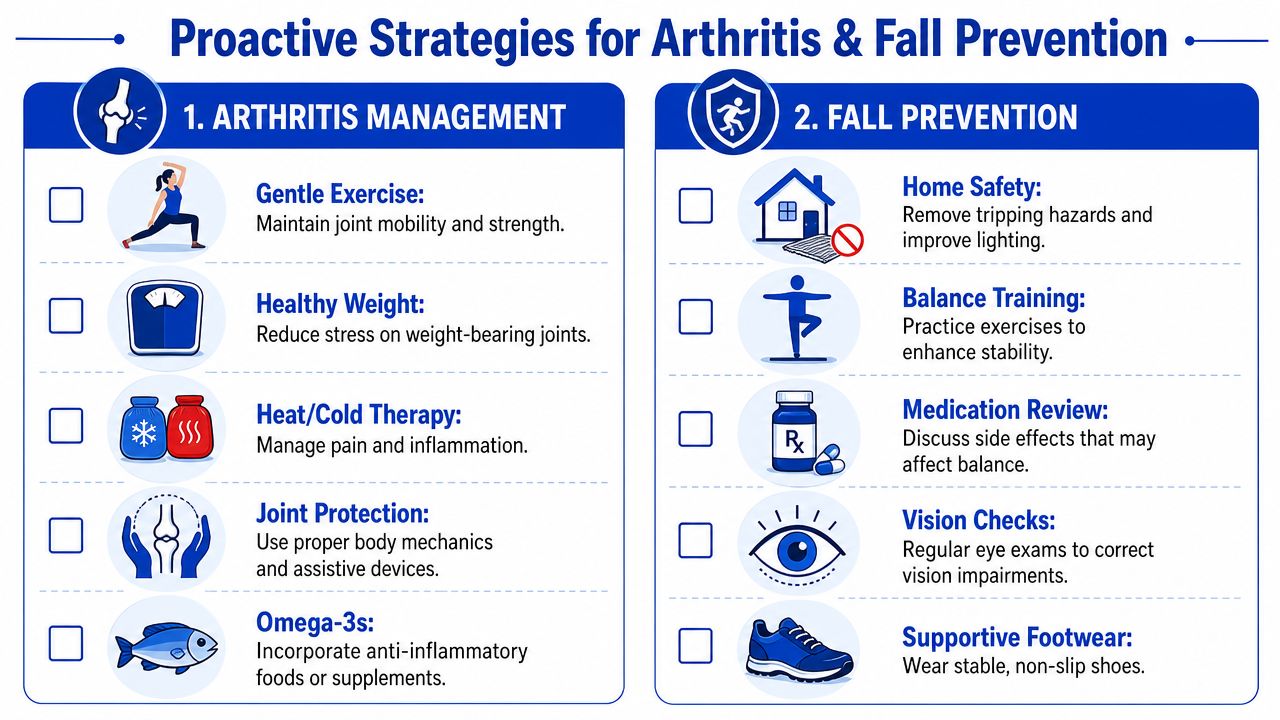
- Protect the joint during tasks by carrying smaller loads, using both hands, and avoiding long periods of gripping or twisting.
- Warm up before activity with a heat pack, warm shower, or a few minutes of gentle movement.
- Keep joints moving daily even when formal exercise isn't happening.
- Use support wisely such as jar openers, thicker-handled kitchen tools, or railings where needed.
The goal isn't to baby every joint. It's to reduce unnecessary irritation so the movement you do choose feels more comfortable and more sustainable.
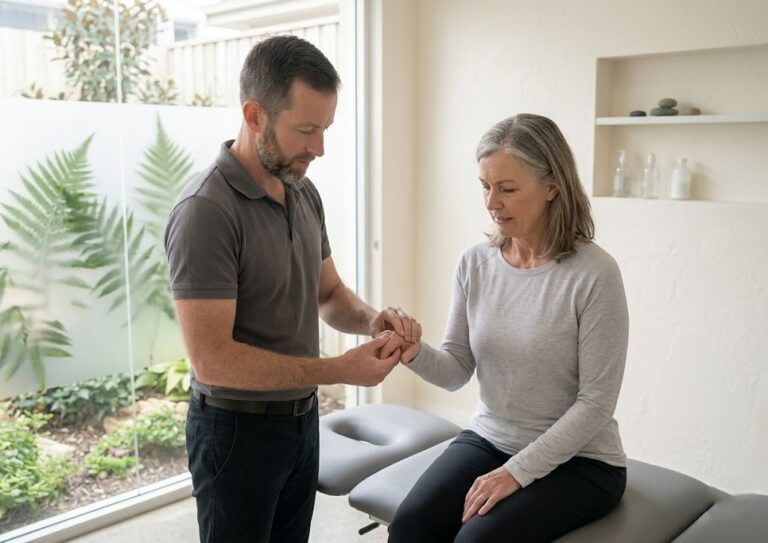
For a visual reference on joint support and mobility, this arthritis and joint mobility image reflects the kind of gentle care and movement focus that suits many people with stiffness.
One group often gets overlooked in preventive care. Research highlighted by the Social Policy Research Centre at UNSW on preventive care pathways for people with severe mental illness notes that stigma and system barriers can make it harder for this population to maintain consistent GP relationships and access screening for chronic conditions. If pain, low mood, anxiety, or complex health needs are all present, continuity of care becomes even more important.
A practical fall prevention checklist
Falls rarely happen because of one single issue. More often, they come from a mix of poor lighting, clutter, low confidence, footwear, fatigue, rushing, and reduced balance.
Use this home and daily-life checklist:
- Clear walkways by removing loose rugs, cords, low stools, and piles near the bed or hallway.
- Improve lighting in entryways, bathrooms, and night-time routes to the toilet.
- Choose stable footwear with a secure fit and non-slip sole instead of floppy slippers or worn shoes.
- Slow transitions when rising from bed or a chair, especially first thing in the morning.
- Practise balance safely near a bench, sturdy chair, or rail.
A few simple balance drills can help:
- Weight shifts from side to side while holding the kitchen bench.
- Supported heel raises to wake up the calves and ankles.
- Tandem standing with one foot slightly ahead of the other while keeping a hand nearby for support.
Your home should support your movement, not test it.
People often wait until after a wobble or minor fall to make changes. It's far easier to adjust the environment before confidence drops.
Navigating Your Care and Medicare Options in Australia
Pain management is easier when you know where to start. Many people delay getting help because the system feels confusing, not because they don't want support.
Who to see and when
A GP is usually the best first stop if your pain is new, changing, unusually severe, or tied to broader health questions. Your GP can help rule out more serious concerns, review medications, and coordinate referrals if needed.
An allied health practitioner such as an osteopath can help when the main issue is movement, posture, stiffness, flare-up management, or recurring musculoskeletal pain that affects daily function. For many people, good care involves both. The GP oversees the broader picture, and allied health helps with practical management.
There's a strong reason to be proactive. Australia spends approximately $2 billion annually on preventive health, which represents 1.34% of total health expenditure, according to this analysis of Australian preventive health spending. When prevention is underfunded, more care naturally flows toward treatment after problems have grown.
How a Chronic Disease Management plan usually works
If you're living with an ongoing condition, ask your GP whether you may be eligible for a Chronic Disease Management plan. This is often the pathway people mean when they ask about Medicare support for allied health.
The process is usually straightforward:
- Book a longer GP appointment and explain how long the condition has been affecting your daily life.
- Discuss your goals such as walking more comfortably, managing arthritis, or reducing repeated flare-ups.
- Ask whether allied health referral is appropriate for your situation.
- Check the rebate process with both your GP clinic and the allied health provider so you know what to expect.
The most useful plans are specific. “Move better” is too vague. “Walk to the shops without a pain spike” or “sit through work meetings more comfortably” gives everyone something concrete to work toward.
Taking the First Step Toward Better Movement
If you live with chronic pain, prevention doesn't mean going back in time. It means building a life that's less easily knocked off course by pain, stiffness, fatigue, and flare-ups.
That usually comes down to a few steady actions. Eat in a way that supports recovery. Set up your workspace so your body isn't fighting the furniture. Move gently and often enough to keep confidence and mobility alive. Protect sore joints without retreating from activity. Ask for professional help before a manageable problem becomes a larger one.
Australia's National Preventive Health Strategy aims to add two years of life lived in full health to the average Australian lifespan through a systems-based approach, as outlined by the Australian Government's preventive health overview. That's a national goal, but it's built from personal habits, local care, and ordinary decisions repeated over time.
You don't need a perfect routine. You need a starting point that feels realistic this week. One chair adjustment. One short walk. One earlier night. One appointment. Done consistently, those small steps can change how your body feels and how confidently you move through daily life.
If you're ready for support, Bayside Osteopathic Health offers gentle, personalised osteopathic care for people dealing with back pain, neck pain, joint stiffness, arthritis-related discomfort, and postural strain. We work with Bayside locals to improve movement, reduce tension, and create practical self-care plans that fit everyday life. If you'd like help taking the next step toward easier movement, get in touch to book an appointment.