

You wake up stiff again. Your neck eases after a hot shower, your back settles once you get moving, and by late morning you think the problem might be gone. Then you sit at your desk, drive to the shops, lift something awkwardly, or sleep poorly, and the pain returns. So you book another appointment, take another short-term measure, and hope this time it will last.
That cycle is exhausting. It can also make you feel as if your body is unreliable, when often the underlying issue is that your care plan hasn't been built for the long haul. A symptom settles, but the habits, loads, postures, stress patterns, and movement limits underneath it stay the same.
Sustainable health practices become useful. Not as a trendy phrase, but as a calmer, more practical way to think about health. Instead of asking, “How do I get rid of this flare-up today?” the better question becomes, “What can I do consistently so my body copes better next month, next year, and beyond?”
That mindset fits the broader direction of healthcare in Australia too. Australia's National Preventive Health Strategy 2021–2030 identifies physical activity and healthy diets as core pillars of sustainable health to reduce chronic disease. The same verified policy summary notes that a 2024 Philips Australia survey found over 70% of Australians support environmental sustainability in healthcare, seeing it as quality care that also reduces waste and environmental impact.
For people living with chronic back, neck, or joint pain, that bigger idea becomes very personal. Sustainable care means building a body and routine that don't rely on constant rescue.
Table of Contents
- Beyond Temporary Fixes An Introduction
- What Are Sustainable Health Practices Really
- The Lifelong Benefits of a Sustainable Approach
- Building Foundational Health Habits
- Managing Your Inner Environment
- How Osteopathy Supports Your Sustainable Health Journey
- Your 4-Week Sustainable Health Action Plan
Beyond Temporary Fixes An Introduction
Short-term care is typically not chosen out of preference. It is selected because pain interrupts life. You need to get through work, pick up the kids, cook dinner, sleep, and function. Relief matters. The problem starts when relief becomes the whole plan.
A common pattern looks like this. Your shoulder tightens, so you stop using it normally. Your back flares, so you rest more than you need to. Your pain settles enough to carry on, but your strength drops, your movement becomes guarded, and your confidence shrinks. Then the next flare-up arrives faster than the last one.
That doesn't mean you've failed. It usually means your body needs support that's repeatable, realistic, and gentle enough to keep doing.
The treadmill many people get stuck on
When pain keeps returning, people often bounce between opposite extremes:
- Do nothing for too long because they're worried they'll make it worse
- Do too much on a good day and pay for it later
- Rely on passive fixes without changing the daily habits feeding the problem
- Ignore warning signs until the pain is loud enough to stop everything
This stop-start pattern is the opposite of sustainability. It uses a lot of energy and gives little back.
Sustainable health isn't about doing more. It's about choosing what your body can benefit from consistently.
For chronic pain, sustainable care means building capacity. That might include regular walking, steadier sleep, less reactive pacing, more confidence with movement, and a treatment approach that supports function instead of only chasing symptoms.
A better question to ask
Rather than asking whether something gives fast relief, ask three questions:
- Can I keep doing this without burning out?
- Does it help my body work better, not just feel different for a few hours?
- Will this make daily life easier over time?
If the answer is yes, you're probably moving toward a sustainable model of health. That's where lasting change tends to happen.
What Are Sustainable Health Practices Really
Sustainable health practices are the habits and care choices that support your health over time without draining your body, your schedule, or your motivation. They aren't extreme. They don't depend on perfect discipline. They work because they can become part of ordinary life.
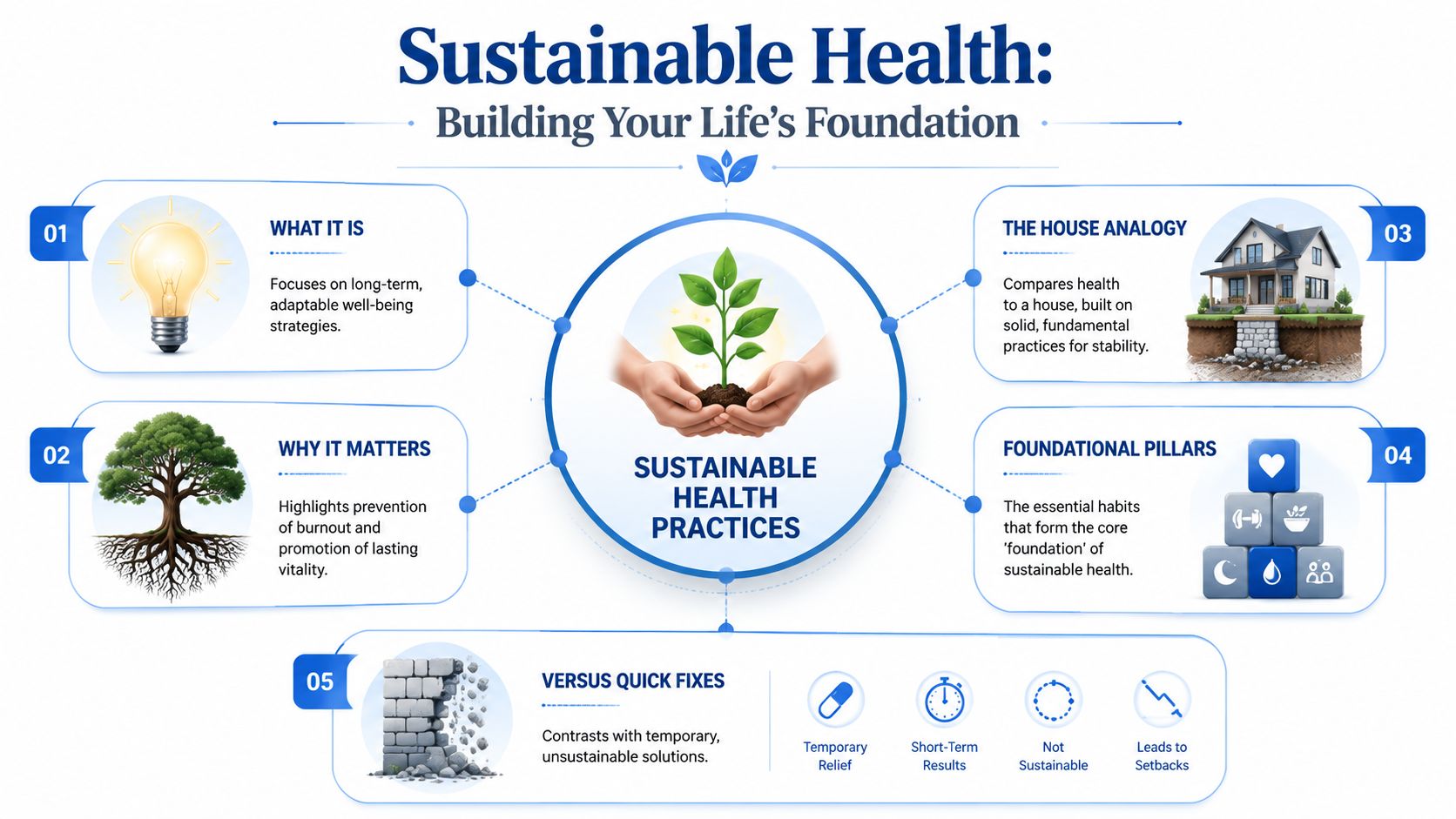
A simple way to define it
Think of your health like a house. If the foundation is weak, you can keep patching cracks in the walls, but the problems keep returning. If the foundation is solid, the whole structure copes better with strain.
For pain care, the “foundation” usually includes things like:
- Movement you can repeat even on busy weeks
- Sleep routines that help your system recover
- Food choices that support energy and healing
- Stress regulation so your nervous system isn't always on edge
- Guided treatment that improves function and teaches you what to do between visits
Quick fixes still have a place. Relief matters. But if a strategy only helps in the moment and doesn't strengthen the foundation, it won't carry your health very far.
Two meanings that matter
The phrase also has a broader healthcare meaning. Sustainable health practices don't just help individuals stay well. They can also reduce strain on the health system.
In Australia, the AMA summary of healthcare sustainability reports that the healthcare sector emitted 35,772 kilotonnes of CO₂-equivalent greenhouse gases in 2014–15. The same verified source notes that the National Health and Climate Strategy 2024 aims for a “net zero health system” by promoting preventive care models that can lower carbon output and long-term disease burden.
That bigger picture can sound abstract, so it helps to bring it back to daily life.
| Approach | What it tends to focus on | What it feels like |
|---|---|---|
| Quick-fix care | Temporary symptom control | Relief, then uncertainty |
| Sustainable health practices | Long-term function and resilience | Slower build, steadier progress |
For a person with chronic pain, personal sustainability and environmental sustainability often overlap. A care path built around prevention, self-management, appropriate treatment, and fewer unnecessary trips or interventions is often easier on both the person and the system.
Practical rule: if a health habit is so strict that you abandon it within two weeks, it probably isn't sustainable.
The Lifelong Benefits of a Sustainable Approach
A sustainable approach doesn't promise a perfect body. It offers something better. A body that's more adaptable, less reactive, and easier to live in.
Why people feel better for longer
When your daily habits support recovery, pain often becomes less dominant. Not because you “ignore” it, but because your body has more resources to deal with normal life. Better movement habits can reduce stiffness. Better pacing can reduce flare-ups. Better sleep can leave you less sore and less irritable the next morning.
That changes daily life in very practical ways. Getting out of a chair feels easier. Carrying groceries feels less risky. You stop organising every decision around the fear of setting your pain off.
Some people also notice a shift in energy. Pain is tiring. Constant guarding, poor sleep, and stress all use up bandwidth. When those factors settle, you often feel clearer and steadier, even before every symptom disappears.
Less dependence and more confidence
The biggest change is often psychological. You stop feeling as if your health only improves when someone else fixes you.
That doesn't mean doing everything alone. It means becoming an active participant in your care. You learn what usually triggers your pain, what helps it settle, and how to respond earlier. Over time, that builds trust in your body.
A simple image can help. This visual guide to preventive care and long-term health reflects the same principle many clinicians see every day. The strongest gains usually come from repeated small actions, not dramatic one-off efforts.

Here's what that often looks like in practice:
- Fewer boom-and-bust weeks where you overdo it on good days
- More consistent mobility for work, walking, and chores
- Less fear around movement because movement is no longer unfamiliar
- A clearer plan for what to do when symptoms start to rise
Health becomes more sustainable when you don't need a crisis to start paying attention to your body.
Building Foundational Health Habits
The most helpful habits for chronic pain are rarely the most impressive ones. They're the ones you can return to when life is busy, energy is low, or symptoms are unsettled.
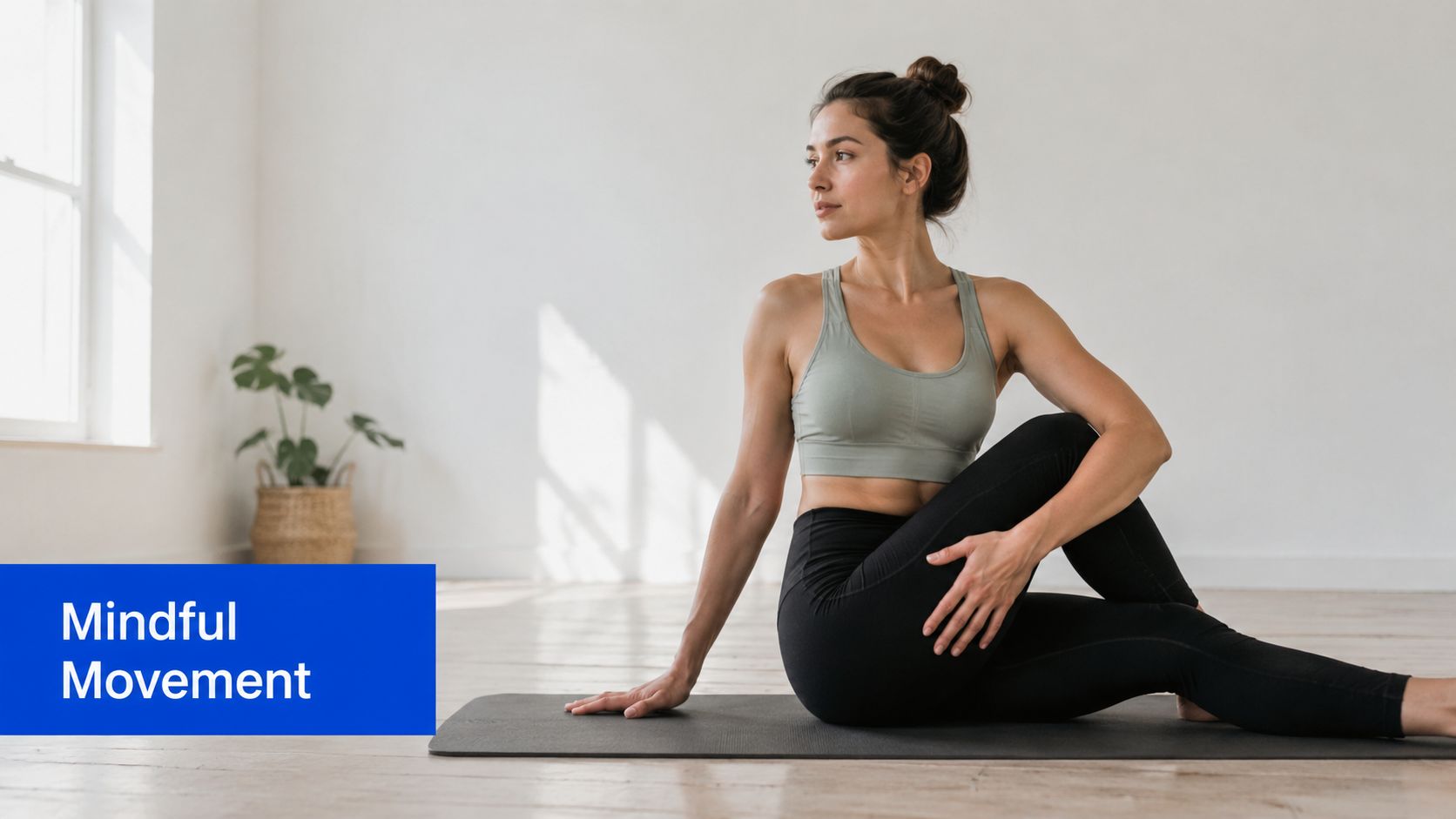
Mindful movement beats boom and bust exercise
Many people with back or joint pain assume exercise has to be intense to count. It doesn't. For a sensitive body, the goal is often to make movement feel safe and repeatable again.
Try thinking in terms of frequency before intensity. A short walk most days often does more for long-term function than one hard session followed by three recovery days. The same applies to mobility work, gentle strengthening, and stretching.
Good starting points include:
- Walking: a steady, comfortable pace that leaves you feeling looser, not wiped out
- Chair rises or sit-to-stands: useful for leg strength and confidence
- Gentle mobility drills: especially for the thoracic spine, hips, ankles, and shoulders
- Simple home yoga or floor work: if it feels calm rather than competitive
If you work at a desk, it helps to treat movement like brushing your teeth. Normal. Brief. Daily.
Posture is a pattern not a pose
People often get confused about posture because they think there's one perfect position they must hold all day. There isn't. A “good” posture is usually one you can vary.
That means your body benefits more from changing position regularly than from trying to sit rigidly upright for hours. If your neck or low back gets cranky at work, look at the pattern around the pain.
A useful checklist is:
- Screen height: bring the screen up so you're not constantly dropping your head
- Chair support: use the backrest instead of hovering forward
- Feet contact: keep both feet supported where possible
- Micro-breaks: stand, stretch, or walk briefly before discomfort escalates
For office workers, this practical posture and ergonomics image captures the sort of setup changes that can reduce unnecessary strain.
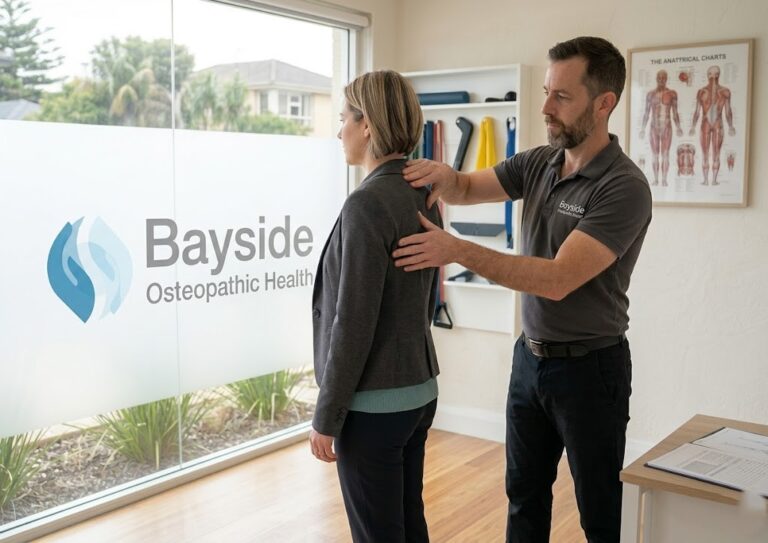
A short movement break can be enough. Roll the shoulders. Stand tall. Walk to the kitchen. Let your joints change angle.
Sleep is when the body catches up
Poor sleep and persistent pain tend to feed each other. When sleep is broken, pain often feels louder. When pain is loud, sleep becomes harder.
You don't need a perfect sleep routine to improve this. Start by making evenings more predictable. Keep your wake time reasonably consistent. Give yourself a short buffer between stimulating tasks and bed. If certain sleeping positions aggravate your pain, adjust pillow support rather than forcing one ideal posture.
This guided routine can also help people who need a gentle entry point into movement and body awareness:
A few simple sleep supports often work well together:
- Wind down earlier: dim lights and reduce intense screen use if possible.
- Settle the body: use gentle stretches, slow breathing, or a warm shower.
- Reduce the “catch-up” trap: sleeping in too long can make the next night harder.
- Notice patterns: some people are worse after late meals, alcohol, or long evening screen sessions.
None of these habits are glamorous. That's why they work. They're ordinary enough to keep.
Managing Your Inner Environment
Pain isn't only about muscles and joints. It's also shaped by your internal environment. Food, stress, pacing, and nervous system load all influence how your body feels from day to day.
Nutrition basics for steadier recovery
Nutrition advice becomes unhelpful when it turns into a list of forbidden foods. Generally, a sustainable approach starts with adding supportive basics rather than chasing a perfect diet.
That can mean building meals around whole foods more often, eating regularly enough to avoid energy crashes, and making sure your body has what it needs for bone, muscle, and general recovery.
One verified Australian example shows why this matters. The McKell Institute report on preventive nutrition notes that increasing vitamin D and calcium uptake in at-risk Australian groups could save $142 million annually in healthcare costs. For patients, the practical takeaway is simpler than the policy language. Targeted nutrition support can matter a lot, and it doesn't have to be expensive or extreme.
Useful food habits often include:
- Regular protein intake to support tissue maintenance and recovery
- Fibre-rich foods that support gut health and steadier energy
- Calcium-rich foods where appropriate
- Enough hydration across the day, especially if you get headaches or muscle tightness
If you're unsure whether a supplement or dietary change is appropriate, personalised advice matters. “Healthy” doesn't always mean suitable for you.
Stress changes pain more than people realise
You can have a perfectly manageable physical issue that feels far worse during a stressful week. That's not imaginary. A stressed system often becomes a more protective system. Muscles stay tighter. Sleep drops. Breathing becomes shallow. Small loads feel bigger.
That's why simple stress practices belong in sustainable health practices. Not as a luxury, but as a way of lowering unnecessary alarm in the body.
Try one or two of these:
- Longer exhales: breathe in gently, then breathe out a little longer than you breathed in
- Two-minute pauses: step away from the desk and let your eyes and shoulders soften
- Body scanning: notice where you're bracing, then consciously release it
- Walking without input: a short walk without phone scrolling or multitasking
A calmer nervous system often moves better, sleeps better, and hurts less.
Simple self-management tools for flare-ups
A flare-up doesn't always mean damage. Often it means your system is irritated and needs steadier input.
When symptoms rise, keep your response simple:
| Situation | Helpful response |
|---|---|
| Morning stiffness | Start with gentle movement before long sitting |
| Post-work tension | Change position, walk, and use easy mobility work |
| Stress-related pain spike | Slow breathing and reduce load for the rest of the day |
| After overdoing it | Scale back, but don't stop moving completely unless advised |
The skill is learning to dial down without shutting down. That's one of the most useful long-term pain management abilities a person can build.
How Osteopathy Supports Your Sustainable Health Journey
Osteopathy fits naturally within a sustainable model of care because it focuses on how the body functions as a whole. Rather than treating pain as an isolated event, it looks at movement patterns, joint mobility, muscular tension, posture, daily load, and the way different body regions influence one another.

Why hands-on care fits a long-term model
In Australia, there's a useful gap in the conversation around sustainable healthcare. This discussion of sustainability in healthcare and the preventive paradox highlights that while preventive medicine is central to reducing healthcare emissions, there is still little content showing how gentle, drug-free therapies like osteopathy may contribute by reducing reliance on higher-impact pharmaceutical and hospital interventions for chronic pain.
That gap matters because chronic pain care often becomes unsustainable when it depends only on escalation. More medication. More waiting. More intervention. More fear. A supportive manual therapy approach can offer another path. It can help settle irritation, improve movement, and create a window where people can re-engage with the habits that keep them well.
A well-rounded osteopathic approach often includes:
- Hands-on treatment to ease tension and improve mobility
- Movement advice specific to what your body can currently tolerate
- Postural and activity guidance based on your actual daily routine
- Education so you understand your pattern rather than fearing it
What supportive care can look like
For someone with recurring neck pain, support might involve gentle treatment to the neck, upper back, ribs, and shoulders, plus workstation adjustments and a short home movement plan. For persistent low back pain, it may involve restoring hip and spinal movement, reducing protective tension, and teaching pacing so a good day doesn't become a bad week.
That broader view is one reason many people find osteopathy easier to stick with. It aims to increase function between appointments, not create dependence on them.
If you're curious about the kind of whole-person framework often used in this style of care, this holistic health assessment guide gives a useful visual snapshot.
For some Australians, access may also be supported through a Medicare Chronic Disease Management plan if their GP considers them eligible. The details depend on individual circumstances, so it's worth asking your GP what applies to you.
The best treatment plan usually gives you relief and a clearer idea of how to help yourself after you leave the clinic.
Your 4-Week Sustainable Health Action Plan
The easiest way to start is to make your health routine smaller, not bigger. A four-week plan works well because it gives you enough time to build rhythm without demanding a total life overhaul.
If you live locally, this kind of plan suits busy Bayside patients because it focuses on actions that fit around normal work, family, and recovery demands. Keep it simple. If a goal feels too hard, shrink it until you can do it consistently.
One system-level idea is worth keeping in mind here. Australia's review of sustainable healthcare notes that telehealth implementation can significantly lower carbon footprints by reducing unnecessary patient travel while maintaining clinical efficacy where in-person follow-ups aren't essential. For some people, that means a check-in or progress review may be possible without another trip across town.
4-Week Sustainable Health Starter Plan
| Week | Movement Goal | Habit Goal | Mindfulness Goal |
|---|---|---|---|
| Week 1 | Walk for 10 to 15 minutes on most days at an easy pace | Set up one part of your workspace better, such as screen height or chair support | Spend 2 minutes each day on slow breathing |
| Week 2 | Add one short mobility session for your neck, shoulders, hips, or back | Choose a regular bedtime routine and repeat it on work nights | Take one phone-free walk or quiet break this week |
| Week 3 | Add a basic strength habit such as sit-to-stands or gentle band work | Build one meal each day around simple whole foods | Notice where you clench during the day and consciously release it |
| Week 4 | Combine walking with one other movement session you can maintain | Plan your week to avoid the boom-and-bust cycle | Use a flare-up plan instead of panicking when symptoms rise |
A few reminders help this plan work:
- Keep the target easy enough that success feels likely
- Track consistency, not perfection
- Repeat what helps before adding something new
- Ask for guidance if pain is persistent, confusing, or worsening
The goal after four weeks isn't to finish. It's to have a routine you can still recognise and use months from now.
If you're ready for a steadier, drug-free approach to pain and mobility, Bayside Osteopathic Health offers gentle, hands-on osteopathic care for people dealing with back pain, neck tension, joint stiffness, postural strain, and long-term movement issues. The team focuses on helping you move better, understand your body, and build practical habits that support lasting wellbeing. If you'd like personalised support, flexible bookings, and guidance on Medicare options where applicable, reach out to Bayside Osteopathic Health and take the next step toward feeling more comfortable in your body.