

There isn't a single best painkiller for neck pain, and in Australia the usual first-line choices are paracetamol for milder pain or an NSAID such as ibuprofen or naproxen when inflammation seems likely. The better question is which option fits your pain pattern, how long it's been going on, and what risks you already carry.
You wake up with a stiff neck after a bad night's sleep, or you finish a long desk day and your neck feels hot, tight, and hard to turn. In that moment, it's tempting to ask which tablet is strongest, but the practical answer is more personal than that. Australian evidence supports a matching approach, not a one-size-fits-all pill, and medicines work best when they're paired with movement, reassurance, and sensible self-care.
Table of Contents
- Why There Is No Single Best Painkiller for Neck Pain
- Paracetamol and NSAIDs Compared
- Matching the Painkiller to Your Pain Pattern
- Safe Dosing and Avoiding Common Mistakes
- Topical Analgesics, Muscle Relaxants and the Opioid Question
- Non-Drug Options That Make Painkillers Work Better
- Red Flags and When to Stop Self-Treating
- Putting It Together and Accessing Care Locally
Why There Is No Single Best Painkiller for Neck Pain
A stiff neck rarely comes with a clear label. You might have slept awkwardly, sat hunched over a laptop for too long, or irritated a joint with one sudden movement, and each pattern can respond differently to treatment. The answer to what is the best painkiller for neck pain starts with the pain pattern and your risk profile, not with the strongest tablet in the cupboard.
Australian guideline reviews do not point to one superior drug class for every case of neck pain. They support a range of oral analgesics and topical medications, usually alongside advice to stay active and exercise, which makes the trade-off plain. Medicine can help with symptoms, but it is only one part of the plan. The choice is usually matched to symptom type, how long the pain has been present, and safety, not to chasing a universal winner. Evidence-based review of neck-pain guidelines
Pain relief should match the problem
If the pain is mostly aching and general, a milder analgesic can be enough. If the neck feels inflamed or flared after a twist, an anti-inflammatory medicine may fit better. If the pain keeps returning, the problem may need assessment rather than stronger self-medication.
Practical rule: the best painkiller is usually the one that gives short-term relief with the lowest risk for you.
That approach matters because Australian-facing guidance recognises that many people try to manage mild to moderate neck pain themselves first. Short-term relief is useful, but there is no single drug that suits every person, every flare, and every medical history. Australian burden and neck-pain context
Neck pain is often mechanical. Painkillers can reduce discomfort enough to let you move, but they do not correct posture strain, joint irritation, or nerve-related symptoms on their own. The best use of medicine is often temporary support while the neck settles and you get back to normal movement.
Paracetamol and NSAIDs Compared
A patient with a stiff neck after sleeping awkwardly often does best with paracetamol first. Someone whose neck is hot, sharp, and clearly reactive after a flare may get more relief from an NSAID. That difference matters because the question is not which pill sounds stronger, it is which one fits the pain pattern and the person taking it. Australian Prescriber review
Paracetamol and NSAIDs sit at the centre of most neck-pain conversations because they are familiar, easy to access, and usually the first oral options discussed in Australian care. They are not identical, and the trade-off is practical. Paracetamol is generally the safer first-line oral option for uncomplicated neck pain, while NSAIDs can be more useful when inflammation is part of the picture.
How they differ in practice
Paracetamol tends to suit pain that is mild, mechanical, or not obviously inflamed. It can take the edge off without adding the stomach, kidney, and heart concerns that come with anti-inflammatory medicines.
NSAIDs such as ibuprofen, naproxen, and diclofenac reduce pain and inflammation together, and oral NSAIDs are more effective than placebo for neck pain. No single NSAID has shown clear superiority over another, so the choice usually comes down to your risk factors and tolerance rather than which one is “strongest”.
That is the trade-off in clinic. A person who can safely use an NSAID may get better short-term relief when the neck is inflamed or sore with movement. A person with a history of stomach irritation, kidney disease, or cardiovascular risk may be better served by staying with paracetamol, or by avoiding oral NSAIDs unless a clinician thinks the balance still makes sense.
| Drug class | Best suited for | Key cautions | Typical short-term role |
|---|---|---|---|
| Paracetamol | Mild, uncomplicated neck pain | Can be double-dosed through combination products | First-line pain relief when inflammation is not the main issue |
| NSAIDs such as ibuprofen or naproxen | Flare-ups where inflammation seems likely | Higher stomach, kidney, and heart risks | Short course when paracetamol alone is not enough |
The table is only a starting point. It does not replace the details that matter in real life, such as whether you already take other medicines, have had ulcers, or have been told to avoid anti-inflammatories.
What this means for your shelf at home
If you want the safer default, paracetamol usually fits best for mild, uncomplicated pain. If the neck is clearly irritated, sore with movement, or feels inflamed, an NSAID may work better, provided you do not have a reason to avoid it. The right choice is the one that gives useful relief without creating a problem somewhere else.
For people with persistent pain, the question should not be “which tablet is strongest?” It should be, “which tablet gives me enough relief to keep moving safely, without adding avoidable harm?” A clinician will usually look at the same trade-off, then add movement advice, load management, and if needed, assessment for a pain pattern that pills alone will not fix.
If the pain is recurring or you are relying on tablets week after week, that is a sign to reassess rather than increase the dose. The neck may be asking for a different plan.
Matching the Painkiller to Your Pain Pattern
The safest choice starts with the pattern, not the pain score. A neck that is stiff after desk work, sore after sleep, or clearly irritated by movement does not always need the same medicine, and it certainly does not justify stronger tablets by default. The useful question is what the neck is doing, and what risk you are willing to take for the amount of relief you get.
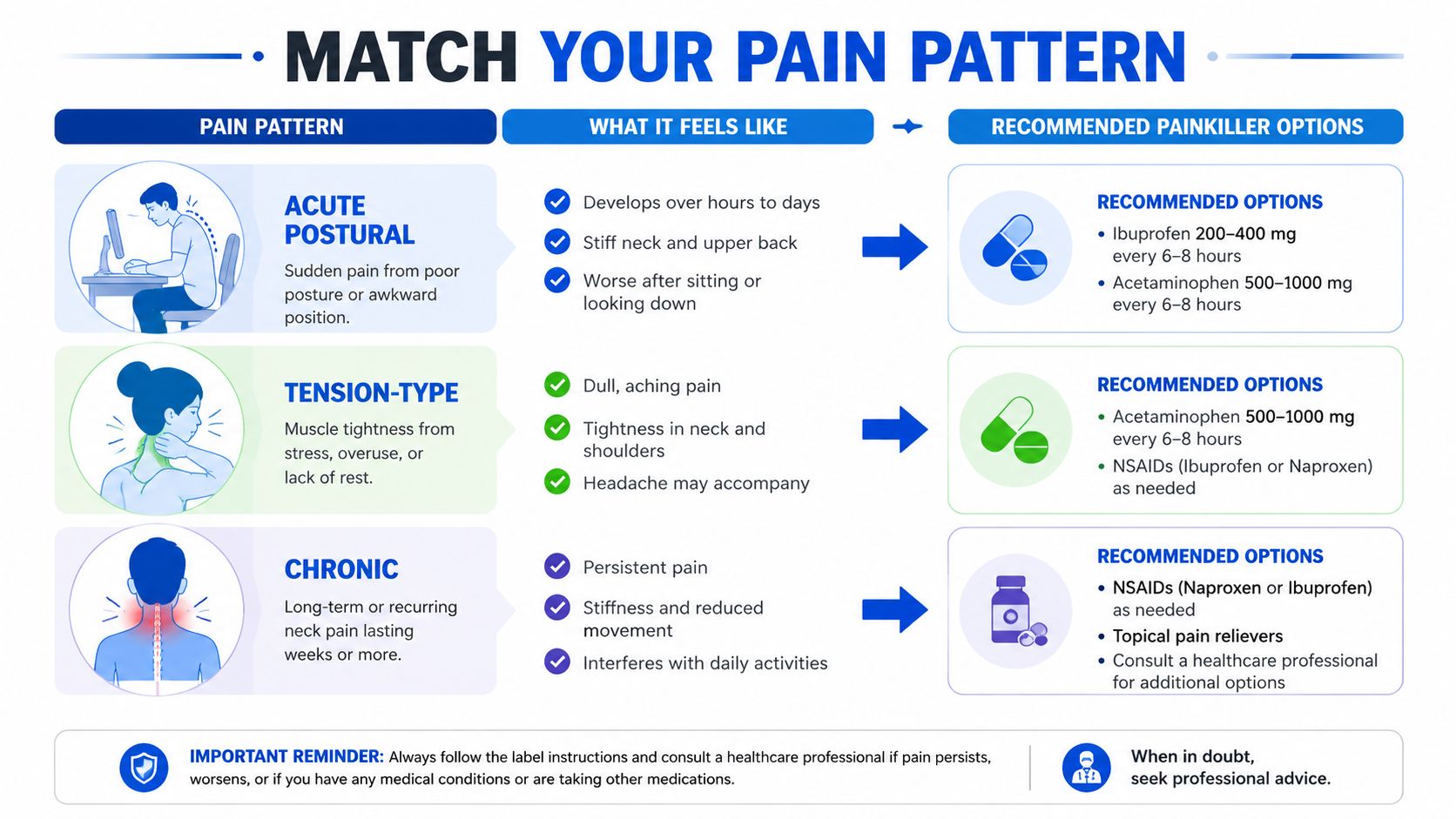
Three common patterns and the sensible starting point
For a mild postural strain after a desk day or a poor night's sleep, paracetamol is often the practical first step. It can take the edge off while you use heat, gentle movement, and better positioning to settle the area. If the pain is annoying but not obviously inflammatory, there is no good reason to move straight to a stronger option.
For a mechanical flare with inflammation features, a short course of an oral NSAID such as ibuprofen or naproxen is often the more logical option if paracetamol is not enough. That fits Australian guidance that NSAIDs can help in the short term, especially when movement makes the neck feel hot, sharp, or reactive.
For persistent or recurring neck tension, the medicine matters less than the pattern itself. Repeated symptoms often point to posture load, stress, or a mechanical issue that needs a clinician's input rather than repeated self-treatment.
Painkillers should help you function. If they only mute the pain briefly and the pattern keeps returning, the problem needs a proper look.

Trigger-point therapy and pain relief for neck pain

A simple decision filter
- Choose paracetamol first when the pain is mild, general, and you want the safest baseline option.
- Choose an NSAID cautiously when the pain feels inflamed or movement-sensitive and you do not have a reason to avoid it.
- Pause and reassess when the pain keeps returning, starts spreading, or only settles for a few hours before flaring again.
- Escalate to a clinician when the pattern does not behave like routine muscle or joint strain.
That approach keeps you out of the trap of choosing by brand recognition or strength alone. It keeps the focus on matching the medicine to the pain pattern and your own risk profile, which is where the important decision sits.
Safe Dosing and Avoiding Common Mistakes
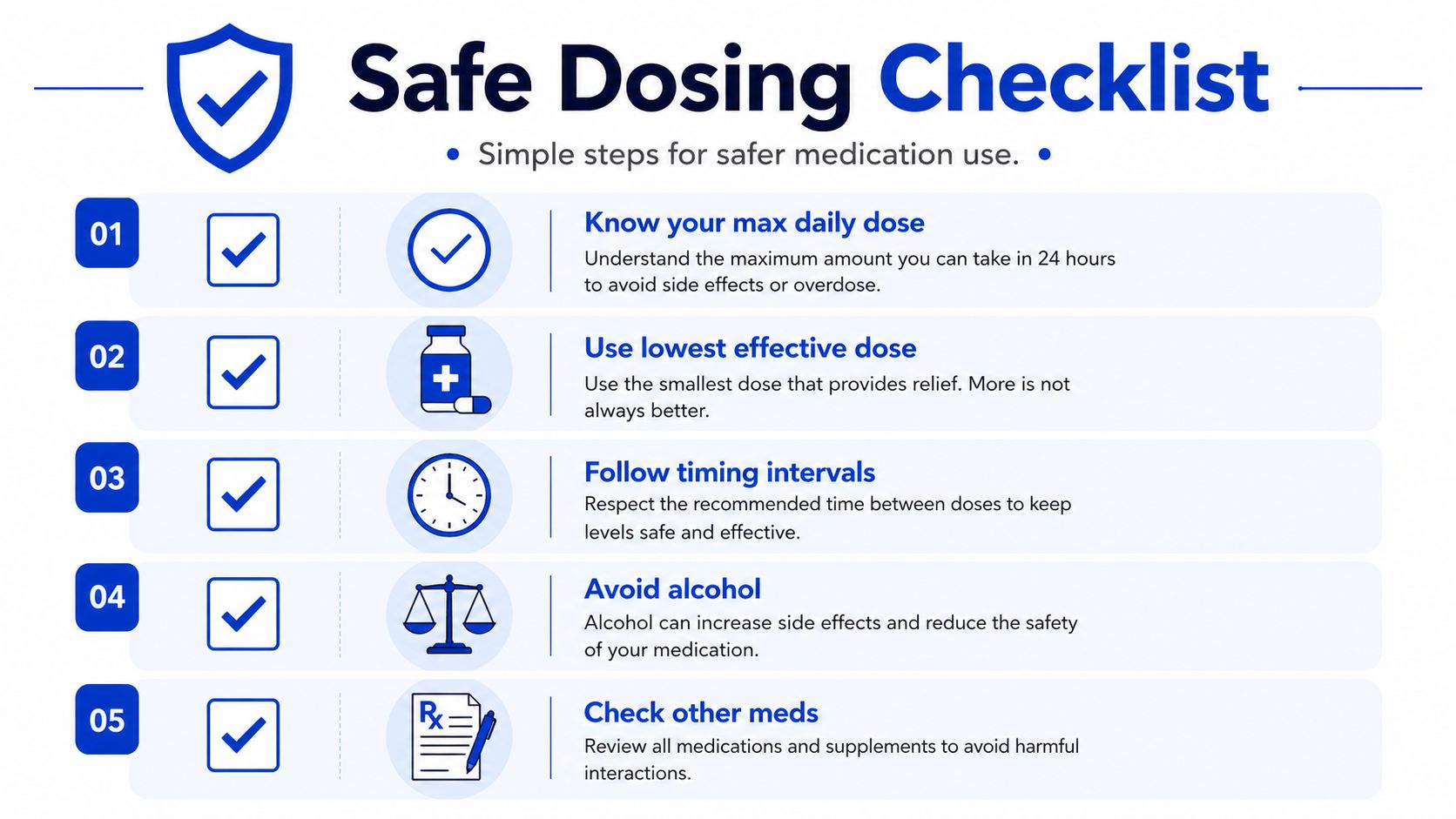
The most common problem with self-treating neck pain isn't choosing the wrong brand. It's taking too much, taking the wrong combination, or assuming a product is safe just because it's sold over the counter. In Australia, the Therapeutic Goods Administration warns that people can unintentionally double-dose paracetamol when they use more than one cold, flu, or pain product at the same time. TGA safety advice on paracetamol use
Read the label every time
If a product contains paracetamol, it counts towards your total. That includes combination tablets, not just simple pain relief packs. Checking the ingredient list is boring, but it's the easiest way to avoid an overdose that started with good intentions.
NSAIDs need the same care, just for different reasons. Take the lowest effective dose for the shortest duration, because self-care-oriented neck-pain guidance emphasises that most mild-to-moderate cases improve within 2 to 3 weeks and warns against overuse because the side effects can be serious. Mayo Clinic neck pain guidance
A few habits that keep people safe
- Know every ingredient before you take a tablet, especially if you're already using a cold or flu product.
- Track your total daily intake of paracetamol, not just the dose in one packet.
- Avoid stacking medicines that do the same job unless a clinician has told you to do it.
- Be careful with alcohol, especially if you're taking medicines that can affect the liver, stomach, or alertness.
- Use the minimum needed, then stop once the pain settles enough for normal movement.
If the pain still drives you to keep redosing, that's a clue. It usually means the problem needs more than more tablets. A face-to-face assessment is the safer next step when pain feels stubborn or confusing.
Topical Analgesics, Muscle Relaxants and the Opioid Question
Tablets aren't the only option, and for localised neck tenderness they're not always the best one. Topical analgesics can be useful when you want to limit oral exposure, especially if the sore area is small and easy to reach. Options that are commonly discussed include menthol, methyl salicylate, capsaicin, and topical NSAIDs.
When a local treatment makes sense
A topical product can be a good fit when the pain is superficial, muscular, and concentrated in one part of the neck or upper shoulder. It won't fix the cause, but it may take the edge off without the same systemic burden as an oral NSAID. For people who already take other medicines or prefer a lighter approach, that matters.
A short prescription for a muscle relaxant can sometimes help if neck spasm is the main problem. The caution is simple, these medicines can cause sedation and can interact badly with alcohol, so they're not a casual add-on. They're more useful when a clinician has identified spasm as the major driver and wants to help you sleep or move more comfortably for a short period.
Why opioids are rarely the right answer
Opioids have a limited role in uncomplicated neck pain. They may be considered for severe pain under close medical supervision, but they're not a routine solution for day-to-day neck strain. In practice, they can blur the picture, reduce alertness, and create more problems than they solve if used as the default response.
The strongest medicine is not always the best medicine. For neck pain, the safest useful option is often the smarter one.
The broader point is that “best painkiller” may mean a topical, a brief prescription adjunct, or a carefully chosen oral medicine. The right choice depends on the pain pattern, your health history, and how much risk you can reasonably accept.
Non-Drug Options That Make Painkillers Work Better
A tablet often works better when the neck is also getting the right kind of movement and support. In practice, that means pain relief should help you stay active and keep the joint and muscle system moving, rather than become the whole plan on its own. As noted earlier, guideline-based neck-pain care commonly combines medication with advice to remain active and exercise.
What to combine with medication
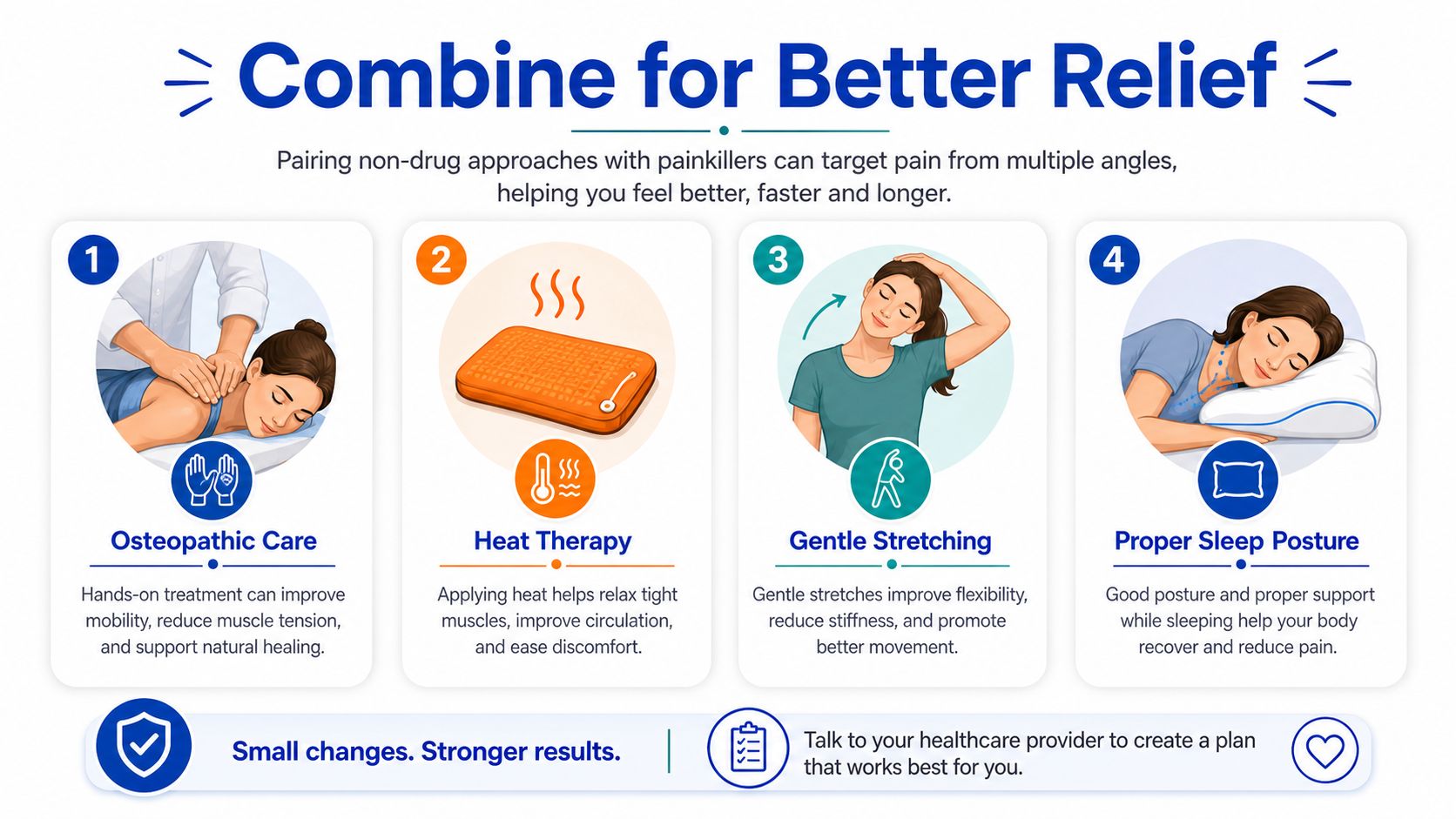
Gentle hands-on care can help when the neck is tight, guarded, and moving poorly. In osteopathic practice, that usually means soft-tissue work, joint articulation, and mobilisation, used to ease tension and improve movement without forcing the area. A careful assessment also helps sort out whether the pain looks more muscular, joint-based, or postural.
Physiotherapy-led rehab matters for a different reason. Exercises that build tolerance, improve control, and restore movement often do the work that painkillers cannot. If you sit at a desk all day, workstation changes matter too, because the same posture that irritated the neck in the first place will keep aggravating it if nothing changes.
A realistic daily plan
- Move gently within tolerance, because total rest often makes a stiff neck feel worse.
- Use heat if the muscles feel tight and guarded.
- Adjust your screen, chair, and pillow so the neck is not doing extra work all day and all night.
- Add targeted exercise or manual care if the problem keeps coming back.
That mix usually works better than relying on one tablet and hoping the body sorts itself out. If pain relief opens the door to movement, the odds of settling improve. If the painkiller only buys a few hours of comfort while everything else stays the same, the cycle usually repeats.
Red Flags and When to Stop Self-Treating
Some neck pain is ordinary. Some isn't. The warning signs matter because they tell you when the problem may be nerve-related, post-traumatic, infectious, or otherwise outside the scope of a simple over-the-counter hierarchy.
Signs you shouldn't keep pushing through
- Pain after a fall or accident.
- Pins and needles or numbness that keeps travelling into the arm.
- Weakness in the hand or grip, especially if it's new.
- Pain that wakes you at night or doesn't behave like normal muscle soreness.
- Unexplained weight loss or fever.
- Pain that isn't improving after a few weeks of sensible self-care.
The reason these patterns matter is simple. They can point to nerve involvement or another cause that painkillers won't solve on their own. Persisting with stronger tablets can delay the assessment that would move things forward.
What to do next
If you've got trauma, arm symptoms, or worsening weakness, see a doctor or urgent care clinician promptly. If the pain is lingering without clear improvement, book a practitioner who can examine movement, nerve signs, and posture together. Bring a list of what you've already taken, how often you took it, and what helped, even if the relief was only partial.
If the pain is paired with arm weakness, numbness, or symptoms that don't settle after a sensible self-care window, don't keep upgrading the painkiller. Get assessed.
After the pain settles
If the pain calms down but returns whenever you sit, drive, or work at a desk, the issue is probably not just the tablet choice. That's the point at which movement strategy, manual assessment, and posture correction become more important than another round of medication.
Putting It Together and Accessing Care Locally
The simplest way to answer what is the best painkiller for neck pain is to match the pain pattern, start with paracetamol for mild strain or an NSAID such as ibuprofen or naproxen when inflammation seems likely, stay within safe dosing limits, and add movement and posture changes. If the pain keeps returning or red flags show up, that's the point to stop self-treating and get examined.
Manual therapy benefits in physical therapy

For people in the Bayside area, osteopathic care can sit alongside over-the-counter pain relief by addressing how the neck, shoulders, and posture are working together. In some cases, supportive care may be accessible through certain Medicare plans, and private health cover may also apply depending on the policy.
A clear plan beats a strong pill every time. If your neck pain is recurring, stubborn, or hard to classify, contact Bayside Osteopathic Health to arrange an assessment and build a practical plan that fits your symptoms, your routine, and your risk profile.