
That familiar neck ache after a long video call, the tight shoulders when you've been hovering over a laptop all morning, the low-back stiffness that shows up the moment you stand, these are the predictable costs of desk work. Stretching exercises for office workers can help because prolonged sitting loads the same tissues in the same way, day after day. The goal isn't to “loosen up” in a vague sense, it's to give the neck, chest, hips, wrists, and mid-back the movement they've been missing.
From an osteopathic point of view, desk pain is rarely just one tight muscle. It's usually a pattern, forward head posture, rounded shoulders, a stiff thoracic spine, shortened hip flexors, and overloaded forearms, all working together. A good stretch should address the tissue that's tight, the joint that's under-moving, and the position that keeps re-irritating it. That's why the best routines are short, repeatable, and specific.
There's also real research behind a structured approach. A 3-month stretching program for office workers was associated with fewer workers reporting pain, including neck, shoulder, upper-back, lower-back, and feet pain, in a BMJ Open trial (BMJ Open trial). Office stretch training has also been studied as a preventive workplace intervention, with measurable mobility gains within 12 weeks in desk workers (office stretch-training study). In practice, that means these movements aren't just comfort breaks, they're part of sensible load management.
Table of Contents
- 1. Neck Flexion and Rotation Stretch
- 2. Seated Spinal Twist
- 3. Shoulder Rolls and Scapular Squeeze
- 4. Hip Flexor and Quadriceps Stretch
- 5. Chest and Anterior Shoulder Opener
- 6. Seated Forward Fold With Spinal Decompression
- 7. Wrist and Forearm Stretches
- 8. Piriformis and Deep Hip Rotator Stretch
- Comparison of 8 Office Stretches
- From Stretching to Strategy When to See an Osteopath
1. Neck Flexion and Rotation Stretch

Your neck often hurts because it's doing too much static work. In osteopathic terms, the cervical spine is compensating for a forward head position, while the upper trapezius and levator scapulae stay switched on longer than they should. A gentle neck flexion and rotation stretch helps restore motion to the joints that get stuck and lets the overworked muscles settle.
Sit tall, tuck your chin slightly, then let your head nod forward until you feel a soft stretch through the back of the neck. From there, turn the head slowly to one side, return to centre, then turn the other way. Keep the movement smooth and calm, and don't chase range for its own sake.
Practical rule: if the stretch feels sharp, dizzy, or aggressive, it's too much. Neck work should feel like release, not strain.
The most useful version is the one you'll repeat through the day. For many office workers, that means pairing it with a screen break, especially after long calls or deep-focus blocks. A short hold is enough, and a pain-free range matters more than forcing the head further.
A simple desk sequence looks like this:
- Tilt forward gently: Let the chin nod towards the chest without collapsing the upper back.
- Rotate slowly side to side: Keep both shoulders relaxed so the neck isn't dragged into the movement.
- Breathe out on the turn: That helps reduce guarding through the upper traps.
- Stop before pain: If symptoms sharpen, ease back and get assessed.
If your neck pain comes with arm tingling, headaches that are new or worsening, or symptoms that don't settle when you move, an osteopath should look at the whole pattern, not just the neck.
2. Seated Spinal Twist
A seated twist is one of the clearest ways to counter a rigid desk posture. The thoracic spine is designed to rotate, but long hours of typing, mouse use, and leaning into a screen often leave it stiff and underused. When the mid-back stops moving well, the neck and lower back usually take up the slack.
Sit upright with both feet flat on the floor, then rotate your trunk gently to one side while keeping the pelvis steady. You can cross your arms over the chest for a softer version, or place one hand behind the head if you need a little more help. The point is not to crank the body into a bigger twist, it's to wake up the rotation you've lost.
The osteopathic reason this helps is simple. Rotation through the thoracic spine reduces the demand on the cervical and lumbar regions, which are often forced to compensate during desk work. People with stiff backs often notice that twisting feels easier after a few repetitions, not because the stretch “fixed” everything, but because motion has been reintroduced.
A good office version is short and controlled. Hold each side for 20 to 30 seconds, breathe slowly, and keep the shoulders down. If you work from home, this is one of the easiest movements to do between meetings because it doesn't need a mat or special setup.
You'll get more from this stretch if you avoid common mistakes:
- Twisting through the knees: Keep the lower body quiet so the thoracic spine does the work.
- Holding the breath: Breathing helps the rib cage move with the spine.
- Forcing end range: A gentle, repeatable twist is more useful than one hard push.
- Skipping it after long sitting: That's exactly when the mid-back needs it most.
3. Shoulder Rolls and Scapular Squeeze
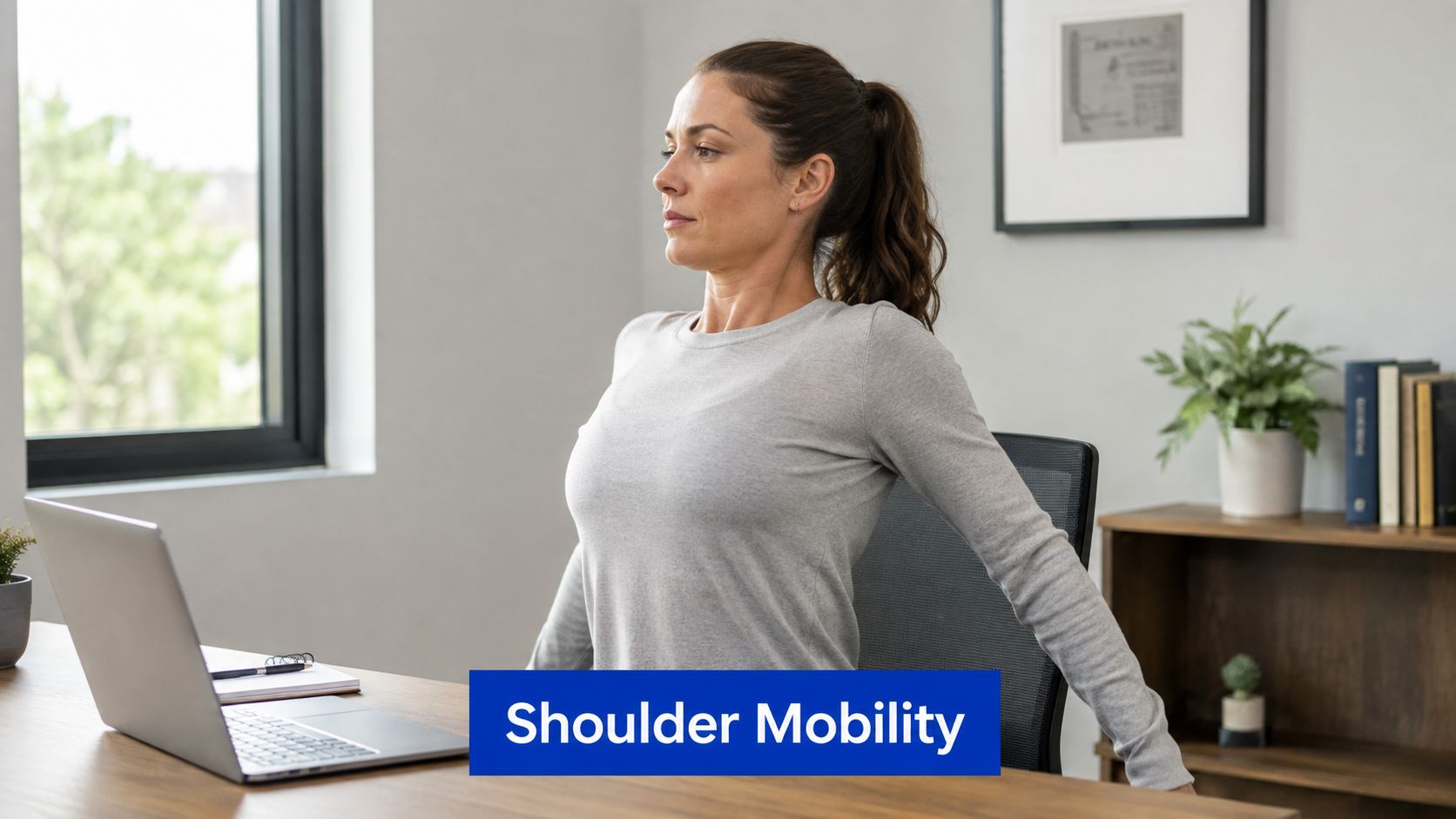
Shoulders get tight at desks because they're never really at rest. Mousing, keyboarding, and hunching forward all encourage the shoulder blades to sit in a poor position, while the muscles around the upper back stay braced for hours. Shoulder rolls and a scapular squeeze help reset that pattern.
Start with slow backward shoulder rolls, then gently draw the shoulder blades together and slightly down. Don't overdo the squeeze, because over-retraction can turn the stretch into a clench. The aim is to remind the body what a neutral shoulder position feels like.
This exercise works well as a movement break because it's dynamic rather than static. That matters for desk workers who spend too long in one posture. The roll gets blood moving, while the squeeze helps you notice whether you've been unconsciously living with your shoulders lifted.
A useful cue is to exhale as the shoulder blades glide back. That often makes the movement smoother and less effortful. If you're on calls all day, this is the kind of stretch you can do standing or seated without drawing attention.
This shoulder and spine image is a good reminder that the upper body works as a chain, not separate parts. If the chest is tight and the thoracic spine is stiff, the scapulae can't glide properly, and the neck often pays for it.

A practical sequence is 8 to 10 slow rolls, then a 3 to 5 second squeeze, repeated a few times across the day. If you feel pinching at the front of the shoulder, reduce the range and check your workstation setup.
4. Hip Flexor and Quadriceps Stretch
Sitting shortens the front of the hip. That's one of the reasons office workers stand up feeling bent, not just tired. The hip flexors, especially the iliopsoas group, adapt to long periods of sitting, and the lower back often arches or stiffens to make up for it.
A standing hip flexor and quadriceps stretch is one of the most useful ways to reverse that pattern. Step one foot back, tuck the pelvis gently, and keep the ribs from flaring. You should feel the stretch through the front of the hip and thigh on the back leg, not in the lower back.
Osteopathic reasoning matters. If you just push the hips forward, you may create more lumbar compression instead of lengthening the front of the hip. The better strategy is to control the pelvis first, then let the stretch come from position rather than force.
A stable surface helps. Use a desk, wall, or chair for balance if needed, and keep the spine neutral. Hold for 30 to 40 seconds on each side, especially if you've been sitting for hours or working from home without proper breaks.
A hip stretch should open the front of the body without making the lower back feel crowded.
Use it after a lunch walk, between meetings, or any time you've had a long stretch of uninterrupted sitting. If the front of the hip is tender or the lower back feels pinched, shorten the hold and reduce the depth of the lunge. People with knee or groin symptoms should be careful and may need a modified version from an osteopath.
5. Chest and Anterior Shoulder Opener
Rounded shoulders are not just a posture issue, they're a tissue issue. The pectorals and the front of the shoulder tighten when the arms stay in front of the body all day, and that can pull the shoulder girdle forward while limiting thoracic extension. A chest opener helps undo that direction of load.
Use a doorframe with the arm at shoulder height and step forward gently until you feel the front of the chest open. Keep the rib cage from flaring and avoid yanking the shoulder too far back. The stretch should feel broad across the chest, not sharp in the front of the shoulder.
This movement is particularly useful if you spend your workday in a laptop curl or a forward mouse position. The goal is to create some balance between the front and back of the upper body so the scapulae can sit and move more naturally. If you pair it with a scapular squeeze, the effect is usually more noticeable.
A good real-world habit is to do it at natural pause points, when you're walking to the kitchen, the printer, or the bathroom. That makes it easier to stick with than a formal exercise block. Short, repeatable movements matter more than one perfect session.
Use these cues:
- Step in slowly: Let the front of the chest ease open.
- Keep the elbow level: That helps target the pectoral region without over-twisting.
- Avoid arching the lower back: The stretch should come from the chest, not lumbar compensation.
- Repeat both sides if needed: Desk habits are rarely symmetrical.
6. Seated Forward Fold With Spinal Decompression
A seated forward fold is the closest thing many office workers get to a reset button. It gives the back a break from upright holding, lengthens the posterior chain, and allows gravity to assist the release. For people who feel compressed after sitting, that can be very relieving.
Sit near the front of a chair, hinge forward gently, and let the arms hang or rest loosely towards the floor. Keep the knees slightly bent so the stretch doesn't become a hamstring contest. You're looking for a quiet decompressive feeling through the back, not a strong tug.
From an osteopathic perspective, this is useful because it changes the loading direction. Desk work keeps the spine long and supported in one posture, often with the hips flexed and the back muscles on. The forward fold lets those tissues settle while giving the nervous system a break from sustained postural demand.
Don't force depth. A small, relaxed fold is usually better than rounding aggressively or bouncing in and out. If you feel light-headed when you return upright, come up slowly and keep the movement shorter next time.
This stretch can be particularly useful late in the afternoon, after a long run of meetings or after standing up from a chair that's been “too comfortable” for too long. It's not a fix for a serious back problem, but it's a practical way to reduce the sense of spinal compression that many desk workers describe.
7. Wrist and Forearm Stretches
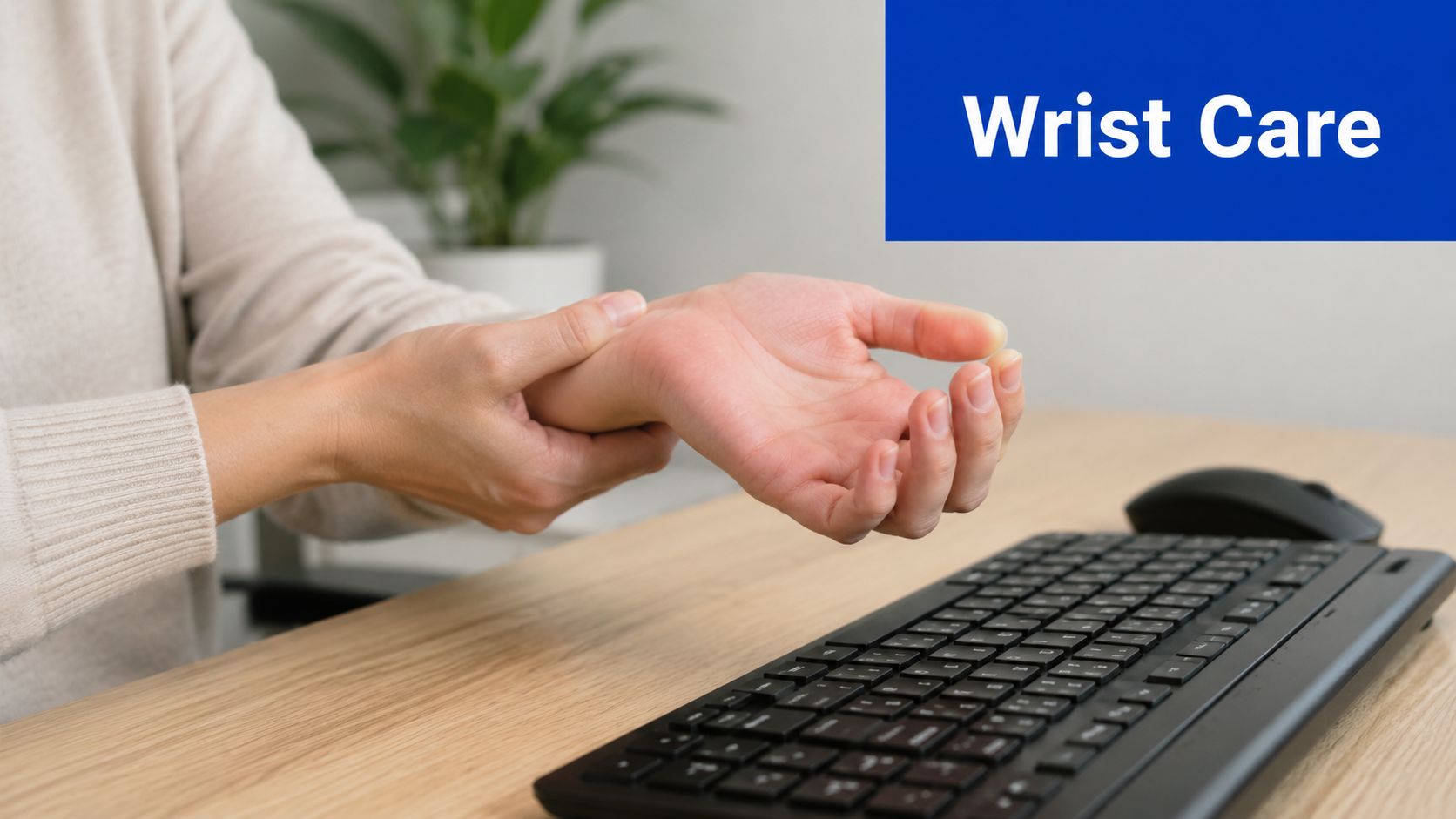
If you type and mouse all day, your forearms are doing more work than you might realise. Repetitive gripping, clicking, and keyboard positioning can load the wrist flexors and extensors until they feel tight, achy, or irritable. That's where simple wrist and forearm stretches come in.
Stretch the wrist flexors by turning the palm up and gently pressing the fingers back. Then stretch the extensors by turning the palm down and easing the hand the opposite way. Keep the elbows soft and the shoulders relaxed so you're not dragging tension up into the neck.
These stretches are not a cure-all for repetitive strain problems, but they're useful as part of a broader strategy that also includes ergonomic keyboard and mouse setup. If the wrist is already inflamed, keep the stretch light and brief. Pain-free motion matters more than intensity.
Most office workers do best with short holds repeated often rather than long holds done once. That fits well with the way desk strain develops, small loads repeated over and over. If you wait until the wrist is sore, the stretch is less likely to feel good.
A practical routine:
- Flexor stretch: Palm up, fingers gently drawn back.
- Extensor stretch: Palm down, hand eased downward.
- Hold briefly: 15 to 20 seconds is enough for a desk break.
- Stay relaxed: If the shoulder lifts, the forearm isn't doing the full job.
If you get numbness, night pain, or symptoms that spread into the hand, that needs a proper assessment rather than more stretching.
8. Piriformis and Deep Hip Rotator Stretch
The deep hip rotators often tighten in people who sit a lot, especially when the pelvis stays fixed for hours. When those muscles get overworked, the buttock can feel jammed, the hip can feel pinchy, and some people notice symptoms that spread down the leg. A piriformis stretch helps restore space and rotation in that region.
Use the seated version by crossing one ankle over the opposite knee, then hinging forward gently from the hips. Keep the spine long, breathe slowly, and let the stretch build gradually through the outer buttock. This is one of the stretches that should never be forced, because the area is sensitive and can react if you push too hard.
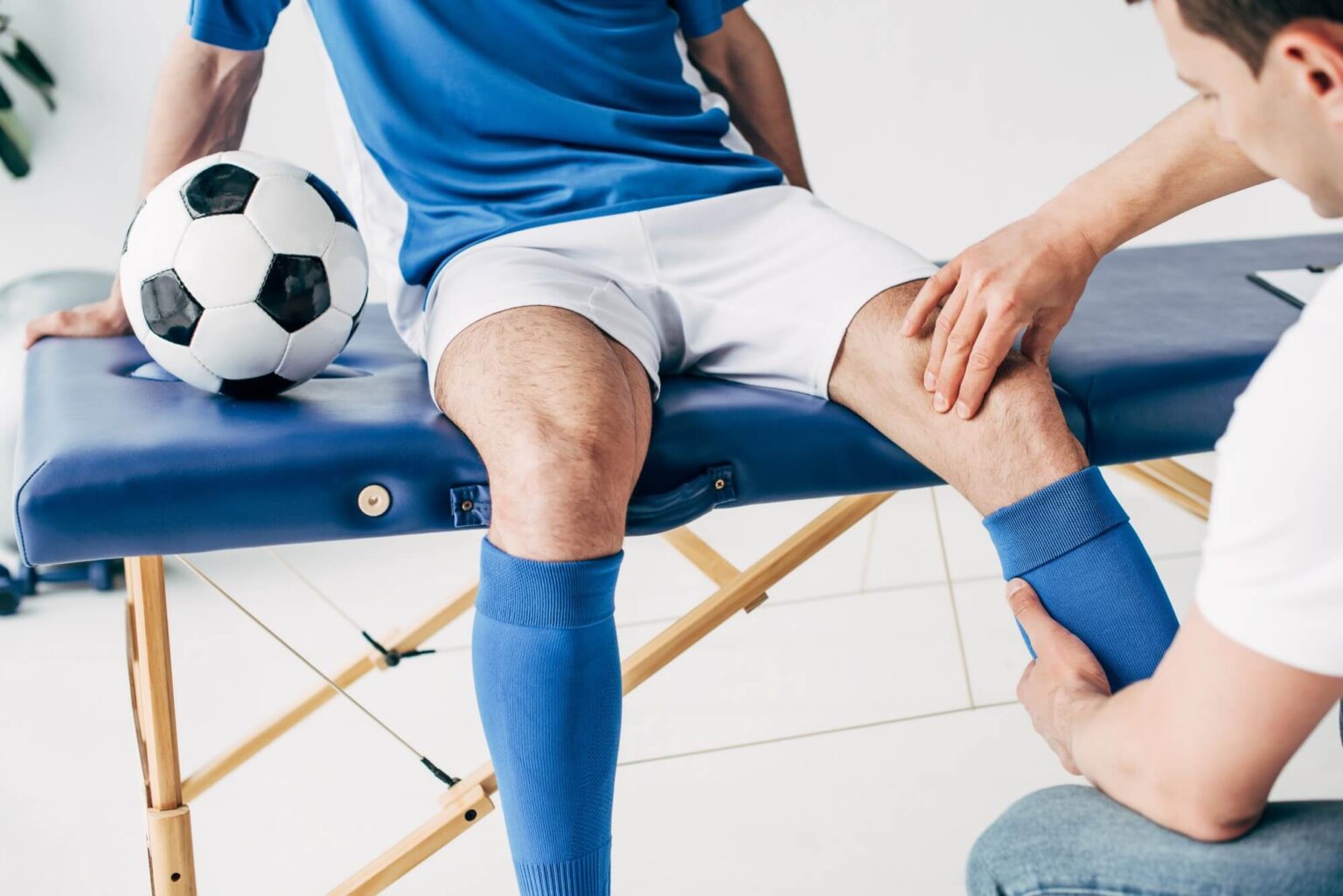
This leg treatment image fits the osteopathic principle well, because persistent hip and glute pain often needs more than one self-care tool. Manual therapy, movement advice, and a home plan often work better together than stretching alone.
The best time to do this is after work, when the body is warm and you're not trying to squeeze it into a rushed meeting break. Some people alternate it with a hip flexor stretch so the front and back of the hip both get attention. That's a more balanced approach than endlessly chasing the same sore spot.
If the stretch reproduces sharp sciatic-type pain, stop and get assessed. Deep hip pain that doesn't behave like ordinary tightness shouldn't be guessed at.
This stretch is useful for office workers, drivers, and anyone who sits for long periods, but it's especially important for people whose glute symptoms keep returning. If the pain is persistent, one-sided, or linked with numbness or weakness, an osteopath can help determine whether the hip, lumbar spine, or nerve tissue is the source.
Comparison of 8 Office Stretches
| Exercise | 🔄 Implementation complexity | ⚡ Resources & time | 📊 Expected outcomes | 💡 Ideal use cases | ⭐ Key advantages |
|---|---|---|---|---|---|
| Neck Flexion and Rotation Stretch | 🔄 Low, simple seated movements; slow control required | ⚡ None; 2–3 min/session; repeat every 30–45 min | 📊 Immediate neck tension relief; reduced headaches; ⭐⭐⭐⭐ | 💡 Desk workers, frequent screen users, hourly movement breaks | ⭐ Desk-friendly; quick relief; no equipment |
| Seated Spinal Twist | 🔄 Low–Moderate, requires upright posture and core engagement | ⚡ None; 20–30s per side; 2–3×/day | 📊 Improves thoracic rotation; reduces mid‑back stiffness; ⭐⭐⭐ | 💡 Mid‑day posture reset, between meetings, digestive support | ⭐ Restores rotation; modifiable for flexibility levels |
| Shoulder Rolls and Scapular Squeeze | 🔄 Low, dynamic + isometric; visible but professional | ⚡ None; 8–10 rolls + 3–5s squeezes; hourly | 📊 Rapid shoulder tension reduction; improves scapular control; ⭐⭐⭐⭐ | 💡 Video call workers, call centres, hourly movement routines | ⭐ Immediate tension relief; prevents shoulder dysfunction |
| Hip Flexor and Quadriceps Stretch | 🔄 Moderate, standing or kneeling; balance and core control | ⚡ Wall/desk optional; 30–40s per side; 2–3×/day | 📊 Reduces lower back pain; improves hip extension and posture; ⭐⭐⭐⭐ | 💡 Prolonged sitters, postural rehab, standing breaks | ⭐ Targets seated-related hip tightness; improves gait and pelvic alignment |
| Chest and Anterior Shoulder Opener | 🔄 Low–Moderate, needs doorframe/wall and correct alignment | ⚡ Doorframe/wall; 30–45s holds; 2–3×/day | 📊 Reduces rounded‑shoulder posture; improves breathing & thoracic mobility; ⭐⭐⭐ | 💡 Counteracting kyphosis from screen time; stretch stations | ⭐ Directly reverses chest tightness; immediate postural feedback |
| Seated Forward Fold with Spinal Decompression | 🔄 Low, passive, gravity‑assisted; easy to modify | ⚡ None; 45–60s hold; 1–2×/day | 📊 Spinal decompression and posterior chain stretch; calming effect; ⭐⭐⭐ | 💡 Desk‑friendly decompression, stress relief, PT home practice | ⭐ Gentle for most mobility levels; efficient full‑back stretch |
| Wrist and Forearm Stretches (RSI prevention) | 🔄 Low, simple maneuvers; consistency required | ⚡ None; 2–3 min protocol; every 30–45 min | 📊 Prevents RSI, reduces numbness/tingling; maintains dexterity; ⭐⭐⭐⭐ | 💡 Typists, developers, frequent mouse users, admin staff | ⭐ Highly effective for RSI prevention; discreet and quick |
| Piriformis and Deep Hip Rotator Stretch | 🔄 Moderate, positioning varies (seated/lying); can be intense | ⚡ None; 30–45s per side; 1–2×/day when warm | 📊 Effective for sciatica and gluteal pain relief; improves external rotation; ⭐⭐⭐⭐ | 💡 Sciatica sufferers, long‑haul drivers, office workers with radiating leg pain | ⭐ Targets deep rotators; often provides immediate pain reduction |
From Stretching to Strategy When to See an Osteopath
Stretching works best when it's consistent, specific, and matched to the reason you're tight in the first place. The 3-month office-worker trial showed fewer people reporting pain in the neck, shoulders, upper back, lower back, and feet after a stretching program, which supports the idea that this kind of movement can make a real difference over time (BMJ Open trial). Structured office stretch training has also shown that mobility changes can appear within 12 weeks, especially for people who start with poorer flexibility (office stretch-training study).
The other side of that story is dosage and individual fit. Australian workplace guidance tends to favour short, pain-free holds and repeatable micro-breaks, rather than treating stretching as a one-off fix (workplace stretching guide; SafeWork NSW stretch guidance). That makes sense in the clinic as well. A person with a stiff neck may need a different sequence from someone with wrist irritation, and someone with chronic back pain may need modified movements instead of generic stretches copied from a poster.
You should book an osteopath if your pain keeps returning, if stretching makes things worse, or if you notice numbness, weakness, radiating pain, or movement that feels increasingly limited. Those signs usually mean the issue is more than simple tightness. We need to look at the whole chain, posture, joint motion, muscle tone, daily load, and any aggravating habits, before the problem gets baked in.
At Bayside Osteopathic Health, we take that broader view seriously. We use hands-on treatment, practical movement advice, and self-care so you can keep working without constantly fighting the same ache. If your desk is starting to wear you down, book an appointment with Bayside Osteopathic Health and get a plan that fits your body, your work, and the way you move each day.