

Your GP mentions an allied health care plan, and suddenly the appointment feels more confusing than helpful. You came in to talk about your back, neck, hip, or knee pain. You leave with new terms, referral rules, Medicare questions, and a vague sense that you should book “someone allied” soon.
That's a common Bayside experience.
For many people, ongoing pain isn't just about one sore spot. It affects sleep, walking, gardening, work at a desk, sport, and confidence in everyday movement. An allied health care plan gives that problem some structure. It helps your GP connect you with the right professionals so treatment isn't left to guesswork or random online advice.
If you live around Brighton, Sandringham, Hampton, Black Rock, Beaumaris or Cheltenham, local access matters too. When care is close to home, it's easier to keep appointments, follow through, and get support before pain becomes your new normal.
Table of Contents
- Introduction Navigating Your Path to Better Health
- What Exactly Is an Allied Health Care Plan
- Understanding Your Medicare Entitlements
- How to Access Your Plan A Step by Step Guide
- Choosing the Right Allied Health Provider in Bayside
- Beyond Medicare Private Health and Self Funding
- Frequently Asked Questions About Care Plans
Introduction Navigating Your Path to Better Health
An allied health care plan is one of those healthcare terms that sounds more bureaucratic than useful. In practice, it can be a practical pathway for people living with ongoing conditions such as persistent back pain, arthritis, shoulder stiffness, balance problems, or long-running joint discomfort.
The reason people get stuck is simple. They're trying to solve a physical problem while also learning a funding system. Those are two separate jobs. When you're already sore, tired, or frustrated, it's hard to decode referrals, service limits, provider types, and appointment timing.
A clearer way to see it is this. Your GP identifies that your condition needs more than medication or watch-and-wait. The plan then opens a formal path to allied health professionals who can help with movement, function, pain management, footwear, nutrition, or other parts of day-to-day health.
A good care plan doesn't replace your GP. It gives your GP a team to work with.
That matters because chronic pain often responds best when care is coordinated. You might need hands-on treatment, movement advice, pacing strategies, and regular review rather than a single one-off appointment.
For Bayside residents, osteopathy is often part of that picture. If your pain is linked to posture, work setup, arthritis, old injuries, reduced mobility, or general wear and tear, an osteopath may be one of the allied health professionals your GP refers you to. The goal isn't paperwork for its own sake. The goal is helping you move more comfortably and function better in ordinary life.
What Exactly Is an Allied Health Care Plan
A simple way to think about it
An allied health care plan isn't a plastic card or a separate Medicare product you carry around. Think of it as a formal agreement between you and your GP about how to manage an ongoing health condition with help from other qualified professionals.
It works a bit like a prescription, but for coordinated care rather than tablets. Your GP documents your condition, your needs, and which allied health services may help. That creates the basis for referral and Medicare support where you're eligible.

This kind of care is widely used in Australia. A national study found that 43% of patients with a GP Management Plan claimed at least one allied health service within a year, and uptake reached 49% for people aged 85 years and over (national study on allied health uptake and chronic care). That tells you something important. These plans aren't rare or unusual. They're part of mainstream chronic condition care.
Which professionals might be involved
The exact mix depends on your condition. Your GP may refer to one or several allied health professionals, such as:
- Osteopaths for hands-on care, mobility work, posture-related pain, and practical advice on moving with less strain.
- Physiotherapists for rehabilitation, exercise programs, and recovery after injury or surgery.
- Podiatrists for foot pain, gait issues, pressure areas, and lower-limb mechanics.
- Dietitians when weight, inflammation, diabetes, gut health, or nutrition affects the bigger picture.
If your problem is chronic pain, osteopathy can be especially useful when the pain isn't isolated to one simple injury. An osteopath looks at how your body moves as a whole. For example, recurring neck pain may be linked with thoracic stiffness, workstation posture, jaw tension, or reduced shoulder movement rather than only the neck itself.
You can get a visual sense of whole-body mechanics in this pelvis and spine treatment image used by a Bayside osteopathy clinic. It reflects a common osteopathic approach. Look beyond the sore area and assess how other joints and tissues may be contributing.

Practical rule: If your pain has lasted, keeps returning, or affects normal daily tasks, ask your GP whether allied health support would help rather than waiting for it to “settle down” on its own.
Understanding Your Medicare Entitlements
Medicare support can feel simpler once you separate three questions. Do you fit the eligibility rules. How many subsidised visits can you use. Will there still be an out-of-pocket cost.
Who usually qualifies
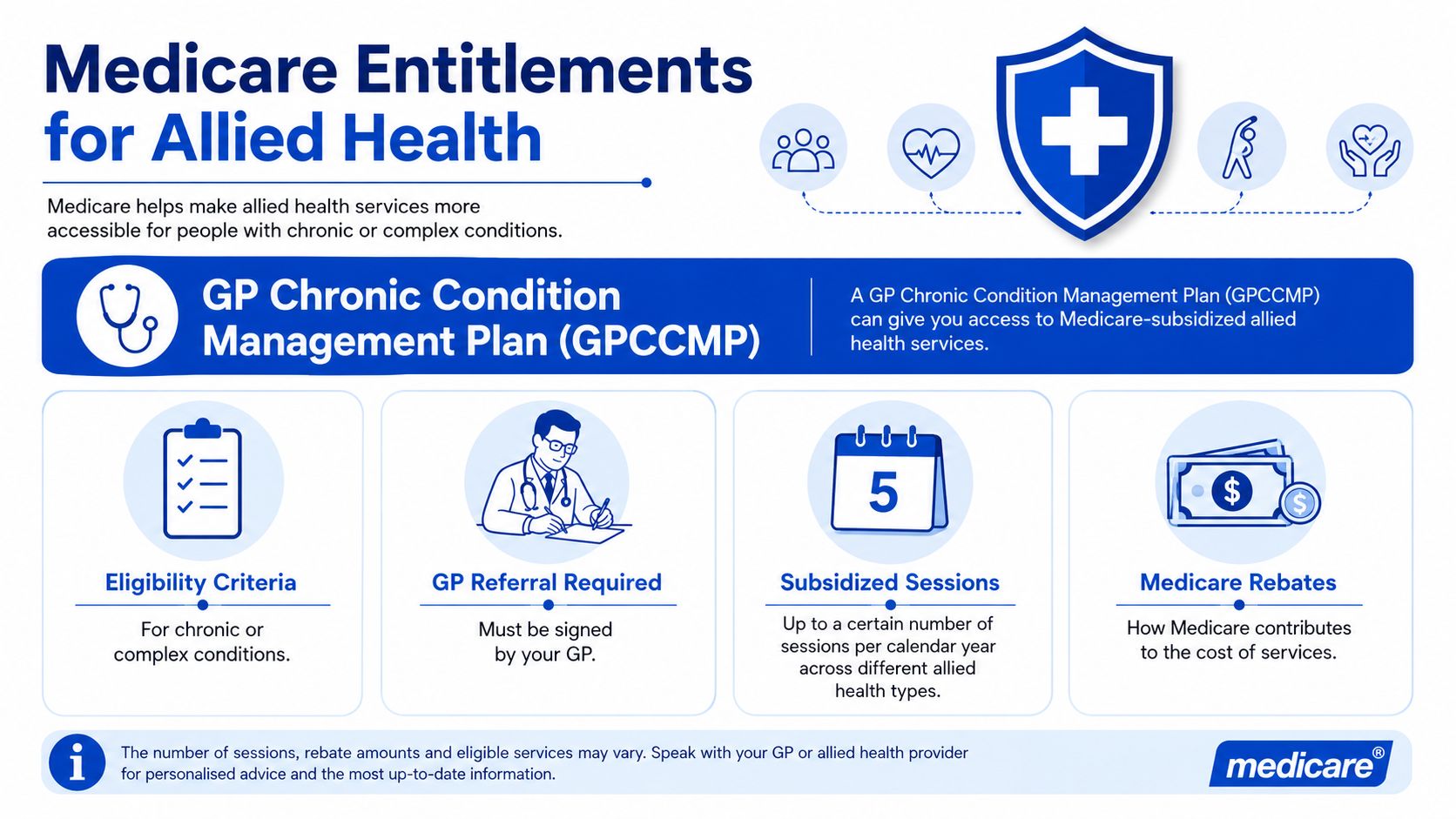
For many Bayside patients, Medicare-funded allied health starts with a GP Chronic Condition Management Plan, often shortened to GPCCMP. In practical terms, your GP is looking at whether you have an ongoing condition and whether allied health care would form part of sensible management.
A chronic condition usually means one that has been present, or is expected to be present, for 6 months or more, as noted earlier in the Medicare item guidance. Chronic does not mean extreme. It often includes the kind of problems that gradually wear people down over time, such as recurring back pain, osteoarthritis, persistent neck stiffness, or long-running joint pain that limits sleep, walking, work, or exercise.
Your GP makes the final call. That matters because two people can have the same label, such as “back pain,” but different needs. One may improve with simple advice alone. Another may benefit from structured care with an osteopath or other allied health provider, especially if the pain keeps returning or starts affecting day-to-day function.
What Medicare Gives You
The key point is that Medicare gives a limited pool of subsidised allied health visits each calendar year, not open-ended treatment.
For eligible patients under a GPCCMP, that usually means up to 5 Medicare-supported allied health services per calendar year across the approved disciplines. Aboriginal and Torres Strait Islander patients may be eligible for additional services under specific arrangements. Your referral also has a time limit, so it is not something to leave sitting in a drawer indefinitely.
A simple way to picture it is as a small health budget rather than an unlimited pass. If you use several visits with one provider, fewer remain for another. That is why planning matters, particularly for Bayside residents trying to get meaningful relief from persistent pain rather than just ticking off appointments.
For example, someone with ongoing neck and back pain might choose to use some of those visits with an osteopath to improve movement, reduce flare-ups, and get a clear home plan, then save the remaining visits for another discipline if needed later. Used well, the plan can create momentum. Used randomly, it can disappear quickly.
Medicare support is usually a starting point for chronic pain care. It helps you begin treatment, test what works, and decide what ongoing support makes sense.
What you may still need to pay
A Medicare-supported appointment is not always a free appointment. Some clinics bulk bill. Others charge their usual fee, and you pay the difference between that fee and the Medicare rebate. That difference is the gap fee.
Many people are often surprised by costs, especially if they assume “Medicare-funded” means no out-of-pocket cost. The safer approach is to ask clearly before you book.
Ask these two questions:
- Do you accept allied health care plan referrals?
- What is the out-of-pocket cost for a Medicare-supported appointment?
If you are choosing care in Bayside, cost is only one part of the decision. Experience with your type of problem matters too. A provider who regularly manages persistent spinal pain, joint stiffness, or work-related posture strain may be a better fit for long-term improvement than one whose work is centred on a very different patient group. For many local residents, osteopathy is a practical option because it combines hands-on treatment, movement advice, and whole-body assessment within a Medicare-accessible pathway.
How to Access Your Plan A Step by Step Guide
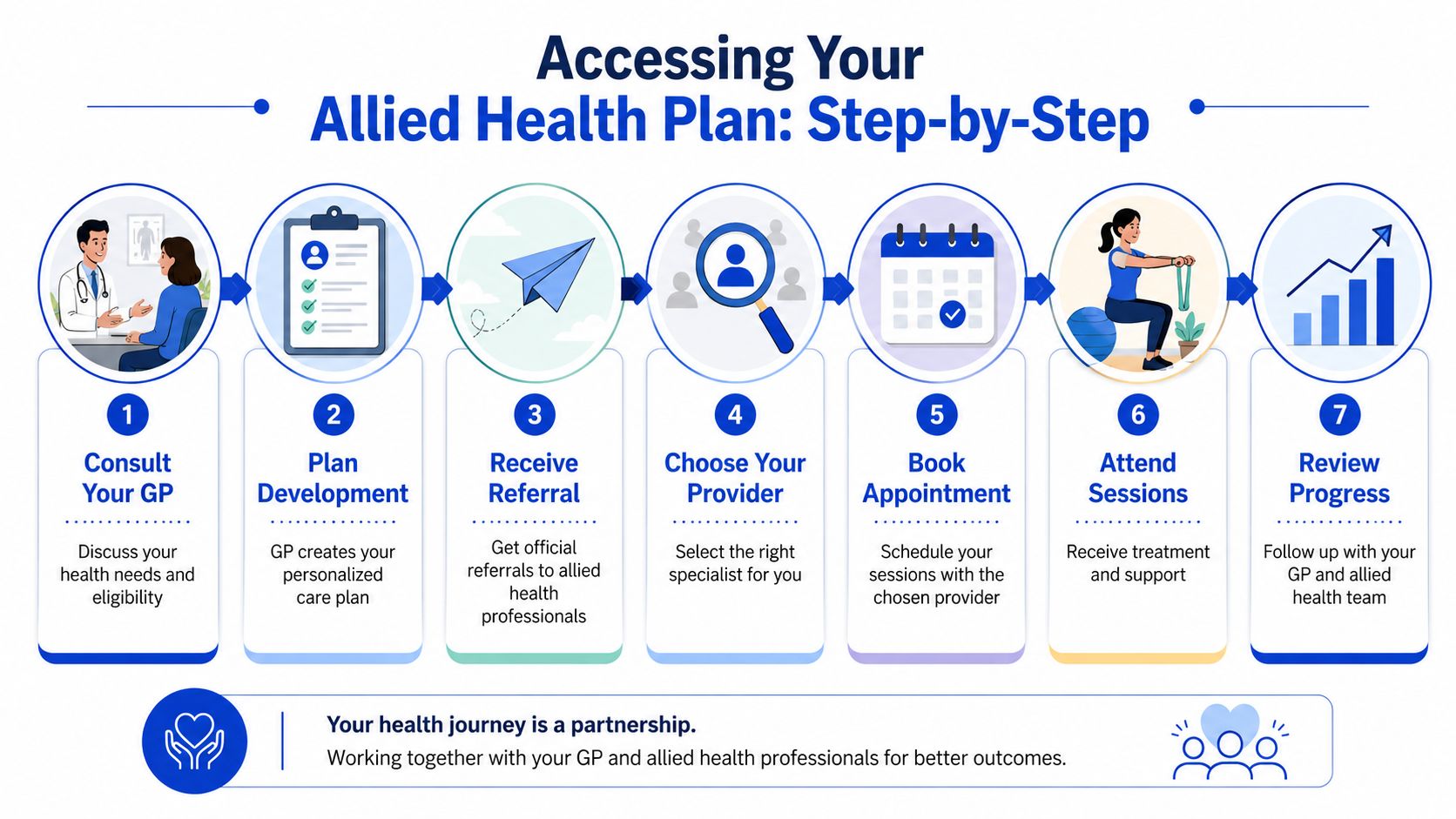
The process feels easier when you treat it like a short sequence rather than a maze.
Before you see your GP
Go in prepared. You don't need to use technical language. You do need to describe the pattern of the problem clearly.
A simple way to prepare is to note:
How long it has been going on
Ongoing pain over many months gives your GP useful context.What it stops you doing
Walking the dog, sleeping well, driving, desk work, gardening, or getting up from a chair are all relevant details.What you've already tried
Rest, medication, stretching videos, massage, heat packs, or previous therapy all help paint the picture.
If you suspect allied health may help, it's fine to ask directly. You can say, “Would I be eligible for an allied health care plan for this?” That's a reasonable question, not a pushy one.
What happens during the GP appointment
Your GP will assess whether your condition and circumstances fit the Medicare rules. If they decide a plan is appropriate, they may prepare the necessary care planning documents and referral information.
What matters most from your side is understanding the referral before you leave the clinic. Check:
- which profession you've been referred to
- whether the referral names a provider or is more general
- how many services you intend to use with that provider
- when the referral starts to count from
This short explainer may help if you prefer to see the pathway in action:
Many patients also want to know whether they need both a plan and a referral. In practical terms, what you need is valid GP documentation that supports Medicare-subsidised allied health access. Your GP clinic handles the formal side. Your job is to make sure you know what you've been given and how to use it.
Using the referral well
Once you have the referral, book promptly. Don't wait until pain flares badly again.
When you call the allied health clinic, say that you have a Medicare referral under a chronic condition management plan and ask what they need before the first appointment. Some clinics want the referral sent in advance. Others can take details at booking and collect paperwork on arrival.
Bring useful information to the first visit:
- Your referral paperwork
- Relevant scans or letters, if you have them
- A medication list, if your treatment team needs the broader health context
- Questions you want answered, such as whether care will include hands-on treatment, exercise advice, or home strategies
Booking tip: Ask the clinic how they usually spread allied health care plan visits. Good providers think about pacing and review, not just filling a diary.
After your visits begin, your allied health practitioner may communicate back to your GP as part of coordinated care. That's helpful. It means the treatment isn't happening in a silo.
Choosing the Right Allied Health Provider in Bayside
You have the GP paperwork. Your back, neck, or joint pain is still shaping how you move through the day. Now comes the part that often feels harder than it should. Choosing a provider who suits your needs, your budget, and your routine in Bayside.
A good choice is not only about credentials. It is about fit. The right provider should help you understand what is happening, give you a clear plan, and make it realistic to keep attending. That matters because pain relief usually comes from steady care over time, much like following a sensible walking program works better than doing too much in one day and stopping the next.
What to look for in a provider
Start with the basics first. Check that the practitioner is properly qualified, registered where required, and experienced in the kind of problem you have. Neck pain after desk work can need a different approach from arthritis stiffness, sports injury, or long-running lower back pain.
Then look at how the clinic works in practice.
Clear communication
You should leave knowing what they think is contributing to the problem, what treatment they recommend, and what you can do between visits.A sensible approach to persistent pain
Be careful with dramatic promises. Ongoing pain usually improves with a measured plan, regular review, and advice you can use at home.Treatment style that suits you
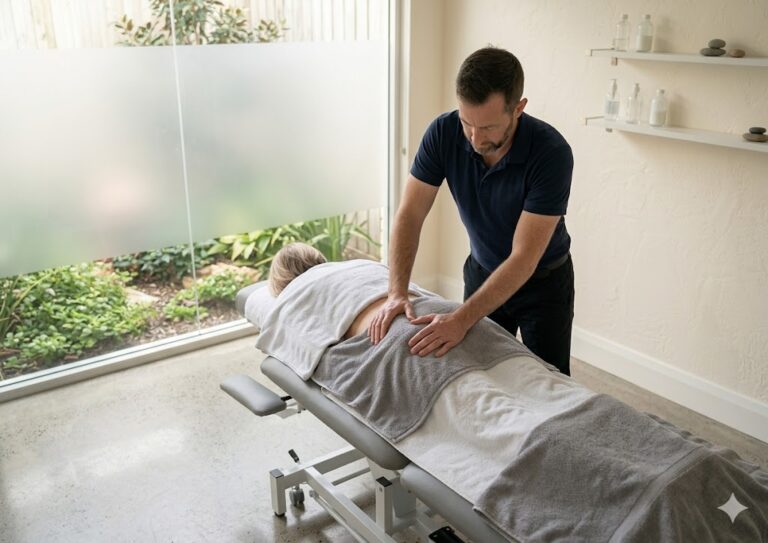
Some people want more hands-on care. Others prefer exercise-based support and self-management. Many clinics combine both. This rehabilitation clinic image showing hands-on physical care gives a simple visual reminder that allied health can look quite different from one clinic to another.Practical access
Parking, public transport, appointment times, and distance from home or work all affect whether care stays consistent.

One simple test helps. Ask yourself, “Could I see this provider for a few follow-up visits without it becoming a hassle?” If the answer is no, the plan often falls apart before the treatment has a fair chance to help.
Why local care often works better in Bayside
For Bayside residents, convenience is part of good care. If you live in Brighton, Hampton, Sandringham, Black Rock, Beaumaris, Mentone or Cheltenham, a nearby clinic makes it easier to get help early, keep review appointments, and stay on track when life gets busy.
That local factor matters more than it seems. Pain management works a bit like maintaining a sore shoulder before it flares badly again. Small, timely check-ins are often easier than waiting until simple movement becomes difficult.
Osteopathy can be a useful option under an allied health care plan when the main issues are pain, stiffness, reduced mobility, posture strain, or arthritis-related discomfort. Bayside Osteopathic Health is one local provider offering gentle hands-on osteopathic care aimed at easing pain, improving movement, and supporting a whole-body, drug-free approach within broader chronic condition care.
A good local provider also looks beyond the sore area itself. They should ask how the problem affects your sleep, your walking, your work setup, your lifting, and your confidence with movement around everyday Bayside life. That patient-centred view is often what turns a confusing Medicare entitlement into care that feels practical and worth using.
Beyond Medicare Private Health and Self Funding
Medicare helps, but it doesn't cover every situation. Some people need more care than their plan allows. Others don't meet Medicare criteria but still want treatment.
Three common ways to pay for care
Private health insurance can be useful if your extras cover includes osteopathy or other allied health services. The key is to check your policy carefully. Look for annual limits, waiting periods, and whether you can claim on the spot. If you're considering bodywork as part of your broader care options, this remedial massage and muscle therapy image may help you think about how different supportive services can sit alongside your main treatment plan.
Self-funding is the most flexible route. You don't need to meet Medicare eligibility rules, and you're not restricted by the annual session cap attached to the GPCCMP pathway. Many people choose this when they want to continue care after their Medicare-supported visits have been used.
Here's a simple comparison.
| Funding Method | Eligibility | Number of Sessions | Typical Cost |
|---|---|---|---|
| Medicare via allied health care plan | Must meet Medicare rules for chronic condition management and have a GP referral | Limited by the Medicare rules attached to your plan | Medicare contributes to the cost. Some clinics bulk bill, others charge a gap fee |
| Private health extras | Must hold an eligible extras policy with cover for the service | Depends on your policy limits | Insurer contributes according to your cover. Out-of-pocket cost varies |
| Self-funding | Available to anyone booking privately | Based on your needs and budget | You pay the clinic's private fee |
If you're unsure which path makes sense, ask the clinic what payment options they accept and ask your insurer what your extras actually cover before your first appointment.
Frequently Asked Questions About Care Plans
A common Bayside scenario goes like this. Your GP has mentioned a care plan, your pain is still limiting what you can do, and now you are trying to work out whether osteopathy can fit within your Medicare-supported visits. The paperwork can feel harder than the treatment decision.
These are the questions patients ask us most often.
Do I need a new plan right now if I already have an older GPMP or TCA?
It depends on when your plan was created and whether your GP considers it current for your referral needs. Medicare rules are changing from older plan types to the GP Chronic Condition Management Plan, so the safest step is to ask your GP clinic to check your record and confirm whether your existing paperwork can still be used for allied health referrals.
Editor note: verify the transition dates and wording before publication, as government timeframes can change.
Can I use all of my Medicare-supported visits for osteopathy?
Sometimes, yes. Your GP decides how to allocate the visits across allied health services based on your condition and care needs. If osteopathy is the main service likely to help with your pain, your referral may direct more than one visit that way. It helps to ask one clear question before booking: “How many visits have been referred to osteopathy?”
Why do some clinics bulk bill while others charge a gap?
Each clinic sets its own fees. Medicare pays a set benefit, but that does not mean every provider charges the same amount. Bulk billing means the clinic accepts the Medicare benefit as full payment. If there is a gap, you pay the difference between the clinic fee and the Medicare benefit.
A simple way to picture it is this. Medicare support works like a contribution, not a blank cheque.
How long does my referral last?
This is one of the most confusing parts. The answer can depend on the plan type, the referral details, and when the paperwork was issued. If anything is unclear, ask both your GP clinic and the allied health clinic to confirm the referral period written on your documents before your appointment.
What if I need more care than the plan covers?
That is very common, especially with persistent pain that takes time to settle. Many Bayside patients use their Medicare-supported sessions to get started, then continue with private health extras or self-funding if ongoing treatment is recommended. That approach can make osteopathy more accessible at the beginning while still giving you a path for longer-term care if needed.
If you are in Bayside and feeling unsure about referrals, fees, or whether osteopathy fits your plan, Bayside Osteopathic Health can explain how care plan appointments may work in your situation in plain English.