
You take the first step out of bed and your knee feels as though it needs a few minutes to catch up with you. The stairs are manageable if you use the handrail, but a longer walk along the Bayside foreshore leaves the joint sore and puffy later in the day. You may have started changing small routines without quite realising it, choosing the lift, avoiding low chairs, or shortening the dog walk.
Arthritis pain in the knee can affect much more than the joint itself. It can alter confidence, sleep, exercise, work, and the activities you value. Yet a painful knee doesn't automatically mean that surgery is the next step, and an uncomfortable exercise session doesn't always mean you've caused harm.
This guide focuses on making sensible decisions. You'll learn what knee arthritis involves, which symptoms need assessment, why scans don't tell the whole story, and how exercise, weight management, medication, injections, self-care, and osteopathic treatment may fit together. The aim isn't to promise instant relief. It's to help you judge your knee's response, protect daily function, and progress without unnecessary fear.
Table of Contents
- A Familiar Morning With Sore Knees
- What Knee Arthritis Actually Is
- Common Symptoms and the Red Flags to Watch For
- How Knee Arthritis Gets Diagnosed
- Evidence-Based Non-Surgical Treatments Worth Considering
- Practical Self-Care and Home Exercises You Can Start This Week
- Where Osteopathic Care Fits in Your Plan
- When to See a Clinician and How Bayside Access Works
A Familiar Morning With Sore Knees
A stiff knee often announces itself during ordinary tasks rather than dramatic events. You might pause before stepping down from the kerb, hold the banister on the stairs, or notice a dull ache after gardening. The knee may loosen as you move, then complain again after prolonged sitting or a walk that used to feel easy.
That pattern can be frustrating because the joint may look perfectly normal from the outside. Some days are relatively comfortable. On others, swelling or stiffness makes the same route feel longer. A flare after activity can lead people to stop moving altogether, but extended inactivity can reduce strength and make everyday movement harder.
A useful starting point: don't judge an activity only by how the knee feels during it. Also assess how you feel later that day and the following morning.
Australian figures show why this is a common health concern, not a minor inconvenience. In 2022, an estimated 2.1 million Australians, or 8.3% of the population, had osteoarthritis, according to the Australian Institute of Health and Welfare. Prevalence rises with age, reaching approximately 30% among Australians aged 75 and over, while women are affected more often than men in the national estimates.
Your next decision doesn't need to be “exercise or surgery”. It can be more practical: what does the knee tolerate, what helps you remain active, and which symptoms suggest that a clinician should examine you? That approach gives you room to adjust treatment around your work, family, walking routes, and confidence.
What Knee Arthritis Actually Is
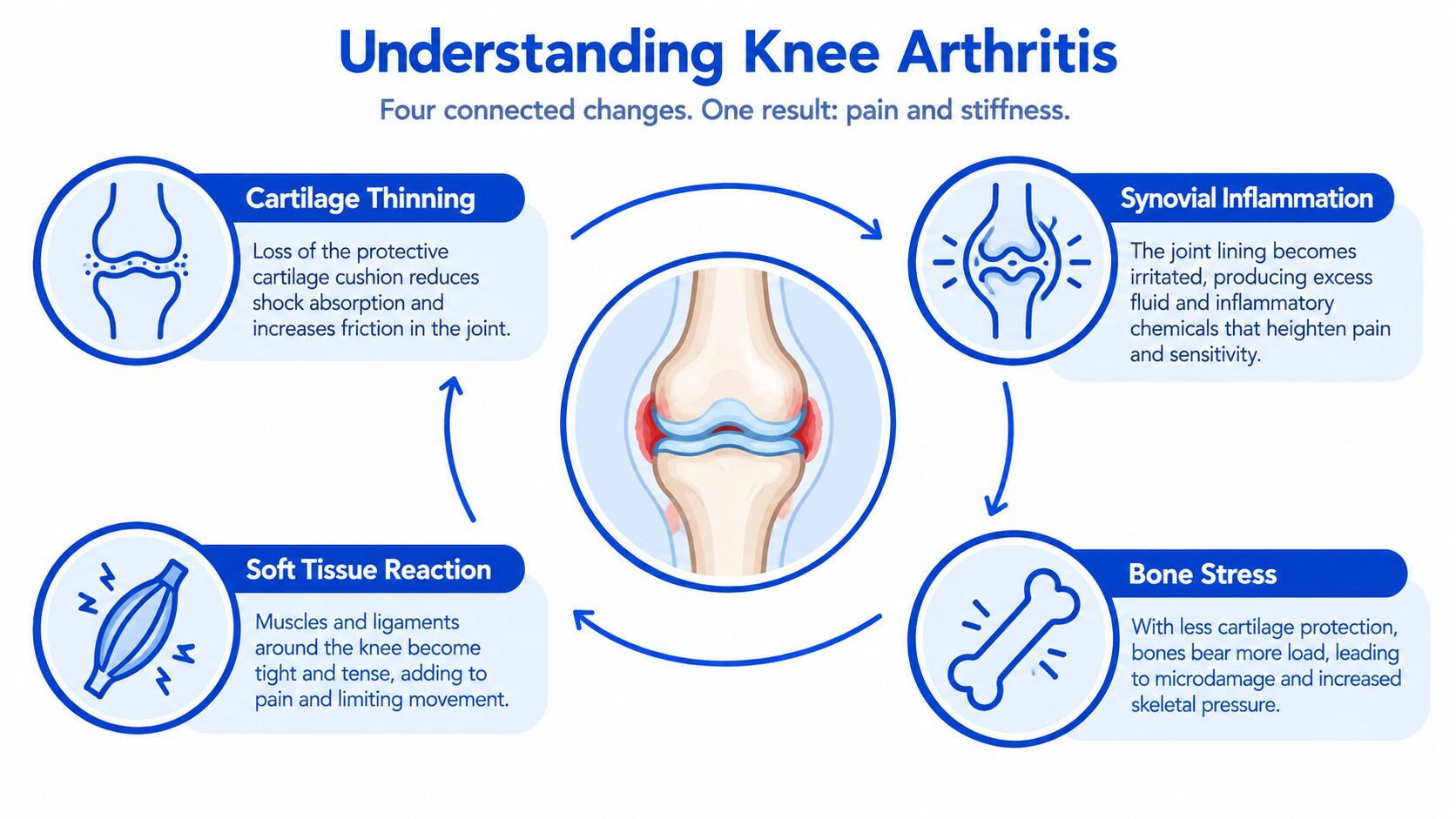
Think of the knee as a hinge with a smooth protective lining. In osteoarthritis, that lining, called cartilage, becomes thinner and less effective at distributing load. Cartilage itself has no nerves, so pain doesn't arise directly from cartilage loss. The surrounding joint tissues contribute substantially.
The joint lining, or synovium, may become irritated. The bone beneath the cartilage can experience increased stress, while the capsule, ligaments, tendons, and nearby muscles respond to altered movement. These changes can create pain, stiffness, swelling, weakness, and reduced confidence even when the visible cartilage damage doesn't explain every symptom. The Australian knee osteoarthritis clinical care standard describes this wider pain picture and supports assessing function rather than relying on imaging alone.
Arthritis is an umbrella term
Osteoarthritis is the most common form and involves a gradual imbalance between joint loading, tissue repair, and adaptation. Age, previous injury, body weight, muscle capacity, occupation, genetics, and everyday activity can all influence how it presents. It isn't a matter of a joint being “worn out” through one particular movement.
Rheumatoid arthritis and other inflammatory arthritides involve immune-system activity and need a different clinical pathway. They may cause more persistent swelling, prolonged stiffness, symptoms in several joints, or broader unwellness. Gout, infection, and injuries can also produce a painful swollen knee without being osteoarthritis.
The type matters because treatment choices change. A knee that is hot and acutely swollen needs a different response from a knee that feels stiff after sitting and settles with gentle movement. If you haven't had the cause clarified, an assessment is more useful than assuming every knee symptom is arthritis.
The national burden is substantial. The AIHW reports that arthritis overall affected approximately 3.7 million Australians, or 15% of the population, in 2022, a broader figure that includes osteoarthritis, rheumatoid arthritis, and other forms of arthritis. Knee symptoms sit within that wider group, but national osteoarthritis figures generally cover multiple joints rather than the knee alone.
Common Symptoms and the Red Flags to Watch For
Knee osteoarthritis often reveals itself through a familiar pattern: stiffness when rising from a chair, discomfort on stairs, pain after a longer walk, or swelling after gardening. Grating or clicking may occur, and the knee can feel less dependable when turning, squatting, or stepping down.
Morning stiffness is common but is often relatively brief with osteoarthritis. Movement may ease the knee, while a demanding day brings symptoms back. Track the pattern over time, including whether your walking distance is reducing, swelling keeps returning, or valued activities are becoming harder.
A arthritis joint mobility illustration can help you discuss joint movement and stiffness with a clinician. Use it to prepare questions, not to diagnose the cause of your symptoms.
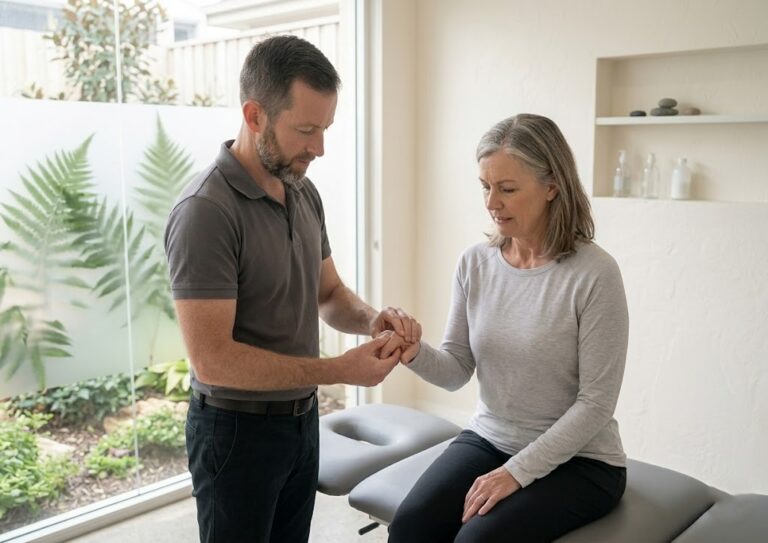
Pain response and daily function provide useful guides for progression. If an activity causes a mild, settled response, it may be possible to adjust its duration or intensity gradually. A sharp increase in pain, swelling that persists, or a clear drop in function calls for a slower plan and professional assessment.
Arrange prompt medical review if you have:
- A locked knee: the joint gets stuck and cannot fully bend or straighten.
- Major instability: the knee repeatedly gives way or cannot reliably support you.
- Marked or rapidly increasing swelling: particularly without a clear increase in activity.
- Fever or a hot, very painful joint: seek urgent assessment.
- Sudden inability to bear weight: obtain clinical advice rather than trying to walk it off.
- Acute traumatic pain: a fall, twist, or direct impact may indicate an injury requiring separate assessment.
An occasional difficult day does not necessarily mean the joint is deteriorating. Persistent loss of function is more informative. If you avoid stairs, cannot complete your usual walk, or need increasing support to move around, arrange an assessment even without a dramatic flare.
How Knee Arthritis Gets Diagnosed
Diagnosis starts with your story. A clinician will want to know when the pain appears, whether it improves with movement, how swelling behaves, which activities are difficult, and whether the knee has ever been injured. Details about sleep, work, exercise, other joints, medications, and general health can also change the interpretation.
The physical examination then adds context. It may include knee range of motion, swelling, tenderness, strength, gait, balance, and functional tasks such as sitting to standing. The hip, thigh, ankle, and foot may also be assessed because the knee works within a connected movement system.
What imaging can and can't tell you
An x-ray can show changes such as narrowing of the joint space or bony enlargement. It can help confirm a clinical impression and rule out some other causes, but it doesn't measure pain directly. MRI may be useful when the diagnosis is uncertain, symptoms suggest another structure is involved, or an injury needs closer investigation.
This distinction is important after hearing terms such as “bone on bone”. The Australian clinical care standard for knee osteoarthritis explains that pain can arise from synovial inflammation, bone stress, the joint capsule, muscles around the knee, and altered pain processing. As a result, radiographic severity and reported pain can differ substantially.
Bring a short symptom record to your appointment. Note the activity that brings pain on, how long symptoms last, swelling, sleep disruption, and what helps. If the diagnosis or treatment recommendation doesn't make sense to you, asking for clarification or a second opinion is reasonable. The goal is a shared explanation that fits both the scan and your lived experience.
Evidence-Based Non-Surgical Treatments Worth Considering
A knee osteoarthritis diagnosis gives you choices, not a single prescribed route. Australian guidance places land-based exercise at the centre of care, whatever your age, pain level, functional limitation, or scan findings. A suitable program can combine quadriceps and hip strengthening with aerobic conditioning, mobility, balance, and neuromuscular work. Walking, cycling, and Tai Chi are reasonable options when they match your capacity and preferences.
The useful test is your response over the following day. Exercise should build confidence and function without causing a flare that disrupts walking, sleep, or essential activities. Progression may mean slightly more resistance, time, or repetition, but the right pace depends on symptoms and daily demands.
Weight management may help if you carry excess weight and want to pursue it. The Australian Commission on Safety and Quality in Health Care guidance reports that losing 5–10% or more of body weight over approximately 20 weeks is associated with reduced pain and improved quality of life. RACGP recommendations specify a target of at least 5–7.5%, ideally alongside exercise. This is not a condition for receiving care, and weight loss should not replace strength or mobility work.
Medication decisions belong with your doctor or pharmacist. Topical or oral pain-relieving medicines may be options, but suitability depends on your other conditions, current medicines, and stomach, kidney, cardiovascular, and bleeding risks. Medication can make movement more manageable. It does not rebuild strength or teach the knee to tolerate load.
Injections may suit selected people. A corticosteroid injection can provide temporary relief during a painful period, while some clinicians discuss hyaluronic acid injections. Benefits vary, and neither option replaces a longer-term plan based on function, exercise, and informed self-management.
| Approach | What it involves | Main benefit | Key limitation |
|---|---|---|---|
| Exercise | Strength, aerobic, mobility, balance, and neuromuscular work | Improves capacity and supports daily function | Needs gradual progression and regular practice |
| Weight management | A personalised plan where excess weight is relevant | Can reduce pain and improve quality of life | Progress takes time and must respect health, preferences, and circumstances |
| Medication | Topical or oral pain relief discussed with a health professional | May make activity and sleep more manageable | Side effects, interactions, and limited impact on physical capacity |
| Injections | Clinician-delivered corticosteroid or hyaluronic acid options | May reduce symptoms for selected people | Response varies and relief may be temporary |
Surgery can be appropriate when pain and disability remain severe despite a well-delivered conservative plan. An x-ray or diagnosis alone does not make it the automatic next step. Australian data recorded 40,255 knee replacements in 2012–13, equivalent to 156 procedures per 100,000 people, in an AIHW osteoarthritis factsheet. That figure describes healthcare use, not an individual prediction.
Practical Self-Care and Home Exercises You Can Start This Week
Start below the level that provokes a large reaction. A short walk around the block, several gentle knee bends while holding a bench, or a few controlled sit-to-stands may be more useful than an ambitious routine that leaves you unable to move comfortably the next day.
A manageable home sequence
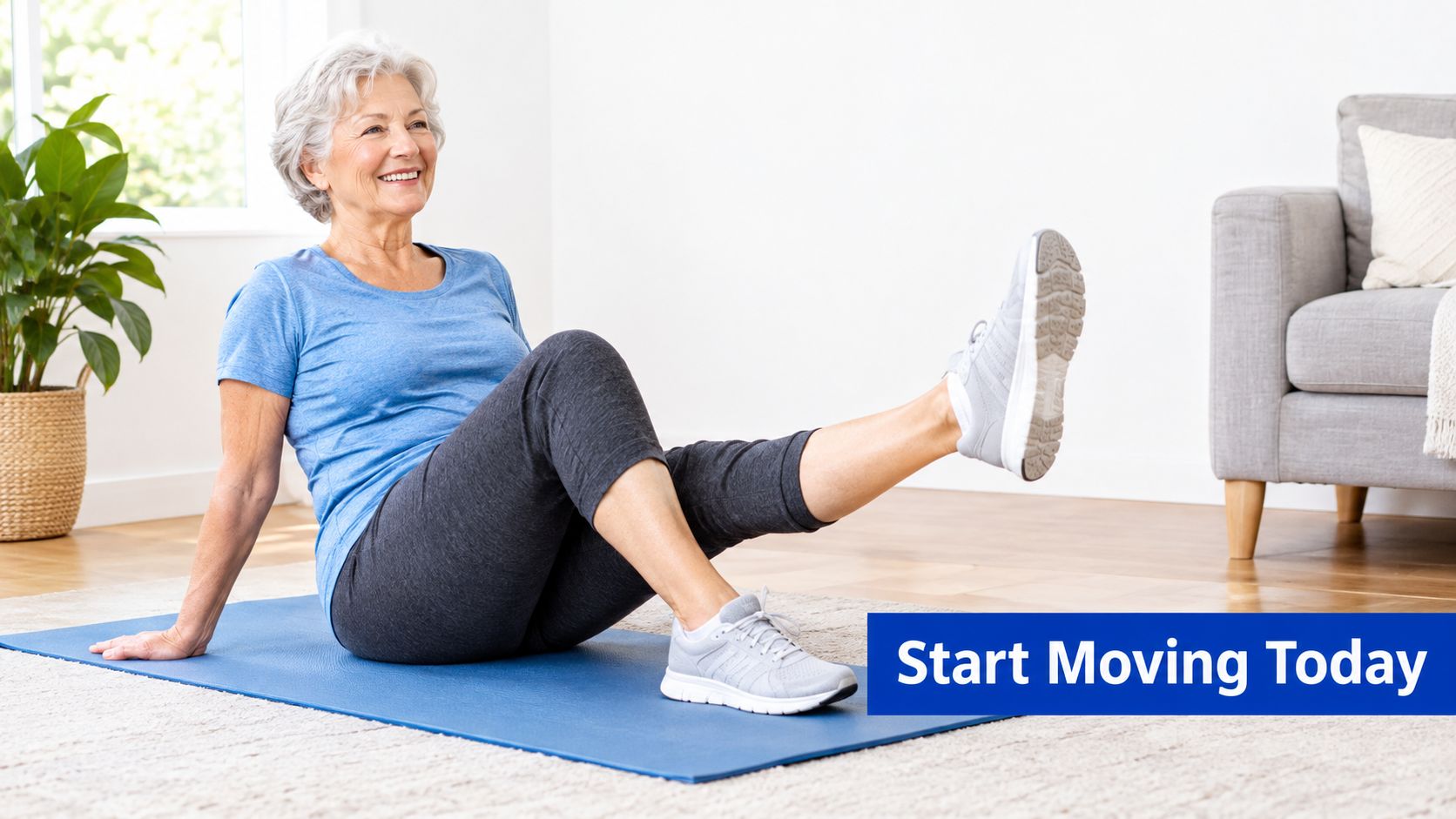
Begin with a gentle warm-up. Walk slowly around the room, move your ankles, and bend and straighten the knee within a comfortable range. Then choose two or three movements:
- Sit to stand: Use a firm chair and rise with control, using your hands only if needed. Sit back down slowly.
- Straight-leg raise: Lie or sit with one leg straight, tighten the thigh, and lift the leg a small distance without arching your back.
- Heel slide: Lie on your back and slide your heel towards you, then away, staying within a tolerable range.
- Gentle walking: Choose a flat route and shorten the distance before pain changes your gait.
You don't need to complete every movement at once. Quality, breathing, and control matter more than forcing a deep bend. If balance is limited, keep one hand on a stable surface and avoid exercising on a slippery floor.
The key dose-setting rule comes from RACGP recommendations for knee and hip osteoarthritis: modify the amount or intensity if pain remains unusually high for more than two hours after exercise or if swelling increases the next day. A small, temporary awareness can be acceptable. A delayed flare means the dose was too high for your current capacity.
For practical ideas about supervised movement and equipment, see this clinical exercise image.
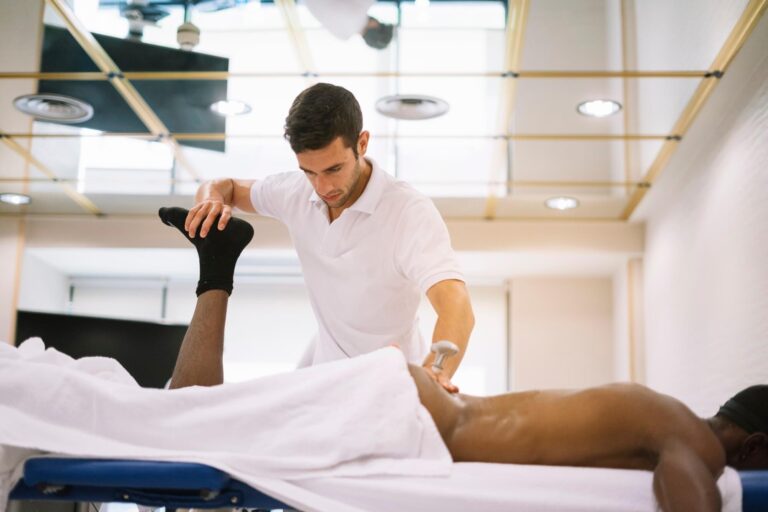
Rotate activities rather than repeating the most demanding task every day. Supportive, comfortable footwear may make walking easier, and pacing gardening or housework can prevent a long flare. Poor sleep and stress can also increase pain sensitivity, so treat rest and recovery as part of the plan rather than signs of weakness.
This video offers another visual demonstration of movement options:
Where Osteopathic Care Fits in Your Plan
Osteopathic care is most useful when it supports the decisions you make between appointments. The clinician assesses how the knee moves, then considers the hip, pelvis, ankle, foot, muscles, posture, gait, and the way you load the leg during ordinary tasks. The aim isn't to claim that hands-on treatment can reverse cartilage changes. It is to identify modifiable contributors to stiffness, discomfort, and reduced confidence.
A session may include soft-tissue work, joint articulation, gentle mobilisation, stretching, and movement advice. Techniques are selected according to the person's presentation, irritability, medical history, and goals. Someone struggling to bend the knee after sitting may need a different approach from someone whose main problem is walking tolerance or protective muscle tension.

The trade-off is integration
Hands-on treatment may make movement feel easier in the short term, but those changes need to be used. A simple strengthening routine, walking progression, or strategy for stairs helps convert a more comfortable range of motion into useful capacity. Osteopathy should complement exercise and lifestyle changes, not become a reason to avoid them.
An osteopathic assessment may suit you if:
- Stiffness limits movement: You want help understanding which movements are safe to practise.
- The knee feels overloaded: Hip, ankle, foot, or muscle contributions may need attention.
- You lack confidence: A graded plan can make activity feel less uncertain.
- You need individual guidance: Generic exercises don't account for your strength, symptoms, or daily demands.
- You want conservative care: You'd prefer to discuss practical options before considering more invasive treatment.
At Bayside Osteopathic Health, care is described as a combination of assessment, gentle hands-on techniques, movement advice, and practical self-care. Outcomes vary because arthritis pain is influenced by joint tissues, strength, activity, sleep, health conditions, and personal goals. A responsible plan makes those limits clear.
When to See a Clinician and How Bayside Access Works
Arrange an assessment when knee pain is new, worsening, repeatedly swollen, disturbing sleep, or reducing the activities you can manage. Seek prompt medical review for locking, major instability, fever, rapidly increasing swelling, sudden inability to bear weight, or pain after an acute injury.
Your first osteopathic appointment generally covers your symptoms, goals, and movement. The practitioner may assess how the knee, hip, ankle, foot, and surrounding muscles contribute to your daily function. Gentle soft-tissue work, joint articulation, or mobilisation may be appropriate, followed by a practical plan for exercise, pacing, and progression. Ask how pain response will guide the plan, how improvement will be measured, and when another medical opinion is needed.

Medicare support may apply under certain plans for eligible patients. Private health rebates depend on your policy and extras. Confirm eligibility, current rebates, and out-of-pocket costs with the clinic and insurer before treatment. Local updates are available through the Bayside Osteopathic Health website.
Osteopathic care can support movement, but it works best alongside self-care and gradual strengthening. Arthritis does not determine your future mobility. Record symptoms, choose a manageable activity, and seek help when daily life is becoming narrower. Bayside Osteopathic Health offers assessment, hands-on care, movement advice, and practical self-care strategies for arthritis-related knee discomfort.