

You've started avoiding the stairs, taking longer to stand up after sitting, or changing your usual walk along the Bayside foreshore because your knee keeps complaining. Perhaps the pain settles after a few minutes, then returns when you carry shopping, get out of the car, or try to exercise. Searching for arthritis treatment for the knee usually begins when these small adjustments start affecting everyday decisions.
Knee osteoarthritis doesn't have one universal fix. Effective care usually follows a pathway, starting with self-management and guided exercise, then adding allied health support when needed, and considering surgery only when pain and disability remain severe. The right treatment depends on how your knee behaves, how much function you've lost, and which options you can use consistently.
Table of Contents
- Why Your Knee Hurts and What Arthritis Treatment Really Means
- Understanding Knee Osteoarthritis and How It Develops
- Non-Surgical Arthritis Treatment Knee Options That Work
- How Osteopathic and Manual Therapy Support Knee Arthritis Care
- Daily Self-Care Strategies for Managing Knee Arthritis Pain
- When Knee Arthritis Treatment Shifts to Surgical Options
- Knowing When to Seek Referral and Understanding Medicare Access
Why Your Knee Hurts and What Arthritis Treatment Really Means
A Bayside resident might first notice knee arthritis during a familiar routine. The walk to the café feels manageable, but the return journey brings aching. Getting up from a chair takes more effort. After a weekend in the garden, the knee feels swollen and stiff, and rest becomes the default response.
That pattern is common with knee osteoarthritis, but pain isn't a reliable measure of how much damage exists inside the joint. Osteoarthritis involves changes to the cartilage, bone, joint lining and surrounding tissues. These changes can make movement less comfortable, reduce confidence, and encourage you to use the leg differently.
Australian data shows why early, practical care matters. In 2019, more than 1.9 million Australians were estimated to be living with knee osteoarthritis, an increase of 126% compared with 1990, and the condition contributed more than 59,000 years lived with disability each year, according to this RACGP special editorial on knee osteoarthritis. It affects adults aged 45 years and older particularly strongly and is more common in women than men.
Treatment is more than pain suppression
Pain relief can help you move, but it doesn't replace movement rehabilitation. If the knee becomes painful, people often reduce activity, lose strength and become less tolerant of everyday loads. That can make stairs, squatting and walking feel even harder.
A useful arthritis treatment plan addresses several contributors at once:
- Joint capacity: Exercise helps maintain the strength and movement needed for daily tasks.
- Load management: Changing how much, how often and how intensely you move can reduce irritating flare-ups.
- Whole-body movement: Hip, ankle and trunk movement can influence how force travels through the knee.
- Confidence: Gradual exposure to safe activity can reduce fear of movement and support independence.
Practical rule: The aim isn't to eliminate every sensation from the knee. It's to improve what you can do, reduce avoidable aggravation and keep the joint participating in daily life.
Understanding Knee Osteoarthritis and How It Develops
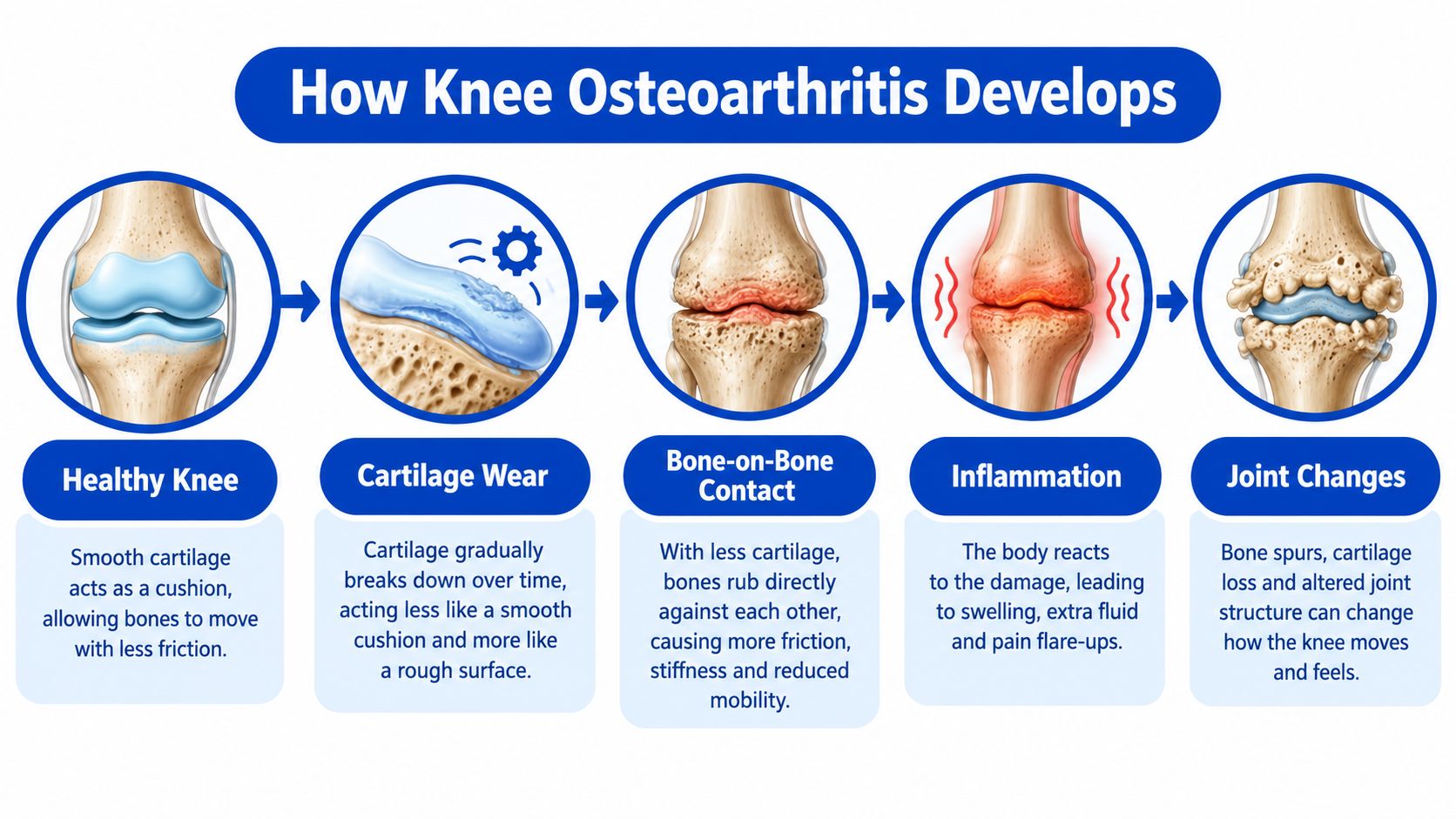
Think of the knee as a meeting point between the thigh bone, shin bone and kneecap. Smooth cartilage helps the joint surfaces move with less friction, while muscles, tendons and ligaments guide and support the movement. Osteoarthritis develops as the joint undergoes progressive structural change, rather than as a single isolated problem in one piece of tissue.
The process isn't identical for everyone. Some people develop osteoarthritis gradually with age and accumulated loading. Others notice symptoms after an earlier knee injury, repeated strain or a change in the way the leg is aligned and loaded. These are often described as primary and secondary patterns, but an assessment is needed to understand what applies to you.
How symptoms emerge
Early symptoms may appear during loaded activities such as stairs, hills, standing from a low chair or longer walks. Stiffness after rest is also common. As the condition progresses, swelling, reduced bending or straightening, grinding sensations and changes in walking can become more noticeable.
Pain can be influenced by more than the joint's internal appearance. Sleep, stress, muscle strength, recent activity and previous injury can all affect how sensitive the knee feels. This is why treatment shouldn't be selected from an X-ray report alone.
A clinician may look at:
- Your symptom pattern: When pain begins, what settles it and whether swelling or locking occurs.
- Your movement: How you walk, squat, climb steps and transfer from sitting to standing.
- Nearby joints: The hip, ankle, foot and lower back can alter the forces reaching the knee.
- Your goals: Walking to the shops, returning to cycling or managing work may require different priorities.
Why diagnosis still matters
Not every painful knee has osteoarthritis. A recent injury, marked warmth and swelling, sudden inability to bear weight or a knee that locks requires appropriate medical assessment. Rapid changes or symptoms in several joints may also point to a different condition.
The practical question isn't only, “What does the scan show?” It's also, “What is stopping you from moving, and what can be changed safely?” That answer guides the next stage of arthritis treatment.
Non-Surgical Arthritis Treatment Knee Options That Work
Australian clinical guidance places non-surgical care at the centre of knee osteoarthritis management. The Australian Commission on Safety and Quality in Health Care clinical care standard recommends combining lifestyle modification, exercise therapy and pain management across all stages of the condition.
These options aren't competitors. They usually work best when each one has a clear role.
Exercise builds usable capacity
Land-based exercise is a foundation because the knee needs regular, appropriately graded loading. A programme may include strengthening for the thigh, hip and calf, mobility work, balance practice and functional movements such as controlled sit-to-stands. The right dose should challenge you without creating a flare that prevents activity for days.
Exercise isn't a promise that the knee will feel perfect immediately. Its value is measured in practical function, such as walking farther, standing more easily or recovering more predictably after activity.
Weight management can reduce load
If you're overweight or obese, Australian guidance recommends weight management alongside exercise, with a target of at least 5% body-weight loss. The Australian Orthopaedic Association patient information on knee osteoarthritis supports this approach.
The target should be handled respectfully. It isn't a judgement about appearance, and it doesn't need to involve extreme dieting. A GP, dietitian or exercise professional can help you choose a sustainable approach that protects strength and supports regular movement.
Medication and injections have limits
Short-term oral non-steroidal anti-inflammatory drugs may help some people, but they need cautious use and aren't suitable for everyone. Your GP or pharmacist should consider your medical history, other medicines and possible risks before you use them.
A corticosteroid injection may provide short-term relief during a painful flare. That relief can create a useful window for exercise, but an injection doesn't rebuild cartilage or replace a longer-term plan.
Arthroscopy isn't the automatic next step
The Australian clinical care standard states that arthroscopic debridement or partial meniscectomy provides little or no clinically significant benefit for pain or function in uncomplicated knee osteoarthritis. Persistent pain after conservative care shouldn't automatically lead to arthroscopy.
A cane, brace or other assistive device may help selected patients, particularly when pain, balance or confidence limits walking. These tools should support your activity rather than become a substitute for rehabilitation.
For a visual example of supervised movement-based care, see this guided exercise treatment image. The important question isn't which treatment sounds most advanced. It's which combination helps you move more comfortably and can be maintained in ordinary life.
How Osteopathic and Manual Therapy Support Knee Arthritis Care
A knee that hurts often changes how the rest of the body works. You may shorten your stride, turn the foot outward, avoid bending, or place more weight through the other leg. Those adjustments can increase tension around the hip, thigh, calf, and lower back, especially when they continue during everyday walking and stairs.

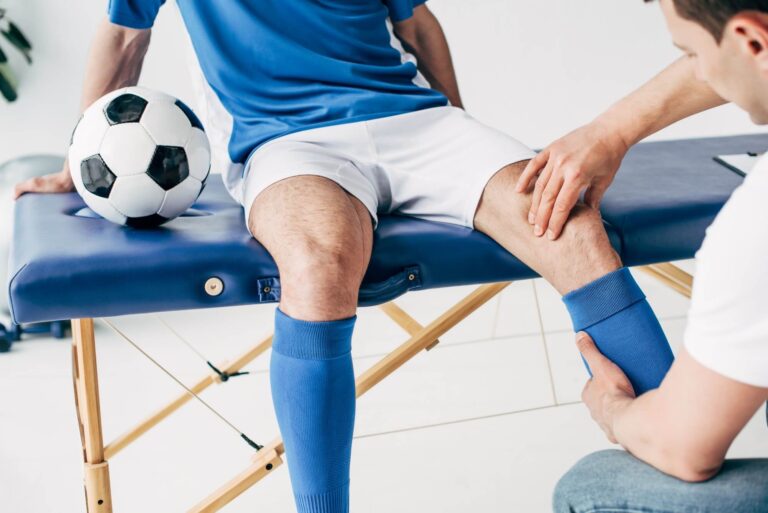
An osteopathic assessment looks at the painful knee and the movement around it. The practitioner may watch you walk, rise from a chair, climb a step, or stand on each leg. They may also assess hip rotation, ankle movement, muscle tension, and how confidently you load the affected side. This helps connect your symptoms with the tasks that bring them on.
What hands-on care may involve
Gentle soft-tissue treatment can reduce tension in the muscles around the thigh, hip, and calf. Joint articulation and mobilisation use controlled movement to support a more comfortable range. Treatment should remain within your tolerance and should account for your symptoms, health history, medication, and response on the day.
Manual therapy does not reverse osteoarthritis or restore damaged cartilage. Its practical role is to make movement easier, so you can take part in strengthening, walking, and other activities. Relief may be temporary, and the benefit is usually greater when hands-on care supports an active rehabilitation plan.
A consultation may include:
- Hands-on treatment: Gentle work for areas that restrict or alter comfortable movement.
- Movement coaching: Guidance for walking, stairs, chair transfers, gardening, and other tasks that aggravate symptoms.
- Progressive exercise: Strength and mobility exercises matched to your current capacity, then adjusted as that capacity improves.
- Self-management planning: Clear instructions for reducing activity during a flare and gradually returning to your usual routine.
The osteopath can also coordinate with your GP, physiotherapist, or exercise physiologist when your symptoms require a broader plan. Where weight management is part of your care, hands-on treatment and exercise advice can be adjusted so increased activity does not provoke a flare. Referral is appropriate if pain, swelling, instability, or reduced function suggests that your plan needs medical review.
The following video demonstrates a movement-focused approach that patients may encounter during rehabilitation:
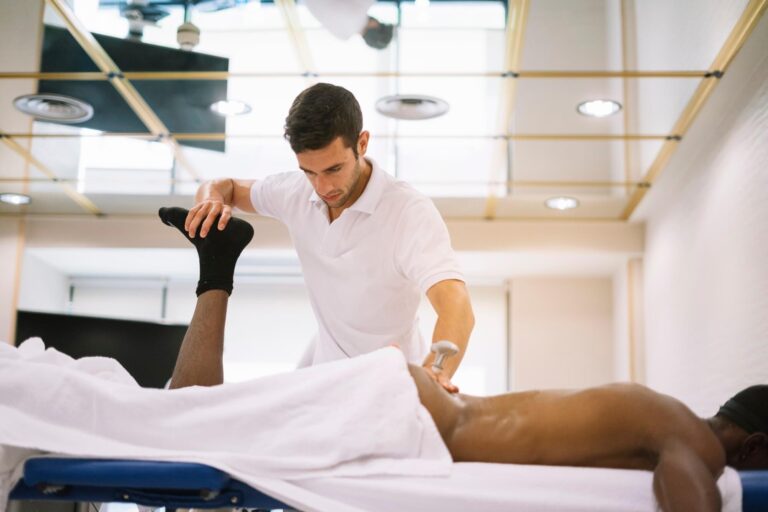
Some patients may also find gentle leg massage treatment comfortable as part of a wider program. The trade-off is straightforward: passive treatment can settle symptoms for a time, while exercise, pacing, and daily movement build the tolerance needed for longer-term function.
Daily Self-Care Strategies for Managing Knee Arthritis Pain
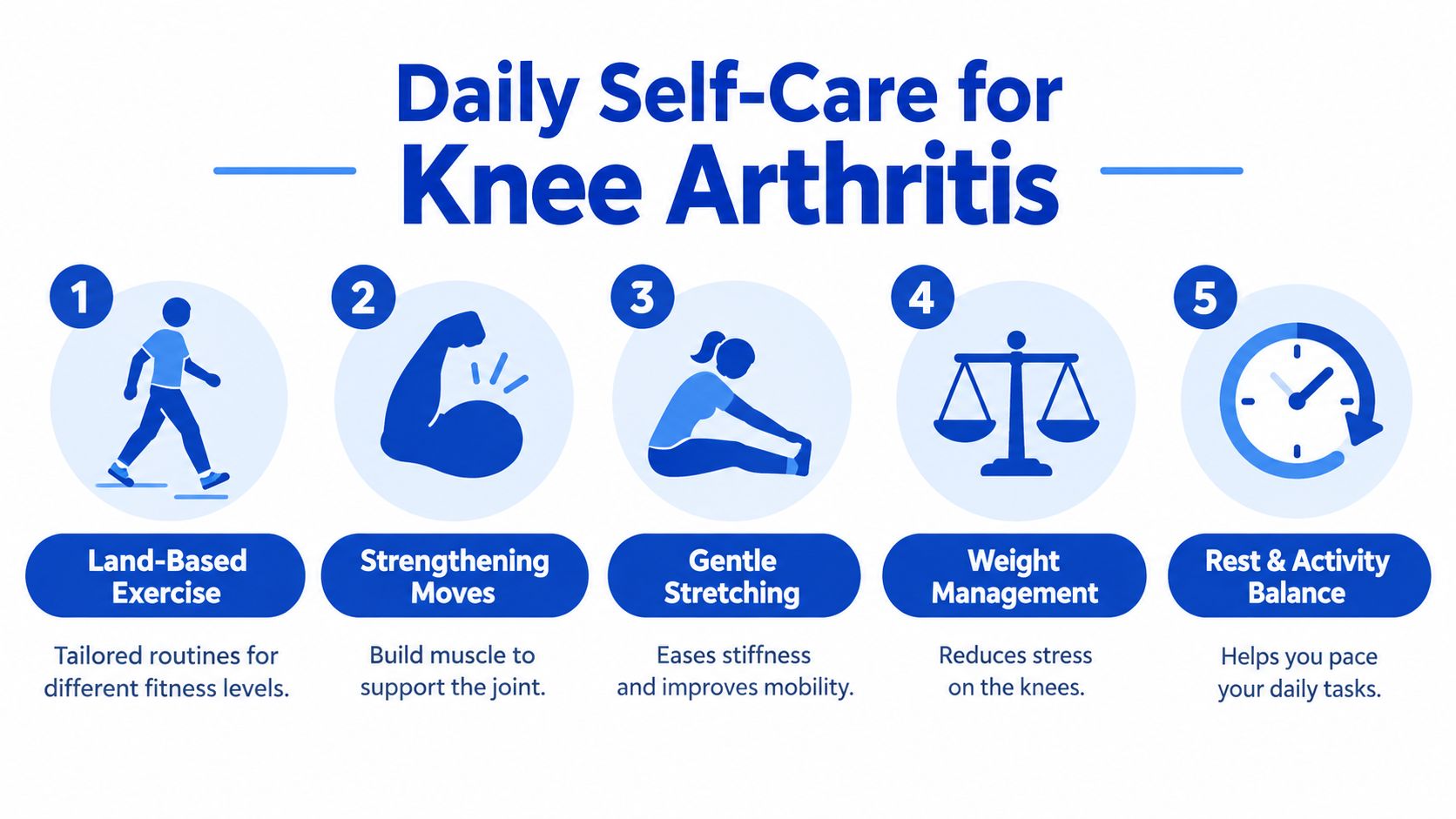
Your daily plan should be simple enough to follow on an ordinary week, not just on a motivated day. Start with an activity that feels manageable and increase it gradually. A short walk, cycling, swimming, strengthening session or mobility routine can be useful when it matches your current ability and doesn't leave you unable to function afterwards.
Land-based exercise is specifically recommended in Australian knee osteoarthritis guidance. That might mean walking on level ground, practising sit-to-stands from a suitable chair, strengthening the thigh and hip, or working on balance. A clinician can adjust the range, resistance and repetitions if your knee becomes sore.
Make the plan fit your day
Try these practical adjustments:
- Choose regular movement: Break up long periods of sitting with comfortable walking or gentle mobility.
- Strengthen with control: Use movements such as supported sit-to-stands or step practice, provided they can be done without sharp pain.
- Manage activity peaks: Avoid doing a large amount of gardening, walking or lifting after several inactive days.
- Use support when appropriate: A brace, walking aid or cane may improve confidence and balance for selected people.
- Plan for recovery: If symptoms rise after activity, reduce the next session rather than abandoning movement altogether.
Weight management can also form part of self-care. For patients who are overweight or obese, Australian guidance recommends aiming for at least 5% body-weight loss, alongside exercise. A GP or dietitian can help you approach this without sacrificing muscle, energy or enjoyment of food.
Pain relief should be individualised. Heat may feel helpful for stiffness, while a cold pack may be more comfortable after a flare for some people. Medication decisions should be discussed with a GP or pharmacist, especially if you have other health conditions or take regular medicines.
Use this knee joint mobility resource as a prompt to keep movement gentle and consistent. Stop and seek advice if you develop substantial swelling, sudden loss of function, marked warmth, or pain after an injury.
When Knee Arthritis Treatment Shifts to Surgical Options
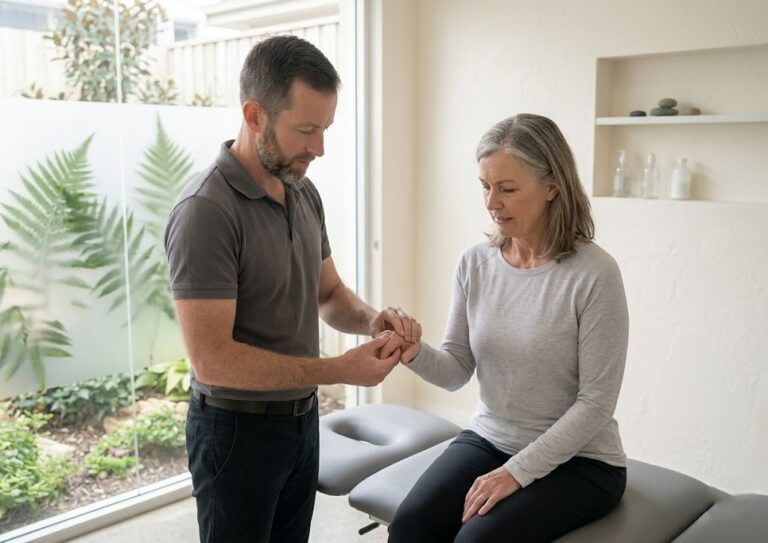
Surgery becomes a consideration when knee osteoarthritis causes persistent pain and substantial functional restriction despite a well-delivered non-surgical programme. The decision isn't based on an X-ray alone. An orthopaedic surgeon will consider symptoms, examination findings, health history, daily limitations and what you want to regain.
A total knee replacement replaces damaged joint surfaces with artificial components. It can be appropriate when pain is severe, walking and daily activities are significantly affected, and other reasonable treatments haven't provided enough relief. It remains a major operation, with rehabilitation and recovery demands that should be discussed clearly before proceeding.
What Australian treatment patterns show
Australia performs a large number of knee replacements for osteoarthritis. More than 53,500 knee replacements are performed each year for osteoarthritis, and that number was projected to rise by 276% by 2030, according to the Australian analysis of knee replacement and arthroscopy patterns.
The same evidence base reports that more than 55,000 primary total knee replacements were being performed annually, representing 152% growth since 2003. It also reports that knee replacements tripled in absolute numbers and doubled per capita between 2002 and 2021. These figures describe national treatment patterns, not a prediction that any individual patient will need surgery.
Knee arthroscopy remains a different question. Private-system arthroscopies still exceeded 30,000 per year, despite falling in recent years. For uncomplicated osteoarthritis, current Australian guidance restricts arthroscopic procedures because they offer little or no clinically significant improvement in pain or function.
Making a balanced decision
Surgery may offer meaningful relief when the joint is severely affected, but it isn't a shortcut around every earlier step. Before referral, check whether you've had a properly structured exercise programme, appropriate weight-management support where relevant, sensible pain management and an assessment of contributing movement limitations.
Surgery should be considered because your symptoms and loss of function justify it, not simply because a scan looks abnormal.
After surgery, rehabilitation still matters. Strength, walking confidence, joint movement and general conditioning all influence how well you return to everyday tasks. A non-surgical clinician may remain part of that wider care team before or after an operation, in coordination with your medical providers.
Knowing When to Seek Referral and Understanding Medicare Access
Book a clinical assessment when knee pain keeps returning, limits walking or sleep, or stops you from doing activities that matter to you. Seek prompt medical attention after a significant injury, sudden inability to bear weight, rapid swelling, marked warmth, or a knee that locks.
A referral to an orthopaedic surgeon or rehabilitation physician may be appropriate when pain and functional decline continue despite a consistent conservative programme, when there is substantial deformity, or when the diagnosis is uncertain. Your GP can help coordinate imaging, medication review and specialist referral when required.
Medicare access depends on your circumstances and the type of care recommended. Some allied health treatment may be available through a GP-prescribed chronic disease management plan for eligible patients, while private health insurance may cover osteopathy or other services according to the policy. Check the details with your GP, Medicare and your health fund before booking, as eligibility and rebates can change.
Keep a short record of what aggravates your knee, what helps, how far you can walk and which activities you want to resume. That information gives your clinician a practical starting point for an arthritis treatment plan rather than relying on pain intensity alone.
Bayside Osteopathic Health offers gentle, hands-on osteopathic care, movement assessment and practical self-care guidance for people managing knee arthritis-related discomfort. If you want help choosing the next step in your knee treatment pathway, visit Bayside Osteopathic Health to learn more and arrange an appointment.