

A familiar twinge can show up halfway through a workday. You've been at your desk for hours, stand to stretch, and feel your lower back tighten as you straighten. It's natural to wonder whether you should move more, rest, or try a stretch you've seen online.
For many people, gentle movement is a sensible place to start. The right back pain relief stretches can ease stiffness, help you feel more at ease moving, and complement the work you do with an osteopath. They aren't a universal fix, though. A movement that feels relieving for one person might aggravate another, especially when symptoms are persistent or travel into the leg.
Australian guidance supports an individual approach. For persistent or chronic low back pain, exercise may combine stretching, strengthening, and aerobic activity, with adjustments based on your needs and how you respond (Australia's Low Back Pain Clinical Care Standard). A stretch should feel manageable, not forced. Stop if it causes sharp pain, worsening symptoms, tingling, or numbness, and seek clinical advice if your pain is severe, persistent, or changing.
These eight options offer a starting point, not a test of flexibility. Choose movements that feel comfortable and use them alongside regular activity and, when needed, professional assessment.
Table of Contents
- 1. Cat-Cow Stretch
- 2. Child's Pose
- 3. Knee-to-Chest Stretch
- 4. Prone Press-Up
- 5. Standing or Seated Piriformis Stretch
- 6. Kneeling Hip Flexor Stretch
- 7. Seated or Kneeling Thoracic Rotation
- 8. Doorway Pectoral Stretch
- 8 Back Pain Relief Stretches Comparison Guide
- Bringing It Together: Stretching as Part of a Bigger Picture
1. Cat-Cow Stretch
Cat-Cow is a gentle way to explore spinal movement without holding a long, deep position. Start on your hands and knees, with your hands under your shoulders and knees under your hips. As you breathe in, let your abdomen soften and lift your chest and tailbone slightly. As you breathe out, gently round your back and let your head follow. Move between the positions slowly, staying within a comfortable range.
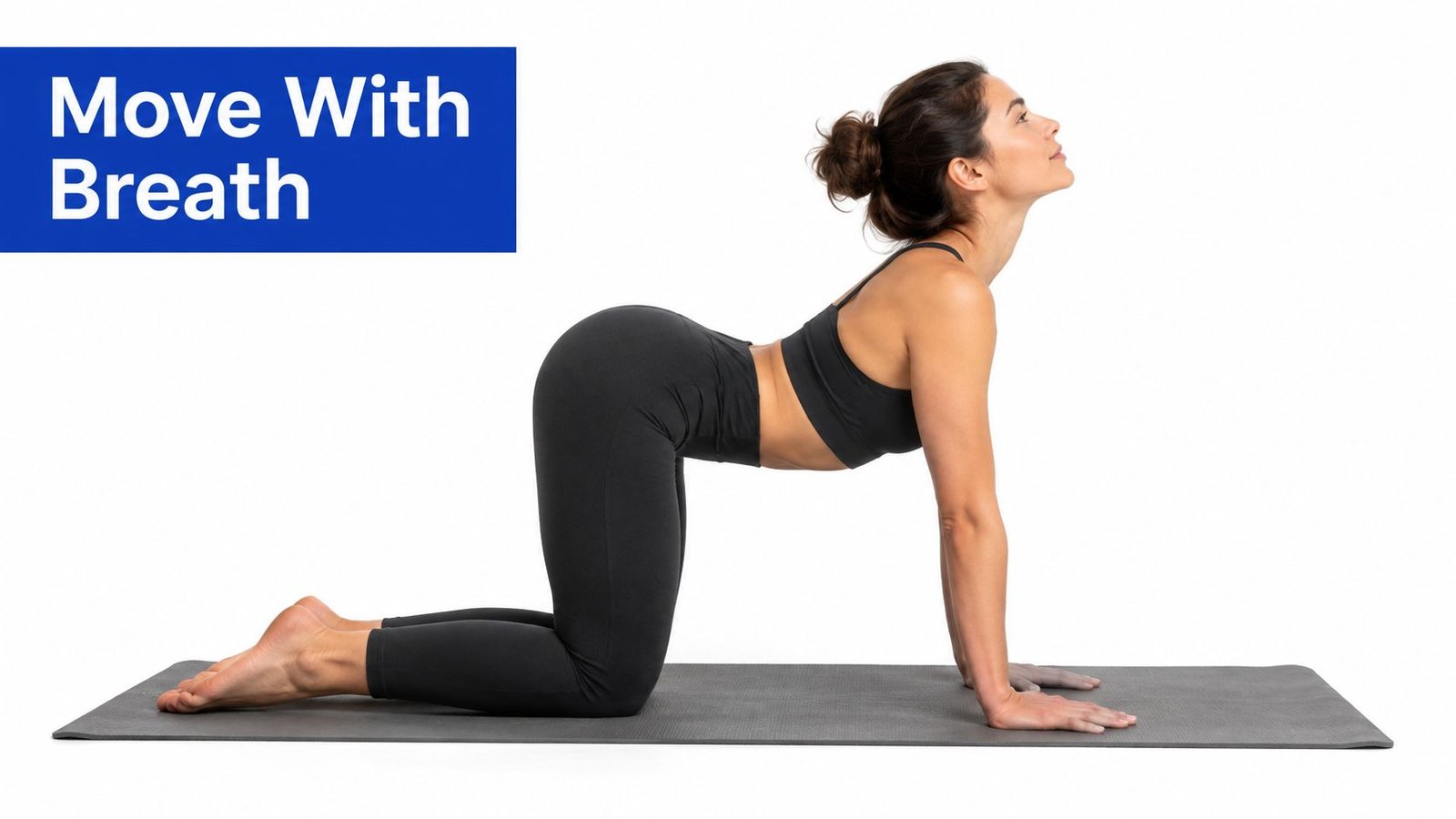
This movement may suit someone who feels stiff after a long spell at a desk or a quiet morning. The rhythm gives you a chance to notice how your back responds as you bend and straighten. Try initiating the motion from your pelvis, then letting it travel through your spine, rather than hinging only at your lower back. A folded towel under your knees can make the position more comfortable.
Keep the movement easy
Cat-Cow isn't a contest to make the biggest arch or roundest back. If you're having a flare-up, or either direction clearly increases pain, reduce the range or stop. Hands-and-knees positioning can also be uncomfortable for people with sensitive wrists or knees. You can try placing your hands on a sturdy chair instead, or ask a practitioner to help you find a more suitable variation.
A slow breath can make the movement feel less rushed, but don't force a particular breathing pattern. The useful question is whether moving gently leaves you feeling the same or more comfortable, not whether you can reach a certain position. If the movement feels good, it can be a brief mobility break before returning to work or another daily activity.
2. Child's Pose
After gardening, lifting, or sitting for a long time, you might want a position that lets you pause and soften some tension. Child's Pose is one option. Begin on your hands and knees, then ease your hips back towards your heels while reaching your hands forward. Rest your forehead on the mat or on a cushion if that's more comfortable.
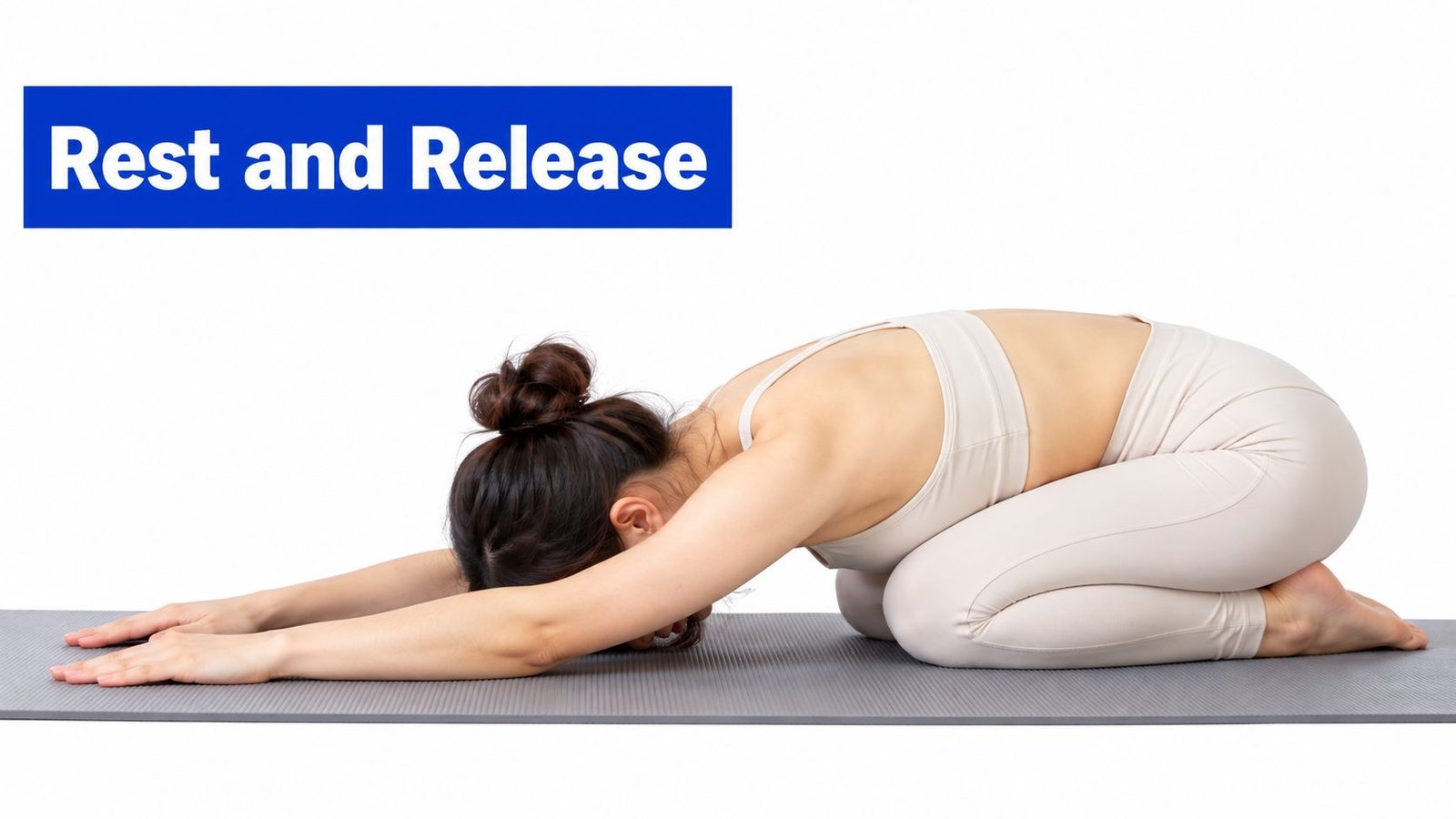
The position may feel soothing when your lower back feels tight and you can comfortably kneel and fold forwards. But it isn't right for everyone. A sore knee, restricted hip, or back symptoms that worsen with bending can make it unpleasant. Don't try to force your hips towards your heels to match a picture.
Make room for comfort
- Support your hips: Place a pillow or rolled blanket between your hips and heels if sitting back feels strained.
- Change your knee position: Widen your knees slightly if your hips feel pinched, while keeping the movement gentle.
- Use help to get up: A sturdy chair or wall can make lowering down and standing up feel steadier.
- Stop for unusual symptoms: Sharp pain or numbness in your knees or legs is a reason to come out of the pose and seek advice if it continues.
A restorative position should make it easier to relax, not leave you stuck or worried about getting back up. If kneeling is difficult, skip this stretch and choose a comfortable movement you can do standing or lying down instead.
3. Knee-to-Chest Stretch
This stretch starts on your back, which can be a more accessible choice than kneeling if your knees are sensitive. Lie with your knees bent and feet resting on the floor. Bring one knee towards your chest, holding behind the thigh or around the shin, and let your shoulders and neck stay relaxed. Keep the other leg bent or extend it along the floor, choosing whichever position feels easier on your back.
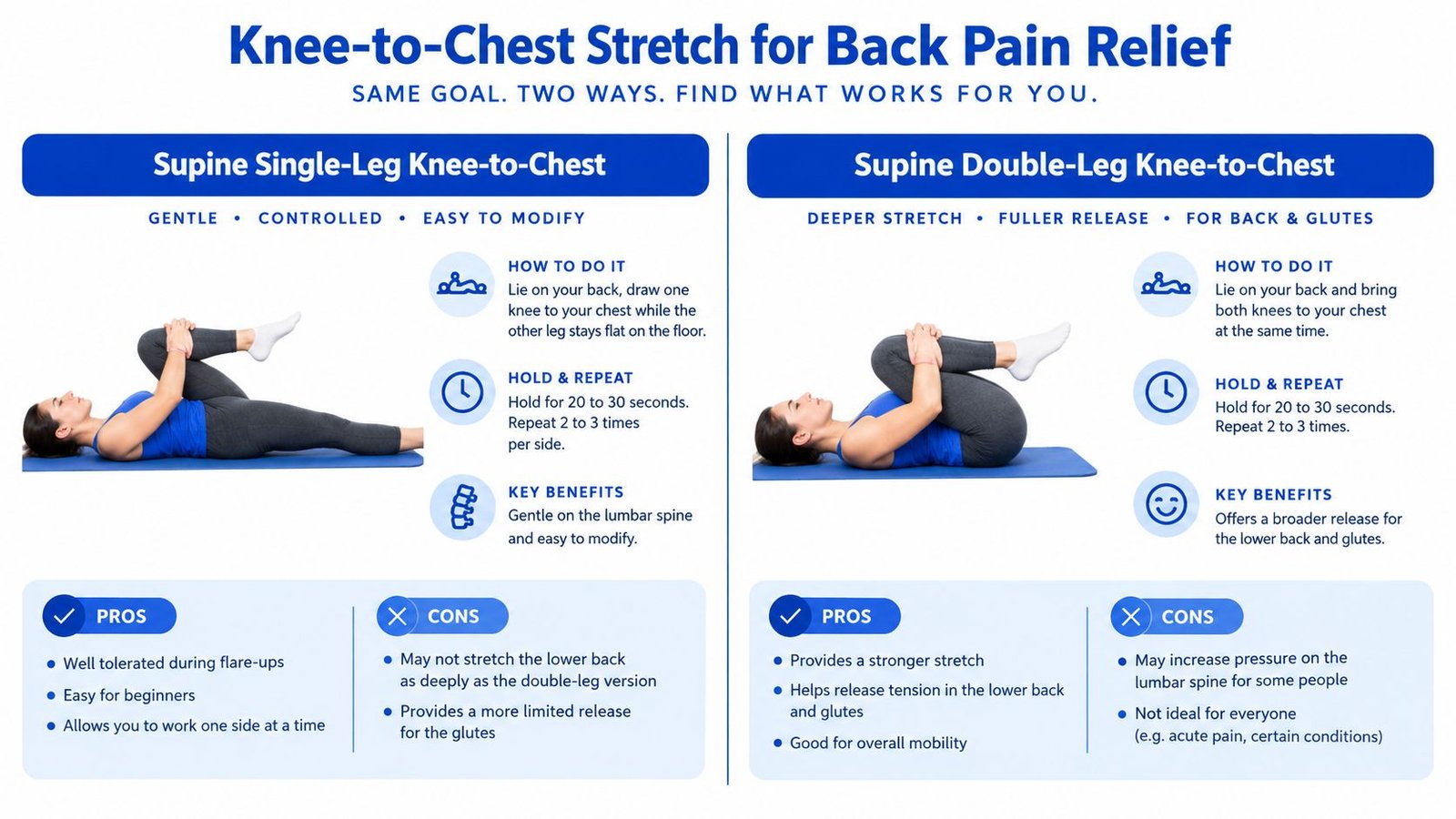
The single-leg version lets you judge each side separately. If it feels comfortable, you can later try drawing both knees in, but there's no need to progress to that version. A towel looped around your thigh can help if reaching your leg is difficult. Let the stretch develop gradually rather than pulling hard with your arms.
Practical rule: A stretch should feel like a manageable change in tension, not a tug-of-war with your back.
This movement may suit people who feel comfortable lying down and bending their hips. It may not suit you if bringing a knee up increases pain or makes symptoms travel further down your leg. Come out slowly, placing your foot back on the floor before changing sides. If getting to or from the floor is difficult, ask a practitioner about a safer alternative rather than pushing through.
4. Prone Press-Up
A press-up moves your lower back into extension, or a gentle backward bend. Lie face down, with your hands near your shoulders. First notice how your symptoms feel in this position. If you're comfortable, press through your hands to lift your chest while keeping your hips on the floor. You can keep your elbows bent and rise only partway.
Some people find extension more comfortable than bending forwards. Others feel worse. The response of your symptoms matters more than the name of the exercise. If pain in your buttock or leg moves closer to your back, that may be a useful response to discuss with a clinician. If it travels further down your leg, becomes stronger, or brings on tingling or numbness, stop and seek guidance.
Don't push through a warning sign
A press-up is not a general-purpose stretch, and it isn't a good choice because your back hurts. It's best suited to people who tolerate this direction of movement, ideally after an assessment if symptoms extend into the leg. If lifting onto your hands feels too intense, resting face down or trying a smaller lift may be more comfortable. Stop if either option aggravates symptoms.
Try this guided video only if the position feels appropriate for you:
A trained clinician can help assess which direction of movement suits you and whether a press-up belongs in your plan. If you're unsure, don't use repeated attempts to test your pain. Choose a comfortable position and arrange an assessment if symptoms persist or worsen.
5. Standing or Seated Piriformis Stretch
A tight-feeling buttock doesn't always mean your lower back needs a deeper stretch. The figure-four position targets the hip and buttock area instead. Sitting on a stable chair, place one ankle over the opposite thigh, above the knee. Sit tall and gently hinge forwards from your hips until you feel a mild stretch in the crossed-side buttock. Keep your spine relaxed rather than rounding hard to reach further.
If getting into the seated position is uncomfortable, or you prefer the floor, lie on your back and cross one ankle over the opposite thigh. You can then draw the supporting leg towards you, stopping as soon as you feel a manageable stretch. The two versions aren't interchangeable for everyone, so choose the one that feels steadier and easier to control.
If a stretch produces a shooting sensation or tingling down your leg, ease out of it. More intensity isn't necessarily more helpful.
This may suit someone who notices buttock tightness after sitting or finds the outer hip stiff. It may not suit you if crossing your leg irritates your hip or knee, or if the position brings on leg symptoms. Don't bounce, force your knee down, or pull aggressively on your leg. Give your body time to settle after the stretch, then check whether standing or walking feels comfortable.
6. Kneeling Hip Flexor Stretch
Long spells of sitting can leave the front of the hips feeling restricted, but that doesn't mean tight hip flexors are the cause of every sore back. This lunge-style position gently stretches the front of the hip. Kneel with one foot forward, then bring your torso upright. Keep your ribs above your pelvis and gently tuck your tailbone, as if you're drawing it underneath you. You should feel the stretch at the front of the hip on the kneeling side.
A cushion or folded towel under the back knee can reduce pressure. Hold a wall or sturdy chair if balance is uncertain. Avoid leaning your chest back or arching your lower back to make the stretch feel stronger. If you feel the effort mainly in your lower back rather than the front of your hip, reset your position or choose another movement.
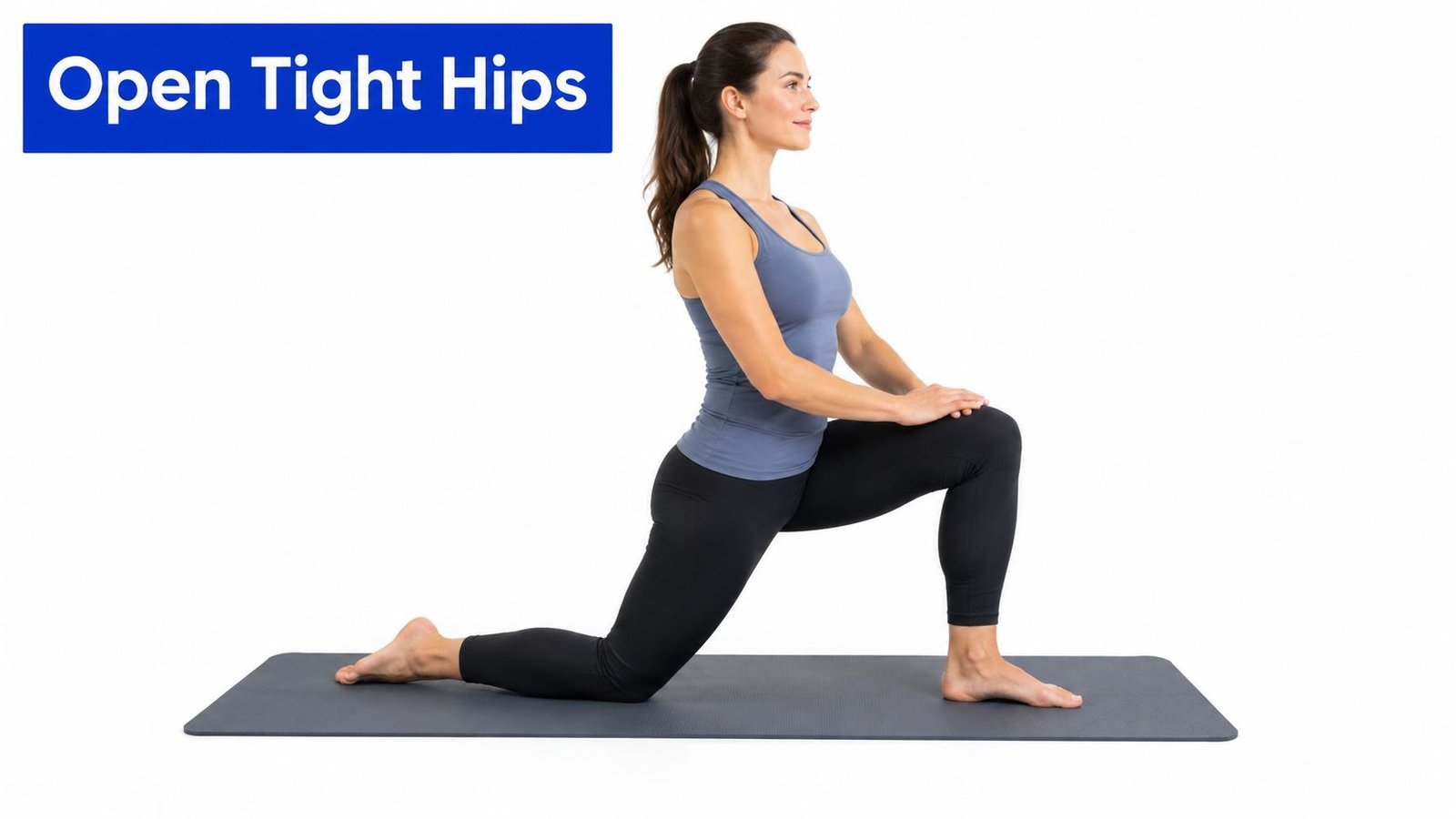
This stretch can be useful for someone who sits for much of the day and feels tight at the front of the hips. It's a poor fit if kneeling hurts, balance is a concern, or the position worsens your symptoms. Try a standing version with one foot behind you if that feels safer, keeping your torso upright and your back relaxed. If neither version feels comfortable, skip it. You don't need to stretch every area to care for your back.
7. Seated or Kneeling Thoracic Rotation
When twisting feels stiff, the lower back isn't always the only area to consider. A gentle upper-back rotation can help you explore movement through your chest and mid-back. For an open-book version, lie on your side with your knees bent and stacked. Reach both hands forwards, then slowly sweep your top arm across your body, turning your chest towards the ceiling only as far as feels comfortable. Let your eyes follow your hand if that doesn't strain your neck.
Keep your knees together so most of the movement comes from your upper body, rather than letting your pelvis roll backwards. Breathe out as you turn if that helps you move smoothly. A pillow under your head can make the starting position more comfortable, and a cushion between your knees may help you stay settled.
The aim is an easy, controlled turn, not a forced twist.
This option may suit someone who feels upper-back stiffness after desk work or wants to move more freely when reaching and turning. It may be less comfortable if lying on your side aggravates symptoms or your shoulder doesn't tolerate reaching across. A seated version can be easier: sit upright on a chair and turn gently towards one side without pulling on the chair or forcing your lower back around.
If your pain increases, reduce the range or stop. Rotation should feel controlled enough that you can return to the starting position smoothly.
8. Doorway Pectoral Stretch
Eight hours at a desk leaves the chest and front of the shoulders shortened, and that pulls the upper back into a rounded position. Standing in a doorway with your forearms against the frame gives those tissues a gentle opening. Place your elbows around shoulder height, step forwards slightly, and keep your ribs stacked over your pelvis rather than arching the lower back.
Arm height matters. Raise or lower your forearms until you feel a mild stretch across the chest rather than a pinch at the front of the shoulder. Breathe easily throughout. If you find yourself holding your breath or shrugging towards your ears, you have stepped too far.
This stretch suits desk-based workers who feel tight across the chest or front of the shoulders. It is less suitable if the doorway position irritates an unstable or recently injured shoulder, and it will not resolve neck or upper-back pain on its own. In clinic, I often find chest tightness is only half the picture, so a hands-on assessment helps identify whether the shoulder joint, thoracic spine or something else is driving your symptoms before you commit to a home routine.
Adjust the arm height until you feel the stretch across the chest rather than the shoulder, and hold for 20 to 30 seconds before stepping back.
8 Back Pain Relief Stretches Comparison Guide
| Stretch | 🔄 Implementation Complexity & Resources | ⭐ Key Target / Advantage | 📊 Expected Outcome | 💡 Ideal Use Case |
|---|---|---|---|---|
| Cat-Cow Stretch | Low; hands-and-knees position, no equipment | Mobilises the spine and pairs movement with breathing | Gentle spinal movement and relaxation | General stiffness after prolonged sitting; avoid forcing painful movement |
| Child's Pose | Low; floor space; cushion optional | Gently stretches the lower back, hips, and thighs | Relaxation and reduced sense of tension | Resting or easing back tightness; modify if kneeling is uncomfortable |
| Knee-to-Chest Stretch | Low; performed lying down, no equipment | Stretches the lower back and glutes | Gentle relief of lumbar stiffness | Beginner routines or mild stiffness; use care if the stretch worsens symptoms |
| Prone Press-Up | Moderate; floor space; clinician guidance may help | Encourages spinal extension; may suit extension-responsive symptoms | May reduce or centralise symptoms for some people | When extension feels relieving; stop if symptoms spread or worsen |
| Figure-Four (Piriformis) Stretch | Low; floor or chair; no equipment | Targets deep hip rotators and glutes | May ease buttock and hip tightness | Hip or buttock tension; avoid forcing the hip or provoking nerve symptoms |
| Kneeling Hip Flexor Stretch | Low; floor space; knee padding optional | Stretches the front of the hip and supports pelvic positioning | May reduce hip tightness associated with prolonged sitting | Desk workers or cyclists; keep the torso upright and avoid back arching |
| Thoracic Rotation (Open Book) | Low; floor space; pillow optional | Mobilises the mid-back and improves rotation | May reduce upper-back stiffness and lower-back compensation | Desk workers or mobility warm-ups; rotate gently within a comfortable range |
| Doorway Pectoral Stretch | Low; doorway required, no equipment | Opens the chest and front of the shoulders | May ease chest tightness and support upright posture | Desk-based work or rounded-shoulder posture; pair with strengthening for lasting benefit |
Bringing It Together: Stretching as Part of a Bigger Picture
These stretches work best as options you can adapt, not as a fixed routine you must complete every day. There is no single exercise type or dosage that suits everyone, and the Australian clinical guidance cited earlier in this article reflects that: management is individualised, often combining stretching, strengthening, and aerobic activity with progression based on your tolerance and function. Walking, for example, may be a more useful addition than trying to deepen every stretch.
Start with movements that feel comfortable and relevant to your day. You might choose Cat-Cow after a long stretch of sitting, a gentle hip stretch when your hips feel restricted, or thoracic rotation if turning feels stiff. Keep each movement slow and within a manageable range.
Stop if a stretch makes things worse. Symptoms that spread further into the leg, or that bring on numbness or tingling, are signs to pause and get advice rather than push through.
Regular movement matters too. If you work at a desk, change positions, stand, or take a short walk during the day instead of waiting until your back feels locked up. As noted earlier, staying gently active tends to serve recovery better than extended rest, and the goal is movement you can sustain rather than a forced return to everything at once. A simple, repeatable plan beats an ambitious routine you abandon within a fortnight.
An osteopathic assessment can help put your symptoms in context, especially if your pain keeps returning or affects everyday tasks. At Bayside Osteopathic Health, practitioners assess how your body moves and can provide hands-on care, movement advice, and self-management strategies. The aim is to work out what may be contributing to your symptoms and how to adapt activity accordingly, rather than treating any stretch as a stand-alone cure.
Back pain is common, but it can also occur alongside other health conditions, which is one reason a standard routine may not suit every person (the Australian Institute of Health and Welfare's information on chronic back problems). Seek professional assessment if pain is persistent, severe, worsening, associated with neurological symptoms, or interfering with daily life. For new or concerning symptoms, speak with an appropriate health professional rather than relying on home stretches alone.
Choose two or three movements that feel comfortable and practise them most days for two weeks, adjusting or stopping any that aggravate your symptoms. If your pain persists, changes, or gets in the way of work, sleep, or normal activity, book a hands-on assessment so your plan can be adjusted to you.
Bayside Osteopathic Health offers gentle, hands-on osteopathic care alongside movement advice and practical self-management strategies for back pain and mobility concerns. If you'd like support choosing suitable stretches and building a plan around your needs, visit Bayside Osteopathic Health to arrange an assessment.