
You wake up stiff again. Your back loosens after a hot shower, then tightens by mid-morning at your desk. Your GP has ruled out anything urgent, which is reassuring, but you still can't sit, walk, lift, or sleep the way you want. Hospital care doesn't fit the problem. Doing nothing doesn't feel right either.
That's where many people get stuck. They're not in crisis, but they're not well. They need support that sits between brief medical reviews and hospital-based treatment. In practice, that middle layer often includes local community health services, allied health, movement advice, pain support, and practical help that makes day-to-day life easier.
For chronic pain and mobility issues, that local layer matters more than is often appreciated. It's also where simple tools and guided home care can help you stay moving between appointments, such as core stability exercises commonly used in osteopathic care. Good care doesn't just react to flare-ups. It helps you build steadier function over time.
Table of Contents
- Beyond Your GP A New Path to Wellness
- What Are Community Health Services in Australia
- Common Types of Community Health Support
- The Benefits of Using Local Health Services
- How to Access Services in Your Community
- Your Next Step to Better Health in Bayside
Beyond Your GP A New Path to Wellness
A common local scenario goes like this. Someone develops nagging neck pain after months of laptop work, or hip and knee stiffness that's worse after gardening, walking hills, or getting up from the couch. They see their GP, which is the right first move, but the next step isn't always obvious if the issue is persistent rather than urgent.
Community health services can fill that gap. They're the network of support that helps people manage pain, improve function, stay independent, and deal with the practical barriers that keep health problems going. That can include screening, education, chronic disease support, mental health care, and allied health.
What works well is early action. People tend to do better when they seek help while the problem is still interfering with comfort and movement, rather than waiting until they've stopped exercising, cancelled social plans, and lost confidence in their body. What usually doesn't work is bouncing between short-term fixes that never address movement habits, home setup, workload, stress, or the need for hands-on treatment.
Community-based care is often the right setting when the goal isn't emergency treatment. It's steady progress, safer movement, and less disruption to daily life.
For people with back pain, posture-related strain, arthritis, or recurring stiffness, this part of the system can be especially valuable. It's local. It's practical. And when it's coordinated properly, it can connect medical advice, movement guidance, social support, and hands-on care instead of treating each issue in isolation.
What Are Community Health Services in Australia
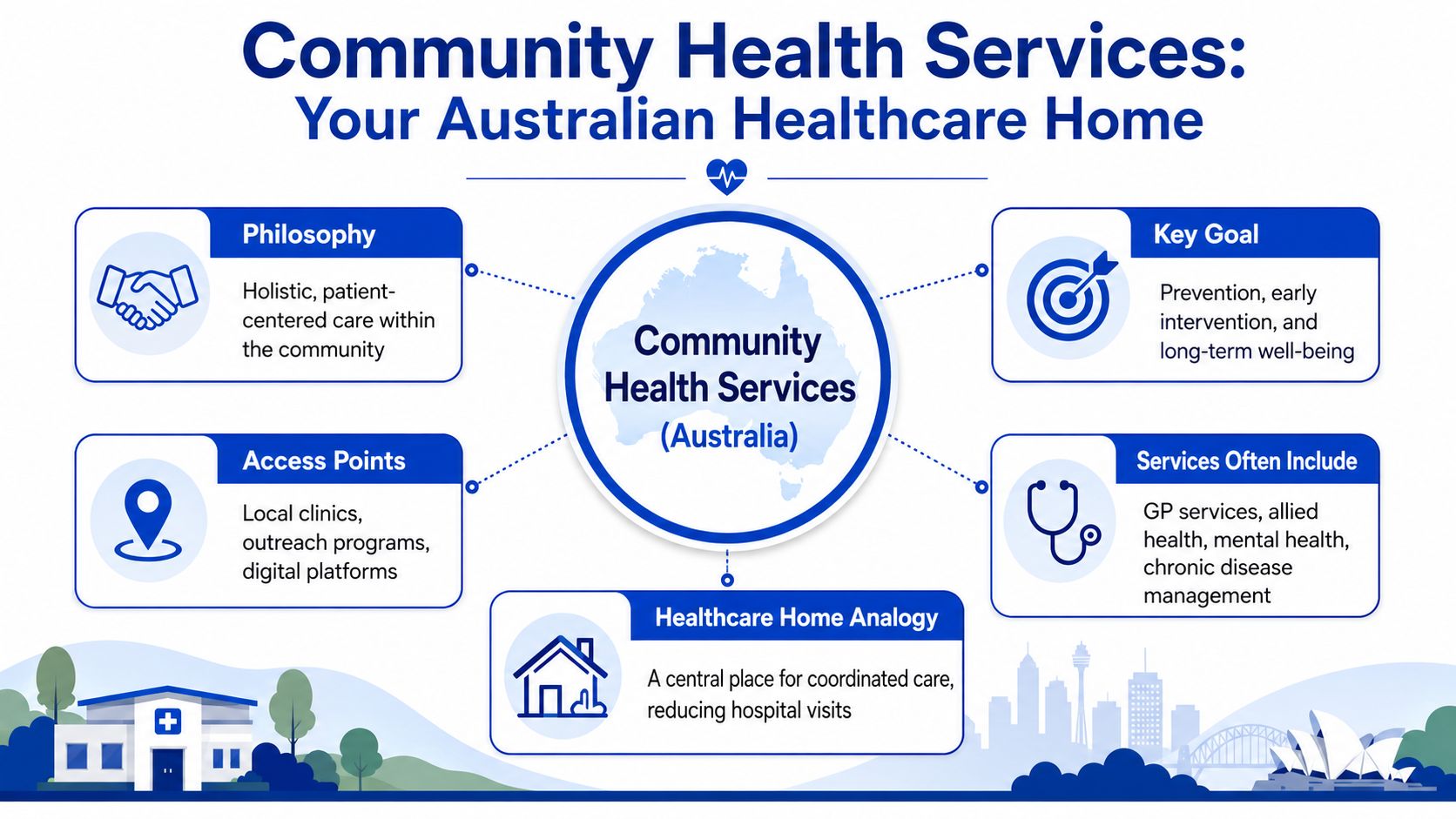
In Australia, community health services are built around care outside the hospital system. The focus is prevention, early intervention, and chronic disease management delivered in the places people live, work, and recover. That might be a local clinic, an outreach service, or a care pathway that links several providers around one person's needs.
Healthcare scaffolding close to home
One useful way to think about community health services is as healthcare scaffolding. A hospital is there for acute episodes and major interventions. A GP is your central medical contact. Community health services sit around that structure and support what happens between crisis points.
That matters because many health problems aren't solved in one appointment. Arthritis, persistent back pain, reduced balance, postural strain, and long-term mobility issues usually need layered support. People often need assessment, practical education, graded exercise, help with daily routines, and sometimes allied health input that restores comfort and movement over time.
Australia's framework is explicit about this broader role. Community Health Services are designed to focus on preventive care and chronic disease management outside hospitals, and 78% of CHS funding is allocated to non-clinical drivers such as social determinants of health. A Victorian analysis also found that CHS programs embedding osteopathic and allied health guidance reduced disability days by 22% among older adults with arthritis.
Why social needs belong in health care
That funding split is important because pain and poor health don't exist in a vacuum. Housing instability, transport issues, isolation, financial stress, and difficulty accessing exercise spaces can all worsen physical symptoms. A person may need treatment for joint stiffness, but they may also need help getting to appointments, understanding exercises, or finding support that fits their budget and routine.
When community health is working properly, it doesn't stop at the sore body part. It asks better questions.
- Can the person get to care consistently
- Do they have a safe place to move and exercise
- Are they managing work, caregiving, or fatigue
- Do they need support beyond medication alone
Practical rule: If a service only treats symptoms and ignores the barriers around them, progress is usually slower and harder to maintain.
This is also where allied health deserves more attention. In many discussions about community health, people think first of nursing, vaccination, or social support. Those services are important. But for residents dealing with chronic pain, reduced mobility, and day-to-day functional limits, hands-on allied health care can be the difference between coping and steadily improving.
Common Types of Community Health Support
Community health services can feel broad until you break them into clear categories. Most residents won't need every type of support. They usually need the combination that fits their current problem, their medical background, and what's getting in the way of recovery.
Preventive and early support
This is the part of the system designed to catch problems before they become harder to manage. It can include health checks, education, advice about activity, falls prevention, and early support for pain or reduced movement.
These services suit people who are still functioning reasonably well but can tell something isn't right. They may be slowing down, becoming less active, or relying more on pain relief than they'd like.
Chronic condition care
This group is for longer-running issues that need regular review and a plan. Think arthritis, diabetes-related mobility decline, recurring back pain, or long-term postural strain from office and remote work.
What helps here is continuity. A one-off treatment rarely changes a chronic pattern on its own. Better results usually come from a mix of monitoring, education, movement progression, and clear self-management.
Allied health and hands-on care
Allied health often becomes relevant when pain changes how someone moves. They may start limping, avoiding stairs, guarding their lower back, or losing confidence with lifting, walking, turning, or getting out of bed. In these instances, osteopathy, physiotherapy, exercise physiology, podiatry, and similar services can play an important role.
Osteopathy is especially useful when the goal is to improve comfort and movement together. Treatment may include soft-tissue work, joint articulation, gentle mobilisation, and advice that helps the person move more freely at home and work. Some people also compare approaches by looking at hands-on rehabilitation equipment and treatment environments used in physical care settings, but the key question is simpler. Does the care match your body, your symptoms, and your daily life?

Community Health Services at a Glance
| Service Type | Primary Goal | Common Examples | Who It Helps |
|---|---|---|---|
| Preventive support | Reduce risk and catch issues early | Screening, education, movement advice, falls prevention | People noticing early stiffness, fatigue, balance change, or rising pain |
| Chronic condition care | Support long-term management | Care planning, regular reviews, self-management guidance | People with arthritis, ongoing pain, or complex health needs |
| Mental health support | Improve coping and overall wellbeing | Counselling, behavioural support, stress management | People whose pain, sleep, or mood are affecting daily function |
| Allied health | Restore function and reduce physical limitation | Osteopathy, physiotherapy, podiatry, exercise support | People with mobility loss, posture-related strain, joint stiffness, or recurring pain |
| Social and practical support | Remove non-medical barriers to care | Transport help, care coordination, referrals to local supports | People whose recovery is affected by access, routine, or social circumstances |
A useful way to choose is to start with the problem that affects your day most. If you can't move comfortably, allied health may be the missing piece. If your condition is medically complex, your GP and care planning may need to lead. If stress, fatigue, or access barriers are driving flare-ups, broader community support can matter just as much as treatment itself.
The Benefits of Using Local Health Services
Local care has a practical advantage. It fits into ordinary life. If treatment is too far away, too fragmented, or too hard to coordinate, people miss appointments, postpone help, and fall into a cycle of flare-up and recovery that never really settles.
Why integrated care works better
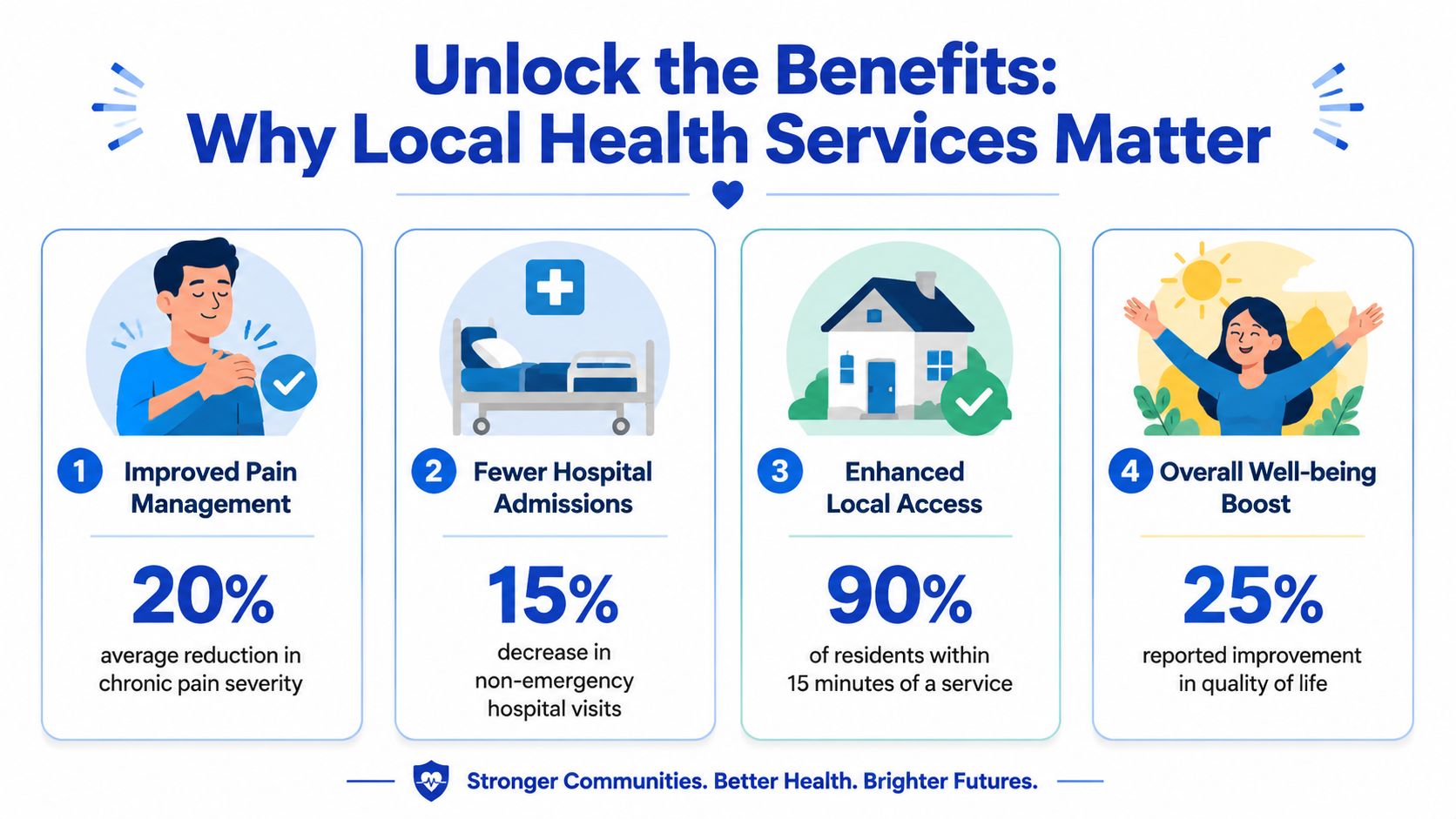
The strongest local models don't rely on one provider doing everything. They combine medical oversight with allied health, practical education, and follow-through. That matters for chronic joint stiffness and mobility problems, where progress often depends on more than a diagnosis.
According to NDIS data, CHS programs with multidisciplinary teams, including osteopaths, achieve a 40% higher rate of sustained mobility improvement in patients with chronic joint stiffness. The same dataset shows that collecting detailed feedback and tailoring care, such as home exercise guidance, increases patient adherence to self-care strategies by 55%.
Those two points line up with what clinicians see every week. Better outcomes usually come from coordinated care and specific follow-up. Generic advice like “keep active” rarely helps on its own. A person needs to know which movements are helpful, which loads to ease into, and how to modify activity when symptoms spike.
What patients notice day to day
The benefits are often less dramatic than a hospital intervention, but more meaningful in daily life. People notice that getting dressed is easier. They can turn their head while driving. They can walk longer before their hip tightens. They feel steadier using stairs. They stop planning every outing around whether sitting will hurt.
A good local care plan should make ordinary tasks feel more manageable, not just improve how you feel on the treatment table.
Local services also support consistency. If your care team is nearby and communicates clearly, it's easier to keep momentum. That can include reviewing your response to treatment, refining home exercises, or adding another service if one approach isn't enough. Some residents also benefit from complementary hands-on support such as remedial massage and muscle therapy approaches used for soft-tissue tension, especially when muscle guarding is part of the problem.
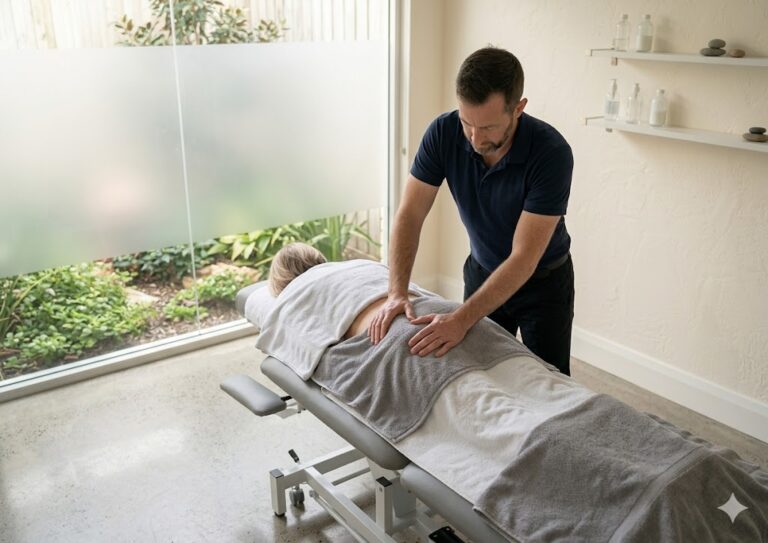
What doesn't work as well is isolated care with no review. A single appointment can provide relief, but longer-term mobility gains usually come from a plan that's adjusted as your body changes.
How to Access Services in Your Community
Getting started is often simpler than people expect, but it helps to know which doorway to use first.
Start with the right doorway
If your pain is new, worsening quickly, linked to trauma, or accompanied by symptoms that worry you, start with your GP. That gives you a medical review and helps rule out problems that need urgent investigation. Your GP can also guide referrals if your situation involves multiple conditions, medication review, or broader care planning.
If the issue is familiar and clearly musculoskeletal, such as recurring back stiffness, neck tension, posture-related pain, or joint restriction, many allied health services can also be accessed directly. That can be appropriate when you're seeking assessment, hands-on care, and movement advice for a non-emergency problem.
A simple pathway looks like this:
Notice the pattern
Is the problem affecting walking, sleep, work, exercise, or confidence in movement?Choose the first contact
GP for medical screening or complex care. Direct allied health booking for a straightforward mobility or pain issue.Ask what the plan is
You want more than symptom naming. Ask what treatment is proposed, what you should do at home, and when progress should be reviewed.Track response over time
Good care changes with your symptoms. If you're not improving, the plan should be adjusted.
Questions worth asking before you book
Not all services are equally useful for every patient. Ask practical questions.
What conditions do you commonly see
This matters if you have arthritis, postural strain, persistent back pain, or age-related stiffness.What does treatment involve
Some people want gentle manual care. Others want a stronger exercise focus. Most do best with a thoughtful mix.Will I get home advice
The best appointments usually include something you can apply between visits.
If a provider can't explain how treatment connects to your daily activities, the care may be too generic for a chronic problem.
For a quick overview of how local care pathways are often described to the public, this short video is a helpful starting point.
When direct booking makes sense
Direct booking is often a good option when you already know the problem is movement-related and you want practical help sooner rather than later. That may include long hours at a desk, stiffness after sport, recurring neck and shoulder tension, or difficulty staying active because of manageable but persistent pain.
What matters most is choosing care that is local, clear, and responsive. If the problem turns out to need broader medical input, a good practitioner will tell you.
Your Next Step to Better Health in Bayside
For many Bayside residents, the hardest part isn't deciding whether pain matters. It's knowing where to go when the problem is real, persistent, and not severe enough for hospital care. Community health services are meant to support exactly that space. They help people act earlier, stay mobile, and avoid letting a manageable issue become a much bigger one.
There's also a clear gap in the system. A 2025 Australian report noted that only 12% of community health centres offer any form of non-pharmacological pain management, even though manual therapy can reduce reliance on medication for chronic pain. That means many people still have to look beyond standard public pathways if they want hands-on, movement-focused support for back pain, postural strain, arthritis, or joint stiffness.
For local residents, that makes access to experienced allied health even more important. If you want a sense of what a welcoming local osteopathic setting looks like, this Bayside Osteopathic Health website view gives a clear picture of the kind of care environment many people find reassuring.
The key message is simple. You don't have to wait until pain becomes disabling before seeking help. Local, practical, person-centred care is available, and for many people, it starts with the right allied health support close to home.
If you're ready to explore gentle, hands-on support for back pain, neck pain, joint stiffness, postural strain, or arthritis-related discomfort, Bayside Osteopathic Health offers personalised osteopathic care for the local community. The clinic focuses on improving mobility, easing pain, and giving you practical self-care strategies you can use between visits. If you'd like trustworthy local help, you can learn more or book an appointment through the website.