

You wake up with a stiff lower back, try to turn to get out of bed, and get that sharp, catching pain that makes you pause before the day has even started. A drive across Bayside, a desk shift, lifting groceries, or reaching for the kids can all feel harder when the small joints in your spine are irritated. Facet joint pain relief matters because this isn't just ordinary soreness, it's a common spinal pain pattern that needs the right kind of care, not guesswork.
In Australia, 16% of adults aged 45 and over were living with chronic back pain in 2022, and back problems were among the leading causes of disability burden. Facetogenic pain also accounts for 15% to 41% of chronic low back pain cases in published literature, with controlled diagnostic studies finding it in up to 27% to 40% of patients with chronic low back pain (Australian Institute of Health and Welfare and facetogenic pain review). That's why the same “rest and hope it settles” approach often falls short.
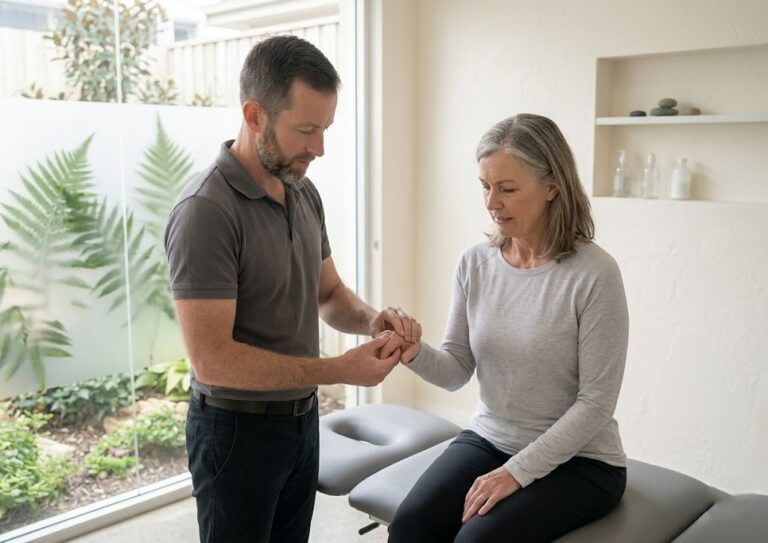
For Bayside residents, the practical question is simple. What can you do at home, what should you avoid, and when should you move from self-care to a clinician-guided plan? The answer starts with knowing whether the pain is coming from the facet joints at all, because the right relief strategy depends on the source.
Table of Contents
- Introduction to Facet Joint Pain and Its Impact
- Understanding Facet Joint Anatomy Causes and Symptoms
- Diagnosing Facet Joint Pain and Recognising Red Flags
- Self Care Posture Adjustments and Targeted Exercises
- Manual Osteopathic Techniques and Pain Management Options
- Interventional Treatments Injections Surgery and Professional Help
Introduction to Facet Joint Pain and Its Impact
A stiff back can start with a small, easy-to-miss problem. Facet joints are the small guiding joints at the back of the spine, and when they become irritated, movement stops feeling smooth and starts feeling guarded, like a hinge that no longer swings freely. You may notice that bending backwards feels worse, sitting for too long tightens everything up, or standing upright after rest makes you wince. Arthritis and joint mobility changes that can affect spinal movement often explain why this pattern feels so persistent.
Why this pain pattern keeps catching people out
Facet pain often feels local and stubborn rather than dramatic. It can sit in the lower back, spread into the buttocks, or travel into the thigh without behaving like a classic nerve pinch. That is one reason people mistake it for a muscle strain and keep repeating the same triggers day after day.
Practical rule: pain that changes with spinal position, especially extension and twisting, deserves a closer look than a generic back rub.
A simple home plan often starts with the basics. Reduce the movements that keep squeezing the irritated joints, then build back comfort with gentler positions, lighter daily tasks, and short bouts of movement that do not provoke the area. For Bayside residents, that usually means matching the plan to work demands, driving, housework, and the way you sit or lift at home. If symptoms keep returning, a local osteopath can help you decide whether self-care is enough or whether a Medicare-eligible pathway, such as a general practitioner review and referral, is the better next step.
Because this pain pattern can become long-lasting, the goal is not only to calm a flare. The goal is to reduce the load on the irritated joints, restore comfortable movement, and stop the same mechanical stress from building again. For older adults, office workers, and people who do regular lifting, that usually means a blend of posture changes, movement work, and a clear plan for escalation if self-care is not enough.
Understanding Facet Joint Anatomy Causes and Symptoms
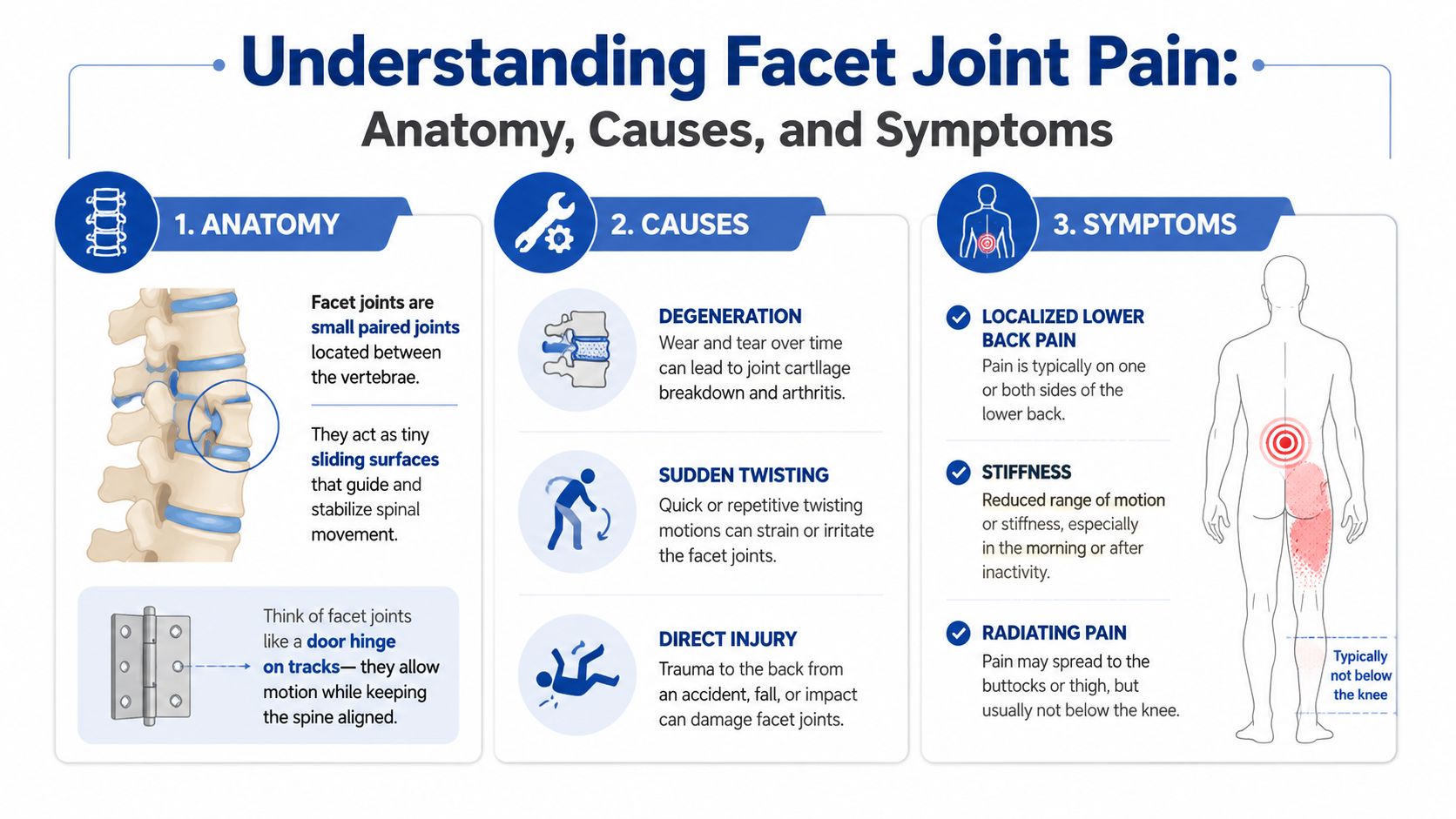
Facet joints sit at the back of each spinal level and help guide movement while also limiting how far the spine can glide. The disc sits more like a cushion in front, while the facet joints steady the motion behind it. When those joints are smooth and well matched, turning and bending feel coordinated. When they become irritated, the segment often tightens and starts to guard.

What usually irritates the joint
Wear and tear is the common explanation, but it is not the only one. A sudden twist, a poor lift, repeated extension at work, or a flare after long sitting can all make the joint surface and the nearby pain-sensitive structures unhappy. Once those tissues are sensitised, even ordinary movements can feel sharp.
For Bayside residents, the trigger is often buried in daily routine. A commute, time at a desk, housework, or lifting from the car can keep the same segment under load until it protests. That is why a home-care plan needs to match the way you move at home and at work, not just the name of the pain.
The symptom pattern matters more than the word “arthritis” on its own. Many people with visible joint change on scans do not hurt much, and some people with very real pain have scans that look disappointing or even normal. That is why movement behaviour often tells you more than a picture does, and why a local osteopath may ask about the exact position that starts the ache, not just where it sits.
If symptoms keep returning, a nearby clinic can also help you work out whether self-care is enough or whether a Medicare-eligible pathway, such as a general practitioner review and referral, makes more sense. That step is often missed in generic guides, yet it can matter when the pain keeps cycling back.
Clues that point toward facet pain
Common clues include localised low back pain, stiffness when you first get moving, and pain that worsens when you arch backwards or rotate. Some people feel referral into the buttocks or upper thigh, but the pain usually stays fairly regional rather than shooting below the knee. That pattern is useful because it helps separate facet irritation from a more nerve-dominant problem.
- Extension hurts: bending backwards, standing upright for a long time, or arching during exercise can pinch the irritated joint.
- Twisting aggravates it: turning to reach the back seat of the car or unload shopping can trigger a jab.
- Flexion often feels easier: leaning forward slightly, sitting with support, or resting in a gentle curl may reduce the load.
A good clue is the movement that makes you guard. If one direction keeps reproducing the same familiar pain, that pattern is worth assessing carefully.
Diagnosing Facet Joint Pain and Recognising Red Flags
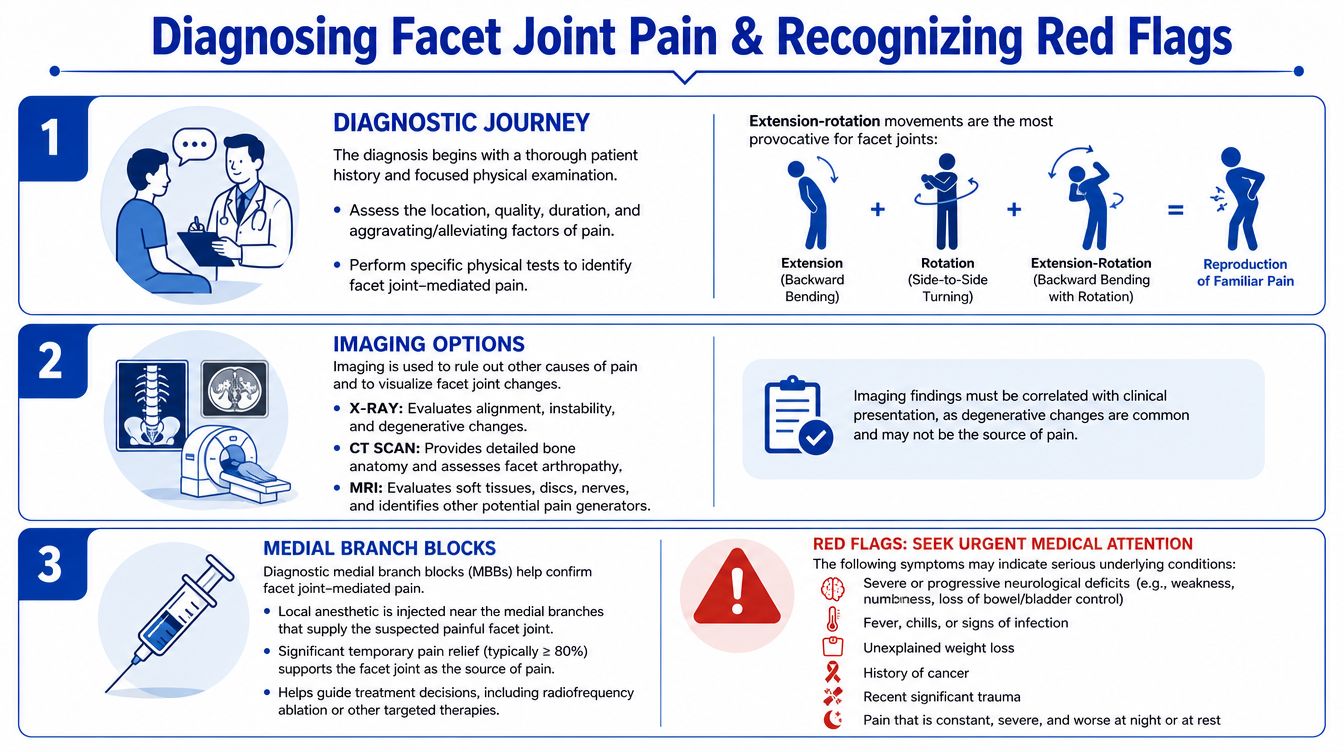
Diagnosis starts with the story, not the scan. A clinician listens to where the pain sits, which movements make it worse, what eases it, and whether anything unusual is happening elsewhere in the body. Physical tests often include extension-rotation movements, because they can reproduce the familiar pain pattern when the facet joints are involved.
How clinicians narrow it down
Imaging can help rule out other problems or show joint changes, but it doesn't always answer the main question. That's where medial branch blocks matter. These are image-guided local anaesthetic blocks that temporarily numb the nerves carrying pain from the facet joints, so the response helps confirm whether the facet joint is really the pain source.
In practical terms, the test is about cause and effect. If pain eases clearly after the block, the facet joint becomes a stronger suspect. If it doesn't, the clinician has to look harder at other structures.
Red flags that need urgent attention
Some symptoms are not suitable for home management or routine booking.
- New severe weakness or numbness
- Fever or feeling systemically unwell
- Unexplained weight loss
- Night pain that doesn't ease with rest
- Loss of bladder or bowel control
If any of those show up, seek urgent medical assessment. They can point to problems that need prompt investigation rather than routine mechanical care.
Self Care Posture Adjustments and Targeted Exercises
The first home change is often the most effective. If your spine keeps living in the same loaded position all day, even the best treatment plan will struggle to hold. Small adjustments in how you sit, stand, lift, and move can take pressure off the irritated joints before they keep protesting.

Make the day easier on the joint
Set your screen high enough that you're not craning forward, keep your chair supportive through the lower back, and place your keyboard so your shoulders aren't shrugged. When lifting, bend through the hips and knees, keep the object close, and avoid twisting while you rise. Those habits sound simple, but they reduce the repeated compression that often keeps facet pain smouldering.
Use movement that calms rather than flares
A gentle mobility circuit works better than forcing through pain. Try a slow cat-cow pattern, but keep the range small and stop before the end-range pinch. If your back tolerates it, a modified plank on a bench or wall can help build support without cranking into extension, and a glute bridge can help the pelvis share load more evenly.
- Cat-cow with control: move slowly, breathe out as you round, and keep the motion smooth.
- Modified plank: hold a short, steady line from head to knees or hands to bench.
- Glute bridge: lift through the hips, pause briefly, and lower without jerking.
Keep the rule simple, mild effort is useful, sharp pain isn't. If an exercise keeps the same ache alive for hours, scale it back.
Manual Osteopathic Techniques and Pain Management Options
Hands-on care is most useful when it supports movement rather than chasing a quick fix. Gentle soft tissue work can settle the guarding muscles around the irritated joint, joint articulation can reduce stiffness, and careful mobilisation can help the spine move with less resistance. That combination often makes home exercise feel possible again instead of threatening.
What matters is the match between the technique and the presentation. A sore, guarded back usually responds better to calm, graded treatment than to aggressive force. The aim is to lower the protective tone around the joint so the body stops bracing against everyday movement.
Pain management can also include simple supports such as heat, short periods of cold, and over-the-counter analgesics when they're appropriate for the person. These are helpers, not the whole plan. They can take the edge off long enough for mobility work and posture changes to do their job.
Recent reviews show that 66% of cervical radiofrequency ablation patients achieved complete pain relief, often lasting months to over a year (review of cervical radiofrequency outcomes). That figure is about a neck procedure rather than every lumbar case, but it shows an important point, longer-acting relief is possible when the pain generator is identified well and treated precisely.
Interventional Treatments Injections Surgery and Professional Help
A face-to-face review becomes important when pain keeps returning in the same stiff, catching pattern even after home care has been tried properly. In Australian practice, treatment usually moves in steps, not leaps. Conservative care comes first, then diagnostic blocks if pain keeps persisting, and then radiofrequency if the block response is positive, which reflects guideline-based stepwise treatment (guideline review). That sequence matters because it keeps the procedure tied to a clear pain source and helps avoid treatment that is not likely to help.
How the main procedural options differ
Therapeutic facet joint blocks can give immediate pain reduction in 74% of patients, while 33% maintained a helpful medium-term response, defined as more than 50% pain reduction for over 3 months (ASIPP review). The same review also reported Australian Medicare data showing lumbar facet joint injection use rising from 201 to 251 sessions per 100,000 enrollees, a 24.9% overall increase, or about 2.5% annual growth (ASIPP review). In practical terms, these procedures are not the first thing to reach for, but they can help when the pain pattern has been carefully identified and simpler care has not held the result.
| Treatment | Immediate Success Rate | Medium Term Response | Sessions per 100,000 |
|---|---|---|---|
| Therapeutic facet joint blocks | 74% | 33% maintained benefit for over 3 months | Not stated in the verified data |
| Lumbar facet joint injections use in Medicare data | Not stated in the verified data | Not stated in the verified data | 201 to 251 |
When to escalate
If home care helps only a little, if the pain keeps coming back, or if the exam points strongly to the facet joints but the symptoms will not settle, a professional review is the next step. A clinician can decide whether a diagnostic block, continued conservative care, or radiofrequency makes the most sense for your situation. For Bayside residents, the referral path often starts with a local GP or osteopath who can explain whether the problem fits a Medicare Chronic Disease Management plan, what the likely out-of-pocket gap may be, and whether the next step should be imaging, a specialist opinion, or a trial of guided injections. Asking those questions early helps you choose the right clinic pathway instead of guessing which service is covered in the same way.
If you are in Bayside and your back pain keeps returning with the same stiff, catching pattern, book an assessment with Bayside Osteopathic Health. Their gentle hands-on approach, movement advice, and practical self-care guidance can help you build a plan around facet joint pain relief without feeling pushed into unnecessary treatment.