

Golfer's elbow, or medial epicondylitis, is an overuse injury of the forearm tendons on the inner elbow that causes pain with gripping and wrist bending, and it affects far more than golfers. In Australian amateur golf injury data, the elbow accounts for 15.3% of reported injuries in one analysis and the elbow or forearm for 17.2% in a later follow-up.
You may notice it while reaching for the kettle, lifting a child, turning a screwdriver or finishing a gym session. The pain can feel strangely disproportionate to the task, especially when you haven't played golf for months. That's because golfer's elbow pain usually reflects a mismatch between how much repetitive force your forearm is handling and how much recovery and strength the tendon has available.
A Bayside osteopath will often look beyond the painful spot. Your work habits, grip, shoulder movement, neck position, gym programming and golf technique can all influence the load reaching the inner elbow. The aim isn't just to rest until the pain fades. It's to calm the irritation, rebuild capacity and return you to normal movement without repeatedly provoking the tendon.
Table of Contents
- What Is Golfer's Elbow Pain Really About
- Understanding the Anatomy Behind Inner Elbow Pain
- Recognising Symptoms and Knowing When to Seek Help
- Evidence-Based Self-Care and Rehab Strategies
- How Osteopathic Care Addresses Root Causes
- When to See a Practitioner and Accessing Care
- Prevention and Long-Term Elbow Health
What Is Golfer's Elbow Pain Really About
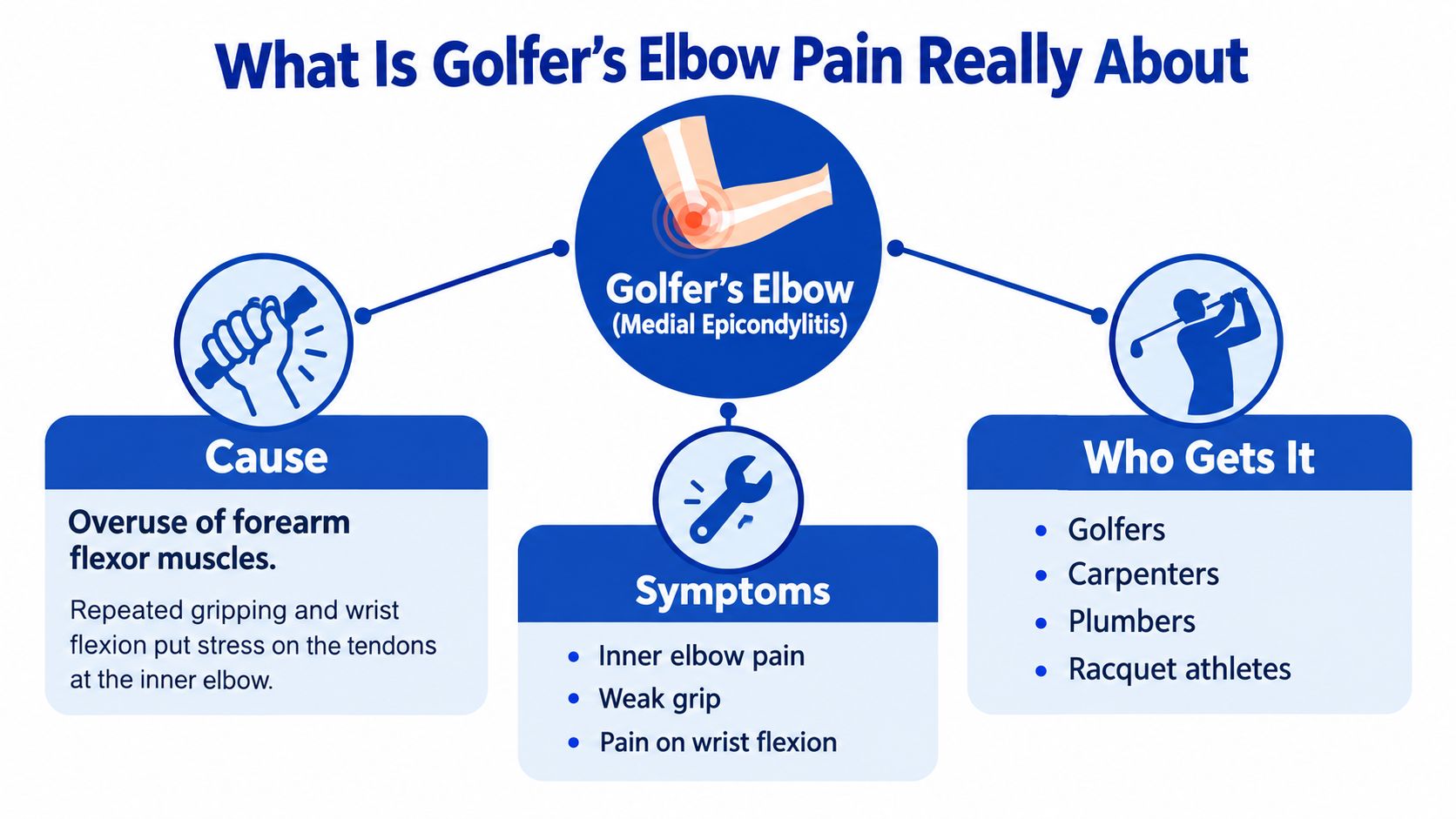
Golfer's elbow pain is a tendon overload problem at the inner elbow, and golf is only one possible source of that load. The condition, medically called medial epicondylitis or medial elbow tendinopathy, develops where forearm tendons attach to the medial epicondyle, the bony prominence on the inside of the elbow. These tendons help bend the wrist and fingers and rotate the forearm, so gripping, pulling and forceful wrist movements can make everyday tasks painful.
A kettle, phone, shopping bag or heavy drawer can expose the problem. The same applies to a screwdriver, wrench or barbell. Pain can appear even when you have not played golf recently because the tendon responds to the total amount of repetitive forearm work, not to the label on the activity.
The name can send people in the wrong direction. Golf involves repeated gripping and impact, but carpentry, plumbing, gym training and desk work can create similar demands. A sudden increase in gym volume, long days with hand tools, extended mouse use or poor control during lifting may all raise the load reaching the inner elbow. The practical issue is a mismatch between current tendon capacity and the amount, speed or frequency of loading.
Why the Australian data matters
Australian golf injury research shows how frequently the elbow is involved in a sport built around swinging and gripping. One analysis found that the elbow represented 15.3% of reported golf injuries, making it the second most common injury site after the lower back. A later follow-up found that the elbow and forearm represented 17.2% of injuries, as reported in the Australian one-year follow-up study of amateur golf injuries.
These figures do not mean every elbow complaint is golfer's elbow. They show that repeated upper-limb loading can leave the elbow vulnerable. For people who do not play golf, occupational and recreational tasks can create the same pattern.
Symptoms often build gradually rather than following one dramatic incident. The original activity may stop, yet the tendon remains sore because other daily tasks continue to apply a similar load. Effective management usually involves reducing the most aggravating demands temporarily, then rebuilding strength and tolerance. Complete rest can settle symptoms briefly, but progressive loading is what helps the tendon handle normal work, training and sport again.
Understanding the Anatomy Behind Inner Elbow Pain
If gripping a tool, carrying a child or training with a bar leaves the inside of your elbow sore, the problem may be concentrated at a small tendon attachment rather than caused by golf. The medial elbow is a meeting point for several forearm muscles. Their tendons attach to the medial epicondyle, the firm bony prominence on the inside of the joint. These muscles flex the wrist, bend the fingers and turn the palm down, while also helping the wrist stay steady during lifting and pulling.
The flexor-pronator tendons anchor five muscles to a coin-sized area on the medial epicondyle. Repeated wrist flexion with a clenched grip can therefore concentrate force on a small attachment. The tendon may become less tolerant of load without being torn, particularly when work, gym training or household tasks keep repeating the same demand.
The load travels through the whole movement
Golfer's elbow is rarely about golf itself. The same forearm loading can come from using a screwdriver, gripping a mouse for long periods, lifting with the wrist bent, or holding a heavy dumbbell with a tight grip. In the Australian cohort, poor technique accounted for 44.8% of reported injury mechanisms and overuse for 25.3%, as documented in the open-access Australian golf injury survey.pdf). Those findings support changing how force is applied during work and exercise, not merely reducing golf.
A practical test can help identify which part of the forearm is being provoked. Resisted wrist flexion loads the muscles that bend the wrist towards the palm, while resisted pronation tests the muscles that rotate the palm down. Pain with one movement more than the other can guide an examination, although it cannot confirm the diagnosis on its own.
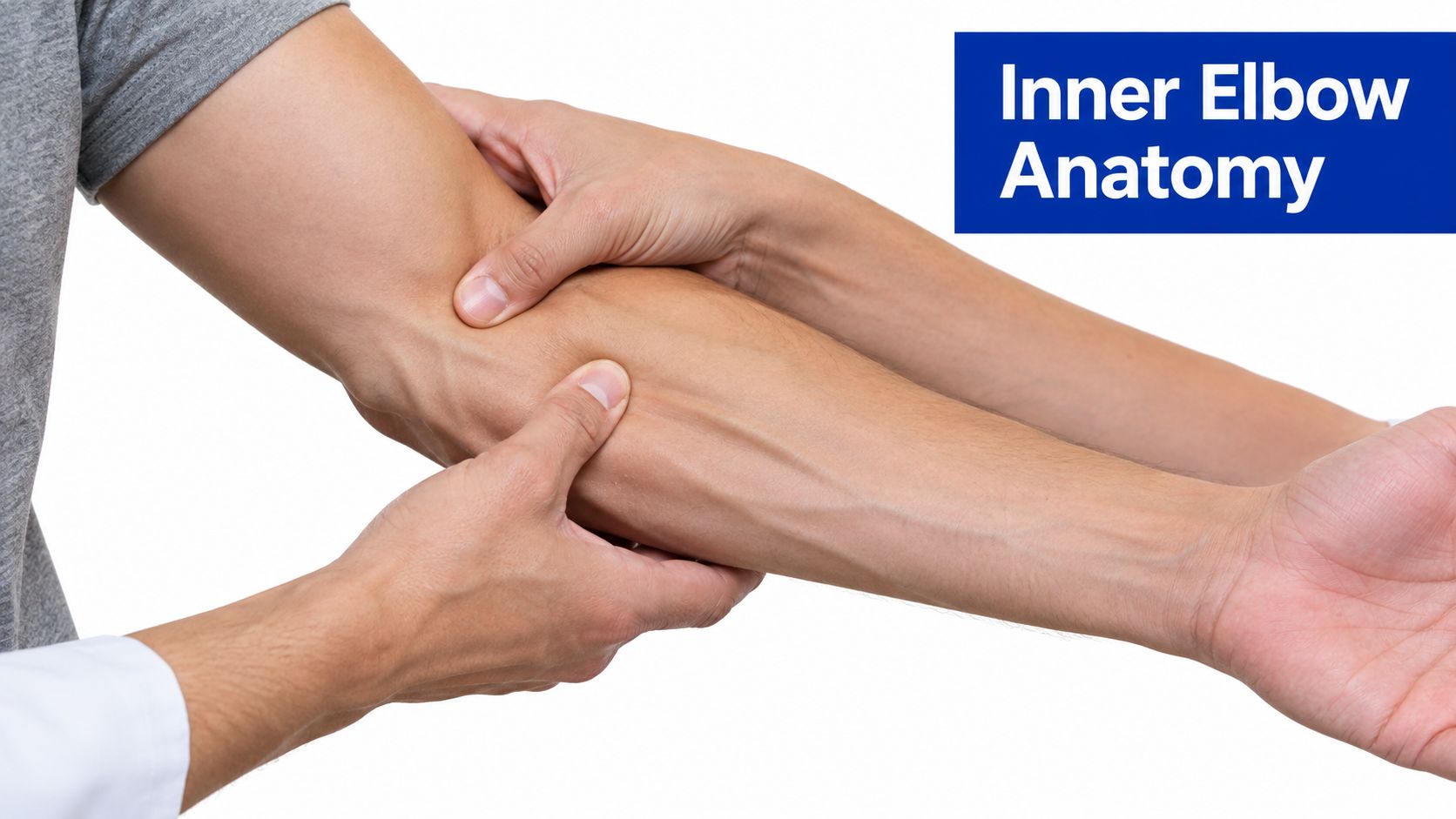
Manual treatment may ease local tension or improve movement for a time, but it does not remove the task that keeps irritating the tendon. Reduce the most painful grip, change the wrist position, or lower the load temporarily, then rebuild capacity with gradual strengthening. Complete rest can reduce symptoms briefly, while planned loading helps the elbow tolerate normal work, training and sport again.
Why pain can spread
Pain may stay near the medial epicondyle or extend down the inner forearm towards the wrist and hand. This pattern does not by itself show severe tendon damage. Muscles, nerves and joints occupy nearby regions, so assessment should consider strength, sensation, elbow motion and neck-related symptoms.
An osteopath or other qualified practitioner can compare resisted wrist flexion with pronation, assess grip and shoulder mechanics, and screen nearby nerve sensitivity. This helps distinguish tendon pain from joint irritation, nerve involvement or pain referred from the neck.
Recognising Symptoms and Knowing When to Seek Help
Golfer's elbow usually announces itself through a familiar cluster of symptoms rather than one isolated sign. Use the following pattern as a guide, not a substitute for an examination.
- Inner elbow tenderness: Pressing around the medial epicondyle may reproduce the ache, especially after a day of gripping or lifting.
- Pain with grip: Opening jars, carrying bags, holding a barbell or squeezing a tool can bring it on.
- Pain with wrist bending: Bending the wrist towards the palm against resistance may aggravate the tendon.
- Reduced confidence or strength: Your hand may feel weak, or you may unconsciously avoid using it because you expect pain.
- Morning stiffness: The elbow can feel tight after inactivity, then become more irritable as the day's tasks accumulate.
Australian clinical guidance places golfer's elbow alongside tennis elbow within the broader, recognised category of elbow tendinopathy. The NSW Agency for Clinical Innovation guidance on elbow tendinopathy is useful because it frames the problem as tendon pain around the elbow, not as an injury reserved for people who play a particular sport.
A simple decision guide
If symptoms are mild and clearly linked to a recent increase in gripping or training, begin with activity modification and gentle, tolerable loading. Keep the elbow moving, reduce the most provocative task and monitor whether everyday function improves.
Book an assessment sooner if the pain is interfering with work, sleep, lifting or basic household tasks. You should also seek professional advice if you can't identify a clear trigger, the pain followed a significant injury, or your grip is deteriorating.
Numbness, tingling, unusual hand weakness, marked swelling, a visibly deformed joint, severe night pain or rapidly worsening symptoms deserve prompt medical assessment. Persistent pain despite sensible self-care also warrants a review, because another structure may be involved or your current loading plan may be mismatched to your capacity.
Diagnosis commonly comes from the history and physical examination. Imaging isn't automatically necessary, but a practitioner may recommend further investigation when the presentation is unusual, severe or not responding as expected.
Evidence-Based Self-Care and Rehab Strategies
Complete rest sounds logical, but it often creates a difficult return. The tendon loses exposure to useful load, everyday demands then feel unexpectedly heavy, and the original work or training pattern resumes without improved capacity. A better approach is relative rest, which removes the sharpest aggravating loads while keeping the arm active.
Start with a manageable baseline
For several days, reduce the tasks that produce a clear flare. You might use a lighter tool, alternate hands where practical, shorten a gym set, reduce the force of your grip or take brief movement breaks during computer work. You don't have to stop every activity. The useful question is whether the elbow settles after the task and feels no worse across the following day.
Try an isometric exercise first. Rest your forearm on a bench or table, keep the wrist in a comfortable position and press gently against your opposite hand without allowing movement. Hold a tolerable effort, relax, and repeat. If this reduces confidence or increases pain, lower the effort rather than forcing through it.
Gentle stretching can complement strengthening. With the elbow straight and palm facing up, use the other hand to extend the wrist until you feel a mild forearm stretch. It should feel controlled, not sharp, burning or increasingly painful. Stretching alone rarely rebuilds tendon capacity, so treat it as preparation for movement rather than the whole rehabilitation plan.
Progress strength gradually
As symptoms become more settled, introduce light wrist flexion and forearm rotation exercises. A small dumbbell, resistance band or even a partially filled water bottle can provide a starting point. Move slowly, keep the wrist aligned and increase the challenge only when the current level feels manageable during the exercise and afterwards.
A practical progression might look like this:
- Isometric control: Hold a light, steady contraction without visible wrist movement.
- Slow lifting and lowering: Use a light resistance and control both directions.
- Functional grip: Carry, pull or handle equipment with a relaxed wrist and less excessive squeezing.
- Task exposure: Reintroduce work, gym or golf demands in short, planned doses.
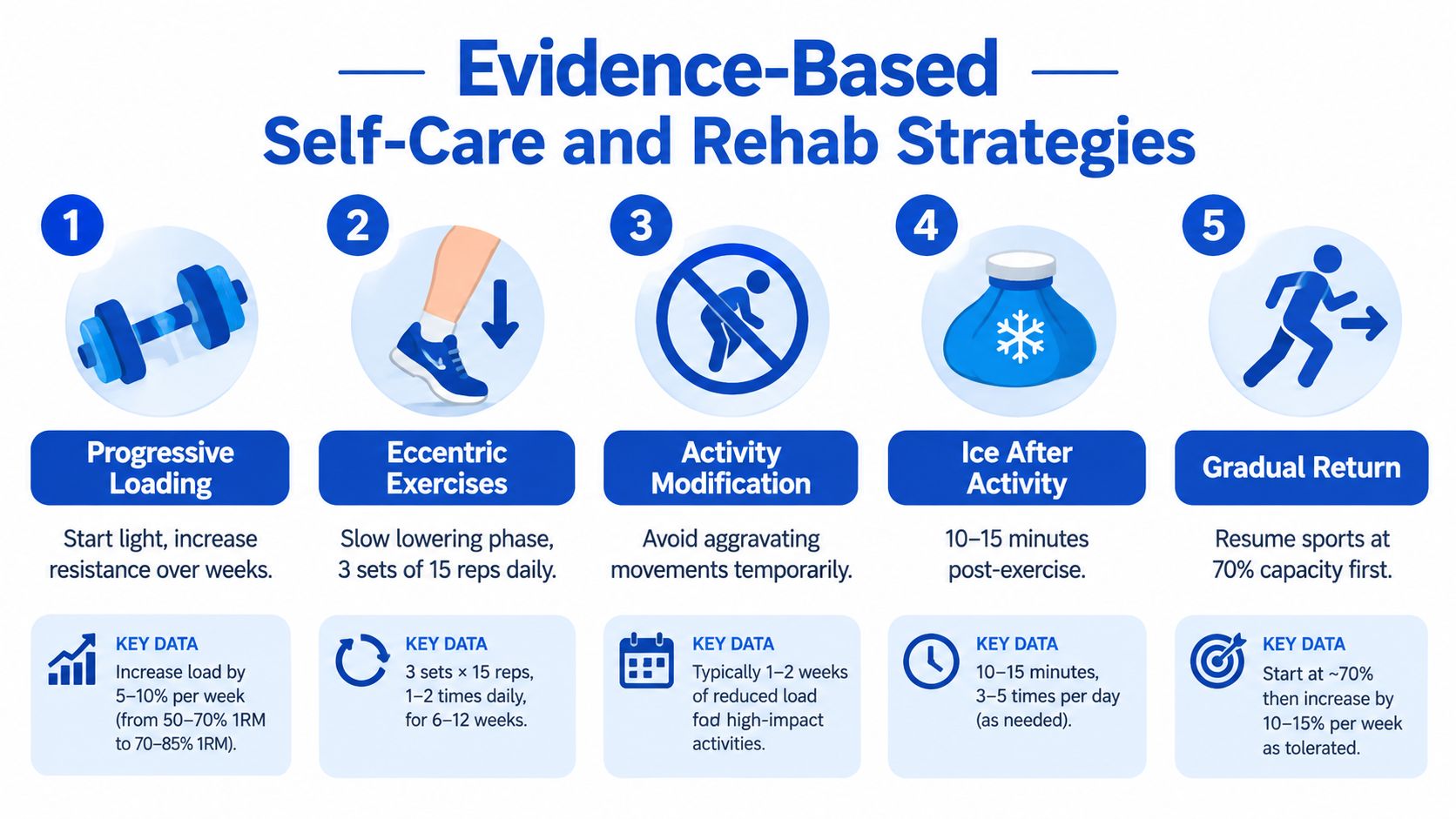
The prescribed infographic includes specific exercise and return-to-activity suggestions, but those details shouldn't override your symptoms or an individual assessment. A programme that suits a recreational golfer may not suit a tradesperson whose forearm is exposed throughout the day.
Ice can temporarily soothe a flare after activity, while heat may make a stiff forearm feel more comfortable before movement. Neither replaces progressive rehabilitation. A brace can reduce strain during a short period of unavoidable work, but relying on it indefinitely may leave the underlying capacity problem unchanged. For broader guidance on managing painful movement, see this joint pain treatment resource.
A visual demonstration can help you check your technique before adding resistance.
How Osteopathic Care Addresses Root Causes
A painful inner elbow is often responding to repeated forearm loading rather than golf itself. Work tasks, gym exercises, gripping habits and fixed wrist positions can keep the tendon irritated. Osteopathic assessment looks at what the elbow is being asked to manage, then identifies practical ways to reduce unnecessary strain while maintaining useful movement.
Assessment starts with your actual routine
Describe a normal day in detail: carrying materials, using vibrating tools, typing with a fixed wrist, lifting children or training through heavy pulling exercises. The practitioner can compare those demands with your painful movements and examine how the shoulder, neck, upper back, elbow and wrist contribute to each task.
For example, limited shoulder external rotation during a simulated lift, or a flexed wrist during typing, can be measured and linked to greater load at the medial epicondyle. That finding can shape the exercise prescription and guide changes to the task, rather than just telling you to rest.
The elbow remains part of the problem, even when another movement restriction contributes to its workload. A golfer may need swing-load advice and a review of grip mechanics. A gym-goer may need to change exercise selection, volume or wrist position. A desk worker may benefit from adjusting how the forearm rests during extended computer use.
As the Australian sports injury research paper shows, elbow load is often a technique and exposure issue. The same principle guides osteopathic assessment of work and gym loading.
Hands-on care has a specific role
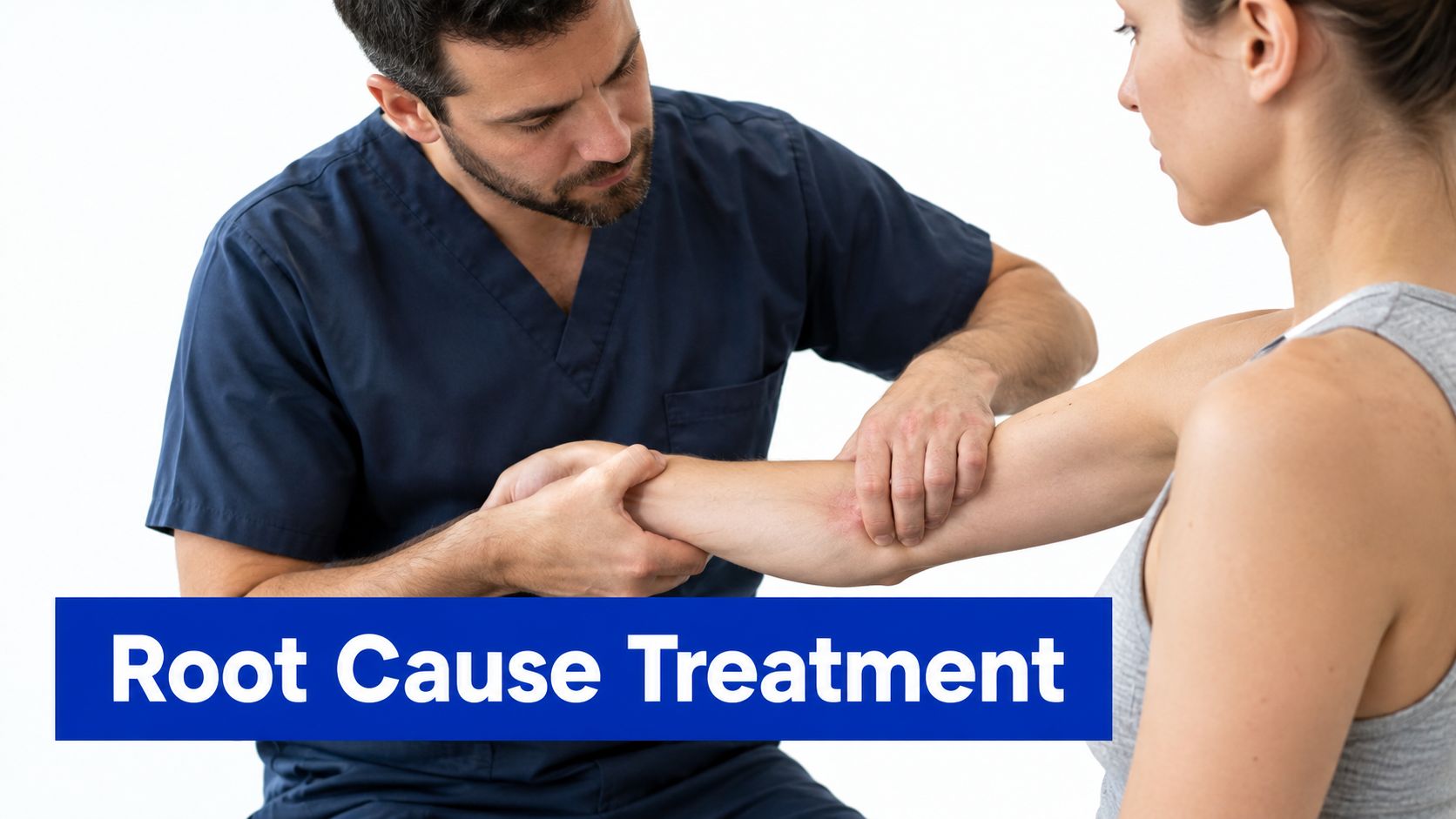
Osteopathic treatment may include soft-tissue work for the forearm and surrounding muscles, gentle joint articulation, and mobilisation of the elbow, wrist, shoulder or upper back. These techniques can reduce protective tension and improve movement, making it easier to complete the strengthening work that builds tendon capacity.
Hands-on treatment works best as part of a load-management plan. It may help you move more comfortably and recognise aggravating factors, while the practitioner provides workplace modifications, lifting suggestions and a graded return to sport or training. Rest may calm a flare, but progressive exposure is what helps restore capacity.
For people in Bayside, Bayside Osteopathic Health offers assessment, gentle manual therapy and personalised movement advice for musculoskeletal problems, including elbow-related overuse presentations. This soft-tissue therapy and physiotherapy rehabilitation comparison can help you compare approaches when deciding which style of care suits your needs.

When to See a Practitioner and Accessing Care
You don't need to wait until elbow pain becomes disabling before asking for help. Early assessment can clarify whether the tendon is the main source, identify the load that keeps it irritated and give you a plan that fits your work and home life.
Professional care is particularly sensible when:
- Daily tasks are changing: You avoid lifting, driving, cooking, dressing or using tools because of the elbow.
- Work is becoming difficult: You can't complete normal duties without compensating with the other arm or taking repeated breaks.
- Self-care has stalled: Activity modification and gentle exercises haven't produced a clear improvement.
- The diagnosis is uncertain: Neck symptoms, tingling, hand weakness or pain after trauma suggest you shouldn't assume it is simple golfer's elbow.
- The problem keeps returning: Repeated flare-ups usually mean the progression, technique or exposure pattern needs review.
At a first osteopathic appointment, expect questions about when the pain began, what makes it worse, your work and exercise routine, previous injuries and any medical conditions or medication. The physical examination may include grip testing, resisted wrist movement, joint range, nerve screening and assessment of the shoulder and neck.
Your plan should be practical rather than generic. It may combine hands-on treatment, an exercise progression, temporary changes to work or training and clear criteria for returning to golf, lifting or other activities. The right amount of treatment varies. Some people need education and a few targeted adjustments, while others benefit from closer follow-up while they rebuild strength.
Australian patients may be able to access osteopathic care through Medicare where an eligible chronic disease management plan applies. Eligibility and referral arrangements depend on your circumstances, so check with your GP, Medicare or the practice before booking on that basis.
Seeking an assessment isn't an admission that your elbow is fragile. It's a way to replace guesswork with a plan, particularly when pain is affecting the activities that matter to you.
Prevention and Long-Term Elbow Health
Rest may settle symptoms, but it does not prepare the tendon for the demands that caused them. Long-term elbow health depends on matching your workload to current capacity, then building that capacity gradually.
Start by identifying repeated forearm loading across the whole week. A tradesperson might rotate demanding grips and choose tools that reduce unnecessary clenching. A gym-goer can prepare with easy forearm and shoulder movements before heavy pulling, pressing or carrying. At a desk, review how many uninterrupted hours your arm spends in one position, then change tasks or posture before discomfort builds.
For golfers, technique is part of prevention. A single coaching check on grip pressure and wrist position at impact may reduce forearm load more effectively than skipping weeks of play. Load management also needs to include work, gym training and sport. Increase total gripping volume by no more than 10% per week, and schedule one light day after a heavy gripping day so the tendon can adapt.
Notice the early warning signs
A mild ache during a new task is useful information. It can signal that workload rose too quickly, recovery has fallen or technique changed with fatigue. Reduce the most provocative element, keep the elbow moving comfortably and return to the last tolerable level before progressing again.
Use this posture and corporate ergonomics guide to review how your workstation positions the neck, shoulder and forearm. Small adjustments will not resolve every tendon problem, but they may reduce prolonged awkward loading.
Tendons adapt gradually. Consistent strengthening, varied movement and realistic recovery provide a better long-term approach than ignoring pain, stopping completely and restarting at the same intensity.
Bayside Osteopathic Health provides hands-on assessment, targeted treatment and progressive movement advice for golfer's elbow pain and other musculoskeletal problems. Visit Bayside Osteopathic Health to discuss your symptoms and book care suited to your work, training and daily activities.