
You wake up with the same stiff neck. By mid-morning, your lower back is grumbling again. You stretch, rub the sore spot, maybe change chairs, maybe blame the pillow. It settles for a bit, then returns. After a while, the pain starts to feel less like a single problem and more like an uninvited routine.
That's usually the moment a whole-person health assessment becomes useful.
For people dealing with recurring back pain, neck tension, joint stiffness, arthritis-related discomfort, or posture strain, the sore area often isn't the whole story. A shoulder can hurt because your upper back is rigid. A low back can flare because your hips don't move well. Headaches can be linked to breathing pattern, jaw tension, sleep habits, stress, desk setup, and how your body compensates through the day.
A standard medical appointment and an osteopathic assessment don't do the same job. Both matter, but they answer different questions. A medical check-up often focuses on diagnosis, medication needs, pathology, and whether anything serious needs urgent attention. An osteopathic assessment looks at how your body is functioning as a connected system, and what practical factors may be keeping pain going.
Table of Contents
- Going Beyond the Symptoms of Your Pain
- The Core Components of Your Assessment
- Your Assessment at Bayside Osteopathic Health
- Expected Benefits and Positive Outcomes
- A Checklist to See if This Is Right for You
- Your Next Steps to Better Movement and Wellbeing
Going Beyond the Symptoms of Your Pain
A lot of persistent pain follows a familiar pattern. You feel it in one place, so all your attention goes there. You massage the tight muscle, stretch the stiff joint, apply heat, and try to “fix” the exact spot that hurts. Sometimes that helps. Sometimes it doesn't.
When it doesn't, the issue is often broader than the symptom.
Think of a holistic health assessment like detective work. If a detective only looks at one clue, they'll miss the case. In the same way, if a practitioner only looks at the sore patch on your back, they can miss the chain of factors feeding that pain. Those factors might include old injuries, sleep quality, workload, stress, walking pattern, breathing, daily posture, confidence with movement, and how one stiff area is forcing another area to overwork.
Australian health frameworks support this wider view. NSW Health-aligned whole-person assessment principles describe assessment as going beyond mental or physical pathology to include emotional, social, and spiritual wellbeing, with the goal of understanding the whole person rather than an isolated complaint, as outlined in this technical report on holistic assessment frameworks.
Why symptom chasing often falls short
A painful neck can come from the neck itself. It can also be linked to upper thoracic stiffness, jaw tension, shallow breathing, or long hours looking at a laptop set too low. A sore knee may not be a “knee problem” in isolation. It may reflect reduced hip mobility, ankle restriction, balance changes, or the way you've unconsciously altered your gait because of pain elsewhere.
Practical rule: If treatment only works while someone is doing it, and the pain returns as soon as normal life resumes, the assessment usually wasn't broad enough.
That's the difference in approach. A standard problem-focused appointment often asks, “What is the painful part?” A comprehensive assessment asks, “What pattern is keeping this going?”
What that feels like as a patient
In practice, this means you're not just asked where it hurts and how much. You're asked what your day looks like, what movements you avoid, when symptoms ease, what makes them spike, and what you want to get back to doing comfortably.
If you've been searching for practical ways to support recovery between appointments, this kind of broader thinking also pairs well with pain relief self-management strategies.
A good assessment doesn't make pain sound mysterious. It makes pain make more sense.
The Core Components of Your Assessment
A thorough assessment in an osteopathic setting gives us a working map of the problem. It shows which areas are taking too much load, which parts are not contributing well, and what may be slowing progress between appointments.
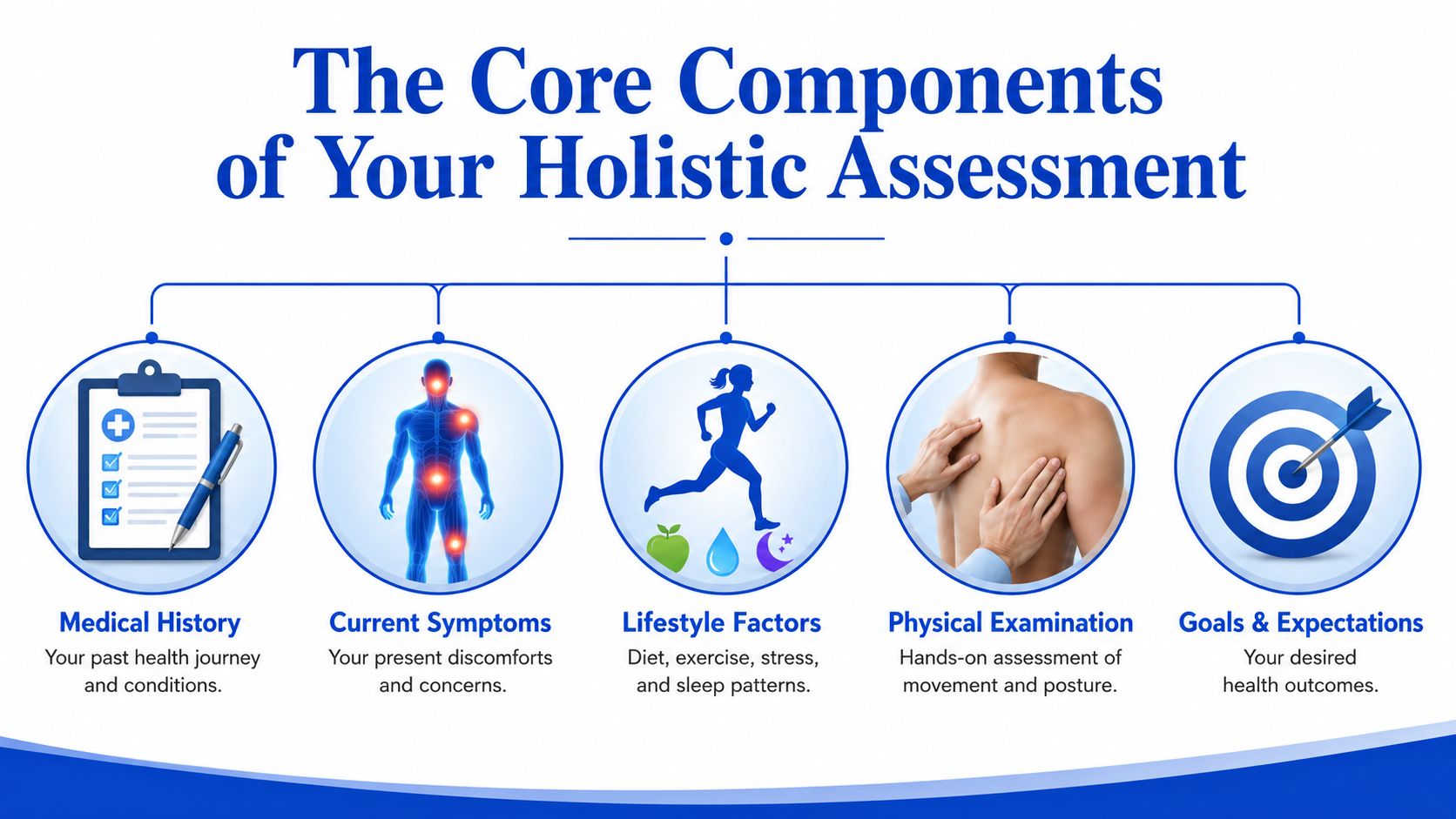
In osteopathy, that map is built from several domains. They include physiological, psychological, sociological, developmental, spiritual, and cultural factors. Evidence discussed in this overview of whole-person assessment domains notes that stress, support at home, and other non-physical influences can affect symptoms and increase fall risk in older adults. In clinic, the practical question is simple. Which of these factors is relevant to your pain, movement, and recovery right now?
History gives the assessment its context
Your medical history is the first part. Previous injuries, surgeries, arthritis, recurring strains, scans, medications, and long-standing health conditions all matter because they change how the body adapts to stress. An old ankle sprain can still affect balance years later. A guarded shoulder after surgery can alter the way the neck and upper back work.
Your current symptoms are the second part. We look at the behaviour of the pain, not only the postcode. Sharp pain after bending tells a different story from morning stiffness that eases with movement, or burning pain that builds after a long drive. That detail helps us decide whether the issue looks more joint-based, muscular, nerve-related, or linked to overload.
Then we look at the habits and demands around the problem. This is often where the pattern becomes clearer.
- Work setup: Desk height, screen position, driving time, and repetitive tasks can keep loading the same area day after day.
- Sleep and recovery: Broken sleep can leave muscles more guarded and the system more sensitive the next morning.
- Stress load: Stress can change breathing, pacing, muscle tension, and how well someone recovers after activity.
- Activity pattern: Too little movement can lead to stiffness. Too much, too soon, can stir symptoms up.
A quick photo of your desk or workstation can be useful if posture strain is part of the picture, especially in jobs that involve long hours sitting. We often use examples like corporate ergonomics and posture strain to show how small setup issues can keep feeding neck, shoulder, or lower back pain.
Movement testing makes the pattern visible
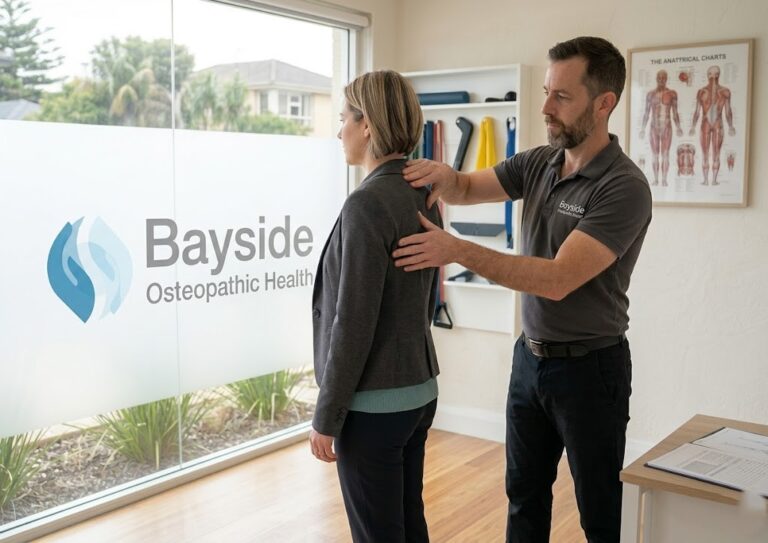
The physical examination is where the assessment becomes hands-on and specific. We check posture, balance, joint motion, tissue tension, breathing mechanics, and how you manage simple tasks such as turning, bending, reaching, stepping, or standing on one leg. This differs from a standard medical check-up in a very practical way. The goal is not only to rule out illness or record symptoms. The goal is to see how your body shares load in real movement.
That matters because pain can be misleading. I might see a patient with lower back pain whose hips are doing very little, or someone with shoulder pain who cannot rotate through the upper back well. The painful area is still important, but it makes more sense once we see how the rest of the body is contributing.
The final part is your goals and expectations. A useful plan has to fit your life. Getting back to tennis, sleeping through the night, walking the dog without limping, or sitting through work comfortably all call for different priorities, timelines, and advice.
The best assessment gathers information that changes the treatment plan, the home advice, and the pace of recovery.
We also screen for red flags. If your presentation suggests something outside a musculoskeletal problem, or something that needs medical investigation first, that changes the plan straight away. Good osteopathic care includes knowing when hands-on treatment is suitable, when exercise is the better first step, and when referral is the safer option.
Your Assessment at Bayside Osteopathic Health
People often feel more comfortable once they know what will happen in the room. A comprehensive osteopathic assessment is hands-on, but it shouldn't feel abrupt or confusing. It's a guided process.
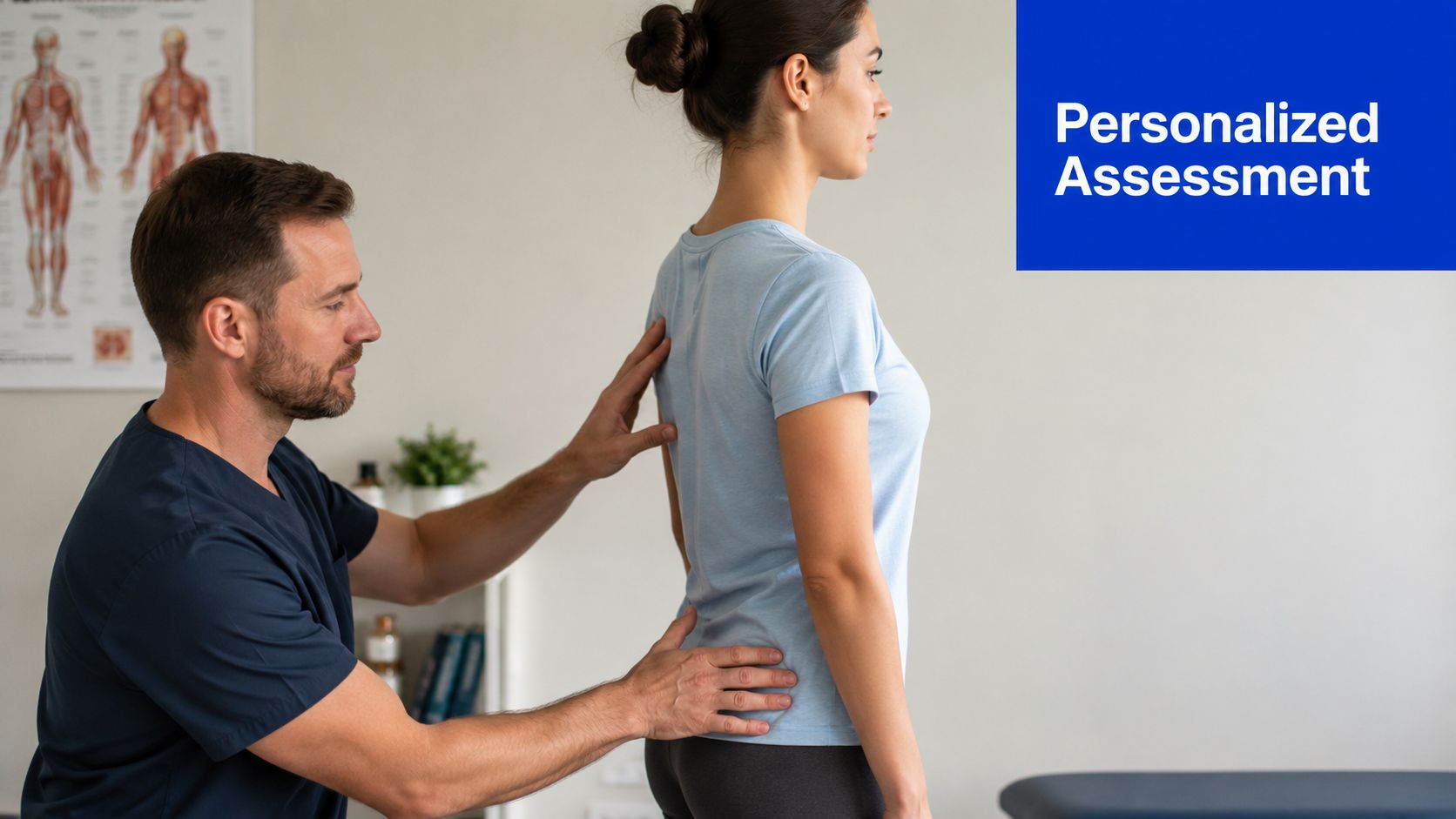
There's also a genuine gap in Australian health content here. Broad integrated principles are widely discussed, but there's limited detail on how they translate into hands-on manual therapies such as osteopathy. That gap is highlighted in this Australian discussion of person-centred holistic assessment and care, especially for practitioners assessing how the body moves as a whole.
What happens in the room
The appointment usually begins with conversation, not treatment. You talk through what brought you in, what the pain is stopping you from doing, and what you've already tried. If your back hurts, but your bigger frustration is not being able to sit through work, lift your grandchild, or get comfortable in bed, that matters.
Then comes observation. You may be asked to stand, walk, bend, turn, raise your arms, or perform a few simple movements. None of this is about catching you out. It's about seeing which areas move well, which areas are guarding, and where the body starts compensating.
From there, the practitioner uses gentle palpation and guided testing to assess joints, muscles, fascia, breathing pattern, rib movement, pelvic control, and spinal mechanics. Sometimes the key finding isn't at the painful site. A tight thoracic spine may be feeding neck strain. A stiff hip may be pushing extra load into the lower back. Restricted rib movement may be contributing to upper back and shoulder tension.
How osteopathic reasoning is different
A standard medical check-up often asks whether there is disease, damage, inflammation, or a need for medication, imaging, or referral. An osteopathic assessment asks a different set of practical questions:
| Focus | Standard medical check-up | Osteopathic holistic assessment |
|---|---|---|
| Main aim | Rule out pathology and manage medical concerns | Understand movement patterns and mechanical contributors |
| Usual emphasis | Diagnosis, medication, tests, referral | Function, posture, load, compensation, and recovery habits |
| Key question | What condition is present? | Why is this area under strain? |
That doesn't make one better than the other. It means they serve different purposes.
Sometimes the most useful finding is not “this structure is damaged”, but “this body has been compensating for months”.
If you'd like to see a broader example of gentle, movement-based assessment and treatment principles in action, this short video is a helpful visual reference.
What tends to reassure patients most is this: the process is collaborative. You're not being done to. You're being assessed with care, with clear explanations, and with the goal of helping your body move with less effort and less irritation.
Expected Benefits and Positive Outcomes
The value of a holistic assessment isn't in sounding thorough. It's in what that thoroughness gives you afterward.
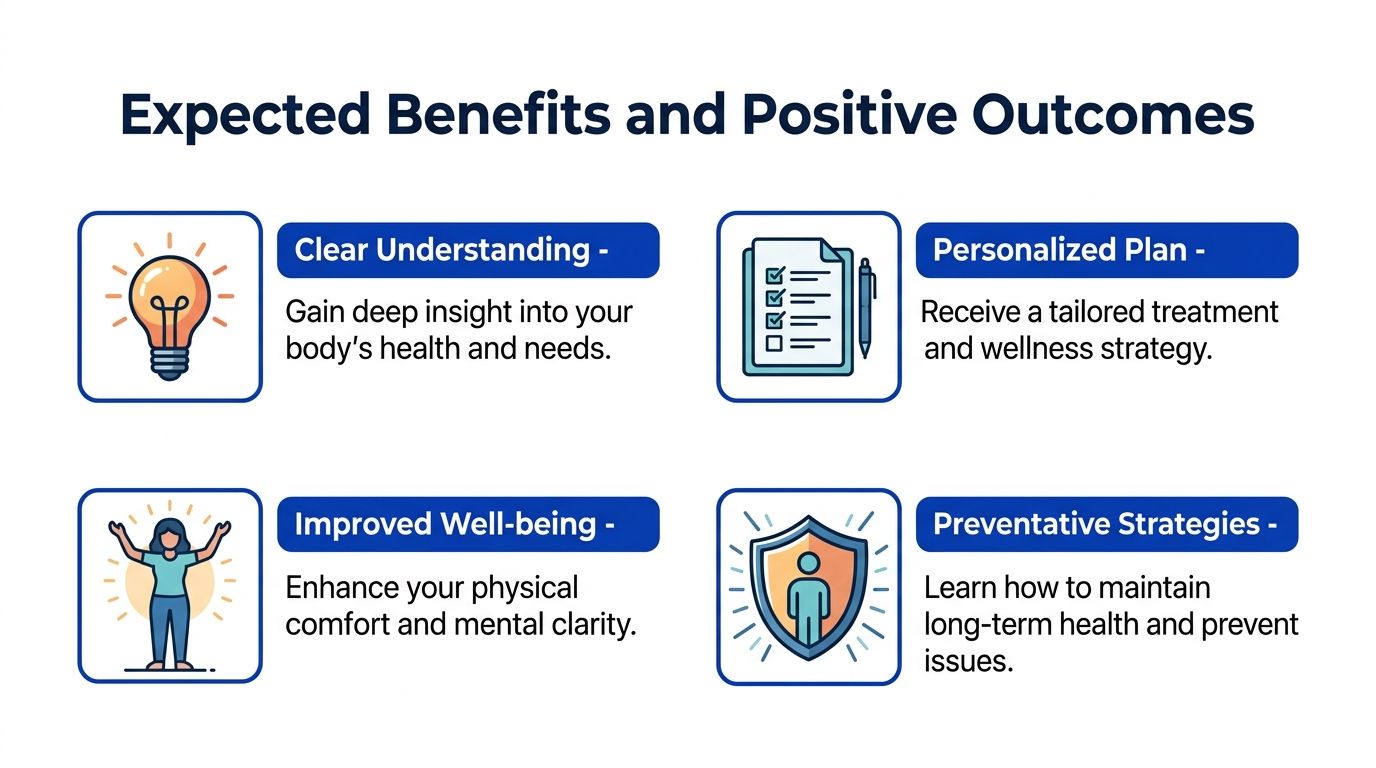
What a good assessment gives you
First, it gives you clarity. Many people with ongoing pain feel confused because symptoms seem inconsistent. One day the pain is in the neck. The next day it's in the shoulder blade. Then the lower back joins in. A good assessment can turn that from a messy list of aches into a pattern you can understand.
Second, it gives you a personalised plan. Not a generic “stretch more” message, but a plan built around your movement findings, your aggravating factors, and your goals. That may include hands-on treatment, load modification, mobility work, pacing advice, walking guidance, breathing drills, sleep-position changes, or workstation adjustments.
Third, it often gives people a sense of confidence. Pain can make movement feel risky. When someone understands what's stiff, what's overloaded, and what's safe to rebuild, they usually move with less hesitation.
A useful plan doesn't just aim to reduce pain. It helps you trust your body again.
For many people, practical self-care becomes far more effective once it's matched to the actual pattern behind the pain. Preventive habits matter most when they're specific, as shown in examples of preventive care and long-term health support.

Why this matters earlier, not later
There's also a preventive angle. In Australia, uptake of the 75+ Health Assessment remains around 33% of the eligible population, which shows many older adults aren't receiving broad preventive assessment even though early intervention can help identify issues affecting mobility and chronic pain, according to this study on 75+ Health Assessment uptake in Australia.
That doesn't mean every ache requires a major work-up. It does mean waiting until pain becomes severe, constant, or significantly limiting is rarely the easiest path.
Expected benefits often include:
- Better understanding: You know which factors are driving the problem.
- Smarter treatment choices: Care can target the cause, not just the loudest symptom.
- Improved movement: Stiff joints, guarded muscles, and awkward movement habits can be addressed together.
- Longer-term thinking: You leave with strategies that support daily life, not just the next few hours.
What works best is consistency, individualized advice, and realistic progression. Quick fixes feel appealing, but lasting change usually comes from a better map of the problem.
A Checklist to See if This Is Right for You
A checklist can't diagnose anything, but it can help you decide whether a broader assessment makes sense.
Signs a broader assessment may help
If you answer “yes” to several of these, a holistic health assessment is worth considering.
| Question | Yes/No |
|---|---|
| Do you have pain that keeps returning in the same area? | |
| Does the pain move, spread, or seem inconsistent from day to day? | |
| Have you treated the sore spot directly without lasting relief? | |
| Do long hours sitting, driving, or working at a desk aggravate symptoms? | |
| Do you wake up stiff and take time to loosen up? | |
| Have you started avoiding certain movements because they feel unreliable? | |
| Does stress, poor sleep, or a busy week seem to make the pain worse? | |
| Have old injuries changed how you walk, lift, or exercise? | |
| Do you feel your posture or work setup may be part of the issue? | |
| Are you looking for a gentler, drug-free approach to pain and mobility support? |
A few situations commonly point toward this style of assessment:
- Recurring strain without one clear cause: This often suggests a pattern problem rather than a single injured tissue.
- Arthritis with stiffness beyond one joint: The body may be compensating above and below the affected area.
- Posture-related discomfort: The issue may not be “bad posture” alone, but endurance, breathing, desk setup, and movement variability.
- Pain that improves briefly, then returns: That usually signals the driver hasn't been identified yet.
Why a checklist has limits
Generic tools have limits, especially for older adults with chronic pain, arthritis, or posture-related strain. As noted in the Australian preventive health guidance for Aboriginal and Torres Strait Islander people, some commonly used extensive tools are designed for other groups, and there isn't a single data-backed assessment tool specifically designed for older Australian adults with these needs, which is why a personalised practitioner-led approach matters in this National Guide document.
That's an important trade-off. Checklists are useful for prompting reflection. They're not enough to explain your individual movement pattern.
If your pain story is complicated, a one-size-fits-all questionnaire usually won't capture the real driver.
What tends to work better is a clinician joining the dots between your history, your daily load, your movement findings, and the way symptoms behave over time.
Your Next Steps to Better Movement and Wellbeing
If this sounds familiar, the next step is simple. Book an initial consultation with an osteopath who can assess how your body is working as a whole, not just where it hurts. Bring any relevant scan reports, a list of medications, and a clear idea of what you want to get back to doing more comfortably.
If you're seeing your GP regularly for a chronic condition, ask whether you may be eligible for care under a Chronic Disease Management plan. Medicare arrangements can vary, so it's worth confirming what applies to your situation before your appointment.
You can also start with a few gentle changes at home:
- Set your screen higher: If you work at a laptop, raise the screen so you're not folding into your upper back and neck for hours.
- Break up static positions: Stand, walk, or change posture regularly. The body usually tolerates variety better than stillness.
- Use easy movement, not aggressive stretching: Gentle range-of-motion work often helps more than forcing a painful area.
If pain has been lingering, shifting, or limiting your confidence with movement, don't wait for it to become your normal. A careful assessment can make the problem clearer and the path forward much easier.
If you're ready to get clear on what's driving your pain and what to do next, Bayside Osteopathic Health offers gentle, hands-on care focused on better movement, less pain, and practical support you can use in daily life.