

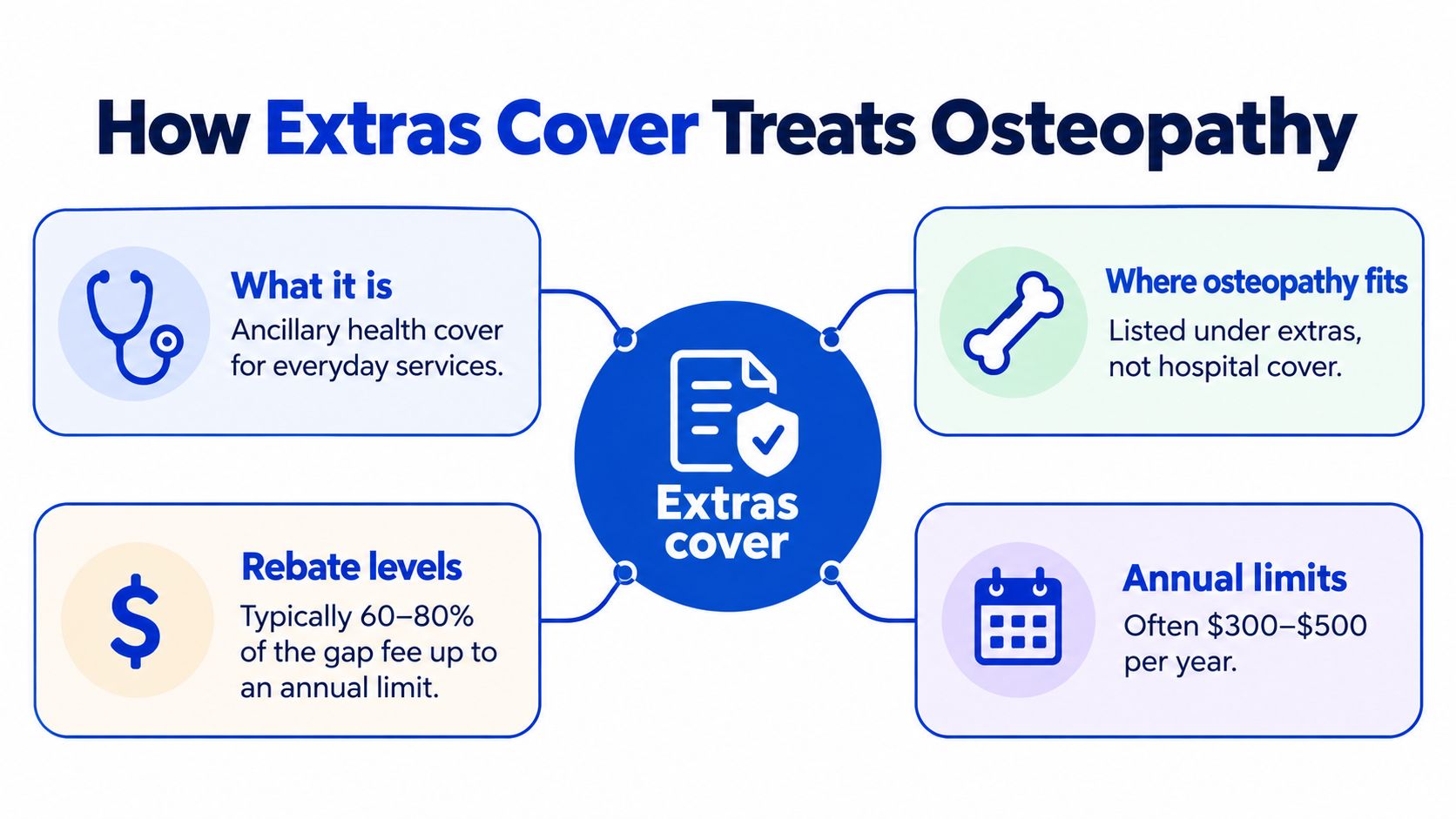
In Australia, osteopathy is generally covered under private health insurance Extras rather than hospital cover, but “covered” does not mean fully reimbursed. Listed policies can apply a two-month waiting period, per-visit benefits such as $48 initially and $32 for later visits, or a 60% rebate within a combined $300 annual limit.
You may be asking this after booking an osteopath for a stiff neck, persistent back pain or a joint that has started limiting everyday movement. The next question is usually practical: will your health fund help with the appointment, and how much will you still need to pay?
The answer depends on your specific Extras policy, not on whether your insurer advertises allied-health benefits. A fund may recognise osteopathy but restrict the benefit through a fixed rebate, a percentage of the fee, a shared annual limit or a waiting period. Your practitioner may also need to meet the fund's registration and claiming requirements.
There's a second pathway that can matter for some Bayside patients. Medicare generally doesn't cover ordinary out-of-hospital osteopathy, but eligible people with a chronic condition and complex care needs may access osteopathy through a GP chronic condition management plan. That pathway has different rules from private Extras cover, and you can't claim both systems for the same service.
The simplest way to estimate your real cost is to ask your fund four questions before booking:
- Is osteopathy explicitly included?
- What benefit applies to an initial and a subsequent visit?
- Is the annual limit separate or shared?
- Has the waiting period been served?
Those questions turn a vague “yes, osteopathy is covered” into a clearer estimate of your likely out-of-pocket cost.
Table of Contents
- The Short Answer Bayside Patients Want
- How Extras Cover Actually Treats Osteopathy
- Why Covered Often Means Shared Limits
- The Four Questions to Ask Your Fund Before Booking
- What Billing and Rebates Look Like on the Day
- Medicare, Chronic Conditions, and Where They Fit In
- Practical Next Steps for Bayside Patients
The Short Answer Bayside Patients Want
A Bayside resident with a stiff neck may finally decide to book an osteopath, then pause at the payment question. Their health fund includes Extras, but the policy schedule contains several categories and unfamiliar terms. The patient wants a straightforward answer, not a general statement that leaves the important details hidden.
In Australia, osteopathy is generally treated as an Extras or general-treatment service, rather than hospital cover. Product information on the Australian Government's PrivateHealth.gov.au comparison service shows that policies can differ considerably in waiting periods, annual limits and per-visit benefits.
The word covered describes eligibility, not full payment. An insurer might pay a fixed amount for each consultation, reimburse a percentage of an eligible charge, or stop paying once a combined annual allowance has been used. You may therefore receive a rebate and still pay a gap at the appointment.
The two systems you may encounter
Private Extras cover is the system most patients mean when they ask whether their health insurance covers osteopathy. It can include everyday out-of-hospital services, but the fund sets the benefit under the policy you purchased.
Medicare is separate. Ordinary out-of-hospital osteopathy generally isn't covered, although a specific chronic-condition pathway may apply when the eligibility requirements are met. That distinction matters because a patient can't choose whichever rebate seems more convenient for the same appointment.
Practical rule: Treat “osteopathy included” as the start of the conversation, not the final answer.
Before you book, ask the four questions above and request an estimate using the osteopath's provider details and proposed fee. Also ask whether the practitioner is recognised by your fund and whether electronic claiming is available. These checks are especially useful if you've already claimed physiotherapy, chiropractic care or another allied-health service during the benefit year.
The rest of the decision comes down to reading your policy as a benefit allowance. Your fund makes part of that allowance available per visit, then limits the total amount through annual or shared caps. Once you understand that structure, the phrase “is osteopathy covered by private health insurance” becomes a cost-planning question rather than a yes-or-no mystery.
How Extras Cover Actually Treats Osteopathy
Extras cover is designed for services outside hospital treatment. Osteopathy usually appears alongside services such as physiotherapy, chiropractic care, remedial massage or exercise physiology, depending on the policy. Hospital cover and Extras cover are different parts of a private health insurance policy, so having one doesn't automatically provide the benefits associated with the other.
Think of the osteopathy benefit as a measured allowance. The fund may release part of it at each appointment, but several controls determine how much is available.
- Waiting period: You may need to wait before claiming the service. The policy examples cited by the Australian Government comparison service include a two-month waiting period for osteopathy benefits. PrivateHealth.gov.au policy information sets out one such example.
- Percentage rebate: The fund may pay a stated percentage of an eligible charge, subject to the policy's other limits.
- Fixed per-visit cap: The policy may set a maximum benefit for an initial visit and a different maximum for later visits.
- Annual or combined limit: The fund may stop paying after you reach the yearly allowance, or after you exhaust a limit shared with other services.
Why the same appointment can produce different rebates
One listed Australian policy provides a two-month waiting period, a combined annual limit of $400 per person for chiropractic and osteopathy, and maximum benefits of $48 for an initial visit and $32 for subsequent visits. Another listed policy pays 60% of eligible charges for osteopathy, subject to a combined $300 per-person limit, as described in the government comparison material.
Those policies both include osteopathy, but they don't create the same patient experience. A fixed benefit can be easy to understand, yet it may be lower than the consultation fee. A percentage rebate can look more generous, but the annual cap still limits the total amount the fund will pay.
A policy schedule should therefore answer four practical questions: when you can claim, what the fund pays for each type of visit, how the benefit is calculated, and when the allowance runs out. If any of those details are unclear, call the insurer before your appointment.
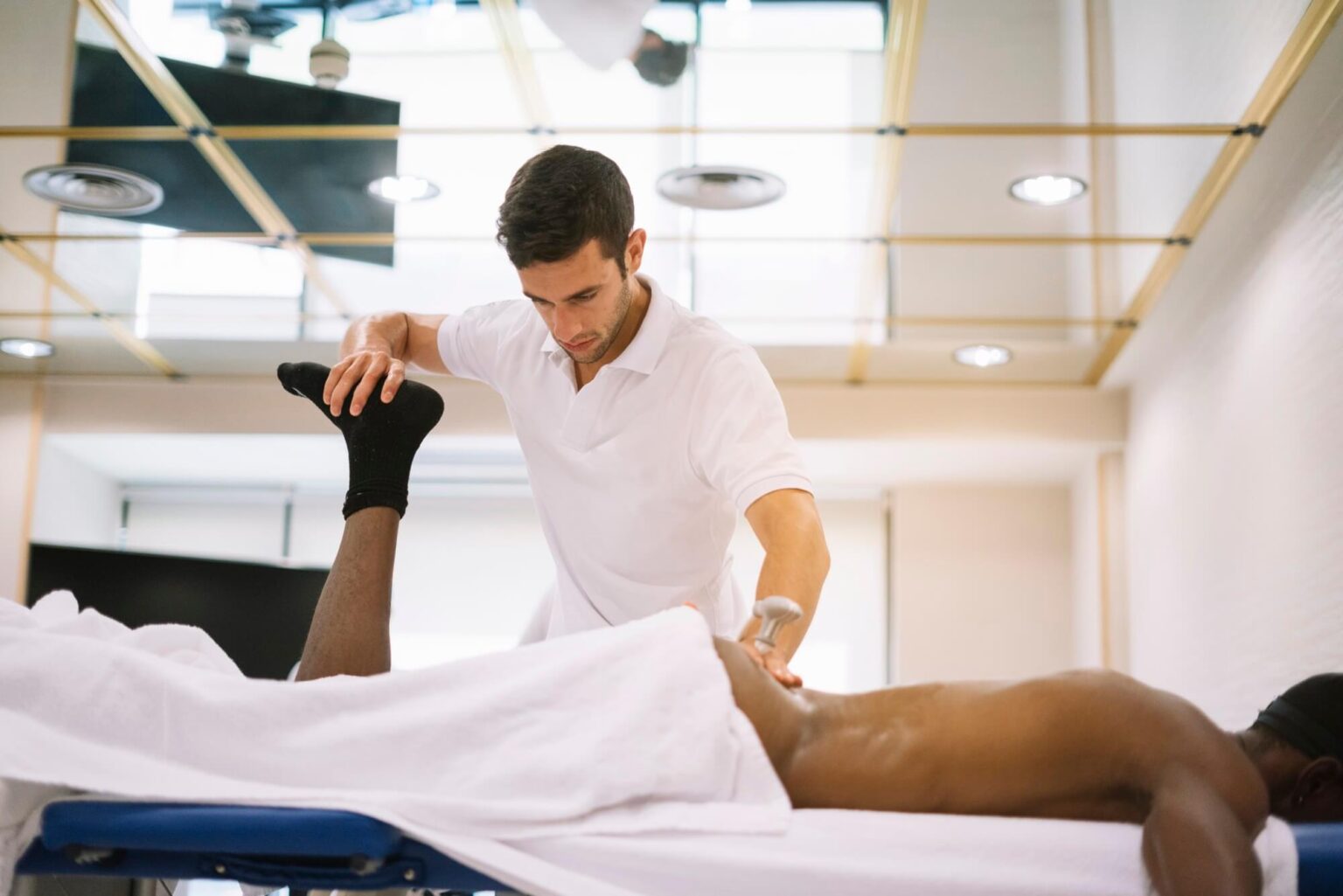
For general context about the movement and hands-on care an appointment may involve, patients can also review this osteopathy treatment image, while remembering that the clinical service and the insurance benefit are separate questions.
Why Covered Often Means Shared Limits
A policy can include osteopathy while offering little or no allowance when you book. The usual reason is a pooled limit. Several therapies draw from one annual balance, rather than each receiving a separate allowance.
For example, one listed Australian policy combines chiropractic and osteopathy under a $350 annual per-person limit. Another groups osteopathy with physiotherapy, chiropractic, acupuncture, remedial massage, Chinese medicine and exercise physiology under a $200 combined cap. These figures and service groupings come from listed HIF policy information.
The balance works like one shared wallet. A physiotherapy claim takes money from the same wallet if physiotherapy and osteopathy use one combined limit. Osteopathy may remain listed as an eligible service, while the available balance has already been partly or fully used.
How pooled benefits can affect your balance
| Policy example | Combined services | Annual per-person limit | Osteopathy benefit per visit |
|---|---|---|---|
| Listed policy example | Chiropractic and osteopathy | $350 | e.g. $32 per subsequent visit under the listed example policy |
| Listed policy example | Osteopathy, physiotherapy, chiropractic, acupuncture, remedial massage, Chinese medicine and exercise physiology | $200 | The policy schedule sets the applicable benefit |
These examples show why the service list is only one part of the answer. Before booking, check the remaining balance, the services sharing it and the benefit available for the appointment. A policy's annual cap does not tell you how much remains for your next visit.
A shared limit means previous allied-health claims can affect today's osteopathy rebate.
Ask the fund to check your member-level balance instead of relying on a general product page. Tell the representative which services you have already claimed, then ask whether the limit resets on 1 January or another date. The Australian Government's private health insurance guidance advises consumers to check the benefit, waiting period, annual limit, reset date and whether related services share a limit.
A four-question check keeps the issue practical: is osteopathy included, what is the benefit for this visit, which services share the cap, and how much remains? The answer depends on your membership and past claims, not on seeing "osteopathy" in the policy wording.
The Four Questions to Ask Your Fund Before Booking
A quick call before booking can prevent an unexpected gap. Keep the clinic's practitioner details nearby and ask the fund to assess your membership, rather than quoting a general policy category. Use these four questions as a pre-booking check.
Is osteopathy explicitly included?
Ask whether osteopathy is included in your current Extras level and whether the proposed provider meets the fund's requirements for claiming. Having Extras does not automatically mean every allied-health service is covered.
If the representative mentions “natural therapies” or “allied health”, ask them to confirm osteopathy by name. Policy wording works like a menu: a broad category may contain only the services specifically listed as eligible.
What is the benefit for each visit?
Ask about the benefit for both an initial consultation and a subsequent consultation. A fund may offer different fixed amounts, or calculate a percentage of an eligible charge up to a maximum.
Confirm what the calculation uses: the osteopath's fee, the fund's scheduled amount or another figure. This helps you estimate the likely gap before attending, although the final rebate still depends on your membership and claim assessment.
Is the annual limit separate or shared?
Ask whether osteopathy has its own allowance or shares a cap with chiropractic, physiotherapy and other services. Then ask how much remains in your current benefit year.
A shared limit can affect your rebate even when osteopathy is clearly listed. Claims for related services may already have reduced the balance, so request the remaining amount rather than relying on the original policy limit.
Has the waiting period been served?
Ask whether you have completed the waiting period for osteopathy. A policy may include the service while still restricting claims until the relevant waiting requirement has passed.
Also confirm when the benefit year resets and whether waiting periods or limits change after switching cover. The Private Health Insurance Ombudsman guidance can help you identify the policy details to check before treatment.
Before you hang up: Confirm the practitioner's registration requirements, the provider number needed for claiming and whether HICAPS or another electronic claiming channel is available.
Write down the representative's name, the date and the answers, and quote those notes if you request a reassessment.
What Billing and Rebates Look Like on the Day
Appointment-day claiming usually follows a simple sequence, but the result depends on the answers from your fund.
First, reception may confirm your health fund, membership details and the osteopath's provider information. If the clinic and practitioner meet your fund's requirements, an electronic terminal such as HICAPS may process the claim at the desk. You then pay the remaining gap rather than paying the full consultation fee and waiting for a reimbursement.
Three common rebate arrangements
A fixed benefit pays a set amount for the relevant consultation type. The patient pays the difference between that benefit and the clinic's fee.
A percentage rebate pays a stated proportion of an eligible charge, but the policy may still impose a per-visit maximum or a shared annual limit. The percentage alone therefore doesn't tell you the final out-of-pocket cost.
A hybrid arrangement can combine a percentage with a cap. For example, the fund may calculate a percentage but stop at the maximum benefit listed in the schedule.
If electronic claiming isn't available, the practice can provide an itemised receipt. You may then submit the claim through your insurer's approved channel and pay the full fee upfront. Keep the receipt and check that it shows the service, provider details and payment information required by the fund.
If the rebate is lower than expected
Start with the claim statement. Check whether the fund applied a waiting period, used a shared balance, rejected the provider classification or applied a different benefit for an initial versus subsequent visit.
Policy design means a patient who has already claimed physiotherapy or chiropractic care may have little or no osteopathy allowance remaining. Some policies also require treatment from a practitioner registered with the insurer in the relevant speciality, as shown in PrivateHealth.gov.au policy information.
Ask the fund to explain the decision and request a reassessment if the details don't match the information you were given. The clinic team can help you locate provider details or supply an itemised receipt, but the insurer decides the benefit under your policy.
Medicare, Chronic Conditions, and Where They Fit In
Private Extras cover isn't the only possible route for every patient. Medicare generally doesn't cover ordinary out-of-hospital osteopathy, but the Medicare Benefits Schedule includes osteopathy under item 10966 for an eligible patient with a chronic condition and complex care needs.
The service must be recommended through a GP chronic condition management plan or qualifying care arrangement, and the consultation must last at least 20 minutes, according to the Medicare Benefits Schedule item information. This isn't a universal osteopathy rebate. Your eligibility, plan wording, practitioner requirements and applicable service rules all matter.
Keep the two pathways separate
A GP may consider a chronic condition management plan where a person has persistent back, neck or joint problems and needs coordinated care. The plan must identify the relevant need and recommend the eligible allied-health service. Ask your GP whether this pathway is suitable rather than assuming that a long-lasting symptom automatically qualifies.
The Medicare route and the private Extras route have different rules. Medicare eligibility doesn't prove that your health fund will pay, and Extras inclusion doesn't create Medicare eligibility.
You can't claim both an MBS benefit and a private health insurance payment for the same osteopathy service.
That rule makes the pre-booking conversation important for older adults and people managing ongoing musculoskeletal conditions. Before paying privately, ask your GP whether the appointment is part of an eligible plan. If it is, ask how the claim will be processed. If it isn't, check your Extras benefit or plan to self-fund the appointment.
Patients considering how chronic pain affects movement may find this chronic pain resource useful when preparing questions for their GP or osteopath. It doesn't replace confirmation of Medicare eligibility, which depends on the MBS requirements and your individual circumstances.
Practical Next Steps for Bayside Patients
You don't need to become an insurance expert before seeing an osteopath. Make the first appointment easier by completing three checks.
Call your fund before booking. Ask whether osteopathy is included, what remains in your annual balance, which benefit applies to the first and later visits, and whether your practitioner is recognised. Give the fund the provider details so the answer relates to the service you're considering.
Bring your membership details on the day. If electronic claiming is available, the practice can process the rebate at reception and tell you the remaining gap. If it isn't available, request an itemised receipt and retain it with your health records for the relevant benefit year.
Ask your GP about the chronic-condition pathway when appropriate. If you've been dealing with persistent back, neck or joint problems, ask whether a chronic condition management plan could apply. Don't claim Medicare and private insurance for the same service.
For practical preparation, an ergonomics and posture resource can help you identify work or daily movement factors to discuss during your appointment. The clinic team can also help clarify provider details, item information and electronic claiming options, although your fund remains responsible for confirming the benefit.
Osteopathy is easier to plan when you treat rebates as one part of ongoing care rather than the sole reason to attend. A clear cost estimate lets you focus on your movement, comfort and longer-term goals.
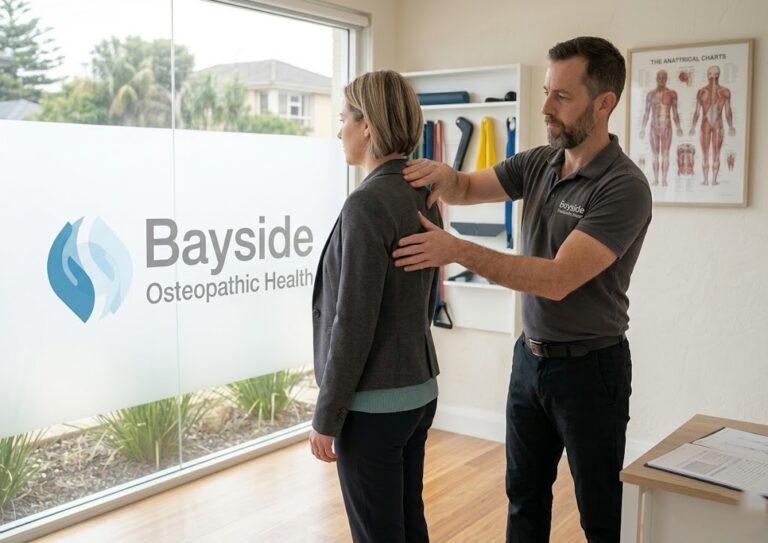
Bayside Osteopathic Health provides gentle, specialised osteopathic care for back, neck and joint concerns, with practical guidance about Extras and applicable Medicare pathways. Visit Bayside Osteopathic Health to learn about appointments and speak with the team about what to confirm with your fund before treatment.