

Social media often presents lymphatic drainage as a universal answer for puffiness, detoxification, weight loss, immunity and recovery. That advice blurs two very different experiences: temporary relaxation or a feeling of reduced heaviness, and measurable treatment of lymphoedema or other fluid-management problems.
Manual lymphatic drainage, or MLD, is a specialised, low-pressure technique. It may have a useful place in care when lymph transport is impaired, but it isn't a guaranteed cure and it isn't automatically appropriate for every swollen area. Australian evidence supports using it as an adjunct within an individualised plan, alongside assessment, compression where indicated, exercise, skin care and education.
Table of Contents
- Why Lymphatic Drainage Is Not a Wellness Trend
- How the Lymphatic System and Drainage Actually Work
- Lymphatic Drainage Benefits Examined One by One
- Where Australian Evidence Actually Stands
- Contraindications and When to Seek Assessment First
- What to Expect in a Session at Bayside Osteopathic Health
- Simple Self-Care Techniques You Can Use at Home
- Choosing the Right Next Step for Your Situation
Why Lymphatic Drainage Is Not a Wellness Trend
The phrase “lymphatic drainage” now covers everything from a gentle clinical technique to a cosmetic massage marketed as a way to flush toxins. Those services aren't interchangeable. A trained lymphoedema practitioner uses a deliberate sequence to assess the likely cause of swelling and guide fluid towards functioning lymphatic pathways. A general wellness massage may feel calming, but that sensation doesn't prove that it has treated impaired lymph transport.
The distinction matters in Australia because lymphoedema is clinically significant, even though its full population burden remains incompletely measured. The Australian Institute of Health and Welfare reports 9,370 hospitalisations associated with lymphoedema in 2020–21, equivalent to 30.3 hospitalisations per 100,000 people. Females accounted for 6,499 hospitalisations, or 39.9 per 100,000 females, while males accounted for 2,871, or 19.7 per 100,000 males.
Practical rule: A treatment that may support lymphoedema care shouldn't be advertised as though every person with puffiness has the same diagnosis.
AIHW also cautions that Australia doesn't yet have a population-level prevalence estimate because lymphoedema is often under-recognised or recorded inconsistently. Its scoping work cited a conservative estimate of approximately 70,000 Australians living with lymphoedema, while noting that the true number may be higher. Cancer-related risk adds another reason to take new swelling seriously. Among people diagnosed with cancer in 2022, AIHW projected that around 4,100 people with breast cancer and between 1,600 and 5,100 people with melanoma could subsequently develop secondary lymphoedema.
MLD therefore belongs in a conversation about assessment and supportive management, not miracle treatments. Australian Cancer Council guidance describes it as a specialised technique intended to direct fluid towards functioning lymph nodes, rather than a universal treatment or guaranteed cure.
How the Lymphatic System and Drainage Actually Work
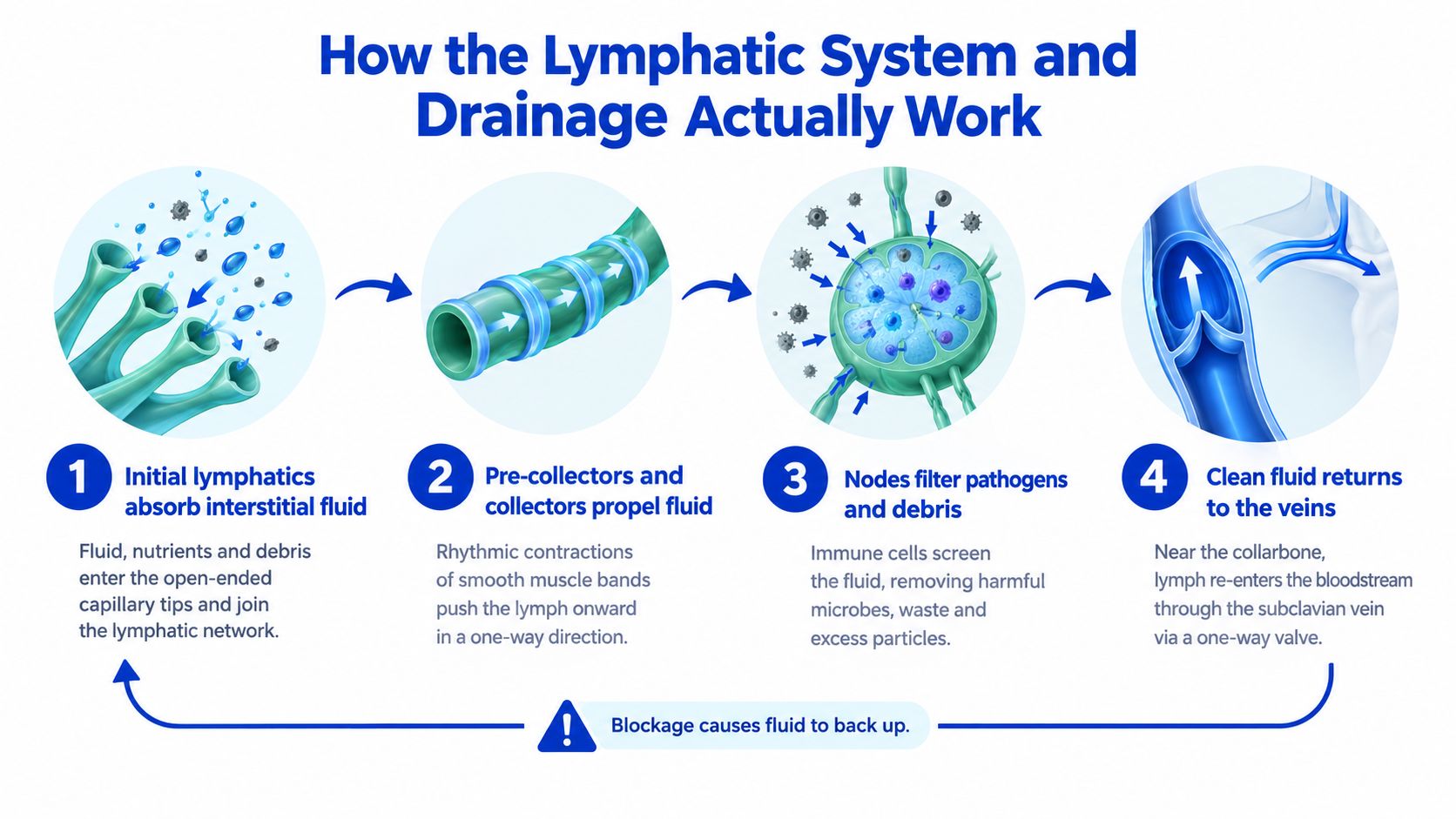
Think of the lymphatic system as a one-way transport and clean-up network. Your tissues constantly exchange fluid with the small blood vessels around them. Some fluid remains between cells, carrying proteins, cellular debris and other material that needs to leave the tissue space.
Four stages of lymph transport
Initial lymphatics collect this interstitial fluid through tiny, highly permeable openings. The fluid then enters progressively larger vessels called pre-collectors and collectors. These vessels have valves that help keep movement directed forwards.
The collectors don't rely on a single central pump in the way blood circulation relies on the heart. Their walls contain smooth muscle, and their movement is supported by breathing, body movement and skeletal muscle activity. Rhythmic contractions help propel lymph along the vessel.
Lymph then passes through lymph nodes, where immune cells screen the fluid for pathogens and other material. After filtration, the lymph eventually returns to the bloodstream through ducts that connect with veins near the collarbone.
What MLD adds
MLD uses light, rhythmic skin-stretching movements rather than deep pressure. The practitioner first works near an available drainage region, then uses carefully directed strokes to encourage fluid from an area with reduced transport capacity towards functioning vessels and nodes.
That sequence is important. Deep massage isn't automatically better. Heavy pressure can compress superficial lymphatic structures and may increase local fluid filtration in some circumstances. MLD works at the skin level because many lymphatic vessels involved in initial fluid collection sit close to the surface.
“Drainage” doesn't mean that a therapist is squeezing toxins out of the body. It means encouraging the movement of excess interstitial fluid through available lymphatic pathways. Whether that movement produces a meaningful clinical result depends on the cause of swelling, the condition of the vessels and nodes, and the rest of the person's treatment plan.
Lymphatic Drainage Benefits Examined One by One
The most useful way to discuss lymphatic drainage benefits is to ask which outcome is being measured. A person may feel relaxed after a session, while limb volume remains unchanged. Another person with mild lymphoedema may experience a useful change in heaviness when MLD is combined with compression and movement. Those are different claims.
| Benefit | Evidence strength | Best context |
|---|---|---|
| Reducing limb volume in lymphoedema | Stronger as part of comprehensive care, uncertain as MLD alone | An assessed lymphoedema plan using compression, exercise, skin care and education |
| Supporting post-cancer or post-surgical swelling | Mixed and condition-dependent | As an adjunct after appropriate medical or lymphoedema assessment |
| Easing heaviness or discomfort | Possible, but outcome evidence is limited | Individualised care where symptoms and function are monitored |
| Sports-related swelling or delayed muscle soreness | Plausible, but not established as a universal indication | Gentle movement and usual recovery strategies remain central |
| Fibromyalgia or persistent pain | Limited and emerging | Only as supportive care, not as a treatment for the underlying condition |
| Immune enhancement in healthy people | Poorly supported | Avoid broad “immunity boost” claims |
| Detoxification, weight loss or sinus cleansing | Not supported as general health claims | Treat these statements as marketing rather than established outcomes |
| Relaxation and sleep support | Plausible indirect benefit | A calming treatment experience, separate from lymphoedema treatment |
Swelling and limb volume
The strongest clinical case concerns lymphoedema, particularly when MLD forms part of complete decongestive care. That broader approach may include compression, exercise, skin care, education and MLD. The benefit can't be attributed automatically to the hands-on technique alone.
A systematic review of 17 randomised controlled trials involving 1,911 patients after breast-cancer surgery found that MLD did not significantly reduce lymphoedema compared with control treatment in a meta-analysis of 8 trials involving 338 patients. The standardised mean difference was −0.09, with a 95% confidence interval from −0.85 to 0.67, as reported in the Australian MLD evidence summary. Prevention evidence was also uncertain. Four trials involving 1,364 patients found no statistically significant reduction in risk, with a risk ratio of 0.61 and a 95% confidence interval from 0.29 to 1.26.
Recovery, pain and relaxation
MLD may be considered after surgery or cancer treatment when a qualified clinician has assessed the swelling and confirmed that the technique is suitable. It shouldn't replace wound care, medical review, compression advice or prescribed rehabilitation.
Claims about faster sports recovery, fibromyalgia, chronic pain, sinus congestion and general immune enhancement require more caution. Some people may notice a lighter, calmer or less tense feeling, but that doesn't establish a change in lymphatic function or prove treatment of a disease.
A calm room, slow touch and time away from daily demands can support relaxation. That is a legitimate experience, but it should be labelled accurately as a wellness or comfort outcome, not presented as detoxification, fat loss or immune repair.
Where Australian Evidence Actually Stands
Australian-facing evidence places MLD inside a broader management plan rather than at the centre of every plan. The practical question isn't whether MLD can ever help. It is whether the person's swelling reflects impaired lymph transport, whether the technique is safe, and whether another intervention is likely to produce more meaningful change.
An Australian evidence summary comparing MLD with other treatments found no significant difference in limb-volume reduction. It reviewed six randomised trials, comparing MLD involving 117 patients with comparison treatments involving 120 patients. The weighted mean difference was 75.12, with a 95% confidence interval from −9.34 to 159.58 and p=0.08, according to the Australian review of single-modality lymphoedema treatment.
That finding helps explain why compression, exercise, skin care and education matter so much. Compression can support fluid management, exercise uses muscle activity to assist movement, and skin care helps reduce the risk of breaks and infection. MLD may help prepare or support the tissues, but it doesn't make those other components unnecessary.
What the broader review suggests
A systematic review by researchers at Macquarie University identified 19 studies involving 869 participants, predominantly people with breast-cancer-related lymphoedema. Some studies reported improvements in limb volume, quality of life or symptoms, and possible preventive effects in people at risk. Other studies found no additional benefit when MLD was added to complex decongestive therapy.
The review concluded that MLD may add value particularly in mild lymphoedema, while its additional benefit is less clear in moderate-to-severe disease when compression, exercise, skin care and other components are already provided. The Macquarie University review of MLD for lymphoedema supports monitoring individual response rather than promising the same result to everyone.
| Indication | Evidence level | Recommended role |
|---|---|---|
| Confirmed lymphoedema | More supportive within comprehensive care | Adjunct to an assessed plan |
| Mild lymphoedema | Potentially useful for selected patients | Combine with compression, movement and education |
| Moderate or severe lymphoedema | Additional value is less clear | Prioritise specialist-led comprehensive care |
| Post-cancer swelling | Mixed, condition-dependent | Use after assessment and alongside rehabilitation |
| General wellness without swelling | Not established as a medical indication | Consider relaxation and self-care only, without therapeutic promises |
Objective measures make the discussion more reliable. A practitioner may track limb circumference or volume, symptom scores, skin integrity and functional tolerance. If those measures don't improve, the plan deserves review rather than indefinite continuation of the same technique.
Contraindications and When to Seek Assessment First
Gentle pressure doesn't make MLD risk-free. The technique can influence fluid movement and local tissue responses, so a practitioner needs to understand the person's medical history before beginning. Australian Cancer Council guidance states that MLD should be performed by a trained lymphoedema practitioner, and that self-drainage should be taught rather than improvised.
Seek medical assessment before any manual drainage if swelling is sudden, one-sided, painful, unexplained or associated with fever. A history of cancer, lymph-node removal, radiation treatment, recent surgery or significant infection also changes the decision. The priority is identifying the cause, not trying to massage the symptom away.
Situations requiring particular caution
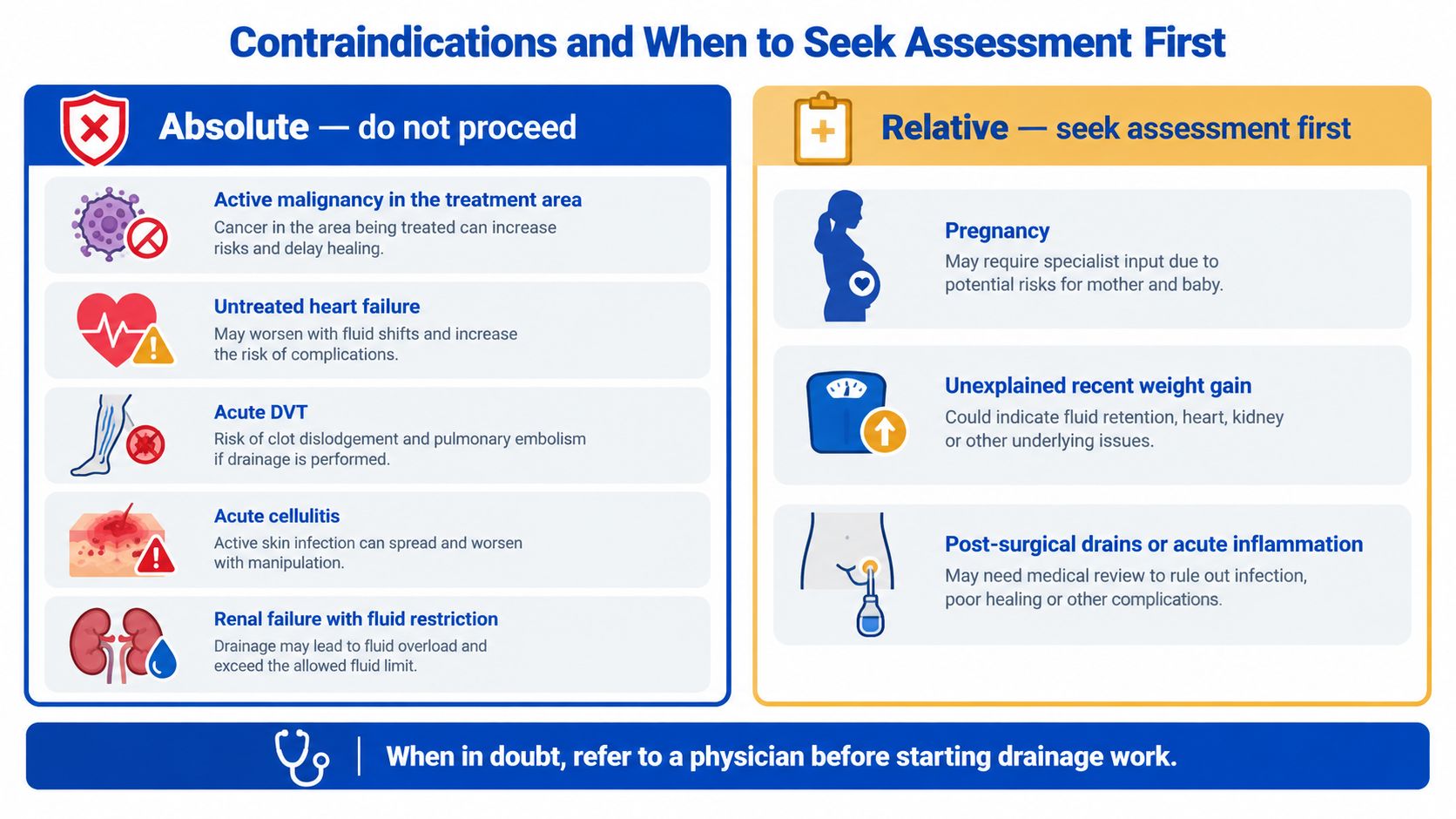
Practitioners commonly screen for conditions such as:
- Active malignancy in the treatment area: Medical and oncology guidance should determine whether manual work is appropriate.
- Untreated heart failure or significant renal disease: Fluid movement may not be suitable without the treating team's advice.
- Suspected or confirmed acute deep vein thrombosis: This requires urgent medical management, not massage.
- Acute cellulitis or another active infection: Fever, spreading redness, warmth and worsening pain need prompt clinical care.
- Pregnancy, recent surgery, drains or acute inflammation: The technique and timing require individual assessment.
- Uncontrolled blood pressure or other unstable illness: Stabilisation and medical clearance come first.
Before booking: Unexplained swelling deserves a diagnosis. A soothing treatment shouldn't delay assessment of a clot, infection, heart problem or cancer-related lymphatic change.
Self-care is more appropriate when a qualified practitioner has already assessed you, explained the likely cause and taught a specific technique. Stop and seek advice if home work causes increasing swelling, new pain, skin colour changes, breathlessness or fever. For pregnancy-related postural concerns, readers can also review this pregnancy postural support resource, while still obtaining individual clinical guidance.
What to Expect in a Session at Bayside Osteopathic Health
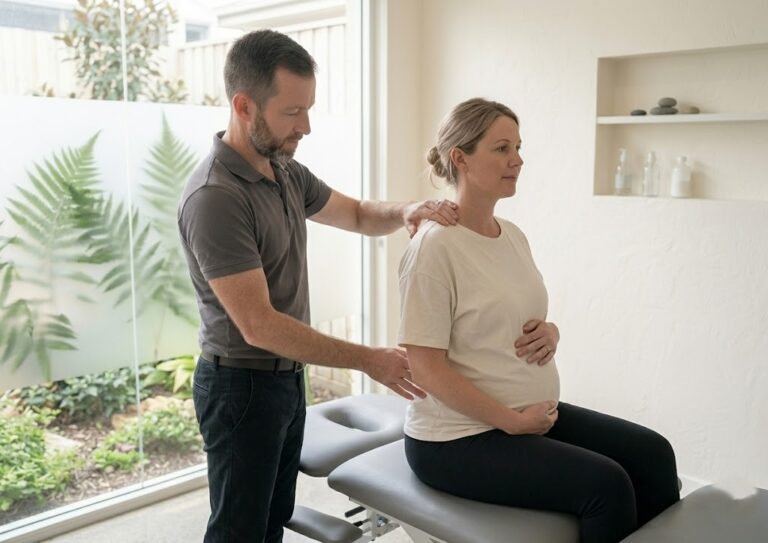
A first appointment should begin with questions, not immediate massage. The practitioner will ask when the swelling or heaviness began, whether it followed surgery, cancer treatment, injury or infection, and what medicines or medical conditions may affect fluid management. They'll also check for red flags and explain what the assessment can and can't establish.
The physical assessment may include posture, movement, skin quality and the appearance of the affected area. Limb circumference or volume measurements may be considered when they would help establish a baseline. The practitioner should explain the proposed technique, invite questions and obtain consent before treatment begins.
How the treatment feels
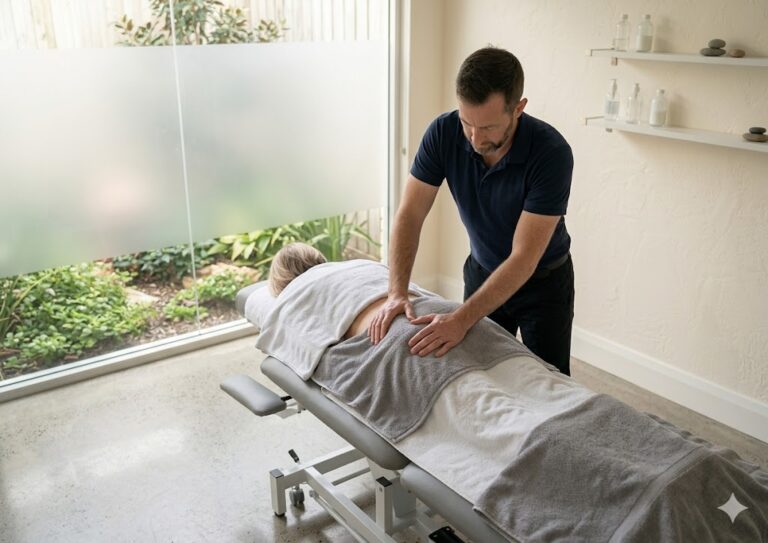
MLD is usually performed with the patient comfortably supported in a quiet, warm treatment space. The strokes are light, slow and rhythmic, with a gentle stretch of the skin rather than the firm pressure associated with deep tissue massage. You shouldn't expect bruising, forceful kneading or pain.
The practitioner may work around the neck, trunk and nearby drainage regions before addressing the area of concern. That sequence helps direct fluid towards functioning pathways instead of merely rubbing the most swollen location. The treatment plan should be adjusted if symptoms, skin response or comfort change.
Afterwards, you may be given advice about gentle movement, prescribed compression, skin care and what to monitor. A useful review focuses on your response and measurable goals, not on an automatic promise that repeated sessions will solve the problem. For a related example of hands-on care, see this remedial massage and muscle therapy resource, noting that remedial massage and MLD are different techniques with different purposes.
Simple Self-Care Techniques You Can Use at Home
Home techniques should be gentle, brief and previously taught where possible. They can support comfort between appointments, but they shouldn't replace assessment for persistent or unexplained swelling. The aim is not to force fluid through tissue. It is to encourage normal movement without redness, pain or bruising.
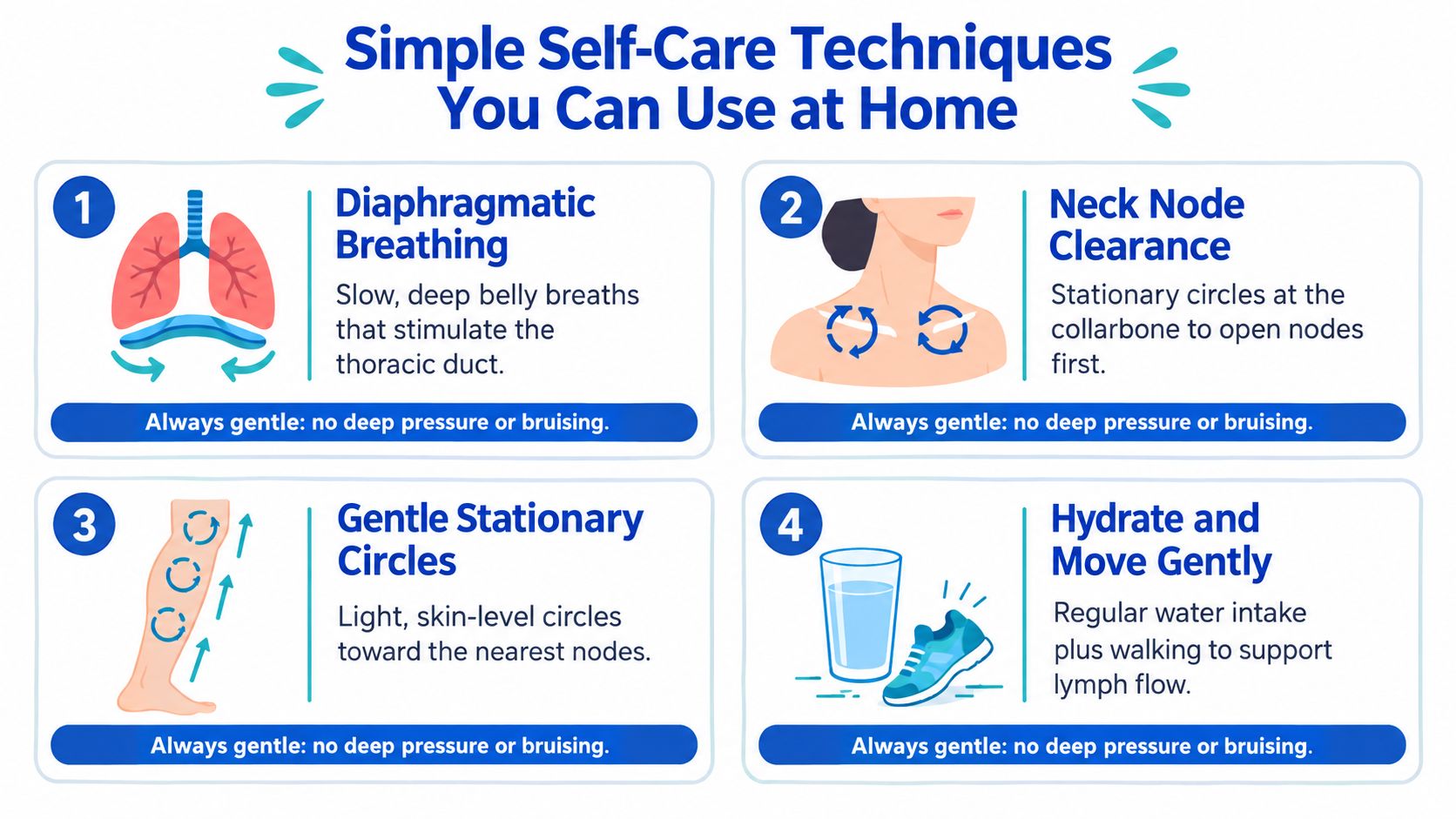
A gentle routine
Use diaphragmatic breathing. Place a hand on your abdomen and breathe slowly so the belly expands comfortably on the inhale. A relaxed breath creates movement around the chest and abdomen, which can support lymph transport.
Start near the collarbone and neck. With flat fingers, use small stationary circles over the skin rather than rubbing hard. A practitioner should show you the correct direction and pressure for your condition.
Work from proximal areas towards the affected limb. Use a light skin stretch, release fully, then repeat. The sensation should be a mild drag of the skin, not muscle soreness, heat or visible redness.
Add slow ankle or wrist pumps. Move through a comfortable range, keeping the action easy. Short walks and ordinary movement can also help the muscle pump, provided your clinician has not restricted activity.
A short routine after a morning shower may be easier to remember because the skin is visible and the body is already warm. Drink normally according to your health needs, but don't force excessive fluid intake as a supposed detox strategy. People with heart, kidney or other fluid-management conditions should follow their medical advice.
Stop if swelling increases, pain appears, the skin changes colour, or you develop fever. This posture and corporate ergonomics resource may be relevant to movement habits, but ergonomic advice doesn't diagnose lymphoedema.
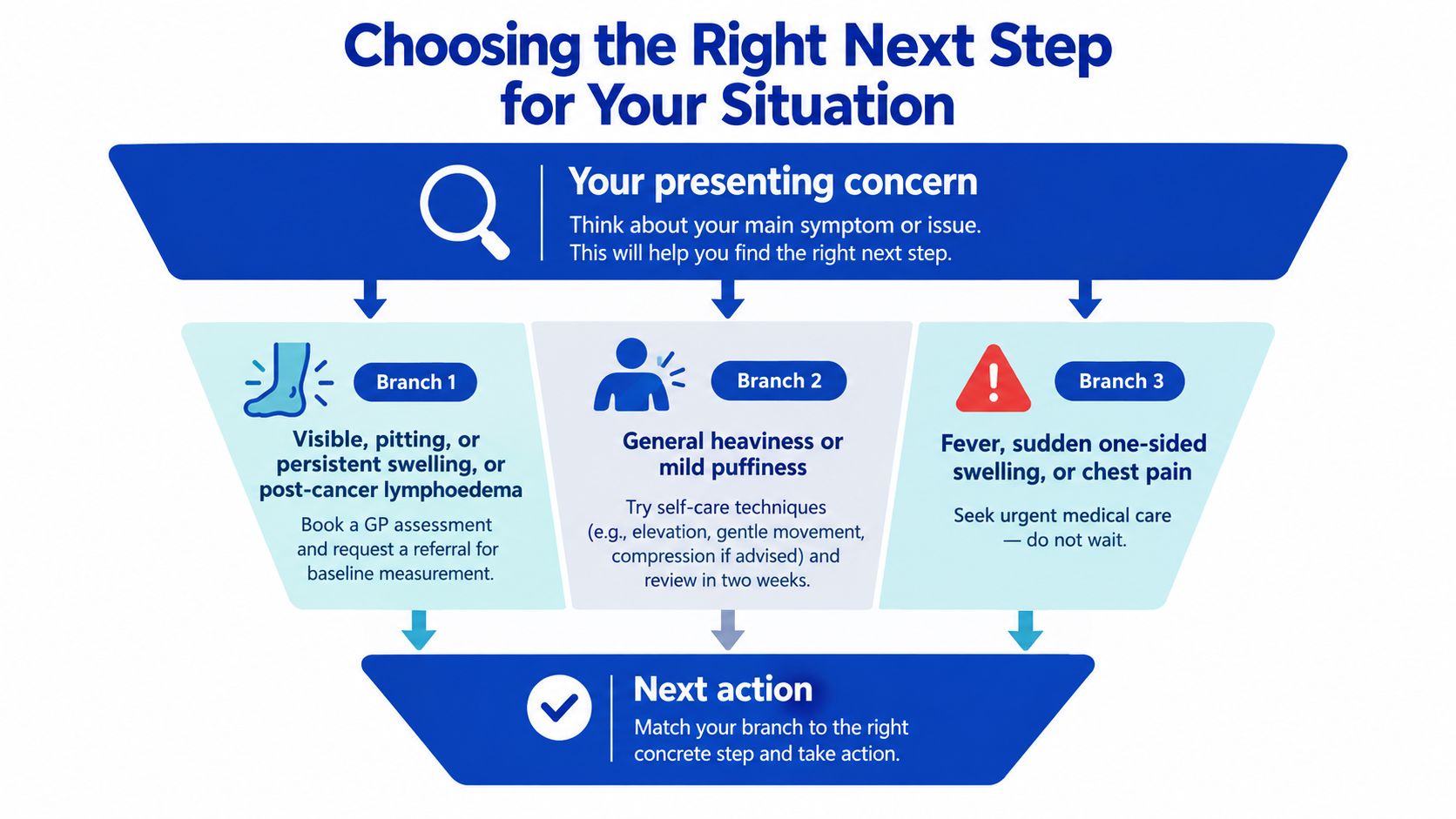
Choosing the Right Next Step for Your Situation
Your next step should match the symptom, not the popularity of the treatment.
- Visible, pitting or persistent swelling: Arrange assessment with a GP or appropriately trained lymphoedema practitioner. If lymphoedema is confirmed, ask about a full plan that may include compression, exercise, skin care, education and MLD.
- Swelling after cancer treatment or lymph-node surgery: Don't self-treat first. The cause and drainage pathways need individual review, and early advice can prevent unsuitable pressure or technique.
- Mild post-surgical or sports-related puffiness without red flags: Follow the treating clinician's recovery instructions. Gentle movement may be appropriate, and MLD can be considered as an adjunct when cleared.
- General tension, relaxation or wellbeing without swelling: Choose ordinary movement, comfortable breathing, sleep routines and gentle self-care. A relaxation benefit is possible, but it isn't evidence of detoxification or weight loss.
- Sudden one-sided swelling, severe pain, fever, chest pain or breathlessness: Seek urgent medical care rather than booking a massage.
When uncertainty remains, an assessment is more valuable than guessing which lymphatic drainage benefits apply to you. A qualified practitioner can clarify the likely goal, select an appropriate technique and decide whether referral or broader lymphoedema care is needed.
Bayside Osteopathic Health offers gentle, individualised assessment and hands-on care for people seeking support with movement, tension and recovery, including questions about whether lymphatic techniques are appropriate. Visit Bayside Osteopathic Health to learn more or arrange an appointment focused on a safe, evidence-informed next step.