
You've done the right thing by looking for answers before doing another round of stretching, resting, or popping painkillers that only seem to help for a few hours. If your back feels locked up after sitting, your neck is stiff by mid-afternoon, or your shoulders keep creeping towards your ears, manual therapy can be a practical way to reduce pain and improve movement without jumping straight to a more aggressive intervention.
The phrase manual therapy benefits can sound vague, but the idea is simple. A trained practitioner uses hands-on techniques to assess how you move, ease tight tissues, and help joints move more freely, often alongside exercise and self-care. In Australia, the strongest evidence sits in systematic reviews and guideline-informed summaries, which point to measurable symptom relief, modest physiological effects, and generally low rates of serious harm when manual therapy is used appropriately evidence synthesis in adults.
Table of Contents
- Introduction to Manual Therapy Benefits
- Understanding the Principles of Manual Therapy
- How Manual Therapy Relieves Pain
- Mobility Improvements through Manual Techniques
- Reducing Tension and Supporting Posture
- Real-life Examples of Manual Therapy in Action
- Who Benefits Most from Manual Therapy
- Next Steps for Your Manual Therapy Journey
Introduction to Manual Therapy Benefits
A common story starts the same way. Someone rests for a few days, uses heat, maybe takes medication, and still wakes up with the same stubborn ache in the lower back or neck. The pain isn't always severe enough to stop life completely, but it makes driving, desk work, sleep, and exercise feel harder than they should.
That's where manual therapy often enters the picture. It gives people a hands-on option that can ease discomfort, improve movement, and support the body's return to normal activity. The key point is that manual therapy is usually one part of a broader care plan, not a magic reset button. Evidence from Australian-relevant reviews shows it tends to work best for common musculoskeletal complaints such as low back pain and neck pain, especially when paired with active care broad evidence summary.
Why people keep looking for it
Many readers aren't really asking for a cure. They want to bend, turn, lift, and sit with less guarding. They want a treatment that feels practical, not abstract.
Practical rule: if a treatment helps you move more comfortably and then supports exercise, it's usually serving the right purpose.
That's the heart of the manual therapy benefits conversation. It's about comfort, function, and confidence in movement, especially for people who've already tried rest alone and found it wasn't enough.
Understanding the Principles of Manual Therapy
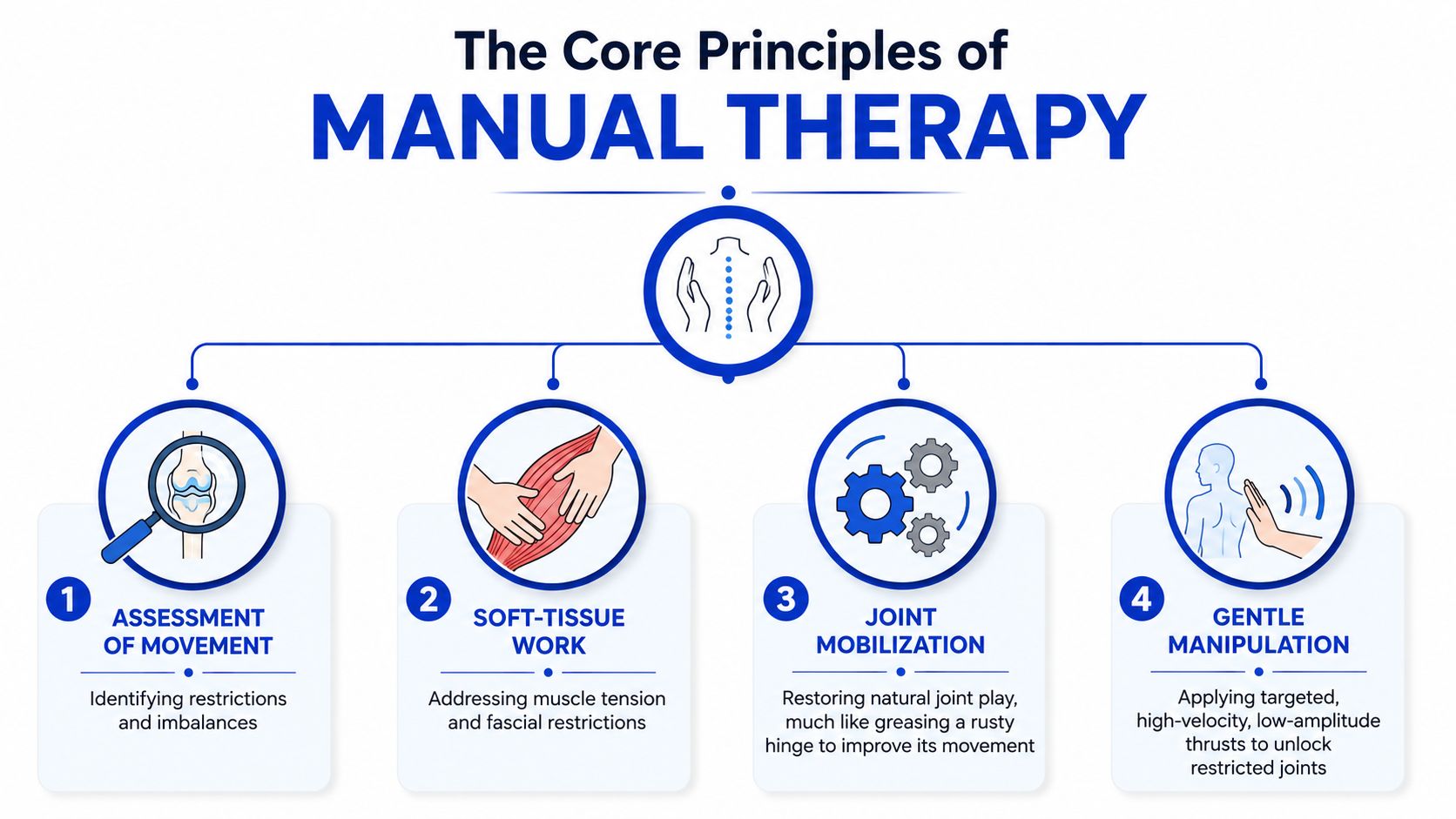
Manual therapy isn't one single technique. It usually includes assessment of movement, soft-tissue work, joint mobilisation, and gentle manipulation. It serves as a skilled tune-up for the movement system. A practitioner looks for where motion is restricted, where tissues are overly tense, and where the nervous system seems to be holding on to pain.
What each part is doing
Assessment comes first, because hands-on care should match the person in front of the practitioner, not a generic label. Soft-tissue work focuses on muscles and surrounding tissue that feel tight or overworked. Joint mobilisation is like loosening a stiff hinge, because the aim is smoother movement rather than forcing anything into place. Gentle manipulation uses a targeted thrust in selected cases, with the intention of improving mobility and pain response.
The science behind this is less about “putting things back” and more about pain modulation through neurophysiological mechanisms. Reviews show that manual therapy can reduce pressure-pain sensitivity and influence central nociceptive processing, which helps explain why some people feel looser or less protective after treatment even before strength or flexibility work has changed pain processing review.
Pain relief from manual therapy is often a nervous system effect as much as a tissue effect.
That matters because it changes expectations. Manual therapy is not about chasing a structural correction at all costs. It's about giving the body a safer window for movement, then using that window to build better habits.
How Manual Therapy Relieves Pain
A common first step with pain is protecting the painful area. A shoulder stays tense, a neck feels guarded, or the lower back seems to brace before you even move. Manual therapy works with those reactions by using touch, movement, and pressure to lower the body's alarm response and make movement feel less threatening.
What the evidence says
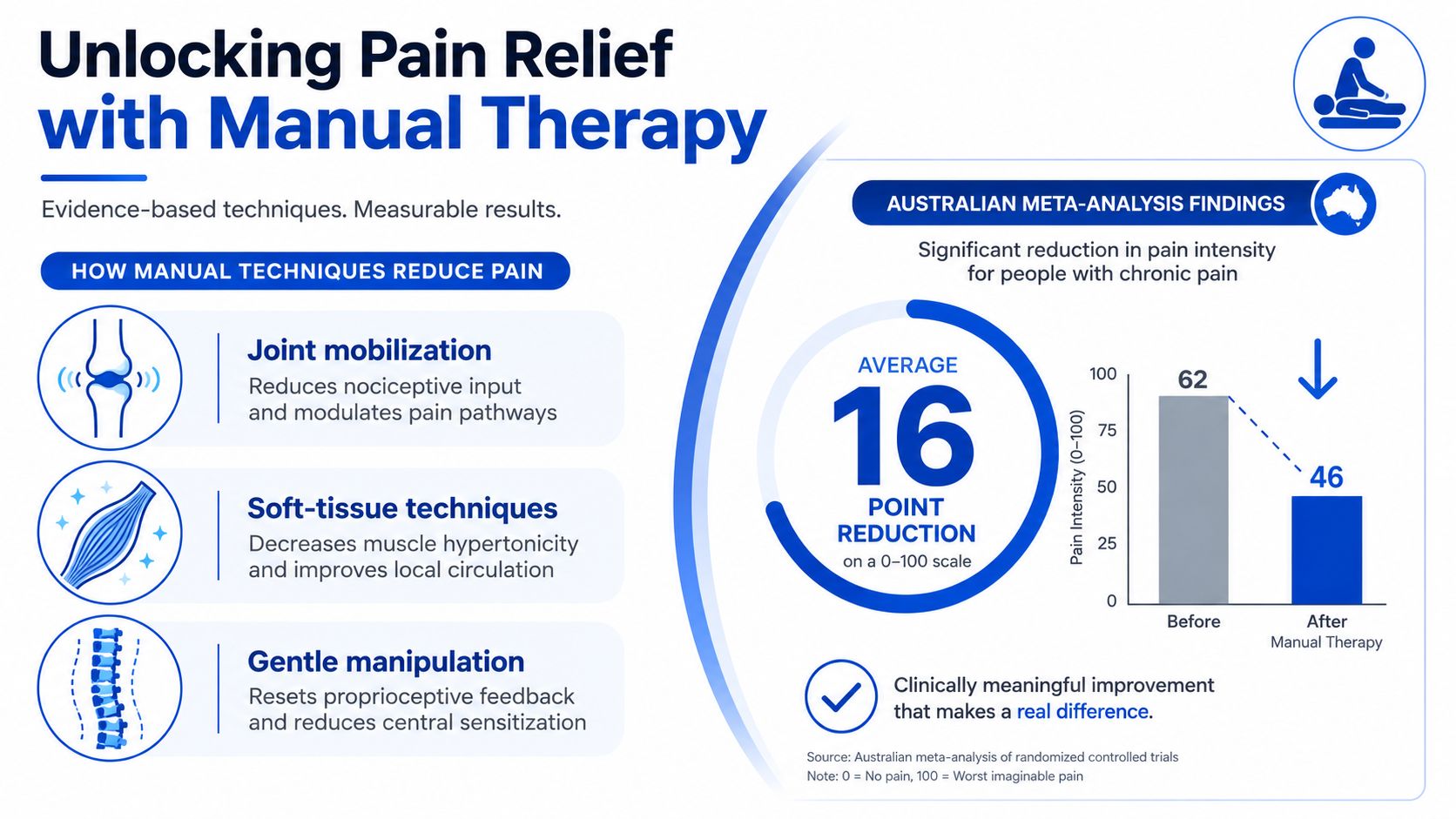
One way to see this is through pain modulation through neurophysiological mechanisms. Manual treatment can calm the sensitivity of pain pathways, so the nervous system responds less strongly to touch and motion. That is why some people feel easier movement or less guarding soon after treatment, even before exercise has had time to build strength or endurance.
A recent analysis of adults found manual therapy was linked with less pain and modest changes in body signals such as blood pressure, heart rate, and breathing rate adult meta-analysis. In practical terms, the treatment did not only relate to reduced pain. It also lined up with a small shift toward a calmer physical state.
For neck pain, Cochrane evidence shows manual therapy combined with exercise can reduce pain and improve function compared with no treatment, with only non-serious effects such as soreness, headache, or dizziness reported neck pain review. That matters because it shows where hands-on care fits best. It helps settle pain enough for exercise to do its job, and exercise then helps those gains last.

The short version is simple. Manual therapy can turn the pain volume down, while exercise helps the body relearn safe movement and build lasting tolerance.
Mobility Improvements through Manual Techniques
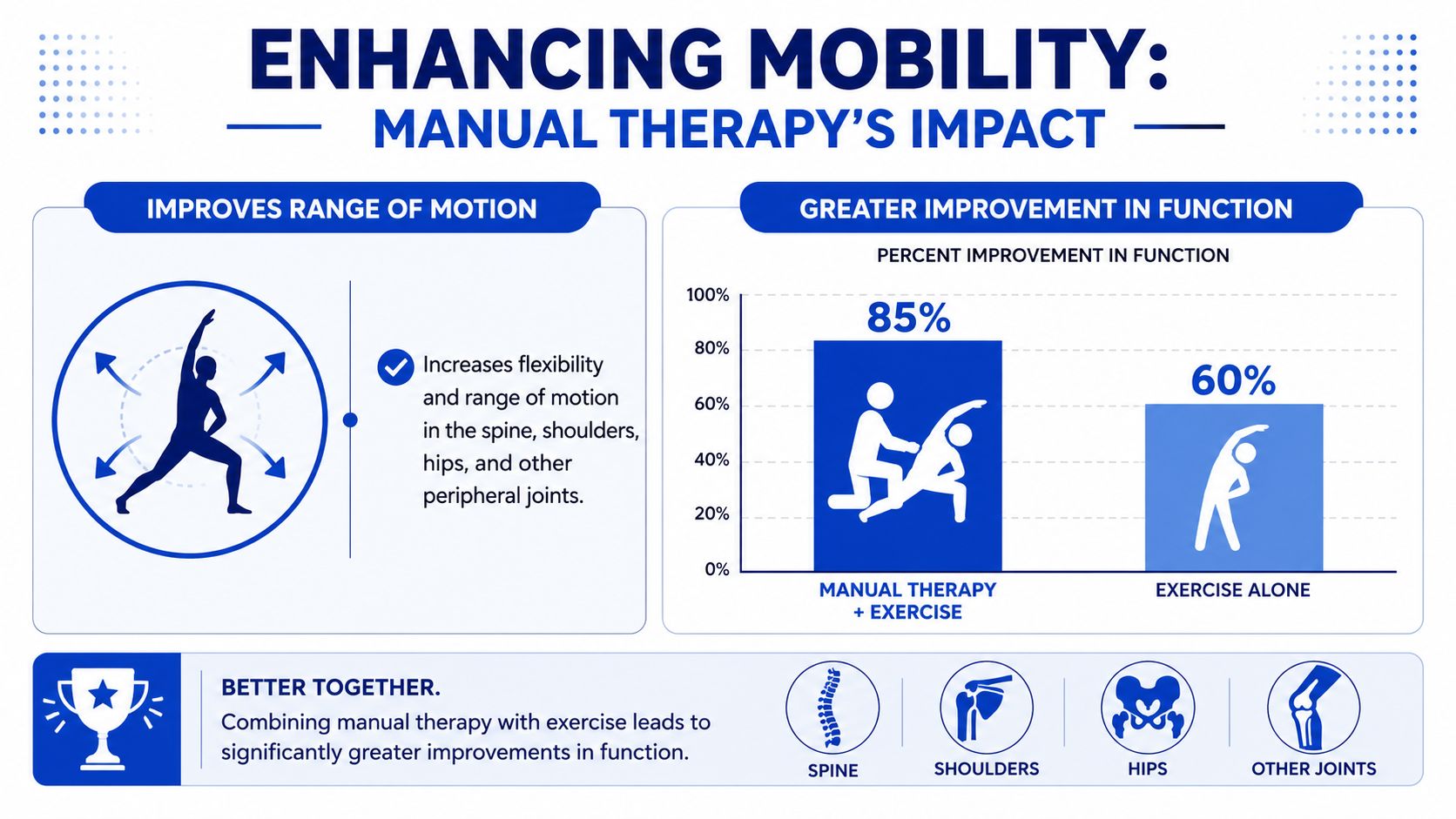
Stiffness is often the first thing people notice, even before the pain feels severe. Turning the head to check traffic, bending to tie shoes, or twisting to reach the back seat can start to feel limited, almost as if the body has put on the brakes. Manual therapy can help restore that movement by improving how the spine, shoulders, hips, and other joints glide and respond.
The change is not only mechanical. Hands-on treatment can calm the nervous system's protective response, which may make movement feel less threatening and less guarded. When pain settles, the body often allows motion more freely, much like easing pressure on a door so it swings open without sticking.
Why mobility often improves faster with exercise
The strongest results usually come when hands-on care is paired with movement. Reviews show manual therapy combined with exercise produces large reductions in pain and moderate improvements in function compared with no treatment or exercise alone across multiple musculoskeletal conditions combined care review. That matters because mobility is not only about the joint itself. It also depends on how willing the surrounding muscles and nervous system are to let the joint move.
The pattern is easy to follow. Manual therapy can reduce guarding and make movement feel less restricted. Exercise then teaches the body how to use that new range in daily life, so the gain is not just felt on the treatment table. Without active movement, the improvement may fade. Without hands-on care, the first steps of movement can stay too uncomfortable for some people.
Practical rule: hands-on care opens the door, exercise helps you walk through it.
For people who have tried stretching alone and felt disappointed, that pairing matters. A stiff area may need short-term relief before it can tolerate strengthening, balance work, or walking drills. Exercise after treatment helps the body practice movement while it still feels possible, which is one reason the two approaches work better together than either one on its own.
Arthritis and joint mobility example
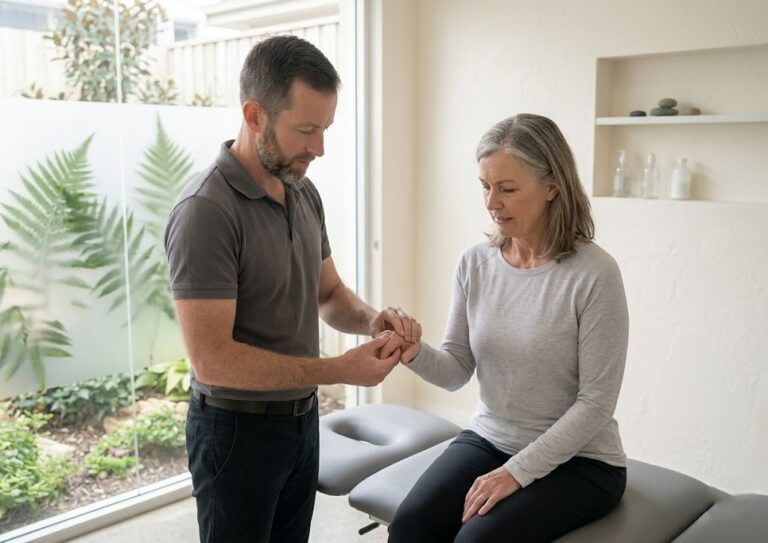
If movement feels blocked, manual therapy may help get it moving again. If the goal is to keep that progress, active exercise usually needs to be part of the plan.
Reducing Tension and Supporting Posture
Poor posture isn't just about “sitting up straight”. It's often what happens when the body spends too long in one position, especially at a desk, in a car, or on a couch. Muscles in the neck, chest, lower back, and hips can start doing extra work, while other areas become less mobile and less efficient.
Soft-tissue work and joint articulation can help interrupt that pattern. When tension eases, people often notice it's easier to hold themselves upright without feeling braced. That matters for office workers, parents, tradespeople, and older adults who feel worn down by repetitive strain.
Posture is usually a movement problem, not a willpower problem
Manual therapy can be useful as a mobility-enabling support. Australian guidance notes that it's most effective when framed as a treatment that supports exercise rather than as a primary fix for degenerative joint disease Australian Physiotherapy Association guidance. That distinction matters, because posture improves when the body can move better, rather than from being told to sit up taller.
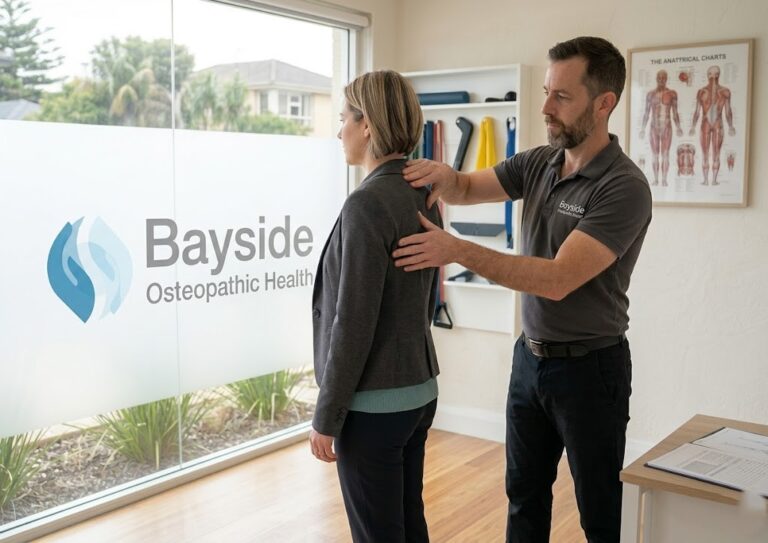
Targeted treatment can reduce the sense of strain around the shoulders and spine, which makes ergonomic changes easier to tolerate. It can also help people notice how much their usual positions are contributing to discomfort. Once that's clearer, home changes become more realistic. A better chair setup, regular movement breaks, and short exercise bouts start to feel doable instead of annoying.
Posture and corporate ergonomics example
Real-life Examples of Manual Therapy in Action
A remote worker with neck stiffness might come in after months of screen-heavy days. The first visit usually focuses on movement assessment, gentle soft-tissue work, and a few simple home exercises. After several sessions over four to six weeks, many people in that situation report less guarding when turning their head and a better tolerance for desk work, especially when they keep up with the movement plan between appointments.
An older adult with mild arthritis may describe stiffness that's worse in the morning and after sitting. In that setting, manual therapy is often used to reduce discomfort and make walking or stair climbing feel less abrupt. The goal isn't to “fix” arthritis. It's to help the person move more comfortably, which can make everyday tasks easier and reduce avoidance of activity.
What gradual progress usually looks like
A weekend athlete with a hamstring strain usually wants one thing, a return to training without re-triggering the pain. Manual therapy can be used alongside load management, mobility work, and progressive strengthening. The early changes are often subtle, such as less tightness when walking or squatting, rather than an instant return to full sport.
Progress is often measured in what people can do without thinking about pain every minute.
That's a more realistic expectation than hoping for a dramatic before-and-after moment. Manual therapy tends to work best when the person keeps moving, follows the home plan, and sees treatment as part of recovery rather than the whole answer.
Who Benefits Most from Manual Therapy
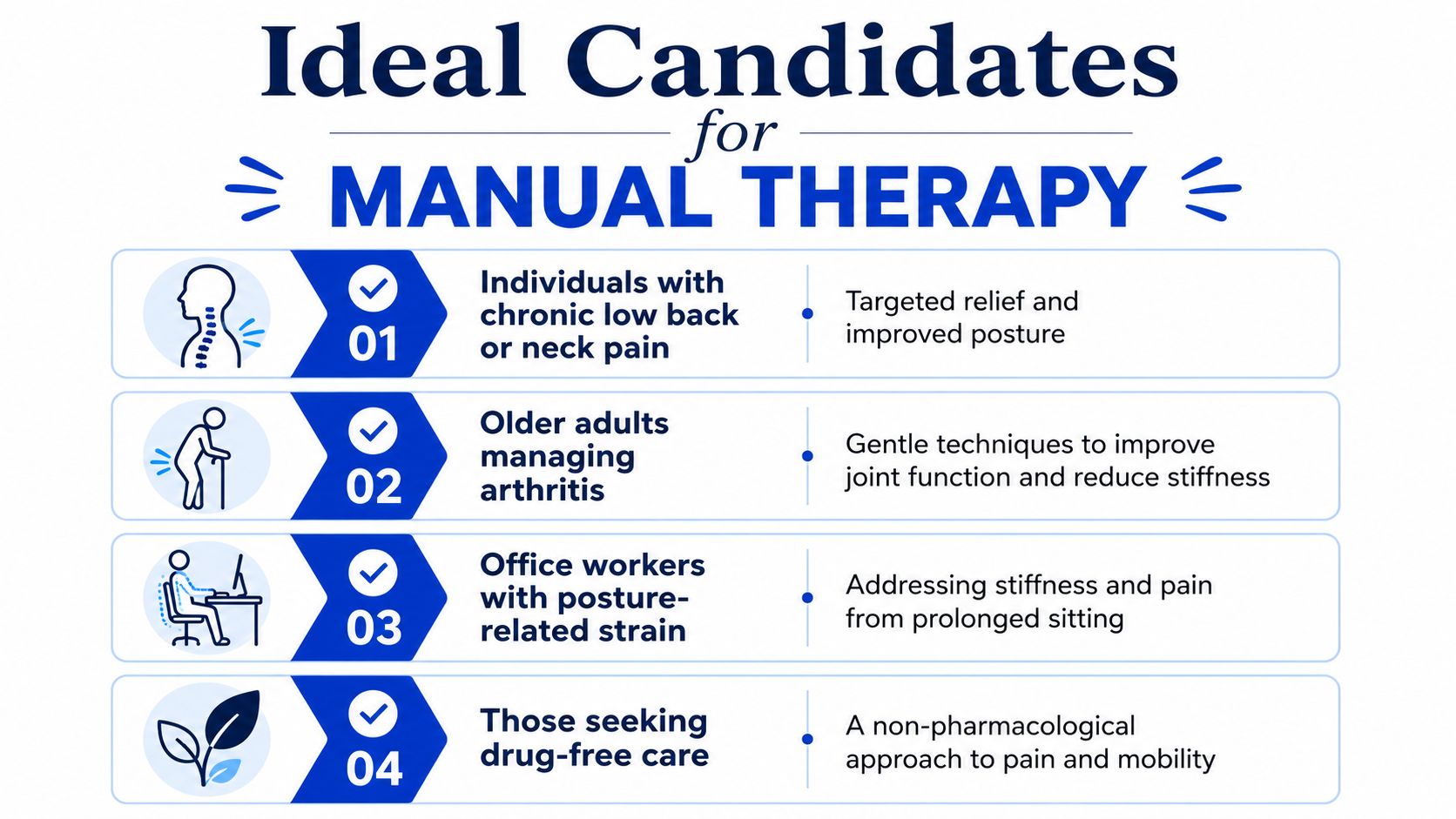
A common first question is, “Is this for my kind of pain?” Manual therapy is often a good fit for people with chronic low back pain, neck pain, posture-related strain, or stiffness that keeps everyday movement feeling restricted. In many cases, the hands-on work helps reduce pain enough that walking, stretching, and exercise feel more doable. That matters because manual therapy often works best when it makes movement easier, then exercise helps hold onto the gains.
The short-term relief is not just about loosening tight tissue. Hands-on techniques can change how the nervous system processes pain, which may lower guarding and make movement feel less threatening. It is a bit like turning down the volume on a noisy speaker. The message is still there, but it is easier to hear and respond to.
Who tends to respond well
- Individuals with chronic low back or neck pain. These complaints are among the best-studied uses of manual therapy, and a broad evidence summary supports this area of care.
- Older adults managing arthritis. Gentle techniques may help with stiffness and movement tolerance, especially when the goal is better function rather than a cure.
- Office workers with posture-related strain. Long periods of sitting can leave the neck, chest, and upper back feeling tight, and manual therapy can help ease that build-up so movement feels less guarded.
- People seeking non-pharmacological care. Manual therapy gives them a hands-on option that can be paired with exercise and self-management.
Safety matters too. The research generally shows that side effects are usually mild and short-lived, such as soreness, headache, dizziness, local redness, or bruising when they occur. That is reassuring, but it does not mean every technique suits every person. Technique choice, treatment dose, and medical history still matter.
Good care matches the person, not just the pain location.
That idea is especially relevant for older adults and people with degenerative joint changes. The aim is often to improve comfort and function first, then support those changes with exercise and other movement habits so the benefits last longer.
Next Steps for Your Manual Therapy Journey
If you're looking for a practitioner in the Bayside area, start with someone who assesses movement, explains their reasoning clearly, and links treatment to exercise or home care. A good first appointment should feel like a conversation, not a rushed routine. You should come away understanding what the practitioner found, what they plan to do, and what you can do between visits.
Bayside Osteopathic Health offers Osteopathic Manual Therapy as an onsite hands-on treatment option for musculoskeletal pain and mobility issues, and it fits the kind of conservative care many readers are looking for. Other qualified clinicians may also provide suitable manual therapy, including physiotherapists and osteopaths, as long as they tailor the plan to your symptoms and goals.
Good questions to ask at the first visit
- What are you seeing in my movement? This helps you understand whether the issue is mainly stiffness, sensitivity, weakness, or a mix of factors.
- How will this treatment support exercise? The answer should connect the hands-on work to an active plan.
- What should I expect after treatment? Mild soreness can happen, so it helps to know what's normal.
- What can I do at home? Clear advice usually leads to better follow-through.
A simple self-care checklist
- Move often. Brief standing or walking breaks help reduce the build-up of stiffness.
- Keep stretches gentle. The aim is comfort and consistency, not forcing range.
- Use your treatment gains. If a session makes turning, bending, or walking easier, practise those movements safely afterwards.
- Build in posture reminders. Small changes matter more than trying to hold one perfect position all day.
- Follow the exercise plan. The longer-lasting change usually results from doing so.
If you're ready to see whether hands-on care fits your pain pattern, book an assessment with Bayside Osteopathic Health and ask how manual therapy can be combined with exercise, home advice, and a plan that suits your daily routine.