
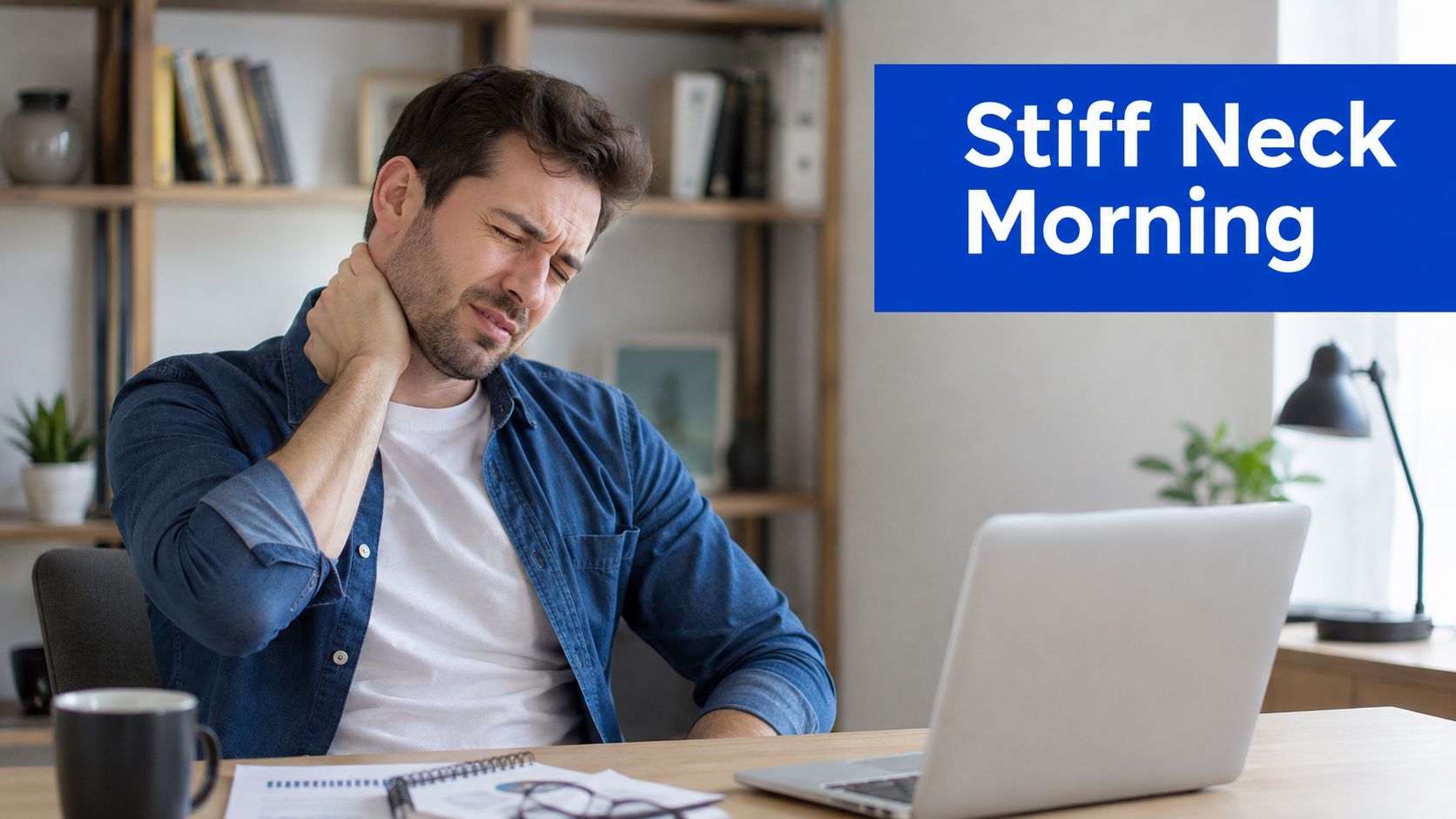
You've probably had the same frustrating moment in the morning. Your neck feels stiff, your jaw feels tender when you chew, and the whole side of your face seems to be “off” before the day has even started. When neck pain and jaw pain show up together, they're often behaving like one mechanical problem, not two separate complaints.
That doesn't mean every sore neck automatically comes from the jaw, or that every clicking jaw starts in the neck. It does mean the two areas often share load, share muscles, and share the same irritation pattern. In an osteopathic view, the useful question is rarely “Which one is the problem?”, it's “What's making the whole system work harder than it should?”
Table of Contents
- Why Your Neck and Jaw Hurt Together
- The Shared Anatomy Behind the Symptoms
- Common Causes of Combined Neck and Jaw Pain
- Signs Your Neck and Jaw Are Connected
- Self-Care Strategies for Lasting Relief
- How Bayside Osteopathic Care Approaches the Problem
- When to Seek Help and Common Questions Answered
Why Your Neck and Jaw Hurt Together
A common pattern starts in a very ordinary way. You sit at a desk all day, lean forward toward your laptop, then wake the next morning with a tight upper neck and a jaw that feels sore when you chew toast. That kind of combined symptom doesn't usually point to two unrelated injuries, it points to one chain under strain.
The neck and jaw work like linked parts of the same frame. If the upper neck is stiff, the jaw often has to move through a slightly different track. If the jaw is clenched for hours, the muscles that stabilise the head and neck often join the compensation. The result is a loop, the same way one stiff hinge can make the whole door feel heavier.
Practical rule: if your jaw feels worse after a long screen day, and your neck feels worse after clenching or poor sleep, you're probably looking at a shared load problem.
Grinding teeth, sleeping awkwardly, and long hours on screens can all feed that pattern. A neck that doesn't rotate smoothly can also make chewing feel less comfortable, because the body tries to protect one area by tightening another. That's why relief usually comes faster when you treat the whole pattern rather than chasing whichever spot is loudest today.
The Shared Anatomy Behind the Symptoms
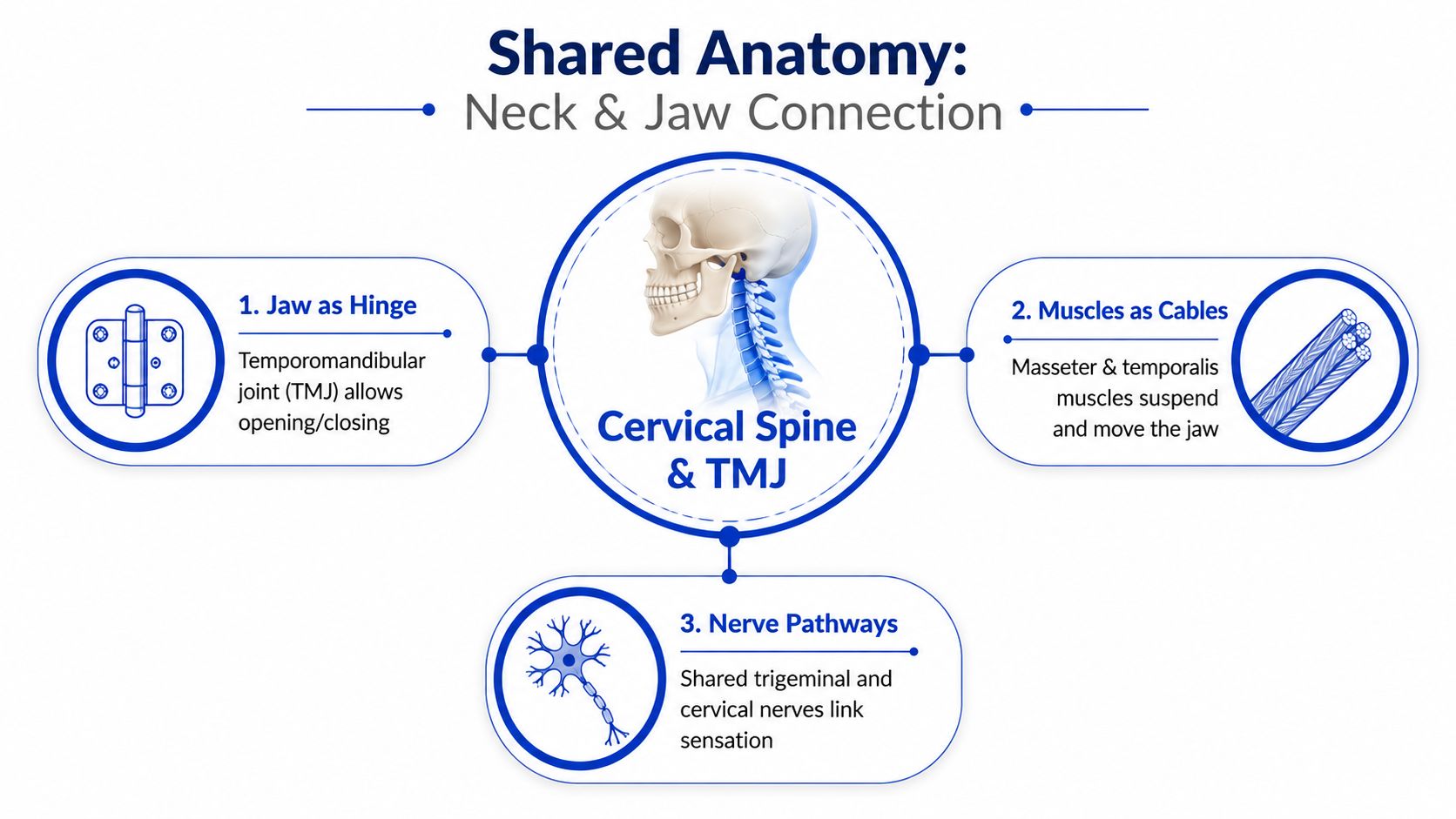
Think of the jaw as a hinge suspended by cables. The hinge is the temporomandibular joint, or TMJ, and the cables are the chewing and support muscles that control how the jaw opens, closes, and settles at rest. The supporting frame is the cervical spine, especially the upper neck, because head position changes the working angle of the jaw almost immediately.
The main chewing muscles, the masseter, temporalis, pterygoids, and suprahyoids, don't work in isolation. They attach to the skull, lower jaw, and structures in the front of the neck, so a change in one area changes tension everywhere else. That's why a stiff upper neck can alter how the jaw tracks, and why a guarded jaw can create a heavy, tired feeling through the neck.
Why pain can travel
Nerves also help explain the confusion. The face and jaw send sensation through the trigeminal nerve, while the upper neck sends sensation through nearby cervical nerve pathways. When those signals meet in the same processing area, the brain can misread the source, which is why pain can be felt in the cheek, temple, ear, jaw, or neck even when the original irritation is somewhere else.
The stylohyoid and digastric muscles add another layer because they help link jaw movement with the front of the throat and the neck. You don't need the Latin names to understand the effect, though. If the front and side supports are tight, the jaw doesn't glide freely, it gets steered.
For a deeper look at how myofascial techniques fit into this picture, this guide on myofascial therapy in Bayside shows how soft-tissue restriction can change movement quality. Once you can visualise the jaw and neck as one connected unit, the symptoms make more sense and the treatment plan becomes more logical.

Common Causes of Combined Neck and Jaw Pain
A common driver is forward-head posture from desk work, laptops, and phone use. A teacher leaning over a laptop after class, or a remote worker hunched toward a second monitor, keeps the upper neck under constant load while the jaw braces in the background. The body does not file those tasks separately, it turns them into one protective pattern. An illustration of ergonomic posture for office workers to prevent neck and jaw pain.
Bruxism and clenching come next, often with stress or broken sleep. Some people wake with sore jaw muscles after grinding through the night, while others hold their teeth together during concentration, driving, or meetings. In both cases, the jaw works harder than it should, and the neck often tightens to help stabilise the head.
Whiplash and minor sports injuries are another trigger, especially when the head snaps quickly or the jaw tightens during impact. Cyclists who grip the handlebars too hard, or players who brace through contact, can irritate both regions in the same incident. Dental work matters too, because prolonged mouth opening can leave the jaw muscles tired and the neck guarded afterwards.
Arthritis in the TMJ or the cervical spine can also make motion feel stiff and restricted. Referred pain from upper cervical dysfunction can blur the picture further, so the spot that hurts is not always the spot that needs the most attention.
| Cause | Typical Pattern | Common Trigger |
|---|---|---|
| Forward-head posture | Upper neck stiffness with jaw fatigue | Long desk or laptop sessions |
| Bruxism or clenching | Morning jaw soreness and tight neck muscles | Stress, sleep disturbance, concentration |
| Whiplash or minor sports injury | Sudden neck pain with jaw guarding | Rapid head movement, impact, bracing |
| Dental procedure strain | Jaw tiredness and facial aching | Prolonged mouth opening |
| Arthritis or joint irritation | Stiff, limited movement in both areas | Age-related joint change or overload |
The takeaway is simple. The cause is usually not one dramatic event, but repeated strain layered over time.
Signs Your Neck and Jaw Are Connected
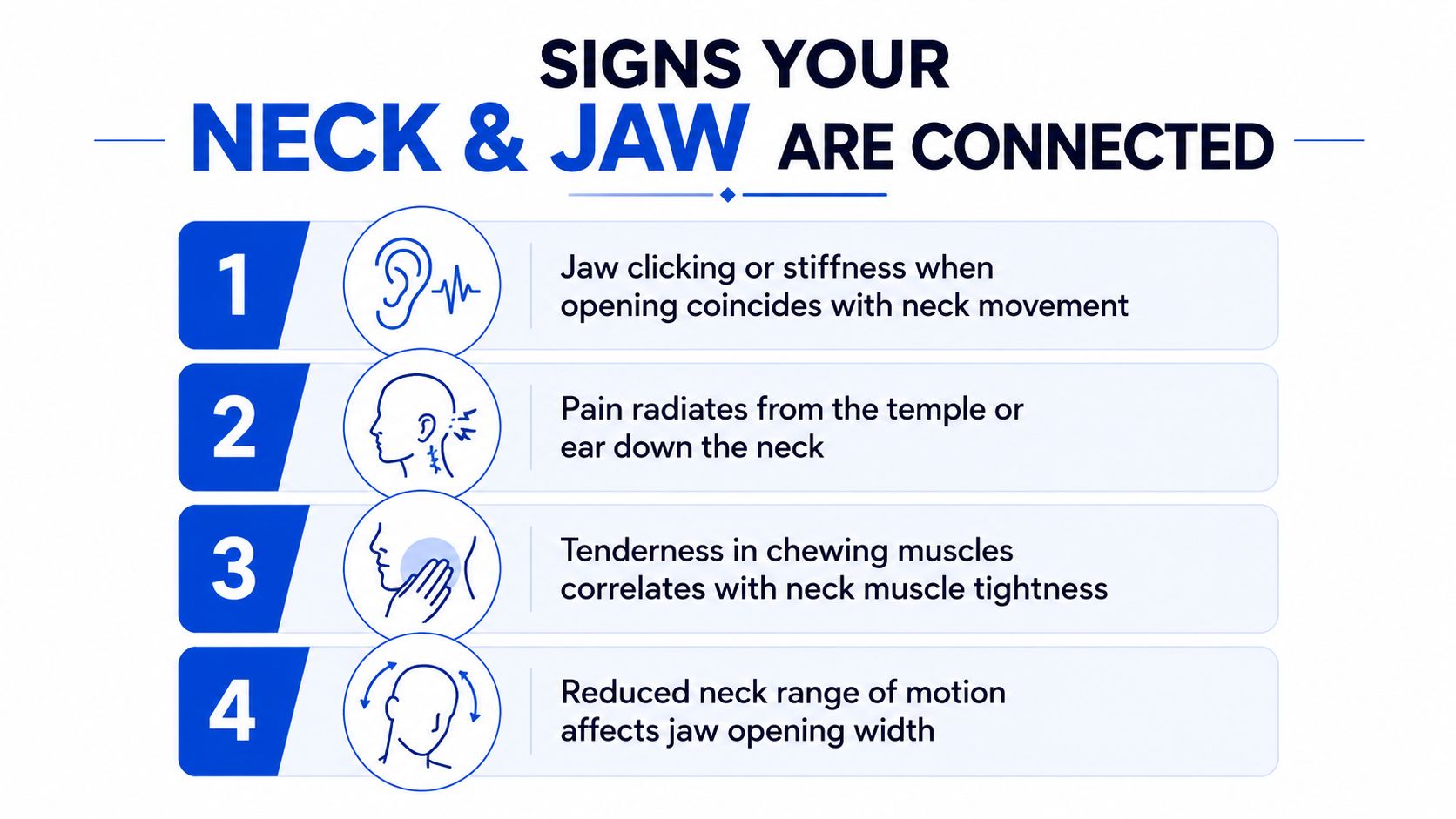
Start with the morning check. If your jaw clicks or feels stiff when you open it, and your neck is also tight first thing, that's a clue the two are behaving as one. The timing matters, because overnight clenching and sleeping position often set the tone for both areas.
Now turn your head slowly from side to side, then tilt your ear towards each shoulder. If the jaw feels tighter, clicks more, or sends discomfort into the cheek or ear during those movements, the neck is probably influencing the jaw. The reverse can happen too, where jaw movement makes the neck feel guarded or pulled.
Try a gentle clench for a few seconds, then release. If the upper trapezius or the muscles at the base of the skull tighten in response, your body is linking jaw effort with neck effort. That response is common in people who brace through the day without noticing it.
Place your fingertips just in front of each ear and open and close your mouth slowly. If one side moves differently, feels tender, or catches, that side deserves closer attention.
A few visible signs are worth watching together:
- Jaw clicking with neck movement, especially when you turn or tilt your head.
- Cheek, temple, or ear referral, which often feels like pain “moving around”.
- Chewing muscle tenderness that appears alongside neck tightness.
- Reduced neck range, which can make the jaw opening feel less smooth or less comfortable.
The point of these checks isn't to self-diagnose. It's to notice whether the system is working as one unit, which helps you describe the problem more clearly when you seek care.
Self-Care Strategies for Lasting Relief
The best self-care works like a small routine, not a scattered list of tricks. Warmth, movement, posture, and habit change all support one another, so each one makes the next easier. When people only stretch, or only massage, they often miss the part that keeps reloading the tissue.
Start with calm input
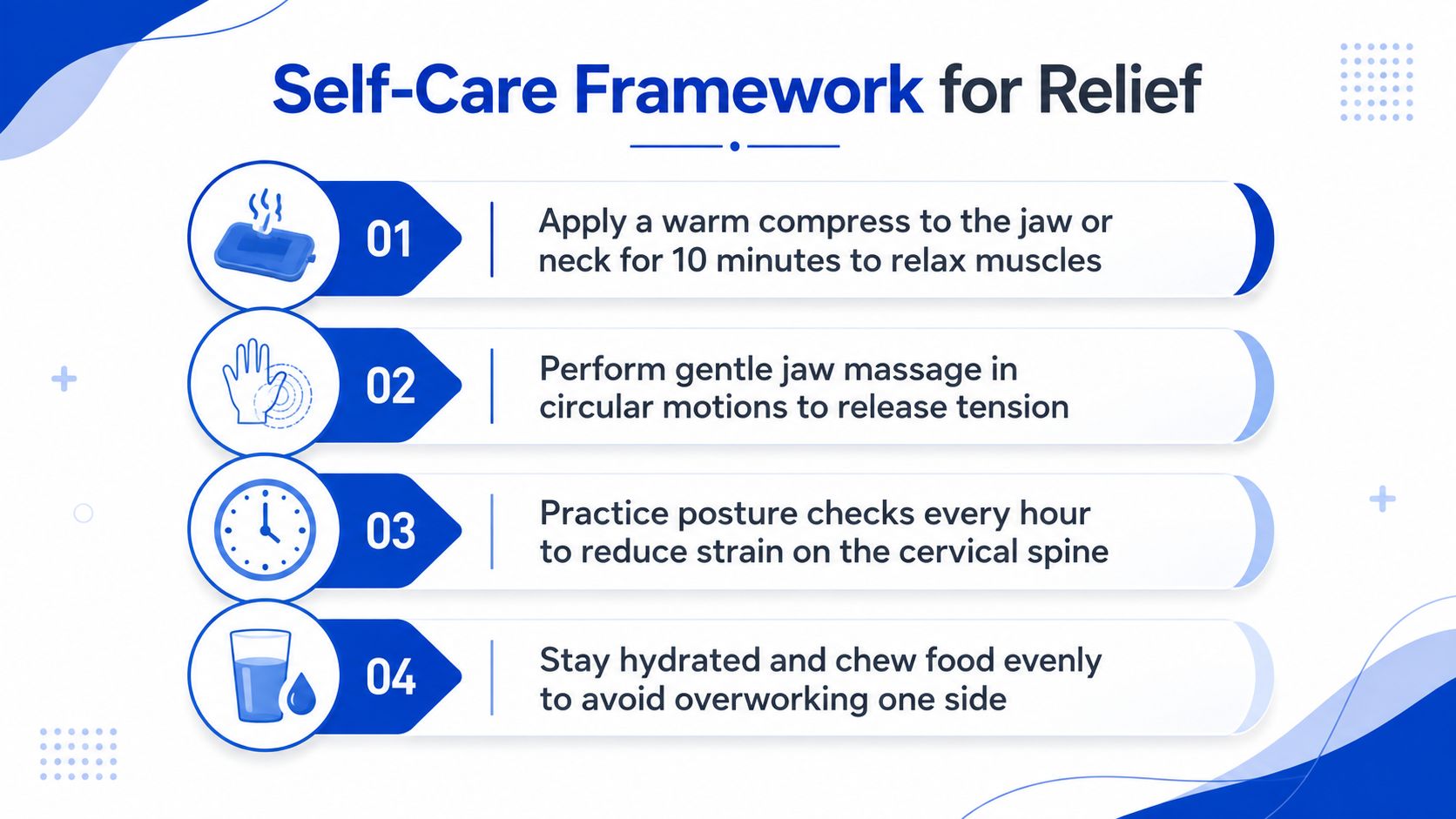
A warm compress on the side of the neck or jaw can help the muscles settle before you ask them to move. After that, light self-massage over the masseter and the muscles at the base of the skull can reduce the “guarding” feeling. Keep it gentle, because hard pressure often makes an already irritable jaw brace more.
Then use controlled movement
Slow chin tucks help the neck find a better resting position without forcing it. Controlled jaw opening, done only within a comfortable range, helps the joint move without panic. If you want resistance, place a palm under the chin and apply only a light push while opening slightly, then stop if pain sharpens.
Reset the habits that keep loading the system
Screen height matters because a low monitor pushes the head forward. Sleep position matters because a twisted neck often leaves the jaw tense by morning. A useful resting cue is lips together, teeth apart, because it stops low-level clenching from becoming an all-day habit.
If the jaw feels worse at the end of the day, look at the day itself before looking for a dramatic cause.
Simple breathing drills can help too, especially when stress keeps the jaw half-locked. Slow exhalation tells the body it doesn't need to brace quite so hard. The goal is not perfection, it's giving the jaw and neck enough chances to stop overworking.
How Bayside Osteopathic Care Approaches the Problem
A neck and jaw problem often looks like two separate complaints, but the body usually presents them as one mechanical pattern. If the bite, the upper neck, and the muscles around the skull are all working harder than they should, symptoms can spread across the system. That is why a careful assessment matters more than guessing at the most painful spot.
What the first appointment usually involves
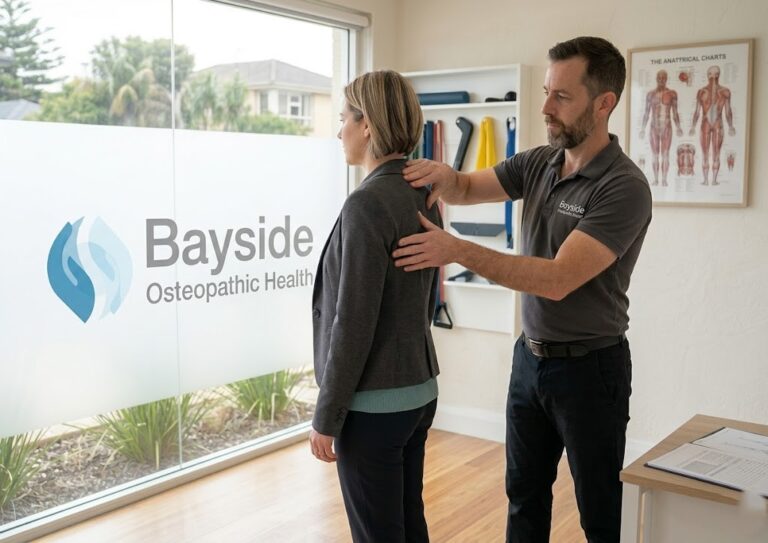
The first consult usually starts with your history, especially how the jaw behaves when you chew, yawn, clench, or wake up. The practitioner then looks at posture, neck range, and jaw opening, because those movements often show the pattern more clearly than pain alone. Palpation of the cervical spine, TMJ, and nearby muscles helps identify which tissues are guarding and which ones are not moving well.
A useful diagnosis links the neck, jaw, and upper back into one mechanical chain. That keeps care focused on the cause of the load, not only the place where the ache shows up. If one part of the chain is stiff, the others often compensate.
What hands-on care may involve
Osteopathic care often includes cervical and upper thoracic articulation, suboccipital release, and myofascial work through the masseter, pterygoids, and sternocleidomastoid. TMJ balancing techniques may also be used where appropriate. A medical illustration of osteopathic treatment planning for neck and jaw pain can help show how those areas are assessed together. For some patients, Bayside Osteopathic Health provides this kind of gentle, hands-on assessment and treatment for connected head, neck, and jaw symptoms.
A care plan may include a few review visits, home exercises, and simple changes to daily load. If dental factors or a more complex headache pattern are involved, coordination with a dentist or GP can help. The aim is steadier movement and less muscle tension, not a quick fix that ignores why the system became overloaded.
| Appointment Stage | Practitioner Focus | Patient Involvement |
|---|---|---|
| History and screening | Identifying jaw, neck, sleep, and work patterns | Describing triggers and daily habits |
| Movement assessment | Watching how the neck and jaw move together | Opening, closing, turning, and tilting |
| Hands-on treatment | Reducing stiffness in joints and soft tissue | Relaxing and giving feedback |
| Home plan | Building a realistic self-care routine | Doing exercises and posture changes |
When to Seek Help and Common Questions Answered
Some symptoms need prompt medical review rather than waiting for conservative care. Get checked quickly if you notice unexplained weight loss, fever, night pain, limb weakness, numbness, a sudden severe headache, jaw locking open or shut, or recent trauma. Those signs deserve proper assessment because they can point beyond a routine mechanical problem.
If the jaw is locked, the pain is severe, or the symptoms changed suddenly after a fall or impact, don't try to “work through it”. The same applies if you're noticing neurological symptoms in the arms or legs. A hands-on approach can help many people, but red flags should be handled first.
Common questions patients ask
How long does it take to settle?
It depends on how long the neck and jaw have been overworking, and on whether clenching, posture, or sleep habits are still feeding it. Short-term flare-ups often calm faster than long-standing patterns.
Should I see a GP or dentist first?
If the problem started after a dental issue, or if tooth pain is part of the picture, a dentist may be the right first stop. If the main issue is movement, stiffness, and muscle tension, a GP or osteopath may be the better first call.
Is imaging always needed?
No. Many neck and jaw patterns are assessed clinically first, because movement behaviour often gives more useful information than a scan does.
Does jaw clicking always mean damage?
Not necessarily. Clicking can happen when the joint track is a bit uneven, and it's more important to ask whether it's painful, locking, or getting worse.
How does stress fit in?
Stress often shows up as clenching, shallow breathing, poor sleep, and a jaw that never fully rests. It doesn't mean the pain is “in your head”, it means the body is bracing.
If you're in Bayside and the jaw, neck, or upper back all feel tied together, Bayside Osteopathic Health offers gentle, hands-on care focused on movement, muscle tension, and practical home strategies. Book a visit through Bayside Osteopathic Health if you'd like a calm assessment of how your neck and jaw are working as one system.