
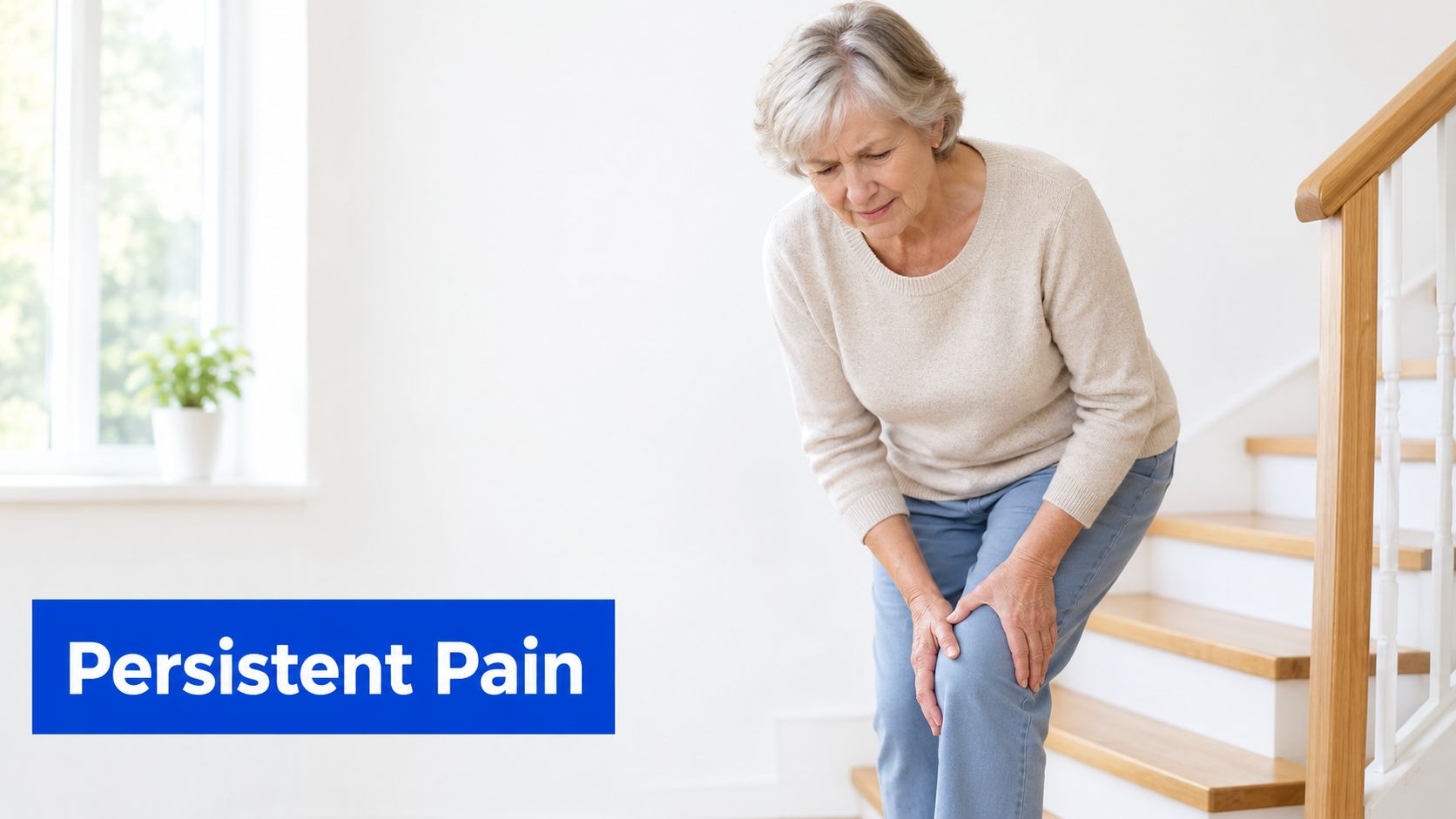
You notice it first on the stairs. Your knee aches as you lower your weight onto the next step, then feels stiff when you stand after sitting. A short walk that used to clear your head now requires planning around hills, benches and how much discomfort you can tolerate.
That uncertainty is why many people search for an osteopath for knee pain. They want to know whether the pain is coming from the knee itself, the hip or ankle, how much activity is safe, and whether hands-on treatment could help them move more comfortably. Osteopathy can be part of that process, but it should sit within a safety-conscious plan that may also involve exercise, a physiotherapist, a GP or a specialist.
Table of Contents
- Why People Seek an Osteopath for Knee Pain
- How an Osteopath Assesses Knee Pain
- Common Osteopathic Techniques for Knee Pain
- What the Evidence and Australian Data Show
- Self-Care and Exercise Support for Knee Pain
- When to See Other Professionals
- Medicare Access and Booking Local Care in Bayside
- What to Expect from Osteopathic Knee Pain Care
Why People Seek an Osteopath for Knee Pain
Knee pain rarely behaves like a simple on-off switch. It may be tolerable while walking on level ground but sharp on stairs, uncomfortable after rest, or worse after gardening. Some people feel stiffness around the kneecap, while others notice reduced confidence because the knee feels weak or unreliable.
The knee also works as part of a chain. A stiff ankle can change how the shin moves. Reduced hip strength can alter how the thigh tracks during a step. Protective tension in the quadriceps, hamstrings or calf can make the joint feel more restricted, even when the main source of irritation is inside the knee.
What people are usually looking for
A lot of people aren't seeking a dramatic manipulation or a promise that damaged cartilage can be restored. They want a clear explanation, sensible options and a way to keep doing ordinary activities without constantly provoking symptoms.
An osteopath may provide:
- A movement assessment: This looks at the knee alongside the foot, ankle, hip, pelvis and spine.
- Hands-on support: Soft-tissue work and gentle mobilisation may make movement feel easier for a period of time.
- Practical guidance: You can discuss walking, stairs, work positions, exercise and how to respond when symptoms flare.
- Referral when needed: Persistent swelling, instability, trauma or rapidly worsening symptoms may require medical investigation rather than routine conservative care.
The important distinction is that osteopathy is one option, not a universal answer. For many people, it works best as an adjunct to active rehabilitation rather than as a passive treatment used on its own.
How an Osteopath Assesses Knee Pain
A useful assessment begins before any hands-on treatment. The practitioner needs to understand when the pain started, what changed around that time, what aggravates it and whether symptoms are improving, stable or deteriorating.
The first consultation
Expect questions about walking, stairs, squatting, sitting, exercise and previous injuries. Your osteopath may ask whether the knee clicks, catches, locks, gives way or swells. They'll also want to know about general health, medication, inflammatory symptoms and any recent trauma.
Next comes functional testing. You might be asked to walk, rise from a chair, balance, bend the knee, step down or perform a controlled squat. These tasks show how the body shares load. A person who avoids bending the knee may shift more work into the hip or ankle, creating tension elsewhere.
Looking beyond the painful joint
The practitioner may compare both knees and assess the hip, ankle, foot, pelvis and lower back. They can check muscle tone, joint range, balance, coordination and the way the kneecap and lower leg move during simple tasks.
Palpation adds information about tenderness, muscle tension and local sensitivity, but it can't identify every cause of knee pain. An osteopathic assessment doesn't replace investigation for inflammatory arthritis, infection, fracture or significant structural damage.
Practical rule: The more unusual, severe or rapidly changing the symptoms, the more important it is to establish the diagnosis before relying on conservative treatment.
Australian guidance indicates that knee osteoarthritis can often be diagnosed clinically without imaging, while X-rays may be appropriate when symptoms are atypical, worsening or causing severe functional impairment despite non-surgical care. That means an osteopath can be a reasonable first point of contact for some uncomplicated musculoskeletal presentations, provided the assessment includes appropriate triage.
Common Osteopathic Techniques for Knee Pain
Hands-on treatment should have a specific purpose. The aim may be to reduce protective muscle tension, improve a restricted movement or make an exercise easier to perform. It shouldn't be presented as a way to reverse joint degeneration.
What treatment may include
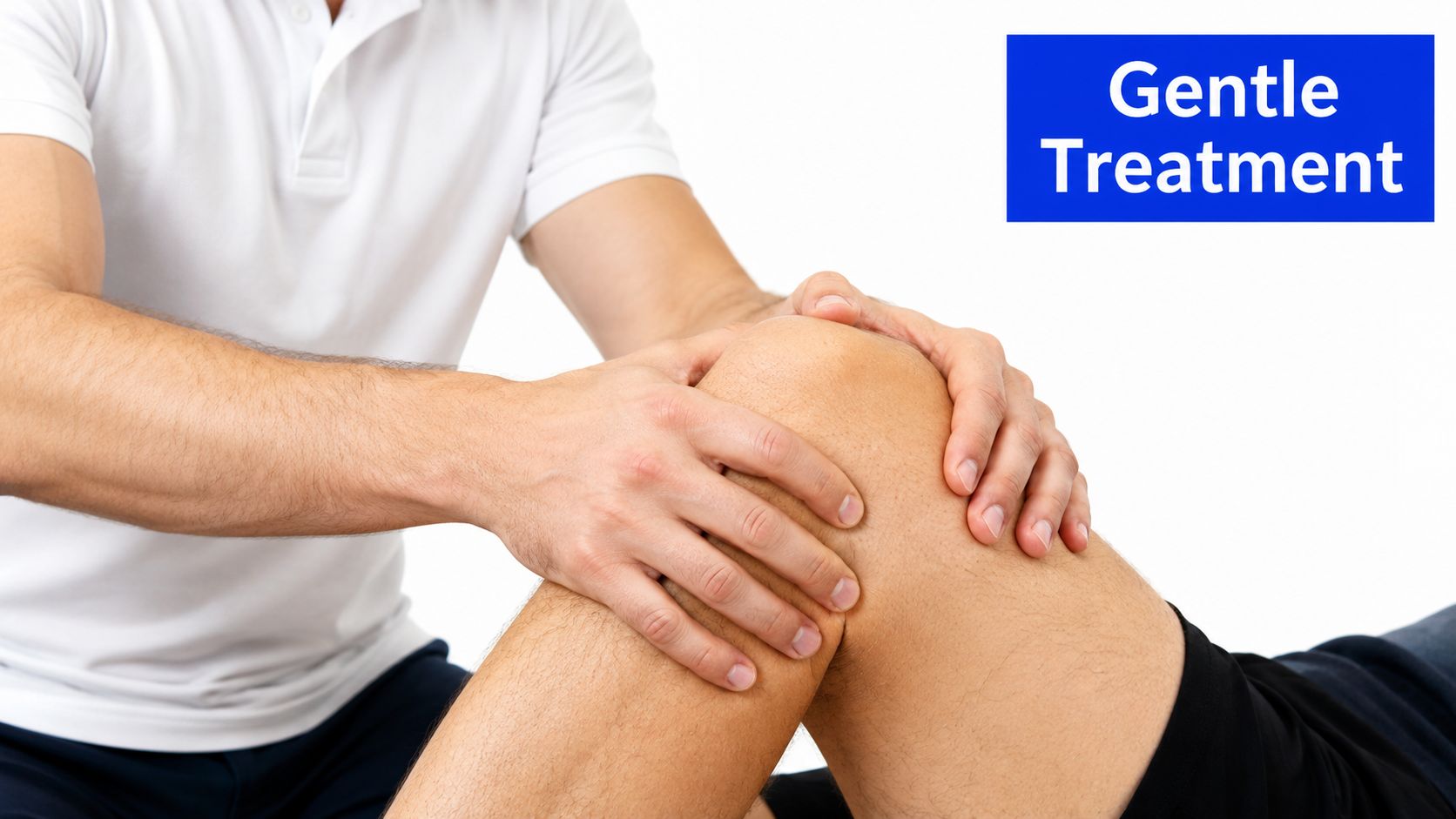
Soft-tissue techniques can target the quadriceps, hamstrings, calf and tissues around the hip. Reducing excess tension may help you bend or straighten the knee with less guarding. The effect is often most useful when it allows you to practise a movement that was previously uncomfortable.
Joint articulation involves controlled movement through a joint's available range. An osteopath may work around the knee, ankle, hip or pelvis, depending on the assessment. The intention is to support comfortable movement, not to force a painful joint into a position it can't tolerate.
Gentle mobilisation uses small, measured movements to help a person feel less restricted. This can be particularly helpful when stiffness has led to reduced activity, although any improvement should be tested through function rather than assumed from how loose the joint feels on the treatment table.
Movement coaching connects manual care with what happens outside the clinic. You may be shown how to modify a squat, manage stairs, pace a walk or begin strengthening without creating a prolonged flare.
The trade-off is straightforward. Hands-on care may provide short-term comfort or improve confidence, but it doesn't replace the gradual loading that helps muscles tolerate daily demands. A plan that uses treatment without building strength and capacity often gives the knee little reason to remain improved.
The following video provides general context about osteopathic approaches. Your treatment should still be based on an individual assessment and consent.
What the Evidence and Australian Data Show
For adults with persistent knee pain, osteoarthritis is a common reason to seek clinical assessment. The Australian Institute of Health and Welfare overview of osteoarthritis estimated that about 2.1 million Australians, or 8.3% of the population, were living with osteoarthritis in 2022. It affected approximately 10% of Australian females and 6.1% of males, and became more prevalent with age.
The same source recorded approximately 242,000 hospitalisations with osteoarthritis as the principal diagnosis in 2021–22, equivalent to 940 hospitalisations per 100,000 people. Australian hospitals also recorded around 53,500 knee replacements where osteoarthritis was the principal diagnosis, corresponding to 210 knee-replacement hospitalisations per 100,000 population during that period.

These figures show the condition's scale, not the results of osteopathic treatment. They also do not mean every person with knee osteoarthritis requires surgery. Joint replacement is generally considered after symptoms, loss of function and non-surgical options have been assessed.
Where osteopathy fits
Australian reporting showed a long-term rise in knee replacement activity associated with osteoarthritis. Total knee replacements increased from 16,089 in 2000–01 to 26,712 in 2007–08, a 67% rise, and more than 97% of knee and hip replacements attributed to arthritis were due to osteoarthritis, according to earlier AIHW arthritis reporting.
That history supports early attention to mobility, strength, activity tolerance and function. It does not establish that manipulation changes osteoarthritis itself. In practice, osteopathy fits after appropriate screening, helping with movement-related symptoms and active rehabilitation. A GP, physiotherapist or medical specialist should assess sudden swelling, trauma, locking, marked instability or symptoms that do not fit a routine musculoskeletal pattern. Hands-on care should support that pathway, with referral when safety or diagnosis is uncertain.
Self-Care and Exercise Support for Knee Pain
The strongest Australian clinical recommendation for knee osteoarthritis is an individualised land-based exercise programme, not manual therapy in isolation. RACGP guidance strongly recommends exercise for people with knee osteoarthritis regardless of age, structural severity, functional status or baseline pain, with walking and muscle-strengthening exercise specifically endorsed.
Build capacity gradually
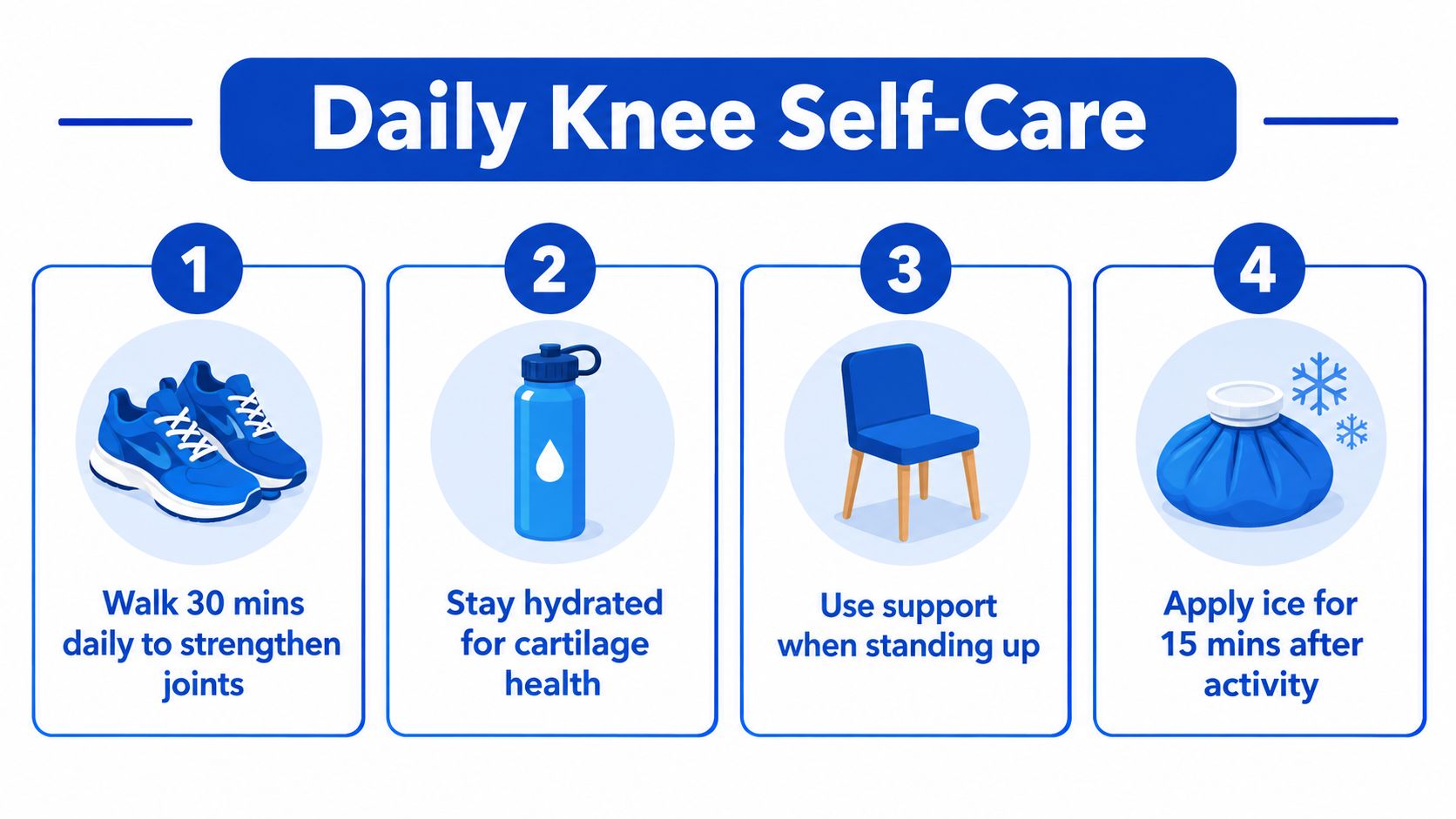
Start with an activity you can repeat consistently. Walking, cycling, swimming and water exercise can provide lower-impact ways to stay active, while strengthening can improve the muscles' ability to share load around the knee.
An osteopath or physiotherapist may help you select and progress exercises for:
- The quadriceps: These muscles help control bending and straightening during walking and stairs.
- The hip abductors: They support control of the pelvis and thigh during single-leg loading.
- The calf: It contributes to ankle movement and helps absorb force as you step.
- Balance and aerobic capacity: These support confidence and participation in everyday activity.
A practical starting point might involve sit-to-stand movements, supported step work, calf raises or controlled knee extensions, but the correct choice depends on irritability, strength and function. The useful dose is the one you can recover from and repeat, not the most demanding session you can tolerate once.
Use the 24-hour response as your guide. A temporary and tolerable increase in symptoms may be acceptable. Persistent worsening, increasing effusion or declining function means the load should be reduced and the diagnosis reviewed.
You can also use this rehabilitation exercise resource as a prompt to keep active care visible between appointments. Don't treat an infographic as an individual prescription. Your exercise plan should reflect what your knee and whole body can currently manage.
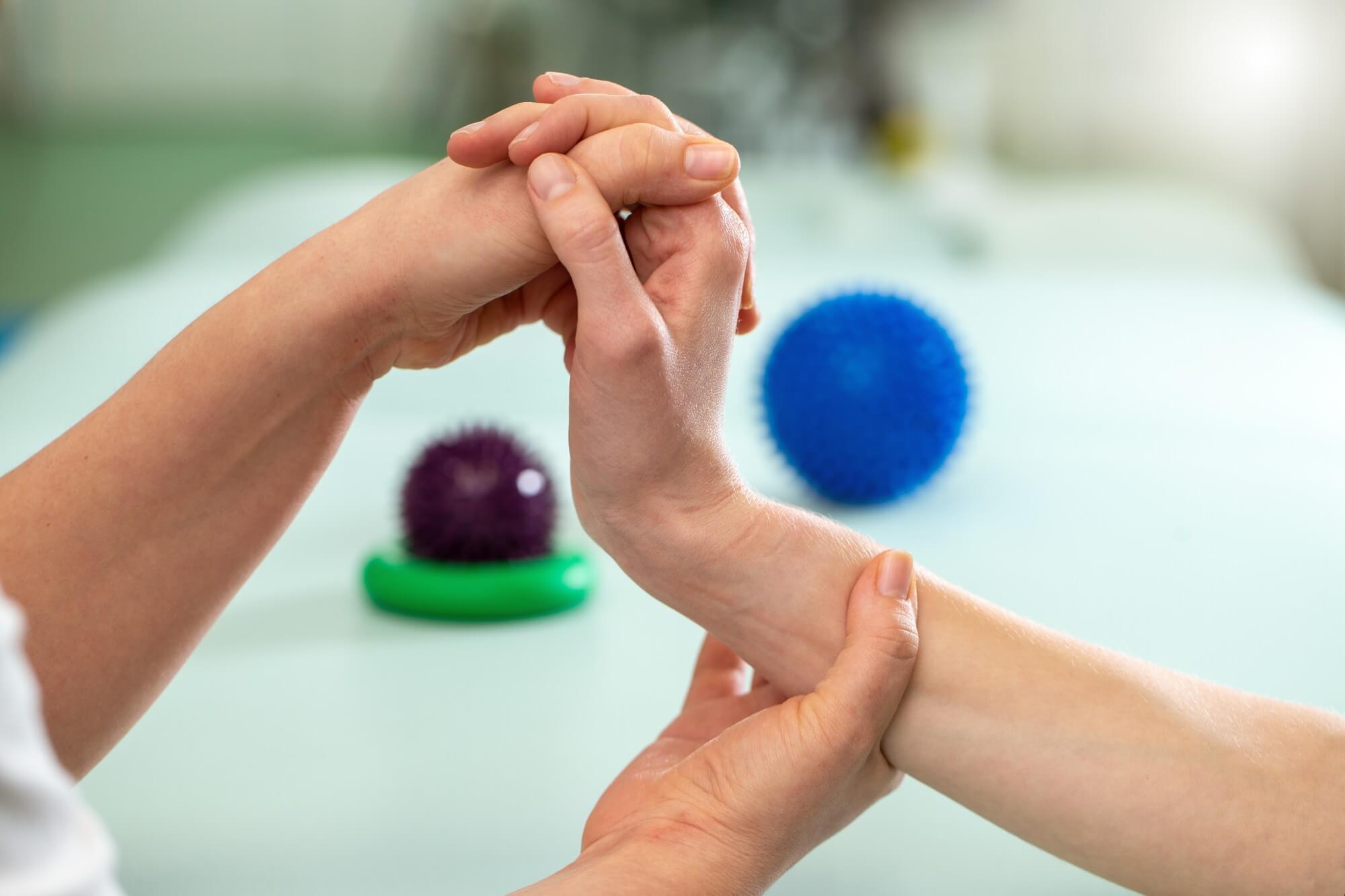
When to See Other Professionals
Choosing an osteopath, physiotherapist or GP depends less on the label “knee pain” and more on the pattern of symptoms. A person with gradual, activity-related discomfort and no warning signs may reasonably seek conservative assessment. Someone with a hot, swollen joint or an inability to bear weight needs a different pathway.
A simple decision guide
- An osteopath may be appropriate: Choose an osteopath for assessment, movement advice and conservative symptom management when the pain appears musculoskeletal, function is reasonably stable and there are no urgent warning signs.
- A physiotherapist may be useful: A physiotherapist can provide detailed exercise prescription, loading progressions and functional rehabilitation, particularly when weakness, balance limitations or return-to-sport demands are central.
- A GP should be involved: Arrange medical review when the diagnosis is unclear, symptoms persist despite appropriate care, medication needs discussion, or inflammatory disease is possible. A GP can coordinate investigations and referrals.
- Seek urgent medical assessment: Don't delay if knee pain follows major trauma, the joint is hot or markedly swollen, you have fever, you can't bear weight, you suspect a fracture, the knee locks, or symptoms are rapidly worsening.
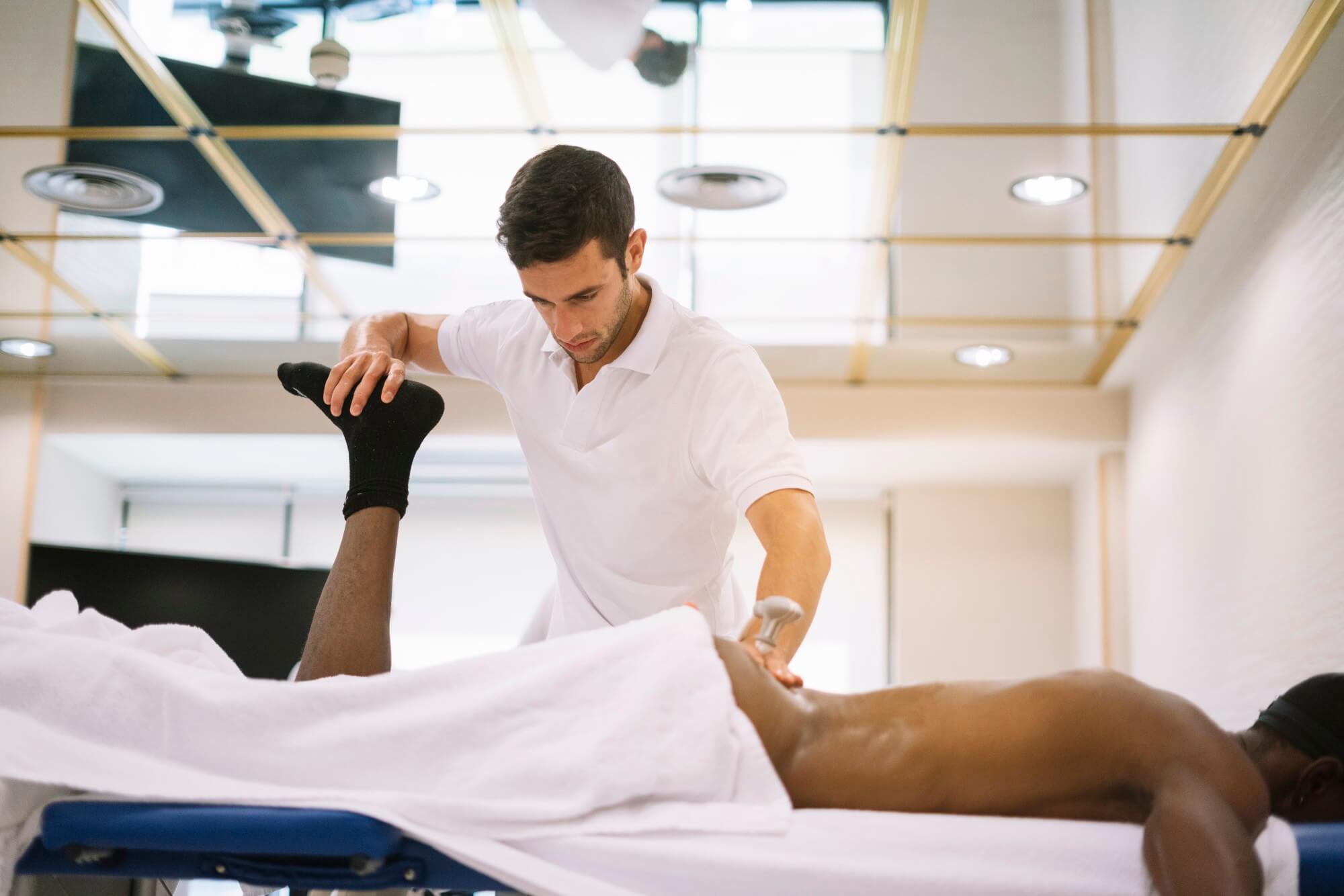
A physiotherapy assessment visual illustrates the broader rehabilitation environment that may be appropriate for some patients. Osteopathy and physiotherapy can overlap in their focus on movement, but the practitioner and service you need depends on the problem being assessed.
Australia's 2025 Osteoarthritis of the Knee Clinical Care Standard states that knee osteoarthritis can usually be diagnosed clinically without imaging. X-rays may be recommended when symptoms are atypical, worsening or linked with severe functional impairment despite optimal non-surgical care.
“No imaging needed” doesn't mean “no medical assessment needed”. Osteopathy can't substitute for diagnosing inflammatory arthritis, infection, fracture or advanced structural disease.
Medicare Access and Booking Local Care in Bayside
Access depends on your circumstances and the type of referral you have. Medicare may contribute to osteopathic care in specific situations, including eligible care plans, but eligibility and rebate conditions can change. Ask your GP, osteopath and Medicare about the current requirements rather than assuming a consultation will be covered.
Private health insurance may also provide benefits for osteopathy if your policy includes the relevant level of extras cover. Check your insurer's rules before booking, including whether you need a participating provider, whether a waiting period applies and how claims are processed.

Questions to ask before your appointment
When calling a local clinic, explain how the pain began, whether the knee swells or locks, and which activities are limited. Ask whether the practitioner assesses the hip and ankle, provides exercise guidance, and refers patients when symptoms require medical review.
For the first visit, bring a list of medications, relevant scans or reports, information about previous injuries and a short description of what makes the knee better or worse. Wear clothing that allows the practitioner to observe walking and knee movement comfortably.
A registered osteopath should explain the proposed approach, expected benefits and alternatives before treatment. You should feel able to decline a technique or ask why it has been recommended.
What to Expect from Osteopathic Knee Pain Care
A first appointment should leave you with more than temporary looseness. You should understand what the practitioner found, which movements are currently limited, what you can do at home and what would trigger a review or referral.
Treatment may involve soft-tissue work, joint articulation or gentle mobilisation, followed by a movement test. The useful question is whether you can walk, bend, stand or climb a step with better control, not just whether the knee feels different immediately after hands-on care.
How progress is judged
Progress is usually practical:
- You can walk farther or with less hesitation.
- Stairs feel more manageable.
- The knee recovers more predictably after activity.
- Strength and balance improve.
- You understand how to adjust exercise during a flare.
- Daily tasks require less compensation through the hip, ankle or back.
Improvement isn't always linear. A flare may reflect too much activity, poor recovery, an unsuitable exercise or a diagnosis that needs reconsideration. Persistent swelling, instability, locking, fever, inability to bear weight or rapidly worsening pain still warrant medical input, regardless of whether hands-on treatment has provided temporary relief.
The most realistic role for an osteopath for knee pain is supportive and active. Hands-on care may help you move with greater comfort and confidence, while exercise, pacing and appropriate medical guidance address the demands placed on the knee over time.
Bayside Osteopathic Health provides individual assessment, gentle hands-on care, movement advice and practical self-care support for people managing knee pain in the Bayside community. Visit Bayside Osteopathic Health to learn more and arrange an appointment that fits your needs.