

You're halfway through the afternoon when your lower back starts demanding attention. The desk worker shifts position after lunch, the retired gardener braces before lifting a grocery bag, and the new parent remembers the exact moment their back seized while leaning over the cot. Different lives, similar frustration: every movement becomes a calculation.
An osteopath can help assess the factors contributing to that pattern and use hands-on care to make movement more comfortable. The practical aim isn't to keep you dependent on treatment or promise a permanent structural correction. It's to use a short course of carefully selected care alongside graded activity, education and self-management, then reduce treatment as your confidence and function return.
Table of Contents
- When Your Lower Back Becomes the Centre of Your Day
- How an Osteopath Assesses Lower Back Pain
- Hands-On Techniques Used in Osteopathic Care
- What a Typical Treatment Pathway Looks Like
- Who Makes a Good Candidate for Osteopathic Care
- Realistic Outcomes and What the Research Shows
- Booking, Costs and Medicare Options at a Bayside Clinic
When Your Lower Back Becomes the Centre of Your Day
Lower back pain can be sharp, dull, localised or felt into the buttock and leg. It may follow an obvious lift, but it can also build gradually through desk work, driving, gardening, training or disrupted sleep. The symptom is real even when scans don't provide a neat explanation.
A desk-based worker might notice stiffness each time they stand after a long morning at the computer. They may feel better after walking, then tighten again after returning to the chair. In that situation, the useful question isn't, “Which vertebra is out?” It's whether the person's work setup, hip movement, thoracic stiffness, strength, recovery and fear of movement are keeping the problem going.
An older adult may hesitate before lifting a shopping bag because a previous episode made ordinary tasks feel risky. Arthritis, reduced activity and concern about falling can all influence how confidently they move. The consultation needs to account for those factors rather than treating the tender spot in isolation.
A practical distinction: hands-on care may create a more comfortable window for movement, but your long-term progress depends on what you're able to do between appointments.
Australian data show why lower back symptoms deserve attention. About 80% of people experience back pain at some point in life, back problems are the second-most common reason Australians visit a GP, and only about 1% of back-pain presentations involve a serious underlying cause, according to the Australian low back pain infographic. Those figures support appropriate assessment, not automatic escalation to invasive treatment.
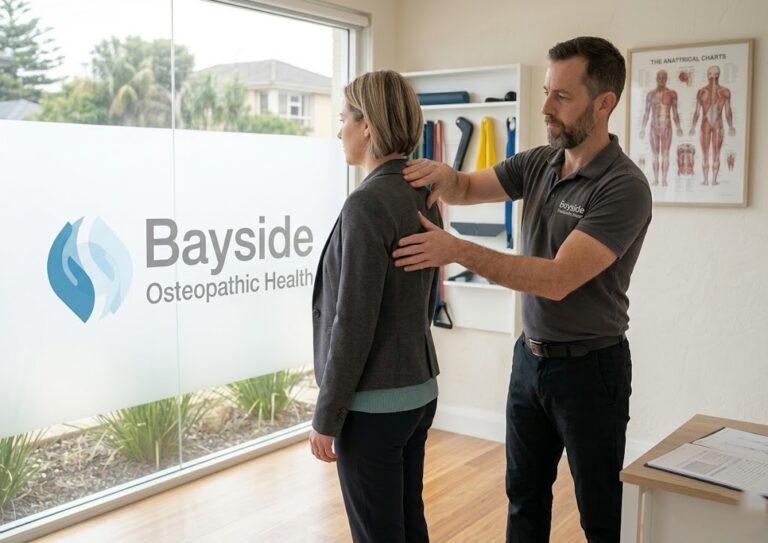
A whole-person osteopathic approach considers how your spine, hips, pelvis, ribs, muscles and daily habits interact. It also considers work demands, sleep, stress and previous injuries. For office workers, an ergonomics and posture resource can help translate that assessment into practical changes rather than vague instructions to “sit up straight”.
The rest of the process should answer useful questions. What happens in an assessment? Which techniques might be appropriate? How long should care continue, what should you do at home, and when does another health professional need to be involved?
How an Osteopath Assesses Lower Back Pain
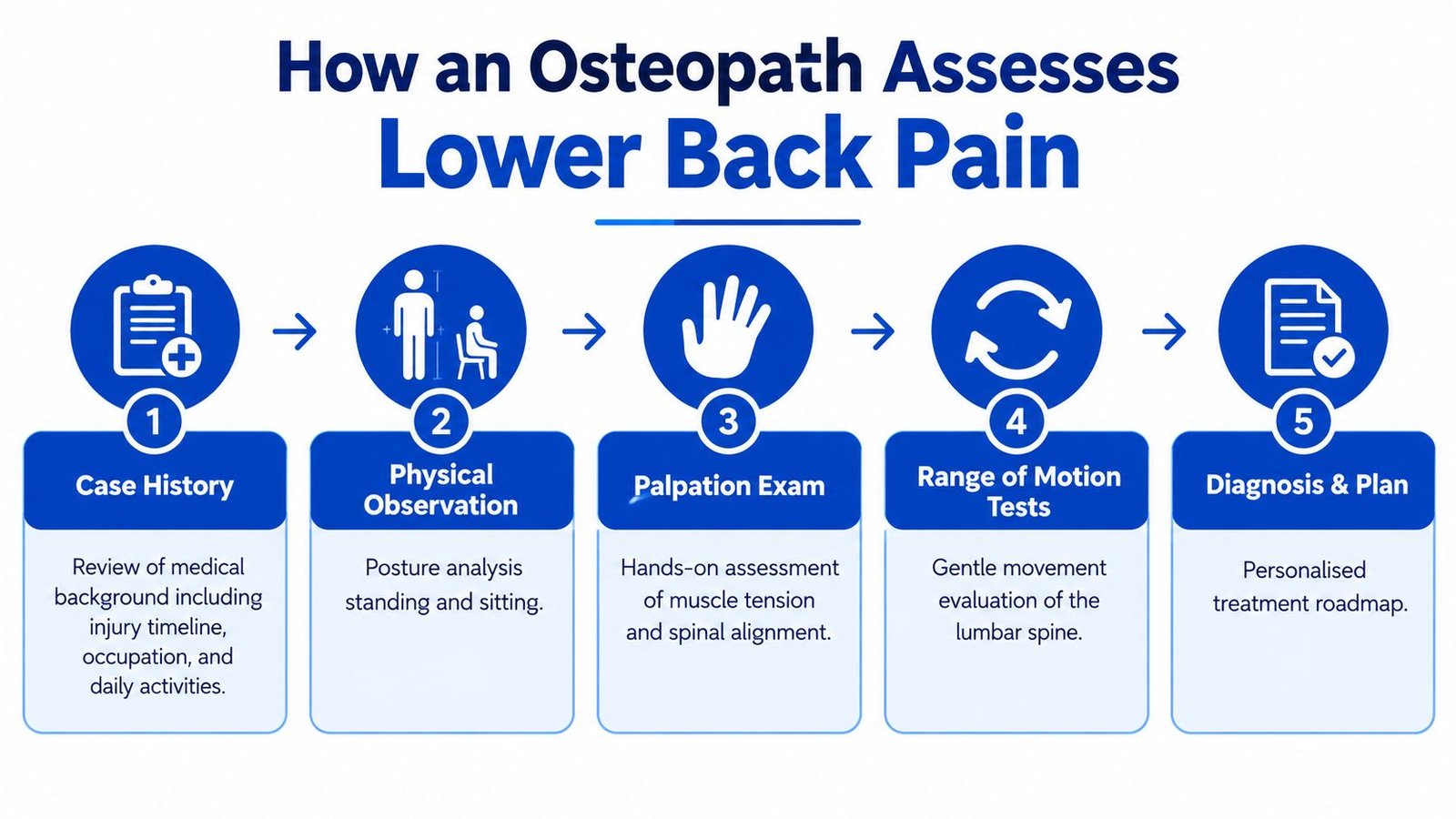
A first appointment should feel like a clinical conversation, not a quick massage followed by a generic exercise sheet. The osteopath needs enough information to understand the symptom, identify anything requiring referral and decide whether hands-on treatment is suitable.
The history gives the examination direction
You'll usually discuss when the pain began, what changed around that time, what aggravates or eases it, and whether symptoms travel into the leg. Your osteopath may ask about previous episodes, injuries, surgery, general health, medications, sleep, work, exercise and the effect of stress or worry on your movement.
Those questions aren't a formality. Pain behaviour can help distinguish a movement-sensitive presentation from one that needs further medical investigation. A person who can walk comfortably but struggles after prolonged sitting may need a different plan from someone with progressive weakness, systemic symptoms or pain after significant trauma.
Australia's Low Back Pain Clinical Care Standard emphasises clinical and psychosocial assessment before single-modality treatment and applies to adults aged 16 and over with low back pain, with or without leg symptoms. That means screening for red flags and barriers to recovery comes before choosing a technique.
Movement tests examine the whole system
The physical examination may include standing and sitting posture, walking, bending, rotation, hip movement and the way you load each leg. The osteopath may assess the thoracic spine, hips, pelvis and surrounding muscles because the lower back rarely operates by itself.
A neurological screen is important when there's leg pain, altered sensation or weakness. It may include checking strength, reflexes, sensation and functional movements. Palpation can then help identify tenderness, muscle guarding and changes in how joints and tissues move, but tenderness alone doesn't prove that one structure is the cause.
Bring a list of current medications, relevant reports or imaging and a clear description of what you want to get back to doing. Ask what the working diagnosis is, what improvement should look like, which symptoms would require review and how you'll participate between visits.
Hands-On Techniques Used in Osteopathic Care
Hands-on treatment can be useful, but its role is narrower and more practical than many advertisements suggest. It may reduce guarding, ease sensitivity and improve movement for a period. It can't guarantee that pain won't return, and it doesn't permanently “put the spine back into place”.
Three common approaches
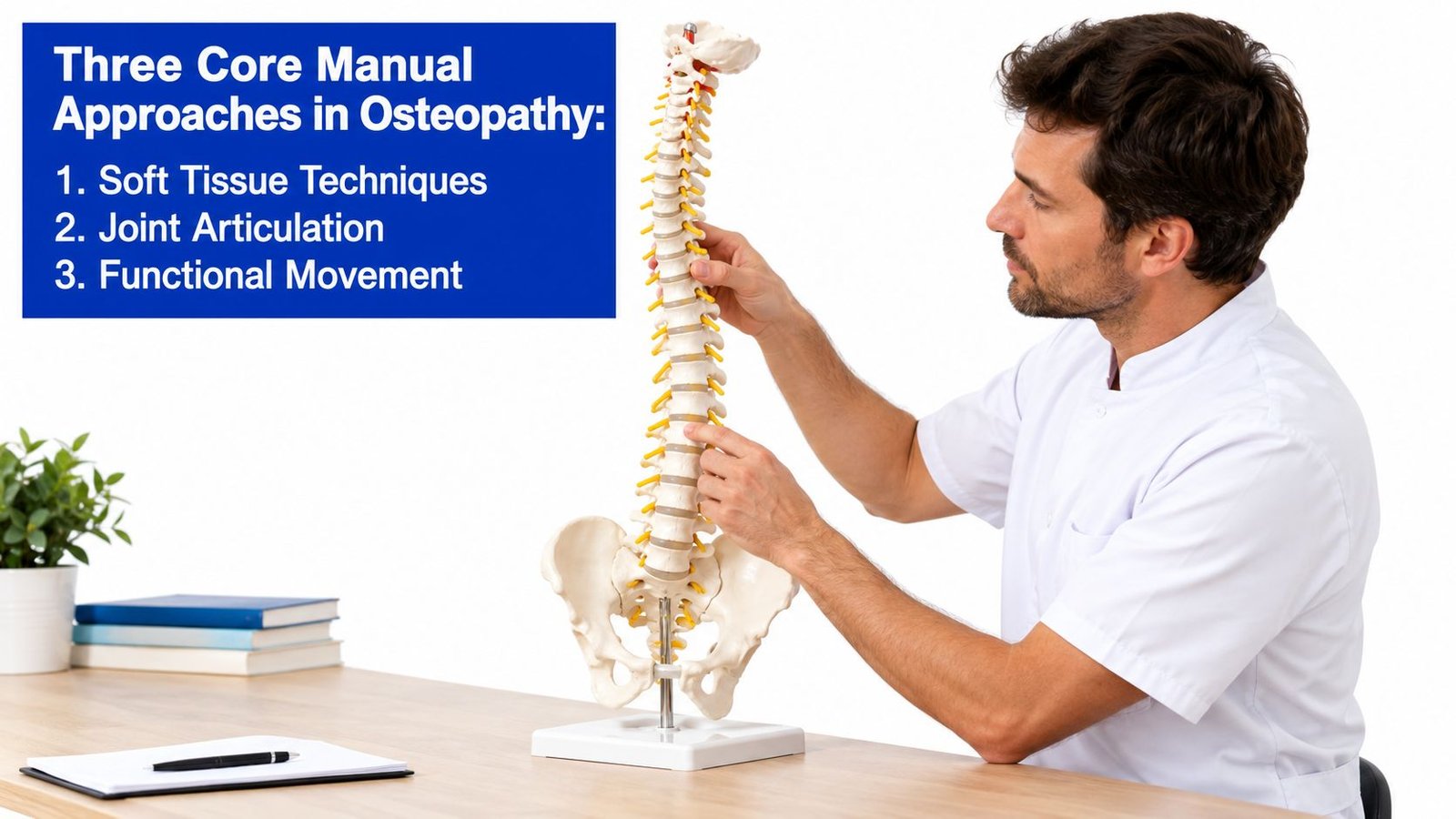
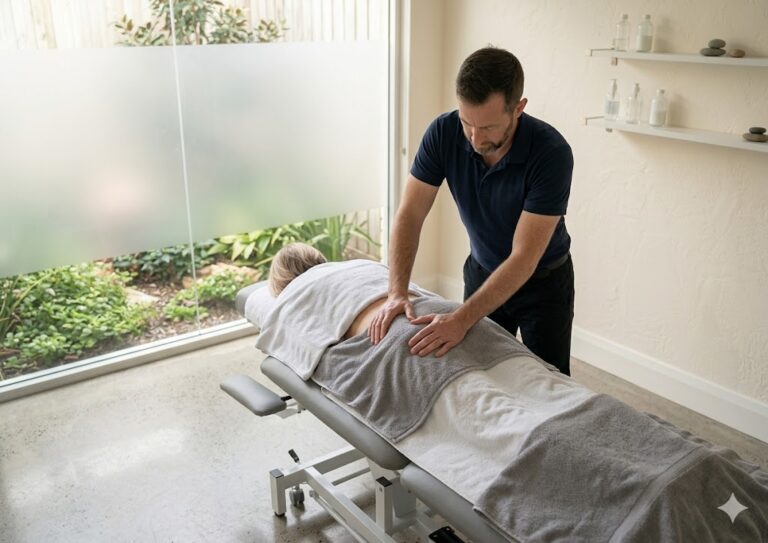
Soft-tissue work targets muscles and connective tissues around the lumbar spine, hips and pelvis. The pressure may be broad and slow or more specific, depending on irritability. Think of it as easing a clenched hand rather than repairing a damaged component. The intended result is often less guarding and easier movement.
Joint articulation uses repeated, controlled movement through a comfortable range. It's similar to easing a stiff hinge without forcing it. The aim is to improve tolerance and joint motion, particularly when stiffness is limiting walking, bending or exercise.
Gentle mobilisation uses small rhythmic movements or sustained positions. It may be appropriate when stronger techniques would flare symptoms or make the person feel unsafe. “Gentle” should describe the dosage and response, not imply that the patient remains passive.
The treatment choice should follow the examination. A person with an irritable acute episode may need low-force care and simple movement advice. Someone with persistent stiffness may tolerate a broader combination of techniques and progressive loading.
For a visual example of tissue-focused care, see this muscle therapy resource. The important clinical question isn't whether a technique looks impressive. It's whether it produces a useful change that helps you practise normal movement.
Australian clinical literature describes isolated spinal manipulation as offering only a modest benefit, while an integrated approach that combines manual techniques with advice and self-management may help selected patients, as discussed in the RACGP osteopathy review.
Hands-on treatment can therefore be a bridge. You might walk more comfortably after an appointment, sleep with less difficulty or feel less apprehensive about bending. The next step is to use that window for walking, strengthening, education, workload changes and recovery habits.
What a Typical Treatment Pathway Looks Like
You come in because tying your shoes, sitting through a meeting or getting out of the car has started to shape the whole day. A useful treatment pathway should make that pattern smaller, then hand control back to you. In practice, osteopathy works best here as a short course of adjunctive care around graded activity, education and self-management, which fits the direction of Australia's Low Back Pain Clinical Care Standard.
The first appointment sets the baseline. That usually includes a history, screening for signs that need medical review, a movement assessment, and a clear explanation of what appears to be driving the pain. If hands-on treatment is appropriate, it should serve a purpose, such as easing guarding enough for you to move more normally or start an exercise plan with less apprehension.
You should also leave with a small number of tasks you can realistically do. That may be short walks, comfortable mobility drills, a workstation change, a different way to pace lifting, or a temporary adjustment to sport or household loads. Two useful actions done consistently beat a long list that gets ignored.
Follow-up care should change as your tolerance improves. Early reviews may focus on settling symptoms enough for you to resume ordinary movement. After that, the emphasis should shift toward walking capacity, strengthening, work demands, gardening, parenting tasks or sport. Appointments are usually spaced further apart as you do more yourself. Heat, ice, sleep-position changes and short-term load modification can help in the background, but they should not become the whole plan.
A practical care outline
| Phase | Typical Visits | Main Focus | Home Strategies |
|---|---|---|---|
| Assessment and starting plan | Initial consultation | History, screening, movement assessment and agreed goals | Comfortable movement, activity modification and simple advice |
| Early symptom management | Follow-up appointments as clinically indicated | Reduce guarding and improve confidence with basic movements | Walking, gentle mobility and practical workstation or sleep changes |
| Functional progression | Review visits spaced according to progress | Strength, lifting, work, sport or daily-activity tolerance | Graded loading, exercise progression and pacing |
| Self-management transition | Fewer appointments when appropriate | Confirm independence and plan for flare-ups | Ongoing movement routine and clear review triggers |
A published cohort study of compensated workers with low back pain found lower median consultation use among workers who attended only osteopathy than among those using multiple physical therapies. That is a utilisation finding, not proof that fewer visits are always better, nor evidence that one set number suits every patient. The practical point is simpler. Care should have review points and an exit strategy.
Progress needs to be judged by function. Can you sit through more of the workday, walk further, sleep with fewer interruptions, climb stairs, lift with more confidence or get through home tasks with less hesitation? If those markers are flat, repeated passive treatment is hard to justify.
At that point the plan should be reconsidered. Imaging or medical review may be appropriate if symptoms worsen, new neurological signs appear, progress stalls, or the history suggests another condition. A rehabilitation-focused approach, illustrated in this exercise and recovery resource, reflects the broader goal. Treatment should help you do more, then need us less.

Who Makes a Good Candidate for Osteopathic Care
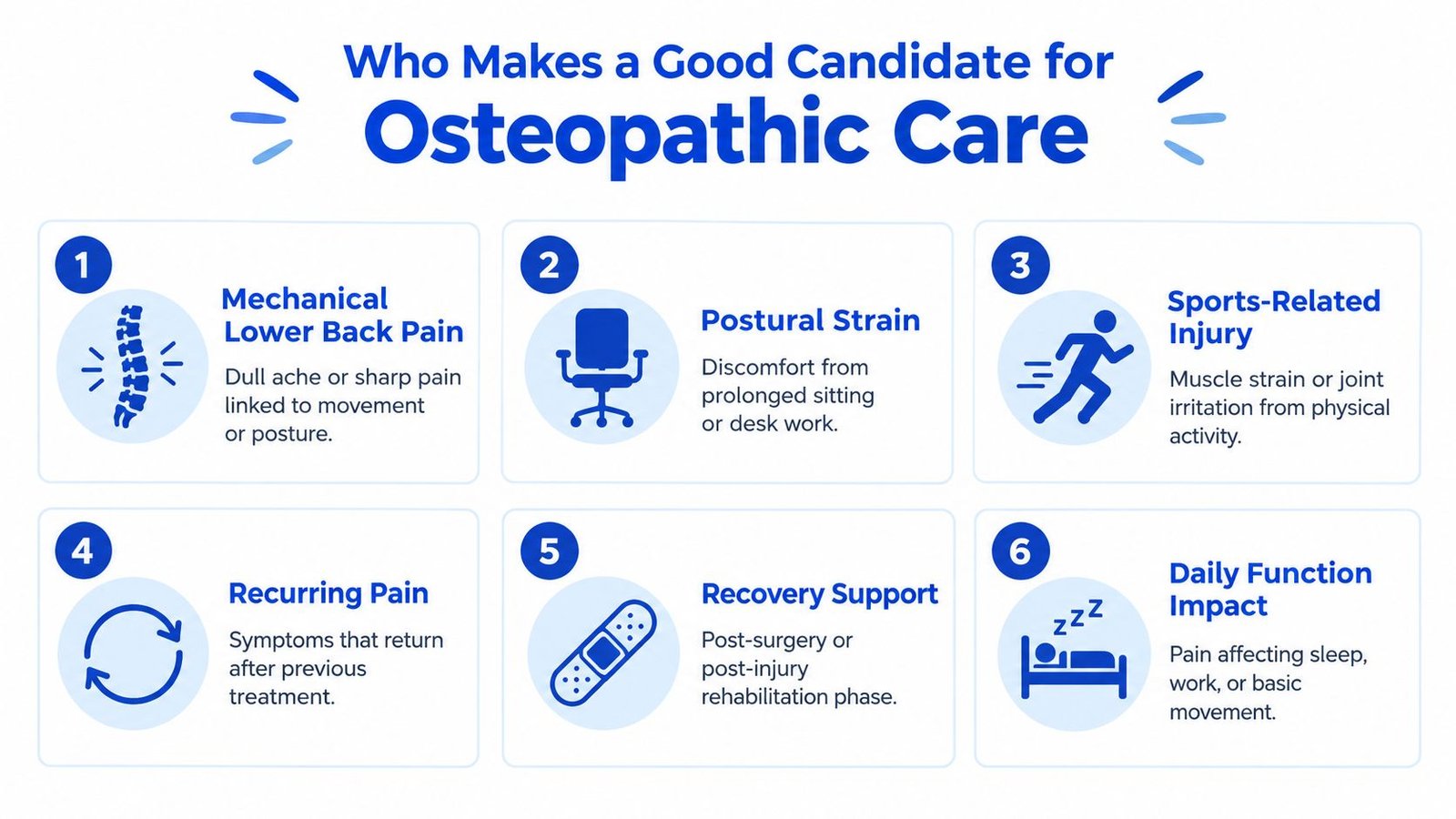
Osteopathic care may suit a person whose lower back pain is linked to movement, posture, work demands or accumulated stiffness. Common presentations include mechanical pain after an awkward lift, discomfort that builds during desk work, reduced mobility with age, recurring symptoms after previous episodes and rehabilitation after an injury has been medically assessed.
When an assessment is appropriate
A good candidate is usually able to participate in a conversation about goals and tolerate some form of graded movement. Hands-on care may be included when stiffness, muscle guarding or fear of movement is limiting progress.
That doesn't exclude people with arthritis, anxiety, an office-based job or a long history of recurring pain. It does mean the plan needs to be broader. Someone with arthritis may need strength and joint-load strategies. Someone worried about movement may benefit from education and gradual exposure. Someone working long hours at a desk may need changes to breaks, chair setup and task rotation.
AIHW estimates that around 29% of Australians, about 7.3 million people, live with a chronic musculoskeletal condition, including roughly 4.0 million people with back problems. Coexisting mental health and arthritis conditions are common in this group, as reported in the AIHW chronic musculoskeletal conditions report. That combination makes a single passive treatment unlikely to address every relevant factor.
When medical review comes first
Arrange prompt medical assessment for severe or rapidly worsening pain, progressive weakness, significant numbness, symptoms after a fall or accident, fever, unexplained weight loss or a history of cancer. New bladder or bowel changes, numbness around the saddle area or major loss of leg function require urgent medical attention.
Post-surgical pain, suspected fracture and persistent leg symptoms also need appropriate coordination. An osteopath may contribute to rehabilitation after clearance, but hands-on treatment shouldn't delay diagnosis or specialist care.
The useful test: a gentle plan should gradually make you more capable, not more reliant on appointments.
“Gentle” doesn't mean passive. The responsible endpoint is a person who understands their symptoms, can respond to a flare-up and has enough confidence to move without needing treatment every time discomfort appears.
Realistic Outcomes and What the Research Shows
A fair expectation is this: treatment may ease pain and free up movement in the short term, but the bigger job is getting you back to normal activity with less fear and less disruption. In practice, that means osteopathy should be a short course of adjunctive hands-on care wrapped around graded activity, education and self-management, not an open-ended passive routine.
Some people feel looser after a session. Bending may feel easier. Walking can feel less guarded. That early change matters because pain often makes ordinary movement feel risky, and a brief reduction in symptoms can create enough space to start moving better again.
It does not prove the problem is fully resolved.
Research on osteopathic care for chronic non-specific low back pain is still limited, and that calls for restraint in how results are described. The sensible reading is that hands-on treatment may help some patients as part of a broader plan, but it should not be sold as a stand-alone fix or a treatment you need indefinitely. That approach fits the intent of Australia's Low Back Pain Clinical Care Standard, which supports assessment, advice to stay active, and treatments that help restore function rather than increasing dependence on passive care.
Measure what you want back
Pain scores matter, but they are only one marker. In clinic, the more useful question is often what pain is stopping you from doing. A person may still notice some soreness while sleeping more consistently, walking the dog again, sitting through work with better pacing, or getting back into the garden. Those gains usually mean recovery is moving in the right direction, even if symptoms have not disappeared.
Useful goals include:
- Walking tolerance: Increase how far or how long you can walk comfortably.
- Daily movement: Bend, turn, stand up or lift a light object with more confidence.
- Sleep: Wake less often because of discomfort.
- Work capacity: Handle sitting, standing, driving or manual tasks with better pacing.
- Independence: Settle flare-ups using movement, exercise and a clear plan, without needing frequent passive treatment.
That last point matters. Good care should reduce reliance on appointments over time. If hands-on treatment is helping, it should make exercise easier to do, build confidence in movement and give you a practical way to manage the next flare. If that is not happening, the plan needs to change.
Booking, Costs and Medicare Options at a Bayside Clinic
Before booking, prepare a concise account of what's happening. Note when the pain began, what makes it worse, whether it travels into a leg and which daily activities you've stopped or modified. Bring relevant imaging or reports, a list of medications and comfortable clothing that allows movement.
A referral isn't always required for an osteopathic appointment, although your GP or another clinician may have recommended assessment. Private health rebates depend on your policy and fund, so check your extras cover and whether your practitioner is eligible for on-the-spot claiming. The clinic can explain its appointment process and payment options before treatment begins.
Some patients may access osteopathic services through a Chronic Disease Management plan arranged by their GP, where eligibility and referral requirements apply. Medicare arrangements can change and aren't automatic for every patient, so discuss your circumstances with your GP and confirm the current details with the clinic.
Questions worth asking at the first visit
- What is the likely cause of my symptoms? Ask for a plain-language explanation and what remains uncertain.
- What needs to be ruled out? Confirm whether your history or examination suggests medical review.
- What will treatment involve? Ask which hands-on techniques may be used and how you'll respond if symptoms flare.
- What should I do between appointments? Request specific movement, exercise, work and recovery guidance.
- When will we review the plan? Agree on functional markers and what would prompt referral or a change in approach.
- How do rebates work? Ask about private health claiming and whether Medicare-related pathways may apply to your situation.
At Bayside Osteopathic Health, osteopathic assessment can combine whole-body examination, soft-tissue work, joint mobilisation, movement advice and home-care strategies for people with acute or persistent lower back pain. The important standard remains the same wherever you attend: safe screening, realistic goals, active participation and a clear reason for continuing or reducing care.
Bayside Osteopathic Health offers personalized assessment and gentle hands-on care for lower back pain, combined with movement guidance and practical self-management strategies. Visit Bayside Osteopathic Health to arrange an appointment and discuss the right next step for moving with greater comfort and confidence.