

You wake with a stiff knee, take a few careful steps, and wonder whether today's pain will stop you from walking to the shops, climbing stairs, or getting through work comfortably. Arthritis can make ordinary movements feel uncertain, but hands-on care may help you move with greater ease when it's combined with sensible exercise and self-management.
Osteopathy for arthritis isn't a cure for joint disease. It's a supportive, movement-focused approach that aims to ease stiffness, reduce muscular strain, and help you keep using the affected area. The right plan depends on the type of arthritis, your symptoms, your general health, and whether a flare-up or another condition needs medical attention.
Table of Contents
- Living with Arthritis and Finding Gentle Support
- The Osteopathic Approach to Whole-Body Health
- How Osteopathy Addresses Different Types of Arthritis
- What to Expect at Your Osteopathic Appointment
- Empowering You with At-Home Exercises and Advice
- Booking and Medicare Guidance at Bayside Osteo
Living with Arthritis and Finding Gentle Support
Morning stiffness often changes the way a person plans the day. You might sit on the edge of the bed before standing, wait for your hips or knees to loosen, and avoid movements that used to feel automatic. Later, you may find that a short walk, a trip to the supermarket, or time in the garden leaves you more uncomfortable than expected.
That experience is common across Australia. Osteoarthritis is the country's most common form of arthritis, with around 2.1 million people, or 8.3% of the population, living with it in 2022, according to the Australian Institute of Health and Welfare overview of osteoarthritis. The burden is particularly concentrated in older age groups, where arthritis affected 48.9% of people aged 75 and over in 2022, as reported by the same source.
Those figures describe a large and ongoing need, but they don't describe your individual experience. Some people notice aching after activity, others struggle mainly with stiffness, and some have symptoms that vary from one day to the next. An osteopath's role is to understand that pattern rather than assume every painful joint needs the same treatment.
A practical aim: the goal isn't to force an arthritic joint to behave like a completely healthy joint. It's to help you use your body more comfortably and confidently.
What gentle care can and can't do
An osteopath may work with the muscles, joints, connective tissues, and movement habits around an arthritic area. Treatment can include gentle joint articulation, soft-tissue techniques, stretching, and advice that helps you stay active without repeatedly aggravating symptoms.
It's important to set realistic expectations. Osteopathy can support pain management and mobility, but it won't reverse cartilage changes or replace medical care for inflammatory arthritis. The most useful plan usually combines hands-on treatment with exercise, education, pacing, and appropriate input from your GP or rheumatology team.
Why a whole-person assessment matters
Pain in one joint can alter how you walk, stand, sit, or use the opposite side of your body. A sore knee may change hip movement, while a stiff hip may make the lower back work harder. These compensations can create additional muscle tension even when the original arthritis hasn't changed.
A careful assessment helps identify those patterns and choose treatment that suits your tolerance. The intention is to make movement easier, then help you maintain that improvement through practical activity rather than relying on passive treatment alone.
The Osteopathic Approach to Whole-Body Health
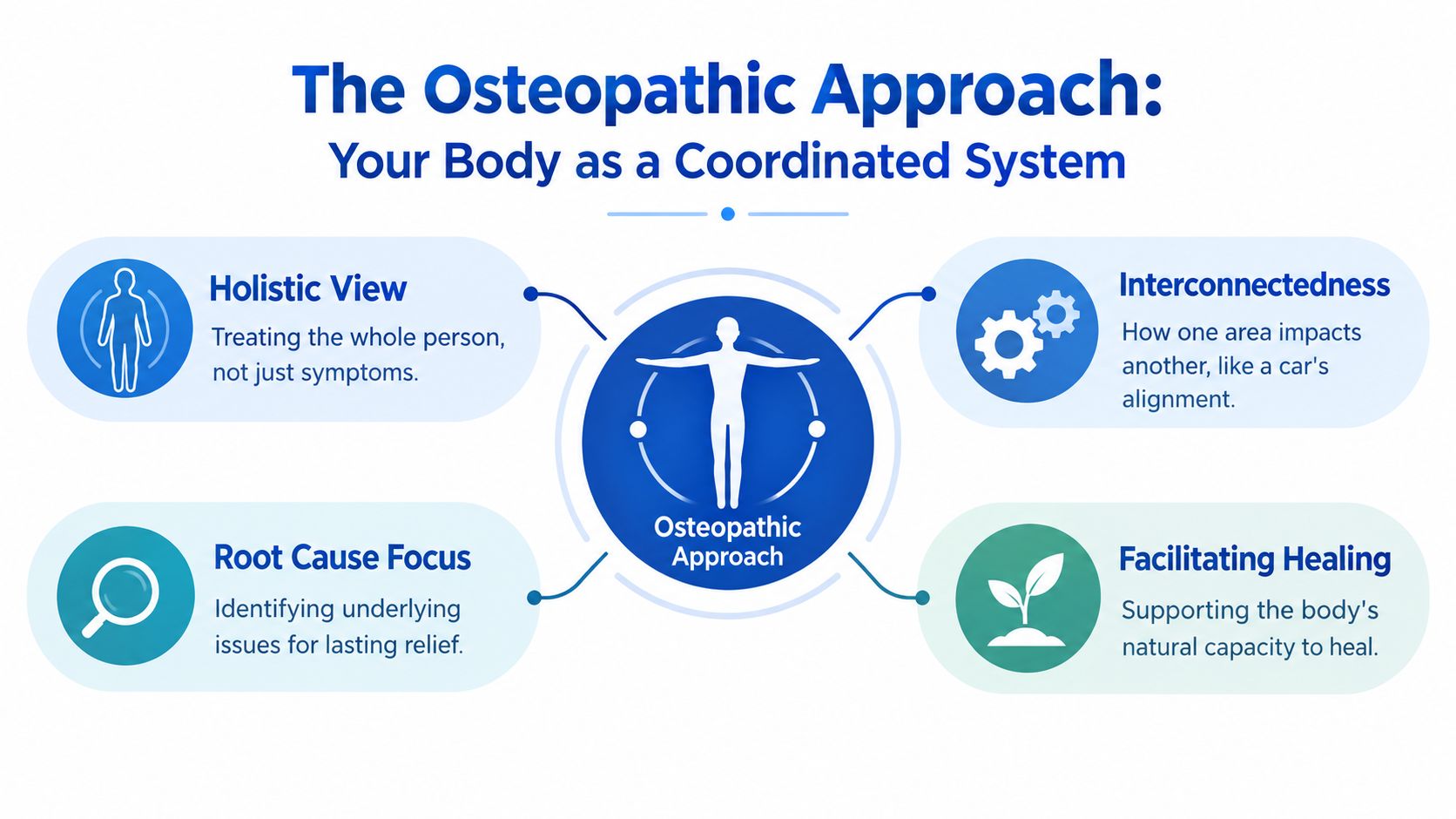
Osteopathy starts with a simple clinical principle. Your body works as a connected system, so the painful area needs to be considered alongside the way nearby and distant regions move.
A useful analogy is a car with poor wheel alignment. One misaligned wheel can affect the tyres, suspension, and steering. The worn tyre is visible, but correcting only the tyre won't address the alignment problem. Similarly, an arthritic knee may be the place you feel pain, while restrictions in the ankle, hip, pelvis, or spine influence how much load passes through it.
How the assessment is organised
An osteopath generally considers several questions:
- Where do you feel symptoms? Pain location, stiffness, swelling, and the activities that provoke symptoms all influence the assessment.
- How does the joint move? The practitioner may examine range of motion, strength, coordination, and how movement changes with different positions.
- What is happening around the joint? Muscles may become guarded or overloaded when a joint is painful, even if those muscles aren't the original source of the problem.
- What does daily life demand? Walking, desk work, driving, lifting, gardening, and sleep positions can all affect your symptoms.
This approach doesn't mean an osteopath ignores the arthritic joint. It means the practitioner looks at the joint in context. A treatment plan may include work directly around the knee or hip, alongside movement elsewhere that helps you distribute load more effectively.
Hands-on treatment as a facilitator
Manual therapy can reduce the sense of restriction and make certain movements more comfortable. That can be useful before exercise, particularly if stiffness or protective muscle tension makes movement feel difficult.
The trade-off is important. Hands-on treatment may feel helpful in the short term, but it shouldn't become the whole plan. Australian guidance places education, activity, self-management, and structured exercise at the centre of knee and hip osteoarthritis care. Osteopathy is most useful when it helps you participate in that active programme.
A whole-body assessment also supports safer decision-making. If your symptoms don't fit a straightforward musculoskeletal pattern, or if the examination raises concern about significant inflammation, injury, or another medical issue, the appropriate next step may be your GP rather than further manual treatment.
How Osteopathy Addresses Different Types of Arthritis
The treatment plan starts with the type of arthritis involved. Osteoarthritis involves changes within a joint and the tissues around it, while rheumatoid arthritis is an inflammatory autoimmune condition requiring medical management. Osteopathy can address related musculoskeletal effects, but it cannot control the autoimmune process itself.
For osteoarthritis, treatment usually aims to make movement more comfortable, reduce unnecessary muscular tension, and improve how you manage physical load. An osteopath may use graded joint articulation, soft-tissue techniques, and mobility retraining around a knee, hip, hand, or spinal region. Intensity should reflect irritability. A sensitive joint generally responds better to measured care than forceful techniques.
The RACGP guideline for knee and hip osteoarthritis places education, self-management, activity, and structured exercise as first-line care. It also indicates that passive modalities have limited evidence. Manual therapy therefore has a supporting role. It may help you move or exercise more comfortably, but it should not replace rehabilitation.
Rheumatoid arthritis requires closer attention to timing. An active flare involving heat, swelling, or marked pain may call for medical review and less mechanical stress. Once symptoms settle, gentle treatment may help maintain mobility and ease secondary muscle tension around protected areas. Medication, flare patterns, joint stability, and advice from your rheumatology or GP team should shape the approach.
The distinction matters: osteopathy may help manage stiffness and movement restrictions, but rheumatoid arthritis needs coordinated medical care for inflammation and disease control.
These priorities are broad rather than prescriptive. Your osteopath should adjust treatment to your diagnosis, current symptoms, medication, joint stability, and functional goals.
| Focus area | Osteoarthritis (OA) | Rheumatoid arthritis (RA, during remission) |
|---|---|---|
| Primary aim | Support comfortable movement and everyday function | Maintain mobility while respecting the inflammatory condition |
| Manual approach | Graded articulation, soft-tissue techniques, and movement retraining | Gentle mobility work and care for secondary muscle tension |
| Exercise relationship | Help make structured strengthening and activity more manageable | Support an agreed movement plan without provoking a flare |
| Load management | Modify tasks and movement habits that repeatedly aggravate symptoms | Balance activity with recovery and medical advice |
| Clinical boundary | Does not reverse joint changes | Does not treat the autoimmune disease itself |
What isn't a substitute for active care
Australian guidance applies a strong evidence filter to symptom-relief treatments. The RACGP guideline document does not recommend electrotherapy modalities or acupuncture for knee and hip osteoarthritis. The Australian Commission's Knee Clinical Care Standard also states that glucosamine, chondroitin, and fish oil provide no benefit and are not recommended.
People respond differently, so judge an intervention by practical outcomes. These might include walking tolerance, joint range, pain during daily tasks, confidence on stairs, and your ability to follow an exercise plan. If treatment provides temporary comfort without improving function, its place in your care should be reconsidered.
What to Expect at Your Osteopathic Appointment
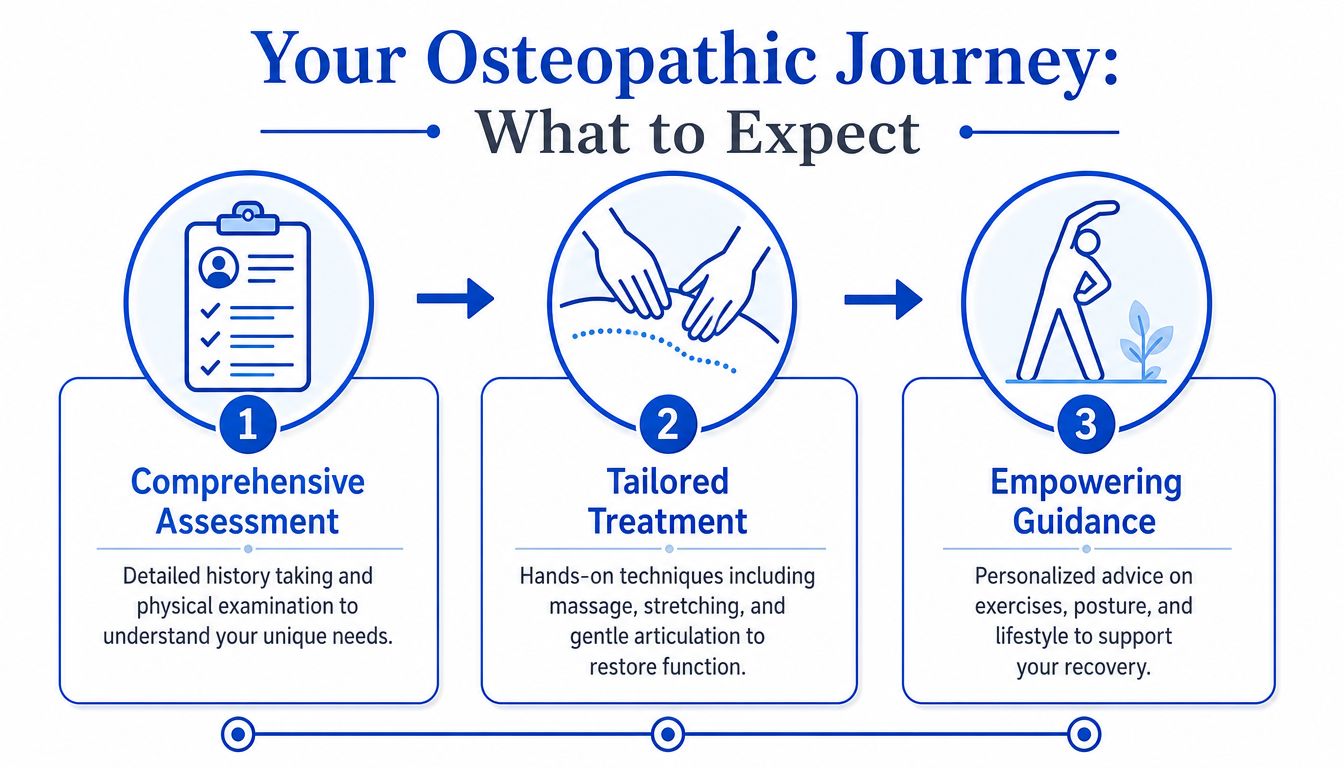
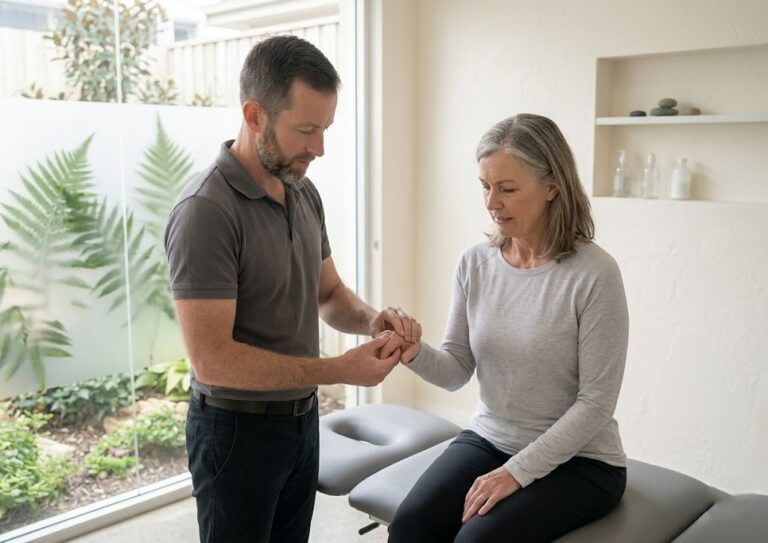
At your first appointment, expect a practical conversation about how arthritis affects your day. Explain what has changed, which activities are difficult, and what you want to do more comfortably. Bring information about your diagnosis, medicines, scans, previous treatment, and advice from your GP or specialist. These details help the osteopath plan safely and avoid working in isolation from your existing care.
First comes the clinical history
Your symptom pattern provides useful information. Describe whether stiffness is worse after rest, whether activity eases or aggravates it, and whether you have noticed swelling, heat, locking, giving way, numbness, or unusual fatigue. Explain your normal routine too. Care needs to fit the demands of work, walking, stairs, sport, and home tasks.
The osteopath should tell you what they are assessing and ask for consent before hands-on treatment. You can ask questions throughout the appointment. You can also request a gentler technique or pause treatment if anything feels uncomfortable.
Then comes movement assessment
The physical assessment may include watching you walk, stand, bend, or rise from a chair. The osteopath may compare both sides and examine the affected joint alongside the muscles and neighbouring joints that influence its movement.
The goal is to connect physical findings with a functional problem. A knee may bend poorly, while the main difficulty also involves hip strength, ankle movement, balance, or concern about loading the leg. Your assessment should lead to useful decisions, rather than a long list of findings without practical meaning.
Treatment is adapted to your tolerance
Hands-on care may include soft-tissue work, gentle joint movement, stretching, or articulation. If an arthritic joint is irritable, the practitioner may begin around the area, use a smaller range, or focus on comfortable movement instead of pursuing a dramatic change in one visit. The trade-off is that a gentler approach may produce a smaller immediate effect, while giving sensitive tissues more time to settle.
Advice may cover exercise, posture, pacing, and what to do if symptoms feel temporarily more noticeable afterwards. If you are unsure about a proposed technique, review this guide to the difference between mobilisation and manipulation. You should understand what will happen, why it has been selected, and when the plan needs review.
A good appointment ends with a plan you understand, including what to do at home and which changes should prompt further advice from your osteopath, GP, or specialist.
Empowering You with At-Home Exercises and Advice
Hands-on treatment can open a window of easier movement, but your daily habits help determine whether that window becomes useful progress. Exercises should be comfortable, controlled, and appropriate for your diagnosis. If a movement causes sharp pain, significant swelling, or a clear worsening that doesn't settle, stop and ask your osteopath or GP for advice.

Gentle movements to discuss with your practitioner
Seated knee extensions can help you practise controlled knee movement. Sit upright with both feet supported, slowly straighten one knee as far as comfortable, pause briefly, then lower the foot with control. Keep the movement smooth and avoid forcing the final part of the range.
Supported sit-to-stands connect leg movement with a daily task. Use a stable chair, place your feet comfortably, lean forward slightly, and stand using your legs rather than pulling on furniture. Return slowly and reduce the range or use your hands for support if the movement is too demanding.
Ankle pumps are simple when a lower-limb joint feels stiff after sitting. Move your feet up and down within a comfortable range, keeping the rest of the leg relaxed. This can be a useful way to reintroduce movement before standing or walking.
Gentle neck rotations may suit people whose arthritis-related discomfort includes upper-body stiffness, but they should be performed slowly and only within a comfortable range. Keep your shoulders relaxed and avoid pushing into dizziness, sharp pain, or radiating symptoms.
These examples aren't a personalised prescription. An osteopath should modify the position, range, resistance, and progression according to your joint, balance, strength, and medical history. The arthritis joint mobility resource can complement a consultation, but it shouldn't replace individual assessment.
Pacing is part of treatment
People often overdo activity on a better day, then rest for too long after symptoms flare. A steadier approach is to break demanding tasks into manageable parts, change position regularly, and use short movement breaks instead of waiting until stiffness becomes severe.
Your osteopath may also review how you sit at a desk, get in and out of the car, carry shopping, or arrange frequently used items at home. The aim isn't perfect posture. It's reducing prolonged, uncomfortable positions and giving your body more opportunities to move.
The video below may provide another visual prompt for gentle mobility work. Follow only movements that feel appropriate for you.
Booking and Medicare Guidance at Bayside Osteo
If arthritis is affecting your walking, sleep, work, exercise, or confidence with everyday tasks, start by gathering a clear picture of what's happening. Note which joints are involved, what activities trigger symptoms, whether swelling or heat is present, and what treatment you've already tried. You can then book an osteopathic assessment in the Bayside area and discuss whether hands-on care fits your broader management plan.

How Medicare may apply
Medicare access depends on eligibility, not on having joint pain. The Medicare Benefits Schedule item for osteopathy requires a chronic condition with complex care needs, a plan or arrangement managed by a medical practitioner, and a service lasting at least the specified minimum time. Your GP needs to determine whether you meet the requirements and include allied health care within the appropriate plan.
The Medicare Benefits Schedule listing for osteopathy item 10966 sets the scheduled fee at $74.55, with an 85% benefit of $63.40. The item is intended to help eligible patients with a limited number of allied health visits under a GP-managed chronic care arrangement, so ask your GP and clinic how the plan applies before booking.
The scheduled benefit doesn't automatically mean the appointment has no out-of-pocket cost. The clinic's fee, the Medicare benefit, and any gap payment need to be confirmed directly. Private health insurance may also contribute to osteopathy, depending on your policy and extras cover, so check with your insurer before treatment.
When a GP should come first
Osteopathic care isn't the right first step for every painful joint. Seek medical assessment promptly for sudden severe pain, a significant injury, a hot or rapidly swollen joint, swelling with fever, unexplained weight loss, new weakness or numbness, or symptoms that feel markedly different from your usual arthritis.
A GP can assess whether you need imaging, medication review, blood tests, specialist input, or urgent care. Osteopathy can then sit alongside that treatment when it's clinically appropriate, with communication between providers where needed.
Bayside Osteopathic Health provides individualized hands-on care, movement advice, and practical self-management guidance for arthritis-related stiffness and reduced mobility. To discuss your symptoms, Medicare questions, and a suitable starting plan, visit Bayside Osteopathic Health and arrange an appointment.