

You wake up, swing your legs out of bed, and feel that familiar pull in your lower back. It might ease after a hot shower, or it might follow you all day. Bending to put on shoes feels awkward. Sitting at your desk gets uncomfortable too quickly. Even simple things, like carrying groceries or playing with the kids, start to feel like tasks you have to plan around.
If that sounds like you, you're not overreacting and you're certainly not alone. Back pain has a way of shrinking daily life. It can make you cautious, tired, and frustrated, especially when the pain keeps returning just as you think it's settling down.
Many people start looking into osteopathy for back pain when they're tired of quick fixes that only dull symptoms for a short while. They want to understand why the pain keeps happening, what treatment feels like, and whether a hands-on, whole-body approach could help them move more comfortably again.
Table of Contents
- Tired of Nagging Back Pain You Are Not Alone
- What Is Osteopathy and How Does It Address Back Pain
- Common Osteopathic Techniques for Back Pain Relief
- The Evidence for Osteopathy and Who Benefits Most
- Your Osteopathic Journey What to Expect
- Finding Osteopathic Care in Bayside
Tired of Nagging Back Pain You Are Not Alone
A lot of people live with back pain for longer than they should. They tell themselves it's just bad posture, stress, getting older, or “one of those things” that will pass. Then weeks turn into months, and the pain starts shaping decisions. You sit differently at dinner. You skip walks. You stop lifting things the way you used to.
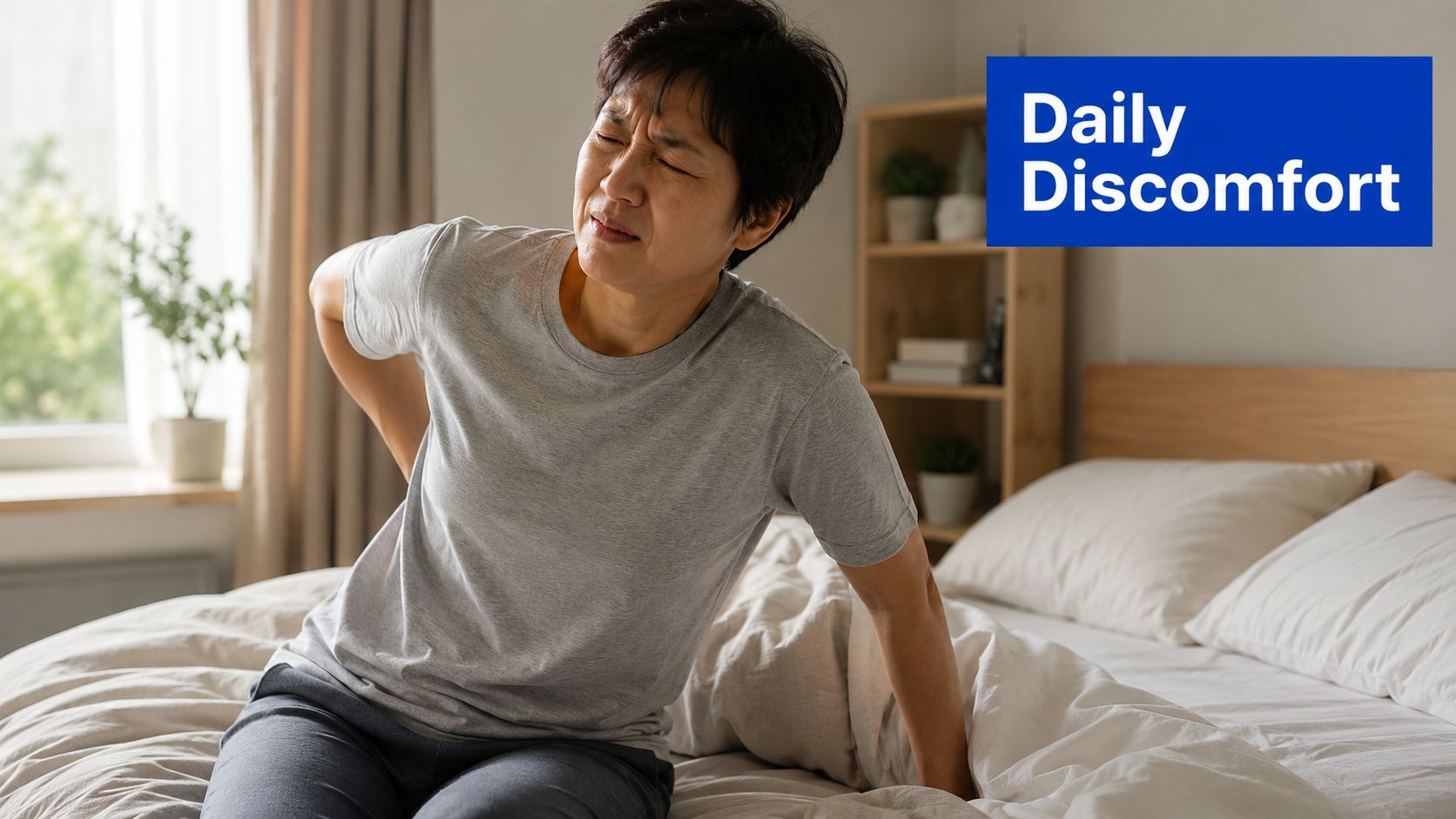
That experience is common. Approximately 80% of Australians are predicted to experience lower back pain at some stage in their lifetime, with 70-90% estimated to suffer from it, making it one of the most widespread health issues in the country, according to the AHPRA workforce and profession data.
What back pain often looks like in real life
Back pain isn't always dramatic. Often it shows up in ordinary moments:
- Getting started in the morning: You're stiff when you first stand up and need time to “straighten out”.
- Sitting for too long: Work meetings, driving, or the couch can all leave you sore and tight.
- Doing normal jobs at home: Vacuuming, gardening, hanging washing, or lifting a child can trigger a flare.
- Feeling tense about movement: You start worrying that one wrong bend will set things off again.
For many people, poor movement habits and postural strain build up gradually over time. If that sounds familiar, this posture and ergonomics image guide gives a useful visual reminder of how daily setup can influence strain.
Back pain often becomes more stressful because it feels unpredictable. That uncertainty can be just as draining as the ache itself.
Osteopathy for back pain appeals to people for a simple reason. It doesn't just ask, “Where does it hurt?” It also asks, “Why is this area doing too much work?” That shift matters. It opens the door to treatment that aims to improve how your body functions as a whole, not just settle the sore spot for a day or two.
What Is Osteopathy and How Does It Address Back Pain
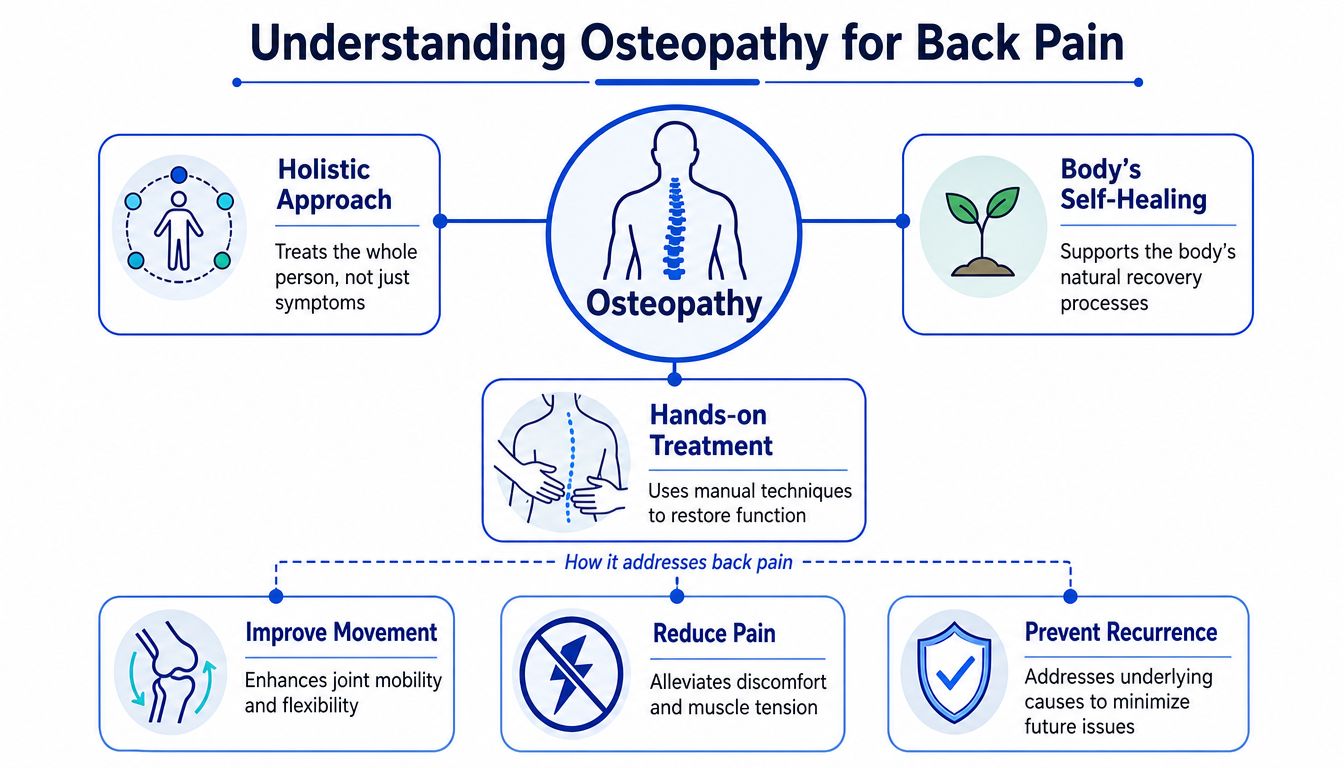
Osteopathy is a hands-on system of assessment and treatment that looks at how the body's structure and movement affect comfort and function. It was developed by US physician Andrew Still in the mid-1800s, is recognised by the World Health Organisation, and provides approximately 3.9 million clinical encounters annually in Australia for musculoskeletal conditions, which cause over 85% of chronic pain, as outlined in this ABC health report on osteopathy in Australia.
Instead of treating the back as an isolated problem, an osteopath looks at the body more like a mechanic checks a car. If a tyre is wearing unevenly, a good mechanic won't just replace the tyre and send you off. They'll check alignment, suspension, and how the whole system is working. Your back is similar. Pain in the lower back may be linked to stiff hips, a tight rib cage, reduced spinal movement, foot mechanics, or the way you sit and load your body each day.
Looking beyond the sore spot
Many new patients often get confused. They expect treatment to focus only on the exact place that hurts. Sometimes it does. But often the painful area is the part that's compensating for another restriction.
An osteopath may assess:
- How your spine moves: Not just whether it's painful, but whether certain segments are stiff or overloaded.
- What your hips and pelvis are doing: Limited hip movement often increases demand on the lower back.
- Your muscle tension patterns: Tight glutes, hamstrings, hip flexors, or upper back muscles can all affect spinal load.
- Breathing and rib movement: A rigid upper body can change the way the lower back works.
- Daily habits: Desk setup, sleep position, lifting style, exercise changes, and stress levels all matter.
What an osteopath is trying to change
The aim isn't to “put things back in place” with one dramatic move. Instead, the goal is to help your body move with less strain and better balance. That may involve easing tension, improving joint mobility, restoring more natural movement patterns, and showing you how to reduce the load that keeps irritating the area.
Later in the appointment, many people find it helpful to see movement principles in action. This short video gives a practical overview of hands-on care and movement-based thinking:
Practical rule: If your back pain keeps returning, it usually makes sense to look beyond the painful point and assess how the rest of the body is sharing the work.
That whole-body view is a big reason people choose osteopathy for back pain. It feels more logical. It also gives you a clearer explanation of why symptoms may have started in the first place.
Common Osteopathic Techniques for Back Pain Relief
For many first-time patients, the biggest worry is simple. What will you do to me? The answer is usually much gentler and more personalized than people expect. Treatment isn't one fixed routine. Your osteopath chooses techniques based on your symptoms, movement findings, comfort level, and general health.
What treatment usually feels like
Some techniques feel similar to targeted massage. Others involve guided stretching, gentle joint movement, or small resisted movements where you actively participate. If you're in an acute flare, treatment is often very calm and careful. If you're stiff and persistent symptoms have built up over time, treatment may involve broader work through the spine, pelvis, ribs, and surrounding muscles.
A lot of people assume osteopathy is just “cracking backs”. That can be part of care for some patients, but it's far from the whole picture. Many osteopaths use low-force approaches and adapt them to what feels appropriate on the day.
If you'd like a visual example of the kind of body tension patterns patients often ask about, this osteopath advice image on reducing muscle tension reflects the sort of issues that commonly show up in practice.
A simple guide to common techniques
| Technique | What It Is | Primary Goal |
|---|---|---|
| Soft tissue work | Hands-on work to muscles and surrounding tissues, often similar to focused massage | Reduce tension and make movement easier |
| Joint articulation | Gentle, repeated movement of a joint through a comfortable range | Improve mobility and reduce stiffness |
| Muscle energy technique | You gently contract a muscle while the osteopath provides resistance | Restore movement and relax overactive muscles |
| Stretching and mobilisation | Guided stretching or low-force movement applied to restricted areas | Improve flexibility and reduce strain |
| Positional release or gentle indirect work | The body or joint is placed in a more comfortable position to settle irritation | Ease protective muscle guarding and discomfort |
A treatment might combine several of these in one session. For example, someone with lower back pain after long hours at a desk may have tight hip flexors, stiff mid-back joints, and tired glute muscles. In that case, the osteopath may use soft tissue work first, then joint articulation through the spine and hips, then a simple movement drill to help the body hold the change.
A few things usually help patients feel more at ease:
- You can speak up at any time: Treatment should feel collaborative, not imposed on you.
- Gentle options are available: If you dislike forceful techniques, say so. There are other ways to treat the area.
- You may get home advice: Simple exercises, walking guidance, or sitting changes often support the hands-on work.
- Some soreness can happen: Mild post-treatment soreness is possible, especially if tissues have been tight for a while.
The main point is this. Osteopathic techniques are tools, not a script. The best ones for you depend on your body, your pain pattern, and how you respond.
The Evidence for Osteopathy and Who Benefits Most
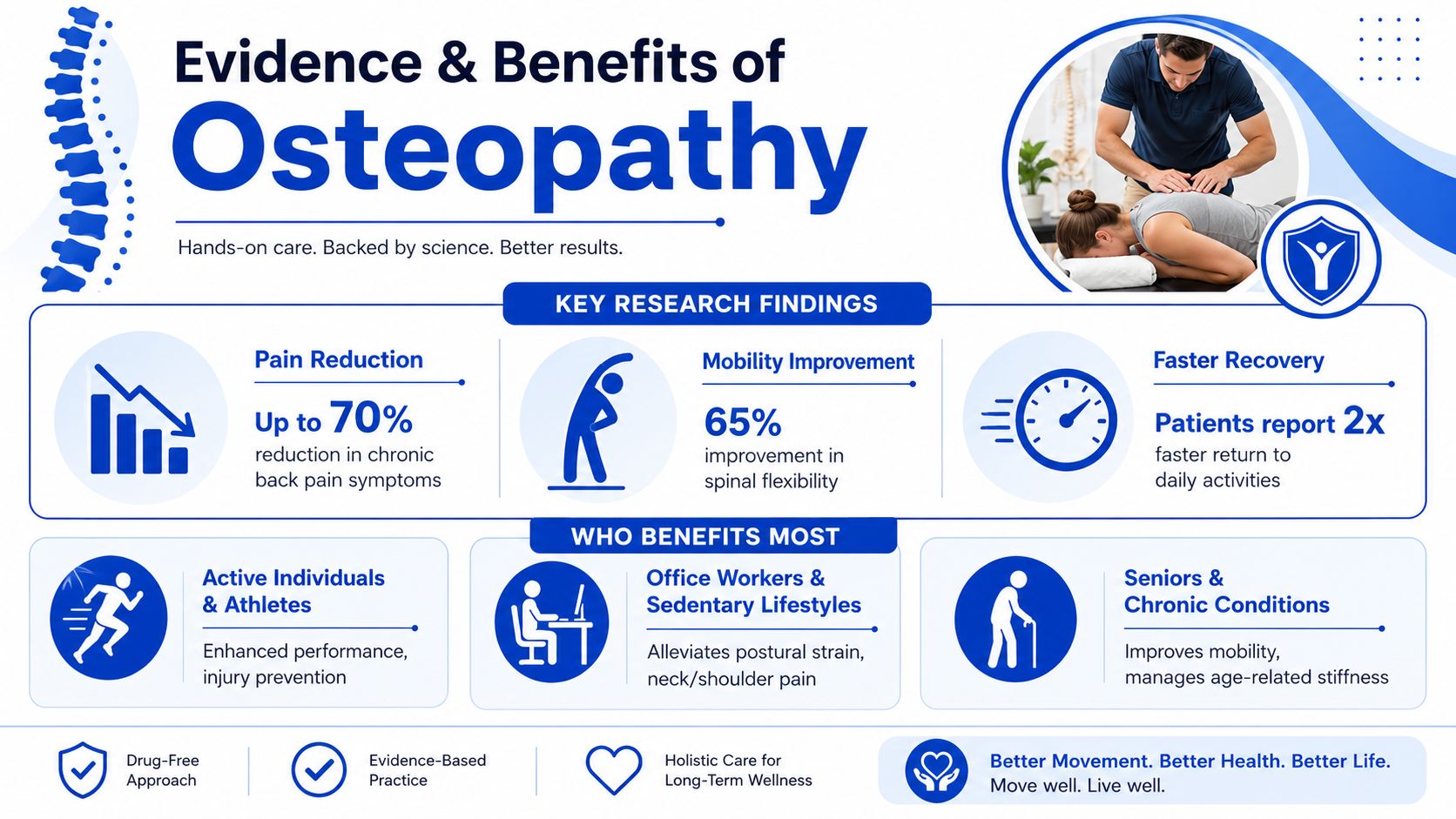
People want more than theory. They want to know whether osteopathy for back pain has real evidence behind it. The short answer is yes, with an important nuance. Research supports osteopathic manipulative treatment for many people with low back pain, while also showing that outcomes can vary depending on the person, the condition, and the broader care plan.
What research tells us
A meta-analysis of trials conducted in the United Kingdom and the United States found that osteopathic manipulative treatment produced a statistically significant reduction in low back pain, with an effect size of -0.30, and that relief persisted for at least three months, according to this peer-reviewed meta-analytic review in PMC.
That matters because people with ongoing back pain often aren't just looking for a brief settling of symptoms. They want treatment that helps them move, function, and cope better over time.
The broader evidence base described earlier in this article also points to another important idea. Osteopathic care tends to work best when it isn't only passive treatment. The hands-on care is useful, but the combination of manual therapy, movement advice, and patient education is often where people notice the most meaningful progress.
Benefits that go beyond pain
This is the part many articles miss. Back pain isn't only physical. It can make people anxious about movement, wary of exercise, and less confident in daily tasks. Evidence from Australia discussed in this Conversation article on mental health and back pain points to a frequently overlooked benefit of osteopathic manipulative therapy. It can improve self-care and quality of life more than standard primary care at 3 and 12 months, while also helping address anxiety and psychological distress related to back pain.
When pain feels less threatening, people often move more freely, sleep a bit better, and trust their body again. That change can be powerful.
There's also a practical access angle. For patients outside major centres, this review of evidence for rural Australian populations notes that peer-reviewed studies support OMT as a clinically effective, sustainable, and cost-efficient option for chronic low back pain.
Who often responds well
Osteopathic care may be particularly helpful for people who fit patterns like these:
- Desk-based workers: Persistent sitting, low movement variety, and postural fatigue often create a pattern of stiffness plus overload.
- People with recurring flare-ups: Symptoms settle, then return with gardening, travel, housework, or long car trips.
- Pregnant women with back pain: Earlier evidence noted in the article supports beneficial outcomes in this group.
- People seeking a drug-free option: Some patients prefer hands-on treatment plus self-management strategies.
- Patients whose pain affects confidence: If fear of movement, stress, or frustration has become part of the picture, an integrated approach can be especially useful.
Not everyone benefits in the same way, and osteopathy isn't a cure-all. But for many people, it offers both physical relief and a calmer, more confident relationship with movement.
Your Osteopathic Journey What to Expect
You wake up, bend to pull on your socks, and your back grabs again. By the time you book an appointment, there is often more than pain in the picture. There can be worry, hesitation, poor sleep, and the nagging question of whether one wrong movement will set everything off.
That is why a good osteopathic appointment should feel clear from the start. The process usually moves in stages: listening, assessing, treating, and giving you a plan for what to do between visits. For many new patients, understanding that sequence reduces some of the tension before any hands-on treatment begins.
Your first appointment
The first visit usually starts with a detailed conversation. Your osteopath will ask where the pain sits, when it began, what stirs it up, what eases it, and whether it spreads into the hip, buttock, or leg. They will also ask how it affects sleep, work, exercise, driving, and simple daily tasks, because back pain rarely stays neatly in one box.
You may be asked about past injuries, scans, medications, digestion, stress, and general health. That broader history matters. Back pain can behave like a tug on one part of a jumper that changes the shape of the whole garment. The sore spot matters, but so do the surrounding strains, habits, and pressures keeping it irritated.
The physical assessment comes next. Your osteopath may watch you stand, walk, bend, twist, sit, and get on and off the treatment table. They may feel for areas of stiffness, muscle guarding, joint restriction, and tenderness, then compare how different parts of your back, hips, ribs, and pelvis are sharing the load.
Bayside Osteopathic Health is one local option for this style of hands-on musculoskeletal assessment, with care focused on pain relief, mobility, and practical self-management.
For many patients, this part is reassuring. A careful assessment helps answer two questions that often sit in the background: What is driving this pain, and what can I safely do about it?
What a treatment plan can look like
Treatment is usually customized, not copied from a template. If your pain began after lifting, your plan may differ from someone whose back stiffens after long desk hours or returns during stressful weeks with poor sleep. The aim is to calm the irritated tissues, improve how the body moves as a whole, and reduce the factors that keep feeding the problem.
Hands-on care may include gentle joint articulation, soft tissue work, stretching, and techniques to improve movement through nearby areas that affect the back. Home advice is part of treatment, not an optional extra. You may be shown easier ways to get out of bed, change position at work, pace housework, restart walking, or build confidence with movements you have started to avoid.
As noted earlier, research suggests that a short series of sessions can help some people with chronic low back pain. In practice, that means improvement often builds over time. Many backs need repeated, sensible input to settle down, much like a stiff lock that starts working better with the right key used consistently, not forcefully.
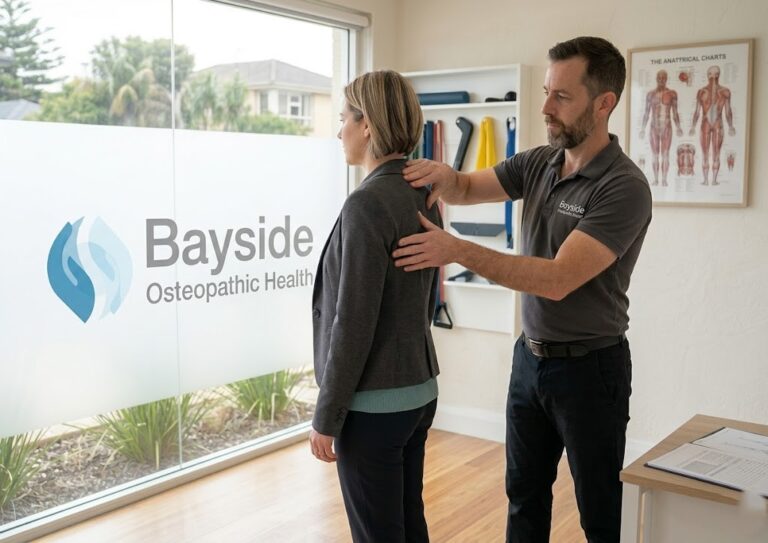
This clinical care image showing spine and shoulder assessment reflects the kind of hands-on evaluation that often happens during treatment planning.

A typical journey may include:
- Settling the flare-up: Reduce pain sensitivity, muscle guarding, and the feeling that every movement is a threat.
- Improving movement: Help the spine and related areas move more freely and share load better.
- Rebuilding confidence: Add simple exercises, pacing strategies, and daily movement habits that feel manageable.
- Supporting long-term change: Address work setup, stress load, sleep habits, and self-care routines that influence recurrence.
That third step often gets overlooked. As pain becomes less unpredictable, many people feel calmer, sleep more soundly, and stop bracing for the next flare. That psychological shift matters because a nervous, guarded body tends to move less freely. A calmer body often moves with less resistance.
A useful mindset: The best results often come when treatment and self-care work together. Hands-on care can reduce irritation and improve movement. Your daily habits help those changes hold.
Red flags that need urgent medical review
Most back pain is mechanical, but some symptoms need prompt medical attention. Seek urgent care if you develop:
- Changes in bladder or bowel control
- Numbness around the saddle area
- Severe weakness in a leg that's getting worse
- Back pain after significant trauma
- Fever, unexplained illness, or pain that feels unlike your usual pattern
- Pain that is constant, severe, and not changing with position or rest
A careful osteopath will recognise these signs and refer you for medical review when needed. Safe care includes knowing when hands-on treatment is appropriate, and when it is not.
Finding Osteopathic Care in Bayside
When you're ready to look for help locally, the basics matter. You want a practitioner who listens carefully, explains what they're finding in plain language, and adapts treatment to your comfort level. For back pain, it's also worth asking whether the appointment includes both hands-on care and practical advice for what to do between visits.
In Bayside, many people are looking for support with work-from-home strain, recurring lower back tightness, arthritis-related stiffness, or pain that keeps interrupting exercise. A sensible starting point is to choose a clinic that focuses on whole-body assessment rather than only treating the painful spot.
A few practical questions can help you decide:
- Does the clinic explain treatment clearly: You should know what they're doing and why.
- Do they offer gentle techniques: That's important if you're nervous about forceful treatment.
- Will you leave with a plan: Advice on movement, pacing, and self-care should be part of care.
- Can they discuss Medicare options where applicable: Some patients may be eligible under certain plans arranged through their GP.
The right fit often comes down to feeling heard and understood. If your back pain has become part of daily life, it's worth getting it properly assessed rather than continuing to work around it.
If you're looking for a calm, hands-on approach to osteopathy for back pain, Bayside Osteopathic Health offers appointments for people across the Bayside community who want help easing pain, improving mobility, and understanding the cause of recurring strain. You can book a consultation or join the newsletter for practical advice on movement, posture, and everyday recovery.