

You wake with a stiff neck and discover that turning your head to check traffic feels harder than it should. By late afternoon, hours at a laptop have added a dull ache between your neck and shoulders, and stretching seems to help only until the next workday. If this pattern keeps returning, the most useful question usually isn't “What can remove the pain today?” but “What keeps placing the same load on my neck?”
Osteopathy for neck pain combines a careful assessment with hands-on treatment, movement advice, exercise, and practical changes to daily habits. It isn't a promise of an instant fix. It's a way to understand how your neck, upper back, shoulders, ribs, breathing, workload, sleep, and stress may be interacting, then build a plan that helps you move with more confidence.
Table of Contents
- Why Neck Pain Keeps Coming Back and How Osteopathy Responds
- Common Causes of Neck Pain in Everyday Australian Life
- What Happens in an Osteopathic Assessment and Treatment
- How Osteopathy Addresses the Root Causes of Neck Pain
- Realistic Outcomes and Recovery Timelines for Neck Pain
- Safe Self-Care and When to Seek Medical Review
- Accessing Osteopathic Care at Bayside Osteopathic Health
Why Neck Pain Keeps Coming Back and How Osteopathy Responds
A patient may describe the same sequence familiar to many osteopaths. The neck feels tight after sleep, improves slightly once the day starts, then becomes sore during desk work. Driving brings another challenge because checking a blind spot feels restricted. By evening, the shoulders are raised and the person is rubbing the base of the skull, hoping the tension will settle.
That pattern doesn't necessarily mean the neck is damaged. Pain can reflect a combination of irritated joints, overworked muscles, reduced movement through the upper back, sustained screen or driving positions, poor sleep, and stress-related muscle guarding. The painful area is often only the place where the body is registering the total load.
Australian osteopathic practice reflects how central neck pain is to everyday musculoskeletal care. In a nationally representative survey of 971 Australian osteopaths, 98% said they often treated neck pain, while those treating it reported an average of 28.1±12.1 patient-care hours and 36.7±18.7 patient visits per week. These findings, reported in the Australian osteopathy neck-pain practice survey, show that neck pain is a routine clinical presentation rather than a niche concern.
The osteopathic difference
An osteopath doesn't assess only the point that hurts. The consultation may consider how the cervical spine moves with the thoracic spine, how the shoulders rest and move, whether the ribs and breathing pattern contribute to upper-body tension, and which activities repeatedly aggravate symptoms.
Treatment may ease restricted movement and muscular sensitivity, but the longer-term plan usually includes active work. That could mean adjusting workstation habits, rebuilding tolerance for movement, improving upper-back capacity, or addressing stress and recovery.
Practical rule: Short-term relief matters, but lasting progress depends on changing the pattern that repeatedly provokes the neck.
Osteopathy is a reasonable option for many people with non-specific neck pain, particularly when stiffness, movement restriction, and recurring workload-related symptoms are present. It shouldn't replace medical assessment when symptoms suggest serious injury, nerve involvement, or another condition requiring prompt review.
Common Causes of Neck Pain in Everyday Australian Life
Neck pain often develops through accumulation rather than one dramatic event. A laptop positioned too low, a phone held near the lap, a long commute, repetitive lifting, and a stressful week can each add demand. The neck may cope for a time, then become painful when sleep, workload, or recovery changes.
Australian data underlines the scale of the issue. A 2025 national survey reported that 64% of Australians had experienced neck pain, and 70% said it interfered with movement or daily activities, as described in this Australian neck-pain survey media release. The figures don't identify one cause for every person, but they reinforce why ordinary work and device habits deserve attention.
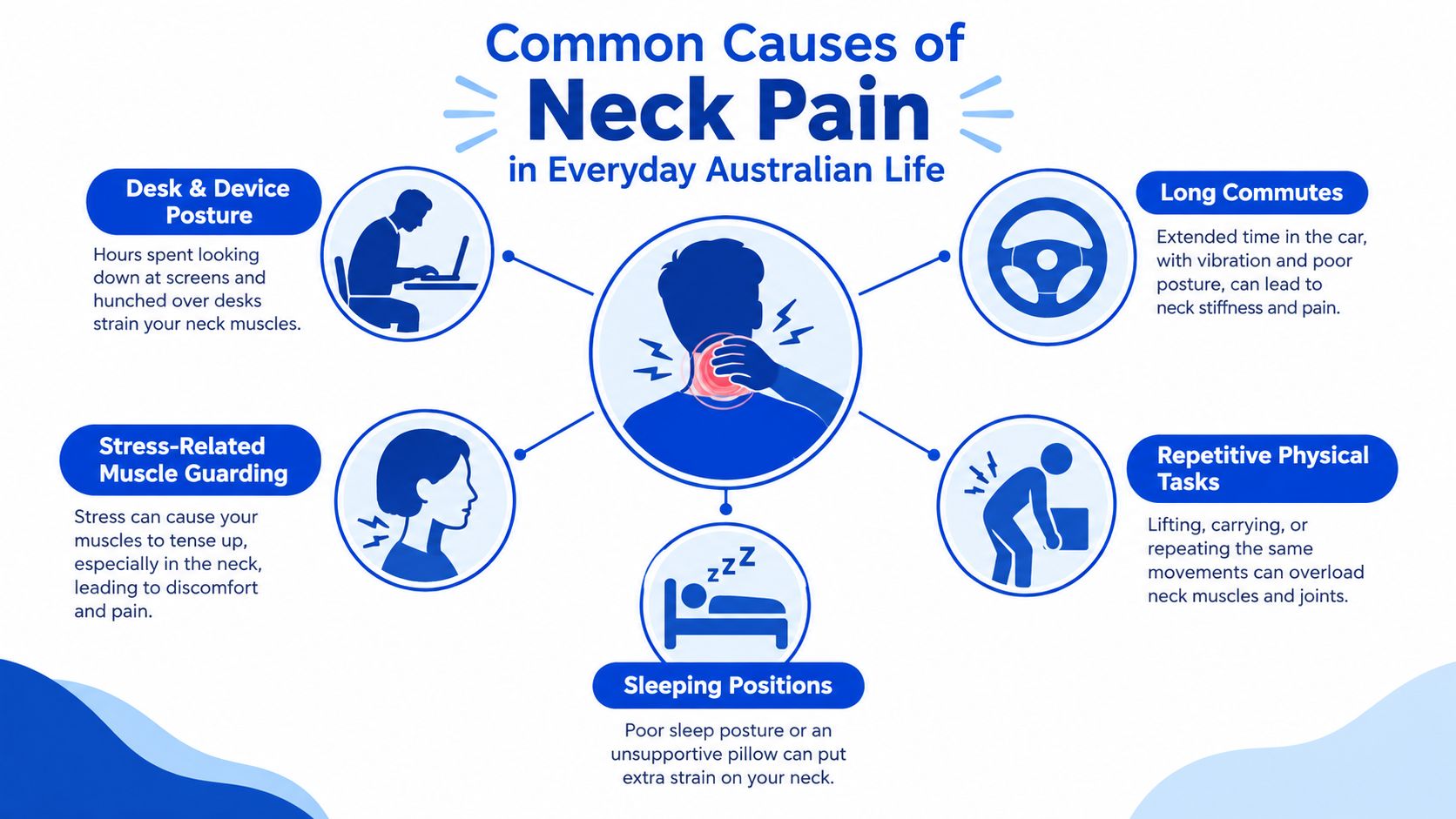
Loads that commonly matter
- Desk and device posture: Looking down or reaching forwards keeps the neck and shoulder muscles working for extended periods. A fixed position can be irritating even when the posture itself isn't harmful.
- Long commutes: Driving limits variation. Hands stay forwards, the upper back may remain still, and the neck repeatedly turns in a narrow range.
- Stress-related guarding: Stress can make people hold the shoulders higher, brace the jaw, or breathe more shallowly. These changes may increase muscular effort around the neck.
- Sleeping positions: A pillow that doesn't suit your body, sleeping with the neck rotated, or lying awkwardly can leave the area sensitive on waking.
- Repetitive physical tasks: Lifting, carrying, overhead work, and repeated reaching can involve the neck when the shoulders and upper back aren't sharing the load well.
Pain that builds late in the workday points towards cumulative loading. Pain that follows a particular task suggests that task deserves examination. Symptoms spreading into the arm, or changes in sensation or strength, need a more careful clinical assessment rather than a posture explanation alone.
A simple desk posture reference image can help you notice screen height, chair support, and shoulder position, but an ergonomic adjustment works best when it fits your actual work routine. The aim isn't to hold a rigid “perfect” posture all day. It's to make movement and position changes easier.
What Happens in an Osteopathic Assessment and Treatment
Your first appointment should feel like a clinical conversation, not a routine neck massage. The osteopath will ask when symptoms began, what makes them better or worse, how they affect work and sleep, and whether you've had previous injuries or relevant medical conditions. Your work setup, commute, exercise, stress, and usual movement habits can all help explain why symptoms persist.

A practical clinical sequence
- History and safety screening: The practitioner identifies the symptom pattern and checks whether medical referral or additional investigation may be appropriate.
- Movement assessment: You may be asked to turn, bend, and extend the neck, while the osteopath observes range, quality, discomfort, and compensation.
- Related-area assessment: The upper back, shoulders, ribs, breathing mechanics, and sometimes the jaw may be considered because they influence how the neck works.
- Treatment selection: The practitioner chooses techniques according to your findings, irritability, preferences, and comfort rather than applying one routine to everyone.
- Plan for between visits: You may receive movement, exercise, workstation, or workload advice designed to maintain the changes made during treatment.
Common hands-on approaches include soft-tissue techniques, which address sensitive or overactive muscles, and joint articulation, which guides joints through controlled movement. Gentle mobilisation uses repeated or sustained movements to support mobility without a thrust.
These methods differ from high-velocity manipulation. In an Australian randomised controlled trial involving 182 people with acute or subacute neck pain, manipulation wasn't superior to mobilisation over two weeks. The reported median recovery time was 47 days with manipulation and 43 days with mobilisation, with a hazard ratio of 0.98 and a 95% confidence interval of 0.66–1.46, according to the Australian neck-pain manual-therapy trial. The practical implication is that a stronger technique shouldn't be assumed to produce faster recovery.
A treatment session may therefore include work away from the sore spot. Improving upper-back movement or shoulder mechanics can reduce the amount of work the neck has to perform. You should understand what the practitioner is doing and feel able to say if a technique is uncomfortable.
How Osteopathy Addresses the Root Causes of Neck Pain
Hands-on treatment can be useful, but passive care alone doesn't teach your body to tolerate the demands that caused the flare-up. Australian osteopathy research describes a multimodal pattern in which practitioners combine soft-tissue work with exercise, physical-activity advice, fitness guidance, stress management, pain education, and posture or ergonomic advice. A cross-sectional study of Australian osteopathic care for non-specific neck pain reported that all surveyed practitioners used soft-tissue techniques alongside these broader strategies.
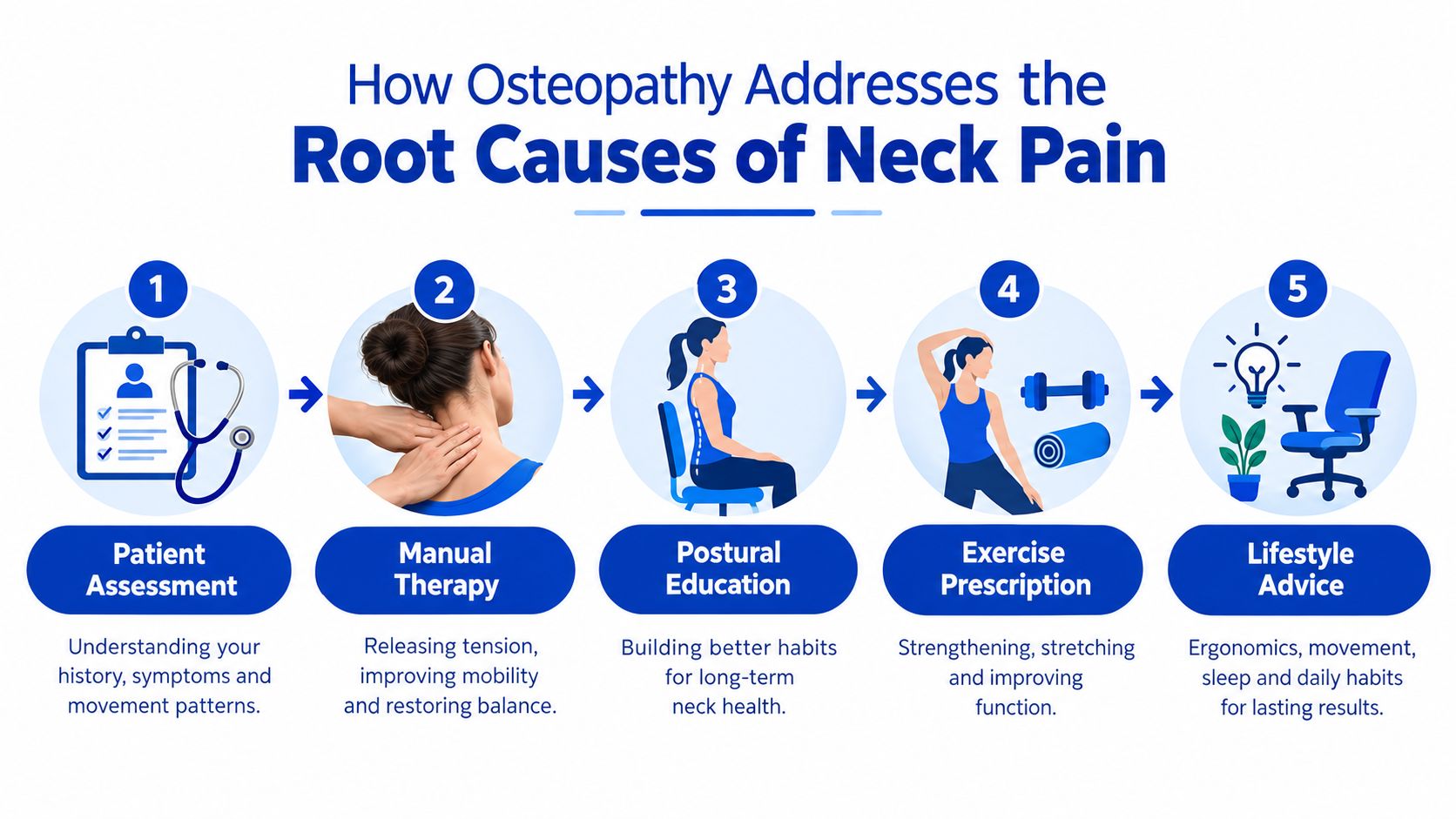
From symptom relief to capacity
Manual therapy may reduce short-term stiffness and make movement feel easier. That creates an opportunity to practise useful movement rather than guarding the neck throughout the day.
Exercise then builds capacity. Depending on your assessment, this might include gentle neck control, shoulder-blade movements, upper-back mobility, or gradual strengthening. The right exercise is one you can perform consistently without provoking a prolonged flare-up.
Posture advice should be practical, not corrective in a punitive sense. Raising a screen, changing hand position for phone use, supporting the arms, or alternating between tasks can reduce uninterrupted loading. The objective isn't to freeze yourself in one ideal position. It's to expand the range of comfortable positions you can use.
Stress and workload also deserve a place in the plan. A demanding week, limited breaks, poor sleep, or persistent worry can increase muscle guarding and reduce recovery. An osteopath may suggest breathing practice, workload pacing, or movement breaks, while referring to another health professional when that's more suitable.
The strongest plan is usually the one you can repeat between appointments, not the one that feels most impressive in the treatment room.
This approach also changes how success is measured. Pain matters, but so do turning the head while driving, completing a workday, sleeping more comfortably, carrying a child, or returning to exercise. For desk-related symptoms, a personalised neck and shoulder movement visual may support a conversation about what your body needs during the day.

Realistic Outcomes and Recovery Timelines for Neck Pain
Recovery doesn't follow one timetable. Someone with a recent, uncomplicated flare-up may notice easier movement early, while a person with recurring symptoms may need to change work habits and rebuild strength before improvements hold. Long-standing pain can also fluctuate with sleep, stress, workload, and confidence in movement.
The Australian manipulation trial provides a useful reminder that recovery from acute or subacute neck pain can take time. Participants had median recovery times measured in days rather than a single appointment, and the trial found no meaningful advantage for manipulation over mobilisation, as reported in the trial findings. That doesn't predict your personal result, but it does argue against judging treatment by whether every symptom disappears immediately.
A comparison of common patterns
| Pain pattern | Early changes in the first few sessions | Longer-term outcomes |
|---|---|---|
| Recent stiffness after an awkward night or new activity | Movement may feel less restricted, and turning the head may become more comfortable. | Normal activity can return gradually when aggravating loads are reintroduced sensibly. |
| Recurrent desk or device-related pain | You may become better at identifying the point in the workday when tension starts and learn which resets help. | Better work tolerance depends on regular movement, a workable setup, and improved capacity, not treatment alone. |
| Long-standing, stress-sensitive neck pain | The first gain may be understanding triggers and reducing fear around movement, rather than immediate large pain changes. | Progress is often steadier when sleep, stress, exercise, and workload are addressed alongside hands-on care. |
| Neck pain with marked arm symptoms | The priority is a careful assessment and deciding whether medical review is needed. | The outcome depends on the underlying cause and whether other health professionals need to be involved. |
A useful progress marker is function. Can you work for longer before symptoms build? Can you check your blind spot, sleep, or exercise with less hesitation? Those changes may arrive before the neck feels completely normal.
If symptoms worsen consistently, fail to change despite a sensible plan, or develop alongside neurological signs, the plan should be reviewed rather than extended automatically.
Safe Self-Care and When to Seek Medical Review
Between appointments, aim for gentle, frequent movement rather than aggressive stretching. Slowly turn your head within a comfortable range, return to centre, and stop if the movement creates sharp pain, dizziness, or spreading symptoms. A short walk can also reduce the time spent in one fixed position.
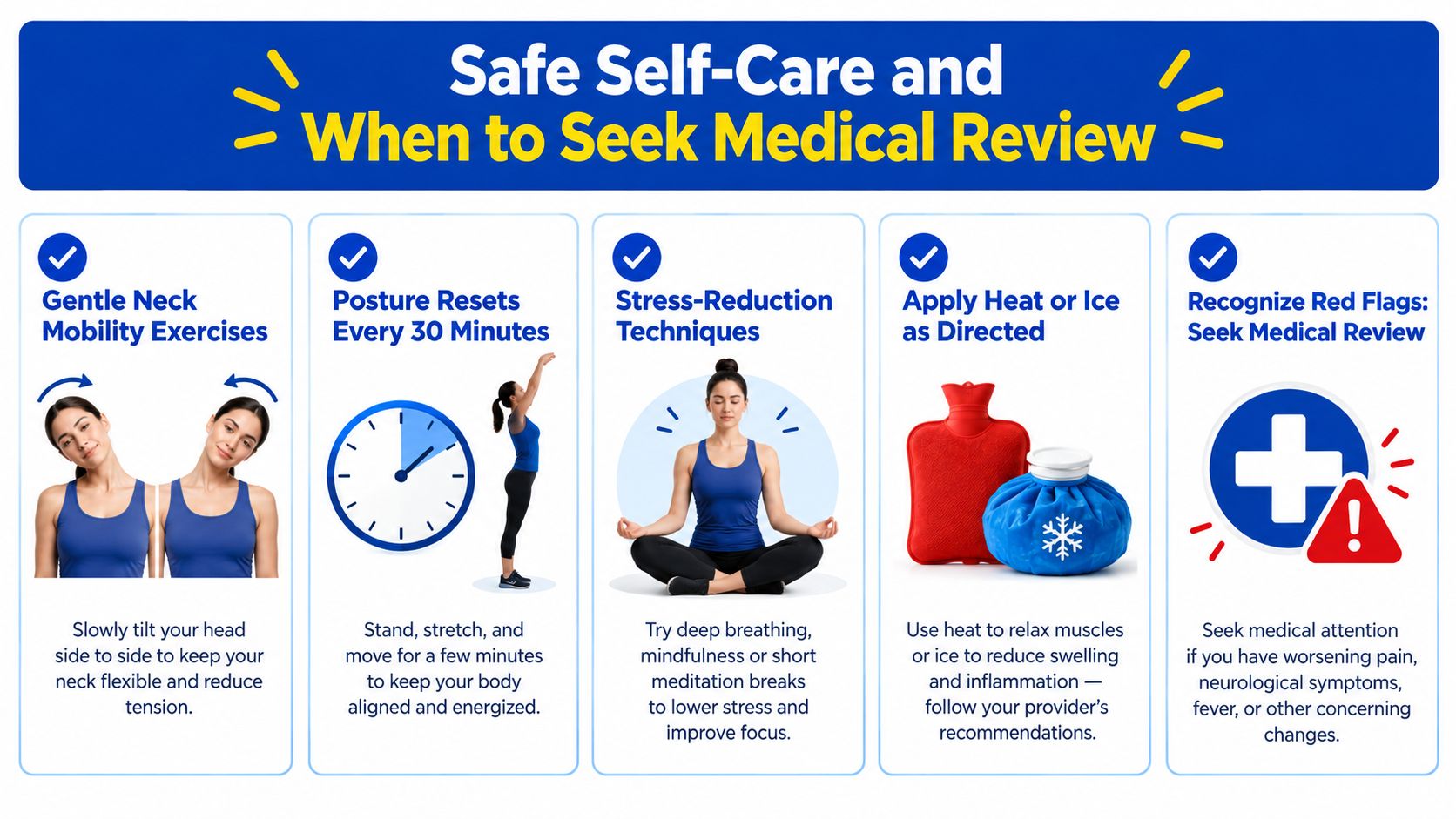
Small actions that support recovery
- Reset your position: Let your shoulders soften, bring the screen closer to eye level, and change position before stiffness becomes intense.
- Use comfortable heat or cold: Either may feel helpful for some people. Protect the skin and follow advice from your healthcare professional, particularly after an injury.
- Breathe slowly: Longer, unforced exhalations can help reduce bracing around the shoulders when stress is contributing to tension.
- Keep exercise modest: Choose movements that leave you feeling the same or better afterwards. Don't force end-range stretching into an irritable neck.
- Track function: Note whether driving, work, sleep, or ordinary movement is becoming easier. This gives your practitioner useful information.
A practical guide to gentle hands-on care and self-management can help you think about treatment expectations, but online advice can't assess your individual symptoms.

Seek urgent medical care after significant trauma, particularly if neck pain is severe or movement is markedly restricted. Medical review is also important for unexplained weight loss, constant pain that worsens at night, fever or systemic illness, new weakness, numbness, tingling, loss of coordination, or pain that travels into an arm with neurological changes.
Don't rely on another osteopathy appointment as the only response to red flags. A doctor, emergency service, or other appropriate clinician should assess symptoms that may indicate fracture, infection, serious disease, or significant nerve involvement.
Accessing Osteopathic Care at Bayside Osteopathic Health
Choosing a practitioner should start with the assessment, not a promise about a particular technique. Ask how the osteopath will evaluate your neck, upper back, shoulders, work demands, sleep, and relevant medical history. You should also receive a clear explanation of the proposed treatment and what you can do between visits.
Australian research shows that osteopathy has an established place in community musculoskeletal care. A national survey estimated that 4.6% of Australian adults used osteopathy in the previous 12 months and that Australians made 3.1 million osteopathy visits during that year, with more than 90% of users rating manipulative treatment as very or somewhat helpful, according to the Australian osteopathy utilisation survey. Those findings provide context, not a guarantee for any individual.
At Bayside Osteopathic Health, an appointment may include a whole-body movement assessment, gentle soft-tissue work, joint articulation, mobilisation, and advice that fits your daily routine. For someone whose symptoms build at a desk, that plan may include workstation considerations and a manageable movement routine. For recurring pain, the emphasis may shift towards exercise, load tolerance, stress, and preventing the same flare-up cycle.
Medicare access can depend on eligibility and the type of care plan in place. Contact the clinic before booking if you want to clarify whether your circumstances may allow access under an applicable Medicare plan, and bring relevant referral or plan information if you have it. It's also useful to bring a list of medications, details of previous injuries, and a brief description of the tasks that aggravate your neck.
You don't need to wait until pain is severe to seek guidance, but you should seek medical review first when red flags or significant neurological symptoms are present. For suitable presentations, a calm assessment and a combined plan can make the next step more practical.
Bayside Osteopathic Health offers gentle, hands-on osteopathic care for neck pain, with personalised movement, posture, and self-care guidance to support comfortable daily activity. Visit Bayside Osteopathic Health to learn about booking and discuss whether an osteopathic assessment is appropriate for your symptoms.