
You wake with a stiff lower back, spend the morning managing discomfort at your desk, then wonder whether to rest, stretch, book an appointment or take another tablet. Persistent pain can make ordinary decisions feel complicated, especially when you want relief without relying on medication.
Pain management without medication works best as a staged plan, not a collection of disconnected tricks. The practical aim is to improve movement, confidence, sleep, coping and participation while checking that nothing more serious is being missed. Medication may still have an appropriate place, but Australian guidance supports combining safe, individualized non-pharmacological strategies with medical care rather than treating medicine as the only answer.
Table of Contents
- Understanding Your Pain Before Taking Action
- Building a Daily Movement and Stretching Routine
- Incorporating Breathing and Pain-Coping Strategies
- When to Seek Professional Osteopathic Care
- Understanding Medicare and Local Access Options
- Putting It All Together – Your Personalized Pain Management Plan
- Frequently Asked Questions About Drug-Free Pain Relief
Understanding Your Pain Before Taking Action
Start with the pattern, not the treatment. Back pain that began after a demanding week, eased at weekends and later reached the buttock during longer walks may reflect common mechanical pain. Neck pain that follows laptop work and changes when the shoulders move can follow a similar pattern. These clues help guide assessment, but they do not confirm a diagnosis.
Ask practical questions: Did the pain follow an injury? Does a position or movement change it? Does it travel into an arm or leg? Have you noticed numbness, weakness, fever, unexplained weight change, or difficulty controlling your bladder or bowel? The answers help determine whether a graded self-management approach is reasonable or whether prompt medical review is needed.
Know when self-care is not enough
Seek urgent medical attention for new or worsening neurological symptoms, significant weakness, loss of sensation, bowel or bladder changes, serious trauma, or pain with signs of systemic illness. Persistent or unexplained pain also warrants assessment instead of repeated home remedies without a clear response.
For chronic, non-specific low-back pain, RACGP guidance recommends screening for red flags and neurological deficits before setting functional goals and selecting exercise suited to the individual. The RACGP exercise guidance for chronic low-back pain describes a graded pathway using supervised sessions alongside home practice. That sequence supports safer progression and gives you a way to review whether activity is improving daily function.
Practical rule: Pain intensity matters, but it is only one measure. Track whether you can walk farther, sleep more comfortably, work with fewer interruptions, or return to an activity you value.
Assessment can reduce uncertainty and identify factors such as restricted movement, a recent change in physical load, poor recovery, or fear of movement. An osteopath, physiotherapist, or GP may be appropriate depending on the presentation, and these clinicians can coordinate care when symptoms or progress warrant it. Use this visual guide to understanding chronic pain to support a conversation about your symptoms, not to diagnose the cause.
Building a Daily Movement and Stretching Routine
After a long day at a desk, your back or neck may feel stiff before you have done anything strenuous. Short, controlled movement often helps more than prolonged rest for persistent back, neck and joint pain. The right dose depends on your starting point, symptoms and recovery. Begin with movements you can manage, then judge progress by how well you function afterwards.
A simple starting sequence
Warm the body gently. Walk around the room or march on the spot for a few minutes. Notice whether stiffness eases and whether any symptoms change.
Mobilise the spine. On hands and knees, slowly alternate between rounding and lengthening your back. Stay within a comfortable range. If kneeling is unsuitable, perform a smaller seated version with your hands on your thighs.
Retract the neck. Sit tall and draw your head gently backwards without looking up or down. Hold briefly, relax and repeat several times. Stop if the movement causes arm symptoms, dizziness or sharp pain.
Open the hips. Use a supported half-kneeling hip-flexor stretch, or stand with one foot behind the other and shift your weight forwards. Keep your ribs and pelvis controlled. You should feel a mild stretch at the front of the hip, not a forceful pull through the lower back.
Add useful strength. Depending on your capacity, try a sit-to-stand, supported bridge, wall push-up or short walk. Strength work helps convert mobility into tasks such as climbing stairs, lifting and getting out of a chair.
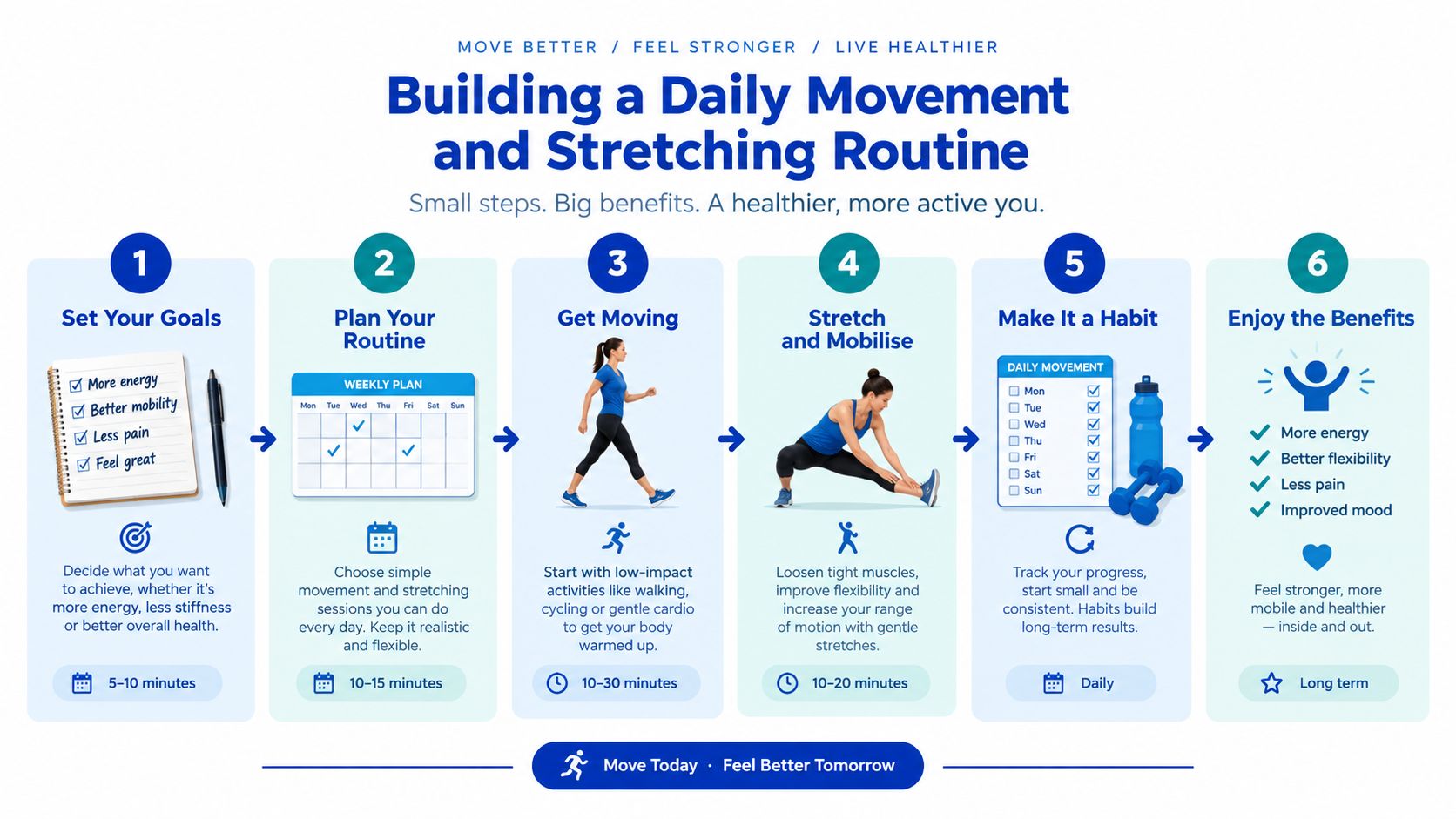
Keep the routine short enough to repeat consistently. Increase duration, repetitions or resistance gradually, changing one variable at a time. Mild, temporary discomfort can occur. Stop and seek advice if symptoms become sharp, progressively worse, or associated with new numbness or weakness.
Common mistakes include stretching aggressively, introducing several exercises at once and treating soreness as proof that the programme is working. Office and remote workers can use this guide to preventing back pain at work to vary position and movement throughout the day.
Australian clinical guidance uses approximately 20 hours of individually supervised exercise over 8 to 12 weeks, alongside home practice, for chronic low-back pain. That workload is a reference point, not a prescription. A clinician can adjust exercise selection, supervision and progression to your symptoms, capacity and goals, while follow-up checks whether changes are carrying over into daily life.
Try this demonstration after reading the safety guidance and adapting each movement to your ability.
Incorporating Breathing and Pain-Coping Strategies
Pain can narrow attention. You brace your shoulders, hold your breath during a difficult movement and start avoiding activities that once felt ordinary. Breathing and psychological strategies don't mean the pain is imaginary. They give your nervous system and your behaviour more ways to respond.
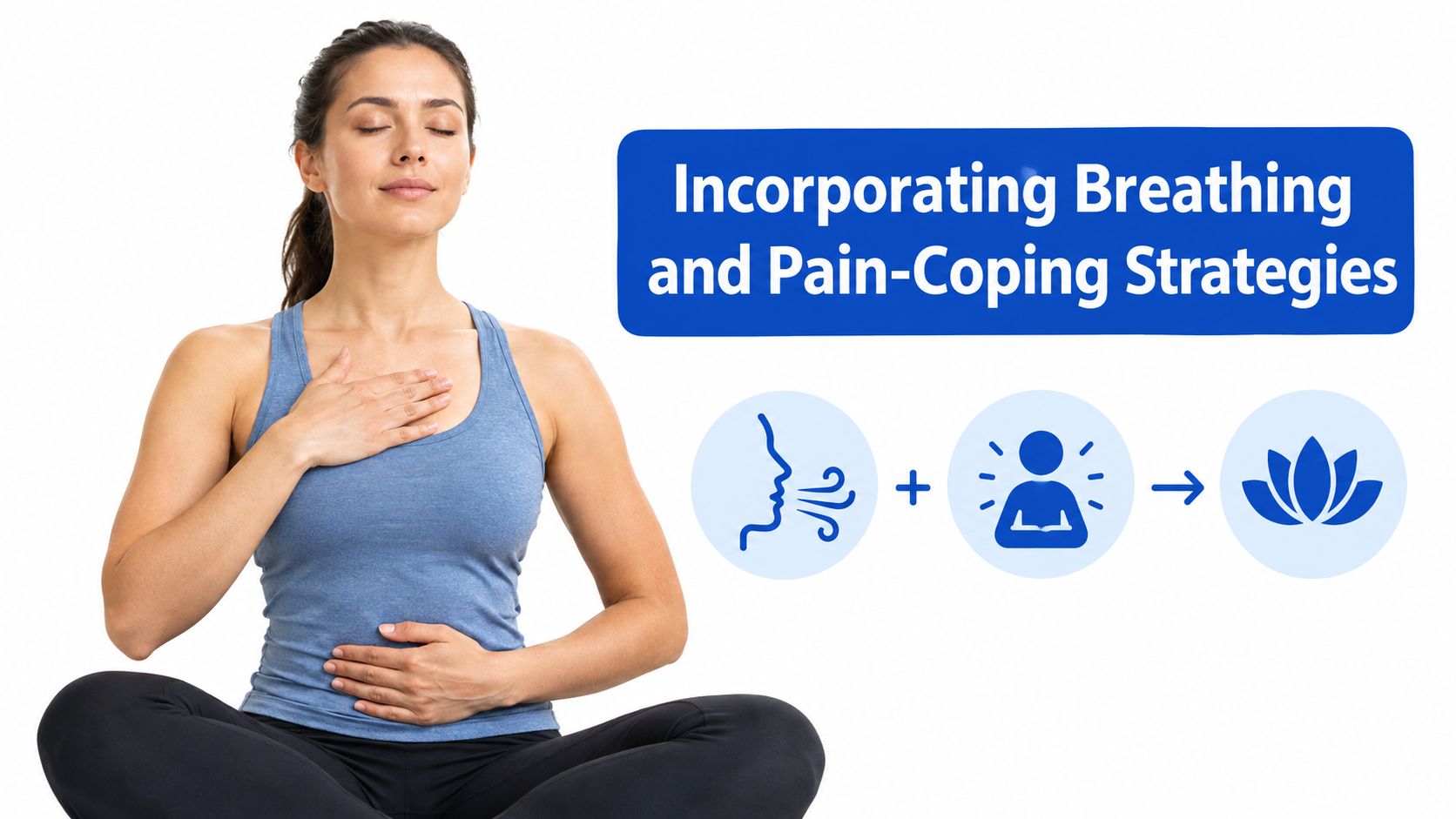
Sit or lie comfortably and let your shoulders drop. Breathe in gently through your nose, allowing the lower ribs to widen, then breathe out slowly without forcing the exhalation. Continue for a few calm cycles, especially before movement, during a flare or at bedtime. The purpose isn't to eliminate pain instantly. It is to reduce unnecessary bracing and make the next useful action feel more achievable.
Turn coping into behaviour
Use a simple sequence when discomfort rises:
- Notice the response. Identify whether you are tensing, avoiding movement or catastrophising what the pain means.
- Choose a smaller action. Reduce the range, slow the pace or take a short walk rather than stopping all activity.
- Set a functional target. Aim to shower, prepare lunch, complete a work task or sleep more consistently.
- Review the result. Track what you did and how your function changed, not just the symptom score.
Education is most useful when it leads to practice. Australian guidance supports exercise and cognitive behavioural therapy for chronic low-back pain, with multidisciplinary care for more complex presentations. An Australian rapid review found moderate-quality evidence that education improves reassurance compared with control in the short and long term, while biopsychosocial care outperformed education and advice alone for pain and functional disability in three trials involving 991 participants. The Australian Commission rapid literature review provides the supporting detail.
Sleep deserves equal attention. Keep your waking time reasonably consistent, make the bedroom comfortable and avoid turning a poor night into a day of complete inactivity. If sleep disruption continues, discuss it with your GP or another qualified clinician. Breathing, pacing and sleep habits work best alongside movement rather than as replacements for rehabilitation.
When to Seek Professional Osteopathic Care
Self-management is valuable, but it has limits. If pain keeps returning, movement remains restricted, you can't progress your routine or uncertainty is stopping you from exercising, professional input can make the plan safer and more specific.
An osteopathic consultation generally begins with a history and movement assessment. The practitioner may examine how your spine, hips, shoulders and surrounding muscles contribute to the problem, then use techniques such as soft-tissue work, joint articulation and gentle mobilisation where appropriate. The hands-on treatment is only one part of the process. A useful appointment should also leave you with clear advice about activity, pacing and what to do between visits.
Match care to the problem
Hands-on care may be helpful when stiffness, muscle guarding or a movement restriction makes exercise difficult to start. It won't correct every cause of pain, and passive treatment alone rarely provides a durable self-management strategy. The stronger approach combines treatment with a home plan that gradually restores confidence and capacity.
Australian evidence highlights why this broader model matters. Medications were used in an average 68.4% of general-practice consultations involving pain management, while about 87% of people with chronic pain had not seen a psychologist about their pain, according to an Australian parliamentary submission on pain management and non-pharmacological care. The figures don't mean medication is inappropriate. They show why education, exercise, psychological support and coordinated care need to be easier to access.
A GP review may be the right first step if the diagnosis is unclear, symptoms are changing or other health conditions affect exercise choices. For people in Bayside, Bayside Osteopathic Health's lower-back-pain resource can help you prepare questions about assessment, hands-on care and home movement.
Understanding Medicare and Local Access Options
Funding for non-drug pain care depends on the service, your eligibility and the plan arranged with your healthcare providers. Medicare doesn't automatically cover every osteopathic appointment. Ask the clinic about fees, rebates and whether a GP-managed care plan applies before booking a course of treatment.
| Service type | Medicare coverage | Bayside access notes |
|---|---|---|
| GP assessment | Medicare may provide a rebate for eligible consultations | A GP can assess red flags, coordinate referrals and discuss care-plan options |
| Osteopathic consultation | Rebates may apply under certain eligible care plans, subject to requirements | Confirm eligibility, out-of-pocket costs and claiming arrangements with the clinic |
| Psychology or multidisciplinary support | Access and rebates depend on the referral pathway and applicable plan | Ask your GP which services fit your needs and local availability |
| Home exercise and self-management | No appointment is required, but professional guidance may improve safety and progression | Use a written plan, track function and review it if progress stalls |
Self-care and professional care serve different purposes. A home routine is convenient, inexpensive and essential for building daily capacity, but it can be hard to choose the right exercises or adjust them during a flare. Hands-on care offers assessment, feedback and symptom modification, but it requires appointments and shouldn't become the only thing you do.
Rural access research also shows that non-medication care isn't automatically low-resource. Physiotherapy, psychology, pain services, transport and follow-up can be difficult to coordinate when workforce shortages exist. In Bayside, ask about appointment availability, telehealth where relevant and how the practitioner will connect treatment with your daily routine.
Putting It All Together – Your Personalized Pain Management Plan
Australian adults face a substantial chronic-pain burden. The Australian Institute of Health and Welfare reported that almost 1 in 5 Australians aged 45 and over, approximately 1.6 million people, experienced chronic pain in 2016. Those affected were 5 times more likely to report being limited a lot in daily activities, and were 2.7 times as likely to have been dispensed pain medication as people without chronic pain. These figures are reported in the AIHW chronic pain data.
A practical plan has four parts:
- Move daily. Choose a manageable routine and progress it gradually.
- Practise coping skills. Use breathing, pacing and graded exposure when pain triggers guarding or avoidance.
- Protect recovery. Organise sleep, work breaks and realistic activity levels.
- Review the plan. Seek professional assessment when progress stalls, symptoms change or the diagnosis is uncertain.
Measure success by function. Record a meaningful activity, your tolerance for it and any barriers that appeared. Pain management without medication isn't a promise of pain-free living. It is a structured way to regain participation and confidence while using medical support when it is clinically appropriate.
Frequently Asked Questions About Drug-Free Pain Relief
Can everyone manage pain without medication?
No. Some conditions require medication, surgery or urgent medical treatment. Non-drug strategies can complement prescribed care, but don't stop or change medication without discussing it with the prescribing clinician.
How quickly should I expect results?
Some people notice changes in movement or confidence early, while persistent pain usually requires consistent practice and review. Progress is better judged by walking, sleeping, working or exercising more effectively than by expecting immediate symptom elimination.
What should I do during a flare?
First, check whether the symptoms are different from your usual pattern or accompanied by red flags. If not, reduce the intensity without stopping all movement, use calm breathing, return to a familiar activity and contact your healthcare professional if the flare is severe, prolonged or repeatedly limiting.
Is osteopathy enough on its own?
Usually, hands-on care works best as part of a wider plan. Assessment and treatment may make movement easier, but your daily exercise, pacing, sleep and follow-up determine how well the change carries into ordinary life.
Start with one safe movement, one coping strategy and one functional goal. Reassess regularly, involve your GP or another qualified professional when needed, and choose care that helps you become more capable rather than permanently dependent on appointments.
Bayside Osteopathic Health provides gentle hands-on osteopathic care, movement advice and practical self-management strategies for back, neck and joint pain. Visit Bayside Osteopathic Health to discuss your symptoms, available care options and how to build a personalised plan for moving with greater confidence.