
You roll over in bed and get a sharp jab through the front of the pelvis. Or you stand up after sitting for half an hour and feel a deep, dragging ache around the pubic bone, hips, or low back. Sometimes it shows up on a walk. Sometimes it hits when you lift one leg to get dressed, climb stairs, or get out of the car.
That kind of pelvic pain during pregnancy can be unsettling because it often arrives without warning, and many women assume they just have to put up with it. They don't. This pain is common, real, and treatable with the right approach.
Table of Contents
- That First Twinge Understanding Pregnancy Pelvic Pain
- Why Is This Happening A Look at Your Changing Body
- Everyday Adjustments for Immediate Pelvic Pain Relief
- Gentle Exercises to Build Pelvic Stability
- How Osteopathic Care Can Help Your Pelvic Pain
- Your Practical Action Plan for Relief in Bayside
That First Twinge Understanding Pregnancy Pelvic Pain
For many women, pelvic pain during pregnancy starts as something easy to dismiss. A twinge turning in bed. A catch in the groin when stepping out of the car. A dull ache after grocery shopping or a short walk. Then the pain starts shaping the day. You walk more slowly. You avoid stairs. You think twice before lifting one leg into your underwear or trousers.
If that sounds familiar, you're not overreacting. In a prospective Australian study, 34% of women had pelvic girdle pain at any given point, and 71% experienced it at some time during pregnancy. In that same study, 80% reported disability, yet only a quarter received any treatment, as reported in the Australian cohort study on pelvic girdle pain in pregnancy.
Pelvic pain during pregnancy is common, but common doesn't mean you should ignore it.
The pain can be felt at the front of the pelvis around the pubic bone, through the buttocks, across the low back, in the groin, or as a sense that the pelvis doesn't feel steady. Some women feel a sharp pain with movement. Others describe heaviness, ache, or strain that builds through the day.
What makes it so frustrating
Pelvic pain often doesn't behave like an injury you've had before. Rest may help one day and not the next. Walking might feel fine for ten minutes, then suddenly aggravate things. Rolling in bed can hurt more than standing still.
That inconsistency is one reason women often doubt themselves. They shouldn't. The pattern is typical of a pelvis under extra load and reduced stability.
What matters most early on
- Take the pain seriously: If a movement repeatedly triggers pain, your body is giving useful information.
- Notice the pattern: Pain with standing, turning, stairs, dressing, or getting in and out of bed points toward a movement-related problem, not weakness or poor effort.
- Get support sooner rather than later: Early changes to movement, posture, exercise, and hands-on care can make daily life much easier.
Why Is This Happening A Look at Your Changing Body
Pregnancy asks a lot from the pelvis. It has to support your body, adapt to a shifting load, and stay comfortable enough for you to keep moving. That is a big job for a structure made of joints, ligaments, and muscles that all need to work together.
The pelvis is built for support and movement
A useful way to think about the pelvis is as a bony basin held together by strong ropes. The bones form the frame. The ligaments are the ropes. The muscles provide active support and control.
During pregnancy, those ropes soften. The Royal Women's Hospital identifies the primary cause of pregnancy-related pelvic girdle pain as biomechanical instability driven by hormones such as relaxin and progesterone. This ligamentous laxity increases joint mobility and can lead to pathological instability, often between 14 and 30 weeks gestation, according to this summary of Royal Women's Hospital guidance and related Australian data.
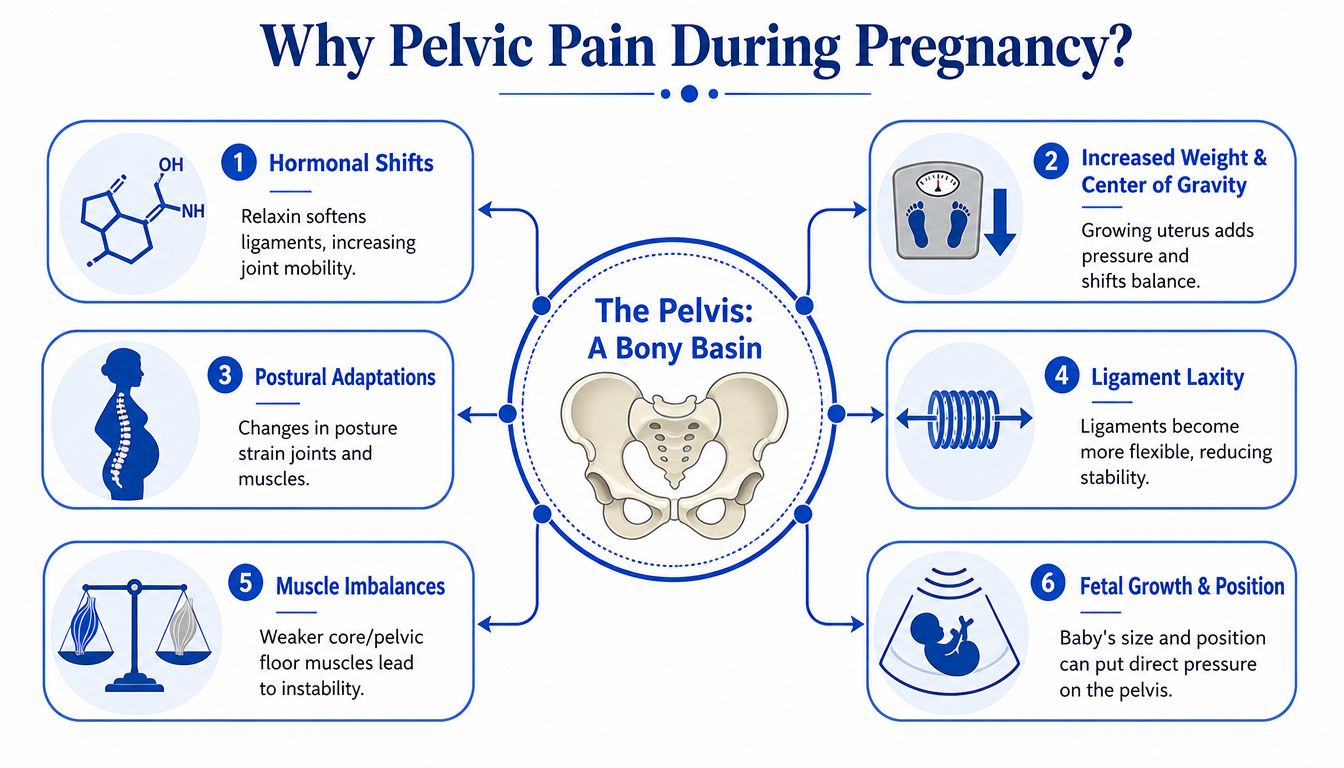
That doesn't mean your body is failing. It means your body is adapting. The trouble starts when the amount of movement in the pelvic joints exceeds the amount of control the surrounding muscles can provide comfortably.
Why symptoms often begin in the middle of pregnancy
As your baby grows, your centre of gravity shifts. Your trunk changes position. Your hips, glutes, abdominal wall, pelvic floor, and lower back all have to share load differently. If one area stiffens and another becomes less supported, the pelvis often ends up absorbing that strain.
Terms like SPD and PGP often get used interchangeably. In practice, women may feel pain at the pubic symphysis at the front, around the sacroiliac joints at the back, or both. The name matters less than the pattern. The shared issue is usually impaired load transfer through the pelvis.
Clinical takeaway: The pain often isn't caused by one structure in isolation. It's usually a combination of joint irritation, ligament strain, altered muscle support, and repeated aggravation from daily tasks.
A few movements commonly reveal this clearly:
- Single-leg loading: Putting on pants, climbing stairs, or stepping into a car can provoke pain because one side of the pelvis has to stabilise more.
- Transitional movements: Rolling in bed, standing from a chair, and turning quickly can trigger shearing forces through irritated joints.
- Sustained standing: Some women cope with walking better than standing still. That's an important clue because static weight-bearing can be especially aggravating when the pelvis lacks support.
Everyday Adjustments for Immediate Pelvic Pain Relief
The fastest wins usually come from changing how you move between tasks, not from doing more stretching. Many women keep irritating the pelvis in tiny ways all day long without realising it. Fix those first.
Small movement changes that matter
Australian clinical guidelines advise not pushing through pain, using ice packs for 20 to 30 minutes every 2 to 3 hours, and keeping the knees together when rolling in bed to reduce shear through the sacroiliac and symphysis pubis joints, as outlined in the RACGP guidance on pelvic girdle pain in pregnancy.
If you only remember one rule, make it this: move as a unit when possible. That means avoiding sudden twisting, wide stepping, and separated-leg movements when the pain is active.
Posture and movement do's and don'ts
| Do | Don't |
|---|---|
| Keep your knees together when rolling in bed | Twist the top leg across your body |
| Sit down to get dressed | Stand on one leg to put on pants or underwear |
| Take smaller steps and slower turns | Pivot sharply on one leg |
| Use both feet evenly when standing up | Push off one side only |
| Break standing into shorter blocks | Stay upright until the pain spikes |
| Use an ice pack as guided | Keep pushing through increasing pain |
A few practical examples help more than general advice.
- In bed: Roll shoulders, trunk, pelvis, and knees together. Put a pillow between the knees if that helps keep the pelvis more neutral.
- Getting out of the car: Sit first, then swivel both legs together rather than stepping out one leg at a time.
- At your desk: Sit with both feet supported. Avoid crossing your legs. If sitting builds pressure, alternate with short movement breaks.
- While standing: Shift less. Fidgeting from one hip to the other can keep irritating the joints. A brief sit-down is often more useful than trying to tough it out.
For visual support with these daily setups, this pregnancy postural support guide image shows the kind of positioning cues that often reduce strain.
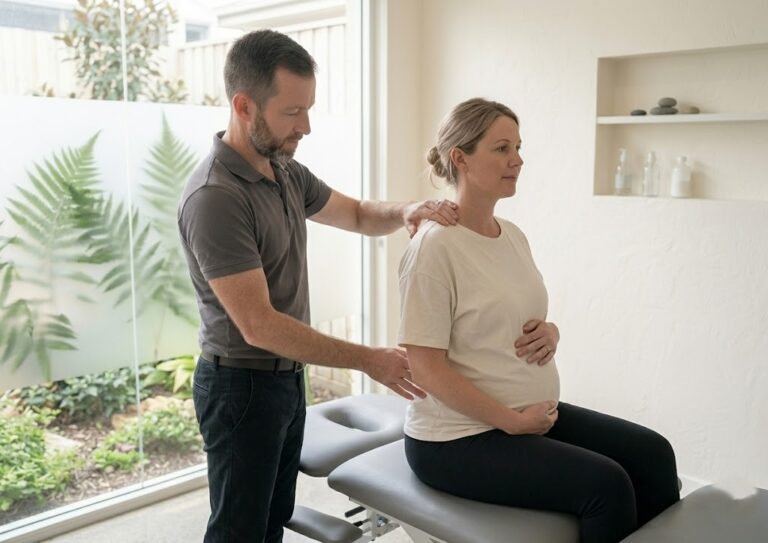
A painful pelvis usually prefers symmetry, shorter movements, and fewer sudden transitions.
What tends not to work well
Some advice sounds sensible but backfires.
- Deep stretching: If the issue is instability, aggressive stretching can leave the area feeling less supported.
- Long walks to loosen up: For some women, that only adds repeated load.
- Ignoring pain on “good days”: Overdoing it when symptoms settle often leads to a flare later that day or the next morning.
- Constant bed rest: Rest has a role, but too much inactivity can make the body feel stiffer and less confident with movement.
The aim isn't to stop moving. It's to move in ways your pelvis can tolerate.
Gentle Exercises to Build Pelvic Stability
The right exercises for pelvic pain during pregnancy don't try to force flexibility. They aim to improve control, especially through the deep abdominals, glutes, hips, and breathing pattern.
What these exercises are meant to do
A stable pelvis doesn't need rigid muscles. It needs the right muscles switching on at the right time, with as little strain as possible.
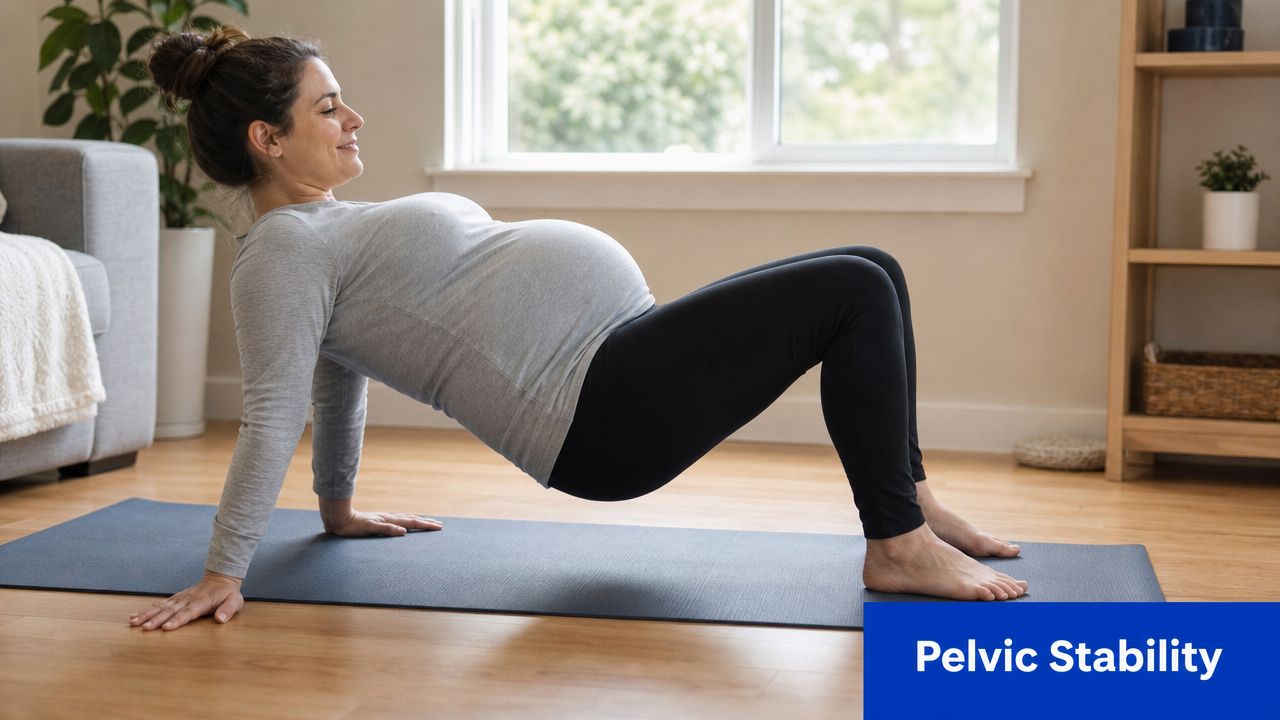
When exercise helps, women often notice they feel steadier walking, less sore after standing, and more confident changing position. When exercise irritates things, it's usually because the movement is too big, too forceful, or done through pain.
A simple pain-aware routine
Try these gently. None of them should create sharp pain.
Pelvic tilts
Start in a comfortable supported position. Gently tip the pelvis forward and back in a small range. The goal is awareness and control, not a big stretch.Deep abdominal activation
As you breathe out, gently draw the lower abdomen in as though you're zipping up around the baby without bracing hard. Think of support, not tension.Cat-cow in a small range
Move slowly through the spine and pelvis. Keep the motion comfortable. If the front of the pelvis feels worse, reduce the range.Supported bridge
Lying comfortably with knees bent, press evenly through both feet and lift only as far as feels controlled. This helps recruit the glutes without forcing the back to do the work.
For women who need extra hip support work, this hip mobility and stretching routine image can help you understand comfortable setup and alignment.
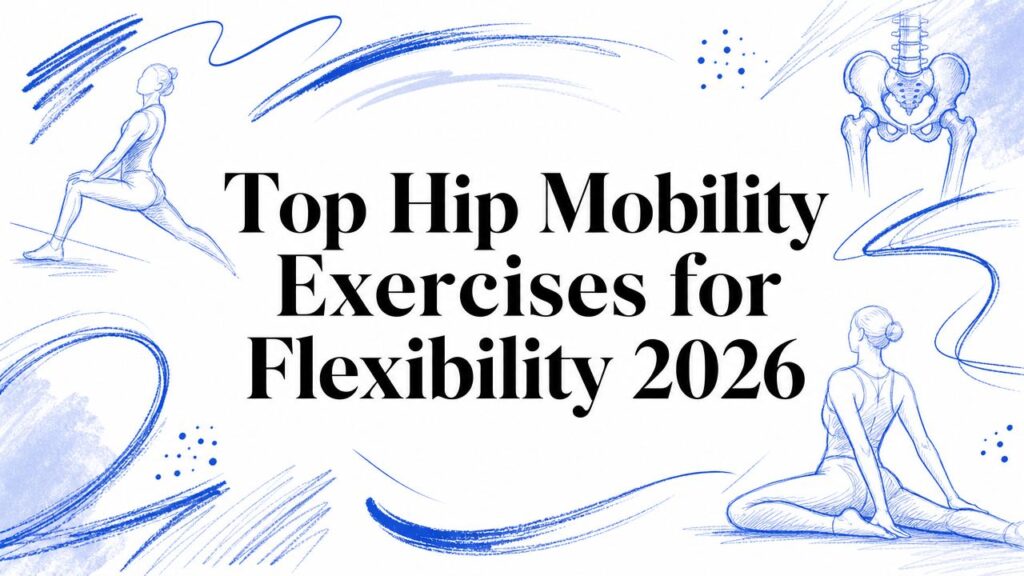
A short demonstration can make the cues easier to follow:
If an exercise gives you a sharp catch, pelvic pressure, or more pain later that day, it's not the right exercise in that form.
A few rules keep home exercise useful:
- Work below the pain threshold: Mild effort is fine. Sharp pain isn't.
- Keep the range small: Smaller, controlled movement usually helps more than a dramatic stretch.
- Stop before fatigue changes your technique: Good support work is precise. Once you start compensating, the exercise loses value.
- Practise consistently: A small routine done regularly tends to beat occasional big sessions.
How Osteopathic Care Can Help Your Pelvic Pain
Self-management can make a real difference, but it doesn't always resolve the problem when the mechanics underneath the pain haven't been assessed properly. That's where a hands-on approach can help.
Why hands-on care can help when standing makes pain worse
One of the most overlooked patterns in pelvic pain during pregnancy is pain that flares with prolonged standing. A significant gap in care exists for women whose symptoms are aggravated this way. About 44 to 50% of Australian women report pelvic girdle pain linked to prolonged standing and weight-bearing, and the same research highlights that generic advice often doesn't provide specific hands-on mobilisation strategies for this group, as discussed in this research summary on standing-related pelvic girdle pain and care gaps.
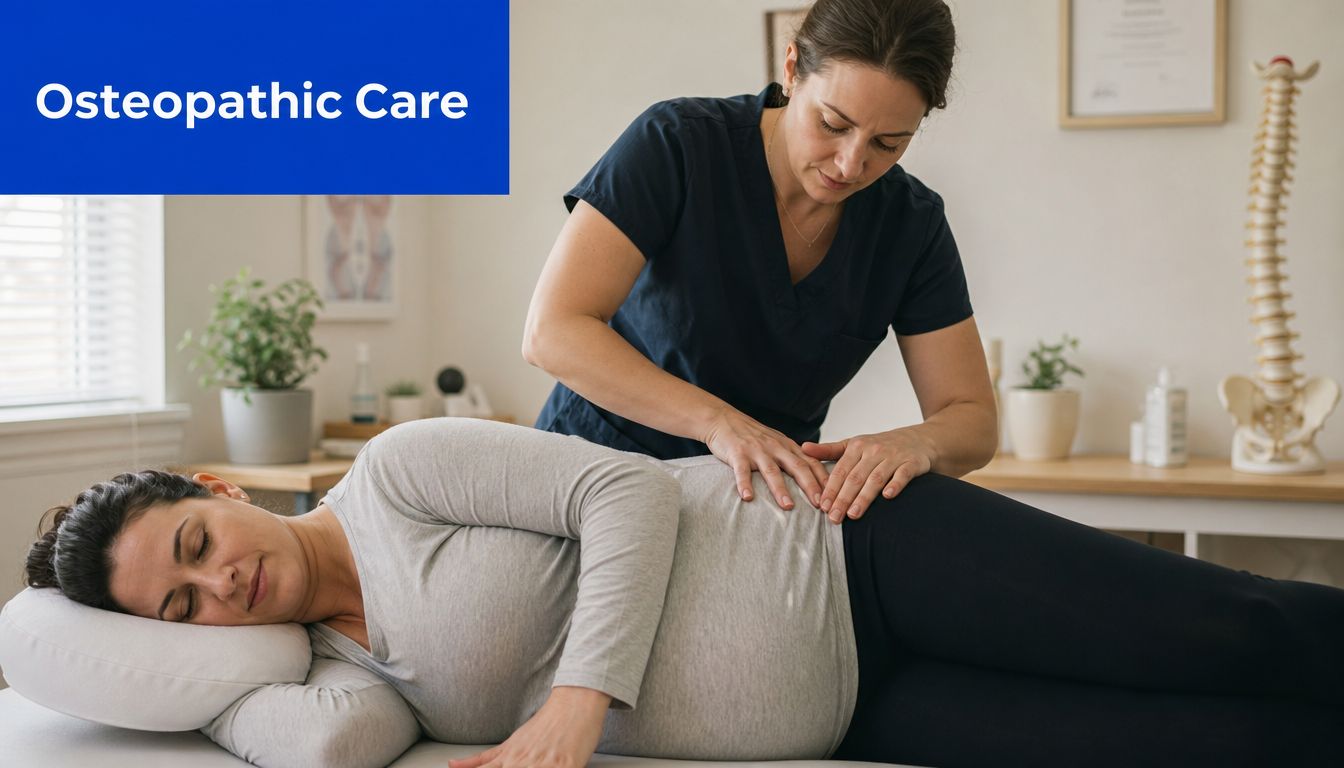
Standing pain isn't just a “do less” problem; it often reflects how the whole body is managing load. The feet, hips, ribcage, lower back, and breathing mechanics all affect what the pelvis has to absorb.
An osteopathic assessment looks at those relationships. Instead of treating the painful spot alone, the practitioner checks how the pelvis moves with the lumbar spine, how the hips rotate, whether one side is overworking, and whether surrounding tissues are adding unnecessary pull or compression.
What treatment usually involves
Osteopathic care during pregnancy is typically gentle and adapted to comfort. That can include side-lying treatment, supported positioning, and techniques aimed at reducing strain rather than forcing change.
Treatment may involve:
- Soft-tissue work: To reduce guarding in the glutes, hip rotators, adductors, lower back, or abdominal wall.
- Gentle joint articulation: To improve how the pelvis, hips, and lower back move together.
- Mobility where needed, support where needed: Some areas need easing. Others need stability cues and exercise.
- Movement retraining: The way you stand, turn, walk, or transfer weight can be adjusted so symptoms settle instead of accumulating.
At clinics such as Bayside Osteopathic Health's pregnancy rehabilitation support service image reference, this kind of care usually combines manual treatment with practical home advice rather than relying on either one alone.
Hands-on care works best when it changes how your body carries load in everyday life, not just how it feels for an hour after treatment.
What doesn't work as well is symptom-only management. Massage may feel relieving but miss the mechanics. Rest may calm pain briefly but not improve standing tolerance. Generic exercise sheets may help some women and aggravate others if they don't match the actual pattern.
A good osteopathic plan should feel specific to your body, your triggers, and your stage of pregnancy.
Your Practical Action Plan for Relief in Bayside
Pelvic pain during pregnancy is common, but it isn't something you need to merely endure. The key is to respond early, move differently, and get help if the pain starts shaping your day.
When to keep managing at home
Home care is a sensible starting point when symptoms are mild and clearly linked to certain activities.
Focus on:
- Changing aggravating movements: Keep knees together in bed, avoid one-leg loading where possible, and shorten standing time.
- Using simple symptom relief: Ice can help when the area feels irritated.
- Building support gently: Choose small, controlled exercises over stretching harder or walking longer.
If that reduces the pain and makes daily tasks easier, stay with it and keep monitoring the pattern.
When to book extra support
Get assessed if the pain is sharp, keeps returning, limits walking, interrupts sleep, makes work difficult, or doesn't improve with the adjustments above. That matters because while most women recover, 10% of those with pregnancy-related pelvic pain still have moderate to severe pain and disability at 18 months postpartum, according to the postpartum outlook summary on pregnancy-related pelvic girdle pain.
Early support often means less time spending each day negotiating pain around basic tasks.
If you're in the Bayside area, a practical plan usually looks like this:
- Start with movement changes today
- Add a short, pain-free stability routine
- Book a professional assessment if standing, walking, rolling in bed, or daily function stays difficult
You don't need to wait until the pain is severe to seek help. You also don't need to prove you can cope with it alone.
If pelvic pain during pregnancy is making it harder to sleep, walk, work, or enjoy this stage of life, Bayside Osteopathic Health offers gentle, hands-on osteopathic care focused on easing pain, improving movement, and helping you feel more supported in your changing body.