
You wake up feeling decent, so you catch up on chores, sit longer at the computer, maybe take a longer walk than usual. By evening, your back tightens, your neck starts to ache, or your joints feel heavier than they did that morning. The next day becomes a recovery day. That pattern is common, and it's exhausting.
Living with ongoing pain can make it feel as if progress never sticks. Hands-on treatment helps, but appointments alone rarely change what happens in the other 23 hours of the day. In Australia, about 5 million people, or 20% of the population, live with chronic pain. That's one reason self-management has become a core part of care, not an optional extra.
As an osteopath, I see the best long-term results when treatment and daily habits work together. Soft-tissue work, joint articulation, and gentle mobilisation can reduce tension and improve movement. Self-management strategies help you hold on to those gains between visits.
This guide keeps the focus practical. These are eight strategies that can reduce flare-ups, support recovery, and help you move with more confidence in Bayside.
Table of Contents
- 1. Progressive Muscle Relaxation
- 2. Activity Pacing and Energy Management
- 3. Mindfulness and Meditation Practices
- 4. Ergonomics and Postural Awareness
- 5. Therapeutic Exercise and Movement Prescription
- 6. Sleep Optimization and Sleep Hygiene
- 7. Stress Management and Emotional Regulation
- 8. Self-Monitoring and Pain Journaling
- Comparison of 8 Self-Management Strategies
- Your Partner in Pain Management Creating a Personalised Plan
1. Progressive Muscle Relaxation
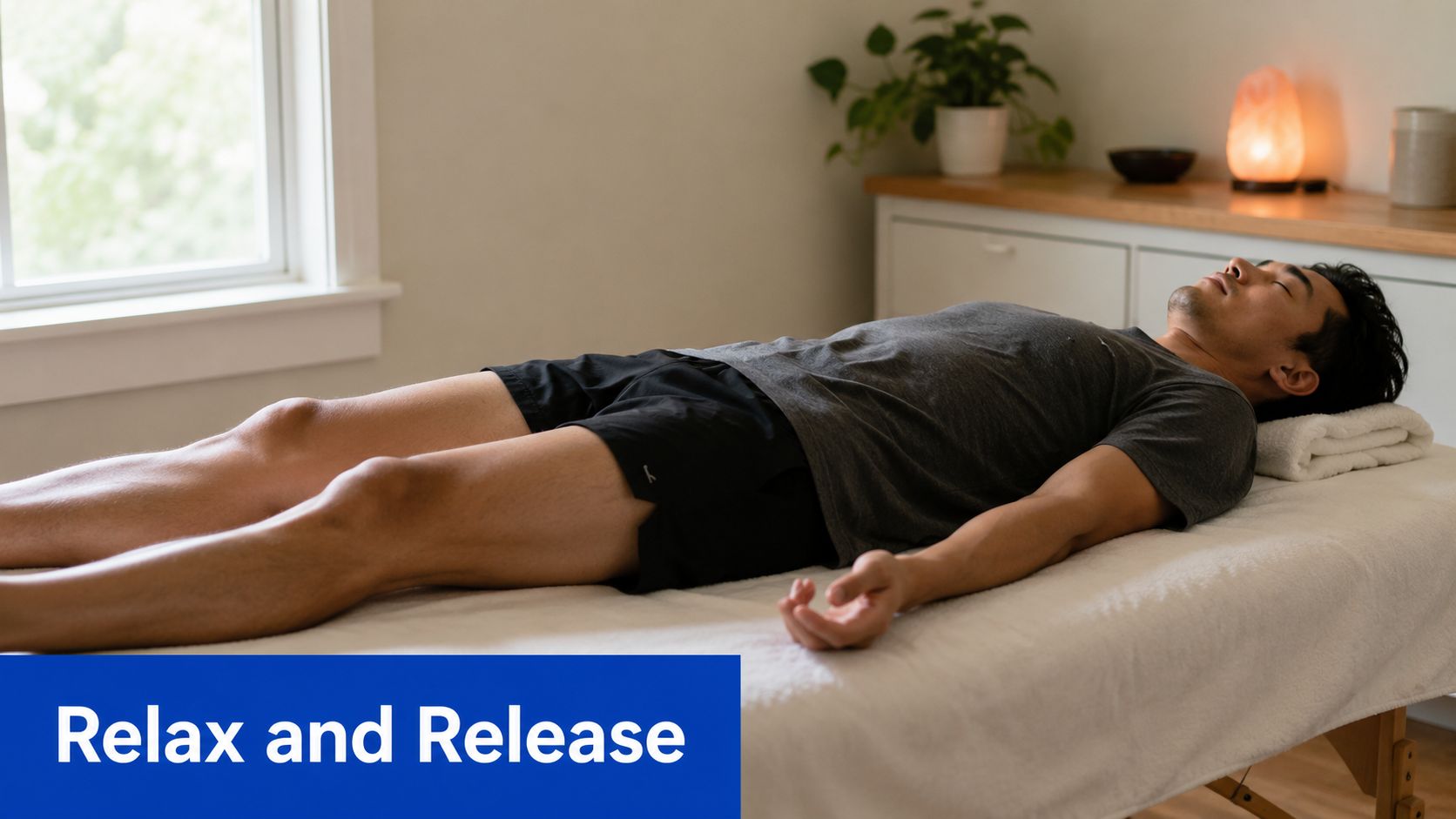
Pain and muscle tension often feed each other. You feel sore, so you brace. You brace, so muscles stay switched on. Then your neck, jaw, shoulders, lower back, or hips never really get a chance to let go.
Progressive muscle relaxation helps interrupt that loop. You tense one area gently, then release it and notice the contrast. Over time, many people get better at spotting tension earlier, before it turns into a full pain flare or headache.
For osteopathic patients, this matters because hands-on care can reduce guarding in the body, but your nervous system still needs practice returning to a calmer baseline. That's why I often suggest doing PMR after treatment or before bed, especially for people who wake stiff.
Notice tension before it builds
Start with larger muscle groups. Calves, thighs, glutes, abdomen, shoulders. Then move to smaller areas such as the hands, jaw, and face. Pair each release with slow belly breathing.
A short session works well for desk workers with posture-related strain. Someone might finish a work block, close their eyes for a few minutes, soften their shoulders, unclench their jaw, and reset before symptoms escalate. If tension headaches are part of the picture, a visual reminder such as this tension headache relief illustration can help connect head pain with neck and shoulder tension patterns.

Practical rule: Don't force the “tense” part. Gentle contraction is enough. The benefit comes from noticing the release, not from squeezing as hard as you can.
What works well:
- Same time daily: Bedtime or after work is easiest to stick to.
- Simple sequence: Use the same order each day so it becomes automatic.
- After treatment: It helps reinforce the relaxed state your body has just experienced.
What usually doesn't work:
- Using it only in a flare: It's less effective if you only try it when symptoms are already high.
- Rushing through it: If you're mentally ticking boxes, you'll miss the body awareness part.
- Expecting instant change: It often takes regular practice before your body starts responding more quickly.
2. Activity Pacing and Energy Management
A common flare starts on a better-than-usual day. Pain settles, energy lifts, and it feels sensible to catch up on everything at once. The garden gets done, errands get squeezed in, the desk work runs long, and symptoms spike that evening or the next morning.
Activity pacing breaks that cycle. Instead of matching your activity to how good you feel in the moment, you set a repeatable amount your body can handle and build from there. The goal is not to do less forever. It is to create enough consistency that your system stops swinging between overload and recovery.
The National Health Service explains pacing as balancing activity and rest so you stay active without repeatedly pushing into pain flares, then increasing activity in a planned way over time in its guidance on chronic pain self-help. That approach fits well with osteopathic care. Hands-on treatment may improve movement and settle guarding, but pacing is what helps those gains hold between appointments.
How to find your starting level
Start with one activity that regularly aggravates symptoms. Walking is a common example. So are meal prep, vacuuming, desk work, school pick-up, or time on your feet. If your back usually tightens after 20 minutes of housework, your starting level might be 15 minutes done consistently for several days.
That can feel conservative. It works.
In clinic, I often explain pacing as respecting current capacity while you build a better one. Pushing past the point of control teaches the body to brace and protect. Staying just under that point gives you a better chance of finishing the day without a rebound in pain, fatigue, or stiffness.
A few habits make pacing easier to follow:
- Set a stop point before you begin: Use time, distance, or repetitions instead of waiting for pain to force the decision.
- Alternate task types: Follow a bending job with a walk, a standing task with sitting, or screen work with a few minutes of movement.
- Spread heavier jobs across the week: One room today often works better than the whole house on Saturday.
- Record what happened: A brief note on sleep, stress, workload, and symptoms helps you spot patterns and adjust your plan.
Energy management matters as much as time management. Persistent pain often comes with poor sleep, mental fatigue, and reduced tolerance for long stretches of concentration or physical effort. A parent in Bayside juggling school drop-off, commuting, and part-time work may need a different pacing plan from a retired golfer trying to return to longer walks. The principle stays the same. Build around what matters most, then protect enough energy to do it again tomorrow.
Practical rule: Finish with something left in the tank. That usually gives better progress than using every bit of a good day.
This is also where osteopathic guidance becomes more specific than generic advice to "take it easy." Pacing should match the pattern of your pain. Someone with neck pain from desk load may need shorter, scheduled breaks and changes in screen-based tasks. Someone with hip or back pain may do better with measured walking blocks and limits on repeated lifting or prolonged standing. If you are accessing care through a Chronic Disease Management plan in Australia, your osteopath can coordinate this advice with your GP so the self-management plan is realistic and easier to stick to.
What usually works:
- Consistency before progression: Keep the same baseline for several days before increasing it.
- Small increases: Add a little, then reassess.
- Planning around important days: Save capacity for work, family commitments, or sport instead of spending it accidentally.
What usually does not work:
- Using pain alone as the guide: Some people feel fine during an activity and pay for it later.
- Resting until symptoms disappear completely: That often shrinks tolerance over time.
- Treating every good day as a catch-up day: That keeps the boom-and-bust pattern going.
3. Mindfulness and Meditation Practices
You get up from the desk, feel your back catch, and the next few seconds matter. If the body reads that sensation as danger, breathing shortens, the jaw tightens, the shoulders brace, and pain often feels bigger than the original trigger.
Mindfulness helps interrupt that sequence. In practice, it trains attention so you can notice pain, tension, or frustration without adding another layer of fear. That matters in persistent pain, where the nervous system can become more protective than the tissues need. The aim is not to ignore symptoms. The aim is to respond with less reactivity, so movement feels more manageable and flare-ups are less consuming.
In osteopathic care, this works well alongside hands-on treatment because better body awareness helps you use treatment gains. If your ribs are moving more freely or your neck is less guarded after an appointment, mindfulness helps you notice that change and keep it during everyday tasks instead of slipping straight back into breath-holding and bracing. For people with desk-related pain, even a brief check-in during the workday can support the same habits reinforced in a workstation and posture review image for Bayside desk workers.
Keep it simple.
A practical starting point is to attach mindfulness to moments that already happen. Before you stand up. While you wait for the kettle. During the first two minutes of a walk. Research from the Royal Australian and New Zealand College of Psychiatrists on mindfulness-based interventions notes benefits for stress, mood, and coping, which are often closely tied to pain severity and flare frequency.
What usually works:
- Short practice done often: Two to five minutes is enough to build the skill.
- A clear anchor: Follow the breath, the contact of your feet with the floor, or the rise and fall of your ribs.
- Use during daily movement: Walking, gentle stretching, tai chi, and qigong can be easier than sitting still for people who feel worse when they stop.
- A realistic goal: Less tension and less alarm. Not a completely blank mind and not instant pain relief.
What gets in the way:
- Treating meditation like a test: Wandering attention is normal. Bringing it back is the practice.
- Expecting pain to disappear on cue: Some sessions feel calming. Others merely stop symptoms from escalating.
- Forcing stillness during a high flare: In that situation, paced breathing or mindful walking is often a better fit.
For Bayside patients managing pain conservatively, this is one of the more useful skills to build between appointments because it gives you something you can use at home, at work, or in the car before symptoms spiral. If you are using a Medicare-supported Chronic Disease Management plan, mindfulness can sit alongside your osteopathic treatment plan as a practical self-management tool, especially when stress, poor sleep, or flare-related anxiety are keeping the pain cycle going.
4. Ergonomics and Postural Awareness
Poor posture is rarely one fixed position. More often, it's too long in one position. Even a good workstation won't protect you if you stay still for hours.
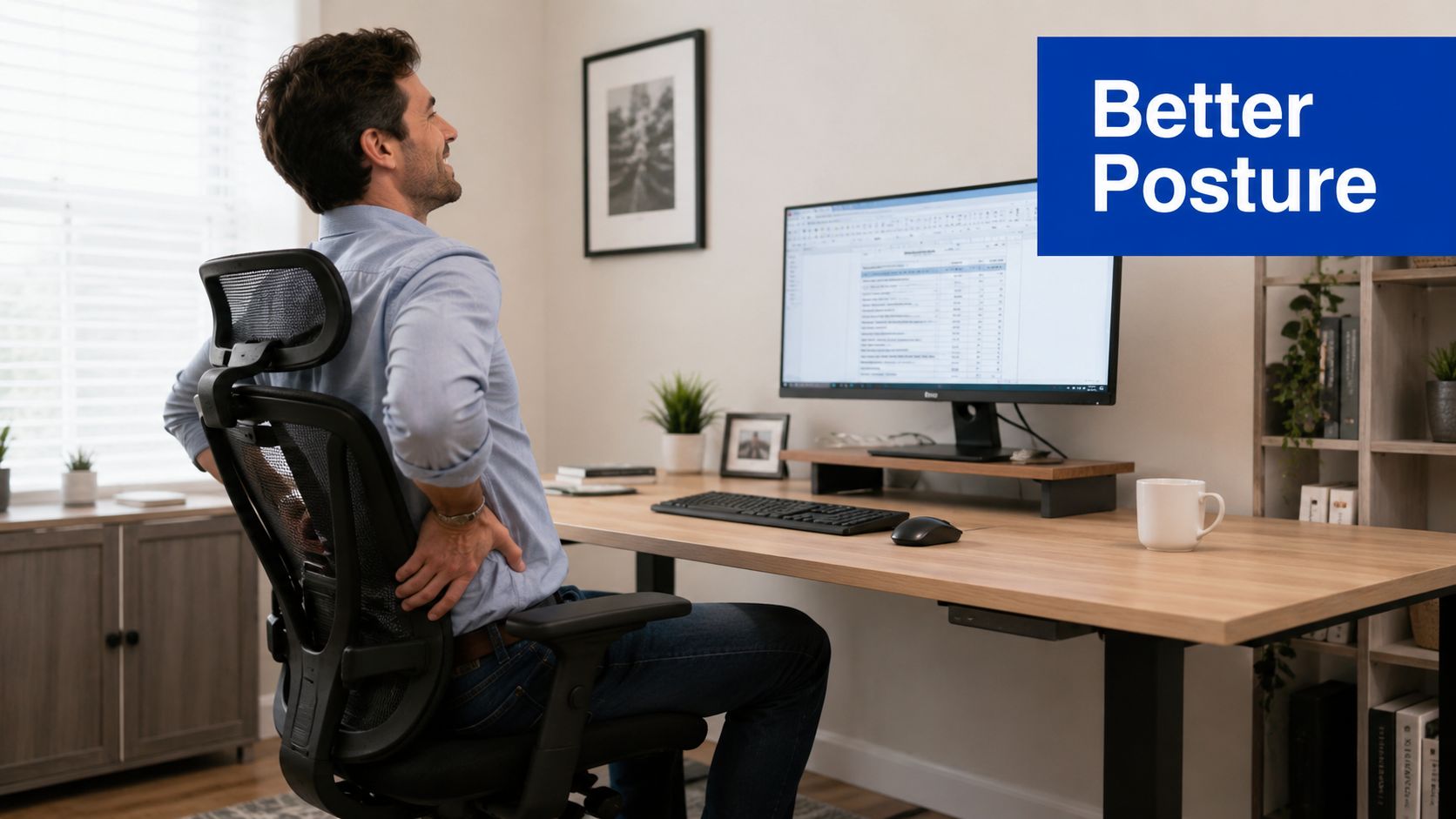
That said, your setup matters. If your screen is too low, your neck pays for it. If your chair doesn't support you well, your lower back and hips often take over. For office and remote workers, better ergonomics reduces repeated strain and helps osteopathic treatment last longer between appointments.
Build a setup you can actually maintain
Start with the basics. Screen near eye level. Feet supported. Elbows relaxed. Lower back supported. If you work from home, perfection isn't necessary. A stack of books under a monitor and a folded towel for lumbar support can go a long way.
For local workers dealing with desk-related pain, this posture and corporate ergonomics image reflects the kind of workstation review that often makes symptoms more manageable.
The bigger issue is that many people chase equipment and ignore habits. A better chair won't fix six hours of uninterrupted sitting. Public advice for remote workers often assumes access to ideal gear, yet Australian commentary has also highlighted how self-management content can miss low-resource, home-based solutions for posture-related strain and other hard-to-reach groups, while generic education often falls short unless it's specific to the person's circumstances and health literacy, as discussed in the Medical Journal of Australia commentary on chronic disease self-management support.
The best posture is your next posture.
Try this instead of chasing a perfect sitting position:
- Alternate tasks: Switch between typing, calls, standing, and walking jobs.
- Use posture cues: Relax your ribs, soften your shoulders, and let your chin stay level.
- Review your workspace with your osteopath: Small adjustments often matter more than expensive upgrades.
5. Therapeutic Exercise and Movement Prescription
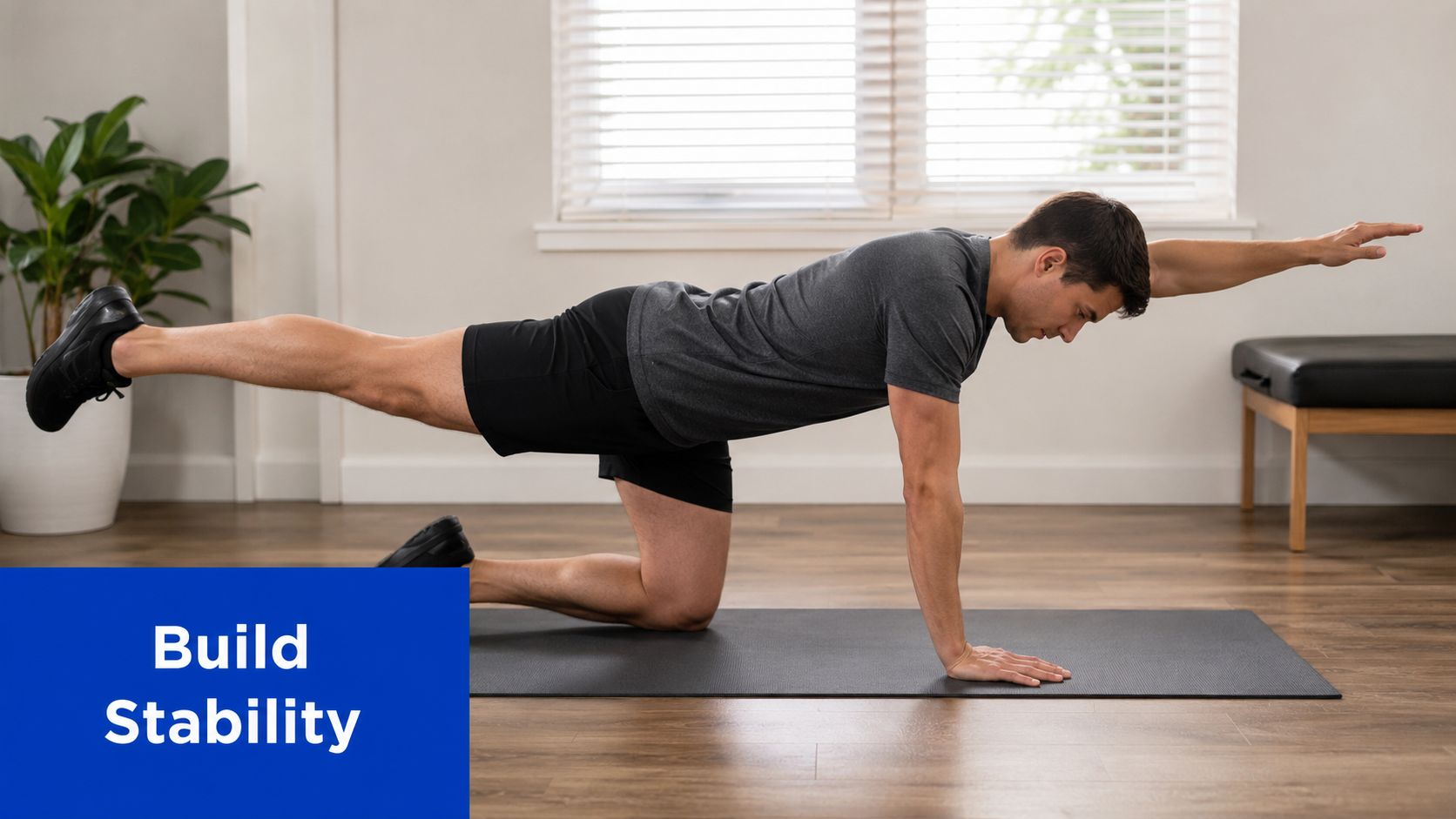
Movement is medicine, but only when the dose fits the person. That's where many people get stuck. They either avoid movement because they're afraid of aggravating pain, or they jump into generic exercises that don't match the problem.
Therapeutic exercise works differently. It targets the areas and patterns that need support. For one person that's hip strength and pelvic control. For another it's thoracic mobility, scapular stability, or gentle range-of-motion work for arthritic joints.
Choose the right dose of movement
In a Western Australian cohort study looking at self-management for back pain in remote communities, the most commonly nominated active behavioural approaches were “doing small bits often,” “modifying activity,” “exercise,” and “correcting posture/stretches,” each reported with equal frequency. That lines up with what works clinically. Small, regular movement usually outperforms heroic sessions followed by a flare.
A practical example is the person with recurrent low back pain who improves after treatment but keeps losing ground because their stabilising muscles fatigue quickly. A simple home program such as bird dogs, sit-to-stands, hip bridges, or band work can help maintain support around the area that keeps overworking. If balance is part of the picture, this fall prevention and balance improvement image highlights the kind of movement focus that can matter for older adults.
A few principles matter more than the exact exercise:
- Start with prescribed movements: Generic internet routines often miss the mark.
- Prioritise quality: Slow, controlled reps beat rushed repetitions.
- Report flare patterns: If an exercise repeatedly aggravates you, it needs adjusting, not gritting through.
Treatment can improve mobility. Exercise helps you keep it.
6. Sleep Optimization and Sleep Hygiene
When sleep is poor, pain is harder to manage. You feel more irritable, less tolerant of activity, and slower to recover. Then pain disrupts sleep again. That cycle can keep symptoms alive even when treatment is helping.
Good sleep hygiene sounds basic, but it's one of the foundations of effective self-management. Australian pain resources emphasise regular sleep patterns as part of a broader chronic pain plan, alongside stress management, movement, and meaningful daily activity, as noted earlier.
Make sleep a pain-management tool
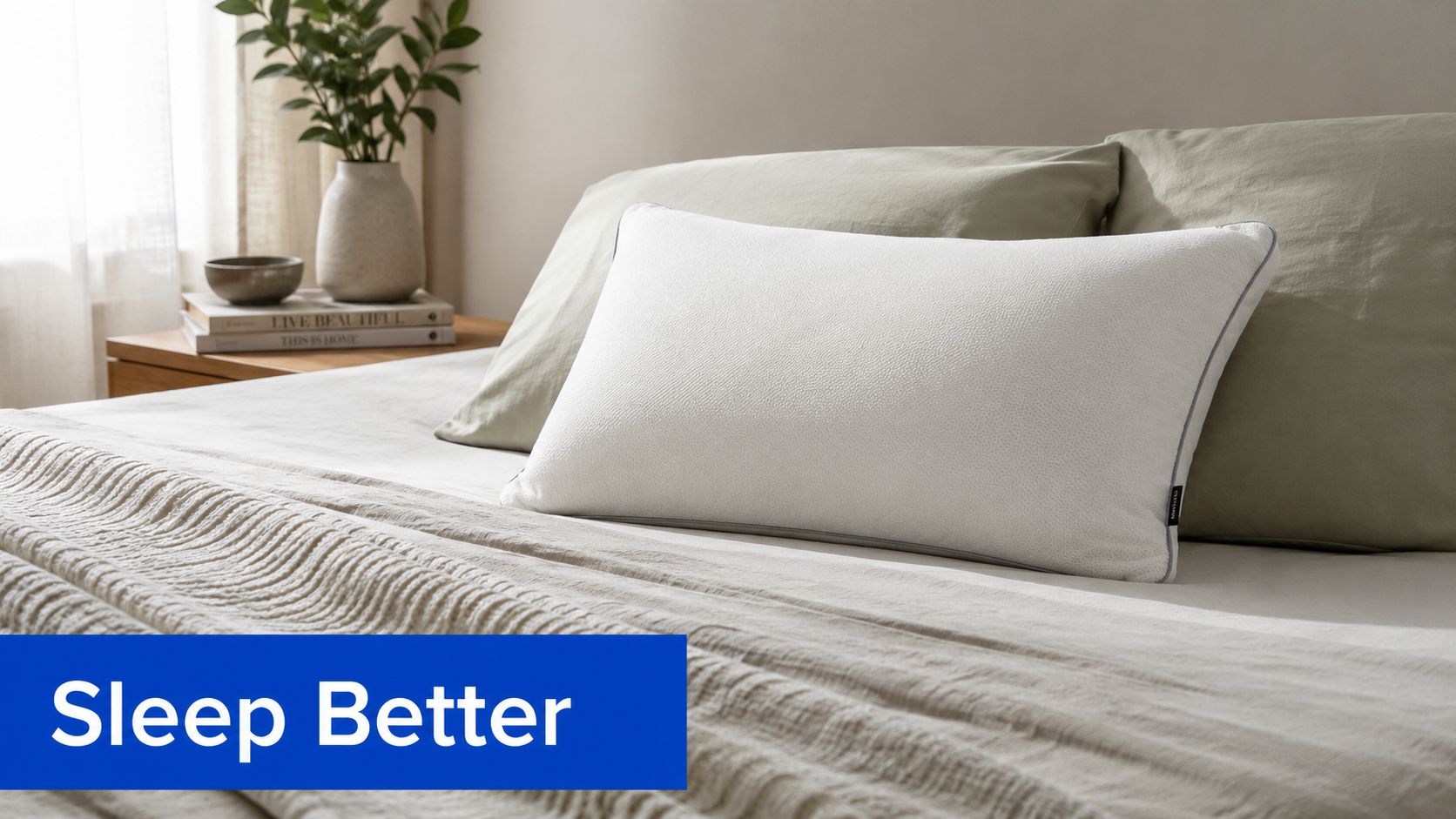
The first thing to fix is consistency. Keep your sleep and wake times steady. Your body usually responds better to rhythm than to occasional catch-up sleep. If pain keeps you waking, also look at your setup. Pillow height, knee support, mattress comfort, bedtime routine, room temperature, and evening screen use can all affect morning stiffness.
I often tell patients to stop chasing the “perfect mattress” before fixing the basics. Many people will get more from a calmer wind-down routine and better pillow positioning than from constantly swapping products.
What tends to help:
- Supportive positioning: Pillow under the knees if you lie on your back, or between the knees if you sleep on your side.
- Wind-down routine: Gentle stretches, breathing, reading, or PMR before bed.
- Less stimulation late at night: Reduce caffeine, screens, and work right before sleep.
What tends to backfire:
- Sleeping in wildly different hours on weekends: It can make Monday pain and fatigue worse.
- Doing stimulating exercise late if it revs you up: Timing matters.
- Ignoring night pain patterns: If one position consistently aggravates symptoms, change the setup.
7. Stress Management and Emotional Regulation
Pain is physical, but stress often turns up the volume. Busy workdays, poor boundaries, family pressure, financial strain, and even the fear of a flare can all increase muscle tension and make symptoms feel more intense.
This doesn't mean your pain is “just stress.” It means your nervous system is part of the picture. If you only treat joints and muscles and ignore the stress response, progress often stalls.
Calm the system, not just the symptom
Australian safety and quality guidance for low back pain has stressed that self-management needs to address psychological barriers such as fear of movement and social obstacles such as work or home stress, alongside physical activity, and that the message to stay as active as possible can reduce sick leave days and healthcare claims in the Australian workforce context. That matters for people in Bayside who are trying to keep working while managing ongoing pain.
Stress management doesn't need to be complicated. It can mean stepping outside for a short walk before your neck locks up at the desk. It can mean using slow breathing before a long drive. It can mean noticing the thought “I've ruined my back again” and replacing it with something more accurate, such as “I'm flared up today, but I know what usually helps.”
Pain often improves faster when people stop fighting every sensation and start responding more calmly and consistently.
Useful options include:
- Breathing drills: Slow exhale-focused breathing can reduce physical bracing.
- Scheduled decompression: A walk, quiet time, stretching, or music after work.
- Support from others: Pain is isolating. Connection helps more than is often given credit for.
If stress, anxiety, or low mood feels overwhelming, that's the point to bring in extra support. Self-management works best in partnership, not in isolation.
8. Self-Monitoring and Pain Journaling
You get home after a treatment, feel looser for a day or two, then the pain builds again by Thursday. Without a record, it is easy to blame the treatment or assume the problem is random. In practice, there is usually a pattern. The common drivers are poor sleep, a spike in sitting time, a heavy weekend, missed exercises, or stress stacking up across the week.
That is why pain journaling can be useful. It gives patients more control over day-to-day decisions and gives me better information to work with in the clinic. In an osteopathic setting, that matters. Hands-on treatment may settle irritation and improve movement, but the journal often shows what is provoking the flare-up between appointments.
Track patterns, not perfection
The goal is not to record every sensation. The goal is to spot repeatable links between symptoms, load, recovery, and routine. A notes app or small notebook is enough.
Start with a few basics:
- Pain level: morning, afternoon, or evening
- Activity load: walking, gym, housework, desk time, driving
- Sleep: rough quality and hours
- Key influences: stress, long meetings, gardening, travel, treatment day, missed exercises
- What helped: movement, heat, pacing, prescribed exercises
After a week or two, useful patterns usually show up. Neck pain that peaks at night often tracks with long screen-based days. Back pain that flares on weekends often follows an all-or-nothing burst of chores or sport. A treatment that seemed less effective may make more sense once you notice that sleep was poor and workload was higher that week.
The journal complements osteopathic care, helping shape the next step. If symptoms rise after prolonged sitting, the plan may focus more on movement breaks and workstation changes. If flare-ups follow overactivity, pacing becomes a bigger priority. If mornings are consistently stiff, we may adjust the exercise dose or timing rather than repeating the same hands-on approach.
A simple journal often helps answer questions like:
- Why do I flare more on weekends than workdays? Activity is often packed into one or two days.
- Why is my neck worse by evening? Screen time, posture tolerance, and work stress are common contributors.
- Why did I respond differently to the same treatment? Sleep, load, and consistency with home management often explain the difference.
For people in Bayside, this can be especially practical. Many patients are balancing commuting, desk work, sport, and family demands. A short record makes it easier to bring clear examples into an appointment instead of trying to recall the week from memory. If you are seeing your GP under a Medicare Chronic Disease Management plan, that same record can also make communication across your care team more useful and specific.
Self-monitoring is also helpful when access to support is less consistent. Australian discussion of self-management support has noted access barriers outside major centres and uneven support for musculoskeletal pain across services, as discussed in the SAGE Open Medicine article on rural and urban self-management support.
Keep it brief. Keep it consistent. A pain journal is not busywork. It is one of the simplest ways to see what is helping, what is aggravating things, and what to change next.
Comparison of 8 Self-Management Strategies
| Technique | Implementation complexity 🔄 | Resources & time ⚡ | Expected outcomes 📊⭐ | Ideal use cases 💡 | Key advantages ⭐ |
|---|---|---|---|---|---|
| Progressive Muscle Relaxation (PMR) | Low, stepwise learning, needs practice consistency | Minimal, 10–20 min sessions, quiet space | Reduces muscle tension, improves sleep, modest pain relief | Chronic neck/back tension, post-treatment relaxation, work breaks | Non‑pharmacologic, easy to self‑practice, complements osteopathy |
| Activity Pacing & Energy Management | Moderate, planning, monitoring and behaviour change | Low equipment, ongoing time for tracking and graded increases | Fewer flare‑ups, steadier functional gains over weeks | Chronic conditions with boom‑bust patterns, rehab progression | Prevents overexertion, supports gradual return to activity |
| Mindfulness & Meditation | Moderate, needs instruction and regular practice | Minimal, 5–30 min/day; apps or classes helpful | Lowers pain perception and anxiety, improves sleep and resilience | Pain with strong stress/anxiety components, body‑awareness work | Clinically supported (MBSR), no medication side effects |
| Ergonomics & Postural Awareness | Low–Moderate, initial assessment, habit change required | Possible one‑off equipment cost; quick small adjustments | Rapid reduction in posture‑related pain; prevents recurrence | Office/remote workers, repetitive tasks, driving | Immediate impact, sustainable habits, boosts productivity |
| Therapeutic Exercise & Movement Prescription | Moderate–High, individualized program, correct form essential | Requires regular sessions (3–5×/week), occasional equipment, clinician input | Improved strength, mobility, and long‑term resilience | Post‑injury rehab, chronic weakness, post‑osteopathic strengthening | Directly supports treatment outcomes, reduces recurrence risk |
| Sleep Optimization & Sleep Hygiene | Moderate, multiple habit and environment adjustments | Low–Moderate, 2–3 weeks to reset; possible bedding investment | Reduces pain sensitivity, enhances healing and mood | Patients with sleep‑exacerbated pain, widespread chronic pain | Foundational benefit across strategies, low ongoing cost |
| Stress Management & Emotional Regulation | Moderate, skill building, awareness, possible therapy | Low cost/time per technique; weeks to build new patterns | Lowers stress‑driven pain amplification and muscle tension | High‑stress patients, emotional contributors to pain | Improves coping, calms nervous system, many low‑cost options |
| Self‑Monitoring & Pain Journaling | Low, simple tracking habit, consistency required | Minimal, brief daily entries or apps; 2–4 weeks for patterns | Identifies triggers, quantifies treatment response, guides adjustments | Patients seeking data‑driven care or monitoring treatment effects | Empowers patients, improves clinician communication and decisions |
Your Partner in Pain Management Creating a Personalised Plan
These self-management strategies are powerful because they put some control back in your hands. They help you reduce flare-ups, build confidence in movement, and get more out of treatment. But they work best when they're matched to your body, your lifestyle, and the actual triggers behind your pain.
That's where professional guidance matters. If your pain is persistent, severe, spreading, or confusing, don't guess your way through it for months. An osteopath can help you work out what's driving the problem, which strategies suit you, and what needs to change first. In practice, that might mean refining your pacing plan, adjusting your home exercises, reviewing your workstation, or helping you move without fear.
For many people, the most effective plan combines hands-on care with daily habits. Osteopathic treatment can reduce tension, improve mobility, and make movement feel safer. Self-management helps those changes stick. That partnership is often what turns short-term relief into longer-term progress.
In Bayside, practical access matters too. Many patients may be able to access osteopathic care through a Chronic Disease Management plan from their GP, which can provide a Medicare rebate for a set number of allied health visits each year. If you're not sure whether that applies to you, it's worth asking. It can make ongoing care more manageable, especially when treatment is part of a broader plan for chronic back pain, neck pain, arthritis, or posture-related strain.
If you've been stuck in the cycle of good days followed by setbacks, start smaller than you think. Pick one or two strategies and do them consistently. That might be pacing your chores, improving your sleep routine, doing your prescribed exercises, or keeping a brief pain journal. Progress usually comes from repetition, not from dramatic effort.
Good pain care shouldn't leave you dependent on the next appointment. It should help you understand your body better, move with more confidence, and know what to do when symptoms rise. That is the main goal. Less fear, fewer setbacks, and a clearer path back to comfortable daily life.
If you're ready to build a practical plan for lasting relief, Bayside Osteopathic Health can help. We provide gentle, hands-on osteopathic care for back pain, neck pain, joint stiffness, arthritis-related discomfort, and posture-related strain, with personalised guidance on movement, pacing, and home self-care. If you're in Bayside and want support that goes beyond short-term symptom relief, book an appointment and take the next step toward easier movement.