
You know the feeling. By mid-afternoon your shoulders are creeping up towards your ears, your neck feels shortened, and even simple things like scrolling on your phone or reaching for the kettle seem to pull at the same tight band across the top of your shoulders. If you're in Bayside and you sit at a desk, drive a lot, garden on weekends, or spend your day carrying kids or shopping bags, shoulder tension relief is rarely about one magic stretch. It's usually about finding what's driving the load in the first place, then using the right mix of movement, hands-on care, and daily setup changes.
A lot of people keep stretching the shoulder itself and wonder why the tightness keeps coming back. The reason is often simple, the shoulder is doing the job of the neck, upper back, breathing muscles, or even a stressed nervous system. That's why the most useful advice isn't a random list of stretches, it's a practical plan that shows what helps, what only gives short-lived relief, and when it's time to get assessed properly.
Table of Contents
- Why Your Shoulders Won't Let Go
- What's Really Causing the Tightness
- Stretches and Mobility Drills That Actually Help
- Self-Massage and Trigger Point Release at Home
- Ergonomics and Posture Fixes for Daily Life
- A Simple Daily Routine You Can Stick To
- Red Flags and When to Book an Osteopath
Why Your Shoulders Won't Let Go
At 3pm, the office worker at the kitchen bench notices it first. The shoulders have climbed, the jaw is tight, and the ache has spread from the top of the shoulder into the neck after another day of laptop work. A few suburbs away, a retiree who spent the morning pruning roses feels the same stiffness when lifting the arm to hang washing. Different day, same pattern, and the shoulder often gets blamed even when it's only the place where the tension shows up.

The shoulder is often the messenger, not the source.
That's the central idea here. Shoulder tension relief works better when you stop treating the shoulder as the whole problem and start looking at the usual drivers behind it, posture load, breathing, sleep position, and stress-linked muscle guarding. The shoulder muscles can certainly feel tight, but they're often responding to a system that's asking them to stabilise too much, for too long.
For many people, that's why stretching alone stalls. The stretch feels good, then the same desk, phone, steering wheel, or one-sided carrying pattern brings the tightness back by afternoon. A more useful approach is to calm the tissues, move the upper back and shoulder blade well, and reduce the habits that keep the area switched on all day.
That's especially relevant for Australians with office jobs and physically repetitive routines. Shoulder pain is common enough to be a major care issue, and workplace and exercise-based approaches have stronger support than hoping the area will loosen on its own (systematic review of musculoskeletal burden and workplace interventions). Relief tends to last when the plan matches the cause, not when it chases the symptom.
What's Really Causing the Tightness
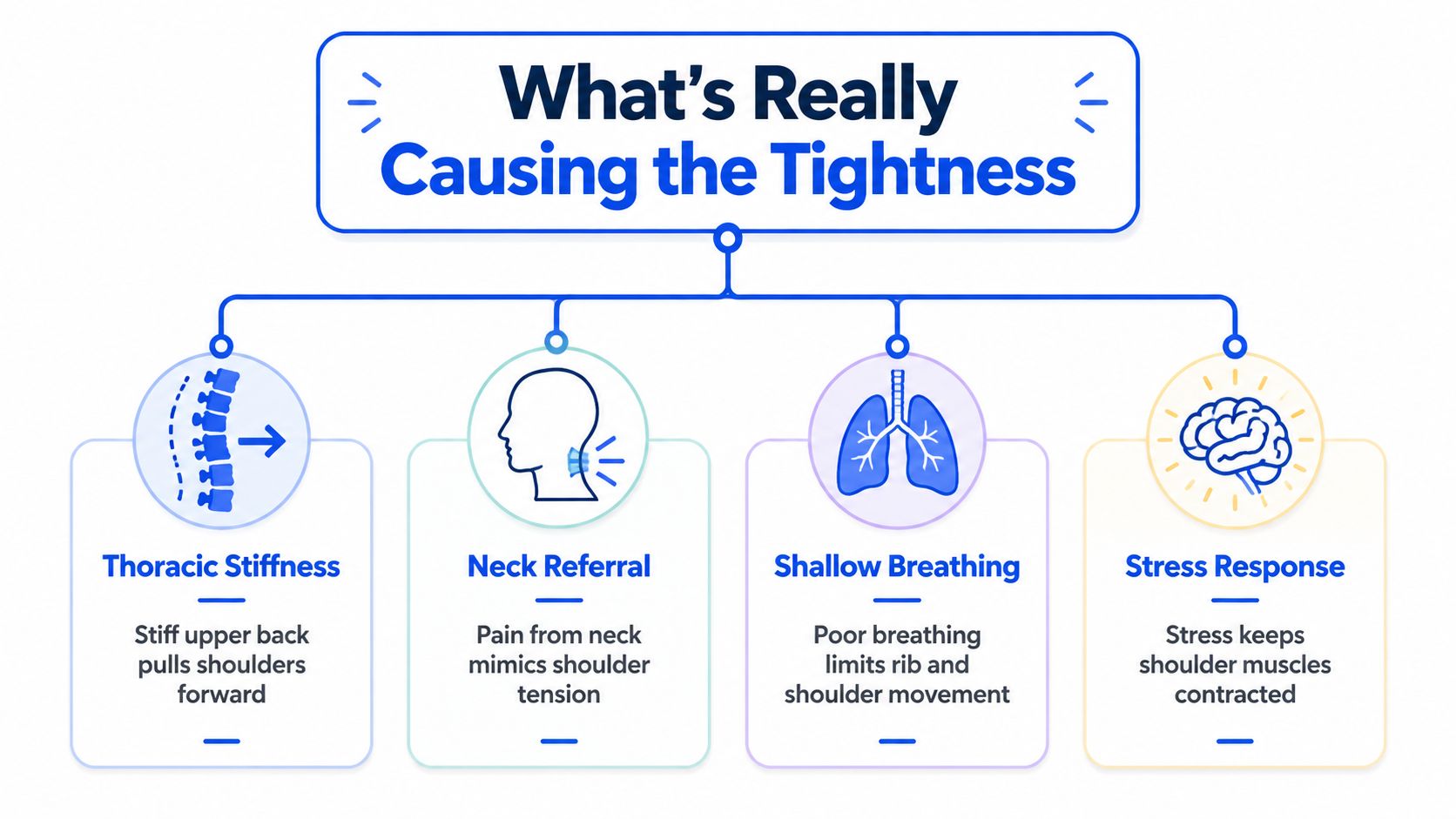
The upper back often starts the chain
A stiff thoracic spine pulls the shoulder girdle into a more rounded position, so the muscles around the front and top of the shoulder have to work harder just to keep you upright. That is why people who sit for long stretches often describe their shoulders as feeling “stuck forward”. The problem is not always weakness, it is often that the upper back is not contributing enough movement, so the shoulder keeps compensating.
Neck symptoms can pretend to be shoulder pain
The cervical spine can refer pain into the shoulder area, so a person may think they need more shoulder stretches when the neck is driving the symptoms. If the pain changes with neck movement, sits high into the upper shoulder, or feels like it spreads rather than staying local, the source may be higher up. That is one reason a whole-body assessment matters more than pressing on the sore spot.
Breathing changes the load on the top of the shoulder
Shallow chest breathing encourages the upper trapezius and nearby muscles to stay active as accessory breathing muscles. Over time, that can make the top of the shoulder feel braced even when you are not moving. When the rib cage and diaphragm move well, the shoulders usually do not need to do so much hidden work.
For many people, scapular position is underestimated
Long sitting, mouse use, phone scrolling, and driving all encourage the shoulder blades to sit in a less dynamic position. When the scapula does not glide and rotate properly, arm movement becomes less efficient and the neck and shoulder muscles pick up the slack. That is why shoulder tension relief usually improves faster when scapular control is part of the plan, not an afterthought.
Australian workplace evidence points in the same direction. A systematic review of workplace interventions and shoulder pain found that exercise programmes reduced shoulder pain intensity in workers with baseline pain, and ergonomic changes were linked with a pooled risk ratio of 1.88 for reducing the prevalence of shoulder pain. In practice, the body responds when the load changes, not just when the sore tissue gets stretched.
Stretches and Mobility Drills That Actually Help
Corner pec stretch and doorway chest opener
The corner pec stretch is useful when the front of the chest is drawing the shoulders forward. Stand in a corner or doorway, place your forearms on the frame, and step through until you feel a mild opening across the chest, not a pinch in the front of the shoulder. Hold 20 to 45 seconds, breathe normally, and come out before the neck starts bracing.
The doorway chest opener is similar, but I prefer it for people who need more control. Keep the ribs down, keep the chin gently tucked, and don't force the arms too high. If you feel the stretch in the neck rather than the chest, you've gone too far.
Thread the needle and supine flexion with a dowel
Thread the needle is one of the best ways to get thoracic rotation back without overloading the shoulder. Start on hands and knees, slide one arm under the other, and let the upper back rotate gently. Move slowly, breathe into the rib cage, and don't jam the shoulder into the floor.
Supine shoulder flexion with a dowel works well for people who hate weight-bearing stretches. Lie on your back, hold a stick, umbrella, or broom handle with both hands, and use the non-painful side to guide the painful side overhead in a comfortable range. Keep the neck soft and the lower back quiet, then come back down before the ribs flare.
Practical rule: if you have to hold your breath to complete the stretch, it's too aggressive for home use.
Levator scapulae release and older-adult modifications
The levator scapulae often feels like a ropey strip at the top inner corner of the shoulder blade. A gentle seated stretch can help, turn the head about 45 degrees away, then nod the chin towards the armpit on the same side while keeping the opposite shoulder relaxed. Hold 20 to 30 seconds, not longer if it makes the neck feel compressed.
Older adults and anyone with arthritis usually do better with supported positions, shorter holds, and smaller ranges. A chair, wall, or bed can reduce strain and make the movement more repeatable. The goal isn't to force a bigger stretch, it's to restore enough motion that the shoulder stops guarding so hard.
Self-Massage and Trigger Point Release at Home
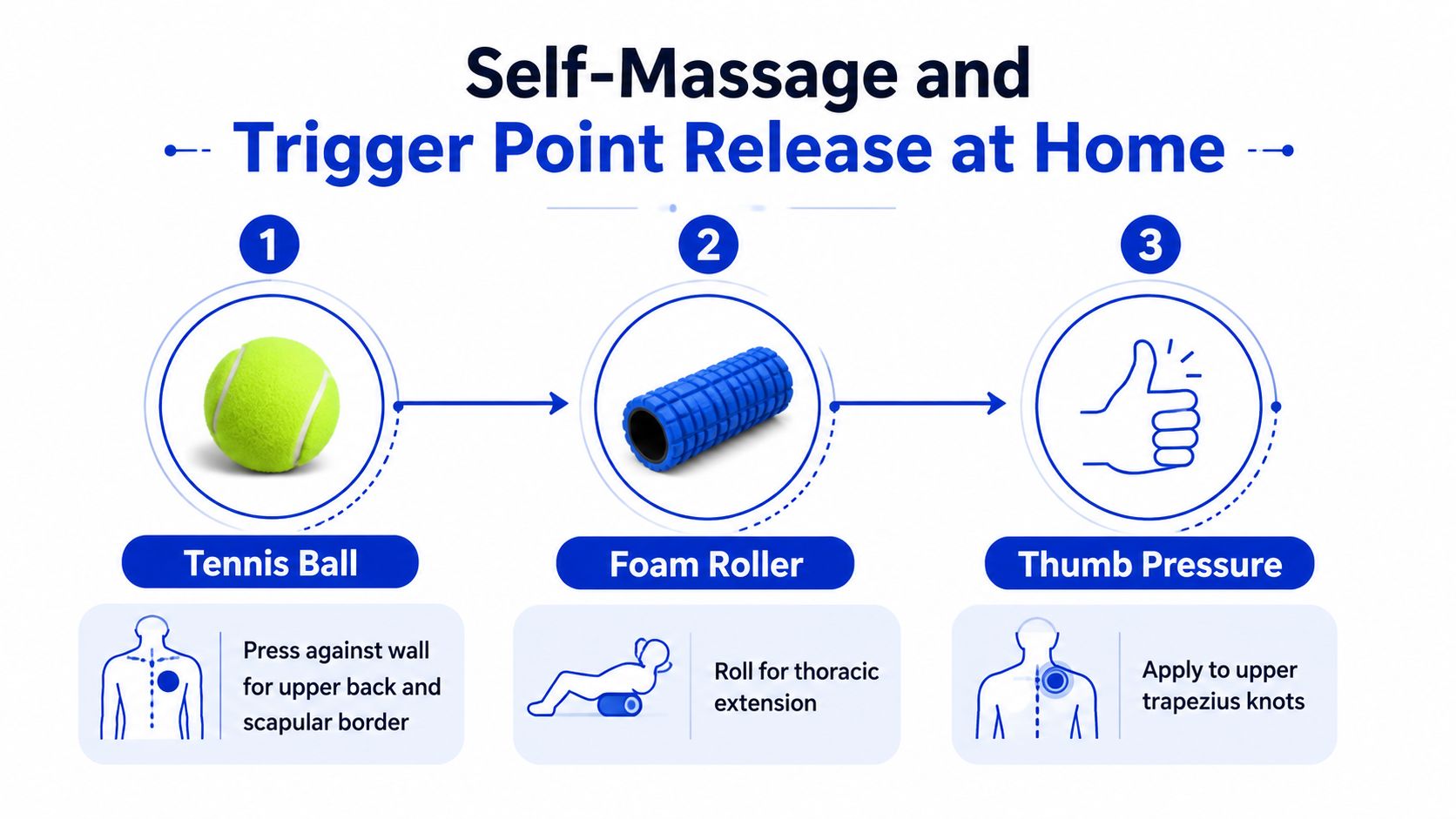
A tennis ball against the wall is usually the simplest place to start. Put it between your upper back and the wall, then lean in gently and let it sit over the tight tissue beside the shoulder blade, not directly on the spine. Move slowly, pause on a tender spot for 60 to 90 seconds, and keep the pressure in the “good hurt” range, never sharp.
A foam roller can help if the upper back feels stiff rather than just sore. Lie along the roller so it supports the thoracic spine, then open and extend gently over it in a small range. The point is to restore movement through the rib cage, not to smash the area into submission.
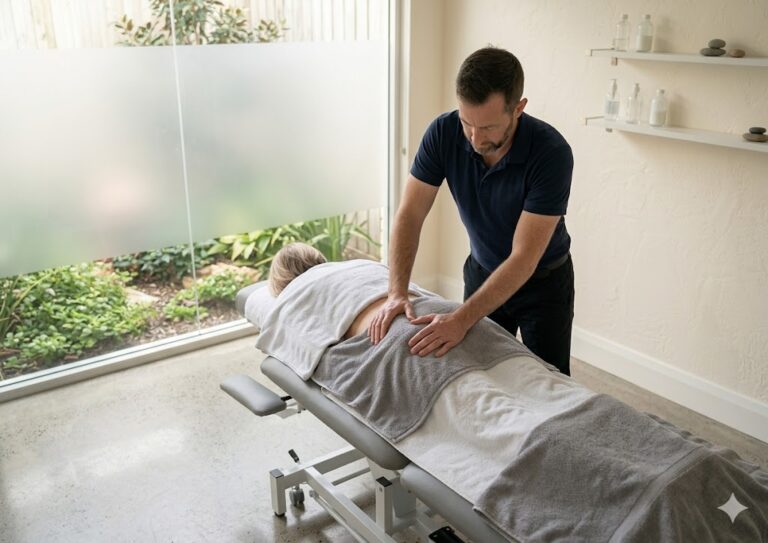
Thumb pressure works best for the upper trapezius and levator scapulae when the tissue is clearly holding a knot. Press gradually, wait for the tissue to soften, then ease off and re-test the shoulder. The clinic pattern that works best is simple, assess the tight band, apply targeted soft-tissue work, then follow with movement so the gain sticks.
I'd keep the session brief, 2 to 3 sets per spot, then move on. Stop if you get tingling, arm pain that spreads, or symptoms that worsen instead of easing. Soft-tissue work has evidence for short-term relief, but it's not a stand-alone fix, and the literature is clear that it tends to work better alongside exercise and scapular retraining (systematic review of soft tissue massage for shoulder pain).
For people who want hands-on support rather than trial and error, a clinic visit can help. If you're comparing options, a local osteopath, remedial massage therapist, or physiotherapist may all use soft-tissue treatment, but the important part is that the soft tissue work gets paired with a movement plan. One useful reference point is this remedial massage and muscle therapy resource, which fits the same principle, calm the tissue, then keep it moving.
Ergonomics and Posture Fixes for Daily Life
A workstation that helps sore shoulders usually does one thing well, it stops the body from bracing all day. Set the monitor so the top line sits near eye level, keep the keyboard close enough that the elbows can rest near a right angle, and choose a chair depth that supports the lower back without tipping the pelvis backwards. If the shoulders only settle after you leave the desk, the setup is still asking too much from the neck, upper back, and breathing pattern.
I see this often in the clinic with desk workers and older adults. The shoulder is rarely the only problem area, so the best ergonomic fix is usually the one that reduces load through the neck and thoracic spine as well. A useful visual reference for that setup is this posture and corporate ergonomics guide image, because it shows the same idea in a workplace context.

The change that gets ignored most often is a short movement break before the tightness builds. A 30-second reset every 45 minutes is often enough to stop the shoulder from staying lifted all day. Stand up, let the shoulders drop, open the chest, and move the neck and upper back through a few easy ranges. That small reset matters more than chasing a perfect posture that you cannot hold for hours.
| Setup Issue | Adjustment | Why It Helps |
|---|---|---|
| Screen too low | Lift the monitor so the top edge is near eye level | Reduces forward head posture and upper shoulder load |
| Keyboard too far away | Bring keyboard and mouse closer | Keeps elbows near the body and limits shrugging |
| Chair too shallow | Use a chair that supports the lower back | Makes it easier to sit without collapsing through the upper back |
| Phone held low for long periods | Raise the phone and alternate hands | Cuts down on sustained neck flexion and one-sided loading |
| Side sleeping with no shoulder space | Use a pillow that fills the gap under the neck | Helps the shoulder settle instead of hanging forward |
Side sleepers often need more pillow support than they expect, especially if the top shoulder rolls forward overnight. Driving can create the same pattern as desk work, so bring the seat close enough that you are not reaching, and keep both hands relaxed on the wheel rather than holding them high and tense. Small details like these matter because they reduce the steady background load that keeps the tissues irritated.
Australian workplace advice generally supports these practical adjustments, especially when pain has a clear desk or driving pattern. The older shoulder pain review linked earlier found benefit from workplace changes, which fits what I see in practice, the setup does not always cause the pain, but it can keep it going if nothing changes. For people who sit for long periods, the trade-off is simple, a few well-placed ergonomic changes usually beat trying to “sit up straight” all day.
A Simple Daily Routine You Can Stick To
Morning version
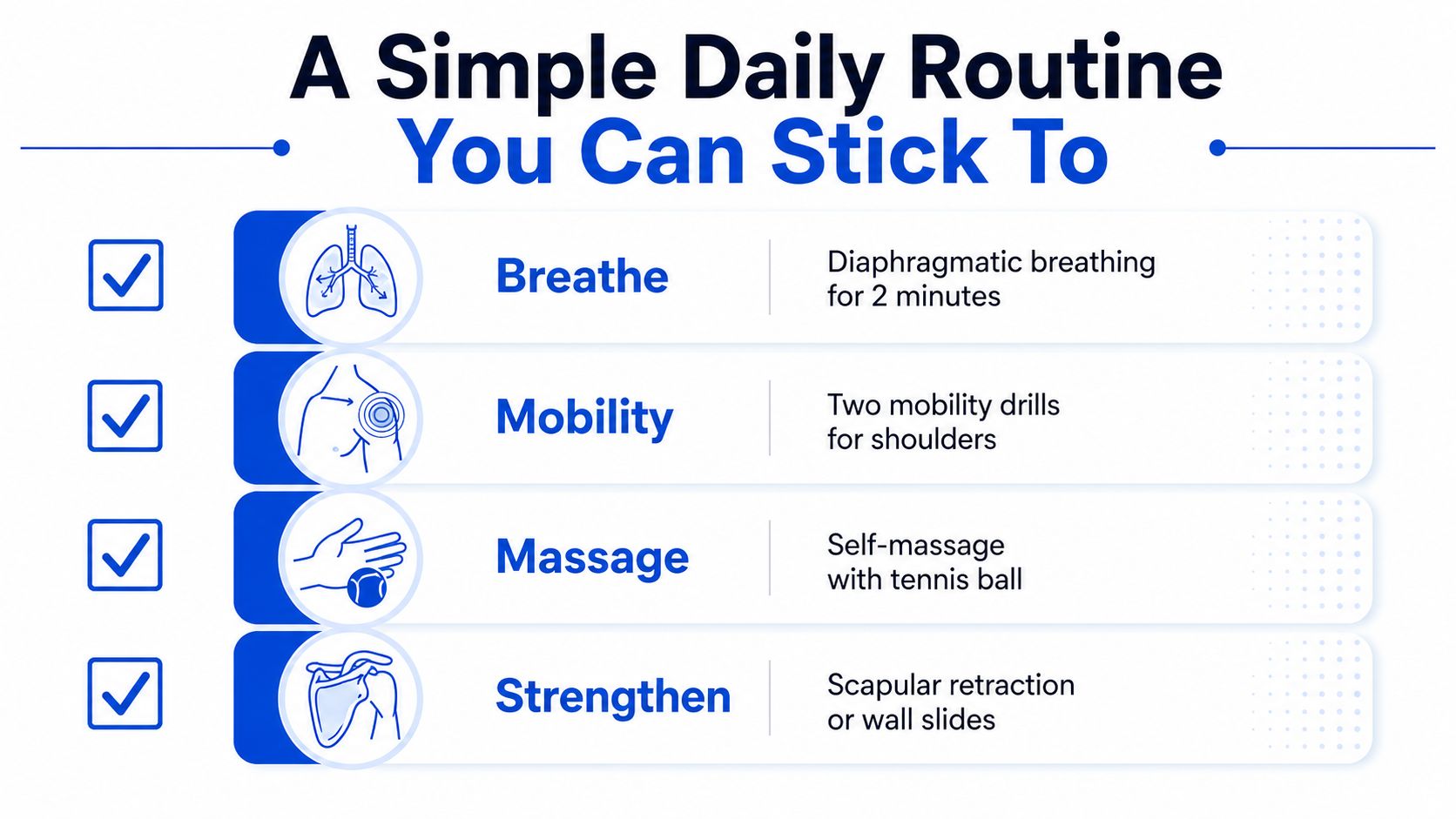
Start with 2 minutes of diaphragmatic breathing. One hand on the chest, one on the lower ribs, slow nasal inhale, longer exhale. Then do one mobility drill for the upper back and one for the shoulder, such as thread the needle plus supine flexion with a dowel.
Add one round of self-massage on the tightest spot, then finish with scapular retraction or wall slides. Keep the effort light and clean, because this routine is about making the shoulder easier to use, not fatiguing it before the day starts.
Evening or office micro version
At night, shorten the same sequence and keep it gentler. A few breaths, one stretch, one minute with a tennis ball, then a few slow shoulder blade squeezes is enough for many people to downshift before bed. At the office, a 90-second version between meetings can be enough to interrupt the bracing pattern.
The rule is frequency over intensity. A little every day usually beats one heroic session on the weekend, especially if your shoulder tension is linked to long sitting or repetitive loading. If the routine feels overwhelming, cut it down rather than skipping it, because consistency is what changes the baseline.
Red Flags and When to Book an Osteopath
Some shoulder symptoms call for more than home care. Pain that wakes you at night, numbness or tingling into the arm or hand, sudden weakness, pain after a fall, or symptoms that have not improved after 4 to 6 weeks of consistent self-care all deserve an in-person assessment. Those signs can point to the neck, nerve tissue, or a deeper joint problem, and more stretching is unlikely to help.
The pattern I see most often is a person who keeps treating the sore shoulder while the neck is driving the pain. If turning the head, looking up, or sitting upright changes the symptoms more than moving the arm does, the source may not be the shoulder itself. A whole-body assessment matters because the treatment plan changes depending on whether the issue is local, referred, or tied to posture and breathing. The same logic applies when shoulder tension keeps returning despite good home care, because the limiting factor is often elsewhere in the chain.
A proper osteopathic appointment usually begins with movement testing, then hands-on treatment such as soft-tissue work and joint articulation, followed by a home plan matched to what your body needs. That approach is practical for desk workers who sit with rounded shoulders, older adults who feel stiff through the upper back, and anyone whose breathing pattern is keeping the rib cage and neck under load. At Bayside Osteopathic Health, shoulder, neck, and postural problems are assessed in that context, and Medicare options may apply for eligible patients. If you want a proper assessment and a plan that fits your daily load, visit Bayside Osteopathic Health and book a consultation.