

Are you choosing between soft tissue therapy and physiotherapy because you know what each appointment feels like, or because you know what your body needs next? That distinction matters. Hands-on treatment can settle a painful flare, while rehabilitation can rebuild the strength, movement confidence, and self-management skills that keep the problem from returning.
The useful question usually isn't which service is universally better. It's which approach fits your current stage of recovery, your diagnosis, your mobility, and how actively you can participate in treatment.
Table of Contents
- Understanding Soft Tissue Therapy and Physiotherapy
- Comparing Techniques and Session Structures
- Matching Your Condition to the Right Therapy
- What the Evidence Says About Long-Term Outcomes
- How Osteopathy Bridges the Gap in Care
- Navigating Access, Costs, and Medicare Options
- Choosing the Right Care Path for Your Needs
Understanding Soft Tissue Therapy and Physiotherapy
Soft tissue therapy works directly with muscles, fascia, tendons, and other surrounding tissues. A practitioner may use massage, myofascial techniques, trigger point work, stretching, or sustained pressure to reduce local tension and make movement more comfortable. People often seek it after strenuous activity, during a painful muscle spasm, or when desk work has left the neck, shoulders, or hips feeling restricted.
Physiotherapy is broader. Physiotherapists assess how pain affects strength, coordination, joint movement, balance, work tasks, and sport. Treatment may include manual therapy, but the central aim is usually functional restoration through exercise, graded loading, movement retraining, education, and self-management.
Australia's physiotherapy profession has expanded from 37,113 registered physiotherapists in June 2020 to 50,064 by 31 March 2026, the first national milestone above 50,000 registrants, according to the Physiotherapy Board of Australia's registration and annual report information. Physiotherapy is therefore a large, regulated, evidence-based comparison point when Australians consider hands-on care for pain, mobility, and rehabilitation.
That doesn't make soft tissue work inferior. It gives each approach a different job.
| Your immediate need | Soft tissue therapy may help with | Physiotherapy may help with |
|---|---|---|
| Pain and tension | Short-term symptom relief and reduced muscle guarding | Identifying contributing movement or load factors |
| Mobility | Making a restricted area feel easier to move | Restoring mobility through active practice |
| Recovery | Settling an acute flare or preparing for movement | Building capacity and reducing recurrence risk |
| Patient role | Mostly relaxed during treatment, with advice between sessions | Active participation in exercises and behaviour change |
For example, a gentle soft tissue session may make a stiff upper back feel more comfortable today. Physiotherapy may then help you strengthen the surrounding muscles, change how you load the area, and return to lifting or sport with greater control. An osteopathic assessment can also combine hands-on care with a broader review of how the spine, joints, muscles, and daily habits interact. A soft tissue therapy treatment image shows the hands-on nature of this work, but the value of any treatment depends on the clinical reasoning around it.
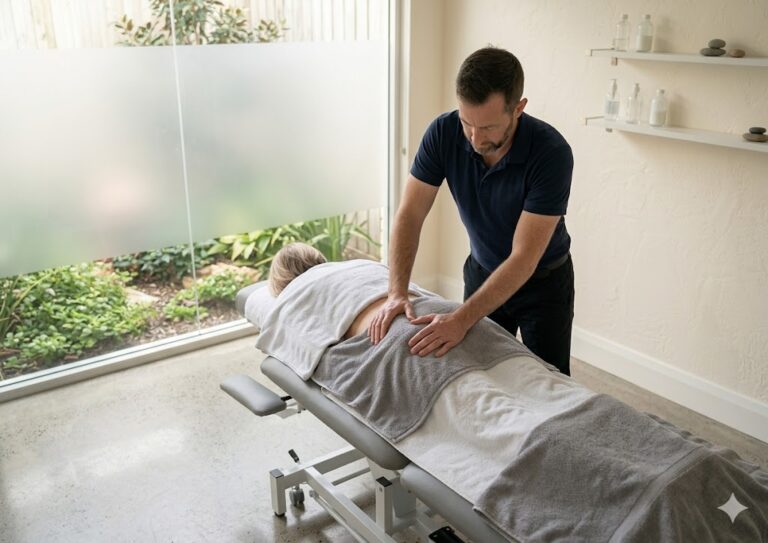
Practical rule: Relief is a useful outcome, but it isn't the same as recovery. The best pathway turns relief into better movement and steadily greater physical capacity.
Comparing Techniques and Session Structures
A soft tissue appointment often begins with a conversation about the painful area, recent activity, aggravating movements, and your treatment preferences. The practitioner then works on relevant muscles and connective tissues using techniques such as massage, myofascial release, trigger point pressure, or assisted stretching.
The session is usually more passive. You might lie or sit while the practitioner works through areas of guarding or tenderness. That can be exactly what you need when pain has made movement difficult, but passive treatment won't automatically teach your body how to tolerate running, lifting, climbing stairs, or returning to work.
A physiotherapy consultation typically gives more time to assessment. The physiotherapist may examine joint range, muscle strength, balance, gait, coordination, work-specific movement, or sport demands. They may also screen for symptoms that suggest nerve involvement, significant injury, or the need for medical review.
Session Structure and Technique Comparison
| Feature | Soft Tissue Therapy | Physiotherapy |
|---|---|---|
| Primary focus | Muscles, fascia, tendons, and local tension | Function, movement, strength, coordination, and recovery |
| Common techniques | Massage, myofascial release, trigger point work, stretching | Exercise prescription, graded loading, movement retraining, education, and selected manual techniques |
| Typical patient role | Relax during treatment and follow advice afterwards | Participate actively during assessment and rehabilitation |
| Main short-term aim | Modulate pain, reduce guarding, and improve comfort | Improve movement while identifying functional limitations |
| Main longer-term aim | Support recovery when integrated into a wider plan | Restore capacity and develop self-management |
A practical example helps. Someone with a painful calf after unusual activity may initially value hands-on work because reduced guarding makes walking easier. A physiotherapist may then assess whether the calf can tolerate progressive loading, whether the ankle and hip are contributing, and how to return safely to activity.
The difference isn't that one practitioner touches the body and the other never does. Physiotherapists can use manual treatment, while soft tissue practitioners can provide movement advice. The difference lies in the scope, assessment process, and treatment emphasis.
Physiotherapy is generally more structured around measurable function. You may be asked to repeat a movement, perform a strengthening exercise, or track how far you can walk. Soft tissue therapy is often organised around the immediate experience of tension, tenderness, and ease of movement.
The following physiotherapy treatment image illustrates the equipment-based and active side of rehabilitation.

Choose the session structure you can use productively. If pain is stopping you from moving, a hands-on approach may open a window for activity. If you can move but lack strength, control, or confidence, an exercise-led plan is more likely to address the limitation directly.
Matching Your Condition to the Right Therapy
The same pain label can describe very different problems. A stiff neck after prolonged screen use isn't managed in exactly the same way as a neck injury with arm weakness. A sore knee after a weekend sport session isn't equivalent to knee pain after surgery.
Soft tissue therapy can be useful when the dominant problem is local muscular tension, guarding, or short-term discomfort. Physiotherapy becomes more important when the problem involves progressive loading, altered movement, reduced strength, balance, joint function, or a planned return to activity.

When hands-on care may fit
An acute muscle spasm can make ordinary movement feel threatening. Gentle treatment may reduce protective muscle contraction and help you change position, walk, or begin comfortable movement. It should be paired with sensible advice about activity, sleep position, and gradual return to normal use.
Desk-related neck or shoulder strain often has a similar pattern. Soft tissue work may settle overactive muscles, but the lasting plan may involve changing workstation habits, taking movement breaks, improving upper-body endurance, and addressing how long you stay in one posture.
Some people also experience headaches linked to neck and upper shoulder tension. A practitioner must first consider the pattern and screen for features that need medical assessment. If the headache repeatedly returns, treatment shouldn't stop at temporary relief. The cervical spine, work demands, sleep, stress, and movement habits all deserve attention.
When structured rehabilitation matters more
Physiotherapy is usually the more appropriate primary pathway after surgery, when a clinician has prescribed staged restoration of range, strength, weight-bearing, or function. It also plays a central role in tendinopathy, where the tendon needs carefully progressed loading rather than repeated attempts to massage away pain.
Neurological symptoms require particular care. Numbness, significant weakness, changes in coordination, or pain that travels with neurological features shouldn't be treated as a simple tight muscle without assessment. A physiotherapist can help identify functional deficits and coordinate referral when the presentation falls outside routine musculoskeletal care.
Weekend sport injuries also benefit from accurate classification. Calf pain, tendon pain, ligament injury, and nerve-related symptoms may overlap early, yet they don't all follow the same loading plan. If swelling, bruising, marked loss of function, or escalating pain is present, seek an appropriate assessment rather than relying on a generic massage session.
The more your problem affects strength, balance, walking, or task performance, the more important an assessment and rehabilitation plan become.
Soft tissue therapy may still have a role in these situations, but usually as a supporting measure. It can make exercise more tolerable, reduce guarding, or help you move between rehabilitation sessions. It shouldn't replace diagnosis, progression, or monitoring when those elements are needed.
What the Evidence Says About Long-Term Outcomes
A relaxing session can feel effective because pain and tension may ease quickly. That experience is real, but short-term symptom change doesn't prove that the underlying problem has resolved. Chronic spinal pain is where this distinction becomes especially important.
The Australian Low Back Pain Clinical Care Standard positions physical therapies such as massage as adjuncts rather than stand-alone care. They may improve function and mobility when delivered as part of a package that includes physical activity, with or without psychological therapy, and they're intended for a short period.
That guidance changes how soft tissue therapy should be used. Massage may help reduce pain or muscle spasm enough for a person to walk, exercise, sleep, or engage with rehabilitation. It isn't a complete long-term management strategy for persistent spinal pain when used on its own.
Turning temporary relief into progress
Australian primary-care guidance describes a typical course of physical therapy for persistent back pain as approximately 12 treatments over 6 to 12 weeks, as outlined in Managing low back pain in primary care. The same guidance identifies structured exercise programmes, acupuncture, and spinal manipulative therapy among the physical therapies with evidence of effectiveness in the reviewed options.
The practical implication is straightforward. If a hands-on session reduces symptoms, use that improvement to practise an agreed movement or activity. If the same pain returns every time you stop treatment, the plan needs reassessment rather than an endless cycle of passive appointments.
A physiotherapy-led programme may include graded strengthening, walking progression, work modifications, lifting practice, and education about flare-ups. The exact exercises should match the person's presentation and capacity. More exercises aren't automatically better, and pushing through severe symptoms without guidance can be counterproductive.
What doesn't work well on its own
Passive treatment becomes a weak strategy when it creates dependence without improving function. Repeatedly chasing a tender spot may provide temporary comfort while the person avoids the movements that would restore capacity.
That doesn't mean people should reject hands-on care. It means the treatment needs a defined purpose. A short period of soft tissue work can be reasonable when it helps someone begin active rehabilitation, but the outcome should be judged by what the person can do, not only by how the area feels immediately after treatment.
How Osteopathy Bridges the Gap in Care
Some people want more than a massage but aren't looking for an exercise-only appointment. They may have pain in several connected areas, a long history of recurring stiffness, or uncertainty about why one movement repeatedly provokes symptoms. Osteopathy can offer a hands-on assessment and treatment pathway while keeping the wider body and daily function in view.
An osteopath may assess spinal and joint movement, muscle tone, posture, breathing patterns, gait, work habits, and the way different regions compensate for one another. Treatment can include soft tissue techniques, joint articulation, gentle mobilisation, and practical movement advice. The purpose isn't to claim that every symptom has one hidden structural cause. It's to understand how the person moves and which factors may be maintaining irritation or restriction.
A common clinical pattern
Consider someone whose lower back becomes sore after sitting and whose hips feel stiff when standing. A purely local approach might focus on the painful lumbar muscles. A broader osteopathic assessment may also examine hip movement, thoracic stiffness, breathing and bracing habits, work posture, walking tolerance, and how the person gets up from a chair.
The first treatment might use gentle hands-on techniques to reduce guarding. The home plan could then include comfortable mobility work, regular position changes, walking, and gradual strengthening. If the person isn't progressing, the osteopath should adjust the plan or recommend physiotherapy, medical review, or another appropriate service.
This is the useful middle ground. Manual treatment can help someone feel safe enough to move, while education and self-care give the person a role outside the consulting room. The approach remains gentle, but gentle doesn't mean passive forever.
At Bayside Osteopathic Health, care is described as combining hands-on osteopathic techniques with movement guidance and practical self-care for pain, stiffness, and mobility concerns. That model may suit people who prefer a whole-body assessment and drug-free care, provided the treatment plan remains realistic about what manual therapy can and can't achieve.

A good bridge doesn't keep you between treatments. It helps you move from symptom control towards confident, sustainable activity.
Osteopathy isn't a replacement for every service. Post-operative rehabilitation, complex neurological symptoms, and conditions requiring specialist medical management may need a different lead clinician. A responsible practitioner recognises those boundaries and collaborates or refers when the presentation calls for it.
Navigating Access, Costs, and Medicare Options
The cheapest appointment isn't necessarily the most cost-effective if it doesn't match the problem. Start by identifying the outcome you need. Are you seeking short-term relief from a muscular flare, an assessment of unexplained weakness, or a structured return to work and sport?
Check your likely coverage
Private health insurance policies differ. Physiotherapy, osteopathy, and remedial massage may sit under different extras categories, and a fund may recognise one provider type but not another. Before booking, check:
- Your extras category: Confirm whether the service is listed as physiotherapy, osteopathy, remedial massage, or another recognised treatment.
- Provider requirements: Ask whether the practitioner needs a particular registration or fund-recognised provider number.
- Your remaining benefit: Check annual limits, waiting periods, claiming rules, and any per-appointment cap.
- The clinic fee: Ask for the consultation price and expected out-of-pocket amount before treatment.
Medicare generally doesn't pay for every allied health appointment just because pain is present. A GP may assess whether you qualify for support under a Chronic Disease Management plan, previously associated with GP Management Plans and Enhanced Primary Care arrangements. If eligible, the GP referral and the plan determine which allied health services can be accessed and under what conditions.
Ask the GP and clinic to clarify the referral before attending. Confirm the number and type of services approved, whether a gap remains, and whether the provider can accept that referral. Medicare rules and eligibility can change, so rely on current information from your GP, Services Australia, and the clinic rather than an old online explanation.
Access is part of clinical decision-making
Australia has a growing physiotherapy workforce, but workforce distribution isn't even. The Australian Government notes that allied health shortages remain a concern in rural and remote communities, as outlined in its overview of allied health.
For people outside major centres, availability may influence the practical choice. A local soft tissue or osteopathic appointment can be useful for immediate support, while telehealth, a local physiotherapist, or a referral pathway may help with longer-term rehabilitation. Access should shape the plan, but it shouldn't hide red flags or delay appropriate medical assessment.
Choosing the Right Care Path for Your Needs
Use your current function as the deciding factor, not the label attached to the treatment.
If pain is recent, localised, and mainly muscular, soft tissue therapy may be a reasonable first step for comfort. Choose a practitioner who asks about the injury, checks movement, explains what to do afterwards, and gives you a clear reason for using hands-on treatment.
If your symptoms are persistent, recurrent, or affecting strength and mobility, seek a broader assessment. Physiotherapy is particularly relevant when you need progressive loading, post-operative recovery, return-to-sport planning, balance work, or help managing a condition through exercise.
Osteopathy may suit people who want hands-on care alongside assessment of the body as a whole. It can be a practical option when stiffness, posture, joint mobility, muscular tension, and daily habits appear to interact. The important safeguard is that any manual approach should lead towards useful movement and self-management, rather than becoming the only thing holding your recovery together.

A simple decision guide
- Choose short-term hands-on support when muscle tension or spasm is limiting comfortable movement and you have no warning signs.
- Choose physiotherapy-led rehabilitation when your main goal is rebuilding strength, balance, tolerance, or sport and work capacity.
- Consider an osteopathic assessment when you want gentle manual care plus a whole-body review and practical movement advice.
- Seek medical assessment promptly for significant trauma, progressive weakness, unexplained neurological symptoms, severe or worsening pain, or symptoms that don't fit a straightforward muscular pattern.
- Combine approaches thoughtfully when each service has a distinct role. For example, hands-on treatment may settle symptoms while physiotherapy provides the loading plan.
The best answer to soft tissue therapy vs physiotherapy is often a sequence rather than a winner. Calm the flare when necessary, assess the cause and functional limitation, then build the capacity that allows you to return to the activities that matter.
Bayside Osteopathic Health provides gentle osteopathic assessment, soft-tissue work, joint articulation, mobilisation, movement advice, and practical self-care strategies for people dealing with pain, stiffness, and reduced mobility. Visit Bayside Osteopathic Health to discuss which care pathway fits your current symptoms and recovery goals.