
You wake up with a jaw that feels stiff, your bite sounds noisy, and chewing your breakfast already seems like hard work. Maybe your ear aches, your temple is sore, or you've started catching yourself rubbing the side of your face because it just doesn't feel right. That's usually the point where people start searching for a temporomandibular joint disorder specialist, and the search gets confusing fast because the right help is rarely in one place.
The problem isn't just the pain, it's the pathway. TMJ and TMD care sits between dentistry, medicine, and hands-on musculoskeletal treatment, so patients are often told to see a dentist, a GP, a physio, or a specialist, without being told who does what or why. In Australian practice, that fragmentation matters because TMD is part of a broader chronic pain burden, and conservative care is usually the safest place to begin, not the last resort.
Table of Contents
- Why Finding a Temporomandibular Joint Disorder Specialist Is Harder Than You Think
- The Clinicians Who Treat TMJ Disorders and What Each One Does
- Symptom Red Flags and When Imaging or Referral Is Needed
- Treatment Options From Self-Care to Osteopathy and Beyond
- How to Choose the Right TMJ Specialist in Bayside
- What to Expect at Your First TMJ Appointment
- Medicare Options and Booking Your Care in Bayside
Why Finding a Temporomandibular Joint Disorder Specialist Is Harder Than You Think
A sore jaw sends a lot of people in the wrong direction at first. The instinct is simple, if the pain is in the jaw, a jaw specialist should fix it. In practice, TMD care rarely starts that cleanly.
TMD is not one neat diagnosis. It is a heterogeneous group of more than 30 conditions affecting the jaw joint and the muscles of mastication, and the symptoms can overlap with headache, neck pain, tinnitus, dizziness, jaw clicking, and restricted opening. That overlap is why the first appointment matters more than the title on the clinic door, because the wrong starting point can leave a patient moving from one practitioner to another without a clear plan.

Why the referral maze feels so messy
In Australia, jaw pain often lands in a fragmented system. Dentists look at the teeth and bite, GPs think broadly about pain and referral, and physiotherapists or osteopaths may be better placed to assess the jaw alongside the neck, posture, and surrounding muscle tone. The problem is that many clinicians have only limited dedicated TMD training, so patients can end up bouncing between offices without a clear treatment pathway.
The “specialist first” assumption often works against patients. In many cases, the better starting point is structured history and physical examination, followed by conservative management if the pattern fits TMD and there are no red flags. A large proportion of patients do not need invasive care, and the skill is deciding whether the main driver is muscular, joint-related, or part of a broader pain pattern.
Practical rule: if your jaw pain changes with chewing, opening, clenching, or yawning, the most useful first clinician is often the one who can examine the jaw, neck, and movement pattern together, not the one who only looks at one tissue.
That wider view matters in Australia because musculoskeletal conditions already sit within a heavy chronic pain burden, with about 1 in 5 Australians living with chronic musculoskeletal conditions in 2022, including 3.7 million people with arthritis and about 923,000 with back problems (Australian Institute of Health and Welfare context). TMD sits in that same world of persistent pain and movement limitation, so a narrow, tooth-only or scan-only approach often misses the point.
The challenge is not just finding a clinician with the right title. It is finding someone who can sort the problem properly, explain the trade-offs, and start with care that fits the pattern in front of them. In many cases, that is conservative hands-on management, not an immediate referral chase.
The Clinicians Who Treat TMJ Disorders and What Each One Does
The most useful way to think about TMD care is not “who is the best specialist,” but “who is the right clinician for this pattern of symptoms.” Different practitioners bring different strengths, and the best pathway is often shared rather than owned by one profession.
Start with the clinician who can triage, not just treat
A GP is often the first stop when pain is new, severe, or hard to classify. They can rule out non-jaw causes, identify broader medical issues, and refer you into dental or allied health care when needed. That's particularly important when the pain is atypical, persistent, or accompanied by symptoms that don't behave like ordinary TMJ dysfunction.
A dentist is valuable when the history suggests bite-related contributors, tooth wear, bruxism, or an appliance may help. Dentists are also important when there's poor dental health, caries, malocclusion, or signs that oral structures are part of the problem. Their role is useful, but it doesn't replace a broader musculoskeletal assessment when the neck, head, or posture are clearly involved.
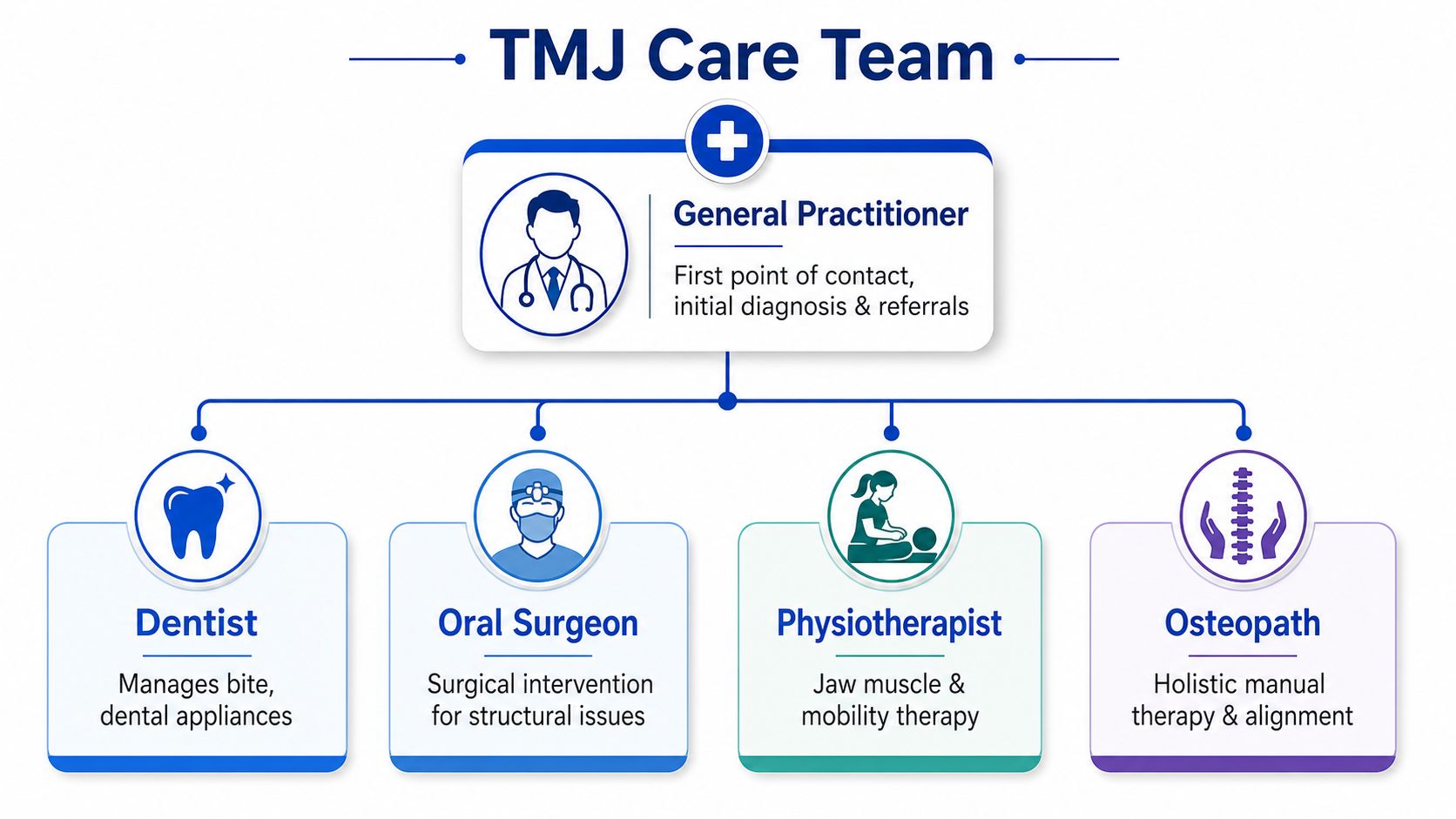
The care team only works well when each person does their part. A physiotherapist or osteopath is often the better fit when the pain feels muscular, posture-linked, or movement-related. A manual therapist can assess the jaw with the neck and upper back, then use gentle hands-on treatment and exercise-based strategies to reduce guarding and restore movement.
The oral and maxillofacial surgeon enters the picture when there's suspected structural disease, trauma, persistent functional loss, or refractory pain that hasn't responded to conservative care. In other words, surgery is for selected cases, not for routine clicking or first-line management.
The key takeaway is simple. A temporomandibular joint disorder specialist is most useful when they fit the problem, not just the label. If the clinical picture looks muscular and mechanical, conservative hands-on care is often the most direct route.
An osteopathic or physiotherapy approach is often most useful when you want someone to assess the jaw alongside the cervical spine, shoulder girdle, and posture. That's where the internal link on assessment and treatment fits naturally, because the work is rarely isolated to one joint, as shown in this example of a physiotherapy-style treatment setup.

A good referral pathway usually starts with the least invasive clinician who can still see the whole pattern.
Symptom Red Flags and When Imaging or Referral Is Needed
Jaw pain by itself does not tell you enough. The decision point is whether the problem looks like a routine TMD pattern or whether it is severe, unusual, or suspicious for structural disease. That distinction matters because imaging and surgical review are meant for selected cases, not as the default response to every painful jaw.
What changes the pathway
TMD is usually grouped into joint disorders, muscle disorders, and TMD-associated headache, and each group points to a different treatment direction. If the symptoms are mainly muscular, the work is usually conservative and movement-based. If there is suspected internal derangement, trauma, or clear loss of function, escalation makes more sense.
Imaging is reserved for cases where diagnosis is uncertain or red flags are present (NIDCR guidance). That is a better rule than scanning every painful jaw, because clicking or popping can also appear in people without symptoms. A scan can distract from the clinical pattern rather than clarify it.
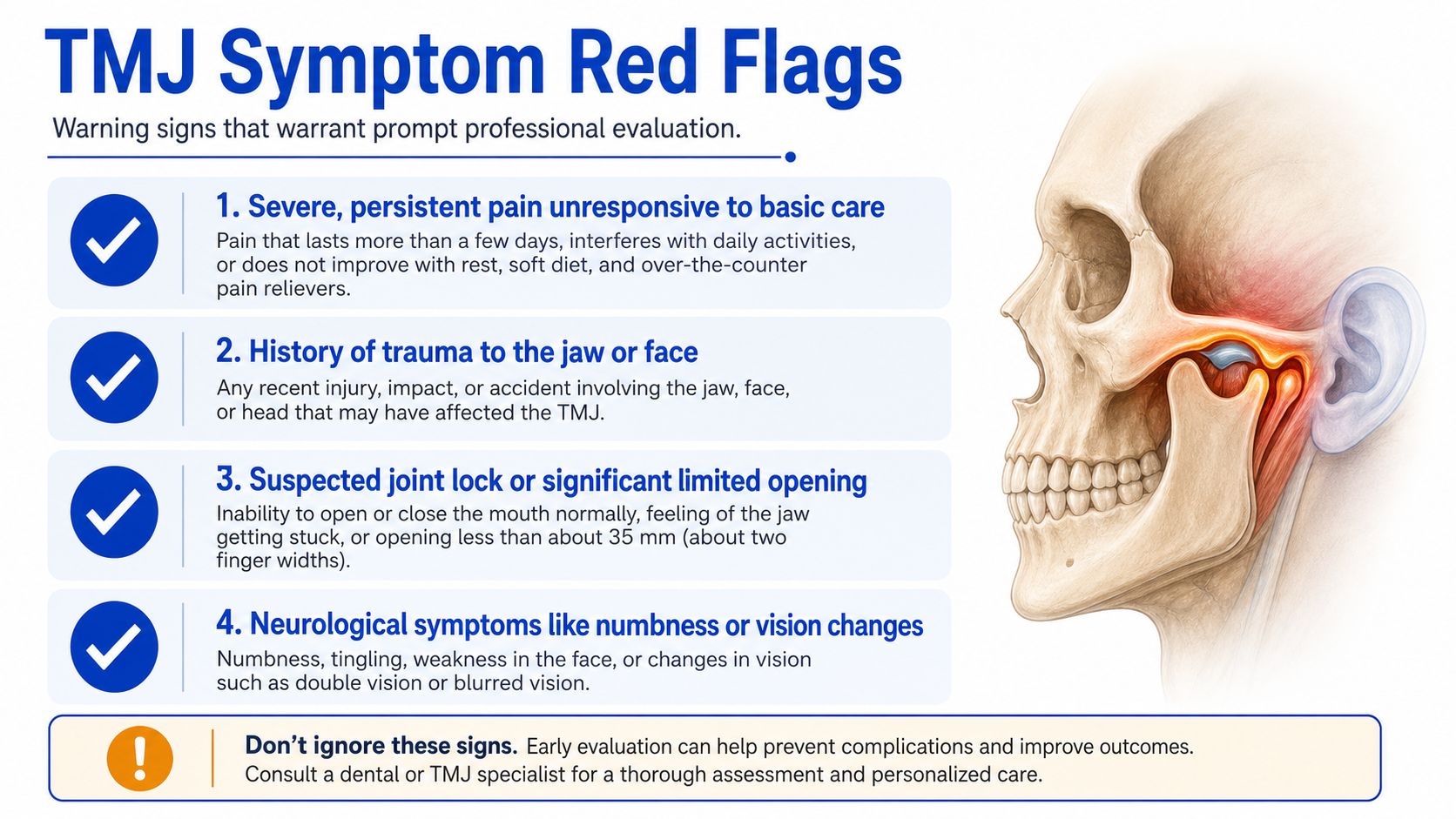
A practical triage pattern looks like this.
- Severe, persistent pain unresponsive to basic care: this raises the chance that the diagnosis needs to be reviewed rather than just more self-management.
- History of trauma to the jaw or face: trauma changes the threshold for referral because structural injury has to be considered.
- Suspected joint lock or major restriction in opening: this can point to internal derangement or mechanical blockage and should not be treated as ordinary soreness.
- Neurological symptoms like numbness or vision changes: these do not fit a routine TMD pattern and need prompt medical assessment.
In evidence-based pathways, the push to refer is driven more by function and risk than by pain alone. Conservative care still covers many cases, but persistent limitation, atypical features, or a failure to improve after a structured trial all justify advanced review (NCBI Bookshelf overview).
If the pain clearly follows jaw activity, that points toward a mechanical or muscular pattern. Pain that stays unchanged no matter what the jaw does deserves a closer look, because that is often the difference between conservative care, imaging, or referral. A clinician who understands the medical-dental divide can also decide whether a hands-on route fits first, or whether the pattern has crossed the line into something that needs a different workup. For patients who are unsure where to start, a TMJ assessment guide for osteopathic care can help show how a conservative examination is usually approached before anything more invasive is considered.

Treatment Options From Self-Care to Osteopathy and Beyond
A patient with a sore jaw often wants the fastest fix, but TMJ care usually works better when it starts gently and only escalates if the joint stays irritable. That approach is practical, not timid. A jaw that is already sensitised can react badly to rushed intervention, especially if the underlying problem is muscular, mechanical, or driven by overload.
What conservative care includes
The first tools are usually simple: soft foods, jaw rest, warm or cold therapy, and graded jaw exercises are part of first-line management (NIDCR management advice). They are not dramatic, but they reduce load on a painful system and give the jaw a chance to settle instead of being provoked by every chew, yawn, or clench.
Physical therapy is often folded into that early care, especially when neck tension, postural strain, or altered movement patterns are part of the picture. In a real clinic, that can mean soft tissue treatment, mobility work, and exercises that improve coordination rather than forcing the jaw to “click back into place.” Osteopathy fits in the same conservative space when it addresses the jaw, neck, and surrounding mechanics together, because those areas often influence one another in daily function.
Some options sound more decisive than they are. Splints can help selected patients, especially where bruxism or night-time clenching is part of the story, but they are not a universal answer and they still need sensible dental oversight. Imaging and procedures belong later in the pathway, not because they are unhelpful, but because they are meant for cases where structural pathology is confirmed or strongly suspected.
| Treatment category | What it's for | Main trade-off |
|---|---|---|
| Self-care | Lowering joint load, calming irritability | Works best when used consistently |
| Hands-on therapy | Muscle tension, movement restriction, posture-linked pain | Needs proper assessment, not a generic massage |
| Dental splints | Selected bite or clenching patterns | Not every jaw pain case benefits |
| Medication | Short-term pain control or muscle spasm | Side effects and limited long-term value |
| Procedures or surgery | Confirmed structural problems | Higher risk, reserved for specific cases |
Medication has a mixed role. Some nonpharmacologic and medication options can be used in care pathways, while surgery remains uncommon and is generally reserved for destruction of the joint, ankylosis, or severe pain and dysfunction after simpler measures have failed (NCBI treatment summary). That is one reason hands-on conservative care often makes sense at the start.
The practical pathway is usually straightforward. First, calm the flare with self-care and movement advice. Then add targeted manual therapy or physiotherapy if the jaw sits inside a broader mechanical pattern. Move to imaging or procedures only when the clinical story does not fit, or when function keeps dropping despite a structured trial of care.
The clinic page on TMJ symptoms, causes and treatment at Bayside Osteopathic Health shows how a conservative care option can fit into that wider pathway.
How to Choose the Right TMJ Specialist in Bayside
A sore jaw, ear pressure, and a neck that keeps tightening after meals can send you looking for a temporomandibular joint disorder specialist fast. The harder part is choosing the right clinician, because the underlying issue is often bigger than the jaw alone. A good local choice starts with a simple question: can this person assess the jaw as part of a wider movement and pain pattern, or are they only looking at one structure?
What to look for before you book
You want someone who can explain how they assess jaw movement, cervical mechanics, posture, muscle tenderness, and functional triggers. If a practitioner only talks about the bite, or only talks about relaxation, that is too narrow for many TMD presentations. The useful clinician can connect the jaw to the rest of the body without turning every case into a posture lecture. For an example of posture assessment in TMJ care, see this posture assessment image.

Ask direct questions in the first call or at the booking stage.
- What TMD training do you have? You are checking for dedicated experience, not just general pain management.
- How do you decide when imaging is needed? Good answers focus on uncertainty, red flags, and function.
- Do you assess the neck as well as the jaw? That matters when symptoms radiate into the head or upper cervical area.
- What does conservative care look like here? You are looking for a clear plan, not a sales pitch for devices or procedures.
- When would you refer me on? Sensible clinicians know their limits and have a pathway for escalation.
The shortage of dedicated TMD-trained clinicians is real, and it is one reason patients struggle to find the right person. The National Academies notes that many people with TMDs have difficulty finding providers with specialised training, and that medical education contains little on diagnosis and treatment of TMDs (National Academies, chapter 8). That gap shows up locally as well, so the quality of the interview matters as much as the clinic name.
A whole-body approach should feel specific, not vague. If the practitioner mentions posture, jaw loading, neck stiffness, and movement habits in the same conversation, that is a better sign than a one-size-fits-all jaw protocol. If they only talk about grinding the teeth or only talk about stress, keep looking.
The practical test is whether the clinician can make the first visit feel orderly. The right person does not promise a miracle. They explain what they think is driving the pain, what they will check first, and how conservative hands-on care fits before anything more invasive.
What to Expect at Your First TMJ Appointment
A first TMJ appointment should feel ordered and calm, because the aim is to sort out what is driving the pain before anyone starts throwing treatments at it. A good clinician listens first, then checks whether the jaw, neck, and nearby muscles are each playing a different role. That first review usually shapes the rest of the care plan.
The consultation usually starts with your history. You may be asked when the pain began, what it feels like, what aggravates it, whether there is clicking or locking, and whether you have noticed clenching, headaches, ear symptoms, or a reduced opening range. Those details matter because TMD diagnosis is mainly built on history and physical examination.
The physical exam comes next. Expect the practitioner to watch how your jaw opens and closes, feel for tenderness in the chewing muscles, assess the TMJ itself, and examine the neck and upper back for linked tension or movement restriction. If posture or cervical mechanics are part of the picture, that should show up in the exam itself, not get added later as an extra idea.
The best first session usually leaves you with a working explanation, not just a treatment.
Hands-on treatment may begin straight away if it is appropriate. That can include gentle soft-tissue work, joint articulation, or mobilisation, with the aim of easing guarding and making movement less stiff. You should also leave with clear self-care advice, usually focused on load management, chewing habits, and how to avoid aggravating the joint over the next few days.
A sensible plan matters more than a dramatic one. TMD symptoms often improve in stages, especially when the jaw has been protecting itself for a while. The first session is about mapping the problem and starting the process, not fixing every detail at once.
If the practitioner explains what they found, what they did not find, and what would make them refer you on, that is a good sign. It shows they are thinking clinically rather than running through a routine treatment script.
Medicare Options and Booking Your Care in Bayside
Access matters as much as technique. If you're already living with jaw pain, the last thing you need is a confusing booking process or surprise uncertainty about how care is covered. A clear first step makes it easier to start and easier to keep going.
In Australia, Medicare coverage for osteopathy can apply in specific circumstances when part of a prescribed treatment plan, and health-fund support can vary depending on your extras cover. The safest move is to check the current details before you book, especially if you're planning a course of hands-on care rather than a one-off visit. That small bit of admin is worth doing early.
Booking itself is usually simple. Bring any relevant scans, a list of your medications, and a short note about what makes the jaw worse, such as chewing, yawning, clenching, or long hours at a desk. If you've already tried a splint, pain relief, or exercises, mention that too, because it helps the clinician avoid repeating steps you've already tested.
Keep self-care in the loop while you wait. Soft foods, jaw rest, and avoiding unnecessary clenching are still useful in the lead-up to treatment, and they're more effective when they're paired with an actual assessment rather than used indefinitely on their own. A good clinician will help you combine home care with hands-on treatment instead of making them compete.
Bayside residents who want a conservative, movement-focused option can look for a clinic that assesses the jaw alongside the rest of the musculoskeletal system and gives practical home guidance as part of the plan. That way, the care fits the problem instead of trying to force the problem into one service type.
If you're dealing with jaw pain, clicking, or restricted opening and you want a calm, conservative assessment, Bayside Osteopathic Health can help you work through the pattern and decide whether hands-on care, self-management, or referral is the right next step. Visit Bayside Osteopathic Health to book an appointment and take the first step toward a clearer TMJ plan.