

Your neck feels tight again after another day at the laptop. The shoulders have that dull, stubborn ache, and the same spot near the top of your back seems to light up every time you turn your head. A quick rub helps for a while, but by tomorrow the tension is back.
That's where trigger point therapy gets interesting. It focuses on the small, hypersensitive spots in muscle that can keep feeding pain into the neck, shoulder, back, or even the arm, and it's often used as part of a broader, gentle plan rather than as a one-off fix. In Australia, that usually means a hands-on approach that combines assessment, targeted pressure, movement work, and self-care, especially for people whose pain has been shaped by desk work, posture strain, or age-related stiffness.
Table of Contents
- Introduction to Trigger Point Therapy
- Understanding Key Concepts
- Recognising Common Indications and Pain Patterns
- Reviewing Evidence and Safety of Trigger Point Therapy
- Comparing Manual Therapies to Trigger Point Therapy
- Experiencing a Bayside Osteopathic Session
- Self-Help Techniques Precautions and When to Seek Help
- FAQs for Older Adults and Office Workers
Introduction to Trigger Point Therapy
A lot of people live with the same pattern. You sit through meetings, lean towards the screen, answer emails, drive home, then realise your neck has been clenched for hours. The pain can feel local, but it can also creep into the head, shoulder blade, or arm, which is why a simple rub or quick stretch often feels helpful without fixing much.
Trigger point therapy aims at those stubborn spots more directly. Historical clinical descriptions describe trigger-point care as a hands-on intervention using massage, manual release, spray-and-stretch, dry needling, and injections, while modern Australian practice materials often frame it as a gentle pressure-and-reassess method. That matters because the approach isn't just about “loosening a knot”, it's about finding a specific tender area, easing its sensitivity, and checking whether movement improves afterwards.
Practical rule: If a spot is sore but also seems to send pain somewhere else, trigger point therapy may be more relevant than general relaxation work alone.
This article keeps things simple. It explains what trigger points are, how they show up, what the research says, how they compare with other manual therapies, what a session can feel like in a gentle osteopathic setting, and how to use self-care safely at home. It also keeps office workers and older adults in mind, because those are the people most likely to need a careful, localised plan that fits real life.
Understanding Key Concepts
A trigger point is a small, irritable spot in a muscle that stays unusually sensitive. It can feel tender when pressed, and that pressure may bring on the same ache a person notices during daily activities. In clinic terms, it is not just a sore patch, it is a spot that seems to keep the muscle in a guarded state.
Why pain can spread
Trigger points often create local pain and referred pain. Local pain is the soreness felt right on the spot. Referred pain is what makes trigger points confusing, because the discomfort can show up somewhere else, such as the upper shoulder sending pain into the head or arm. That is one reason a person may assume the problem is in a neck joint, when the muscle is the main source of irritation.
The older clinical literature describes trigger-point treatment as a hands-on method that can include massage, manual medicine, dry needling, spray-and-stretch, or injection-based approaches. Australian practice materials also describe a more specific soft-tissue technique, where sustained pressure is applied for up to 90 seconds, followed by gentle stretching and reassessment to restore movement and reduce tenderness, according to a classic AAFP clinical article on trigger-point management (AAFP 2002).
What pressure is trying to do
The aim is not to crush the muscle. The clinician applies enough pressure to settle the hypersensitive area while staying within tolerance, then checks whether the tissue softens and whether movement improves. Australian guidance describes sustained ischaemic compression of about 30 to 90 seconds, with gradual pressure, followed by stretching and reassessment so the clinician can judge whether tenderness and circulation have changed.
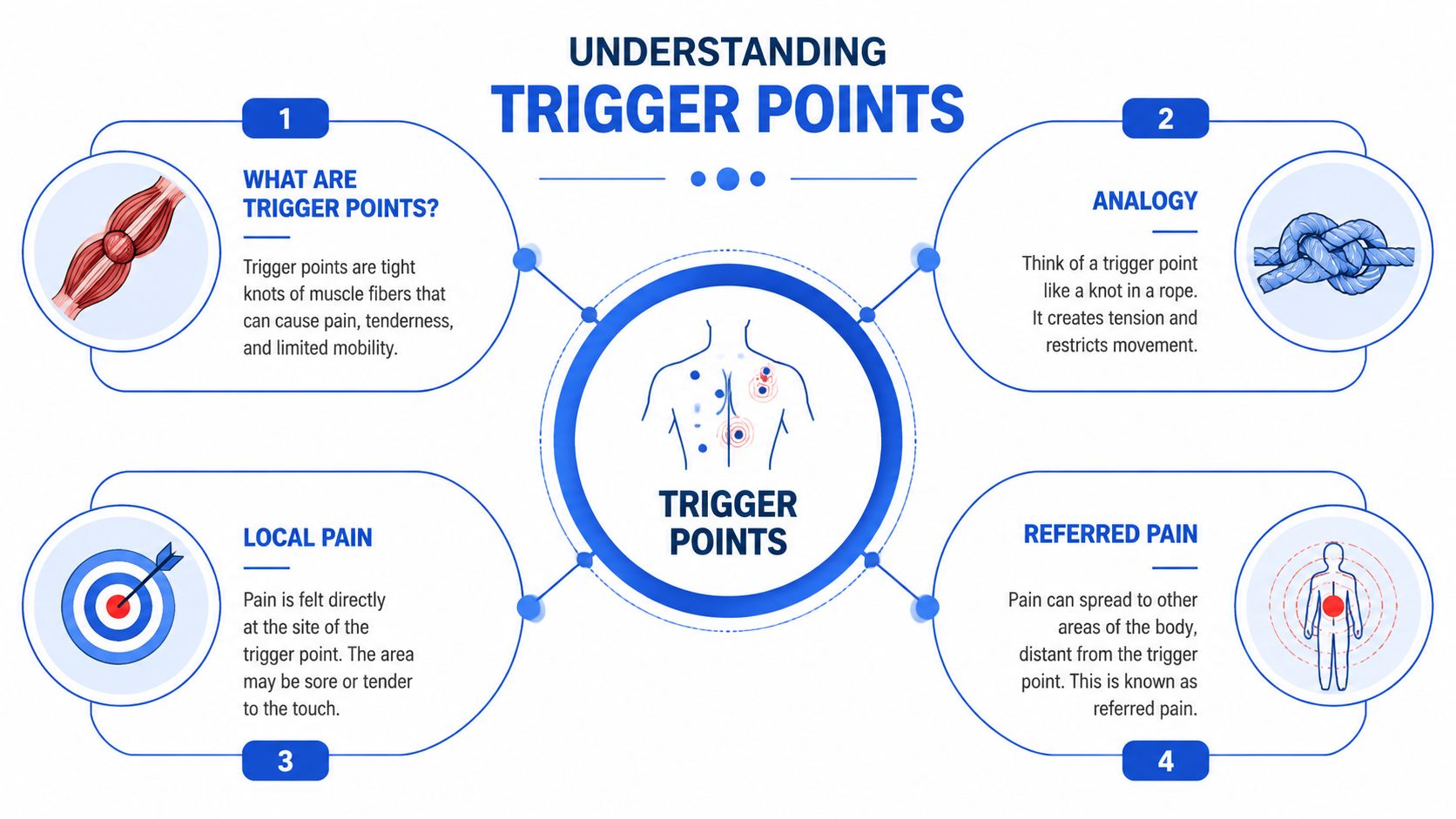
Simple way to understand it: the pressure is used to interrupt the pain cycle and check the tissue's response, rather than force the muscle into submission.
That distinction matters because trigger point therapy works best as a targeted, test-and-response technique. The muscle gives feedback. The practitioner feels for a taut band, the patient reports what they feel, and then movement is checked again. In a gentle phased approach like the one used at Bayside Osteopathic Health, that feedback helps shape care step by step, which is useful for office workers who need short, localised self-care strategies and for older adults who often do better with careful pacing.
Recognising Common Indications and Pain Patterns
Trigger points don't announce themselves with one neat symptom. They usually show up as a pattern. A person may complain of a stiff neck, a hard ridge under the shoulder blade, a nagging ache between the shoulders, or headaches that seem to start after sitting too long at a desk.
Common clues in everyday life
An office worker might spend hours looking down at a laptop, then develop a headache by late afternoon. An older adult might find lifting groceries harder because the mid-back feels rigid and uncooperative. In both cases, the pain can be amplified by repetitive holding patterns, not just by one dramatic injury.
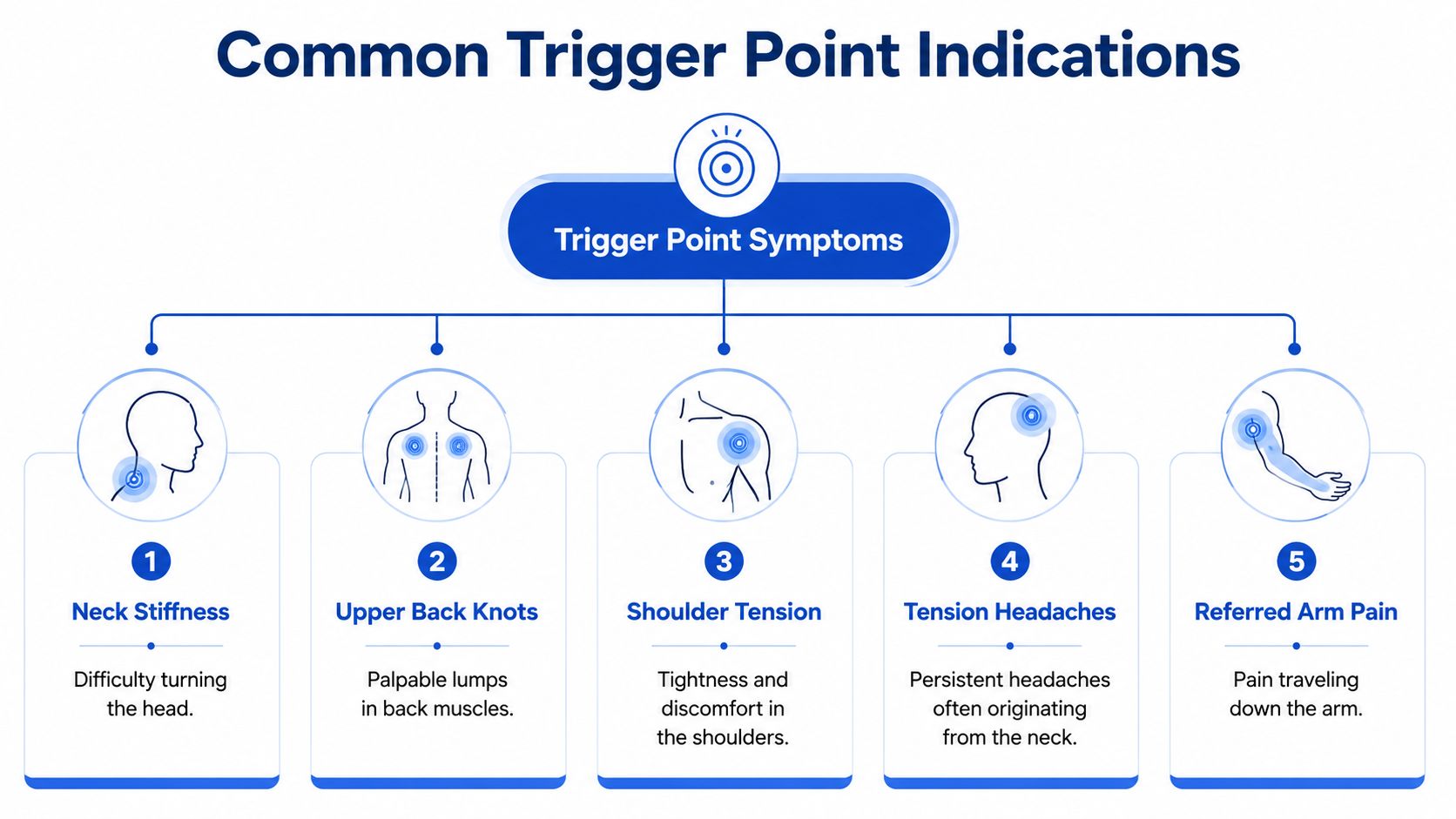
The most useful clue is often referral. If pressing one area reliably recreates the familiar ache somewhere else, that points towards a trigger-point pattern rather than a generalised muscle soreness. The pain may feel like it belongs to the arm, but the starting point can still be a small irritated spot in the shoulder girdle.
When patterns matter more than labels
People often describe these problems as “knots”, and that's not a bad everyday description. The risk is assuming every knot is the same. A trigger point in the upper neck behaves differently from one in the lower back or the shoulder, so the location of the tenderness and the direction of referred pain both matter.
A person's story is often more useful than the label. Where the pain begins, where it travels, and what movements make it worse can point towards the right kind of care.
This is also why self-diagnosis can be tricky. A stiff neck after long screen time may respond well to trigger-point care, but a similar-feeling pain could also come from joint irritation, nerve sensitivity, or another musculoskeletal issue. Pattern recognition helps, but it doesn't replace a proper assessment.
Reviewing Evidence and Safety of Trigger Point Therapy
The evidence is more encouraging than the marketing, but it is less dramatic than many consumer claims. In practical terms, trigger point care can help settle a sore spot and make movement easier, especially when the problem is being kept alive by posture, repeated loading, or long hours at a desk. Bayside Osteopathic Health takes that view into treatment by using a gentle phased approach, starting with what the tissues can tolerate and then building toward steadier function.
A useful way to picture the treatment is as a conversation with the muscle. The first step is to calm the irritated area and see whether tenderness changes when pressure is applied in a controlled way. The next step is to look at how the rest of the body responds, because a neck that moves a little better after treatment may still need help from stretching, pacing, or changes in work habits.
A review in AAFP 2023 reported that physical-therapy programmes for trigger points were studied across 24 randomised controlled trials. Those programmes improved pain-pressure thresholds, pain intensity, and range of motion, but they did not improve disability outcomes.
What that means in plain language
Pain may ease. Movement may become freer. A shoulder may turn better, or the neck may feel less guarded. That does not automatically mean the whole functional problem is gone, especially if posture, loading habits, sleep, or stress are still feeding the same muscle pattern.
The evidence also fits a more cautious review perspective. The CSP review notes that trigger point therapy does not show a clear advantage over other conservative treatments and may be similarly safe and effective when used alone or as part of broader care. In other words, it can help, but it is not magic.
A patient with office-related neck tightness may feel the change clearly after treatment. An older adult with a long-standing shoulder ache may notice easier reaching or less guarding, yet still need gradual strengthening and simpler self-care between sessions. That is why Bayside Osteopathic Health usually combines localised treatment with small, realistic home strategies, such as adjusting sitting positions, changing how often a task is repeated, or using short movement breaks.
Safety in practice
Most discomfort, when it happens, is temporary soreness after treatment. Bruising can occur with hands-on work or needling-based care, so pressure needs to stay within tolerance. Careful treatment matters here. A clinician checks in, eases off if guarding starts, and reassesses movement rather than chasing intensity for its own sake.
The image below reflects that hands-on focus in a simple way.
The research picture also matters because the broader evidence base is still evolving. Reviews note that there is no standardised treatment protocol yet, which helps explain why trigger point care often looks different from one clinic to the next. That variation does not make the approach useless, it just means patients should expect an individual method rather than a fixed script.
Comparing Manual Therapies to Trigger Point Therapy
Someone with a tight neck after long hours at a desk may try a general massage, osteopathic manipulation, physiotherapy, or trigger point therapy and wonder why the experiences feel so different. The overlap is real, but the aim changes from one method to another. Massage usually works across a wider area to ease overall muscle tension. Trigger point therapy focuses on a hypersensitive spot and uses steady pressure to see whether tenderness, movement, and referral pain change.
That focused approach can sit inside a broader treatment plan. A peer-reviewed review describes trigger-point care as a two-phase model. The first phase aims to calm pain, then the second phase builds on that by using stretching, neurodynamic work, joint mobilisation, orthotics, and strengthening so the problem is less likely to keep returning (PMC review).
How the hands-on options differ
- Massage: usually works across a broader area and aims for general soft-tissue easing and relaxation.
- Trigger point therapy: aims at a specific tender band or spot, then checks whether the tissue softens and the pain pattern changes.
- Dry needling: uses a needle-based technique instead of sustained manual compression.
- Physiotherapy-led rehabilitation: usually gives more attention to exercise prescription and load management.
For an office worker with a stubborn shoulder knot, that difference matters. A massage may feel soothing and reduce the sense of tightness. Trigger point therapy asks a narrower question, whether one irritable spot is helping drive the pain pattern. Physiotherapy then adds the work needed to change how the area is loaded day to day.
Research reviews also suggest that trigger point therapy has no clear advantage over other conservative treatments, which is why it often fits best as one part of broader care rather than a stand-alone fix (CSP review). That point is useful for older adults as well. If stiffness has built up over time, or if sitting, lifting, or walking for longer periods keeps provoking symptoms, local treatment may help calm the area while exercise, pacing, and simple self-care do the longer work.
For people choosing between these approaches, the decision usually comes down to the pain pattern and the goal. If the main problem is a small, irritable spot that refers pain into a familiar area, trigger point therapy may fit well. If weakness, deconditioning, or posture overload is part of the picture, exercise-based rehab needs to sit alongside hands-on care. A useful comparison image is here: remedial massage and muscle therapy.
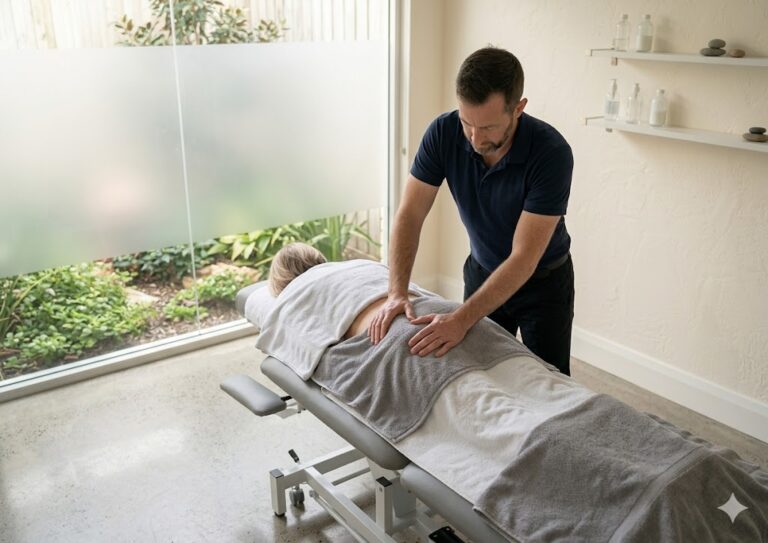
Bayside Osteopathic Health often uses that kind of measured, phased approach in practice. The emphasis is on localised treatment that settles the symptom first, then on realistic self-care that office workers and older adults can keep doing between sessions, such as short movement breaks, easier task setup, and simple strength work that matches the person's tolerance.
Experiencing a Bayside Osteopathic Session
A session often begins with a careful conversation before any hands-on work starts. The practitioner asks where the pain began, what makes it worse, whether it spreads, and how it behaves when you turn, lift, sit, or keep the same posture for too long. That discussion helps narrow down which tissues are involved and whether the pattern fits a local trigger point or a broader movement problem.
What the treatment feels like
A gentle osteopathic session usually starts with settling the irritated area first. In practical terms, that means the practitioner uses enough pressure to let the muscle release, without pushing it into guarding. Australian musculoskeletal guidance describes this as a pain-control phase, where the trigger point is deactivated to reduce nociceptive activity and restore circulation, followed by a deep-conditioning phase that uses stretching, neurodynamic work, joint mobilisation, and strengthening (PMC review).
That sequence suits people who want treatment to stay measured. Pressure is increased slowly, and the practitioner keeps checking whether the feeling is a workable ache or whether the muscle is tensing to protect itself. If the tissue softens, range of motion is checked again, so both patient and clinician can see whether the area has changed.
After the first release, the session usually moves into motion. A shoulder that has been held stiff for weeks rarely stays better from pressure alone. Gentle mobilisation, targeted stretching, and simple exercise cues help the tissue keep the change instead of drifting back into the same pattern.
Good treatment should feel specific, not brute force. If you're bracing the whole time, the pressure is too much.
This phased style fits Bayside Osteopathic Health as well. The focus stays on hands-on assessment, soft-tissue work, joint articulation, gentle mobilisation, and practical advice that people can use between visits. For office workers and older adults, that often means advice that matches daily life, such as short movement breaks, easier task setup, and simple strength work that stays within tolerance.
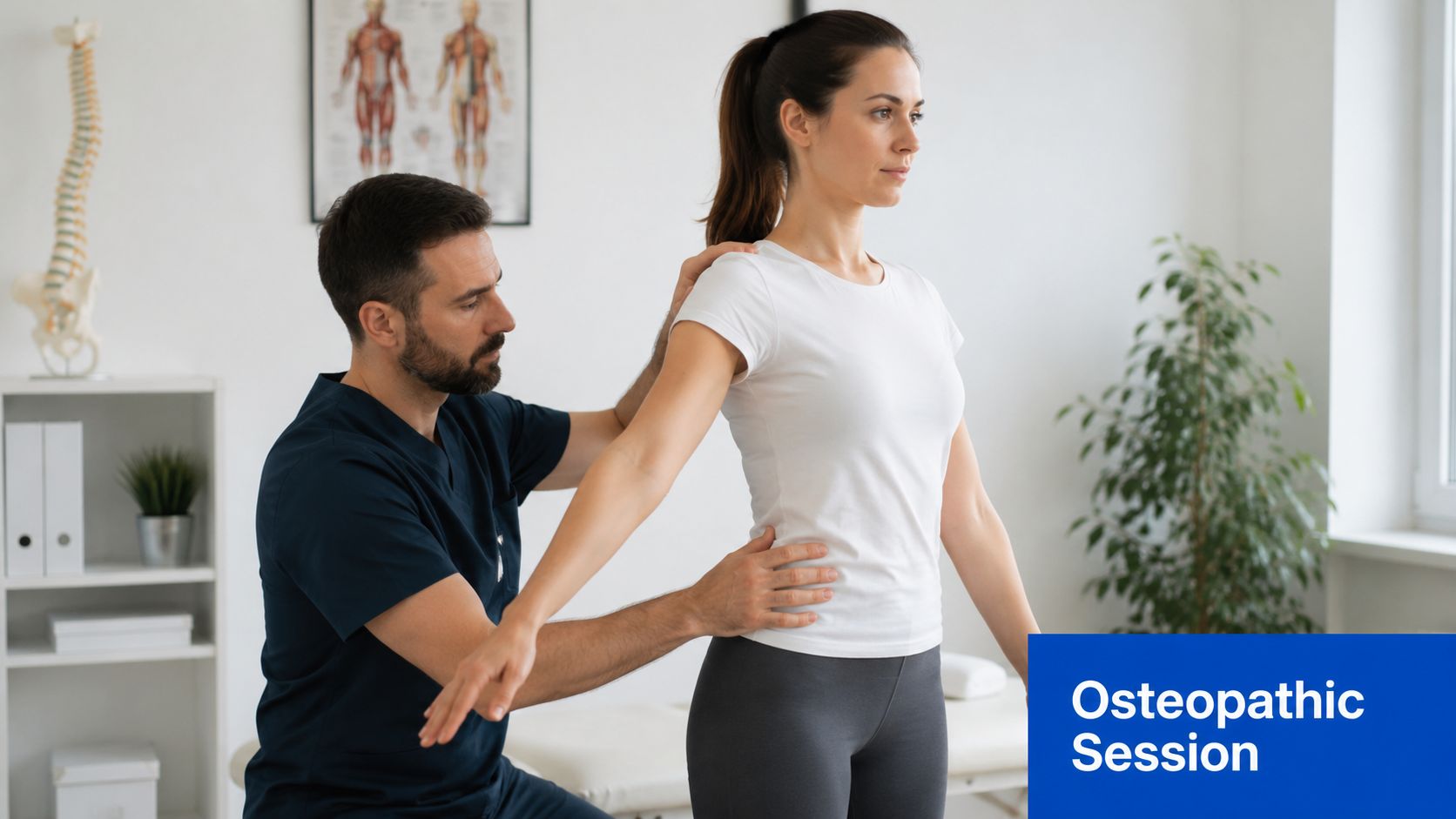
A clear visual guide can also help people understand how a session looks in practice. A clinical shoulder examination during osteopathic care shows the kind of hands-on assessment that often comes before treatment choices are made.
A short video overview can also help people see how the approach looks in practice.
Self-Help Techniques Precautions and When to Seek Help
A home routine can help when it stays gentle and specific. For a tight shoulder blade area, a tennis ball against the wall gives you enough control to find the spot without forcing it. Light foam rolling may settle mid-back stiffness, and slow neck movements with mild stretching usually work better than strong pressure.
For office workers, that often means breaking up long sitting with a few short, localised movements. For older adults, it may mean using less pressure, moving more slowly, and choosing positions that feel stable. This home exercise setup on a yoga mat can support gentle self-care for tight muscles and make it easier to keep the work controlled.
A simple home routine
- Use support first: Place the ball between your back and the wall so you can guide the pressure.
- Stay on muscle, not bone: Keep away from the spine, ribs, and other bony areas.
- Work briefly: Hold the pressure only within tolerance, then move or stretch.
- Check the response: If the area feels calmer afterwards, that is a better sign than trying to press harder.
Home care should follow the same principle used in clinic, gradual pressure within tolerance, then a reassessment of how the tissue feels. Australian guidance describes sustained ischaemic compression of about 30 to 90 seconds, followed by stretching and a check for reduced tenderness and better circulation, which is a useful reference point for self-care (Massage Clinic Australia). The aim is steady relief, not maximum pain.

When to stop and get checked
Stop if the pain becomes sharper, numbness appears, or the area starts to feel inflamed. Extra caution is sensible around varicose veins, open wounds, or swollen joints. If symptoms spread, get worse, or feel unusual for your normal pattern, a professional assessment makes more sense than more self-pressure.
A simple rule helps. If the technique leaves you looser and calmer, it is probably in the right range. If it leaves you braced, sore for longer than expected, or unsure, stop and get help.
FAQs for Older Adults and Office Workers
Older adults often ask whether trigger point work is still appropriate if they already have arthritis. It usually can be, but the pressure has to be adapted to the person, the joint, and the surrounding tissue. A gentle approach matters more than a strong one, especially if stiffness and reduced mobility are already part of the picture.
Office workers usually ask a different question. They want to know whether posture really matters. It does, because long sitting, forward-head posture, and screen reach patterns keep the same muscles switched on for too long, which can make trigger points more likely to stay irritable. A useful posture reference for that group is this local resource on corporate ergonomics and posture.

Common questions answered plainly
Will it help chronic tension headaches? It can, if the headaches are linked to neck and shoulder trigger points. The key is whether the headache follows the same referral pattern every time, because the trigger point is then only one part of the problem.
How often should I do self-care? Often enough to stay loose, but not so often that you irritate the tissue. Short, gentle sessions tend to be safer than long, forceful ones.
Should I keep going if it hurts? Mild, workable pressure can be fine. Sharp pain, spreading numbness, or increasing irritation are signs to stop.
Is sitting posture the whole story? No. Posture is one driver, but load, stress, sleep, and general conditioning all matter too.
For many people, the most sensible next step is not to choose between self-care and professional care, but to combine them. That's especially true when the pain pattern keeps returning in the same place.
If your neck, shoulders, or upper back keep tightening up after desk work or everyday lifting, book an assessment with Bayside Osteopathic Health and ask about a gentle trigger point treatment plan that includes hands-on care, movement advice, and practical self-care you can consistently apply.