
You've tried resting your back, changing your pillow, stretching when you remember and pushing through when you have to. Yet the ache still returns during a walk, a day at the desk or a night in bed. Perhaps a scan showed wear and tear, but the pain feels much bigger than the picture suggests. That experience can be confusing and exhausting.
Understanding chronic pain starts with recognising that pain is real, protective and influenced by more than one factor. Tissue health matters, but so do sleep, stress, previous injuries, confidence in movement, work demands and access to suitable care. A whole-person view can make persistent pain less mysterious and help you choose practical next steps.
Table of Contents
- What Is Chronic Pain Really?
- Acute Pain Versus Chronic Pain Explained
- Understanding the Biopsychosocial Pain Model
- When to Seek Professional Assessment
- Evidence-Based Pain Management Options
- How Osteopathic Care Supports Pain Management
- Practical Self-Help Strategies for Daily Life
What Is Chronic Pain Really?
Think about someone who strains their lower back while lifting a pot plant. At first, the pain is sharp and protective. They move carefully, avoid heavy lifting and gradually return to normal activity. But months later, the back still hurts when they bend, even though the original strain has had time to heal. They may start avoiding walks, sitting for long periods and worrying that every twinge means further damage.
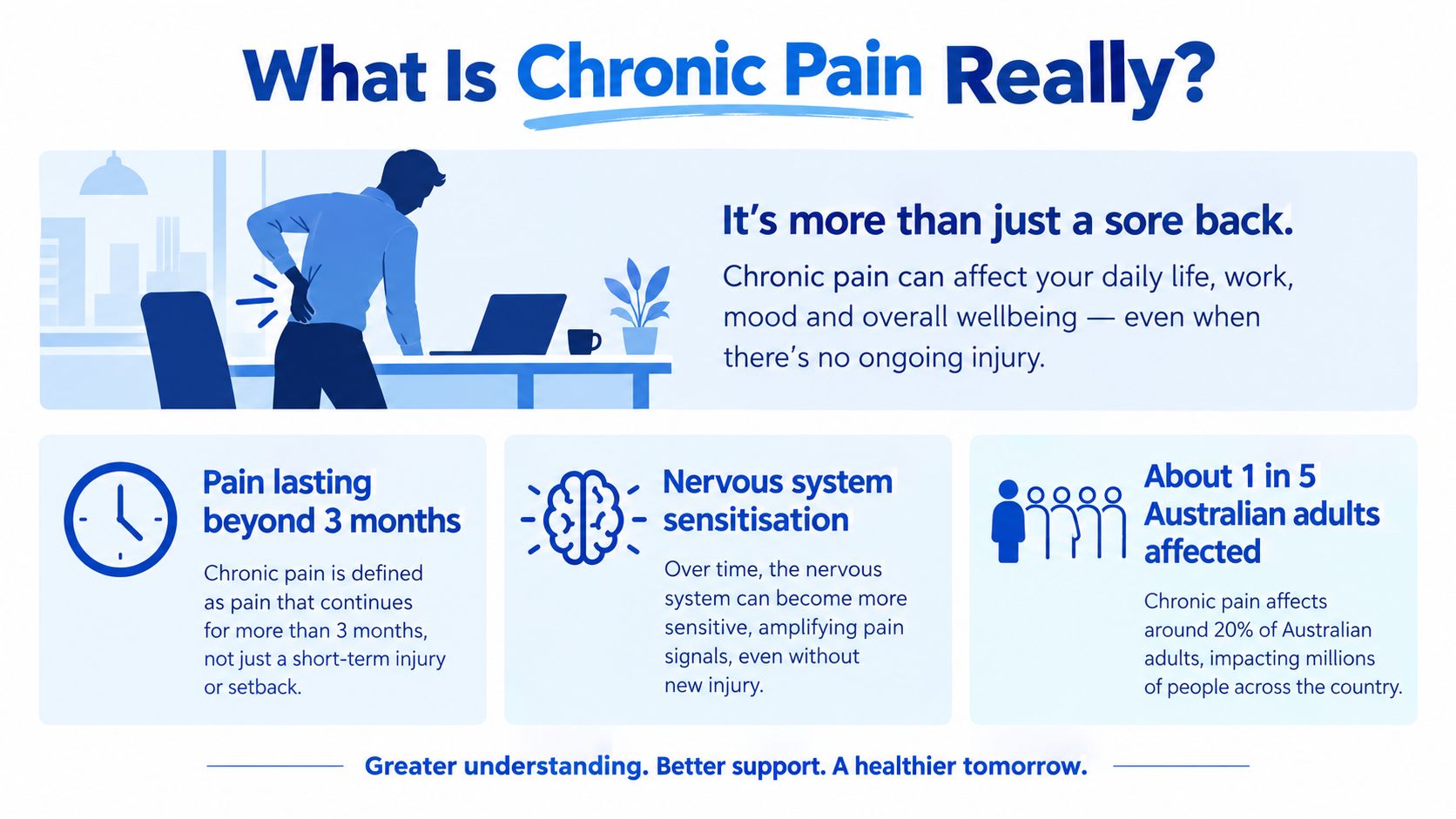
Chronic pain is pain that continues beyond the usual healing period, commonly longer than three months. At that point, pain may no longer be acting only as an alarm about fresh tissue damage. The nervous system can become more protective, so ordinary movement or pressure feels threatening.
Australian Institute of Health and Welfare analysis found that, in 2016, 19% of Australians aged 45 years and over, approximately 1.6 million people, reported chronic pain, with prevalence reaching almost 24% among people aged 85 and over (Australian Institute of Health and Welfare data on chronic pain). Persistent pain is therefore common, particularly among older Australians. It isn't a personal failure or an unusual medical puzzle.
Two useful pain categories
Nociceptive pain begins when tissues such as muscles, joints, ligaments or skin are irritated or injured. A swollen ankle after a fall is a familiar example. The body detects a possible threat and sends information through the nervous system to the brain.
Neuropathic pain involves a nerve that has been injured, compressed or become dysfunctional. Burning, electric, shooting or pins-and-needles sensations may point towards this type of pain, although symptoms overlap and require proper assessment.
Neither category tells the whole story in every person. Chronic pain can involve ongoing tissue irritation, nerve sensitivity, changes in the way the brain processes signals, or a combination of these factors.
Why the alarm can become sensitive
A smoke alarm is valuable when there's a real fire. It becomes a problem when it sounds because someone has burnt toast, and an even bigger problem when it reacts to steam from the shower. Chronic pain can work in a similar way. The alarm is genuine, but its sensitivity may have increased.
That analogy doesn't mean the pain is imaginary. It means the nervous system may be producing a stronger warning than the current threat requires. Recovery therefore involves more than finding a damaged structure. It may include restoring movement, improving sleep, reducing fear and helping the nervous system learn that safe activity is possible.
A painful body part deserves attention, but pain intensity alone doesn't tell you how much damage is present.
Acute Pain Versus Chronic Pain Explained
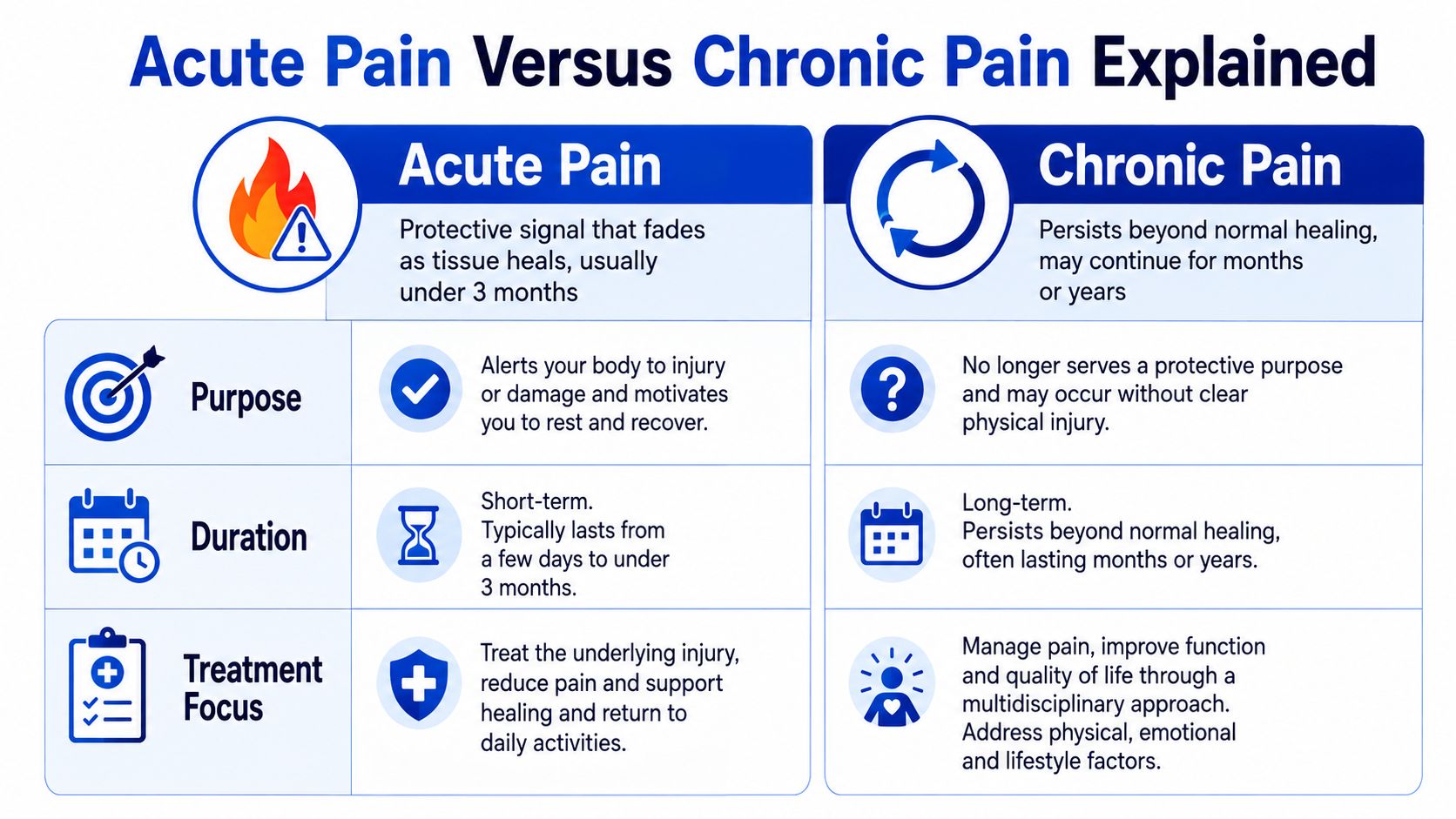
Acute pain usually has a clear protective job. You touch a hot tray and pull your hand away. You sprain an ankle and instinctively reduce weight through it. The signal encourages protection while the body addresses the immediate problem.
Chronic pain behaves differently. The original injury may have settled, yet the alarm continues to sound. That doesn't mean nothing is happening. It means the pain experience may now be maintained by several interacting factors rather than by an untreated injury alone.
A practical comparison
| Feature | Acute pain | Chronic pain |
|---|---|---|
| Main role | Warns you about a recent threat | May persist after expected healing |
| Common pattern | Starts after an injury, illness or procedure | Continues, returns or spreads over time |
| Movement response | Short-term protection can be useful | Long-term avoidance may reduce strength and confidence |
| Management focus | Protect, diagnose and support healing | Restore function while addressing physical, emotional and social factors |
Back pain, neck pain, arthritis and joint conditions can appear in either pattern. A new flare after gardening may be acute, while recurring knee pain that changes how you walk may be chronic. The label depends less on how dramatic the pain feels and more on its duration, behaviour and effect on daily life.
When the alarm keeps repeating
People often ask, “If the scan shows degeneration, isn't that the cause?” Structural findings can matter, but they don't always explain the full pain experience. Two people can have similar imaging findings and very different levels of discomfort, movement confidence and disability.
Australian estimates show the scale of the issue. In 2018, 3.24 million Australians were living with chronic pain, 56% reported activity restriction, and 68.3% were of working age (Deloitte's analysis of the cost of pain in Australia). The estimated financial cost was AUD 73.2 billion in that year, including effects on health services, productivity and everyday life.
This is why management often changes once pain becomes persistent. The aim isn't just to silence every signal. It's to improve sleep, walking, work, lifting, social participation and confidence, while checking for conditions that need specific medical treatment.
Recognising a persistent pattern
Pain deserves assessment when it keeps returning, limits ordinary activities or causes you to avoid movements you need for work and home. Keep track of what increases it, what settles it, how long flares last and which activities matter most to you. That information is often more useful than a single pain score.
Understanding the Biopsychosocial Pain Model
The biopsychosocial model views pain through three connected lenses:
- Biological factors include joint irritation, muscle capacity, nerve sensitivity, previous injury, inflammation, general health and medication effects.
- Psychological factors include stress, worry, low mood, frustration, attention and beliefs about movement.
- Social factors include work, caring responsibilities, finances, transport, family support, culture and access to healthcare.
These aren't competing explanations. They interact. A sore shoulder may make sleep difficult. Poor sleep can reduce concentration and make movement feel harder. Worry about losing work can increase muscle tension and make each movement feel risky. Reduced activity then lowers strength and confidence, which can make the next task more demanding.
Pain is real even when scans look ordinary
A normal or inconclusive scan doesn't invalidate pain. Imaging shows particular physical features at one point in time. It doesn't measure sleep quality, fear, stress, confidence, social pressure or the sensitivity of the nervous system.
The reverse is also true. An abnormal scan doesn't automatically mean that a structure is the sole cause of pain or that it needs invasive treatment. A good assessment connects findings with symptoms, movement, history and function.
Australian research reported chronic pain in 17.1% of men and 20.0% of women. Prevalence peaked at 27.0% among men aged 65 to 69 and 31.0% among women aged 80 to 84 (Australian chronic pain prevalence research). Among adults with arthritis, 93.9% experienced bodily pain, including 36.0% with moderate pain and 17.7% with severe or very severe pain, as reported in the same source.
A broader clinical conversation
A practitioner may ask about your workday, sleep, mood, medication, walking tolerance and what you've stopped doing. Those questions aren't a suggestion that pain is “all in your head”. They help identify the conditions that keep the alarm system on high alert.
The model also changes the treatment target. If pain prevents gardening, success might mean returning to short periods of gardening with planned breaks. If neck pain disrupts sleep, the plan may include movement, work adjustments, a medication review and strategies for settling at night. The most relevant outcome is often what you can do, not whether the pain score reaches zero.
When to Seek Professional Assessment
Persistent pain doesn't always require urgent care, but it deserves a thoughtful assessment when it interferes with sleep, work, walking, lifting or personal care. A clinician should consider the full story rather than examining only the place that hurts.
Seek prompt medical attention if pain follows significant trauma or comes with progressive weakness, worsening numbness, unexplained weight loss, fever, new bowel or bladder changes, or other rapidly changing symptoms. These signs can indicate a condition that needs medical investigation rather than routine hands-on care. If you feel seriously unwell, contact emergency services.
What an assessment should include
A useful consultation usually begins with questions about when the pain started, how it behaves, what makes it easier or harder, and how it affects your activities. The practitioner may review previous injuries, health conditions, medicines, sleep, work and relevant scans.
Movement assessment can then look at walking, balance, joint range, strength, coordination and how the painful area works with the rest of the body. An osteopath may assess the spine, hips, shoulders, muscles and breathing patterns when these are relevant to the complaint. The purpose isn't to search endlessly for one defective structure. It's to form a safe explanation and identify practical options.
Bring the activity you want back into the conversation. “I want to walk to the shops” is more useful than “I just want my back fixed.”
Prepare for a more useful appointment
Before you attend, write down:
- Your timeline: Note when symptoms began, whether they followed an injury and how they've changed.
- Your flare pattern: Record common triggers, easing factors, sleep disruption and the time it takes to settle.
- Your current medicines: Include prescribed medicines, over-the-counter products and supplements, then ask whether a review is appropriate.
- Your priorities: Choose one or two activities that matter most, such as lifting your grandchild, driving or returning to work.
- Your questions: Ask what the working explanation is, which symptoms need escalation and how progress will be measured.
If you're considering a physical assessment, you can also review this clinical appointment image showing equipment-based treatment. Treatment should be adjusted if symptoms worsen significantly, new neurological signs appear or the working diagnosis changes.

Evidence-Based Pain Management Options
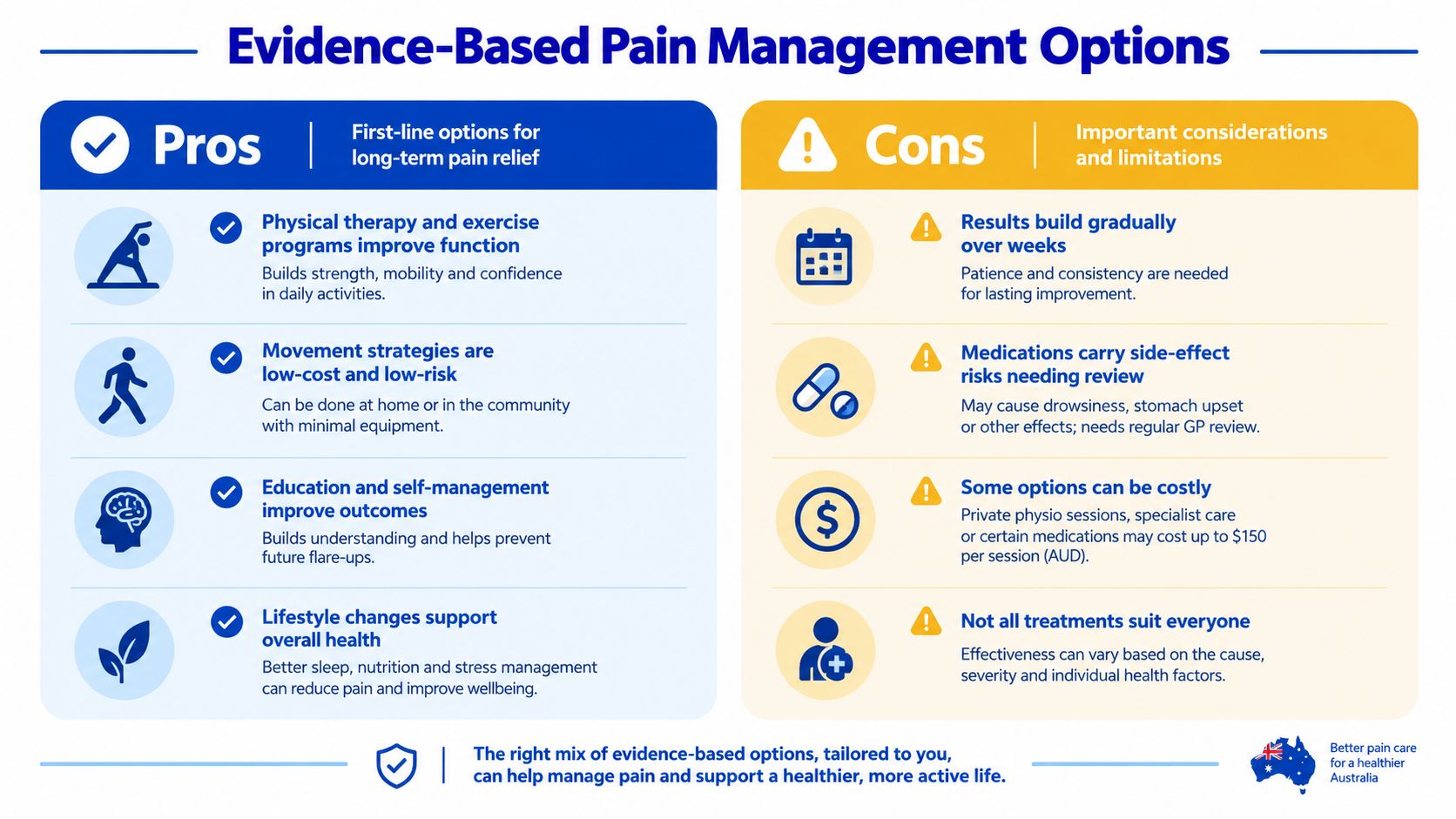
Chronic pain management works best when it matches the person, the diagnosis, the level of irritability and the activities they need to resume. There isn't one universal treatment, and a passive approach may leave you waiting for relief without rebuilding capacity.
Comparing the main options
| Approach | Where it can help | Important limitation |
|---|---|---|
| Education | Makes pain patterns less frightening and supports informed choices | Information alone may not change movement capacity |
| Exercise and physical therapy | Builds strength, balance, tolerance and confidence | Progress usually needs gradual adjustment |
| Manual therapy | May reduce stiffness, muscle guarding and short-term discomfort | Benefits are more useful when paired with active rehabilitation |
| Psychological support | Helps with fear, stress, low mood and coping patterns | It isn't a dismissal of physical symptoms |
| Medication review | May support sleep, function or specific pain mechanisms | Side effects, interactions and suitability require professional review |
Exercise doesn't have to mean a demanding gym programme. It might begin with repeated sit-to-stand movements, a short walk, gentle strengthening or practising a task at a lower intensity. The appropriate starting point depends on your symptoms and health.
Pacing and graded exposure
Pacing means spreading activity before symptoms become overwhelming, rather than alternating between doing too much on a good day and prolonged rest afterwards. For example, someone who enjoys cooking might sit for preparation, change position regularly and stop before their back becomes highly irritable.
Graded exposure takes a feared or avoided movement and reintroduces it in manageable steps. If bending feels dangerous, a practitioner may begin with a small range, controlled breathing and a supported position, then gradually increase the challenge. The aim is to build evidence that movement can be safe, not to force through severe pain.
Medication needs a coordinated review
Medicines can have an appropriate role, but they shouldn't be started, stopped or changed without advice from a doctor or pharmacist. A review should consider the intended benefit, side effects, interactions, sedation, falls risk and whether the medicine is improving a meaningful activity.
For people in regional areas, access can shape the plan as much as clinical theory. Telehealth, local allied-health support, a GP care plan and clear home instructions may help when specialist appointments or multidisciplinary services are difficult to reach. Good care is practical enough to fit the person's transport, finances, work and family responsibilities.
How Osteopathic Care Supports Pain Management
Osteopathic care can sit within a broader pain plan by combining hands-on treatment with movement education and self-management. The practitioner considers how the spine, joints, muscles, posture, breathing, balance and daily tasks interact, rather than treating the painful spot in isolation.
An appointment may include soft-tissue work to reduce muscle tension, joint articulation to guide a stiff joint through comfortable movement, or gentle mobilisation to support mobility. These techniques are selected according to the person's symptoms, health history and response. They shouldn't be presented as a cure for every cause of chronic pain.
From temporary relief to useful movement
Manual therapy may make movement feel easier for a time. That window can be valuable if you use it to practise a task, complete a carefully chosen exercise or learn a strategy for managing a flare. A person with persistent neck pain might combine treatment with screen breaks, upper-back strengthening, sleep adjustments and a gradual return to driving.
Someone with knee stiffness may focus on rising from a chair, walking on level ground and building leg strength. A person with back pain may work on hip movement, trunk capacity, lifting technique and confidence with bending. The exact plan depends on the assessment, and progress should be measured against activities rather than treatment sensation alone.
Hands-on care is most useful when it helps you do more for yourself between appointments.
A whole-body approach also helps identify barriers outside the treatment room. A desk worker may need a more workable workstation routine. An older adult may need balance and falls-risk considerations. A parent or carer may need a plan that allows short bouts of activity instead of long, uninterrupted exercise sessions.
For Bayside residents, Bayside Osteopathic Health's lower-back pain resource illustrates the kind of region-focused education that can support a conversation about symptoms and movement. Osteopathic care should complement medical assessment when red flags, complex illness or medication concerns are present.

Practical Self-Help Strategies for Daily Life
Start with a routine you can repeat on an average day, not an ideal one. Gentle movement, such as a short walk, comfortable joint movements or a few controlled sit-to-stands, can maintain confidence without turning every session into a test.
Use pacing when tasks trigger flares. Break housework into smaller blocks, alternate standing and sitting, and pause before your symptoms become difficult to settle. Consistency matters more than intensity, and a harder day doesn't erase the progress you made on easier days.
Sleep and stress can influence how strongly the nervous system responds. Keep a regular wind-down routine, reduce stimulating activity before bed and use slow breathing when you notice your body bracing. These steps won't remove every source of pain, but they can make daily activity more manageable.
For desk and remote workers, this posture and corporate ergonomics guide can prompt a review of screen height, chair support and movement breaks. Ask your GP or health professional about Medicare pathways where applicable, particularly if you need coordinated care.

Bayside Osteopathic Health provides gentle, hands-on osteopathic assessment for persistent back, neck and joint pain, with personalized movement advice and practical self-care strategies. If pain is limiting your everyday activities, visit Bayside Osteopathic Health to learn about available care and book a consultation.