

You've stretched it, used heat, adjusted your chair, and promised yourself you'll book if it's still sore next week. Yet the tightness between your shoulder blades keeps returning by mid-afternoon, especially after another day at the kitchen table. That's the point at which many Bayside residents start asking, when to see an osteopath, and whether they should keep managing the problem themselves or have it assessed.
Timing matters because a new strain may settle with sensible movement and rest, while recurring pain can gradually change how you sit, sleep, exercise and work. This guide gives you a practical way to judge the difference, understand what an osteopath can and can't do, recognise red flags, and work out whether a GP referral through Medicare may apply.
Table of Contents
- A Familiar Bayside Story That Puts Timing on the Table
- What an Osteopath Does and How That Shapes the Decision
- Pain Timelines That Tell You When to Act
- Specific Signs It Is Time to Book
- Red Flags That Mean a GP or Emergency Department First
- What a First Osteopathic Appointment Looks Like
- Medicare Options and Booking Steps for Bayside Patients
- Putting It Together and Your Next Step
A Familiar Bayside Story That Puts Timing on the Table
Consider a typical local patient, a 42-year-old office worker from Sandringham or Brighton East. After months of hybrid work, he's replaced part of his train commute with long stretches at a laptop on the kitchen table. Three weeks ago, he noticed a nagging ache through the middle of his back, between the shoulder blades.
The discomfort is worse after Zoom-heavy days. A walk along the foreshore eases it, but by late afternoon the tightness has crept back. He's tried stretching, a heat pack and changing chairs. Nothing has made the problem dramatically worse, but nothing has properly shifted it either.
That distinction matters. A short-lived flare after an unfamiliar activity often deserves calm monitoring rather than immediate hands-on treatment. However, pain that's been present for several weeks, returns each day, or interferes with work and exercise gives an osteopath useful information to assess.
Practical rule: If the symptom is improving steadily, keep supporting recovery. If it's unchanged, repeatedly returning, or altering what you do, book an assessment rather than waiting for severity to make the decision for you.
Australia's musculoskeletal burden helps explain why this question comes up so often. The Australian Institute of Health and Welfare reported that around 7.3 million people, or 29% of the population, were living with chronic musculoskeletal conditions in the 2022 National Health Survey (AIHW data summarised for osteopathy patients). Back, neck and joint complaints aren't unusual edge cases. They're common reasons people need a clear plan.
The useful question isn't “How bad is the pain?” Ask instead:
- Is it changing how you work, sleep, drive or exercise?
- Has it failed to improve despite reasonable self-care?
- Does it settle and then return when normal activity resumes?
- Is there anything about it that needs medical review first?
The rest of the decision follows from those answers.
What an Osteopath Does and How That Shapes the Decision
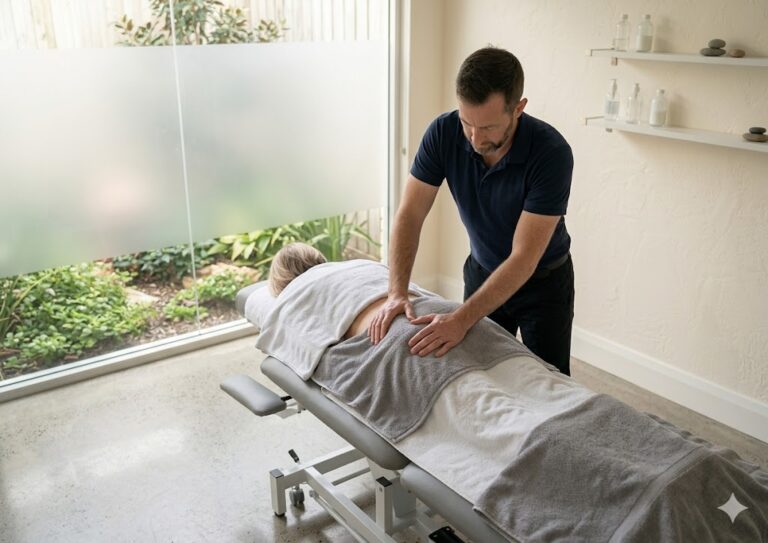
An osteopath looks at how your body is moving and loading, not only at the painful spot. In a Bayside consultation, that may mean checking posture, joint range, muscle tension, breathing mechanics, work habits and the movements that reproduce or ease the complaint.
Treatment might involve soft-tissue work, joint articulation, mobilisation, stretching, or, where appropriate, manipulation or dry needling. The goal is not to make every joint click. Treatment should suit your presentation, be explained clearly, and come with practical advice you can use between appointments.
A desk-related mid-back complaint may involve limited thoracic or rib movement, reduced neck rotation, poor shoulder control, or long periods in one position. With a runner who has an overloaded calf or hip, the assessment may extend through the movement chain and include training load, recovery and strength work. Those findings help determine whether hands-on care is appropriate, whether exercise should lead the plan, or whether another clinician should assess you first.
Choosing the right first appointment
These professions overlap, but they do not start with the same questions. Choose the first appointment according to the problem you need assessed and the type of help likely to change it.
| Provider | What I would expect them to focus on | Common methods | A practical fit for Bayside patients |
|---|---|---|---|
| Osteopath | How joints, muscles and movement habits may be contributing to the complaint | Soft-tissue treatment, articulation, mobilisation, manipulation and movement advice | Stiff or mechanically sensitive back, neck, rib or joint complaints, including postural loading |
| Physio | Restoring strength, control and function after injury or surgery | Exercise prescription, movement retraining, manual therapy and progressive loading | Sports injuries, post-operative rehabilitation and clear strength deficits |
| Chiro | A spinal and joint-focused assessment, often with an adjustment-based approach | Spinal or joint manipulation, mobilisation and supportive advice | Patients specifically seeking that style of spinal and joint care |
| GP | Whether the symptoms require medical diagnosis, investigation, medication or referral | History, examination, prescriptions, imaging or specialist referral | New, complex, systemic or potentially urgent symptoms |
Physiotherapy may be the better first appointment when your main need is a structured strengthening programme or rehabilitation after surgery. A GP should lead if the symptoms could involve infection, fracture, neurological compromise or another medical condition. Osteopathy is a reasonable starting point when stiffness, restricted movement, postural loading or muscle guarding are prominent and no warning signs are present.
Hands-on care has limits. It should not replace medical investigation for unexplained symptoms, and short-term relief does not establish why a problem keeps returning. Patients wanting general information about supportive soft-tissue approaches can also review this remedial massage and muscle therapy resource.
Pain Timelines That Tell You When to Act
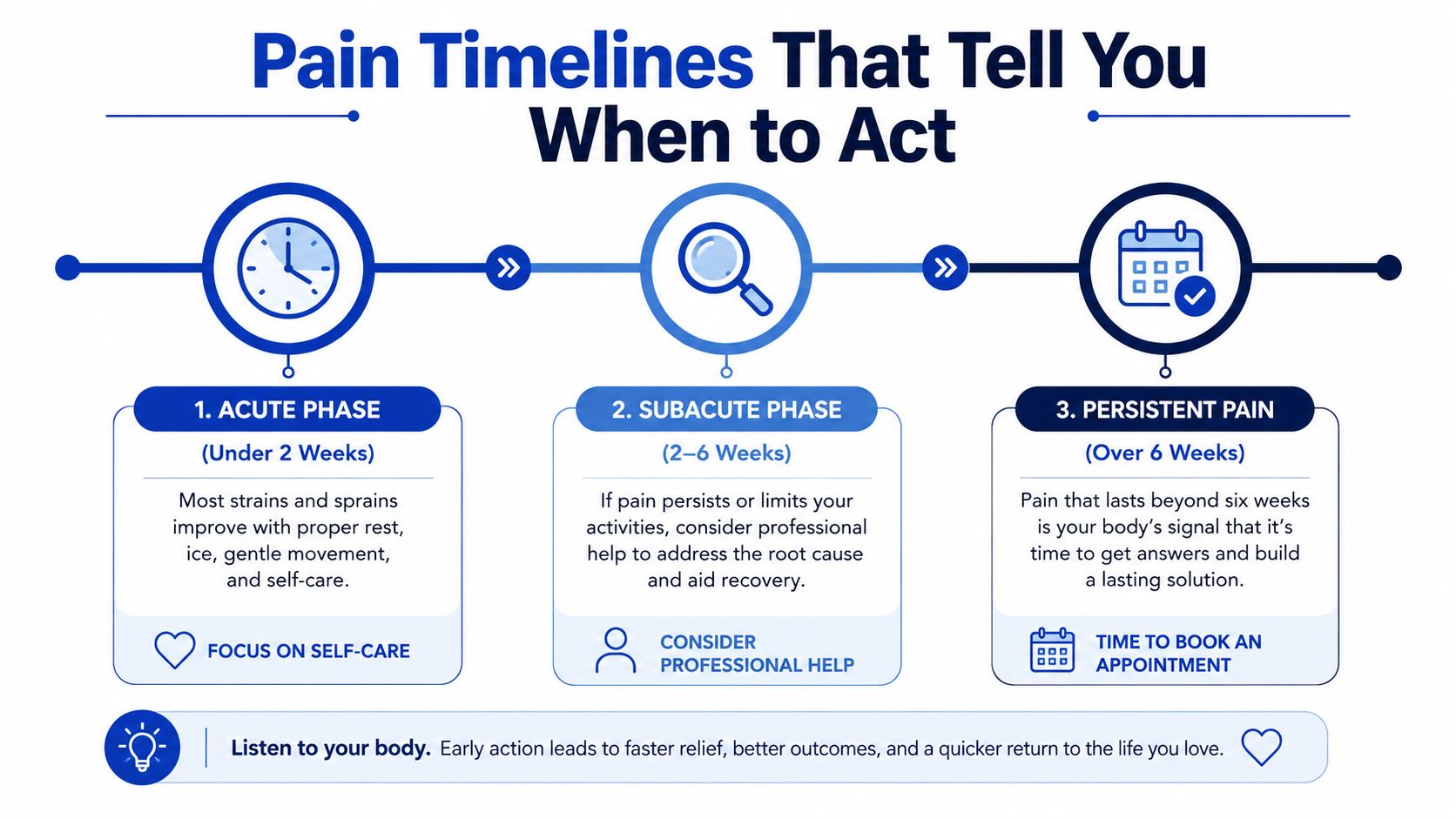
The calendar doesn't diagnose pain, but it helps you choose a sensible next step. Use these timeframes alongside symptom behaviour, function and any warning signs.
Under two weeks
In the early phase, many uncomplicated strains, sprains and posture flares can be monitored if they're gradually improving. Relative rest, gentle movement, heat or ice and avoiding the aggravating activity may be reasonable. Complete inactivity often makes stiffness more noticeable, so keep moving within comfortable limits.
Book earlier if the pain is severe, worsening, follows significant trauma, or includes unusual neurological symptoms. Time alone shouldn't override safety.
Two to twelve weeks
This is the stage where waiting can become unhelpful. If symptoms haven't clearly improved after two weeks, keep returning when you resume ordinary activity, or limit work, sleep or exercise, an osteopathic assessment can clarify what's maintaining the pattern.
A flare that settles on the weekend and returns every Monday is more informative than a single sore day. So is a neck that turns less freely each week, or a back that makes you lift, sit or walk differently. The issue isn't that every symptom needs treatment. It's that persistent uncertainty makes it harder to choose the right self-management.
Three months and beyond
Pain lasting longer than three months, while affecting daily activities, work, study or caring responsibilities despite an adequate treatment trial, meets Victoria's clinically significant threshold for persistent or chronic secondary musculoskeletal pain (Victorian statewide referral criteria). At that point, a coordinated plan may be more useful than isolated appointments, particularly if sleep, mood, function or medication use is deteriorating.
A simple guide is this: two weeks unchanged, six weeks of repeated flare-ups, or three months of adapting your life around pain are all reasonable points to stop waiting and seek professional input.
Specific Signs It Is Time to Book
Pain doesn't need to be dramatic before an assessment becomes worthwhile. The more useful question is whether the symptom has started directing your behaviour.
Look for these practical signals:
- Recurring flare-ups: The pain settles with rest, then returns within weeks when you resume normal work, gym sessions, gardening or walking.
- Morning stiffness: You wake feeling restricted and need a prolonged period of movement before your back, hips, neck or shoulders feel usable.
- Desk-related aggravation: Sitting through a workday brings on neck, shoulder or mid-back discomfort, and you keep changing position without finding a lasting solution.
- Reduced enjoyment of movement: A sore hip, knee, ankle or back makes you shorten your Bayside walk, skip exercise or avoid stairs.
- Pain relief isn't solving the problem: Over-the-counter medication may take the edge off, but the underlying restriction or recurring pattern remains.
A second group of signs is more about compensation. You may notice that you're sitting with one shoulder raised, turning your whole body instead of your neck to check a blind spot, or using your arms differently because one side feels tight. Headaches that begin at the base of the skull after long desk days can also point to a neck and upper-quarter pattern worth assessing.
Booking becomes sensible when symptoms are changing your choices, not only when they become unbearable.
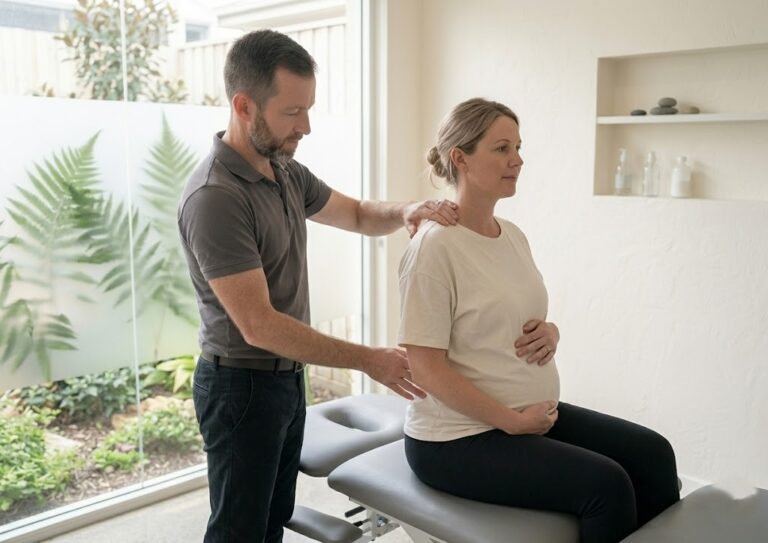
Rib or mid-back aching that worsens with a deep breath deserves care with the assessment. It may be mechanical, but chest symptoms can also have non-musculoskeletal causes, so an osteopath should first decide whether medical review is more appropriate. Pregnancy-related postural and pelvic discomfort also warrants an individual approach, such as the guidance described in this pregnancy postural support resource.
If two or three of these patterns are present, self-care alone probably isn't restoring normal function. That's a good time to book, bring a clear symptom history and ask what the treatment plan will involve.
Red Flags That Mean a GP or Emergency Department First
Not every back or neck problem belongs in an osteopathy appointment. Red flags override the timeline, even if the pain started recently or seems related to posture.
Seek urgent medical assessment for symptoms such as:
- A sudden, severe headache unlike previous headaches.
- Neck pain with fever.
- Unexplained weight loss or persistent night pain that wakes you.
- Numbness around the saddle area, loss of bowel or bladder control, or progressive neurological weakness.
- Pain after a significant fall, motor vehicle accident or other trauma, particularly where fracture is possible.
Australian GP guidance advises immediate medical assessment when low back pain presents with red flags, with urgent cases such as suspected cauda equina syndrome sent directly to emergency care rather than managed as routine osteopathic treatment (RACGP guidance on osteopathy and low back pain).
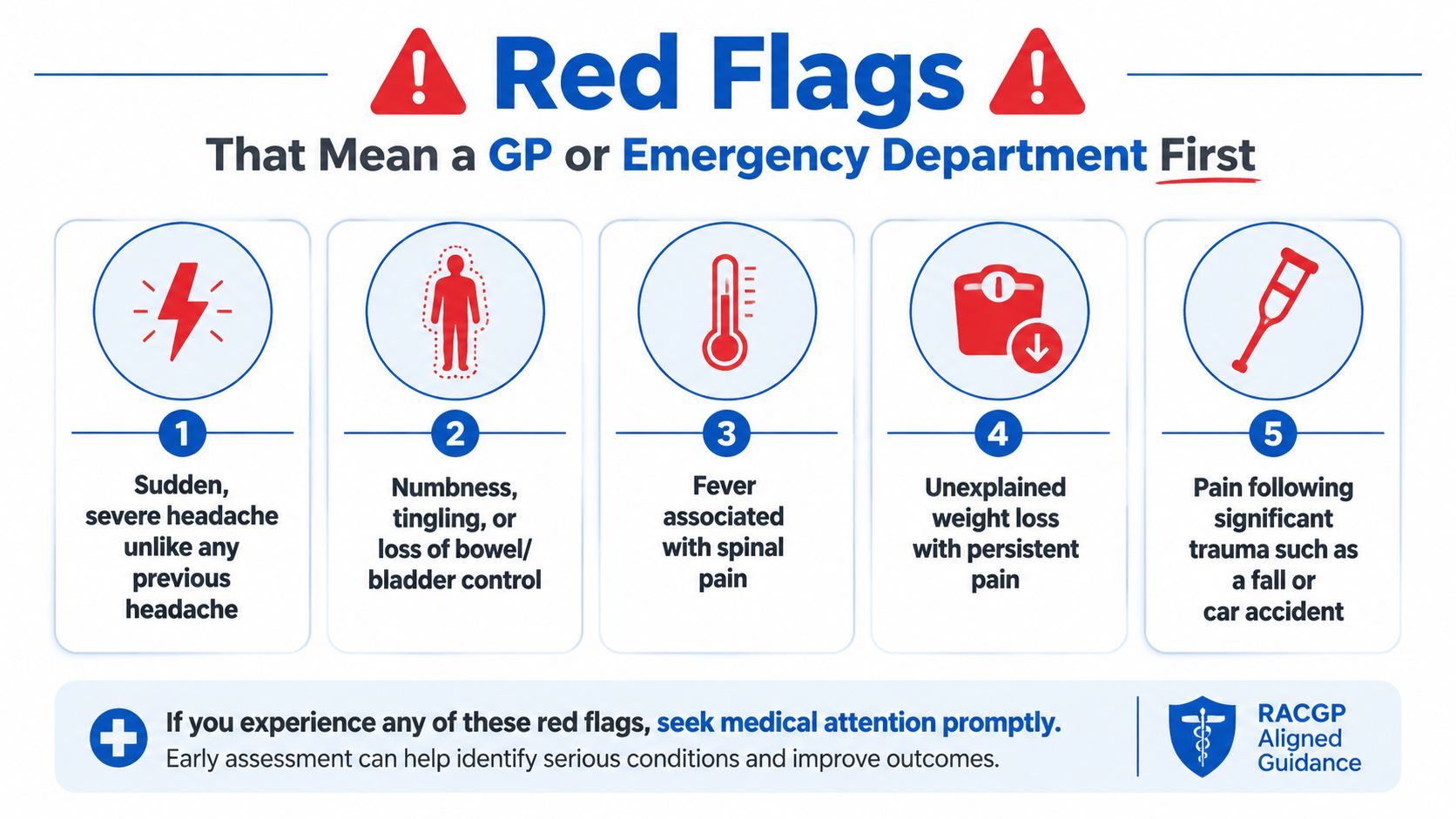
These signs don't mean you should panic. They mean the priority is triage, diagnosis and appropriate medical treatment. An osteopath can't rule out every serious cause of pain through hands-on examination, and delaying a same-day medical review to try routine treatment isn't a sensible trade-off.
If you're unsure whether a symptom is urgent, contact your GP or an appropriate medical service. If there's loss of bladder or bowel control, saddle numbness, major weakness or a serious injury, attend an emergency department rather than waiting for a standard appointment.
What a First Osteopathic Appointment Looks Like
A first visit should reduce uncertainty. Expect the osteopath to ask when the symptoms began, what changed around that time, which movements help or aggravate them, and how the issue affects work, sleep, exercise and daily tasks.
The history should also cover previous injuries, medical conditions, medications, imaging and relevant health concerns. Bring reports or scans if you have them, but don't assume imaging is always needed for a mechanical complaint. Your work setup and exercise habits matter because a treatment plan that ignores your actual week rarely lasts.
Assessment before treatment
The physical examination may include standing and seated posture, walking, active range of movement, joint mobility and specific orthopaedic or neurological tests. You may be asked to bend, rotate, squat, reach or reproduce the movement that causes discomfort.
Wear clothing that allows comfortable movement, such as shorts or flexible activewear. The practitioner should explain what they're testing and ask permission before treatment. If a test increases symptoms in a way that seems unusual, say so immediately.
Hands-on care and a plan
Treatment may involve soft-tissue release, myofascial techniques, joint articulation, gentle mobilisation or manipulation. High-velocity thrust techniques aren't automatically required, and a cautious approach may be more appropriate when symptoms are irritable, you're pregnant, or you don't want that style of treatment.
The appointment should finish with practical next steps. That might include changing how you break up desk time, adjusting a sleeping position, modifying training, practising a small movement routine or gradually returning to an activity. A rehabilitation exercise resource can help illustrate the kind of active follow-through that supports hands-on care.

You should leave knowing what to do, what to avoid temporarily, which changes matter and when review makes sense. If the proposed care is only passive treatment with no explanation of the contributing factors or self-management, ask more questions before committing to an extended course.
Medicare Options and Booking Steps for Bayside Patients
Medicare-funded osteopathy is available through a GP-managed pathway for people with chronic conditions and complex care needs, rather than as a general rebate for any sore back. Under the current framework, eligible patients can receive a maximum of five allied health services per calendar year, including osteopathy when the GP referral and care arrangements meet the requirements. The Osteopathy Board of Australia information can help confirm practitioner registration details.
Your GP and osteopath should clarify the practical arrangements before treatment starts.
- Consult your GP. Explain the condition, how long it has affected you and which daily activities it restricts. The GP decides whether a chronic condition management plan is appropriate.
- Set up team-based care if needed. Where several health professionals are involved, the GP may arrange the relevant care team documentation.
- Confirm the referral. Ask which services have been allocated, whether the referral remains current and whether the osteopath has received it.
- Check fees before booking. A Medicare rebate may still leave a gap payment. Ask about the clinic's fee, electronic claiming and your payment on the day.
- Record appointments. The annual allowance applies across eligible allied health services, so keep track of visits rather than assuming all remaining appointments are for osteopathy.
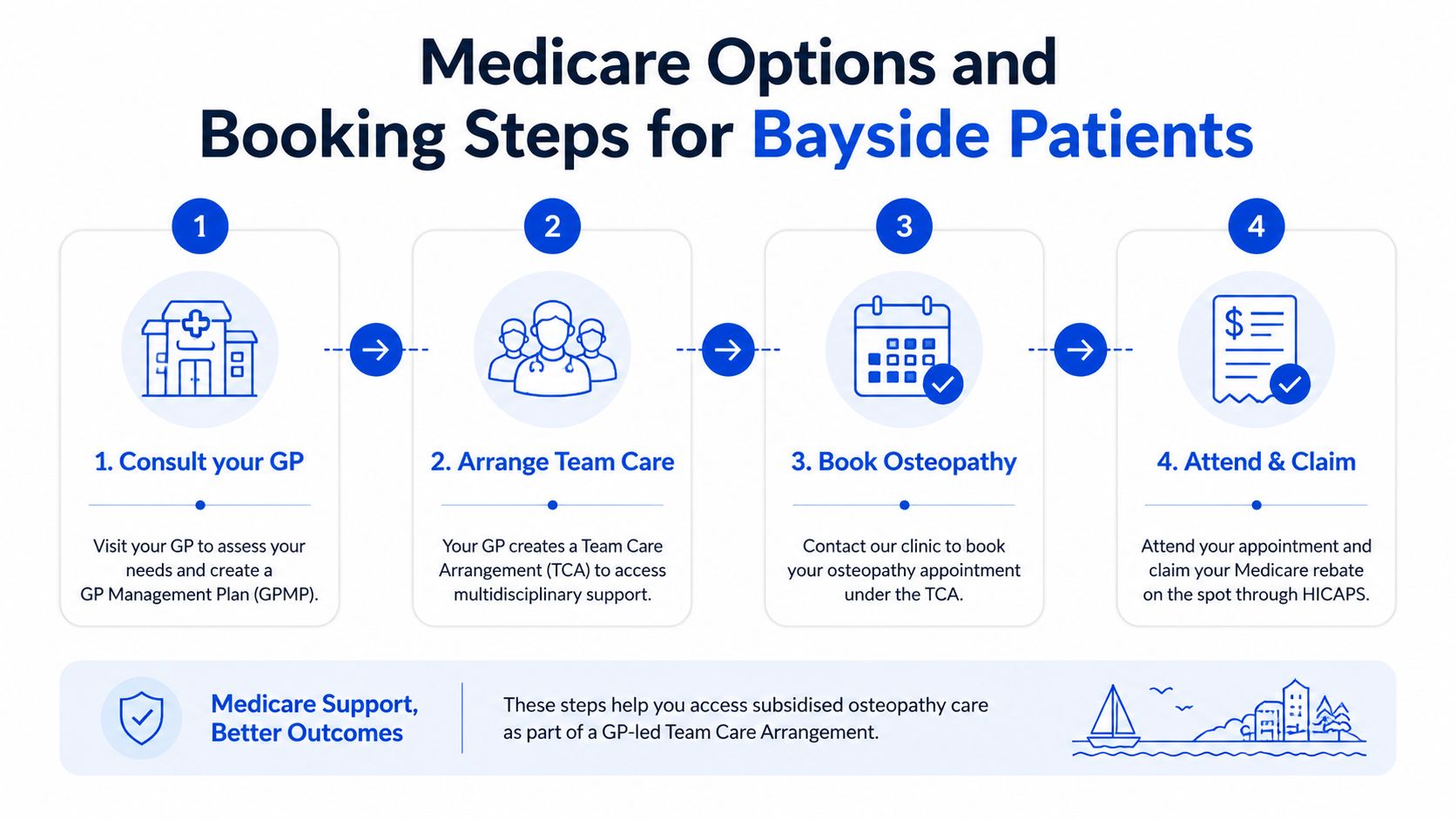
The minimum MBS-funded osteopathy service length is 20 minutes. That does not mean every appointment will be limited to that duration, but the annual cap still applies across eligible allied health care. MBS rules and item requirements can change, so confirm the current details with your GP or clinic before relying on the rebate.
Private health extras may suit patients who do not qualify for the GP pathway or have used their Medicare allocation. Check your policy's osteopathy benefit, waiting periods, annual limit and practitioner-registration requirements with the insurer.
Putting It Together and Your Next Step
Decide based on how the problem behaves, not only how much it hurts. Before booking, ask:
- Is the symptom settling with sensible activity, or is it returning each time you resume normal work, exercise or driving?
- Has it begun changing your sleep, confidence, mobility or ability to manage ordinary tasks?
- Do you know what you have already tried, and did it produce a clear improvement?
- Would assessment by an osteopath add useful movement and loading advice, or does the presentation need a GP, physiotherapist or emergency assessment first?
Red flags override routine booking. Sudden severe headache, fever with spinal pain, unexplained weight loss, significant night pain, saddle numbness, bowel or bladder changes, progressive weakness or major trauma require medical assessment before osteopathy, as outlined in the earlier RACGP guidance.
Bring a short symptom history to the appointment. Note when the problem began, the movements that aggravate or ease it, treatments or exercises you have tried, and the effect on work, sleep and daily activities. This helps the practitioner judge whether osteopathic care is suitable, whether another clinician should be involved, and what progress should realistically look like.
For persistent problems, coordinate care rather than collecting disconnected treatments. Your GP may help investigate medical contributors or organise allied-health support, while an osteopath can assess movement, loading and practical self-management. Current referral criteria remain a useful reference when coordinating care with your GP.
If symptoms are no longer settling, arrange an assessment before they become harder to manage. The goal is a safe plan with measurable changes, not indefinite passive treatment.
Bayside Osteopathic Health provides gentle, hands-on assessment for persistent back, neck and joint pain, postural strain and mobility concerns, with movement advice and practical self-care included. If you are unsure whether osteopathy suits your symptoms or a GP should assess you first, visit Bayside Osteopathic Health to arrange an initial assessment in the Bayside area.