
You finish a workday, stand up, and notice your neck feels heavy, your shoulders are rounded, and turning your head is stiffer than it should be. Or you catch your reflection while looking at your phone and see your chin poking forward, even when you thought you were sitting “normally”. That's the pattern many people bring into clinic. Not a dramatic injury, just a steady build-up of strain.
Forward head posture rarely responds to a single stretch or a burst of motivation. It usually improves when you change the way your whole body supports the head. That means looking at the neck, yes, but also the upper back, shoulders, ribcage, workstation, breathing pattern, and the habits you repeat every day without noticing.
An osteopathic approach treats forward head posture as a movement problem, not just a cosmetic one. The aim isn't to force yourself into a stiff “perfect” position. It's to help your body find a more efficient one that feels easier to maintain.
Table of Contents
- Why Your Neck Aches and What Causes Forward Head Posture
- How to Quickly Assess Your Head Posture at Home
- Your Daily Corrective Exercise and Mobility Routine
- Ergonomic and Lifestyle Changes to Support Your Neck
- Your Sample Weekly Plan and Realistic Timeline
- When to See an Osteopath for Forward Head Posture
Why Your Neck Aches and What Causes Forward Head Posture
Forward head posture means the head sits in front of where the body can support it comfortably. Instead of stacking over the shoulders, it drifts forward. The neck then has to work harder to hold it there, and the upper back and shoulder muscles often stay tense for long periods.
That helps explain why the ache often isn't just in one spot. Some people feel it at the base of the skull. Others notice tight upper traps, burning between the shoulder blades, or recurring headaches after desk work. If headaches are part of the pattern, this guide to cervicogenic headache treatment may also be useful.
A key biomechanical reason this posture becomes irritating is load. The effective weight of the head rises from about 10–12 pounds in a neutral position to 49 pounds at 45 degrees of forward flexion, according to Healthline's explanation of forward head posture. That's why a position that feels harmless for a few minutes can become exhausting when you hold it through a workday.
Practical rule: If your head keeps drifting forward, your neck usually doesn't need more force. It needs less strain and better support.
Why this happens in real life
Forward head posture doesn't usually develop because one neck muscle is “weak”. The pattern usually builds from a mix of habits:
- Desk work: Long periods leaning towards a monitor or laptop.
- Phone use: Repeated neck flexion while reading or scrolling.
- Upper back stiffness: If the thoracic spine doesn't extend well, the neck often compensates.
- Rounded shoulders: Tight chest muscles can pull the shoulder girdle forward and change how the neck sits above it.
The osteopathic view
From an osteopathic perspective, the neck doesn't work alone. If the upper back is stiff, the ribs don't move well, or the shoulders sit forward all day, the cervical spine has to adapt. That's why random stretches often give only short relief. They don't change the pattern that created the tension.
The fix is usually simpler than people expect, but it does need structure. Better neck position comes from repeated low-load corrections, improved upper-back movement, and an environment that stops dragging you back into the same posture.
How to Quickly Assess Your Head Posture at Home
You don't need special equipment to get a decent starting point. A simple self-check can show whether your head tends to sit over your shoulders or in front of them.
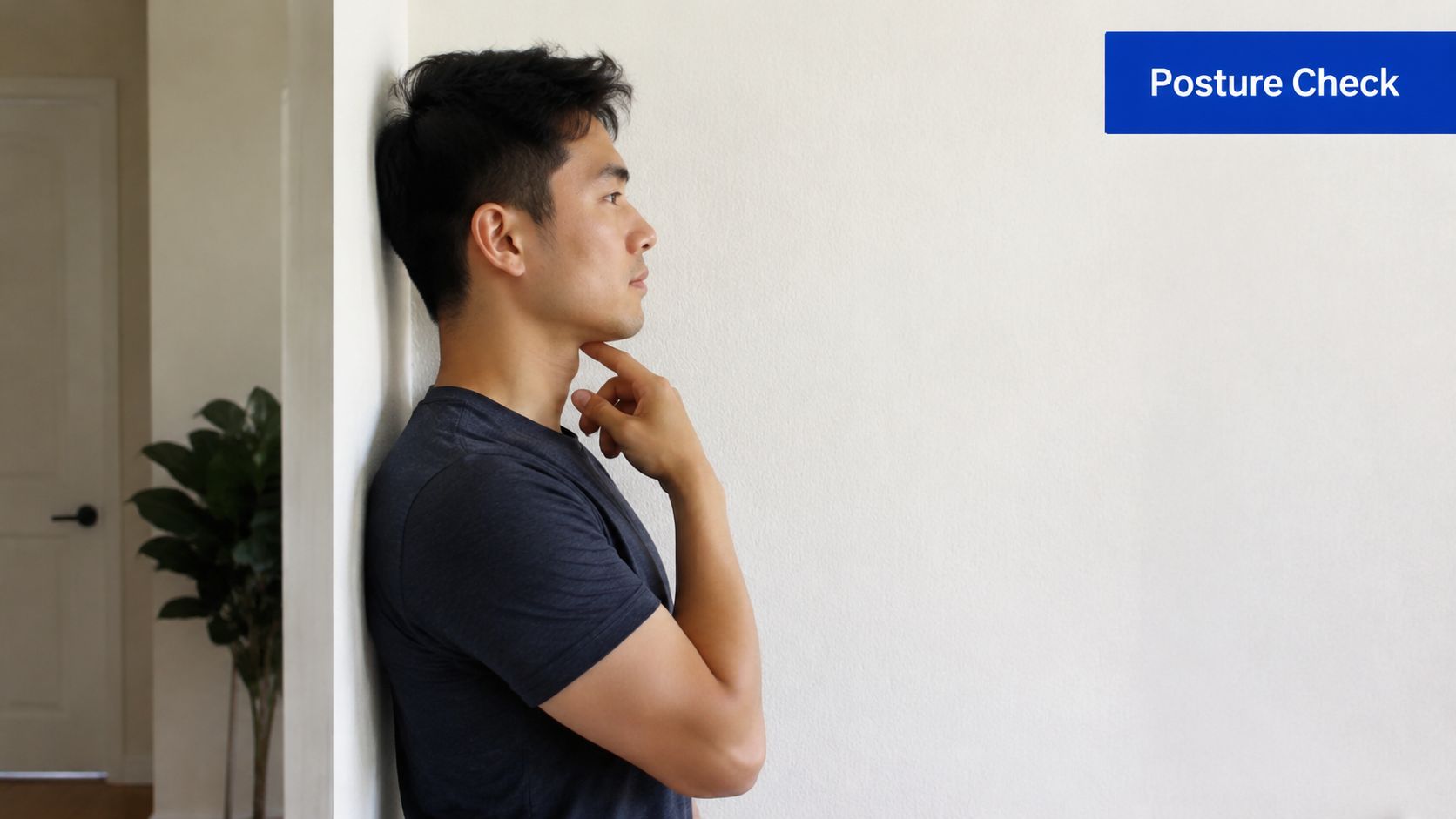
The wall test
Stand with your back near a wall. Let your shoulder blades and hips rest against it. Don't force your lower back flat and don't tip your chin up.
Now notice what your head does naturally. If the back of your head reaches the wall easily, your resting alignment is likely closer to neutral. If there's a gap, or you have to strain to get the head back, that often suggests a forward head pattern.
Pay attention to compensation. If you can only touch the wall by arching your lower back or lifting your chin, that isn't a true correction. It's your body borrowing movement from somewhere else.
The profile photo test
Take a side-on photo while standing naturally. Don't “fix” yourself first. Use your usual relaxed posture.
Then look at the relationship between your ear and shoulder. A simple visual guide is this: when the ear sits clearly forward of the shoulder, the head is likely resting too far in front.
The photo matters because it shows your default posture, not the one you can hold for five seconds when you remember to sit up.
Use these checks as a baseline, not a diagnosis. Repeat them every few weeks under the same conditions. You're looking for gradual change, not a dramatic overnight shift.
Your Daily Corrective Exercise and Mobility Routine
A good routine for forward head posture should do more than pull your chin back a few times. It needs to teach the body a different pattern. In practice, that means three things working together. Better control through the deep front-of-neck muscles, less unnecessary tension through the chest and upper shoulders, and more movement through the upper back so the neck is not forced to do all the work.
What to practise first
The starting point in most programs is the chin tuck. NASM recommends chin-tuck style corrective work in 1–2 sets of 10–15 repetitions, 3–5 days per week, with brief isometric holds. That approach works well because posture changes respond better to frequent, clean practice than to one hard session followed by several inactive days.
If neck discomfort is part of the picture, these neck pain relief exercises can support the routine below.
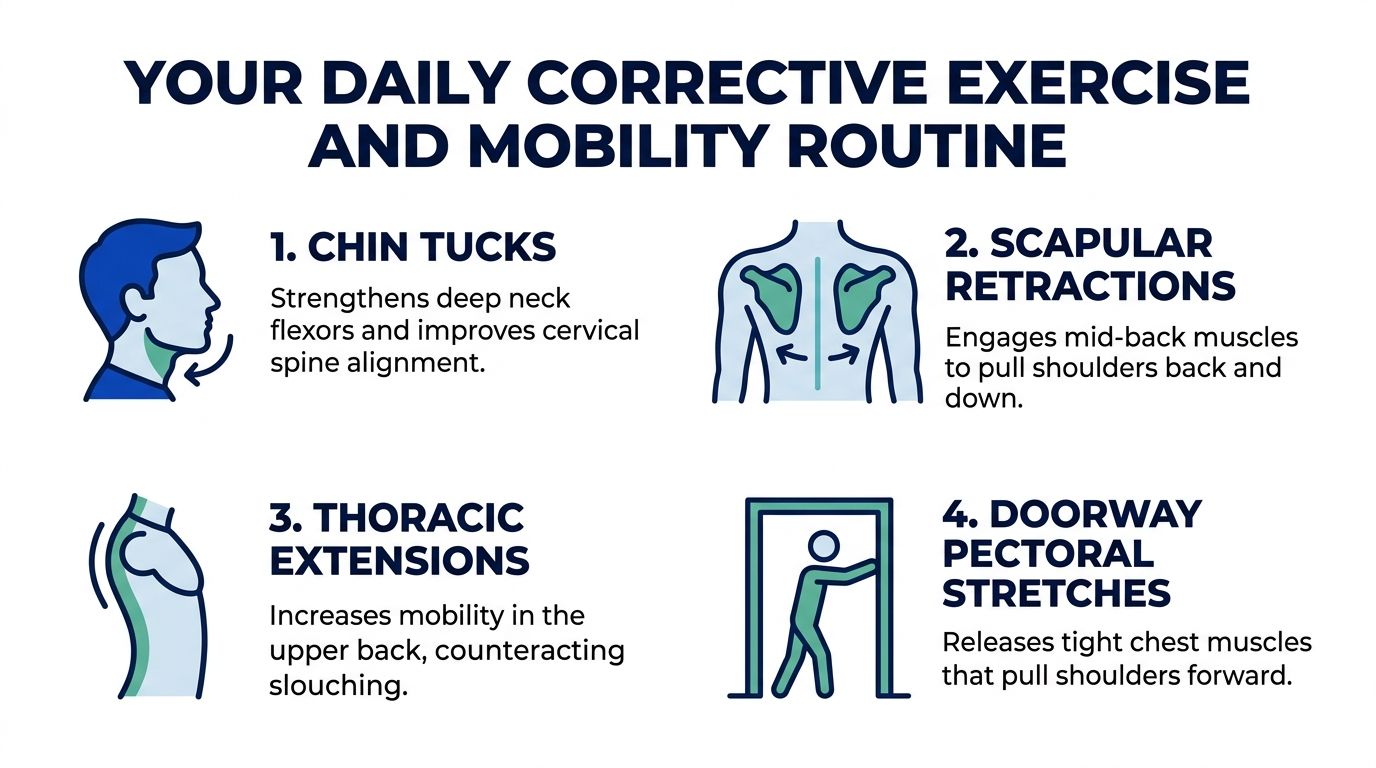
I usually build the daily sequence in this order:
- Chin tucks
- Scapular retractions
- Thoracic extensions
- Doorway pectoral stretches
That order is deliberate. First you position the head. Then you give the shoulder blades a better base. Then you restore movement through the upper back. Finally, you ease some of the chest tension that keeps pulling the body forward.
A short demonstration can help if you're unsure how the movements should look in practice.
How to perform each movement well
Chin tucks
Sit or stand upright and keep your eyes level. Gently glide the chin straight back, as if you are making a small double chin, then return to neutral.
The movement is small. Done well, you will feel light work at the front of the neck and a sense that the back of the neck is lengthening. If you tip your head down or jam backwards hard, you train the wrong pattern.
Scapular retractions
Let the arms relax by your sides. Draw the shoulder blades back and slightly down without forcing them together.
I often cue this as “open across the collarbones.” That tends to work better than telling someone to pinch hard, which often creates more tension around the upper traps and neck. The goal is support, not stiffness.
Thoracic extensions
Use a chair back or foam roller if available. Extend gently through the upper back while keeping the lower ribs from flaring and the lower back from taking over.
A stiff thoracic spine often leaves the neck doing extra extension work all day. If the upper back starts moving better, the neck usually stops trying to create that movement on its own.
Doorway pectoral stretches
Place your forearms on the doorway frame and step through until you feel a stretch across the front of the chest. Hold the position without pushing into pain or forcing the shoulders forward.
This is useful for the rounded-shoulder part of the pattern, but it is only one piece of the program. Stretching the chest without retraining the neck and upper back rarely changes posture for long.
What usually stops progress
The same problems come up again and again:
- Turning the chin tuck into a head tilt: The chin should glide straight back, not lift or drop.
- Using too much force: Mild effort works better than straining.
- Holding a “perfect” posture all day: The body does better with variety and regular resets than with constant bracing.
- Skipping the upper back work: If the thoracic spine stays stiff, the neck keeps compensating.
- Doing random exercises without progression: A structured routine gets better results than swapping drills every few days.
Good corrective work feels controlled, specific, and repeatable. If you can only do it by tensing everything else, the exercise needs to be simplified.
Progress the routine in stages. Start with small, clean reps in a supported position such as sitting. When that feels easy, practise the same pattern in standing. After that, use it in real life, at your desk, while walking, or during gym exercises that usually bring your head forward.
That progression reflects an osteopathic approach. I am not just looking at the neck in isolation. The head sits on the neck, the neck works with the rib cage and upper back, and all of it is influenced by how you breathe, sit, train, and move through the day.
If symptoms are stubborn or movement feels restricted, osteopathic treatment at Bayside Osteopathic Health can assess how the neck, upper back, ribs, and shoulders are contributing to the pattern, then combine hands-on treatment with a personalised exercise plan.
Ergonomic and Lifestyle Changes to Support Your Neck
Exercises help, but they can't outwork a setup that keeps pulling your head forward for hours. If your desk, phone habits, or driving position keep feeding the same pattern, progress slows down fast.
That's why I treat ergonomics as part of the correction, not an optional extra. The body learns from what you do most often.
Set up your desk to reduce strain
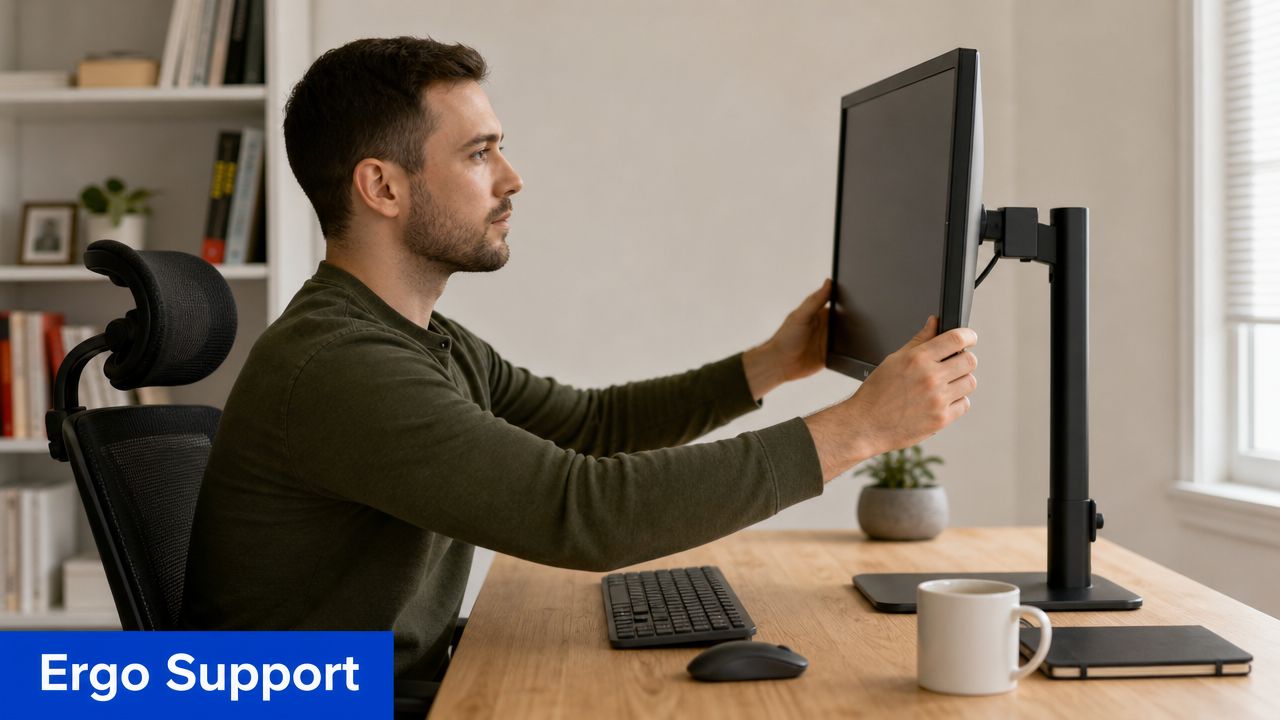
An evidence-informed workplace approach is to raise the monitor so the top third sits at eye level, keep elbows near 90 degrees, and combine that setup with daily chin tucks plus doorway pectoral or upper-trapezius stretches held for 20–30 seconds for 2–3 rounds, as described in this workplace forward head posture guide.
That sounds technical, but in practice it means:
- Lift the screen: If you use a laptop, place it on a stand or stack of books and use an external keyboard if possible.
- Bring the work closer: Reaching forward for the keyboard or mouse encourages shoulder rounding.
- Support the forearms: The more your shoulders have to hover, the more upper-trap tension builds.
- Change position regularly: Even a good sitting position becomes irritating when you hold it too long.
If repetitive work is part of the problem, support for repetitive strain injury treatment may also be relevant.
Carry the same principles into the rest of the day
Forward head posture doesn't only happen at desks. It often shows up in smaller moments repeated all day.
- With your phone: Raise it closer to eye level instead of dropping your face down to it.
- In the car: Sit back into the seat and check that the headrest supports you rather than leaving your head reaching forward.
- When reading or watching TV: Prop the material up instead of bending into it.
- At night: Aim for a pillow height that keeps the neck comfortable and neutral, rather than bent sharply forward or to the side.
The most effective ergonomic changes are the ones you'll actually keep. A good setup doesn't need to look impressive. It needs to remove friction from the healthier choice.
Quick fixes usually fail because they focus on one hour of exercise and ignore the other many hours of loading. Small environmental changes don't feel dramatic, but they often decide whether the neck settles or stays irritated.
Your Sample Weekly Plan and Realistic Timeline
People usually do better with a simple routine than an ambitious one. If the program feels like a second job, it won't last. A workable plan builds short moments of correction into the day and leaves room for normal life.
The bigger point is this. “Fixing” forward head posture isn't just about how it looks from the side. Self-reported neck problems are common, and posture is only one part of the picture. Neck pain is strongly influenced by sustained loading, work setup, and activity patterns, so the goal is better function and less pain, as noted in this discussion of effective strategies to fix forward head posture.
Sample weekly posture correction plan
| Time of Day | Monday-Friday | Saturday-Sunday |
|---|---|---|
| Morning | Chin tucks, scapular retractions, brief thoracic extension practice | Chin tucks, thoracic extension, easy walk or gentle movement |
| Midday | Reset workstation, stand up regularly, short chest stretch break | Check phone and reading posture, short chest stretch break |
| Evening | Doorway pectoral stretch, relaxed posture check, reduce long periods on devices | Light mobility routine, posture photo or wall test every few weeks |
A few points make this more effective:
- Keep sessions short: A brief routine done often beats a long routine you skip.
- Pair habits together: Chin tucks after brushing teeth or chest stretches after logging off work are easier to remember.
- Use symptoms as feedback: If the neck feels more aggravated after a movement, adjust the range or the dose.
What progress usually looks like
In the first couple of weeks, many people notice awareness before visible change. You start catching the forward drift earlier. You may also feel less end-of-day tightness if your workstation improves and the exercises are gentle enough.
By around a month, the movements often feel less awkward. Sitting tall doesn't require as much effort, and the upper back may start contributing more instead of leaving the neck to do all the work.
At the longer end, changes tend to show up in tolerance and comfort. You can work, drive, or use devices with less flare-up. That matters more than trying to achieve a perfectly “ideal” profile. Good outcomes are usually measured in less pain, better movement, and fewer recurring aggravations.
When to See an Osteopath for Forward Head Posture
Self-management is a good starting point, but it isn't always enough. Some people have a straightforward postural strain pattern. Others have joint stiffness, persistent headaches, nerve irritation, old injuries, or movement habits that need a more individual approach.
Signs self-management isn't enough
Book an assessment if you notice any of the following:
- Persistent pain: Your neck keeps aching despite several weeks of consistent changes.
- Headaches that recur often: Especially if they seem linked to neck tension or desk work.
- Tingling or numbness: Symptoms travelling into the shoulder, arm, or hand need proper review.
- Marked loss of movement: Turning the head or looking up feels clearly restricted.
- Frequent flare-ups: Minor tasks keep setting the neck off again.
These signs don't automatically mean something serious is wrong, but they do mean guessing isn't the best plan.
What an osteopathic assessment involves
An osteopath won't just look at where your head sits. The assessment usually looks at how your neck moves, how your upper back extends, how the shoulders and ribs contribute, and whether your body is compensating elsewhere. That whole-body view matters because a forward head pattern is often the visible end of a broader movement problem.
Treatment may include gentle soft-tissue work, joint articulation, and mobilisation to reduce tension and improve movement where the body feels restricted. Just as important, you should leave with a plan you can follow at home, not a list of generic stretches.
A personalised program works better than copying a random posture routine online, because it matches the pattern your body is actually using.
If forward head posture is causing ongoing neck pain, headaches, stiffness, or repeated flare-ups, Bayside Osteopathic Health offers gentle osteopathic care focused on whole-body movement, hands-on treatment, and practical self-management advice for people across the Bayside community.