
You're probably standing in the snack aisle for “just one thing” and leaving more confused than when you arrived. One packet says high protein. Another says all natural. A third looks healthy because it has oats, nuts, or fruit on the front, yet the back label tells a different story.
That confusion is understandable. In Australia, the healthy snacks market was valued at about USD 1.51 billion in 2024 and is projected to reach USD 2.21 billion by 2033, with a forecast CAGR of 4.30% from 2025 to 2033, reflecting growing demand for convenient better-for-you options that suit busy routines, according to Australian healthy snack market reporting summarised in this reference. More choice sounds helpful. In practice, it often makes decision-making harder.
From an osteopathic point of view, snacks aren't just about “being good” or “being bad”. They can support steadier energy, better recovery, less stiffness, and more comfortable movement across the day. The trick is learning how to spot a snack that helps your body, rather than one that wears a healthy costume.
Table of Contents
- Why Choosing Healthy Packaged Snacks Feels So Hard
- How to Read a Snack Label Like a Health Professional
- Choosing Snacks for Better Mobility and Less Inflammation
- Smart Snacking for Older Adults and Posture Support
- Your Guide to Healthier Packaged Snack Categories
- Putting It All Together A Mindful Approach to Snacking
Why Choosing Healthy Packaged Snacks Feels So Hard
A packet of roasted chickpeas sits next to a protein bar. Nearby, there's yoghurt with fruit, seed crackers, nut mixes, rice snacks, dried fruit, and “energy balls”. Many of them look equally wholesome at first glance. That's where people get stuck.
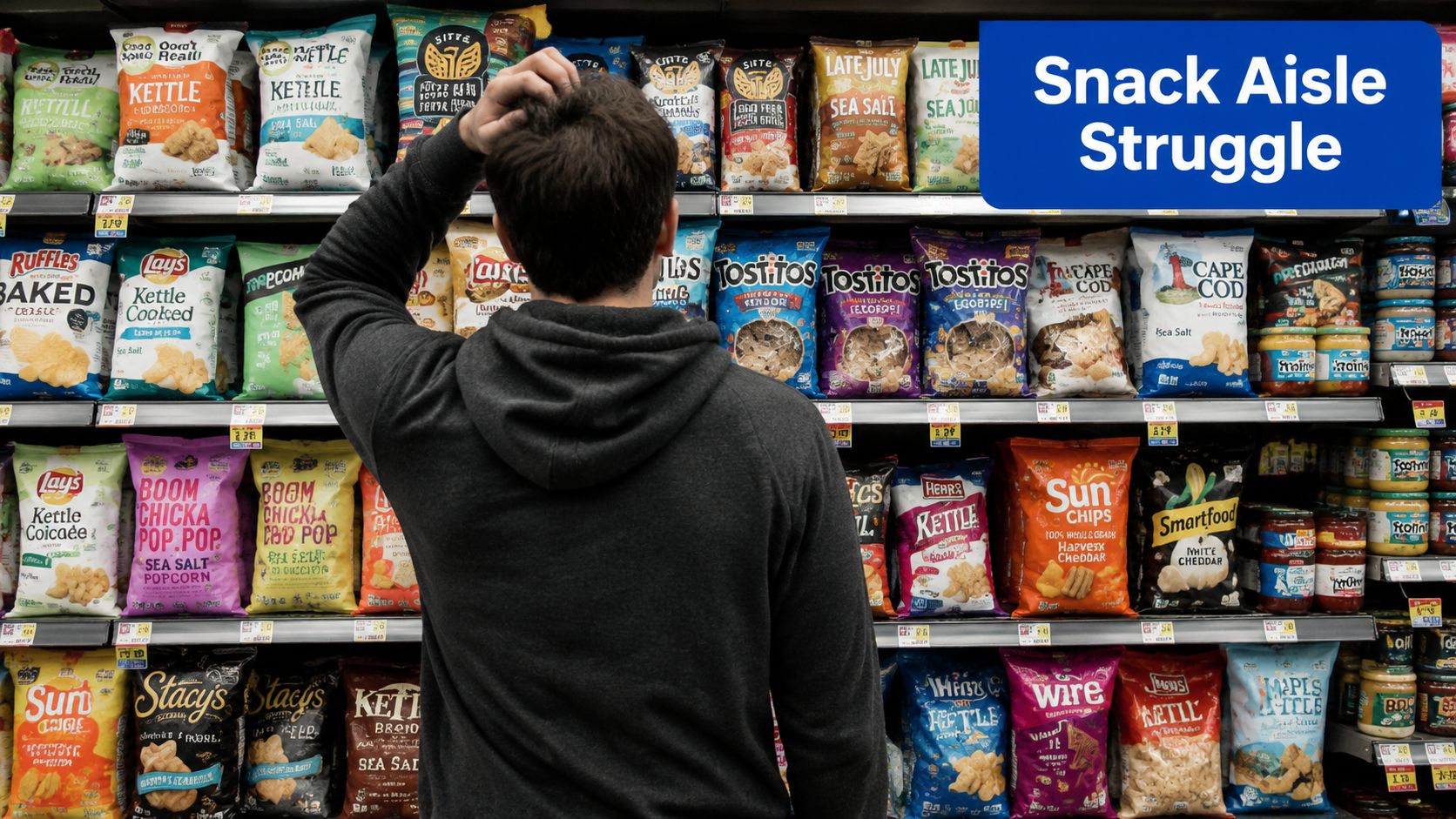
The problem isn't that packaged snacks are automatically unhealthy. The problem is that packaging highlights the one good feature it wants you to notice. A bar may advertise protein while still being quite sugary. A cracker may look light and innocent while carrying a salty, refined ingredient list. A fruit snack may sound natural but behave more like confectionery than a filling mini-meal.
In clinic conversations, this comes up often with people who feel flat by mid-afternoon, stiff after long workdays, or hungry again soon after snacking. They're not failing at healthy eating. They're usually choosing foods that don't create much satiety and don't support stable energy.
Healthy snacking works best when the food actually helps you feel steadier, fuller, and less inflamed afterwards.
There's also a practical tension that generic advice often ignores. People want snacks that are portable, easy to keep at work or in the car, and simple to eat between appointments or school pick-up. That need for convenience is real. It doesn't cancel out health goals, but it does mean the best choice is often the best realistic choice, not the most perfect one.
A useful way to think about packaged snacks healthy choices is this:
- Better snacks support appetite control so you're not chasing food every hour.
- Better snacks reduce nutritional noise by keeping added sugar and sodium in check.
- Better snacks fit the life you live. They can travel, sit in a drawer, or be eaten one-handed if needed.
- Better snacks should help the body, not just fill time. For people managing pain, stiffness, or fatigue, that matters.
Once you know what to scan for on the label, the aisle gets much less intimidating.
How to Read a Snack Label Like a Health Professional
Initial attention often goes to the front of the packet first. Health professionals usually trust the back more. That's because the Nutrition Information Panel and ingredient list tell you what the product is, not what the marketing team wants it to sound like.
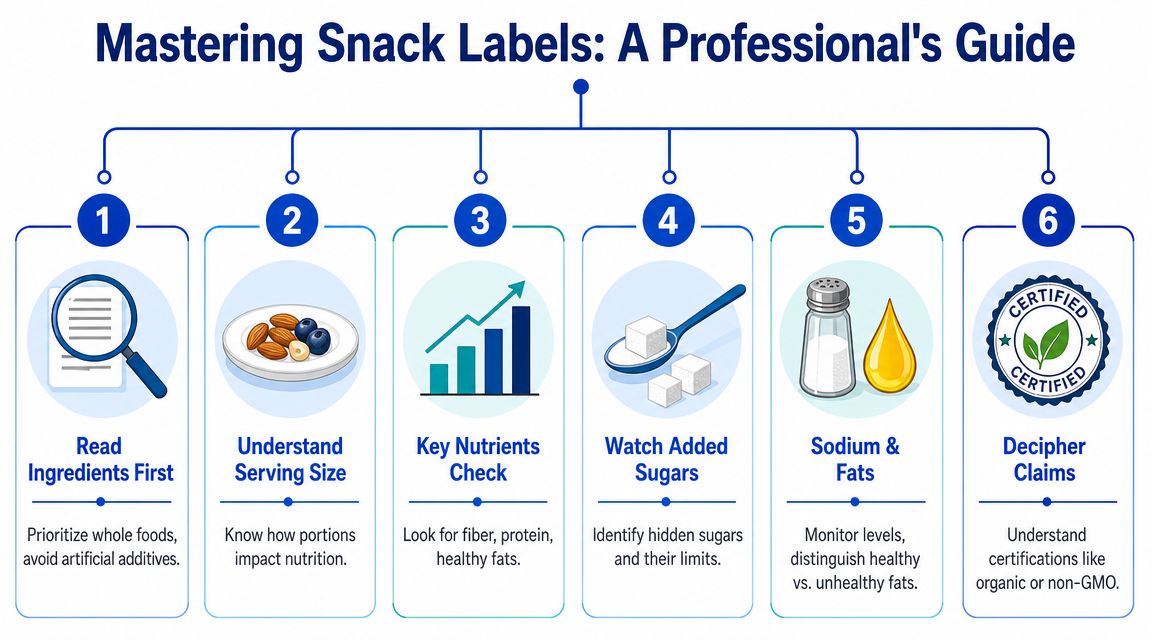
Start with the per 100 g column
Australian dietetic guidance often uses the per 100 g column because it lets you compare products fairly, regardless of serving size. A practical rule is to look for more than 3 g fibre per 100 g and check that sugar isn't one of the first ingredients, as outlined in this Australian dietitian snack guide.
Serving sizes can be tiny, unrealistic, or oddly chosen. Per 100 g removes that confusion. It gives you a true side-by-side comparison between two crackers, two yoghurts, or two bars.
Here's the simplest way to use it:
- Pick up two similar products. Compare crackers with crackers, bars with bars.
- Ignore the front claims for a moment. Start on the nutrition panel.
- Use the per 100 g column so you're not tricked by a small serving size.
- Check fibre, protein, sugar, and sodium before anything else.
A quick visual can help if labels feel overwhelming.
The four numbers worth checking first
For packaged snacks healthy choices, four parts of the panel matter most.
| What to check | Why it matters | Practical reading tip |
|---|---|---|
| Fibre | Helps fullness and steadier digestion | Aim for higher-fibre options |
| Protein | Supports satiety and can make snacks feel more substantial | Useful, but not enough on its own |
| Sugar | High added sugar often means a quick rise and drop in energy | Be cautious if sugar shows up early in ingredients |
| Sodium | Too much can work against heart-aware and inflammation-aware eating | Lower is usually better |
Australian guidance also uses a helpful benchmark from the Health Star Rating system. Foods scoring 3.5 stars or above are generally considered better choices within a category, and snack decisions are often stronger when based on nutrient density per 100 g rather than flashy serving claims.
Practical rule: A snack with decent fibre and protein, lower sodium, and no obvious sugar-heavy ingredient list will usually perform better than a snack with a single “high protein” badge on the front.
Read the ingredients like a reality check
The ingredient list tells you what the product is mostly made from. If sugar appears among the first ingredients, that's a red flag. If the product sounds wholesome on the front but reads like a dessert on the back, trust the back.
A few quick examples:
- Better sign: Whole peanuts, almonds, cashews, seeds.
- Better sign: Rolled oats, chickpeas, yoghurt, wholegrain flour.
- Watch out: Multiple sweeteners near the top of the list.
- Watch out: Flavoured coatings, syrups, or heavy seasoning blends.
Australian nutrition guidance also notes that snacks are healthiest when they provide satiety without a rapid glycaemic load, and a practical benchmark is to choose lower-sodium options, ideally under 400 mg per 100 g, while avoiding products where sugar appears among the first ingredients, according to this summary of snack selection principles.
That's why plain roasted nuts often beat honey-roasted nuts. Plain yoghurt usually beats dessert-style yoghurt. Seeded wholegrain crackers generally beat refined, salty crisp-style snacks.
Choosing Snacks for Better Mobility and Less Inflammation
When people hear “inflammation”, they often think only of swollen joints or obvious injury. In everyday life, the more common issue is a pattern of eating that leaves the body feeling puffier, flatter, and less comfortable to move.
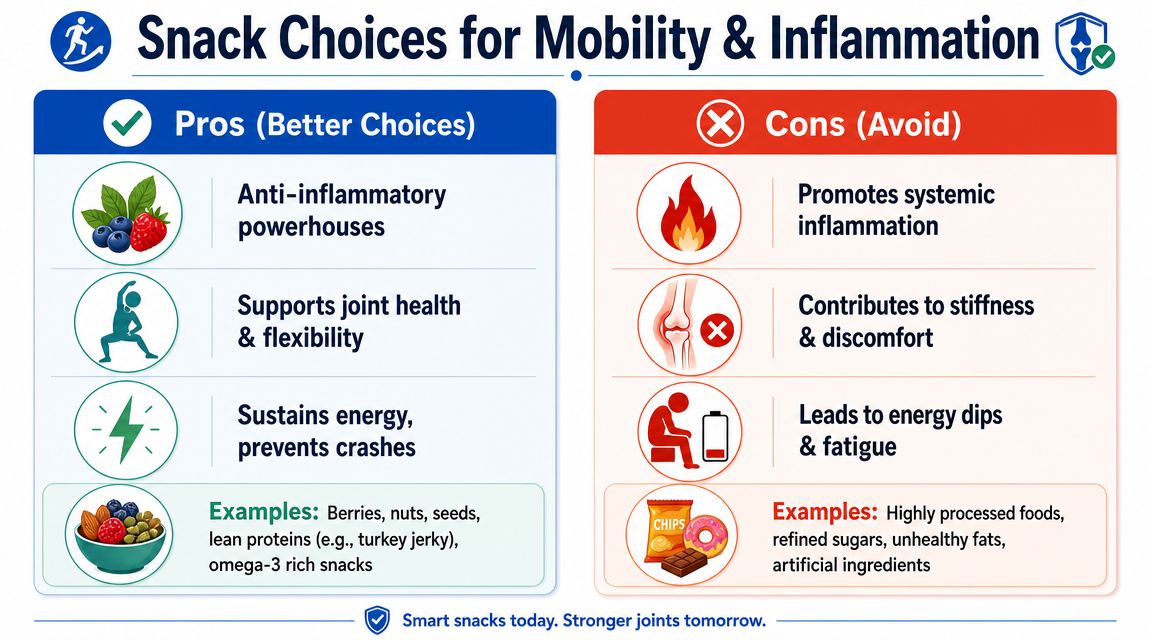
Many snacks marketed as healthy can still be high in sodium and free sugars, and a major gap in snack advice is failing to compare foods by processing level and sodium content, not just by protein claims, as discussed in this Australian snack comparison article.
What tends to work better
From a mobility and pain-management perspective, the most helpful snacks are usually the ones that resemble whole foods. They don't need to be perfect. They need to be calm, simple, and satisfying.
Examples that often make more sense include:
- Unsalted nuts and seeds for healthy fats and slower energy release
- Roasted chickpeas when you want crunch plus fibre
- Plain yoghurt for a softer, filling option
- Wholegrain crackers with seeds when paired with something more substantial
- Fruit-based snacks with recognisable ingredients rather than candy-style fruit products
These choices tend to support steadier energy across the afternoon. That matters if you're trying to stay active, keep up a walking routine, or avoid that late-day slump that makes everything from posture to patience worse.
For people managing persistent aches, it can also help to think in patterns rather than miracle foods. One anti-inflammatory snack won't transform your joints. Repeatedly choosing less sugary, less salty, less ultra-processed options often leaves people feeling more even and less inflamed overall.
If you're already exploring broader lifestyle support for pain, the articles in this chronic pain relief collection give a useful bigger-picture view.
What often backfires
The biggest trap is the snack that looks functional but behaves like confectionery.
A typical example is the protein bar that is sticky, very sweet, highly flavoured, and easy to overeat. Another is flavoured yoghurt that sounds healthy because it contains fruit but carries a dessert-style ingredient profile. Salted “health” crisps can create a similar problem. They may be made from legumes or vegetables, yet still deliver a lot of seasoning and not much staying power.
If a snack leaves you hungry again quickly, thirsty, or craving something sweet straight afterwards, that's useful feedback.
For adults focused on mobility, the goal isn't to eat clinically. It's to reduce friction. Snacks that help you feel steady, lightly fuelled, and comfortable are usually the ones worth buying again.
Smart Snacking for Older Adults and Posture Support
Healthy snacking advice often assumes everyone can chew easily, has a strong appetite, and only wants a quick energy boost. That's not real life. Older adults, people with dentures, and people dealing with pain-related appetite changes need a more practical approach.
For older adults, practicality matters
Guidance for older adults notes that snack suitability goes beyond nutrition alone. Ease of chewing matters, and softer options such as yoghurt or canned fruit in juice can be more practical than hard nuts or crunchy bars, as explained in this guide to healthy packaged snacks.
That changes what “healthy” looks like. A nutritionally solid snack isn't much use if it's unpleasant to eat, tiring to chew, or likely to be avoided.
A more useful shortlist for older adults includes:
- Soft yoghurt when chewing is difficult
- Canned fruit in juice for convenience and softness
- Wholegrain crackers if they're easy to manage and paired with a softer topping
- Nut butters in small serves instead of whole nuts for some people
- Air-popped popcorn only if it's comfortable to eat
A good snack should be realistic, not aspirational. For many people, “good enough and easy to eat” beats “perfect but untouched”.
For desk workers, snacks affect posture more than you think
Office workers often notice posture drifting in the second half of the day. That isn't only about chair setup. Low-quality snacks can contribute by creating a quick burst of energy followed by sluggishness and reduced concentration.
When energy dips, people tend to slump, brace through the shoulders, and stop moving well. A more balanced snack helps avoid that cycle. Not because food fixes posture directly, but because steadier energy supports better habits, better focus, and more willingness to get up and move.
A useful desk-drawer approach is to keep one crunchy option, one soft option, and one more filling option available. That might mean seed crackers, plain shelf-stable yoghurt when practical, or a simple nut and seed pack depending on your needs.
People who are also seeking hands-on support for movement or posture issues often start by finding an osteopath near them in Bayside, while tightening up the daily habits that either help or hinder recovery.
Your Guide to Healthier Packaged Snack Categories
Brand lists become outdated quickly. Category rules last longer. If you can assess the category, you can walk into almost any supermarket and make a decent choice.
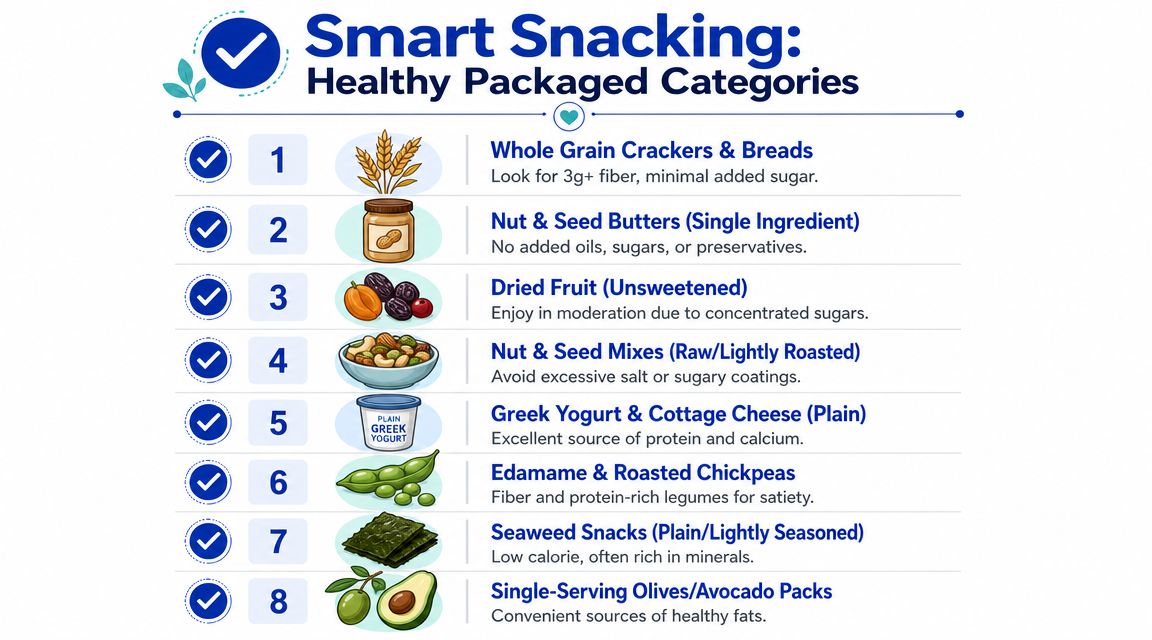
A simple category-by-category guide
Here's the practical version I'd want a patient to use in the aisle.
| Category | Look for this | Watch out for this |
|---|---|---|
| Nuts and seeds | Unsalted, lightly roasted, simple ingredients | Honey-roasted coatings, heavy salt, sweet glazes |
| Yoghurt | Plain or less sweet styles, short ingredient list | Dessert-style flavours, lots of added sweetness |
| Wholegrain crackers | Seeded or wholegrain base, more fibre | Refined flour first, salty flavour dusting |
| Roasted legumes | Chickpeas or broad beans with simple seasoning | Excess flavouring, very high sodium |
| Fruit-based snacks | Recognisable fruit ingredients, minimal additions | Sticky fruit confectionery, sweeteners, syrups |
| Snack bars | Oats, nuts, seeds, simpler recipe | Bars that read more like lollies in disguise |
A few categories deserve closer attention.
Nuts and seed mixes
These are often among the most useful packaged snacks healthy options because they travel well and don't need refrigeration. They can help with satiety, especially when your schedule is messy.
The downside is portion creep and flavour coatings. Once nuts are candied, heavily salted, or mixed with lots of sweetened dried fruit, they change character quickly. Keep it simple.
Yoghurt and softer snacks
For many adults, especially older adults, yoghurt is one of the more practical choices because it's easy to eat and usually more satisfying than a sweet biscuit-style snack. Plain yoghurt works well because you can control the sweetness yourself by adding fruit if you want it.
Soft snacks also suit people whose appetite is patchy. When chewing feels like work, hard snack bars and dry crackers often get skipped.
A snack only helps if you'll actually eat it comfortably and feel better afterwards.
Wholegrain crackers and mini savoury snacks
These can be useful, but they're easy to overestimate. A cracker isn't automatically nutritious because it says grain, seeded, or oven baked. Turn the packet over.
Look for a wholegrain base, a decent fibre profile, and lower sodium where possible. Crackers work better when treated as a base for something more substantial, not as a stand-alone handful that leaves you hungry.
Dried fruit and fruit snacks
Dried fruit can be convenient and fibre-containing, but it has trade-offs. Australian guidance notes that it can contribute to tooth decay if eaten frequently, especially when it's sticky. It's often better used intentionally, not mindlessly.
Canned fruit in juice can be a more practical option for some people, especially if softness matters. Fruit-based packaged snacks are most useful when they remain close to fruit, not when they become a sugary paste marketed as wellness food.
Snack bars
This is the category where people most often get misled. Bars are sold as fuel, but many are basically a soft sweet product with a few functional ingredients added.
If you buy bars, be selective. A better bar usually has recognisable ingredients, less sweetness, and a texture that doesn't scream dessert. If it leaves your fingers sticky and your mouth extra sweet, that's often a clue.
Putting It All Together A Mindful Approach to Snacking
Good snacking isn't about chasing perfection. It's about making repeatable choices that support the way you want to feel in your body.
That usually means eating a snack because you need support between meals, not because the packet is open and nearby. It also means choosing an amount that takes the edge off hunger without turning into a second lunch. A simple visual guide is to keep portions moderate and pause before automatically reaching for more.
Timing matters too. A well-chosen snack can bridge a long gap between meals, prevent the late-afternoon energy drop, and reduce the urge to overeat at dinner. That's especially helpful for people managing pain, work fatigue, or lower energy for movement.
A simple mental checklist can help:
- Am I hungry, or just tired or bored?
- Will this snack keep me going, or spike and drop me?
- Is it easy for me to chew and tolerate today?
- Does it support how I want to move and feel later on?
These are small decisions, but they add up. Over time, smarter snack choices can support steadier energy, more comfortable movement, and a less inflamed feeling across the day. For more practical reading on movement, pain, and everyday wellbeing, browse osteopathy insights from the Bayside team.
If you'd like support that looks at the whole picture, not just the painful spot, Bayside Osteopathic Health offers gentle, personalised care to help ease pain, improve mobility, and support your body's natural healing. If you're dealing with joint stiffness, postural strain, arthritis-related discomfort, or persistent back and neck pain, booking a consultation can be a practical next step.