

You finish a workday, stand up from the desk, and notice your neck doesn't want to come with you. It feels tight when you turn to reverse the car. It aches by evening. Sometimes it even seems worse the next morning, as if sleep didn't reset anything at all.
That pattern is common in people who spend long hours at a computer, on the phone, or commuting. In Australia, neck pain is a major contributor to disability and is strongly tied to the wider burden of musculoskeletal problems in working-age adults, yet a lot of advice still stops at a few generic stretches without showing how to make them work in real life for desk-related strain, as noted in Harvard's practical neck pain guidance.
Gentle movement usually works better than waiting for your neck to “settle on its own”. The key is doing the right amount, in the right way, often enough to calm stiffness without irritating sensitive tissues. That's also where an osteopathic approach can help. If you'd like a broader overview of that whole-body way of thinking, this introduction to osteopathy explains it well.
Table of Contents
- Your Guide to Easing Neck Pain with Gentle Movement
- Understanding Your Pain and Important Safety Cues
- The 5-Minute Daily Neck Relief Routine
- Building a Sustainable Habit for Lasting Relief
- When to See an Osteopath for Your Neck Pain
- Frequently Asked Questions About Neck Exercises
Your Guide to Easing Neck Pain with Gentle Movement
A lot of people try to manage neck pain in bursts. They stretch hard when it flares, do nothing when work gets busy, then start again when the stiffness returns. That cycle usually doesn't help much because desk-related neck strain builds from repetition, posture, and long periods of stillness.
The body responds better to small, repeatable movement than to one heroic stretching session at the end of the week. If your day involves a laptop, dual screens, driving, or looking down at a phone, your neck often isn't asking for force. It's asking for regular motion, less guarding, and better support from the upper back and shoulders.
Gentle exercises aren't a “nice extra”. For many people with postural neck pain, they're the most practical way to reduce tension and restore comfortable movement.
Many neck pain relief exercises miss the mark. They tell you what to do, but not when to do it, how much is enough, or what to avoid if your symptoms are coming from ongoing work strain rather than one awkward sleep.
A sustainable routine should fit around meetings, school drop-off, commuting, and tired evenings. It should also feel safe enough that you'll keep doing it. That's what matters most. Not the perfect stretch. Not the longest hold. Just consistent, calm movement that your neck tolerates well.
Understanding Your Pain and Important Safety Cues
Before doing any exercise, it helps to know the difference between a useful stretch and a warning sign. A useful stretch feels mild, local, and controlled. You might notice tension along the side of the neck or across the tops of the shoulders, but it should ease when you come out of the movement.
Pain that feels sharp, electric, spreading, or unsettling is different. That sort of response suggests the exercise isn't right for you at that moment, or that the problem needs proper assessment first.
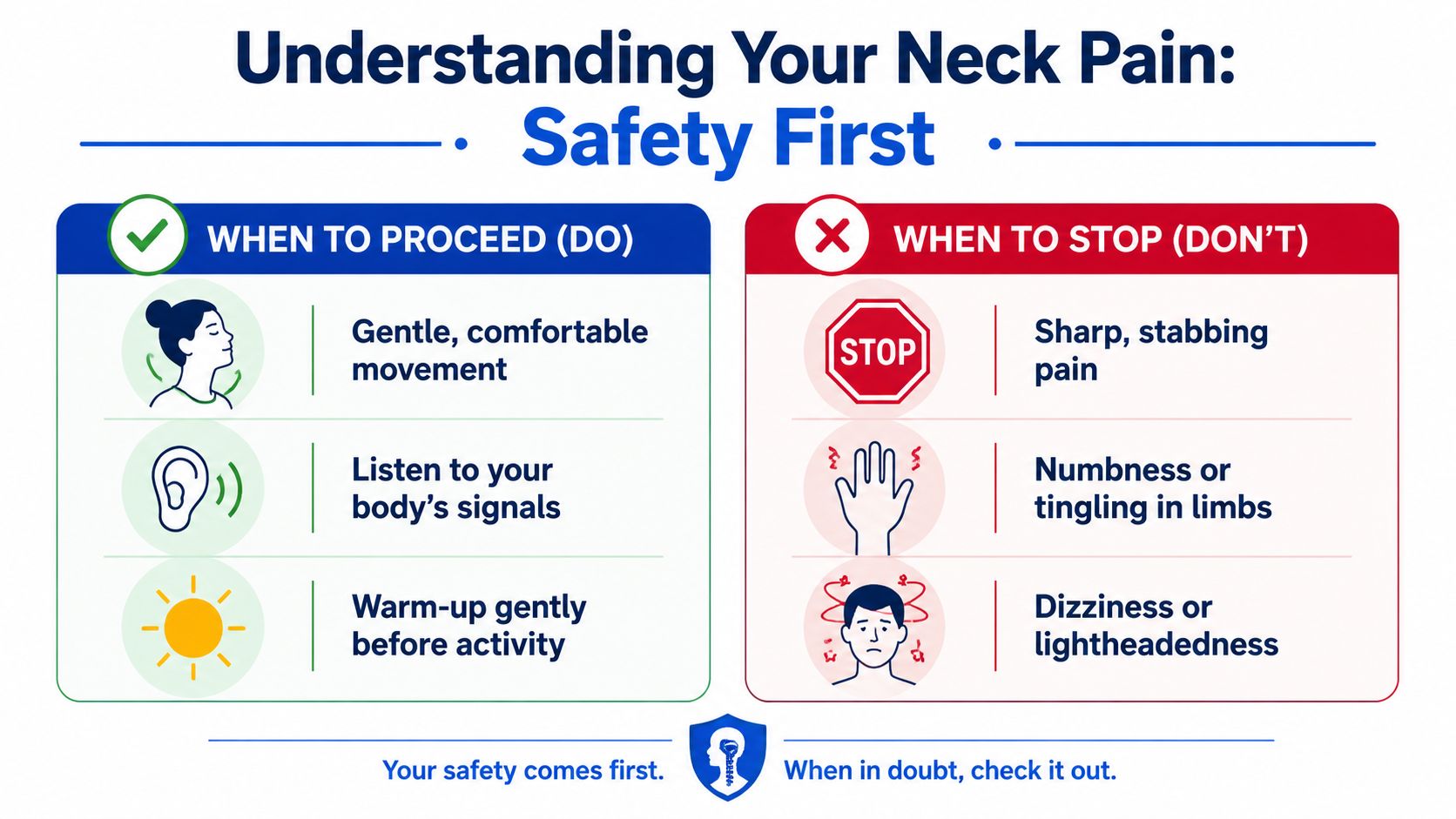
A helpful stretch versus a harmful strain
Think of it this way. A good movement feels like you're easing open a stiff hinge. A poor movement feels like you're forcing a stuck lock.
Use these cues as your guide:
- Proceed if it feels mild: A gentle pulling sensation is fine.
- Proceed if symptoms settle quickly: Mild stiffness during movement that eases after is usually acceptable.
- Stop if pain shoots: Pain travelling into the shoulder, arm, or hand needs caution.
- Stop if symptoms feel neurological: Tingling, numbness, or unusual weakness should not be pushed through.
- Stop if you feel unsteady: Dizziness or light-headedness is a clear sign to pause and get advice.
Many exercise guides blur that line, but they shouldn't. Guidance aimed at older adults and people with arthritis or previous injury highlights that symptoms such as dizziness or radiating arm pain need clinician input, not more self-treatment, as outlined in this neck pain advice for older adults.
When to stop and arrange an assessment
Self-management is appropriate for many straightforward flare-ups, but there are times to stop home exercises and seek care.
Stop and call for help if your neck pain follows an injury, is paired with dizziness, sends pain down the arm, or comes with numbness, tingling, or noticeable weakness.
That advice matters even more if you're older, have arthritis, or have a more complex health history. In those cases, the right exercise may still be very gentle and helpful, but it should be specifically designed rather than guessed.
The 5-Minute Daily Neck Relief Routine
This routine is designed for people whose neck tightens during computer work, reading, driving, or phone use. It's simple enough to do at your desk or at home, and gentle enough to repeat through the day.

Start with less than you think you need
The most defensible home approach is low load and high frequency. A practical starting point is 5 to 10 controlled repetitions, done 2 to 3 times daily, based on guidance for neck pain relief exercises.
That matters because people often make the same mistakes:
- They shrug their shoulders while moving the neck.
- They hold their breath instead of staying relaxed.
- They push into pain instead of working in a comfortable range.
If you notice any of those, reduce the effort. Neck pain relief exercises should feel tidy and repeatable, not dramatic.
Chin tuck
Sit tall or stand with your back lightly supported by a wall. Look straight ahead. Now gently draw your head backwards, as though you're making a “double chin”, while keeping your eyes level.
Hold the position briefly, then relax. You should feel a subtle lengthening through the back of the neck, not a big stretch at the throat.
What it helps: Chin tucks can reduce the forward-head posture that often builds during screen work and can calm overworked muscles at the base of the skull and upper neck.
What to avoid:
- Tipping the head up or down: The movement is a glide back, not a nod.
- Clenching the jaw: Keep your face soft.
- Forcing the range: Small is enough.
Gentle side bend
Let one ear move slowly toward the same-side shoulder. Don't lift the shoulder to meet it. Keep the opposite shoulder heavy and relaxed.
Pause in a mild stretch, then return to centre and repeat on the other side. This is useful when the neck feels one-sided or tight after mouse work or carrying tension through the upper trapezius muscles.
A lot of people overdo this one. If the stretch feels pinchy or compressed rather than open, back off and make the range smaller.
Practical rule: You should be able to breathe normally through every repetition. If you can't, you're using too much force.
Slow neck rotation
Turn your head gradually as if you're looking over one shoulder. Stay in a comfortable arc, then come back to centre and repeat to the other side.
This movement often reveals asymmetry. One side may feel easier than the other. That's common. Don't chase the stiffer side aggressively. Controlled repetition usually works better than forcing a bigger turn.
If you'd like a visual guide for simple movements like these, this short demonstration can help with pacing and technique.
Shoulder blade reset
Neck pain rarely belongs to the neck alone. When the shoulder blades slump forward, the neck muscles tend to work overtime. A simple reset can unload that tension.
Sit or stand tall and gently draw the shoulder blades back and slightly down. Think “broad collarbones” rather than “chest out”. Hold briefly, then release.
This isn't a military posture. It's a light support strategy for the upper back.
| Movement | What you should feel | What means back off |
|---|---|---|
| Chin tuck | Mild lengthening at the back of the neck | Jaw clenching or throat strain |
| Side bend | Gentle pull on the opposite side of the neck | Pinching or shoulder hiking |
| Rotation | Smooth turning with easy breathing | Sharp pain or symptom spread |
| Shoulder blade reset | Light upper-back support | Rigid bracing |
Done together, these movements create a short routine you can repeat without much disruption. That's exactly why they work well for busy people. You can do a round before opening your laptop, another after lunch, and another when the day's tension starts creeping in.
Building a Sustainable Habit for Lasting Relief
Individuals often don't need more neck exercises. They need a routine they'll keep doing.
Why consistency beats intensity
For office workers, exercise has a solid evidence base. A systematic review found that strengthening exercise improved pain intensity in 5 out of 6 studies, with a clinically significant benefit reported overall in this review of office workers with neck pain. The practical takeaway isn't that you should exercise harder. It's that structured exercise helps, especially when it becomes part of normal life.
A single long stretching session after a rough week usually won't undo daily strain from hours of sitting. Short rounds done regularly tend to be easier to tolerate and easier to maintain. That's what makes them useful.
Make the routine fit your day
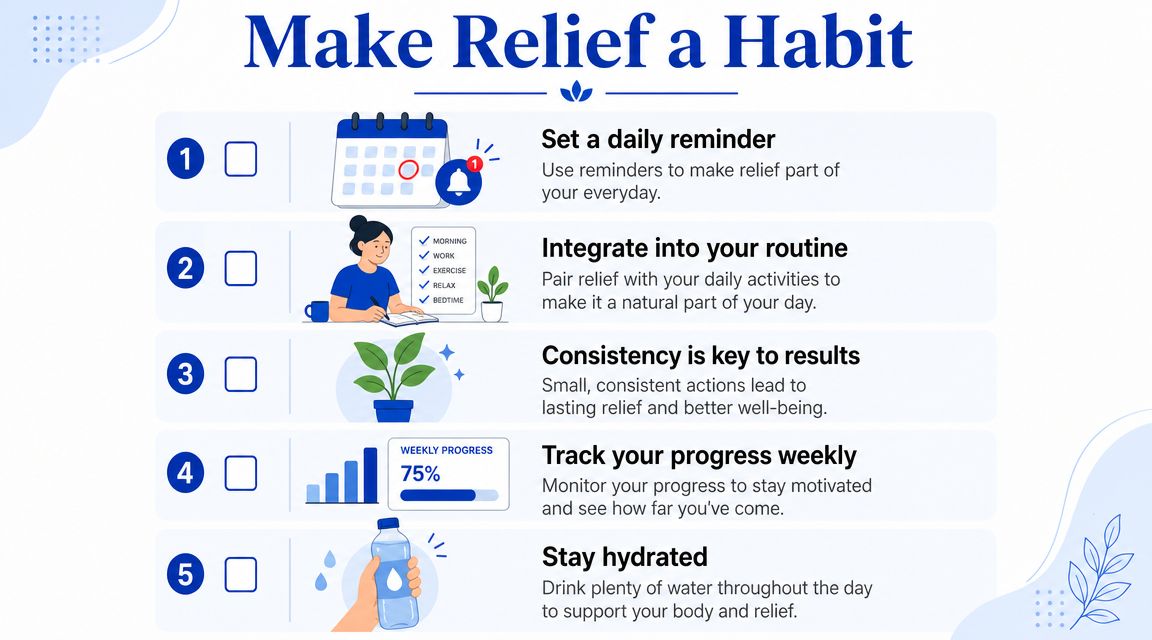
Tie your exercises to moments that already happen:
- Before work starts: Do one round after you sit down and open your computer.
- With a regular break: Pair a round with tea, coffee, or lunch.
- After commuting: Use a short sequence to unwind the neck before the evening.
A few simple environmental changes also make a difference:
- Screen position: Keep the monitor high enough that you're not constantly dropping your gaze.
- Chair support: Sit back into the chair instead of hovering forward.
- Phone habits: Bring the phone up toward eye level when possible.
- Movement breaks: Stand, walk, or reset posture before stiffness becomes pain.
You don't need a perfect workstation to improve your neck. You need less time stuck in one position. If you're also trying to support overall habits around busy days, practical planning matters there too, much like the everyday choices discussed in this guide to healthier packaged snack options.
Relief usually comes from a pattern your body can trust. Small sessions, repeated calmly, beat occasional over-effort.
When to See an Osteopath for Your Neck Pain
Some neck pain settles nicely with home care. Some doesn't. If your symptoms keep returning, feel more complex, or never quite improve despite doing the exercises properly, it's time for a proper assessment.

What a proper assessment looks at
A useful consultation looks beyond the sore spot. Neck pain can be influenced by how the upper back moves, how the shoulders sit, how you breathe when you're stressed, and what your work setup asks of your body every day.
An osteopathic assessment usually considers:
- Neck movement quality: Not just how far you can turn, but how smoothly you move.
- Upper back and rib mobility: Stiffness here often makes the neck compensate.
- Shoulder and postural habits: Desk setup, mouse use, driving, and phone posture all matter.
- Flare-up pattern: Morning stiffness, end-of-day ache, or pain after specific tasks can each point in different directions.
When home exercises aren't enough
Home exercises are a good starting point. They're not the full answer for everyone. You may need individual guidance if the pain is persistent, if you can't work out which movements aggravate it, or if your symptoms include the warning signs mentioned earlier.
The value of treatment isn't just temporary relief. It's getting a clearer reason for why the pain keeps returning and a plan that suits your body, work, and tolerance. If you're ready to arrange that kind of assessment, you can find a local practitioner through this osteopath near me page.
Frequently Asked Questions About Neck Exercises
How often should I do neck pain relief exercises?
Short, repeatable routines tend to work best. Consumer guidance commonly uses 3 exercises, repeated 5 times per side with 5-second holds, as shown in this neck exercise guide. For many people, that's manageable enough to repeat daily.
Is it normal to feel a little sore afterwards?
A mild sense of having “used” stiff tissues can be normal. Sharp pain, increasing pain, or symptoms that spread are not. If symptoms ramp up and stay aggravated, reduce the range or stop and get advice.
Can I do these if I have arthritis?
Often yes, but the movements should stay gentle and comfortable. Arthritis usually responds better to calm mobility work than aggressive stretching. If you also have dizziness, arm symptoms, or a history of injury, get individual guidance first.
If I only have time for one exercise, which should I choose?
For many desk workers, the chin tuck is the best single starting point because it helps counter the head-forward position that builds during screen time. Add shoulder blade support as soon as you can, because the neck rarely improves for long without better upper-back support.
Should I rest my neck completely during a flare-up?
Usually, complete rest isn't the goal. Gentle movement within a comfortable range is often more helpful than avoiding all motion. The trick is to reduce intensity, not stop moving altogether.
If your neck pain keeps returning, feels more complicated than simple stiffness, or you'd like a treatment plan designed for your work and body, Bayside Osteopathic Health offers gentle, hands-on osteopathic care with practical exercise advice to help you move more comfortably and confidently.