
It's mid-afternoon and you've been sitting longer than you meant to. Your shoulders creep toward your ears, your hamstrings feel short when you stand, and bending to tie a shoelace takes more planning than it should. You don't need a punishing routine. You need a gentle dose you can repeat, and a clear way to tell helpful tension from pain you shouldn't push through.
Table of Contents
- Why Flexibility Responds Better to Gentle Stretching
- Step-by-Step Stretching Techniques With Breathing and Posture Cues
- Building a Weekly Frequency and Progression Plan
- Sample Stretching Routines for Busy Days
- Adapting Stretches for Back, Neck, Joint Pain and Arthritis
- Red Flags and When to See an Osteopath
- Your Next Step Toward Easier Movement
Why Flexibility Responds Better to Gentle Stretching
That desk stiffness is familiar in clinic. A person sits through calls, walks to the kitchen, and notices their neck, hips and back of the legs all feel tight at once. The instinct is often to pull hard for a few days, feel sore, then stop. Flexibility doesn't usually reward that pattern.
Think of flexibility as usable range of motion. It's the range you can reach calmly, breathe in, and return from with control. A position you only get by yanking, holding your breath or bouncing isn't teaching your body much. It may make you guard the next time you try.
Gentle, repeated stretching works differently. You move to mild tension, pause, breathe, and come out slowly. Over many small exposures, that range starts to feel familiar rather than threatening. Consistency matters more than force, and comfort matters more than chasing a photo of someone else's stretch.
Pain isn't a performance target. If a stretch needs force to look right, it's probably too much for today.
Stretching techniques for flexibility also sit inside a wider movement picture. Stretching can help joints and muscles move more freely, but it doesn't replace walking, strengthening or balance work. Australian guidance treats flexibility as part of a broader mobility framework, not a stand-alone substitute for overall exercise.
That context matters because many adults aren't covering the basics yet. For adults aged 18 to 64, the target reported by the Australian Bureau of Statistics physical activity release is 150 to 300 minutes of moderate-intensity activity per week, and in 2022 only 22.4% of adults in this age group met the physical-activity guideline. If your whole week is sitting plus occasional stretching, the stretch isn't the problem. The overall dose of movement is too low.
What You Can Realistically Expect
Expect gradual change, not a dramatic overnight loosening. A stiff area may feel easier after one session, but lasting gains come from repeating a modest routine over weeks. Some areas respond faster than others, and a side that's tighter to begin with often has more room to change.
Expect some day-to-day variation too. Sleep, stress, a long drive and yesterday's gardening all change how a stretch feels. That's normal. Judge progress by what you can do across a week, such as reaching a shelf or turning to reverse the car, not by one ambitious attempt.
The approach that follows is simple. Warm up first. Use short, steady holds. Keep breathing relaxed. Stop well short of sharp or lingering pain, and build frequency before you build intensity.
Step-by-Step Stretching Techniques With Breathing and Posture Cues
Start with light whole-body movement before you stretch. Walk on the spot, take a short walk around the house, or do gentle arm circles until you feel warm. Cold tissue is easier to force and harder to read, so don't go straight from the couch into your deepest hamstring stretch.
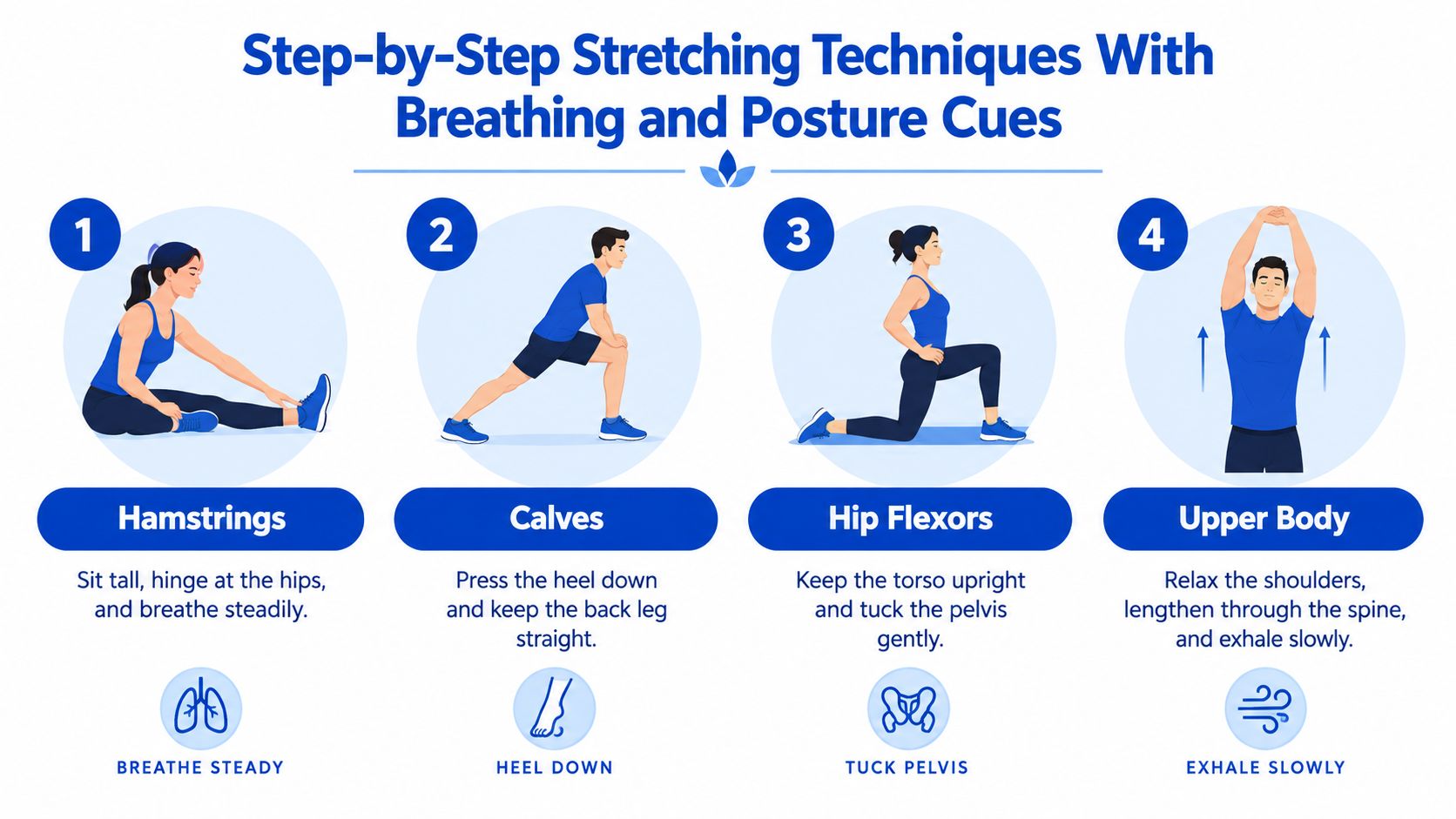
Use the same pattern for each stretch. Move slowly to a pain-free end range. Exhale as you settle in, then breathe through your nose at a relaxed pace. Hold steadily without bouncing, then return to the start just as slowly.
For dose, Sports Medicine Australia's Choose Health Be Active guidance on daily gentle stretching recommends trying some form of stretching every day, with example stretches held for 10 to 20 seconds and repeated 3 to 5 times. Treat that as your starting template, not a test to pass.
Hamstrings and Calves
For hamstrings, sit tall on the front edge of a chair with one leg extended and the heel on the floor. Keep a soft bend in the extended knee if the back of the thigh pulls sharply. Hinge slightly from the hips with a long spine instead of rounding toward your toes. Stop at mild tension behind the thigh, breathe out slowly, and keep your shoulders down.
For calves, stand facing a wall with hands resting on it for balance. Step one foot back, press that heel toward the floor, and keep the back knee straight but not locked. Keep both hips facing the wall and your torso upright. You should feel a stretch in the calf, not pressure in the front of the ankle. Switch sides after each hold so you can compare how they feel.
Hip Flexors
Use a half-kneeling position with a cushion under the back knee, or stand beside a bench if kneeling bothers you. Tuck your pelvis gently under, as if shortening the distance between your ribs and pelvis. Shift forward only a small amount until you feel tension at the front of the back hip.
Keep your torso tall and avoid arching through your lower back to fake more range. Breathe out as you tuck, then hold while breathing normally. If you feel pinching in the groin or pain in the lower back, reduce the shift and reset your pelvis.
Chest Upper Back and Neck
For the chest, stand in a doorway with one forearm resting on the frame and the elbow near shoulder height. Step forward gently until you feel a stretch across the front of the chest and shoulder. Keep your ribs down, neck long, and shoulder away from your ear. Don't push into a pins and needles feeling in the arm.
For the upper back, sit tall and reach both arms forward, clasping your hands if that's comfortable. Let your upper back round slightly and drop your chin a little. Breathe into the space between your shoulder blades and exhale slowly. Come back up by stacking your spine tall again rather than jerking upright.
For the neck, sit with both feet flat and shoulders relaxed. Tilt one ear toward the same shoulder without turning your nose or lifting the opposite shoulder. Keep the movement small and your jaw unclenched. Use your hand only as a resting weight, never to pull. If you get tingling into the arm, come out straight away.
Finish one side at a time and notice the difference before switching. That pause is useful feedback. It tells you whether the dose was enough, too much, or aimed at the wrong spot.
Building a Weekly Frequency and Progression Plan
Heroic Sunday sessions rarely beat a small dose repeated often. A tight hamstring responds to regular exposure, where the tissue gets time to adapt and the nervous system stops guarding the range.
Flexibility works best treated as a dosing problem. Australian guidance on physical activity for older adults recommends being active on most days of the week, and the same principle suits stretching. Several modest sessions spread out are easier to recover from and easier to keep than one long session you keep postponing.
Pick two or three muscle groups that limit your day. Hamstrings, hip flexors and chest are common choices for desk-bound readers. Set a modest weekly total for each, then divide it across sessions you'll repeat. Our overview of ways to improve mobility gradually at home follows the same build-slowly logic.
| Schedule | Stretching Time per Muscle Group | Hold and Repetition Guidance |
|---|---|---|
| Five brief sessions | About 2 minutes per session | Use short steady holds and repeat until the session total is reached |
| Two longer sessions | About 5 minutes per session | Use the same steady holds, rest between repeats, and stop at mild tension |
| Daily gentle option | Spread the weekly total across the week | Keep each day lighter and reduce range on stiff or sore days |
Any of the three works. Choose the schedule that fits your calendar, because consistency drives the result.
Starting Out With a Baseline
Record where you begin before chasing change. Note how far you reach toward your toes while seated, how far your head turns each way, or whether one hip feels tighter in the same stretch. Use the same position, same chair and same time of day when you recheck, so the comparison is honest.
A low starting point is useful information, since people with poorer starting flexibility often have the most room to gain.
Begin below your maximum. If a position produces strong discomfort, ease back to mild tension you can breathe through. You can always add a repeat next session. You can't undo a flare-up caused by doing too much on day one.
Progressing After Two to Three Weeks
Change one variable at a time. Add a small amount of hold time, or a small amount of range, or one extra session. Vary all three in the same week and you won't know what helped or what irritated you.
Your next-day response is the guide. Mild awareness that settles quickly is acceptable. Lingering joint pain, sharp pain or stiffness clearly worse the next morning means the last step was too big. Drop back to the previous level for several sessions before trying again.
Dosing rule: Earn the next step by recovering well from the current one.
Knowing When You Have Plateaued
A plateau means your measured range and daily function have stopped changing despite consistent practice. Check the basics first. Are you warming up, breathing out as you settle into position, and reaching your weekly total for that muscle group.
When those boxes are ticked, look beyond muscle length. Joint stiffness, strength, balance or pain sensitivity can all limit range, and pulling harder on the same tissue won't address them. Changing the target, or getting assessed, is the smarter move at that point.
Sample Stretching Routines for Busy Days
A routine only works if it survives a real weekday. These examples use the same stretches, arranged for different moments. Pick the timing you'll repeat, not the longest option you admire.
For a single session, think in cumulative minutes rather than one long hold. A moderate acute flexibility effect was maximised at about 4 cumulative minutes per session, and hamstring flexibility improved more than spinal flexibility after acute stretching, as summarised in NSW guidance for older adult physical activity. That means repeated short holds count, and a looser hamstring doesn't guarantee your spine will feel equally loose.
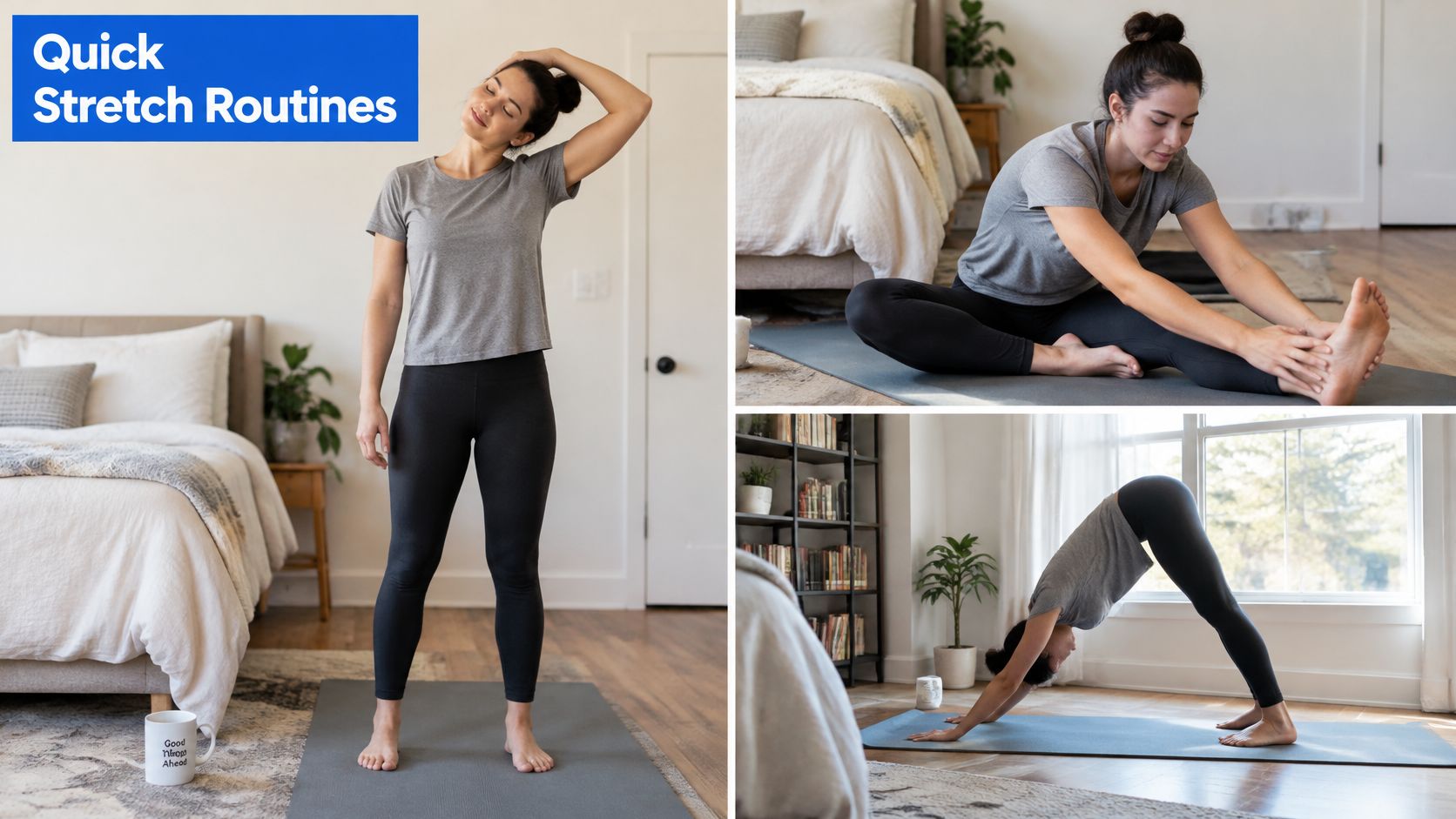
The image below shows a simple home set-up, with no special equipment beyond floor space and support nearby.
Morning Loosening for Hips and Lower Back
After a warm shower or a short walk around the house, start with the upper back reach while seated. Follow with hip flexors using a bench for balance, then seated hamstrings on each side. Keep the range smaller than you would later in the day, because morning stiffness often eases once you're moving.
Use short holds and repeat each position until it feels easier, not exhausted. Finish by standing tall and walking for a minute. That walk tells you whether the routine helped your actual movement.
Midday Reset for Neck and Shoulders
Stand up at the end of a video call before you sit again. Do the doorway chest stretch, the seated upper back reach at your desk, and the gentle neck tilt on each side. Keep your shoulders away from your ears and unclench your jaw between holds.
This is the routine to pair with an existing cue. Kettle boiling, lunch finishing or a call ending can all work. In clinic, the people who improve most aren't always doing more. They're doing a small amount at a moment they rarely miss.
Watch the demonstration below once for pacing, then try to match the calm speed rather than copying anyone's range.
Evening Wind-Down for Hamstrings and Calves
In the evening, use the wall calf stretch first, then the seated hamstring stretch. Slow your exhale as you settle into each hold and avoid turning it into a final effort contest with yourself. Dim effort matters here. You want to finish feeling looser and ready to rest.
Count cumulative time calmly. Add holds together for each muscle group instead of staring at the clock during one long stretch. If your back still feels stiff after your hamstrings ease, don't assume you failed. Different tissues and joints respond at different rates, and spinal stiffness may need movement, strength or assessment rather than more hamstring work.
Choose one of these three as your default this week. Repeatability beats variety when you're building the habit.
Adapting Stretches for Back, Neck, Joint Pain and Arthritis
Pain changes the question. You're no longer asking how far you can go. You're asking how to keep a joint moving without aggravating it, and how to tell normal tension from a warning sign.
That graded mindset matters for older adults in particular. In 2022, only 33.4% of Australians aged 65 and over met physical-activity guidelines, which makes a graded approach that combines gentle stretching with strength and balance especially relevant for older adults, according to the Australian Sports Commission clearinghouse summary on physical activity. Stretching alone won't give you the strength or balance stimulus you need if you're worried about falls.
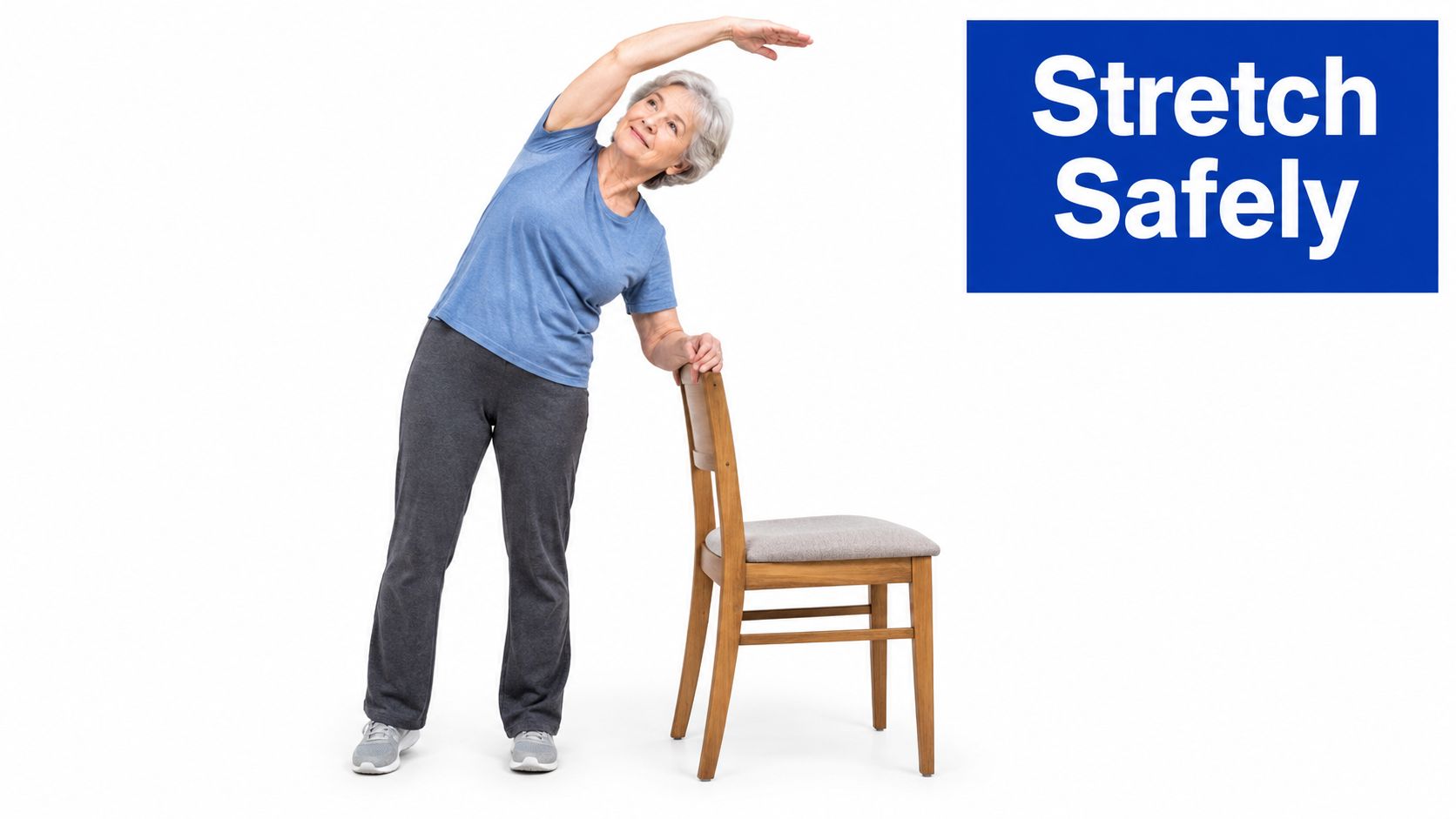
The supported side stretch below is a good model. A chair gives balance, the range stays small, and you can stop without getting up from the floor.
Lower Back Stiffness
Keep spinal stretches gentle and supported. Seated upper back reaching and small, comfortable movements are usually better starting points than forcing a deep forward bend. Keep your feet flat, move slowly, and return to upright with control.
If bending makes leg pain, numbness or tingling worse, stop that direction. A back that feels tight isn't always a back that needs more stretching. Sometimes it needs walking, load management or hands-on assessment first.
Neck and Shoulder Tension
Use smaller ranges and more support. Sit in a chair with a backrest, keep one hand under your thigh to anchor the shoulder down, and tilt your ear only until you feel mild tension. Never pull your head across with your hand.
For shoulders, the doorway chest stretch can be reduced by taking a smaller step forward or lowering the forearm. Stop if you feel pinching at the front of the shoulder. A stretch across the chest shouldn't create sharp joint pain.
Hips Knees Hands and Arthritis
For hips, choose standing hip flexor work beside a bench if kneeling loads a sore knee. Keep the tuck gentle and the shift forward small. For knees, seated hamstring stretches let you keep a soft knee bend and avoid forcing the joint straight. Our guidance on managing arthritis pain in the knee with gentle movement takes the same no forced end range approach.
For hands, use slow finger opening and closing within a comfortable range after warming your hands. Don't use the other hand to crank a stiff finger joint further. Warmth, repetition and small range usually suit arthritic joints better than intensity.
- Normal tension: A pulling or stretching feeling in the muscle that eases within seconds of release
- Too much for today: Sharp, pinching or joint-centred pain, or pain that lingers and feels worse later
- Use support early: A chair, wall or bench lets you reduce load and focus on range and breathing
Add simple balance and standing strength work where it's appropriate and safe for you, ideally with support nearby. Flexibility helps you reach a position. Strength and balance help you use that position confidently in daily life.
Red Flags and When to See an Osteopath
Self-directed stretching suits mild stiffness that behaves predictably. It doesn't suit symptoms that are escalating, spreading or linked to an injury. Knowing the difference keeps a helpful home routine from becoming a delay in getting care.
Signs a Stretch Is Doing Its Job
Mild tension in the belly of a muscle is expected. It should feel like a stretch, not a threat, and it should ease soon after you release. You can breathe, relax your face and shoulders, and return to the starting position with control.
A small increase in ease on the second or third repeat is also a good sign. So is feeling steadier or freer in a daily movement afterwards, such as turning your head or bending to a low drawer.
Red Flags That Need Assessment
Stop stretching and seek medical or osteopathic assessment promptly if you notice any of the following.
- Night pain: Pain that wakes you repeatedly or doesn't settle with position change
- Spreading symptoms: Numbness, tingling or pain travelling into an arm or leg
- Sudden weakness: Loss of strength, dropping objects or a leg giving way
- Injury signs: Swelling, fever, or pain after a fall, impact or sudden strain
- Persistent joint pain: Pain that keeps worsening despite reducing range and load
These signs don't automatically mean something serious, but they do mean stretching harder isn't the next step. Assessment comes first.
What an Osteopathic Assessment Adds
An osteopath looks beyond the single tight spot. Assessment considers how your spine, hips, shoulders and daily habits share load, which areas are stiff, which are sensitive, and which movements you avoid. That whole-body picture helps decide which stretches suit your pattern and which ones to leave out for now.
At Bayside Osteopathic Health, that approach combines a whole-body assessment with a personalised plan. Hands-on care may include soft-tissue work, joint articulation and gentle mobilisation where appropriate, alongside movement advice and home self-care you can realistically repeat. Medicare options may apply in some situations, so check eligibility before you assume what's covered.
If you're weighing up timing, our explanation of signs it may be time to see an osteopath helps you compare watchful self-care with getting assessed now. The trade-off is straightforward. Self-stretching is cheap and convenient, but it can't examine you, rule out red flags or adapt treatment to an arthritic joint on the day.
Your Next Step Toward Easier Movement
You don't need to overhaul your week. Choose one routine that matches your day, whether that's the morning loosening sequence, the midday desk reset or the evening hamstring and calf wind-down. Repeat it at a gentle level and record one baseline check this week so you can judge change.
Keep the decision rules close. Warm up first. Hold at mild tension, breathe out slowly, and accumulate short holds rather than forcing one long position. If pain is sharp, spreading, lingering or linked to arthritis that keeps flaring, don't keep testing it at home.
If stiffness, back or neck pain, joint pain or posture strain persists, book a first assessment instead of guessing. Bring a short note of your pain pattern, the daily activities that feel tight, any prior injuries, and the medications you take. That helps the practitioner assess how you move, identify what's driving the restriction, and explain which stretches and strengthening or balance work fit you.
Ask about flexible booking if work or caring duties make appointments hard to plan. You can also join the clinic newsletter for practical insights on movement and injury prevention for the Bayside community. No one can promise a specific result, but a clear assessment and a dose you can repeat give you a safer starting point.
Today, pick one stretch for the area that limits you most, warm up, and do a few calm holds at mild tension. That's your first rep of a routine your body can trust.
If persistent stiffness, arthritis or back and neck pain is limiting the stretches you can do safely, Bayside Osteopathic Health offers whole-body osteopathic assessment, gentle hands-on care and a personalised home movement plan based on how you move. Book an assessment to get clear guidance on which stretches suit you, which to modify, and how to build easier movement into your week.